The day begins with a yummy breakfast at Bonnie Lu’s Country Cafe. Biscuits and Gravy for me. Healthier fare for Dave and Scott.
My biscuits-and-gravy breakfast at Bonnie Lu’s Country Cafe.
Best activity after a caloric overload: sit on your butt for the next six hours and enjoy the scenery.
We head north from Ojai on Highway 33, the Maricopa Highway. Designated a National Scenic Highway, it’s a twisty road, following Matilija Canyon through the Santa Ynez Mountains. We climb to Pine Mountain Pass – at 5,080 feet, it’s more than 4,300 feet above Ojai.
From Pine Mountain Pass, we descend comfortably into a flat area that takes us to Lockwood Valley. We are now heading East on Lockwood Valley Road. There’s very little out here of note. Trees and mountains. And Harleys. Lockwood Valley sits at about 4,800 feet.
Highway 33, the Maricopa Highway, is a fun ride.
The only road ahead is the one that takes us to Lake of the Woods, a community of less than 1,000 residents in the Los Padres National Forest. Lake of the Woods was named for a mountain reservoir that has been dry since 1962, when its dam burst. Lake of the Woods is located in Cuddy Canyon of the San Emigdio Mountains.
In Lake of the Woods, we turn west on Cuddy Valley Road, and remain in the mountains. To our left is Mount Pinos, whose 8,847-foot summit is the highest point in Ventura County. We descend along the Bitter Creek National Wildlife Refuge, designed to protect the dwindling California condor foraging and roosting habit.
The Bitter Creek Refuge provides grassland, oak woodland, chaparral, pinion pine/juniper/oak woodland, and wetland habitat for endangered critters. Among those struggling species are San Joaquin kit fox, blunt-nosed leopard lizard, giant kangaroo rat, and species of Federal concern such as western spade foot toad, western horned lizard, and tri-colored blackbird. That’s information you’ll only find on this blog. Or on the Internet, if you care to look for it.
Taking a break along the side of the road.
We reach Highway 166, the Cuyama Highway, and turn west. Cuyama, which lies ahead several miles, is derived from Chumash, meaning “To Rest, to Wait.” We will do neither, as there’s nowhere to rest and little to wait for. Cuyama is surrounded by apricot, peach and plum orchards.
Highway 166 takes us past family farms and fruit orchards before we meet US Highway 101, just north of Santa Maria. Until the Interstate Highway System was built, Highway 101 was the primary north-south route through California. It’s also known as El Camino Real (“The Royal Road”), where its route along the southern and central California coast approximates the old trail that linked the Spanish missions in the 18th and 19th centuries.
El Camino Real (pronounced ree-AL) meets the ocean in Pismo Beach, which was once known as the “Clam Capital of the World.” That moniker has disappeared, thanks to over-harvesting. Pismo clams were once so abundant they were harvested with plows on the beach. Clamming is still legal, but few remain to be found. They are a favorite meal of the protected sea otter, which pretty much wipes out what’s left of the local clam population.
This stretch of Highway 1 is called the Cabrillo Highway, named for Juan Rodriguez Cabrillo, a Portuguese explorer noted for his 16th century exploration of the west coast on behalf of the Spanish Empire. He was the first European explorer to navigate the coast of present-day California.
The Cabrillo Highway brings us to San Luis Obispo, where we turn north onto California Highway 1 – the Pacific Coast Highway. We will stay on this road for the next 155 miles, 32 of them today and the rest tomorrow.
Morro Rock, a distinctive sight along PCH.
Still inland on a coastal highway, we soon reach the coastline in Morro Bay, whose most prominent physical feature is Morro Rock, a 576-foot high volcanic plug. Known to locals as “The Rock,” it was quarried from 1889 until 1969. There’s no public access to the rock, because it’s a reserve for the peregrine falcon. Morro Bay calls itself “The Gibraltar of the Pacific.”
Twenty more miles on Highway 1 and we arrive at Cambria, a seaside village doubling as an art colony. Cambria is roughly halfway between Los Angeles and San Francisco. And it’s 100 percent of the way to today’s destination.
Our ride finishes quietly as we pull into the motel and begin to think about dinner. In our rear-view mirror: a tidy 230 miles of mountain roads, valleys and a hint of ocean.
What’s cookin’?
***
Come to think of it, we’ve been sitting on our butts all day and could use some exercise. Might be nice to burn a few calories before dinner.
We’re very close to the Pacific Ocean. Why not a beach walk?
Moonstone Beach, a great spot for a walk in Cambria.
About a mile north of us is the Moonstone Beach Boardwalk, which runs north and south along the beach for about 1.5 miles. The boardwalk meanders along the Moonstone Beach. There are opportunities to jump off the boardwalk and put footprints in the sand.
If you are curious, a moonstone is not to be confused with a moon rock.
Moonstones, which are seen on this beach in abundance, are gemstones, whose name is derived from a visual effect caused by light diffraction. You probably knew this, but the moonstone is Florida’s state gem. Florida made that selection to commemorate the moon landings nearly a half-century ago, because the rockets to the moon were launched from Florida’s Kennedy Space Center. Here is Apollo 11 lifting off toward the Moon, on July 16, 1969.
Five days later, Neil Armstrong became the first human to step on the surface of the Moon.
Ribs at the Cambria Pub and Steakhouse.
We do our own exploring tonight, successfully foraging for food in Cambria. Dinner at Cambria Pub and Steakhouse.
***
To view today’s route from Ojai to Cambria, click here.
Dave ordered the veggie lasagna, as close to health food as it gets on a road trip.
And then, we’re going to the beach. How California-clichéd is that?
Gail Bowman snapping pix of the bikes before we leave Lake Arrowhead.
Day 1 of our journey begins on the Rim of the World Highway, designated a Scenic Byway because it literally feels like you are on the rim of the world. It’s a 110-mile route that traverses the rim of the San Bernardino Mountains from Cajon Pass to San Gorgonio Pass. We follow this narrow, twisting path for about 22 miles before reaching Cajon Junction, where Highway 138 crosses I-15.
We could turn right onto the Interstate, and in three hours we’d be in Las Vegas. But this trip is about reality, not fantasy, so we continue west toward the San Gabriel Mountains.
All red, and raring to go.
Thirty minutes later, we turn onto Highway 2 and arrive in Wrightwood, a quaint community located in a pine-covered valley at 5,935 feet. Wrightwood is at the east end of the Angeles Crest Highway, which we will follow for the next 60 miles to La Canada Flintridge, just north of Pasadena.
The Angeles Crest Highway is a two-lane thrill ride that corkscrews through the Angeles National Forest – through chaparral and montane forest habitats, along the highest and most scenic ridges of the San Gabriel mountain range. It is considered among the top motorcycle roads in the US.
The road has been used extensively in Hollywood movies, including racing scenes in the 1968 Disney film, The Love Bug, starring Dean Jones, Michelle Lee, and a 1963 VW Beetle named Herbie. The Angeles Crest Highway was also featured in the Love Bug’s 1977 sequel, Herbie Goes to Monte Carlo – where the highway doubles for a mountain road in the French Alps.
Construction of the Angeles Crest Highway began in 1929, when it was originally intended to be a fire access road. Much of it was built by prison labor. Original plans called for Angeles Crest Highway to be upgraded to a freeway in the 1950s, but that idea was later considered geographically improbable and the plans were abandoned.
We’re pretty much on our own out here, off the grid in a sense. Cell phone reception is spotty, and, when available, signal strength and clarity is poor. If you tried to call us today, we’ll have to get back to you.
Stopping in Wrightwood for water, snacks, whatever.
The highest point on the Angeles Crest Highway is 7,903 feet at the Dawson Saddle. Much of the highway is closed in winter due to rockfall and avalanche hazards. Today, the road is clear and the skies are sunny as we press on toward several ski resorts convenient for millions of Southern California snow enthusiasts.
Five minutes west of Wrightwood is the Mountain High Ski Area at Big Pines. It bills itself as “Southern California’s closest ski resort.” From a base at 6,600 feet, Mountain High has 1,600 vertical feet in three distinct areas: West, East and North. It’s one of the oldest ski areas in the US, beginning in 1937 with a single rope tow.
Twenty-two miles west of Mountain High is another ski area – Mount Waterman. From a base elevation of 7,000 feet, Mount Waterman has 1,000 vertical feet of skiing – when it’s open. If Mountain High is Southern California’s closest ski resort, Mount Waterman may be Southern California’s closed-est ski resort. The past four seasons, there hasn’t been enough snow to open for business. In the summer, however, it does have an 18-hole disc golf course.
Dave checks out Mount Waterman. Not much skiing today.
Ten minutes from Mount Waterman is the Chilao Visitors Center, one of two on the Angeles Crest Highway. It offers an introduction to the Angeles National Forest through a variety of exhibits, trails and activities. We get all the introduction we need by continuing our ride west.
Other than visitor centers, one of the few buildings on the Angeles Crest Highway is Newcomb’s Ranch, a biker haven about 10 minutes west of Mount Waterman. Newcomb’s Ranch is the only private property along the Angeles Crest Highway. It’s called the “informal headquarters for riders” by Los Angeles magazine, and “one of Southern California’s most famous Rickey Racer Roadhouses” by Motorcyclist magazine.
The Newcomb family, which also created the Mount Waterman ski area, built the roadhouse in 1939. Since then, it’s variously served as a restaurant, hotel, general store, gas station and brothel. Only one of those descriptions serves our purposes today. We stop, admire the bikes, hydrate, relax – and then continue west.
Cooling off at Newcomb’s Ranch.
From Newcomb’s Ranch, it’s 27 miles to La Canada Flintridge, the western terminus of the Angeles Crest Highway. Hey, that was fun!
If you’re more into pictures than words, click here to watch a time-lapse motorcycle ride from one end of Angeles Crest to the other – 66 miles in 10 GoPro minutes.
***
We’re back in the big city now. Or we’re at least aware of its presence.
Nearly 23 million people call Southern California home, and for the next 50 miles, we’ll be among many of them. On a sunny, pleasant August day, we’re reminded why so many find SoCal such a nice place to live. Just look skyward and you’ll get it.
We continue south on Highway 2, but now it’s a multi-lane freeway with typical mid-day Friday afternoon traffic. Soon, we turn west on the Ventura Freeway, so named because Ventura is where it ends – or begins, depending on your perspective.
Just past the Los Angeles Zoo, we turn onto Forest Lawn Drive and are reminded that show business is still a big deal around here. We ride past the famed Warner Bros. and Universal Studios. A lot of big name movies have been made on their lots, including ET, Jaws, Gravity and American Sniper. And TV shows, too – from 77 Sunset Strip to The Big Bang Theory.
Mulholland Drive, the movie version.
Near Cahuenga Pass, we jump onto Mulholland Drive, a famous road named after pioneering Los Angeles civil engineer William Mulholland. Mulholland was responsible for building the Los Angeles city water infrastructure and providing a water supply that allowed LA to grow into one of the largest cities in the world. He designed and supervised the building of the Los Angeles Aqueduct, a 233-mile long system to move water from the Owens Valley to the San Fernando Valley. In a sense, you have him to thank for Los Angeles being a mass of wall-to-wall humanity. Without the water he brought to the LA basin, the city likely would not resemble what you see today.
Mulholland Drive, which has been featured in movies, songs and novels, is a 21-mile two-lane road that follows the ridgeline of the eastern Santa Monica Mountains and the Hollywood Hills. It provides spectacular views of the Los Angeles Basin, the San Fernando Valley and the Hollywood Sign. There’s a small overlook on Mulholland Drive where you can see the Hollywood Sign, whose letters are 45 feet high. The sign, created in 1923 as an advertisement for local real estate development, sits on Mount Lee, at 1,708 feet, the tallest peak in Los Angeles.
One of the most famous sights in the entire Los Angeles area.
Along Mulholland Drive, you’ll find some of the most exclusive and expensive homes in the world. As this is not a house-hunting trip, we keep our eyes on the road and follow Mulholland Drive to the Skirball Cultural Center, near I-405. The Skirball Center is devoted to exploring the connections between Jewish heritage and American democratic ideals. A five-minute walk from the Skirball Center is the American Jewish University, founded nearly 70 years ago by Rabbi Mordecai Kaplan to create an institution representing the diversity of Judaic expression in the US.
***
I-405 North takes us back to the Ventura Freeway, which leads to Topanga Canyon Boulevard., and on to Topanga itself. Topanga is an artsy community in the Santa Monica Mountains, attracting filmmakers, musicians, actors and other unapologetic liberals. The annual Topanga Film Festival is held every summer.
Lunch at a 7-11 just off the Ventura Freeway. This is what extreme hunger looks like on a Harley trip..
It’s believed that the name Topanga means “Where the Mountain Meets the Sea.” Some millennial parents are actually naming their kids Topanga. It’s among the top 300 names on babynames.com. Hey, it’s California!
In Topanga, we turn northwest onto Mulholland Highway. Not Mulholland Drive. This one is a highway, or at least that’s what it’s called. It feels like anything but a highway. It’s a two-lane zig-zagger that crosses Malibu Canyon Road and takes us to the tiny community of Cornell, in the wine country area of the Santa Monica Mountains.
Cornell, sandwiched between Malibu and Agoura Hills, is mostly surrounded by protected open space and state park land. The Tour de California bicycle race occasionally passes through here, attracting locals who cheer the cyclists on.
The hottest spot in Cornell, the place we have to check out, is The Rock Store, a famed hangout for glitterati motorcyclists including Jay Leno, Harrison Ford, Arnold Schwarzenegger, John Travolta and Peter Fonda. One bike magazine calls it a “wonderful collection of humanity and two wheels where diversity isn’t just tolerated, it’s celebrated.”
Dave hydrates at the Rock Store.
The Rock Store is a nice place to park, ogle, covet, and just compare biker notes. “Mine has more chrome” is the Harley equivalent of “Mine is bigger than yours.”
We see a few motorcycles and a bright yellow Lamborghini, but no signs of the Hollywood elite. While Jay Leno is nowhere to be found, here’s a fun clip of him talking about, then riding one of his 90 bikes, a 1936 Harley Davidson Knucklehead.
***
Refreshed and ready for more, we continue west on Mulholland Highway, then turn south on Latigo Canyon Road, another super-twisty two-lane road. Latigo Canyon Road takes us to Highway 1, also known as the Pacific Coast Highway.
Next stop, Malibu. Or, as they call it locally, “The Boo.” We don’t stop in Malibu; we power through it and enjoy the views of the California coastline.
Except for its extraordinary views and multi-million dollar mansions, Malibu is a small town that holds little interest for tourists. Still, it’s amazing to think that earlier in the day, we were riding above 7,000 feet, and now we are skirting the Pacific Ocean.
Riding PCH. California coastal scenery at its finest.
We follow the Pacific Coast Highway for about 30 miles, past El Matador State Beach, Point Dume State Beach, Lee Carrillo State Park, and Point Mugu State Park, where the road turns inland. The ocean vistas were spectacular, but they’re gone for now. On Sunday, we will jump back onto the Pacific Coast Highway’s most scenic section, one of America’s top motorcycle roads.
From PCH, we jump onto US Highway101, and make a quick stop at the Camarillo Harley store. Arriving five minutes before closing time, Dave buys a new gas cap to replace one that mysteriously “went missing.” It’s a long story, involving a senior moment and lack of a documented checklist. Next time you see Dave, ask him about it.
Dave, buying a new gas cap. You can never have too many.
First, it’s time to head for tonight’s destination, Ojai (pronounced OH-hi).
Ojai is a tourist destination, about 15 miles north of Highway 1. We are three tourists in search of a tasty dinner and a comfortable bed, so it should suit us just fine.
Ojai’s culture revolves around ecology, health and organic agriculture, spirituality, music and art. It’s home in mid-June to the annual Ojai Music Festival, which has had among its performers Igor Stravinsky (stylistic ballet and symphony composer), Esa-Pekka Salonen (principal conductor of the London Philharmonic Orchestra) and Aaron Copland (“Fanfare for the Common Man”).
Copland wrote Fanfare For the Common Man in 1942, inspired in part by a famous speech made earlier in the year, where Vice President Henry Wallace proclaimed the dawning of the “Century of the Common Man.” You will recognize this fanfare, as it’s performed by the New York Philharmonic Orchestra at the 9/11 museum dedication ceremony in May 2014.
***
Lavender in Ojai is quite the thing.
Another popular June event is the Ojai Lavender Festival, a celebration of the color purple held in Libbey Park. It showcases lavender art, as well as lavender-themed crafts, soaps, jewelry and clothing. This year’s lavender fest included music from the Honeysuckle Possums.
Sadly, we seem to be two months late for Ojai’s festival season 😦
In make-believe, the title characters of The Bionic Woman and the The Six Million Dollar Man are described in those 1970s TV series as having been childhood sweethearts in Ojai. Jamie Sommers (Lindsay Wagner) and Steve Austin (Lee Majors) appear in a number of episodes that take place in and around Ojai.
In real-life, notable current and past residents of Ojai include film composer Elmer Bernstein, Oscar-winning actress Julie Christie, jazz musician Maynard Ferguson, and David Zucker, director of Airplane! and The Naked Gun.
As the sun begins to set, our eyes begin to droop and sleep beckons. Dinner, drinks, fade to black.
Today’s 250-mile ride was a perfect start to a week of riding. Let’s do it all over again tomorrow.
***
To view today’s route from Lake Arrowhead to the Rock Store in Cornell, click here.
To view the remainder of today’s route, from Cornell to Ojai, click here.
Some noteworthy things have happened on August 20 over the past 150 years:
In 1866, President Andrew Johnson formally declares the Civil War over.
In 1882, Tchaikovsky’s “1812 Overture” opens in Moscow.
In 1920, the first US commercial radio station, WWJ (Detroit) begins daily broadcasting.
In 1940, British Prime Minister Winston Churchill famously says of the RAF: “Never in the field of human conflict was so much owed by so many to so few.”
In 1965, the Rolling Stones release their single, “Satisfaction,” in the UK.
In 1980, Reinhold Messner of Italy is the first to solo ascent Mt. Everest.
In 1998, the Supreme Court of Canada rules that Quebec cannot legally secede from Canada without the federal government’s approval.
In 2011, celebrity booty model Kim Kardashian marries basketball player Kris Humphries; the marriage lasts 72 days.
And, in 2015, three guys, all set to begin a 2,000-mile Harley excursion, decide to stay in Lake Arrowhead, relax, and leave tomorrow instead.
Keep calm, everyone, and nobody will get hurt.
With yesterday’s blog build-up, you’d think Dave, Scott and I would be in the Sierras by now. Not to worry. We’ll have plenty of time to ride, beginning Friday morning.
Dave cooking his “world- famous” ribeye steaks.
So today, we cool our jets, fill our tanks, explore Lake Arrowhead on the Bowman’s pontoon boat, have our last home-cooked meal (Dave’s “world-famous” ribeye steaks) for 10 days, and give you the day off from reading this blog.
We plan to leave bright and early tomorrow. See you then.
A world-famous meal, waiting to be devoured. Then, in the morning, we hit the road!
Today, I hit the road for my seventh major ride in seven years. If I had any writing ability, I’d call that an annual event.
But this time there’s a big difference: Sarah’s coming along.
That’s right, I’ll have adult supervision. To help kick off my 2015 ride through the Sierras, Sarah will trail in the Boxster – sort of a high-class “sag wagon.” Sag, as you may know, is an acronym for “support and gear,” or “support and grub.”
Either way, it’s awesome to have her on the road with me.
***
Over the past six years, you may recall my riding partner on these mountain excursions has been Ray Sanders. Ray was raised in Kentucky’s coal country, had a distinguished career as an engineer, and now lives in Farragut, Tennessee. Ray, who will be 85 in November, is married to Sarah’s cousin, Tina.
Thanks, Ray. Here’s to you!
Together, Ray and I rode to Lake Tahoe and back twice, along the Blue Ridge Mountains in North Carolina and Virginia, to Civil and Revolutionary War sites, New England in the fall, and scaled the highest paved road in North America – 14,130 feet — just below the summit of Colorado’s Mount Evans.
After 65 years of riding, Ray is moving on to other adventures.
So it’s somewhat bittersweet today as I begin a 2,000-mile ride in search of some of California’s more spectacular sights, knowing Ray won’t be a part of it. I think of all the places we’ve been together – probably 15,000 miles on the road – and it’s hard not to be wistful.
I am deeply appreciative of all Ray taught me during our rides, and I will miss him greatly.
***
8:30 am in La Quinta. Ready to hit the road.
As we pull out of the driveway of our La Quinta home, it’s 8 am and already 90 degrees, with an expected high of 113 by 5 pm. We’ll be stuck in the blistering desert heat most of the day, unless we’re lucky enough to find shade or shelter in the mountains.
It’ll be a blast-furnace-like experience for me; riding at 50 miles an hour, the wind in my face isn’t the least bit refreshing. It feels Saharan and stifling. And poor Sarah: she’ll miss the guilty pleasure of driving topless (the Boxster is a convertible). Motorcycles and ragtops aren’t much fun when the temperatures are, as the Urban Dictionary calls it, “Africa hot.”
Today’s destination is Lake Arrowhead, a mile-high town northwest of here in the San Bernardino Mountains. Lake Arrowhead is only 65 straight-line miles from La Quinta, but our route will be a full 175 road miles. We’ll either be lost, or intentionally in the mountains to avoid the crushing heat.
On El Paseo, not quite ready to shop.
In 20 minutes, we arrive in Palm Desert, home of the El Paseo shopping district. It’s our valley’s version of Rodeo Drive. Bill Gates has a home in Palm Desert. So does Phil Condit, former CEO at Boeing.
No time for retail therapy or breakfast with Phil and Bill, so we head south on Highway 74 into the San Jacinto Mountains. The road immediately becomes steep and twisty – what most self-respecting motorcyclists and their sag wagon drivers live for.
A side note: on my Harley rides for the past six years, I constantly reviewed my rear-view mirror, making sure Ray wasn’t far behind. It’s a little odd this time, as Ray is not there, but instead I see Sarah following me.
About 45 minutes after leaving home, we arrive at the Paradise Valley Café, a favorite biker hangout at the intersection of Highways 74 and 371. If we turned left onto 371, the road would take us to Temecula, in the heart of Southern California wine country.
Sarah and Gary at Highway 74 vista point.
A very cool thing happens our way up Highway 74, something you Harley riders will relate to. A California Highway Patrol motorcycle officer passes me going down the hill. He gives me a “Harley wave,” first time that’s ever happened to me. How neat was that! A peace officer giving peace a good name!
But we continue straight, heading toward Idyllwild, a rustic mountain destination known as one of the “100 Best Small Art Towns in America.” With a population of about 4,000, Idyllwild was once the summer home for bands of Cahuilla Indians who migrated to the area to escape the heat of lower elevation deserts. Their thought process was similar to mine and Sarah’s – except they probably didn’t arrive here on Harleys and Porsches.
Today, Idyllwild is home to artists and musicians, including drummer David Atwood of the 1970s rock group America (“Ventura Highway,” “A Horse With No Name“). Casey Abrams, from American Idol season 10 (2011) is an Idyllwilder, as is PGA Tour golfer Brendan Steele.
Hydrating at “Higher Ground” in Idyllwild.
The biggest event every year in Idyllwild is the two-day Jazz in the Pines festival, which just wrapped up on August 16. Featured bands this year included the Euphoria Brass Band and the Graham Dechter Quartet. For more, visit http://www.idyllwildjazz.com
***
Over the next eight days as you read this blog (“Travels With Harley”), you’ll note links to additional information – film clips, YouTube videos, websites and more. Those links, which look like the one for the Jazz in the Pines festival in the previous paragraph, should be easy to spot. Many are eminently clickworthy; just depends on your hunger for knowledge. Apologies, in advance, if YouTube causes you to watch a few seconds of ads before the video begins; that’s how they pay the bills.
Full disclosure: if you click on all of them, be prepared to waste a considerable amount of your life viewing this blog. Your choice. As I like to say every year – if you happen to learn anything or derive mild entertainment value from reading these blog posts, well, you’re welcome.
I look forward to having you along for the ride over the next nine days – and I welcome your feedback. Feel free to comment on the photos, the route, the writing, the weather, our culinary choices – whatever. You can make your comments directly on the blog. Or keep them to yourself.
***
Sarah cooling off in Idyllwild.
One other thing about communication: over the last month, I have moved up a step on the technology food chain. I now have a Twitter account. Yes, I tweet. I’m a novice at this, so don’t expect hashtag-o-mania right out of the gate.
Every day during my ride, I will tweet some information or photos not available on this blog. You could say I’m saving some special (aka, exclusive) stuff for you Twitter followers, or Twits as I like to call you.
To find me on Twitter, I’m: @LQHarleyBoy
If you don’t have a Twitter account, you can still see my latest tweet by going to twitter.com, and entering @LQHarleyBoy in the search field.
My Twitter coach is @DanLewisNews … so if you don’t like what you see, it’s probably his fault.
***
From Idyllwild, we head north on the Banning-Idyllwild Panoramic Highway, as the road climbs to 6,165 feet, then begins descending into Banning, about 30 miles away. Banning is on I-10, in the San Gorgonio Pass, also known as Banning Pass.
Named after Phineas Banning, a stagecoach line owner, the city has a population of nearly 30,000. Banning sits at about 2,350 feet, but it’s still darn hot. So, to cool off, we head up into the mountains again, this time the San Bernardinos.
We jump on I-10 for a few miles, then exit in Beaumont, French for beautiful mountain. The road takes us through Oak Glen, a charming orchard town with less than 700 residents, but zillions of apples. The Oak Glen apple orchards produce the Vasquez and King David varieties, which are grown exclusively here. For you apple aficionados, antique varieties once grown here – but no longer commercially available – include the Ben Davis, the Gravenstein, and the Pink Pearl.
There’s a wonderful five-mile scenic loop through Oak Glen with more than 30 ranches, farms and businesses, and we enjoy every turn.
At beautiful Big Bear Lake.
Before long, we turn onto Highway 38 and begin climbing toward Big Bear Lake. CA-38 is a terrific, twisty road that rises to Onyx Summit. At 8,443 feet, it’s the highest highway pass in Southern California.
I wouldn’t say the air is frigid, but it’s certainly a welcome departure from what our friends in La Quinta are now experiencing. The air temperature is generally about five degrees cooler per 1,000 feet of elevation gain. So, as we cross Onyx Summit, it’s about 70 instead of the 110 it probably is in La Quinta.
Soon, we arrive at Big Bear Lake, a small mountain town sitting at 6,750 feet. The lake is Southern California’s largest recreation lake, teeming with fishing activity in the summer. It’s quite scenic, and made a nice backdrop for 1960s TV Westerns, including a number of Bonanza episodes. In the winter – if there’s snow – many Southern Californians ski and shred (snowboard) at nearby Snow Summit.
***
Now on Highway 18, we continue west toward Lake Arrowhead, eventually arriving around 1 pm. Lake Arrowhead is a beautiful mountain resort town in the San Bernardino Mountains, set amid pine, cedar and dogwood forests. Its economy is based almost entirely on tourism. Nothing wrong with that. You could say the same for La Quinta, and it works fine for us.
After 175 miles on the road, we’re ready to call it a day.
At his mountain retreat, Dave battles bats with his “Bat Net.”
We arrive at the mountain home of my old Boeing boss and good friend, Dave Bowman. By old, I mean “long ago.” Dave’s actually 10 years younger than I am. And a foot taller.
At Boeing, I supported Dave when he was VP/General Manager of the C-17 Globemaster III program. I strung together subjects and verbs to tout the C-17’s achievements, and Dave had profit-and-loss responsibility for the $3 billion-a-year program. Then, I retired in 2008, Dave left the company in 2010, and it’s been all downhill for the C-17 ever since. Just sayin’ …
After assembling about 270 C-17s for the US Air Force and major international customers over the past 25 years, this fall Boeing is building the final C-17 and shutting down its Long Beach factory forever. It will live on forever in pictures and video.
***
Following a distinguished career at Boeing, Dave recently retired as Senior VP of Program Management at Eaton, a global leader in power management, with $22 billion in annual revenue. Dave worked in Eaton’s Cleveland, Ohio, office, which wasn’t entirely conducive to motorcycle riding – though it is home to Rock-N-Roll City Harley Davidson, named for Cleveland’s Rock and Roll Hall of Fame. In May, the Hall of Fame year celebrated its 10-millionth visitor. Rock on!
Retirement, apparently, means Dave finally has the time to ride his Harley in a meaningful way. He has mostly used his 2008 Ultra Glide for day trips from his Fullerton home. Now, he’s going to join me for the next eight days as we ride through California’s mountain ranges and along its Pacific coast.
It’s great to reconnect with him, after years of communicating primarily through this blog.
Dave and his wife, Gail, are graciously hosting Sarah and me at their Lake Arrowhead retreat before the boys begin their journey.
We have a lot of catching up to do.
***
Dinner at the Bowman home in Lake Arrowhead.
It’s a festive atmosphere at the Bowman Lake Arrowhead home. The setting is perfect for relaxing before we terrorize California’s coastline and mountains.
Sarah and I are catching up with Dave and Gail. We reminisce about the good old days, and look forward to even better ones ahead.
When the Harley ride begins in earnest, Sarah will head back to La Quinta and it will be just the guys. Dave and Gary.
Oh, and Scott, too.
Scott Donaldson will be the third of our riding threesome. He’s with us tonight as we chill at the lake.
Scott is Gail’s uncle. You’d think that would make him an old man. Not so much.
Scott Donaldson is in the house.
He’s Dave’s age (55). Scott and Dave have known each other for more than 40 years, starting when they were students together in Mrs. Fox’s 8th-grade algebra class at Alexander Hamilton Junior High School in Long Beach. You remember algebra: integers, single-variable equations, polynomials and the Pythagorean theorem. Pythagoras was quite the mathematician and philosopher.
Scott and Dave both went on to Cal State University at Long Beach after high school, and have remained best buddies ever since, often riding their Harleys together.
What do you call your wife’s uncle who’s also your good friend? Didn’t know there was a term for that until I looked it up on genealogy.com. Scott is Dave’s “fruncle-in-law.” Seriously.
Scott is a native Southern Californian who lives in La Habra with his wife, Jackie. They’re just a few miles away from the Bowman’s primary residence in Fullerton.
After a career in grocery retail management, Scott is now a Superintendent in vessel operations for SSA Marine – Stevedoring Services of America at Terminal C60 in Long Beach, the second-busiest container port in the US. The facility is dedicated to supporting Matson Navigation, providing service to the Hawaiian Islands, Guam and three ports in China.
Scott rides a 2007 Road King Classic. Dave has a 2008 Ultra Glide. I have a 2001 Softail Heritage Classic. All Harleys. Why ride anything else?
Speaking of riding … let’s fire up the bikes and get moving! Vroom, Vroom.
***
To view today’s route from La Quinta to Lake Arrowhead, click here.
Our day begins with a wonderful morning ride on the Meadows in the Sky Parkway, a 13-mile journey that climbs steeply from downtown Revelstoke to 4,921 feet. After 16 switchbacks through forests of cedar and hemlock, spruce and fir, we arrive at Balsam Lake, 3,400 feet above Revelstoke.
Randy takes five at Balsam Lake.
At the top, the subalpine landscape often explodes with wildflowers. The view from the summit is astounding, with breathtaking vistas of the Columbia River and Revelstoke. For those with patience, you can take a shuttle one kilometer to a second summit, this one at 6,350 feet. (Yes, I mixed metric and English units; it happens a lot in Canada.) Here, you find Mount Revelstoke’s historic firetower, built in 1927 – and declared a Canadian National Historic Site 60 years later.
The Parkway is part of Mount Revelstoke National Park, one of the few in Canada established at the request of local citizens. A Meadows in the Sky fun fact: it’s known as the “Royal Road” because of some of its visitors. The last royal visit was in 1955, when Queen Elizabeth II and Prince Philip visited the city of Revelstoke and the National Park. No word on whether they took the shuttle to the summit.
Wildflowers in bloom at Balsam Lake.
We descend steeply, but carefully, back down to Revelstoke, where we jump on the Trans-Canada Highway and head west. The highway follows the Eagle River. Forty-five minutes from Revelstoke, we pass through Sicamous, a resort town that bills itself as the “Houseboat Capital of Canada.“
Sicamous sits on the eastern shore of Shuswap Lake, which has four arms, forming a shape reminiscent of the letter H. The lake is the centerpiece of Shuswap Lake Provincial Park.
We turn south in Sicamous and follow Highway 97A, the Vernon-Sicamous Highway, along the eastern shore of Mara Lake. After turning west onto Highway 97, we arrive in the small community of Falkland BC, home to one of Canada’s largest Canadian flags.
The view of Revelstoke on the way down from Balsa Lake.
The flag is 500 feet above the valley floor on Gyp Mountain. It’s 28 feet high, 56 feet wide, but isn’t really a flag in the traditional sense – you know, flapping in the wind. No, this flag is made out of wood, telephone poles, cement blocks and metal. Seriously. The colors (colours?) of the maple leaf are heated onto enamel. The flag is designed to withstand 35 tons of wind pressure. Quite the feat of engineering, it resides on the list of Canada’s large roadside attractions.
From Falkland, it’s only 50 miles to Kamloops, where we turn in our Harleys, and discover to our pleasant surprise, that Randy’s F-150 is still in the parking lot where we left it. The trash hauler is ready to take us back to the USA.
Today, our last on two wheels, covered about 200 miles. We have 300 more miles to go in the trash hauler before arriving back in the Seattle area. Long day. Great week.
Now … who among you is ready to ride? Gary and Randy do it.
We leave Banff this morning, beginning our third day of riding the Canadian Rockies.
Retracing our steps from yesterday, we ride west on the Trans-Canada Highway for a few miles, then turn onto Highway 1A, also known as the Bow River Parkway. After 15 easy miles, we arrive in Castle Junction, named for nearby Castle Mountain. Castle Mountain’s highest point is 9,744-foot Television Peak, which gets its name from the TV repeater located on top.
The view from Storm Mountain Lodge. Wet and wild.
In Castle Junction, we turn south and west onto Highway 93, the Kootenay Highway. We are now back in British Columbia, where we’ll remain for the duration of our ride. The skies immediately darken, and rain quickly turns to sleet and, oh no, hail! We duck into the aptly named Storm Mountain Lodge to wait out the ill-tempered weather.
The Kootenay region of southeastern British Columbia derives its name from the Kootenay River. The name is often confused with Kootenai, a county in northern Idaho whose largest city is Coeur d’Alene. Kootenai County, Idaho, is named after the Kootenai Tribe. Actually, different spelling, same river.
Killing time at Storm Mountain Lodge, waiting for the rain to stop.
Whatever. The Kootenay Highway follows the contours of the Kootenay River, through Vermillion Crossing. We are now in Kootenay National Park. There’s a lot of Kootenay going on.
After 65 miles on the Kootenay Highway, we arrive in Radium Hot Springs, named for the hot springs located in nearby Kootenay National Park. The hot springs complex is actually a part of the Canadian National Park System. The complex contains two large pools, one with hot water for soaking – temperatures are usually around 104 degrees – and the other, a more traditional swimming pool kept at around 84 degrees. The pools are open year round. For $6.30, we could have stopped for a dip.
The pool at Radium Hot Springs.
The hot springs were named after the radioactive element, radium. An analysis of the water here showed that it contained small traces of radon, which is a decay product of radium. Turns out the radiation dosage from bathing in the nearby pools is insignificant; about .13 millirem from the water for a half-hour bath. A millirem is one thousandth of a rem. Hey, it’s not exactly like you’re in Chernobyl. Three final radium fun facts: its symbol is Ra, its atomic number is 88, and its discoverers were Marie and Pierre Curie.
***
In Radium Hot Springs, we turn north onto Highway 95, which follows the Columbia River for more than 60 miles. The town of Golden, at the northern terminus of Highway 95, is home to the 150-foot-long Kicking Horse Pedestrian Bridge, the longest freestanding timber frame bridge in Canada. The bridge is named after the nearby Kicking Horse River and Kicking Horse Pass.
The Kicking Horse Pedestrian Bridge.
What up with all the kicking? The river was named in 1858, when explorer James Hector was kicked by his packhorse while exploring the river. Hector survived and named the river as a result of the incident.
The town of Golden brings us back to the Trans-Canada Highway, which we will ride for the next 90 miles, much of it along the Columbia River. We cross Rogers Pass, a 4,360-foot high mountain pass in the Selkirk Mountains. Rogers Pass is named for Albert Bowman Rogers, a surveyor hired by the Canadian Pacific Railway in 1881 to find a pass through the Selkirk Mountains. The railway told Rogers they’d name the pass after him — if he found one — and give him a $5,000 bonus to boot. Incentives do work. Thanks to Rogers’ discovery, Canadian Pacific built the railway through the pass in 1884.
We are now in yet another park, Glacier National Park.
An interesting statue at Rogers Pass in Glacier National Park.
Glacier is one of seven national parks in British Columbia. The park’s history is closely tied to two primary Canadian transportation routes, the Canadian Pacific Railway, completed in 1885, and the Trans-Canada Highway, completed in 1963.
After passing through Canyon Hot Springs, we are now following Illecillewaet River, a tributary of the Columbia. The Illecillewaet (good luck spelling or pronouncing it) flows into the north end of Upper Arrow Lake in Revelstoke, tonight’s destination.
Like so many other towns and communities across Canada, Revelstoke was founded in the 1880s when the Canadian Pacific Railway was built through the area. The city was named in appreciation of Lord Revelstoke, head of a British investment bank that helped save the Canadian Pacific Railway from bankruptcy in the summer of 1885. The Revelstoke Railway Museum celebrates the history and heritage of rail’s impact on Revelstoke.
Today, the area may be best known for the Revelstoke Mountain Resort, a ski area with North America’s greatest vertical rise: 5,620 feet. By comparison, Chamonix, in the French Alps has a vertical rise of 7,326 feet. And, the Cloudmont ski area atop Lookout Mountain in Mentone, Alabama, has 150 feet of vertical. Ya gotta start somewhere.
After 245 miles on the road, we call it a day, grab a bite to eat at The Village Idiot (a hip ski restaurant) and spend our last evening in Canada. Tomorrow, the USA beckons.
Dinner at (with?) the Village Idiot, in Revelstoke.
After a hearty breakfast in Jasper, we ride south along the Athabasca River. Athabasca is a Cree word meaning “grass or reeds here and there.”
Today we will see one of the most spectacular sights in Canada. No grass is involved. Today’s natural high is mountains. And glaciers.
At Athabasca Falls, along the Icefields Parkway.
We turn south on Highway 93, the Icefields Parkway, or as the French call it, Promenade des Glaciers. The Icefields Parkway, whose northern end runs along the Athabasca River, will take us past Athabasca Falls to Lake Louise and Banff.
The Icefields Parkway parallels the Continental Divide through some of the most wild and remote portions of Banff and Jasper National Parks. It is a veritable feast of glaciated peaks, turquoise lakes, waterfalls and the spectacular Athabasca Glacier – part of the Columbia Icefield.
This summer, the Icefields Parkway celebrates its 75th birthday. It now attracts more than 1.2 million visitors every year, and has been recognized as one of the world’s “top drives of a lifetime” by National Geographic Traveler magazine. For a look at some other awesome drives, check out Twisted Sifter’s assessment of “roads to drive before you die“
Randy posing at Athabasca Falls.
Because of its close proximity to the Icefields Parkway, and rather easy accessibility, the Athabasca Glacier is the most visited glacier in North America (take that, Alaska!). It’s one of the few places where you can literally drive right up to a glacier. The Columbia Icefield is the largest collection of ice and snow in the entire Rockies, and second only to the Arctic Circle among Northern Hemisphere ice-and-snow collections.
The glacier is currently receding at a rate of about 15 feet a year; it’s lost more than half of its volume over the past 125 years.
This part of Canada seems to have a superlative around every bend in the road. It’s a three-hour ride from Jasper to Lake Louise, nearly all of it breathtakingly spectacular. Words are wholly inadequate to convey its beauty.
Everyone wants to see the glaciers along the Icefield Parkway.
***
Pictures are clearly the best the best way to express nature’s awesomeness. You may have noticed, in some of the photos posted on this blog, the presence of a GoPro camera or two – sometimes mounted on our helmets, sometimes on our bikes, occasionally in our hands. We even have a 53-inch telescoping GoPro selfie stick! I have a GoPro camera, and Randy has one, too. We brought the high-definition action cameras on this trip with the intention of making a movie about our journey.
Randy and I are GoPro neophytes, but we figured that, with our backgrounds in TV and film – me as a producer, and Randy as a director – we should be able to make a short film that won’t set back our careers or embarrass our families. Highly unlikely that anyone’s gonna fire us if the project flops.
A couple of stud muffins at Lake Louise.
When we get home, our plan is to take the footage from this trip, learn a bit about editing and eventually post our video online. No clue how long this will take us, but when the video is ready, we’ll send you a link to it.
In the meantime, here are some GoPro videos that should give you an idea of what we aspire to.
***
We cross the Saskatchewan River at a berg aptly named Saskatchewan River Crossing. It’s the only place between Jasper and Lake Louise offering basic services like gas, food and lodging.
We arrive in Lake Louise, elevation 5,741 feet, around 6 o’clock. Here, you can max out your credit card staying at the Fairmont Chateau Lake Louise, or you can engage in more pedestrian activities like visiting Moraine Lake, one of the most photographed spots in the Canadian Rockies.
Randy, snapping a pic at Moraine Lake.
Moraine Lake, in Banff National Park, is about 10 miles south of Lake Louise. It’s a very popular spot for tourists. The lake’s water is a distinct shade of blue, nearly turquoise, due to the refraction of light off the rock flour deposited in the lake. Rock flour, sometimes call glacial flour, consists of fine-grained, silt-sized particles of rock, generated by mechanical grinding of bedrock by glacial erosion or by artificial grinding to a similar size. The rock flour is so fine that it doesn’t sink to the bottom of the lake. Instead, it remains suspended throughout the water.
The view of the mountains behind the lake is known as the “twenty-dollar view.” It’s really a million-dollar view, but a twenty will have to do: Moraine Lake was featured on the backside of the 1969 and 1979 issues of the Canadian twenty-dollar bill. Visiting Moraine Lake is Number two on Trip Advisor’s list of things to do in the Lake Louise Area.
In Lake Louise, we turn south on Highway 1, Canada’s Trans-Canada Highway, or as the French call it, Route Transcanadienne. The French have a name for everything in Canada. They should; French is one of two official languages in Canada, and is the mother tongue to about 22 percent of the Canadian population. The other? Um, English. French speakers are much more prevalent in eastern Canada, particularly Quebec.
The Trans-Canada Highway travels through all ten Canadian provinces, between the Pacific and Atlantic Oceans. Along with the Trans-Siberian Highway and Australia’s Highway 1, the Trans-Canada Highway is one of the world’s longest national highways.
In all, about 8,000 miles of road are classified as Trans-Canada Highway. The highway may stitch Canada together, but the Canadian federal government is responsible only for sections of highway that pass through national parks; the provinces look after everything else.
From Lake Louise to Banff – today’s destination, the Trans-Canada Highway follows the Bow River, an important source of water for irrigation, drinking water and hydroelectric power generation, primarily for Calgary’s use. Calgary, known for its Stampede that ended on Sunday, is about 100 miles east of Lake Louise.
At Lake Louise. These guys are already married.
From Lake Louise, it’s less than an hour’s ride to Banff, which sits at 4,600 feet, near the confluence of the Bow and Spray Rivers. Banff was first settled in the 1880s, after the transcontinental railway was built through the Bow Valley. The area was named Banff in 1884 by George Stephen, president of the Canadian Pacific Railway. Stephen was born in Banff, Scotland, and apparently was fond of his birthplace.
Banff, whose skyline is dominated by the peaks of Mount Rundle (9,675 feet) and Mount Cascade (9,839 feet), is yet another United Nations World Heritage Site. A Banff fun fact: the International Astronomical Union officially adopted the name Banff for a crater on Mars. Get out your telescopes: the crater is at latitude 17.7 degrees north and longitude 30.8 degrees west. Those are Mars coordinates.
We arrive in Banff, ending our 225-mile day, and, like explorers of old, begin foraging for food. Our culinary search ends at at a charming pizza restaurant, where we eat al fresco and enjoy the mountain ambience.
***
Number one attraction in Banff on Trip Advisor’s List of “top things to do:” riding the Banff Gondola ($39.95), which rises to 7,486 feet on the shoulder of Sulphur Mountain.
Number eighteen on Trip Advisor’s list: golf at Banff Springs Golf Course, a Stanley Thompson-designed layout, open from May through October. Banff Springs is owned and operated by the ritzy Fairmont Banff Springs Hotel, which overlooks the course. Banff Springs is open to the public, and you can play it for $239, plus tax.
You go, Jordan!
Speaking of open, a shout-out tonight to 21-year-old Jordan Spieth, who tees off tomorrow morning at the British Open in Fife, Scotland, on the third leg of his quest for golf’s Grand Slam. Spieth begins his round at 9:26 Greenwich Mean Time, Scotland’s time zone. ESPN’s TV coverage begins at 9:00 am local time (1:00 am here in Jasper); if you’re a Jordan Spieth fan with insomnia, you can watch his entire round.
In April, Spieth was a runaway winner at the Masters, and on Father’s Day, he won the US Open at Chambers Bay. Last weekend, he won the John Deere Classic, a celebration of green-hued farm equipment. It was his fourth win this year! And now, he takes on the world’s best golfers at the British Open, referred to by golf purists (snobs) simply as, “The Open.” This week’s event marks the 29th time The Open has been held at the Old Course at St. Andrews, a tradition dating back to 1873.
The Grand Slam, which you also can have for free at Denny’s on your birthday, has never been achieved in a single calendar year.
Our day begins with breakfast at the Strawberry Moose Snackery, a three-minute walk from our hotel. The Snackery is full of locals. We appear to be the only tourists who’ve discovered the place. The sun’s out, a good omen after yesterday’s ride in the rain.
So enamored with the story about how the Yellowhead Highway got its name (think of a blond guy), we decide this morning to follow the road north to the entrance of Mount Robson Provincial Park.
A moose on the loose in Clearwater, British Columbia, after breakfast.
The Southern Yellowhead Highway traces the gentle curves of the North Thompson River most of the way to the village of Valemount, a railway station that’s home to 1,000 residents. Ten miles north of Valemount, we arrive in Tête Jaune Cache, which sits on the Fraser River.
Tête Jaune Cache is at the intersection of the Southern Yellowhead Highway, and the Yellowhead Highway – Canada Highway 16. This settlement of 500 residents is also named after fur trader and trapper Pierre Bostonais (remember him from yesterday’s blog post?). Bostonais was nicknamed Tête Jaune by French explorers because of his blond hair; Tête Jaune is French for yellow head. Cache means “hiding place.”
Entering Mount Robson Provincial Park.
And with that, we turn east onto the Yellowhead Highway. We are in Mount Robson Provincial Park, named for Mount Robson, at 12,972, the highest point in the Canadian Rockies (the highest point in Canada is Mount Logan, 19,551 feet high in the Yukon Territory). Mount Robson is one of the most photographed features in the Canadian Rockies. Mount Robson Provincial Park is included within the Canadian Rocky Mountain Parks World Heritage Site, a designation noted by the United Nations.
We will spend the next few days exploring the Canadian Rockies, a mountain range that looks unlike any you’ve ever seen. Unless of course, you’ve been to the Canadian Rockies. First time for me.
The Canadian Rockies span the provinces of British Columbia and Alberta. With jagged, ice-capped peaks, it’s a region of dramatic wilderness, alpine lakes, diverse wildlife and many outdoor recreation sites. National Parks include Yoho, home to Takakkaw waterfall; Jasper, famed for its Athabasca Glacier; and Banff, site of glacier-fed Lake Louise.
This week, we’ll visit all those places, and many other Canadian national and provincial parks.
Randy, checking out his portfolio along the Yellowed Highway.
***
We continue along the Yellowhead Highway, following the Fraser River past Moose Lake and into the province of Alberta. Shortly, we arrive in Jasper, the commercial center of Jasper National Park. Jasper National Park and Robson National Park border each other; it’s a seamless transition between the two.
Jasper, established in 1813, is a Canadian National Historic Site. There’s much to do here in the summer – whitewater rafting, rock climbing, hiking, fishing, golf, bicycling, wildlife viewing. Then, in the winter, Jasper is known for ice climbing, cross-country skiing, ice skating, skiing, snowboarding and other activities taking advantage of the winter whiteness.
Making movies along the Yellowhead Highway.
There are more than 50 hotels, motels, chalets, and bed and breakfast inns in Jasper – among them the famed Jasper Park Lodge and Fairmont Jasper. Jasper is a very popular place for tourists from all over North America – and across the globe. In all, thousands of rooms are available. Except when they aren’t. We thought we may have found the last available room in town, at the Lobstick Lodge.
Join the crowd if you don’t know what a lobstick is. It’s a little-known traditional marker found in the boreal forests of Canada by removing the lower branches of a pine tree. The remaining tuft on the top of the tree makes it conspicuous from a distance. Lobsticks mark trails, portages, sources of food or hunting grounds. Canada loves its lobsticks. At least 18 places across Canada are named after the lobsticks that once stood there – including towns, bays, creeks, islands, lakes and rivers. Woo-hoo, eh!
Historically, Canadians have also used lobsticks as cultural markers, to signify meeting places, burial grounds, ceremonial sites or as personal totems. In 2012, Saskatchewan historian and writer Merle Massie called for the lobstick to be added to Canada’s list of biopolitical symbols. In her words, “I like how the lobstick is both natural (a tree) and culturally modified (shaped, changed, adapted, marred or scarred) – in many ways, a fitting symbol of Canada itself.”
Dinner at Earls in Jasper.
Here’s some late-breaking news: at the last minute, a less expensive room has just opened up at the nearby Maligne (“muh-LEEN”) Lodge, a block from the Lobstick Lodge. As this is a guy trip, we settle for the cheaper room at the Maligne Lodge and cancel our lobstickness, so all the explanation about lobsticks, as it turns out, may have been unnecessary. But the process of the Lobstick Lodge booking taught me a new word. Bottom line: we saved money and increased our vocabulary. What could be better?
Maligne Lodge, by the way, is named after Maligne Lake, not far from here in Jasper National Park. Finally, you need to know where the word maligne comes from. It comes from the French word for malignant, or wicked. The name was used by Father Pierre-Jean de Smet in the mid-1800s to describe the turbulent river that flows from the lake in the spring. The name soon spread to Maligne Lake, Maligne River, Maligne Canyon, Maligne Pass, Maligne Mountain and the Maligne Range. How wicked!
Every year, this blog elicits eager comments from wanna-be riders. The basis for their enthusiasm: Gary Lesser rides a Harley; how hard could it be?
There are a lot of you out there who apparently think the vroom-vroom life on the road is worth trying.
“Hey, I’d like to ride with you,” some blog readers tell me.
Always open to new adventures, I welcome their interest. “Great,” I say. “Do you have a bike?”
One such would-be rider is my old friend, Randy Suhr, who expressed his fanaticism last summer, after I completed an 18-day journey through the Colorado Rockies. Randy’s answer to my do-you-have-a-bike question: “Nope, I sure don’t.”
That took care of that.
Until February of this year, when Randy jumped in with both feet and bought a 2006 Yamaha V Star, a 650cc V-twin. It’s his first motorcycle since the 1970s, when he was young and crazy, as we all were back then. Since February, he’s endured damp, gray Seattle days, getting reacquainted with the mechanics of riding: balance, coordination, safety, judgment, situational awareness, and a little chutzpah thrown in for good measure.
So far, Randy’s specialized in baby steps – day trips of an hour or two.
Now, after a thousand miles of prep work, he’s ready to ride.
***
Gary, Randy, and the F-150 Trash Hauler that will take us to Canada, eh?
Our journey begins this morning at a Starbucks, a block off of I-5 in Lynnwood, Washington, just north of Seattle. In addition to providing caffeinated stimulants for the Millennial Generation, Starbucks is the rendezvous point on our way north from the Puget Sound area. I’m coming from Snohomish. Randy arrives from Poulsbo, a Scandinavian-themed city on the Kitsap Peninsula, where he and his wife, Jo, are remodeling an old family home.
Passports in hand, we head for Canada.
First, let me introduce you to Randy. We’ve known each other since 1983, when I was a TV news producer at KOMO-TV in Seattle, and he was a director. I structured the nightly newscast, selecting what stories appeared in what order, defining the “look” of the show, coordinating with live crews in the field. Randy worked with the technical team, giving birth to my vision.
Restless after rising to the top of his profession in Seattle, Randy headed south for Los Angeles, the second-largest TV market in the US. There, he directed news programming at KNBC – a long, long way from his childhood home in Republic, Washington, population 1,073. In his spare time while working for NBC in Burbank, Randy tried to break into the film business – a long-time dream of his. It’s a tough road, where success is often based more on cronyism than merit.
Randy worked on a number of films, including Star Trek IV: The Voyage Home, Grumpy Old Men, and Smoke Signals. He hung out with such Hollywood luminaries as Jack Lemmon, Walter Matthau, Ann-Margret, William Shatner and Leonard Nimoy. The last 15 years of his career – until his retirement in 2014 – were spent primarily as a first assistant director on various TV sitcoms, including Everybody Loves Raymond (141 episodes) and The New Adventures of Old Christine (88 episodes). Yes, Randy knows Ray Romano and Julia Louis-Dreyfus on a first-name basis.
Randy worked on 141 episodes of what he calls “ELR.”
At one time, Everybody Loves Raymond had 24 million viewers in a week, and The New Adventures of Old Christine 15 million. That’s quite a few more eyeballs than watched the Seattle newscasts Randy and I worked on.
After retiring, Randy and Jo (she also worked at KOMO in the 1980s), sold their house in Van Nuys, California, and moved back to the Seattle area. They now split their time between Poulsbo and a townhouse in Phinney Ridge, near Seattle’s Green Lake and Woodland Park Zoo. They’re remodeling the Phinney Ridge home, too. Randy and Jo should host a do-it-yourself home improvement show on HGTV!
***
I grab my motorcycle gear – helmet, pack, footwear, Garmin navigation unit – and jump in Randy’s 1998 Ford F-150 pickup truck. He says it’s a good solid trash hauler. I don’t take that personally.
Today, the F-150 will haul Randy and me north for the 270-mile drive to Kamloops, British Columbia. There, we will rent a pair of Harley Davidson Softail Heritage Classics – just like mine, only 15 years newer. We plan to ride the Canadian Rockies until Friday. It’ll be Randy’s introduction to Harley life on the road.
Driving the Trash Hauler through Whatcom County, en route to Canada.
As we catch up on things – I haven’t seen Randy for a few years – we drive north on I-5 through Bellingham, and turn east on Highway 542, the Mount Baker Highway. Eventually, we arrive in Sumas (pronounced SUE-mass), Washington, a tiny town in Whatcom County, where we’ll cross the international border into Canada.
A mile north of the border, just south of Abbotsford, British Columbia, we turn east on the Trans-Canada Highway and continue toward Kamloops, about 170 miles away. Our path takes us along Canada’s mighty Fraser River, British Columbia’s longest river. It flows for more than 850 miles, from the Canadian Rockies into the Strait of Georgia in Vancouver.
The river is named after British fur trader and explorer Simon Fraser, who, in the early 1800s, charted much of what is now British Columbia. His exploration was partly responsible for the US-Canadian boundary later being established at the 49th parallel. OK, the War of 1812 played a role, too, but that’s another story for some other Harley rider’s blog.
Once in Kamloops, we fill out paperwork, familiarize ourselves with understanding Canadian and Canadians (they’re a lot like Americans, eh?), and transfer our bike gear from the F-150 onto the Harleys.
By now, it’s nearing 5 pm. And the fun is just beginning.
***
All set to ride. Two identical Harley Heritage Softail Classics.
From Kamloops, we follow Highway 5 north, riding along the North Thompson River. The river is the largest tributary of the Fraser River. The Thompson was named by Simon Fraser in honor of his friend, explorer David Thompson.
We’re on the Southern Yellowhead Highway, which in 75 miles brings us to the town of Clearwater, British Columbia – tonight’s destination. Like most similarly named towns, Clearwater is named for its, um, clear water. The town got its name from explorers who rafted down the North Thompson River in 1862. As they arrived at the mouth of what is now the Clearwater River, they noted its distinct clarity compared to the muddy North Thompson. They called it, simply, Clear Water. Et voilà!
And while we’re doing place name etymology, the Yellowhead highway that brings us into Clearwater is named for the Yellowhead Pass, a mountain pass across the Continental Divide through the Canadian Rockies. We’ll visit Yellowhead Pass tomorrow.
It’s believed that Yellowhead Pass was named for Pierre Bostonais, whose nickname was “Tete Jaune,” French for yellow head. This wouldn’t make much sense at all, except that Bostonais’ yellow head nickname was a result of his blond hair. Bostonais was a trapper who led one of the first expeditions for the Hudson’s Bay Company to what is now the interior of British Columbia. I can only imagine my good friends will now start referring to me as gris jaune. Look it up.
En route to Clearwater, British Columbia.
We arrive in Clearwater, British Columbia, about 7:00 pm. Clearwater sits at nearly 52 degrees north latitude, so the days are quite long here in the Great White North, a term made famous by the Mackenzie brothers of SCTV renown.
We have plenty of daylight, at least enough to find the motel and walk to dinner.
At dinner, we’re still drying out. We rode the last 30 minutes into Clearwater in a steady rain. Not much going on in Clearwater. With a population of 2,331, Clearwater’s workforce is predominantly employed by the forest industry. Those who don’t work with trees are probably in the tourism business. Wells Gray Provincial Park, a 1.3 million-acre wilderness park, is just north of here.
Day One of our journey is a success. A short, but good ride on the Harleys. A long drive in the F-150.
Dinner at the Old Caboose Restaurant in Clearwater. Cheers.
Tomorrow, we explore the Canadian Rockies!
***
I look forward to having you along for the ride over the next four days – and I welcome your feedback on this blog (“Travels With Harley”). Feel free to comment on the photos, the French translations, the writing, the history lessons – whatever. You can make your comments directly on the blog, or if you’re a private person, you can send your thoughts to me by email.
If, as you read the blog between now and Friday, you happen to learn anything, you’re welcome!
I’m so excited to be coming home that I wake up at 3:30 this morning in my Wickenburg hotel room. No alarm clock. It just happens.
I remember that it’s no fun riding on a hot day. Today’s forecast is for temperatures in the low 100s in La Quinta and other desert locales along the way.
So, without hesitation — even at 3:30 a.m. — I jump out of bed, shower, load the bike, and am out of Wickenburg at 4:15. This is great for two reasons. First, I’ll avoid the worst of the heat. And second, by leaving early, I may beat Ray home. He has more than 535 miles to go, and I have “only” 275. Edge in the “who’s-gonna-make-it home-first” contest goes to me.
I’m on US-60, riding west for 50 miles or so, mostly in the dark. It’s a very boring road; not a turn to be had. But I can see forever, thanks in part to a new LED headlight I had installed before I left on this trip. George at Valley V-Twin promised the light would be blinding. He was right.
Super bright headlight helps cut the early morning darkness.
As I approach I-10, I get to watch the sun rise in my rear-view mirror. About 10 miles after getting on the interstate, I roll by Quartzsite, Arizona.
Quartzsite calls itself the Rock Capital of the World. Cleveland, Ohio, calls itself the Rock and Roll Capital of the World. Where would you rather be?
Sometimes referred to as America’s largest parking lot, Quartzsite is at the junction of I-10 and US-95. It’s a popular recreational vehicle camping area for winter visitors. It has 9 major gem and mineral swap meets during the year, as well as 15 general swap meets.
Swapping is quite popular in Quartzsite. The swap meets are said to attract about 1.5 million people each year, primarily in January and February.
In March 2014, with the swap season on hiatus, Quartzsite made big news when it was recognized with a new Guinness World Record. On March 9, 631 people got together and formed the letter “Q” … successfully setting a record for Largest Human Letter. Why Q? It’s the first letter in Quartzsite. You can’t make this stuff up.
631 People form the letter Q in a Quartzite parking lot. Who knew?
At 880 feet elevation, Quartzsite is 18 miles east of the Colorado River.
***
With nothing to swap today, I continue west toward the Arizona-California border, which is formed by the Colorado River.
Blythe is the California town in the Sonoran Desert that sits on the western bank of the Colorado. Blythe, elevation 272 feet, was named after Thomas Blythe, a San Francisco financier who established primary water rights to the Colorado River in 1877.
Blythe is a stopover city for travelers – particularly between Los Angeles and Phoenix. It’s about midway between those two cities.
Its population is nearly 21,000. Not much to do here, other than the Blythe Bluegrass Festival in January, and an opportunity to stop for a cold drink on the way from somewhere to somewhere else.
Also popular in Blythe: dove hunting. The season begins September 1.
***
From Blythe, I head south on CA-78. The road takes me through Ripley, past the Cibola National Wildlife Refuge, Picacho Peak Wilderness Area, and the Imperial Sand Dunes Recreation Area.
The Imperial Sand Dunes Recreation Area, a haven for off-roaders.
The sand dunes are a haven for off-road vehicles. The dunes were used to film parts of many Hollywood films, including Road to Morocco, Flight of the Phoenix, and Return of the Jedi. The area is part of the Algodones Dunes.
The only significant man-made structure in the area is the All-American Canal. It cuts across the southern portion of the Dunes. The All-American Canal is an 80-mile long aqueduct that brings water from the Colorado River into the Imperial Valley and to nine cities. The canal is the Imperial Valley’s only water source for residents and area farmlands.
The canal, which runs parallel to the Mexico-California border for several miles, has been called “The Most Dangerous Body of Water in the U.S.” It has deep, cold water, steep sides that make escape difficult, and swift currents that can reach 5.45 miles an hour. More than 500 people have drowned in the canal since 1997, mostly migrants attempting to cross the US-Mexico border.
The All-American Canal is owned by Bureau of Reclamation, but operated by the Imperial Irrigation District, which supplies power to our home and others in La Quinta and the East Coachella Valley. The All-American Canal feeds water into the Coachella Canal, primarily for agricultural use in the Coachella Valley, which includes La Quinta.
The Coachella Canal, providing water for me and Sarah.
The Coachella Canal is managed by the Coachella Valley Water District, which supplies water to our home, and sends Sarah and me a $10 water bill every month. This canal runs along holes fourteen through seventeen on the Arnold Palmer Course at PGA West, and is full of both fish and golf balls.
The Coachella Canal’s cut through PGA West is featured in Soarin’ Over California, a flight simulator attraction at the Disney’s California Adventure, adjacent to Disneyland. Click here to watch the video, whose PGA West scene is at the 2:30 mark.
All that canal talk reminds me – hope someone’s been paying our Imperial Irrigation District ($300/month) and Coachella Valley Water ($10/month) bills while I’ve been on the road. If not, I’d better get home soon.
***
The Imperial Sand Dunes are not far from the city of Brawley, elevation 112 feet below sea level. Agriculture is Brawley’s primary industry. The city was named after J.H. Braly, who originally owned the land. After Braly refused to permit the use of his name, the name of the city was changed to Brawley.
Notable people from Brawley include:
Helen Fabela Chavez, former labor activist for the United Farm Workers of America, and widow of Cesar Chavez. In the 2014 bio-pic about Cesar Chavez, One Step at a Time, Helen is played by America Ferrera. Click here to watch the trailer.
The Bella Twins, Brie and Nikki, are models and professional wrestlers who work for WWE. They do tag team wrestling, and starred in the 2013 TV reality show, Total Divas. Being pinned by them might not be such a bad thing. Click here to see why.
Sid Monge, a retired Major League baseball relief pitcher, who played professionally from 1975 to 1984 for the California Angels, Cleveland Indians, Detroit Tigers, Philadelphia Phillies and San Diego Padres. Monge, born in Mexico, is in the Mexican Baseball Hall of Fame.
***
Brawley is just 70 miles from home in La Quinta.
Migrating birds at the Sonny Bono Salton Sea National Wildlife Refuge.
I follow the western shore of the Salton Sea on CA-86, riding northwest through Salton City. I pass the Sonny Bono Salton Sea National Wildlife Refuge, named after the former entertainer, one-time Palm Springs Mayor, and U.S. Congressman from California.
The refuge was established in 1930 as a sanctuary and breeding ground for birds and wild animals, then renamed after Bono, who played an active role in trying to save the Salton Sea. I got you, Babe.
Speaking of which, click here to reacquaint yourself with the almost-50-year-old song.
The Salton Sea, 225 feet below sea level, is the largest lake in California – estimated at 362 square miles, and shrinking every day. It was the result of an accident, created by a flood in 1905, when water from the Colorado River flowed into the area.
At one time, in the 1950s, the Salton Sea had resorts on its western and eastern shores. But today, these areas are mostly abandoned and are little more than a tourist’s curiosity and beaches full of dead tilapia.
***
The northwest corner of the Salton Sea is only about 10 miles from home.
In no time at all, I’m in the driveway at 81640 Tiburon Drive, unpacking.
Spoiler alert: I’m home!
After 17 days and 4,255 miles, I’m home.
Sarah documents my arrival at 10:45
I managed to beat the heat.
More importantly, I beat Ray home. He arrives at his Farragut, Tennessee, home at 3:45 pm (12:45 Pacific Time).
If I hadn’t snapped up out of a cold sleep this morning at 3:30, Ray would have made it home first and I’d be eating crow until next year.
For those of you betting on me to get home first, nice going. Do you have any money on California Chrome?
***
Hope you enjoyed being a part of the journey on my Ride Through the Rockies. It was nice having you along for the ride.
In the somewhat unlikely event that you learned anything these past few weeks, you’re welcome.
See you on next year’s ride. You in?
Home at last, and already cooling off.
***
Day Seventeen Summary: Dove hunting in Blythe, wrestling with the Bella Twins, soarin’ over California, coming home!
Click here to view today’s route from Wickenburg to La Quinta.
For the first time in two weeks, I wake up with no one to talk to. Ray’s probably halfway to Tennessee, and I still have two days of riding before arriving home in La Quinta.
Let’s get it started.
I head west on AZ-260, leaving the poker capitol of Arizona on West Deuce of Clubs. I ride through Sitgreaves National Forest, toward the town of Heber-Overgaard, situated atop the Mogollon Rim at about 6,400 feet.
Heber was founded in 1883 by Mormon pioneers; Overgaard was settled in the 1930s and named after the owner of its first sawmill. Someone found a surplus hyphen somewhere and decided to call the place Heber-Overgaard.
Today, Heber-Overgaard exists as a retirement and tourism locale.
***
I’m almost halfway to the mountain town of Payson, which sits at 5,000 feet in the Tonto National Forest at the intersection of AZ-260 and AZ-87. Payson is almost exactly in the geographic center of Arizona. It’s motto: “Arizona’s Cool Mountain Town.”
Payson had its first rodeo 130 years ago, in 1884. Payson considers the event to be the world’s oldest continuous rodeo, as it’s been held every year since.
In 1918, the author Zane Grey made his first trip to the area near Payson. He came back regularly over the next 10 years, purchasing several plots of land and eventually writing numerous books about the area.
Fiddling around at the Old Time Fiddlers Contest in Payson.
Every September, Payson hosts the annual Arizona State Championship Old Time Fiddlers Contest, featuring both local and nationally known players.
I have no time for fiddling around, so I continue northwest on AZ-260, the Zane Grey Highway.
I’m riding toward Camp Verde, home of a 32-foot-tall kokopelli, the world’s largest. A kokopelli is a fertility deity, usually depicted as a humpbacked flute player. The kokopelli is a big deal in many Native American cultures in the southwest. You’ll often see them in tourist shops in Arizona. Camp Verde’s ginormous kokopelli sits in front of the Krazy Kokopelli Trading Post.
Parking in front of the world’s largest kokopelli, in Camp Verde.
Camp Verde, at 3,147 feet, sits on the banks of the Verde River. The city doesn’t have much going on other than its kokopelli-on-steroids, and an occasional festival. It holds Fort Verde Days in October; the Pecan, Wine and Antiques Festival in February; and the Crawdad Festival, scheduled for later this month.
In Camp Verde, it’s noon, and the temperature is already in the 90s. I remember Sarah’s less-than-gentle reminders to hydrate adequately.
So I duck into the Starbucks at the foot of the giant kokopelli for a coffee frapuccino. It is just what I need to stay cool and saturated. That’s my idea of hydration!
Hydrating at the Camp Verde Starbucks, with a cold Frappuicino.
***
I cross I-17, following the Verde River to the town of Cottonwood. Here, I turn west on AZ-89A and head 2,000 feet up the mountain for the steep 5-mile ride to the historic mining town of Jerome.
Jerome, elevation 5,066 feet, was named for Eugene Murray Jerome, a New York investor in the early mining operations on Cleopatra Hill, which dominates Jerome’s horizon. A prominent “J” is still visible on Cleopatra Hill.
Supported in its heyday by rich copper mines, Jerome was once home to 15,000 people. Today, its population is less than 500, but it’s big enough to have its own website, which says Jerome was once known as the wickedest town in the west.
Jerome sits above what was once the largest copper mine in Arizona, producing 3 million pounds of copper every month. As the ore deposits became exhausted in the 1950s, the mines closed and Jerome took on a new persona. It became a National Historic Landmark in 1967, and today is an art community, with coffee houses, wineries, and a local museum devoted to mining history.
Jerome is a great place for art, and motorcycles.
Jerome’s funky, artistic vibe attracts musicians, writers, and plenty of tourists – like me – who walk its narrow, winding streets.
Notable people with a Jerome connection:
Fred Rico, former major league baseball player, born in Jerome on July 4, 1944. He made $6,000 playing for the Kansas City Royals in 1969, hitting .231 in 12 games while playing third base and right field.
Maynard James Keenan, singer, songwriter and musician, best known as the vocalist for Grammy Award-winning progressive metal band Tool. Can’t honestly say I’m familiar with their music. Keenan owns Caduceus Cellars winery in Jerome.
Katie Lee, 94-year-old folk singer who lives in Jerome. Lee, who studied under Burl Ives, had an early folk album called “Life is Just a Bed of Neuroses.” It’s out of print, but six of her CDs are still available. She’s in the Arizona Music Hall of Fame.
***
Again remembering Sarah’s hydration admonition, I stop at the Mile High Grill in Jerome for a large, cold diet Pepsi. It hits the spot, and gets me ready to continue my ride south.
More hydration at the Mile High Grill in Jerome.
After exploring Jerome’s arty side, and filling up on diet Pepsi, I continue south on AZ-89A, alternately called the Prescott-Jerome Waterway. It looks nothing like a waterway to me.
I press on toward Prescott, a mountain town designated in 1864 as the capital of the pre-statehood Arizona Territory. With many Victorian-style homes, Prescott has 809 buildings on the National Register of Historic Places.
Known for its western and cowboy feel, Prescott annually hosts Frontier Days, a rodeo (featured in the 1972 film Junior Bonner), and a Bluegrass Festival. The 2014 Bluegrass Festival, which has free admission, will be held June 21 and 22 at the Yavapai County Courthouse Plaza. This year’s bands include The Sonoran Dogs, The Mars Hillbillies, and Marty Warburton and Home Girls.
Prescott has earned a number of designations and distinctions, including being named Arizona’s Christmas City in 1989 by then Governor Rose Mofford, “A Preserve American Community in 2004 by First Lady Laura Bush, and one of a “Dozen Distinctive Designations” in 2006 by the National Trust for Historic Preservation.
Courthouse Square statue in Prescott.
There’s a great statue in Courthouse Square, of a soldier on a horse. It honors the 1st US Volunteer Cavalry, also known as Roosevelt’s Rough Riders. The statue was sculpted by Solon Hannibal Burglum (1868-1922).
The statue is acclaimed by art critics as one of the finest equestrian monuments anywhere. At least that’s what the plaque on the statue says.
Notable residents of Prescott have included:
Piper Stoeckel, Miss Arizona 2012, born in Prescott and now senior at the University of Arizona, majoring in Broadcast Journalism and Dance. That’s an interesting academic combo. To see Piper Stoeckel remind us what broadcast journalism has become, click here.
Alan Dean Foster, science fiction author, best known for his novels set in the Humanx Commonwealth, an interstellar ethical/political union of species including humankind and the insectoid Thranx.
William Ruger, founder of Sturm, Ruger & Company, a large firearms maker. Their first product was the Ruger Standard, the most popular .22 caliber target pistol ever made in the U.S.
At 5,368 feet, Prescott is the last true mountain town on my 2014 Ride Through the Rockies.
Only way I can prove I was in Prescott is by taking a selfie at Courthouse Square.
***
Leaving Prescott, the ride to La Quinta is all downhill from here.
AZ-89 south from Prescott is a fun, twisty mountain road. Parts of it are known as the White Spar Highway, just south of Yarnell. Yarnell Hill descends 1,300 feet in just four miles and has a very popular scenic lookout point at the top.
You may recall Yarnell as the site of a tragic 2013 forest fire that took the lives of 19 firefighters from nearby Prescott. The Yarnell Hill fire overran the firefighters known as the Granite Mountain Hotshots. Arizona’s Industrial Commission, which oversees workplace safety, blamed the state’s Forestry Division for the deaths, saying state fire officials knowingly put protection of property ahead of firefighter safety.
***
I continue south on AZ-89, through the former gold mining town of Congress, just a short ride from Wickenburg, elevation 2,050.
Wickenburg, another former gold mining town, is my last overnight stop before arriving in La Quinta tomorrow.
An Austrian named Henry Wickenburg was one of the first gold prospectors here, and the town is named after him. Wickenburg – the city, not Henry – once claimed to be the Dude Ranch Capital of the World.
Kung Pao Chicken at the Sizzling Wok in Wickenburg.
Dinner tonight: Asian fare at the Sizzling Wok. Yum. Haven’t had a meal yet on this trip that calls for chopsticks. Tonight’s the night for Chinese.
I have Kung Pao chicken. Scrumptious.
***
Post Script: tonight, Ray is in Conway, Arkansas — not far from Little Rock. He rode 565 miles today and has 537 more to go before pulling in the driveway at his home in Farragut, Tennessee. Ray says he expects to be home tomorrow afternoon. Makes my butt sore just thinking about it.
I, on the other hand, have 275 miles to go before I see Sarah’s smiling face in La Quinta tomorrow.
Note to those of you who are betting Ray will get home first: the smart money is now on the short kid from California. I expect to be home by 1 or 2 tomorrow afternoon.
Mathematically, Ray’s gonna have a tough time edging me out in the “who-gets-home-first sweepstakes.”
Ray actually enjoys the solitude of riding long distances by himself. A large number of his 360,000 miles in the saddle are solo miles.
Some people are cut out for that. Over the past two days of riding — 600 miles over 15 hours — I’ve learned (or rediscovered) that I am NOT one of them.
I simply don’t enjoy the experience of riding alone. In fact, I find it, for me, undesirable.
So, all of you riders and would-be wannabe Harley-ites: who wants to ride with me next year? Yup, that was your invitation.
OK, get off your butt. Stop talking. Start riding. Next year is almost here.
If you have a bike and know how to ride it, great. If not, you’ve got until next summer to figure it out.
***
Day Sixteen Summary: No time for fiddling, a larger-than-life kokopelli, an artsy vibe in Jerome, all ready for the Prescott Bluegrass Festival.
Click here to see today’s complete route from Show Low to Wickenburg.
From Santa Fe, it’s a 730 mile ride to my La Quinta home – and nearly twice as far for Ray to ride to his home in Farragut, Tennessee.
It’ll take me three leisurely days. Ray will probably beat me home. What does that possibly say about me? Be gentle.
After a warm hug, we fire up the big bikes and head our separate ways.
The two amigos say “Adios.”
***
I’m on my own now. Pretty sure I can make it, with the help of some good tunes from playlists I created on my iPod. The music will provide companionship over the next few days through speakers in my helmet.
I head south on I-25 for about 50 miles to Albuquerque, New Mexico’s largest town. Albuquerque, elevation 5,300 feet, straddles the Rio Grande River, and has a population of more than 555,000. It’s home to the University of New Mexico, Kirtland Air Force Base, Sandia National Laboratories, and Petroglyph National Monument.
The city is also home to the Albuquerque International Balloon Fiesta, held annually in October. The nine-day event is one of the city’s largest tourist attractions, drawing more than 700 hot-air balloonists from all over the world.
It’s the world’s largest balloon festival. The event began in 1972 as the highlight of a 50th birthday celebration for local radio station KOB.
Albuquerque hosts the world’s largest balloon festival.
Albuquerque seems to bring out good things in music. Glen Campbell began his career here playing guitar in his uncle’s band in the 1950s. Pop singer Demi Lovato was born here. And, R&B singer Bo Diddley spent many of his later years living in Albuquerque. Click here to watch him sing “Who Do You Love?”
None of those artists has a place on my Harley music collections, so I bypass Albuquerque, turn west onto I-40, and head for Grants, about 75 miles to the west. I-40 here is actually part of the old Route 66, which I talked about on Day 1 of this ride, two weeks ago. Time flies.
***
After a record-setting (for me) 128 miles of Interstate Highway riding, I arrive in Grants. I normally avoid Interstates like the plague, but today, there’s no other way west. My issue with Interstates is not danger; it’s the visual boredom.
Grants, a former logging town, was known as America’s “Carrot Capital” in the mid 20th century. Holtville, California, now claims the same distinction. It’s unclear how that tie will be broken.
Creation of the Bluewater Reservoir helped develop agriculture in the area, and the region’s volcanic soils provided ideal conditions for farming. Beyond its carrot moniker, Grants is also home to a mining museum, which is next to Historic Route 66. The uranium mining boom here lasted until the 1980s, when the collapse of mining nearly ruined the town’s economy.
A panoramic view of the El Malpais National Conservation Area.
In Grants, I turn off I-40 / Route 66, and head south on NM-53 toward El Malpais National Monument and El Malpais National Conservation Area. The name El Malpais is from the Spanish term, malpais, meaning badlands. Malpais describes the extremely barren and dramatic volcanic field that covers much of the park’s area.
The road takes me through incredibly desolate areas. If I ran off the road, nobody would find me for weeks. I pass almost no vehicles for an hour or more.
When there is civilization along the roadside, it’s usually dilapidated Indian housing and commerce. Where there is life, there is poverty.
One such place I ride through is Zuni, on the Zuni Indian Reservation. It’s a dusty, barren town that reminds me of the isolation of so many Indian reservations.
I follow NM-53 west toward the state border, where it becomes AZ-61 when we enter Arizona.
As I cross the state line, it is immediately obvious the roads are far better maintained in Arizona. As I leave New Mexico, my personal impression is that it’s nickname could easily be changed to “Land of DIS-enchantment.” Just my opinion.
***
The road continues south to St. Johns, where I turn west toward Show Low, elevation 6,345 feet – tonight’s destination.
Having a diet coke at TLC’s in St. John’s. Man, am I thirsty!
But first, after several hours of riding in mid-80 degree temperatures, I stop in St. John’s at TLC’s Family Kitchen. I get a large diet coke, my idea of proper hydration on a very hot, dry day.
Contrary to what you might think, riding a Harley on a hot day is not the least bit refreshing. It feels like riding in a blast furnace. Can’t wait to ride into La Quinta Saturday when it’s 110, or whatever!
Forty-five minutes later, I roll into Show Low.
According to the legend, Show Low was named after a marathon poker game between Coryden Cooley and Marion Clark in 1875. The two men decided there was not enough room for both of them in their settlement, so they agreed to let a game of cards decide who was to move.
The game was played in the kitchen of Cooley’s home.
As the tale goes, Clark said, “If you can show low, you win.” Cooley turned up the deuce of clubs (the lowest possible card) and replied, “Show low it is.”
As a result, the ranch became Cooley’s. The poker game is memorialized in a statue that fairly epitomizes the Show Low name.
A monument honoring the manner in which Show Low became Show Low.
A quick aside: I never did gamble. Always called it a “tax on stupidity.”
Show Low’s main street is appropriate to the city’s naming. My hotel is on West Deuce of Clubs. Seriously.
Notable residents of Show Low include:
Mike Furyk, father of PGA Tour golfer Jim Furyk. Mike was a golf pro at several clubs in Pennsylvania, and is credited with teaching golf to his son, Jim, who has won nearly $57 million with a club in his hands. Click here to see the somewhat unorthodox swing Jim perfected under Mike’s guidance.
George Takei, actor from the TV series, Star Trek, where he played Hikaru Sulu, helmsman on the USS Enterprise. Takei lives in Show Low with his husband, Brad. Make it so.
Doug Mathis, major league baseball pitcher who’s struggled to stay relevant in recent years, and was last seen throwing in the Tampa Bay Rays’ minor league system. He attended Show Low High School.
In Show Low, the best restaurants are Mexican. I’m all in for a monster quesadilla.
A monster quesadilla at Jalapeños Cafe in Show Low.
So I go to Show Low’s top-rated Mexican cantina: Jalapeños Cafe. Yum.
Jalapeños is actually the top restaurant, of any kind, in Show Low — according to Yelp. It’s number two on Trip Advisor. It has richly earned all the kudos coming its way.
Owners Brad and DeAnna Crabtree cook my custom quesadilla to order, with tender loving care. All the ingredients are fresh (their slogan: “Keep it Fresh”).
I’ve gotta say: this is by far the best, most original, most creative quesadilla I’ve ever tasted. Sarah, who fancies herself a quesadilla connoisseur, would love this place. Note to self: plan a road trip, non-Harley variety, that includes Jalapeños and Sarah in the same sentence.
Tonight’s dinner turns out to be the best meal I’ve had in 15 days on the road!
I can’t believe I ate the whole thing!
***
Post Script: just heard from Ray. He made it safely to Amarillo, Texas, where he’ll stay tonight. Ray’s ride was 280 miles; mine was 310. Still a toss-up who will get home first. If I were a betting person (you know I am not), I’d put my money on the short kid from California 🙂
***
Day Fifteen Summary: Happy trails Ray, listening to my Harley playlist, the best quesadilla on the planet, a Deuce of Clubs city.
Click here to view today’s route from Santa Fe to Show Low.
Today marks my last day riding with Ray. On this trip.
We begin by turning the Million Dollar Highway into a Two Million Dollar Highway by riding it a second time. Today, we ride the highway south to Durango, in the opposite direction of yesterday’s travel.
We leave Ouray early — about 7:30 — to make sure we clear the under-construction section of the Million Dollar Highway before it closes for the day. If we oversleep, the alternate (detour) route takes us 85 miles out of our way!
As we ride out of Ouray, it’s about 35 degrees, and by the time we reach Red Mountain Pass (11,018 feet), the temperature has dropped to about 20 degrees.
We are freezing our butts off.
Stopping for a warmup at the Brown Bear Cafe in chilly Silverton.
It wasn’t nearly this cold when we summited Mount Evans (14,000 feet+) a few days ago. With frozen hands and teary eyes, we stop in Silverton, about 22 miles from Ouray, for a warm-up at the Brown Bear Cafe.
There are quite a few bikers here, all with the same idea. We finally warm up, and leave Silverton about 9:15, after goofing off next door in the Silverton Harley store, the world’s highest.
It’s 70 miles from Ouray to Durango, where we turn east on US-160 and head for Pagosa Springs, 55 miles from Durango.
Pagosa Springs sits at 7,126 feet, and is about 35 miles north of the New Mexico border. “Downtown Pagosa Springs” was the final destination for two truckers in the 1975 country song, “Wolf Creek Pass,” by C.W. McCall. US-160, which drops about 5,000 from Wolf Creek Pass (elevation 10,857) to the town of Pagosa Springs, is described in the song as “hairpin county and switchback city.”
Chillin’ out at the Pagosa Springs Resort & Spa.
A highlight in Pagosa Springs is the Springs Resort & Spa, an upscale spot to relax along the San Juan River. Its hot spring is listed in the Guiness Book of World Records as the world’s deepest geothermal hot spring, unofficially measured at a depth of more than 1,002 feet. Country Living magazine named the Springs Resort & Spa one of its five relaxing and affordable spa vacations.
The Spa calls itself a destination curative resort, specializing in AquaZen Therapy. Aqua Zen? Stay with me on this one. The Spa says therapeutic soaking in the hot mineral springs uses the combination of salt, sulfur, zinc, magnesium and lithium to pull the toxins from the soft tissues of the body. It’s a bit New Agey for my tastes, but who am I to judge? If it feels good, do it.
***
From Pagosa Springs, we ride south on US-84 toward New Mexico, and in 127 miles, we are in Espanola, New Mexico.
New Mexico calls itself the Land of Enchantment. Congress admitted New Mexico as the 47th state, on January 6, 1912.
A few hours in New Mexico, but it didn’t feel all that enchanting.
The state, with a large Hispanic population and cultural influence, is known, in Spanish, as Nuevo Mexico. Almost half of New Mexicans claim Hispanic origin. But New Mexico did not take its name from the nation of Mexico. New Mexico was given its name in 1563 by Spanish explorers who believed the area contained wealthy Indian cultures similar to those of the Mexica (Aztec) Empire.
Nearly 29 percent of the New Mexico population aged 5 and older speak Spanish at home. Another 4 percent speak Navajo. With 16 million acres, mostly in neighboring Arizona, the reservation of the Navajo Nation is the largest in the U.S.
***
Espanola translates in Spanish to “someone or something from Spain.” Espanola was originally called “La Espanola,” because of the large presence of Spanish women in the area.
We roll through Espanola, mostly unaware of its historic importance. Espanola was originally settled in 1598 by the Spanish, in what was the first permanent European colony in North America. But the area’s more recent history is what really put it on the map.
Espanola’s largest employer is the Los Alamos National Laboratory in Los Alamos, at 7,300 feet above sea level. It employs more than 12 percent of the Espanola population. As we pass through Espanola, the Los Alamos facility is off in the distance to our west. But even though we don’t stop and visit, it’s worth a mention.
The Los Alamos National Laboratory has been a popular, and very secret, spot for decades.
Los Alamos is the largest employer in northern New Mexico, with nearly 10,000 employees. It’s one of the largest science and technology institutions in the world, conducting research in national security, space exploration, renewable energy, nanotechnology and supercomputing.
About one-third of the laboratory’s technical staff members are physicists, one quarter are engineers, and the remainder are chemists, materials scientists, mathematicians and other really, really smart people. The facility’s annual budget is more than $2 billion.
The Los Alamos laboratory was founded during World War II as a secret facility to coordinate the scientific research of the Manhattan Project, the U.S. effort to develop the first nuclear weapons. Another Manhattan Project site was in Oak Ridge, Tennessee, where Ray Sanders later worked.
***
In 1942, Lt. General Leslie Groves was in charge of the Manhattan Project. He was looking for a central laboratory at an isolated location. The remote site would enhance safety, and keep the scientists away from the local populace. Groves, an officer with the U.S. Army Corps of Engineers, previously oversaw construction of the Pentagon. He knew how to get big things done, and now needed an ultra-secret location to develop an atomic bomb.
Meantime, Manhattan Project scientific director J. Robert Oppenheimer had spent much of his youth in the New Mexico area, and suggested the Los Alamos area would make a fine spot. Oppenheimer turned out to be right.
This odd-looking thing was called “Gadget.” It was detonated as part of the 1945 Trinity nuclear testing.
The Manhattan Project, at all its locations, operated under a blanket of tight security and unprecedented secrecy. The Los Alamos location was a total secret. Its only mailing address was Post Office Box 1663 in Santa Fe, the state capitol 35 miles away.
The work of the laboratory culminated in the creation of several atomic devices, one of which was used in the first nuclear test near Alamogordo, New Mexico. The July 1945 test’s code name was “Trinity.”
The other two nuclear weapons produced at Los Alamos were “Little Boy” and “Fat Man,” used in the attacks on Hiroshima and Nagasaki, which ended World War II.
***
From Espanola to Santa Fe, it’s about a 30-minute ride, mostly on US-84.
Santa Fe is the oldest capital city in the US. Santa Fe means “holy faith” in Spanish. Its sister cities include Santa Fe, Spain; Holguin, Cuba; and Livingstone, Zambia.
We arrive in Santa Fe, and it’s 87 scorching degrees — almost 70 degrees warmer than when we crossed Red Mountain Pass this morning. We are baking!
The pueblo style architecture seen in Santa Fe looks right at home in New Mexico.
Santa Fe has a large, artistic community – with thriving colonies for artists and writers. Every August, the city hosts the annual Santa Fe Indian Market, the oldest and largest juried Native American art showcase in the world.
Notable residents of Santa Fe include:
Gene Hackman, 84-year-old actor known for films including The French Connection, Unforgiven, Crimson Tide, and Get Shorty. His wife, Betsy, owns an upscale retail home furnishings store in Santa Fe called Pandora’s.
Randy Travis, country music singer and actor, known for his distinctive baritone vocals. Travis has sold more than 25 million records, had 22 number one hits, six Grammy awards and a star on the Hollywood Walk of Fame.
William Berra, a painter of landscapes and still life. His work is shown at galleries throughout the U.S. He’s been in Santa Fe since 1976, spending much of his time painting Northern New Mexico plein air, a fancy term meaning painting outdoors.
Cormac McCarthy, novelist, playwright and screenwriter who won the Pulitzer Prize for fiction in 2006 for The Road. His 2005 novel, No Country for Old Men was adapted as a 2007 film of the same name, which won four Academy Awards, including Best Picture. Click here to watch the trailer for No Country for Old Men.
Ray and I are residents of Santa Fe for the next 12 hours.
A great ending to a great ride.
Tonight, we celebrate our Ride in the Rockies, which officially ends in Santa Fe, elevation 7,260 feet.
We dine at the Olive Garden, a bookend experience: on the first night of our first trip together in 2009, we ate at the Olive Garden in Victorville, California.
So it seems fitting, at the end of our fifth ride, five years later, we close out our journey together at the Santa Fe Olive Garden.
And, wouldn’t you know it: Ray has the identical meal he had in 2009. He orders spaghetti and a glass of Merlot. We are living large on our final night together!
In the morning it’ll be time for me to head west to La Quinta, and for Ray to turn eastward toward Tennessee.
As usual, Ray orders spaghetti, and devours it.
It’s a bittersweet dinner for Ray and me, knowing we won’t ride together again until next year. We recall fondly the trip’s highlights. As you might expect, Rocky Mountain National Park is at the top of the list. So is Mount Evans.
***
Day Fourteen Summary: A two-million dollar highway, hairpin county and switchback city, smart people by the boatload, no country for old men.
To view today’s route from Ouray to Santa Fe, click here.
Today, we’ll make one final loop through the San Juan Mountains and San Juan National Forest, before returning to Ouray for a second night.
We begin the day by riding 10 miles north to Ridgway, then turning southwest on CO-62 for 23 miles toward Placerville, originally established as a small mining camp. Placerville was named after the placer gold mines located on the San Miguel River and Leopard Creek. For you non-miners out there, placer mining is the mining of alluvial (loose) deposits for minerals.
There’s not much in Placerville these days, though it does have a U.S. Post Office, with an 81430 ZIP code.
In Placerville, we turn east on CO-145, and 15 miles later, we are in the mountain town of Telluride, famous for skiing in the winter and its many festivals in the summer. Telluride sits in a box canyon, at 8,750 feet.
Bicycles on parade in Telluride.
Telluride is a former silver mining camp, founded in 1879 as “Columbia.” But due to confusion with a California town of the same name, it was renamed Telluride in 1887, for the gold telluride minerals found in other parts of Colorado. A telluride mineral has the telluride anion as a main component. Consult someone with a chemistry or mining background for a better explanation.
Gold tellurides include calaverite and krennerite. These telluride minerals were never located near Telluride, causing the town to be named for a mineral that was, um, never mined there.
Mining was Telluride’s only industry until 1972, when the first ski lift was installed by Telluride Ski resort founder Joseph Zoline and his Telluride Ski Corporation. The town of Telluride sits at 8,750 feet in the western San Juan Mountains.
In the 1980s, Telluride became notorious in the drug counterculture for being a drop point for Mexican smugglers and a favorite place for wealthy importers to enjoy some downtime.
Wild West Fest is coming up.
The town was featured in the 1985 NBC-TV hit show Miami Vice, courtesy of Glenn Frey’s song, “Smugglers Blues.” Among its lyrics: “They move it through Miami, sell it in L.A. They hide it up in Telluride, I mean it’s here to stay.” Click here to time travel back to the ’80s and hear/watch Smuggler’s Blues.
Frey, a member of The Eagles rock band, has a home at PGA West, where his mother lived for many years until her death in 2013. He’s also owned high-end properties in Hana, Hawaii; Brentwood, California; and Snowmass, Colorado.
Country singer Tim McGraw in 2001 recorded his song, “Telluride,” which included the lyric: “In Telluride, the snow falling down, I was waking up in that sleepy little town. In her eyes my world came so alive. I never will forget the moment she arrived in Telluride.” To see Tim McGraw’s vision of Telluride, click here.
Local residents and visitors have included Bob Dylan, Daryl Hannah, Jerry Seinfeld, Ed Helms, Sean Penn, Oprah Winfrey and Tom Cruise. All rich and famous. Just like in Aspen.
***
Feeling somewhat rich and famous ourselves, if only by association, we hop on our bikes and continue south on CO-145 for 60 miles, to the town of Dolores. For you etymology fans, Dolores is Spanish for “sorrows” and is named for the river on which it’s located. Dolores is at the southern end of the McPhee Reservoir.
Summer is road construction season, as we found on Highway 145.
In Dolores, we turn east on CO-184, heading for the town of Mancos, whose most notable resident is Luther Elliss, former NFL football player for the Detroit Lions, who once played at the University of Utah (“America’s Team”). Elliss was born in Mancos, attended Mancos High School, and played for the Mancos Blue Jays high school football and basketball teams. The guy has some real Mancos roots.
From Mancos, we turn east on US-160 and 27 miles later we are in Durango, which is named after Durango, Mexico – which was named after Durango, Spain. All three Durangos are sister cities. The word Durango originates from the Basque word “Urango,” meaning “water town.”
Durango sits on the Animas River at an elevation of 6,500 feet. Durango was founded by the Denver & Rio Grande Railway in 1879. The railroad arrived in 1881, constructing a narrow gauge line to haul passengers and freight to Silverton – and to haul silver and gold ore from the San Juan Mountains.
Taking the train from Durango to Silverton offers breathtaking scenery.
The historic train has been in continuous operation since 1882. For $85, you can board in Durango for the 3 ½-hour, 45-mile ride to Silverton. There, you’ll relax for 30 minutes before the return trip begins. The train’s top speed is 18 miles an hour.
Durango is also home to the SnowDown Festival, a historic downtown district, and Fort Lewis College.
My good friend, Curtis Smith, a Shell Oil PR exec originally from Soldotna, Alaska, once attended Fort Lewis College, where he was a walk-on player on the golf team. Curtis, part of the annual Alaska golf invasion to La Quinta, now works for Shell in the Washington DC area.
I exchanged email notes today with Curtis, who is in The Hague, The Netherlands — Shell’s international headquarters. That’s way more cool than Boeing sending me to Chicago. Chicago, however, does have better pizza than whatever Curtis is eating in The Netherlands.
Historic downtown Durango.
Other notable people with a Durango connection include:
Bob Roll, former bicycle racer and one-time Lance Armstrong training partner, who now broadcasts major cycle races, including the Tour de France. You can see how Bob rolls when “le Tour” begins Saturday, July 5, on the Versus and NBC Sports Networks.
Steve Carlton, former Major League baseball pitcher, who won four Cy Young awards for the Philadelphia Phillies before retiring to Durango.
Louis L’Amour, western author who wrote his Sackett Series at the historic Strater Hotel in downtown Durango.
Jack Dempsey, boxer who became the world heavyweight champion in 1919. Dempsey won one of his first fights in a 10-round boxing match at Durango’s Central Hotel.
Parts of the 1991 film, City Slickers, were filmed here. Best line from that movie: “We’re lost, but we’re making good time.” The line was originally attributed to Yogi Berra, long noted for his malapropisms.
***
Leaving Durango, we head north on US-550, which will take us all the way to Ouray, 70 miles to the north.
About 25 miles from Durango, we pass by the Durango Mountain Resort, sometimes known by its former name, Purgatory. The name Purgatory comes from Purgatory Creek, which runs through the area – and from Purgatory Flats, today the location of the ski area’s base. The ski resort’s base is at 8,793 feet; its peak is 10,822 feet.
Durango Mountain Resort: no skiing today.
Legend has it that the Purgatory name comes from miners who were trying to get from Durango to the prosperous mines in the Silverton area. They had to pay 50 cents to use the toll road. Miners who couldn’t afford the toll were stuck in the area, which became known as Purgatory Flats. They couldn’t afford to get up the mountain, but couldn’t see themselves quitting and going down, either. Now that’s purgatory.
We continue north on US-550 to Silverton, a former silver mining camp, now designated a National Historic Landmark District.
Silverton, at 9,308 feet, was the setting for some of snowboarder Shaun White’s 2010 Winter Olympic training. Taking advantage of the secluded locale, terrain and snowfall, Red Bull (one of his sponsors) built White a private halfpipe on the backside of Silverton Mountain. The Flying Tomato went on to win the 2010 halfpipe gold medal at Cypress Mountain, near Vancouver B.C., a repeat of his gold-medal performance at the 2006 Winter games in Turin, Italy.
Click here for a fun look at White’s private halfpipe in Silverton.
***
The world’s highest Harley store, in Silverton, elevation 9,308 feet.
From Silverton, the remaining 25 miles of US-550 are quite a thrill. This road, part of the San Juan Skyway Scenic Byway, is known as the Million Dollar Highway.
Though the entire stretch from Silverton to Ouray earns the Million Dollar designation, it’s really the 12 miles from Ouray through the Uncompahgre Gorge to the summit of Red Mountain Pass where the highway gets its name.
The road has steep cliffs, narrow lanes, hairpin curves, and few guardrails. My sphincter is tightening up just thinking about it.
The Million Dollar Highway goes over three mountain passes: Coal Bank Pass (10,640 feet), Molas Pass (10,970 feet), and Red Mountain Pass (11,018 feet).
It’s unclear exactly where the Million Dollar Highway gets its name. Two popular legends for its name:
It cost a million dollars per mile to build the roadway in the 1920s
Its fill dirt contains a million dollars in gold ore
Pick one, or make up something slightly more creative.
A funny thing happens on our way to Ouray: the road is closed!
Well, this is something new: a signal on the Million Dollar Highway, just a few miles from Ouray.
OMG … The Colorado Department of Transportation has closed a mile-long stretch of the Million Dollar Highway, about three miles from Ouray.
The road is closed to all traffic from 8:30 am to 6:30 pm. The DOT is doing rock scaling and “rockfall mitigation” — cleaning up after a super-sized slide over the winter.
We arrive at the closure point about 6:45 pm, and the closed section of road is now open, one lane at a time — when the signal on your direction turns green.
We wait on the red light a few minutes. Then it turns green, and we ride the last few miles into Ouray as the sun sets over the mountains.
Tomorrow we’ll head south out of Ouray on the Million Dollar Highway. We’ll be setting our alarm clocks tonight, knowing if we oversleep, the road will be closed and we may stay in Ouray until it reopens tomorrow night!
***
Day Thirteen Summary: Smugglers blues in Telluride, a lesson in mining chemistry, we’re lost but we’re making good time, a million dollars for the taking.
To see today’s complete route from Ouray to Durango and back to Ouray on the Million Dollar Highway, click here.
Today, we begin heading home. Or at least riding south.
But there’s still much to see along the way. We’ll spend several more days in the Rockies before we even begin thinking about La Quinta (a few feet below sea level), and Farragut, Tennessee – 883 feet above sea level. Both seem so far away right now.
***
Riding 12,000-foot passes on a Harley is addicting. We got an adrenaline high yesterday on Trail Ridge Road, as we climbed to 12,183 feet near Fall River Pass. So, what the heck, let’s see if we can bag another 12,000-footer this morning.
Loveland Pass, just a shade under 12,000 feet.
Wouldn’t you know it, we’re only 20 minutes from Loveland Pass, which, at 11,990 feet, is certainly close enough to be considered a twelve-er.
So we jump on I-70, head east for 10 miles, then turn south on US-6 – and in 4 miles, we are at Loveland Pass. It’s not far from the Loveland Ski area, where 2014-15 season passes are already on sale. Adults can ski the entire season for $379; Seniors (70 ) can get a season pass for $89, and children 5 and under ski for free. Woo-hoo!
For you bicycle enthusiasts, Loveland Pass is one of three passes used in the annual “Triple Bypass” ride, a supreme challenge to test the ultimate fitness of any cyclist. The event, which will be held this year on July 12 and 13, begins in Bergen Park at the junction of CO-74 and CO-103. From there, bikers first climb to 11,140-foot Juniper Pass, before continuing to Loveland Pass (11,990 feet) and on to Vail Pass (10,560), before finishing the 120-mile ride in Avon, just 10 miles east of Vail. The one-day ride has more than 10,000 feet of elevation gain!
If you’re interested, you may be a bit late to start getting in shape – but it’s not too late to register. Click here to learn more about the Triple Bypass, and see how you can sign up. The event is so popular that Saturday’s west-to-east ride is already full – some 3,500 riders are taking up the challenge. But you can still sign up for Sunday’s ride (July 13), which uses the same route, but rides from east-to-west. Super hearty cyclists with a penchant for pain actually ride both Saturday and Sunday; it’s called the Double Triple Bypass!
To read one rider’s first-person account of his Triple Bypass, which he calls “a fun day of suffering,” click here.
Should you try a Triple Bypass? Consult your cardiologist.
***
The view at Loveland Pass.
Today, Ray and I only have time for a single bypass – Loveland Pass only – so we press on, following US-6 past a number of well-known Colorado ski resorts, including Keystone, Arapaho Basin, and Breckenridge.
Season passes for the 2014-15 season are on sale at all these resorts.
A few days ago, we passed by the Copper Mountain Ski Resort. It’s worth mentioning that 2014-15 season passes are available here, too. For $389, it comes with three free days of skiing at Killington (Vermont), Park City (Utah), Boreal (California) and Mt. Bachelor (Oregon). Sweet! And for another $100, you can buy Copper Mountain’s new “Secret!” pass, which gets you on the mountain 15 minutes before everyone else, and there’s a dedicated lift line so you can bypass any crowds. Sorta like one of those hotshot airport passes for travelers to avoid TSA hassles.
We turn south off of US-6 onto CO-9, which takes us over Hoosier Pass, another Continental Divide crossing.
Hoosier Pass, another crossing of the Continental Divide.
Hoosier Pass, 11,539 feet, is at the northern end of the Mosquito Range. The highway over Hoosier Pass provides an alternate route from Denver to ski areas like Breckenridge and Keystone.
The pass is also the highest point on the TransAmerica Trail, a transcontinental bicycle route that stretches from Yorktown, Virginia, to Astoria, Oregon.
CO-9 leads us to US-285, a scenic road that includes Fairplay, which sits at 10,000 feet. Fairplay is a good place to stop for coffee and a pastry. Not much else going on here.
We continue on US-285, to Poncha Springs, which is at the intersection of US-285 and US-50. Because of its location, Poncha Springs has been dubbed the “Crossroads of the Rockies.”
At this crossroad, we turn west on US-50 and ride about 60 miles to Gunnison, which seems like home now.
The Dillon Reservoir.
Past Gunnison, we ride along the Dillon Reservoir. We stop for a few photos of the Dillon Pinnacles, a unique formation on the south side of the reservoir.
We press on, and ride west on US-50 for another 64 miles, to Montrose, another place we’ve been before on this trip. In Montrose, we turn south on US-550 for the 45-minute ride to Ouray, one of the most spectacular and beautiful mountain towns imaginable.
***
Ouray, which sits at 7,792 feet, is the birthplace of Kathryn McBride, who we stayed with last week in Palisade.
Ouray was originally established by miners chasing silver and gold in the surrounding mountains. Prospectors arrived here in 1875. At the height of mining there, Ouray had more than 30 active mines. It was mining that brought Kathryn’s family to Ouray, where her father sought his fortune.
I love Ouray!
All of Ouray’s Main Street is registered as a National Historic District. Several buildings are listed on the National Register or Historic Places, including the St. Joseph’s Miners’ Hospital, where Kathryn was born. The Hospital now houses the Ouray County Historical Society and Museum.
Today’s Ouray economy is based entirely on tourism. Ouray bills itself as the “Switzerland of America,” because of its setting at the narrow head of a valley, enclosed on three and a half sides by steep mountains. Much of the tourism is focused on ice climbing, mountain biking, hiking and off-roading in the San Juan Mountains.
Ouray is considered the winter ice-climbing capital of the U.S. It has the world’s first ice climbing park, expanding on previously popular natural falls, with dozens of frozen waterfalls from 80 to 200 feet high along more than a mile of the Uncompahgre Gorge. The Ouray Ice Park’s slogan: “Get Your Axe in Gear!”
Click here to check it out – by far, the best video you’ll see in 17 days on this blog.
Ice climbing at Ouray’s Ice Park.
There’s that word again. Uncompahgre. Uncompahgre is a Ute Indian word, which loosely translates to “dirty water” or “red water spring.” It’s believed to be a reference to the many hot springs in the vicinity of Ouray.
The town has inspired literature, film, television and commerce.
In Ayn Rand’s 1957 novel, Atlas Shrugged, the protagonist’s secret hideaway was in a beautiful valley called Galt’s Gulch, which was inspired by Ouray – where Rand completed her novel.
In the TV series MacGyver, Ouray is the home of MacGyver’s grandfather, Harry. The town is used as a backdrop for the first-season episode, “Target MacGyver.”
The opening scene in the movie, Over the Top, with Sylvester Stallone, runs straight through downtown Ouray. The movie was universally panned, but you can still click here to watch the film’s Ouray scene.
And, Coors and Chevrolet have both filmed commercials in the area. Thirsty? Click here to watch the Coors Ouray commercial.
Ouray is also a popular destination for motorcyclists, as it marks the beginning of the Million Dollar Highway, which we will ride tomorrow.
***
Day Twelve Summary: The crossroads of the Rockies, Uncompahgre explained, America’s ice climbing capital, Target MacGyver.
To view today’s route from Silverthorne to Ouray, click here.
As I may have mentioned before, Ray has hundreds of thousands of motorcycle miles in the saddle. He’s ridden 356,000 miles in the U.S. and Canada. He’s been to the Arctic Circle, Europe, Australia. It’s hard to imagine somewhere Ray hasn’t been.
And for years, he’s told me that his favorite place of all is Rocky Mountain National Park, in Colorado. That’s today’s destination. It promises to be the highlight of our trip.
***
We leave Silverthorne and head north on CO-9, riding toward Green Mountain Reservoir, which sits at an elevation of 7,950 feet. The Green Mountain Dam was built between 1938 and 1942 by the Bureau of Reclamation. The dam and reservoir store water to benefit Colorado’s Western Slope, which is pretty much everything in the state west of the Continental Divide.
Green Mountain Reservoir.
The reservoir’s lake is popular with fishermen, who catch rainbow trout, lake trout, brown trout, and kokanee. Green Mountain Reservoir empties into the Blue River, which we follow to the town of Kremmling, just north of the confluence of the Blue River and the Colorado River.
We arrive in Kremmling, elevation 7,313 feet, less than an hour after leaving Silverthorne. Like so many towns in the area, Kremmling was founded during the Colorado silver boom days. The original post office here was called Kinsey City, named after brothers Aaron and Kohn Kinsey, who had a local ranch. The Kinsey City postmaster was Rudolph Kremmling, who ran the town’s general store. In 1895, the town was officially re-named Kremmling.
Kremmling is at the intersection of CO-9 and US-40, once a main east-west route through Colorado. Before the Interstate Highway System, US-40 once traversed the entire country, from San Francisco to New Jersey. Today, US-40’s western terminus is in Utah, not far from Park City. The highway terminates in Atlantic City, two blocks from its famous Boardwalk.
We turn east in Kremmling onto US-40, which follows the Colorado River, running through the towns of Parshall and Hot Sulphur Springs.
Relaxing in a geothermally heated pool in Hot Sulphur Springs.
Hot Sulphur Springs was originally a winter campground for Native Americans who came to use the geothermally heated hot springs for medicinal purposes. If we had more time – and money – we’d stop at the Hot Sulphur Springs Resort & Spa for some soaking and relaxing. Click here to see what we are missing.
After luxuriating in the hot springs, or at least thinking about, we continue east on US-40, toward Granby, a mountain town 7,935 feet above sea level. Granby was founded in 1904, along the route of the Denver, Northwestern & Pacific Railway. It was named after Granby Hillyer, a Denver lawyer who later served as the U.S. Attorney for the area.
Granby might be best known for an incident in 2004, when welder and automobile muffler repair shop owner Marvin Heemeyer went on a rampage through the town in a modified bulldozer and trashed several buildings. Outraged over the outcome of a zoning dispute, Heemeyer armored a Komatsu D355A bulldozer with layers of steel and concrete, and used it to demolish the town hall, the former mayor’s house and other buildings. Afterward, Heemeyer died of a self-inflicted gunshot, ending the bizarre day. Click here to see some news helicopter footage of the Granby carnage.
***
Fishing on Lake Granby is quite good. Above is a Mackinaw. The fish, not the guy.
We turn north in Granby on US-34, and continue riding past Lake Granby, the third-largest body of water in Colorado, and home to the Lake Granby Yacht Club. At 8,280 feet, it’s believed to be one of the world’s highest-elevation yacht clubs.
Not far from Lake Granby is Shadow Mountain Lake and Grand Lake. Grand Lake is Colorado’s largest and deepest natural lake, and is part of the headwaters of the Colorado River. This is where Trail Ridge Road begins.
I should come clean at this point: I hate heights.
For as long as I can remember, I’ve had an overwhelming, irrational fear of heights. For all my seeming bravado about the high places we’re riding on this trip, truth be told – I’m terrified on mountain roads with steep drop-offs. That pretty much describes what’s ahead of us today.
But here we are, so I’ll suck it up and ride on. Or, hope for bad weather, a mechanical breakdown, or some other intervention that keeps me at reasonable elevations.
A panoramic view on Trail Ridge Road.
US-34, also known as Trail Ridge Road, takes us to dizzying heights. With a maximum elevation of 12,183 feet near Fall River Pass, Trail Ridge Road is the highest continuous paved road in the U.S. A continuous paved road is one that doesn’t simply doesn’t end at a summit, resulting in a turnaround to head back down. The road is considered continuous because it, um, continues.
For comparison purposes, the highest continuous paved road in the world is the Karakoram Highway, connecting China and Pakistan through the Khunjerab Pass in the Karakoram mountain range. The highway opened to the public in 1986; it reaches 15,397 feet in elevation. In recent years, the Karakoram Highway has become an adventure tourism destination, providing the pathway to expeditions for almost all peaks in Gilgit-Baltistan, including 28,251 foot K2, the Earth’s second highest mountain.
Because of its high elevation and extremely difficult construction, the Karakoram Highway is sometimes referred to as the Eighth Wonder of the World. The highway took 20 years to complete – and in the process, more than 800 Pakistanis and 200 Chinese workers lost their lives.
***
Let’s get back to the USA, in the state of Colorado, in Grand County, near the town of Grand Lake. That’s where we’re about to arrive at Rocky Mountain National Park’s western entrance.
On Trail Ridge Road.
From the Kawuneeche Visitor Center at the entrance to Rocky Mountain National Park, Trail Ridge Road follows the North Fork of the Colorado River through the Kawuneeche Valley.
Trail Ridge Road runs 48 miles from Grand Lake to Estes Park. The road crosses the Continental Divide at Milner Pass (10,758 feet). As you might guess, it is closed during the winter. Trail Ridge Road usually opens in late May.
A snow plow operator clearing Trail Ridge Road in the spring.
National Park Service plow operators normally begin clearing the snow in mid-April, with crews from the west side of the park and crews from the east side of the park eventually meeting at the Alpine Visitor Center – 11,796 feet above sea level. That Visitor Center is the highest in the National Park System. It’s not easy being a snowplow operator on this road; snowdrifts often are up to 22 feet deep.
My Harley at 12,183 feet on Trail Ridge Road.
The road takes us through Rocky Mountain National Park. The park headquarters, Beaver Meadows Visitor Center, is a National Historic Landmark, designed by the Frank Lloyd Wright School of Architecture at Taliesin West in Scottsdale, Arizona.
We arrive in Estes Park at the eastern end of Rocky Mountain National Park. The town is named after Missouri native Joel Estes, who founded the community in 1859, then moved his family there four years later.
To learn more about Rocky Mountain National Park, click here.
***
From Estes Park, we head south on CO-7 for about 20 miles. To our right, we can see Longs Peak, at 14,255 feet, the highest peak in Rocky Mountain National Park.
We turn south on CO-72, also known as the Peak to Peak Scenic Highway. Established in 1918, it’s Colorado’s oldest Scenic Byway. Its curvy road winds through the Arapaho National Forest, and the Indian Peaks Wilderness Area.
As we ride south, we pass through Nederland, which began as a trading post between Ute Indians and European settlers during the 1850s. Nederland hosts several major events each year, including the NedFest, the historical Miners Day celebration, and the annual Frozen Dead Guy Days festival. Frozen Dead Guy Days commemorates an attempt by Norwegian immigrant Trygve Bauge to practice cryonics on Bredo Morstoel, his deceased grandfather. Uff da!
Frozen Dead Guy Days in Nederland.
From Nederland, it’s only a 15-mile drive east on Boulder Canyon Drive to Boulder, home of the University of Colorado. The last time I was in Boulder, in 1970, I had a burger, fries and a beer at a restaurant called The Sink. At the time, you could drink so-called 3.2 percent (by weight) beer in Colorado at age 18. The Sink is still there. President Obama dropped by in 2012, and noted foodie Anthony Bourdain checked it out in 2013. If you want to visit The Sink, click here.
***
Continuing south on CO-119 to Central City, we turn onto the Central City Parkway, which leads us to I-70. From here, it’s just a few miles on the Interstate to Idaho Springs, elevation 7,526.
Idaho Springs has several Hollywood connections. Scenes from the 2008 film, The Overbrook Brothers, were shot here. And, the 1970 film, Downhill Racer, portrayed an alpine ski racer from Idaho Springs, played by Robert Redford. A brief scene was shot on location here. Other Downhill Racer filming locations included Kitzbuhel, Austria; Wengen, Switzerland; Grenoble, France; and Boulder, Colorado. Click here to see the Downhill Racer trailer, including a much younger Redford, Gene Hackman and Camilla Sparv.
We don’t stay long in Idaho Springs. After just a few miles on I-70, we turn off onto CO-103, which takes us in the direction of one of Colorado’s 14ers – Mount Evans. The mountain is named after John Evans, second governor of the Colorado Territory from 1862 to 1865.
Smiling, but scared stiff.
Mount Evans rises to 14,265 feet, and dominates the Denver metropolitan area skyline, rising more than 9,000 feet above the Mile-High City. Mount Evans is 31 miles west of Denver, as the crow flies. Trip Advisor identifies 135 attractions in the Denver area, and ranks Mount Evans at the very top of the list. Perhaps we should take a closer look.
As we approach the Mount Evans welcome center, I’m secretly hoping it’ll start snowing, or blowing ferociously, or otherwise keeping me down here where it’s safe, comfortable and not the least bit threatening.
We arrive at the welcome center, and the Forest Service ranger discourages us from going up. Yessss! “I’ve been waving off bikers all day,” he tells us. “It’s been blowing 30-40 miles an hour and I don’t recommend riding up the mountain in those conditions.”
All of a sudden, the wind calms and my excuse goes away. The skies are blue, the road is dry, and I no longer have a reasonable excuse for NOT going up Mount Evans.
So we fire up the Harleys and roar up the mountain.
The road up Mount Evans. Buckle up!
Thirteen miles of climbing on CO-103 takes us past Echo Lake Park, where we turn onto CO-5 for another 14 miles, as we appear to be riding directly into the sky.
We are now on the Mount Evans Scenic Byway, riding toward the top of Mount Evans. Our Harleys climb this road to a final elevation of 14,130 feet – the highest paved road in North America! The road takes us within 135 vertical feet of the summit.
I am tense all the way to the summit, but feel a great sense of accomplishment and exhilaration once we reach the parking lot at 14,130 feet. Despite my misgivings, I’ll have to say the ride to the top was worth the stress. Who, among you, can say you’ve ridden to the top of Mount Evans?
Ray and I at the top of Mount Evans, the highest I’ve ever been without being on an airplane.
We’re almost half as high as the summit of 29,029 foot Mount Everest. OK, to be precise, we’re 48.675%25 as high. Still, it feels like we’re at the top of the world. It’s as high as you can get on a Harley, if you’re riding from La Quinta, California.
Interesting aside: while riding a Harley to the top of Mount Everest is out of the question, a 46-year-old New York man two years ago attempted to take his bicycle to the top of the world. It’s a pretty strange idea, even more silly than riding a Harley up Mount Evans. Click here to read Outside magazine’s story of the bicycle-up-Everest journey.
***
As you might expect, the Mount Evans Scenic Byway is strictly a summer time ride. The road generally opens around Memorial Day; the Colorado Department of Transportation closes the top five miles after Labor Day, and shuts down the rest of the road after the first “significant snowfall,” or the first weekend in October – whichever comes first.
You may recall that earlier today, we rode Trail Ridge Road, the highest continuous paved road in the U.S, and now we’re on the absolute highest paved road in North America. That’s a pretty awesome daily double! We are truly as high as you can get without riding on dirt or snow – or being on drugs.
From Mount Evans, the view is breathtaking.
The view from Mount Evans.
And the air is thin. There’s considerably less oxygen up here than most of us are accustomed to. About 20 percent of people will experience symptoms of altitude sickness above 8,000 feet. We are considerably higher than that. There’s a big sign near the summit of Mount Evans, warning of the risks of altitude sickness.
Acute Mountain Sickness is the most common unhealthy response to altitude. It’s a collection of signs that your body is becoming ill and has not adapted successfully to a higher altitude. Symptoms include fatigue, dizziness, loss of appetite, nausea or vomiting, confusion, and difficulty walking. The single most important factor in reducing forms of altitude sickness is descending toward sea level.
On that note, we should consider returning to a lower elevation, which seems rather obvious, since there is no higher possible elevation.
Other than the stress of riding to the summit, I feel fine. No mountain ill effects at all.
If a mountain goat can climb Mount Evans, so can I. On a Harley.
Even though we feel fine, we’ve been on the road since early this morning and we’re ready to call it a day. We head back toward Idaho Springs, 6,600 feet below us. It’s a 27-mile ride down the mountain to Idaho Springs, a one-hour descent. From there, it’s 35 miles to Silverthorne, mostly on I-70.
***
Today was another loop day, but so much more than that. I now understand why Rocky Mountain National Park is Ray’s all-time favorite ride. It takes your breath away, in every possible way.
Day Eleven Summary: Historic US-40, on a rampage in Granby, getting high on a Harley, Robert Redford makes a cameo appearance.
Click here to view today’s route from Silverthorne to Rocky Mountain National Park, Mount Evans, and back.
Leaving Gunnison, we head west on US-50, riding along the Gunnison River and Blue Mesa Reservoir.
Turning onto Colorado Highway 92, an awesome road along the Gunnison River gorge.
At the western end of the reservoir, we turn onto CO-92, a twisty mountain road that winds along the Gunnison River gorge. It is probably the most spectacular road we’ve been on since beginning our ride through the Rockies.
Ray even says it might be one of his favorite rides of all time, which says a lot coming from someone who’s ridden more than 360,000 miles in the past 20 years.
The road has been designated a scenic byway, and is known as part of the West Elk Loop.
The West Elk Loop Scenic Byway is exactly that: scenic.
CO-92 takes us past Gould Reservoir and Crawford Reservoir, before we arrive in the town of Hotchkiss 52 miles later.
About 10 miles south of Hotchkiss is the tiny ranch town of Crawford, best known for its resident rocker, Joe Cocker. Cocker, who turned 70 a week ago, has owned his 240-acre ranch here since the 1990s. Called Mad Dog Ranch, it has a European-style, seven-bedroom, nine-bathroom house with a turret at the entrance. Like many his age, Joe and his wife, Pam, are downsizing. So the ranch is now for sale; it could be yours for $7 million.
One of Cocker’s biggest hits was “With a Little Help From My Friends,” a Lennon-McCartney song originally released on Sgt. Pepper’s Lonely Hearts Club Band in 1967. Click here to see Joe Cocker perform that classic song in concert a few years ago.
We pass by Mad Dog Ranch, named after Cocker’s 1970 album, Mad Dogs and Englishmen, then turn northeast onto CO-133 and head for Carbondale, Colorado. We’re now following the North Fork of the Gunnison River.
We pass the Paonia Reservoir and the town of Paonia, named for the flower, Paeonia mascula. The road begins to climb until we arrive at McClure Pass, which sits on the boundary between Pitkin and Gunnison Counties. The approaches on either side of the pass have an eight percent grade.
McClure Pass.
CO-133 takes us past the town of Redstone, home to the renowned Redstone Inn. Redstone was established in the 19th century as part of a coal mining enterprise by industrialist John Cleveland Osgood. Osgood built 84 cottages and a 40-room inn – for his coal miners. Most of these Craftsman-era Swiss-style cottages are still used as homes.
A dominant feature of Redstone is Redstone Castle, a 42-room Tudor-style mansion that Osgood built for his second wife, Swedish Countess Alma Regina Shelgrem.
***
The Crystal River, a tributary of the Roaring Fork River, is on our right as we roll into Carbondale. Carbondale’s horizon is dominated by Mount Sopris, at the northwest end of the Elk Mountains, several miles south of town.
Mount Sopris is notable for having two summits, East Sopris and West Sopris. The summits are a half-mile apart, and have the identical elevation: 12,965 feet. The mountain is named for Richard Sopris, mayor of Denver from 1878 to 1881, and part of the first European expedition here in the Roaring Fork Valley.
Mount Sopris, 12,965 feet, dominates the skyline near Carbondale.
In Carbondale, we turn east on CO-82 and head for Aspen, elevation 7,945 feet.
When I grew up in Northern California, skiing at Squaw Valley, Alpine Meadows and Heavenly Meadows – in the Sierra Nevada Mountains near Lake Tahoe – I’d always dreamed about skiing in Colorado. Skiing Aspen was at the top of my list.
And yet, after 40 years of skiing – including Alta, where I taught at the Alf Engen Ski School; Sun Valley, where I skied while living in Boise; and five trips to France – I never carved a single turn at Aspen.
So it was somewhat ironic that last summer, I finally saw Aspen for the first time. Then, I arrived by car, with Sarah. Today, I roll in to Aspen on a Harley.
Last year, I rode a bicycle on the Rio Grande Trail from Carbondale to Basalt, about a 20-mile ride. Basalt has some great restaurants, terrific trout fishing in the Frying Pan River, and mountain biking in the Roaring Fork Valley.
Basalt is a charming mountain town halfway between Carbondale and Aspen.
Basalt is also home to some notable residents, including:
Wally Dallenbach Jr, NASCAR driver, who was born here.
Christy Smith, contestant on the CBS TV show, Survivor: The Amazon. She’s best known for being the first deaf contestant on the show.
Torin Yater-Wallace, freestyle skier and the youngest person ever to medal at the Winter X Games. Click here to watch Torin and friends skiing in Park City.
***
Today, I arrive in Basalt powered by 96 cubic inches of hot, throbbing metal, slightly more powerful than the rental bicycle I was on last year. From Basalt, we ride east on CO-82, past Snowmass, Woody Creek (home of the world-famous Wood Creek Tavern) and into Aspen.
About a mile past Buttermilk Mountain, we turn southwest on Maroon Creek Road to see what is believed to be the most photographed mountain scene in all of North America: the Maroon Bells. The Maroon Bells are two fourteeners, just 10 miles from Aspen, and a highly worthwhile side trip. Maroon Creek Road takes us to the Maroon-Snowmass Trailhead, at the foot of Maroon Lake. Once there, all you can say is Wow! My iPhone photos, while visually stunning, don’t do justice to the majesty of the view.
The Maroon Bells as I see them today, shrouded in clouds.
The Maroon Bells are two peaks – Maroon Peak and North Maroon Peak – separated by about a third of a mile. Maroon Peak is 14,156 feet and North Maroon Peak is 14,014 feet. The view of the Maroon Bells to the southwest is one of the most famous scenes in Colorado – which is saying a lot. Of Trip Advisor’s 59 rated attractions in the Aspen area, the Maroon Bells rank Number One; most of the visitor comments describe the view as just short of a religious experience. I’d have to agree.
Unfortunately, the skies are dark and clouds obscure the view of Maroon Bells as we arrive at the vista point. My photos today will not convey the beauty of this place, so I’ll include another one so you’ll know what we missed.
There are a multitude of hikes from the trailhead to the mountain itself. It’s a hugely popular summertime activity. But we have a lot more to see today, so that’ll have to wait for another visit.
And, the Maroon Bells on a clear day. Not today.
So after gazing lovingly at the two mountains, we begin our descent down Maroon Creek Road back into Aspen.
***
The list of part-time Aspen residents reads like a who’s who of Hollywood: Jack Nicholson, Kevin Costner, Mariah Carey, Goldie Hawn and Kurt Russell, David and Victoria Beckham … and the list goes on. One thing’s clear: this skiing Mecca is a magnet for celebrities, who are drawn by the spectacular slopes and chic lifestyle.
Aspen’s sister cities include Chamonix, France; Davos, Switzerland; and Queenstown, New Zealand.
Aspen truly is a haven for the rich and famous. There’s a lot to see, a lot to do, a lot to buy, a lot to envy. Conspicuous consumption everywhere. But this is not a shopping trip, so we saddle up and head east on CO-82, toward Twin Lakes.
CO-82 is another scenic byway, appropriately named “Top of the Rockies.”
About 20 miles east of Aspen, we cross Independence Pass, the road climbing more than 4,000 vertical feet in those 20 miles.
At Independence Pass, crossing the Continental Divide.
At 12,095 feet, it’s the highest paved crossing of the Continental Divide. The road is closed in the winter, but when it reopens annually in late May, it’s a popular tourist destination. The road opened this year on May 22 — just last week.
Independence Pass gets its name from the village named Independence, which was established on July 4, 1879 – and is now a ghost town four miles west of the pass.
Since 2011, the pass has been on the route of the week-long USA Pro Cycling Challenge, held in late August. The bicycle race begins in Aspen and finishes in the streets of downtown Denver. Last year’s winner was American Tejay van Garderen, who rode 573 miles in 22 hours and 38 minutes. Previous winners include Levi Leipheimer and Christian Vande Velde. This year’s race kicks off August 18 in Aspen.
Climbing Independence Pass is challenging enough in a car, or a Harley, or any sort of motorized transportation. It seems well beyond crazy to ride over the pass on a bicycle.
At the top of the world, sort of.
At the pass, we stop at a scenic overlook, which on a clear day, offers views east to Mount Elbert, at 14,440 feet, Colorado’s highest peak. Mount Elbert is the second-highest mountain in the continental U.S. (California’s 14,505-foot Mt. Whitney, which Sarah Murr summited, is the highest).
At Independence Pass, it’s anything but clear and we have no idea where Mount Elbert is. We snap a few photos, and as it starts snowing lightly, we saddle up for the ride down the mountain.
To the west, more Fourteeners stand out – or they would on a clear day. Any other day, we’d be able to see the Maroon Bells, Snowmass Mountain and Capitol Peak. At some point, you become almost numb to these elevations. To put it in perspective, Mount Elbert is just shy of half as high as Mount Everest.
We leave Independence Pass, and begin our descent toward Twin Lakes. In 17 miles, we drop 3,000 feet, before arriving in Twin Lakes, elevation 9,200 feet. The arrival is low-key, to say the least, since there’s very little in Twin Lakes. It has a population of less than 200, and if you don’t eat at the Twin Lakes Inn, you’re not going to eat at all.
Just past Twin Lakes, we turn north on US-24 and 30 minutes later, arrive in the historic town of Leadville. At 10,152 feet, Leadville is the highest incorporated city in the U.S. It’s a former silver mining town, credited with producing 240 million troy ounces of silver and nearly 3 million troy ounces of gold. Fittingly, Leadville opened the National Mining Museum and Hall of Fame in 1987.
Stopping in historic Leadville.
The city annually hosts the Leadville Trail 100 Run, a 100-mile ultramarathon with elevations ranging between 9,200 and 12,620 feet. In most years, fewer than half the starters complete the race within the 30-hour time limit. The course record is 15 hours and 42 minutes, set by Matt Carpenter in 2005. Ann Trason holds the female record: 18 hours and 6 minutes.
Notable residents of Leadville have included:
Harvey Seeley Mudd, famous mining engineer and founder of Cyprus Mines Corporation. Harvey Mudd College is named in his memory. The College is part of the Claremont University consortium in Southern California; it includes Scripps, Pomona, Pitzer, Claremont KcKenna, and Harvey Mudd.
Barry Sadler, U.S. Army Green Beret and songwriter who made famous the song “Ballad of the Green Berets” in 1966. The song was one of the few in the 1960s to cast the military in a positive light.
Alice Ivers Tubbs, frontier gambler known as “Poker Alice.” A 1987 made-for-TV film about Poker Alice, starred Elizabeth Taylor in the title role.
***
After a short rest in Leadville, we turn north on CO-91, riding past Buckeye Peak, Chalk Mountain and Jacque Peak, which sits on the shoulder of the Copper Mountain Ski Resort.
As we near I-70, Copper Mountain is just to our west, and the Breckenridge Ski Resort is to our east.
We jump on I-70, and head north toward Dillon Reservoir, sometimes called Lake Dillon. The reservoir provides water for the city of Denver. It’s bordered by the towns of Frisco, Dillon and Silverthorne, where we’ll stay tonight.
The Dillon Reservoir provides water for the city of Denver.
Silverthorne served as a makeshift camp for workers during the construction of the Dillon Reservoir in the early 1960s. Silverthorne is known as the “gateway to Summit County. At 9,035 feet, it’s the highest lodging we’ll have on our trip.
***
Day Ten Summary: In the land of the rich and famous, contemplating an ultramarathon, in Aspen at long last, the Ballad of the Green Beret.
To view today’s route from Gunnison to Silverthorne, click here.
After a lifetime of being out of the loop, and often not even knowing where the loop is, today is loop day.
We are riding from Gunnison to Gunnison. Call it a Gunny Sack loop. Two hundred sixty-seven miles.
The loop begins by riding west on US-50 out of Gunnison for 10 miles, then turning south at the Blue Mesa Reservoir on CO-149, a twisty route through the San Juan Mountains.
Riding Colorado Highway 149, through the San Juan Mountains.
The San Juan Mountains are Colorado’s largest mountain range. Major towns, every one an old mining camp, include Creede, Lake City, Silverton, Ouray and Telluride – all of which we will visit on this trip. The highest point in the San Juan Mountains is Uncompahgre Peak, at 14,309 feet.
The San Juan Mountains have the distinction of having the highest U.S. airport with scheduled airline service – Telluride Airport, at an elevation of 9,070 feet. You can fly to Telluride on United, Frontier, or Great Lakes Airlines. Or, in your own Gulfstream V, aka G5, if that’s how you roll.
The San Juan and Uncompahgre National Forests cover a large portion of the San Juan Mountains.
***
Visiting old ghost towns in the San Juan Mountains is a popular tourist activity.
In search of ghost towns, we follow CO-149 for 86 miles, passing by Lake City, the Hinsdale County Museum and Lake San Cristobal, a high mountain lake that sits at 9,003 feet.
The road is spectacular, but it’s drizzling and much colder than we expected. So we stop in Lake City to warm up, dry out, and get something hot to drink.
Stopping at Mean Jeans for a hot chocolate on a cold day.
A local auto repair shop recommends Mean Jean’s, a cozy little place that is Lake City’s version of a Starbucks — but even better. Mean Jean’s offers free wi-fi, and makes me a mean cuppa hot chocolate. The barista adds whipped cream, and soon I’m warm again, ready to ride to our highest elevation on our trip so far.
Lake San Cristobal is the second largest natural lake in Colorado. San Cristobal means Saint Christopher, in Spanish. Saint Christopher is a patron saint of travelers. We need all the help we can get. We dressed for 60-degree weather, and it’s in the low 40s. Brrrrr!
From Lake City, the road climbs quickly and steeply. In 10 miles, we ride over Slumgallion Pass — at 11,530 feet, a new high for our ride. The north side of Slumgallion Pass has the steepest grade (9%) of any continuously paved road in Colorado.
The weather clears — a little — and soon we cross the Continental Divide at 10,901-foot Spring Creek Pass.
Near the Rio Grande River, we turn north, staying on CO-149. The Rio Grande flows from southwestern Colorado to the Gulf of Mexico, along the way forming part of the Mexico-U.S. border.
There is no night in Creede.
We follow the Rio Grande on CO-149, passing through Creede, a historic old mining town in appropriately named Mineral County. Creede’s motto: “There is no night in Creede!”
Creede, elevation 8,800 feet, has been featured in a number of Hollywood films, including:
The Shootist in 1976 with John Wayne, about a dying gunfighter who spends his last days looking for a way to die with the least pain and the most dignity.
The final scene in the 2007 drama, The Assassination of Jesse James by the Coward Robert Ford, takes place in a saloon in Creede, where outlaw Robert Ford (played by Casey Affleck) is gunned down by Edward O’Kelley. The scene was shot on a set in Edmonton, Alberta, that recreated much of 19th century Creede. Earlier in the film, Ford had killed Jesse James, played by Brad Pitt.
Scenes from the 2013 western, Lone Ranger, starring Armie Hammer and Johnny Depp, were filmed in and around Creede.
We snap a few photos in Creede, then continue our ride along the Rio Grande. In the town of South Fork, we turn east on US-160. Here in South Fork, the Griswold family spends the night at a campground as part of the 1983 Harold Ramis movie, National Lampoon’s Vacation. The movie starred Chevy Chase as Clark Griswold, and is considered to be one of the 50 greatest comedy films of all time. Number one on many lists: Airplane (“What’s your vector, Victor?”).
After 15 miles on US-160, we roll into Del Norte, named after the river Rio Grande del Norte – “Grand River of the North.” Del Norte, elevation 7,884, is a good place to stop for gas, and a snack at the Three Barrel Brewing Company.
It’s a sleepy little town, home to Patriot Bible University, an independent Baptist correspondence school. The unaccredited school issues religious degrees only, and has been criticized as a “degree mill,” with low graduation requirements and high graduation rates. You can prepay for a degree ($1,899) and walk away with a Doctor of Ministry in a matter of months.
In Del Norte, we skip Bible study, instead gassing up and stopping at Boogie’s Restaurant. Ray has his usual hamburger, and calls this one the best burger he’s has in a long while. For desert, Ray has cherry pie, which he devours.
Ray has the “best burger in ages” at Boogies.
Boogies, like much of Colorado culture, has Denver Broncos paraphernalia throughout the restaurant. The Broncos may have sucked in this year’s Super Bowl, but they rock the house at Boogies.
We turn north on US-285, not far from Monte Vista. With 4,500 residents, it’s the most populous city in Rio Grande County. Unusual for a Rocky Mountain ride, the road is a straight line for 25 miles. No turns, not even a bend in the road.
At the junction of CO-114, we veer west for 62 miles, and enjoy some mountain curves for a change. In the distance, we see Razor Creek Dome (11,530 feet) and Sawtooth Mountain (12,304 feet).
Well, we would see them if the skies hadn’t dramatically darkened and dropped buckets of rain on us for much of the ride back to Gunnison. It is cold, windy, wet and not as much fun as it should be. Good thing we thought to bring our rain suits — and wear them.
At US-50, we turn west and ride the remaining eight miles to Gunnison, which completes our loop.
Gunnison, when it’s not cold and rainy.
We arrive cold and wet — and very glad to be parking the bikes for the night.
***
Day Nine Summary: Living the high life, flying your G5, looking for ghost towns, no night in Creede.
To view today’s route from Gunnison to Gunnison, click here.
Sipping my morning coffee in Palisade, I wish Eldon a happy birthday. Today, he’s a very young 69.
Other notable May 29 birthdays include John F. Kennedy, 35th President of the U.S., who would be 97 years old today; comedian Bob Hope, long-time host of the PGA Tour event in the Palm Springs area bearing his name; singer LaToya Jackson, Michael’s older sister, who is 58 today; and basketball player Carmelo Anthony, who led the NBA in scoring last year, and turns 29 today.
Happy Birthday to all, but especially Eldon.
Happy Birthday. It’s a wrap!
Kathryn presented Eldon with several gifts from REI, which he unwrapped like a child at Christmas. One gift was a hit, the other a miss. Both were presents that went well with an outdoor, active lifestyle — which describes much of the Grand Junction area demographics.
We leave Palisade, so Eldon and Kathryn can celebrate quietly … or as loudly as they want. They’ll just have to party without us, because we’re riding the Rockies today.
Our bikes take us south from Palisade, through Whitewater, on our way to Nucla. We skirt the Dominguez-Escalante National Conservation Area, which has canyons along the Uncompahgre Plateau, along the Gunnison River.
We are on CO-141 for about 90 miles of mountain roads before passing by Nucla. The town’s name comes from its founders’ intent that it serve as a “nucleus” for the surrounding farms and mines. In the early 20th century, uranium mining was big here in Montrose County.
Colorado Highway 141, along the Dolores River gorge.
Colorado is considered to have the third largest uranium reserves of any US state, behind Wyoming and New Mexico. There are apparently no Colorado mines currently producing uranium, a testament to fluctuating mineral prices. That’s a radical departure from the uranium boom that began in the late 1940s.
Nucla became a key supplier of nuclear fuel during the Cold War era. While many places shudder at such a prospect, Nucla would like to see uranium mining and milling come back.
But Nucla may be best known as Colorado’s first and only town mandating gun ownership. I am not kidding.
A Nucla municipal ordinance requiring heads of households to own guns and ammunition was enacted in May 2013. The rationale, according to the Nucla Town Board: to provide for and protect the safety, security and general welfare of the town and its inhabitants.
Nucla Town Board member Richard Craig cleans a shotgun in his home. The town of Nucla has some wacky gun laws.
When Ray rides, he’s packing heat for his and my safety – so I’m pretty sure we’re in compliance with the Nucla way of life.
The most notable resident of Nucla seems to be Bill Symons, a Canadian Football Hall of Famer, who was born here. He was a running back with the Toronto Argonauts, a long way from Nucla.
***
From Nucla, we ride east on CO-145 and then on CO-62, around the Uncompahgre National Forest. At Ridgway, we turn north on US-550.
Ridgway was featured in the John Wayne movie, True Grit, and other western movies including How the West Was Won, and Tribute to a Bad Man. Ridgway has the only stoplight in Ouray County – at the intersection of US-550 and CO-62.
A little-known fun fact about Ridgway: the Grammy Award trophy is manufactured here exclusively by Billings Artworks. The trophies are all hand-made, assembled and plated on site.
Grammy awards put Ridgeway, Colorado, on the map.
The Gramophone trophy – Grammy for short – has been awarded nearly 8,000 times since the first Grammy Awards ceremony in 1959. Hungarian-British conductor Sir Georg Solti has won the most Grammys: 31. Most Grammys won by a female: 27, by Allison Krauss, bluegrass and country singer/songwriter.
There have been as many as 109 categories, some of them quite specialized. One Grammy category, Best Disco Recording, was awarded only once, in 1980. The winner was Gloria Gaynor, for “I Will Survive.”
Other nominees for the disco Grammy that year included “Boogie Wonderland,” “Don’t Stop ’til You Get Enough,” Da Ya Think I’m Sexy?” and “Bad Girls.” Because of a subsequent disco backlash, the category was discontinued after only one year. How can you not love disco? Click here to remind yourself why polyester leisure suits were the bomb.
***
Notable residents of the Ridgway area include:
Charles Ergen, co-founder and CEO of EchoStar Communications, the parent company of Dish Network. His net worth is estimated at more than $12 billion.
Ralph Lauren, fashion designer, who has a 17,000-acre ranch near here. He was born Ralph Lifshitz, but who would wear clothes with that label?
Dennis Weaver, Emmy Award-winning actor, best known for his work as Chester Goode on the TV show Gunsmoke.
Danny Thompson, race car driver, businessman and son of the legendary racer Mickey Thompson. Danny owns a fabrication company and race shop in the area. Click here to watch him drive a 1,300-horsepower Mustang 265 miles an hour on the Bonneville Salt Flats.
***
From Ridgway, we continue north on US-550 to Montrose. The city was incorporated in 1882, and named after Sir Walter Scott’s novel, A Legend of Montrose.
Montrose sits at 5,806 feet above sea level, and is considered a gateway to many spectacular areas in the Rockies. If you have time in Montrose, you can visit the Museum of the Mountain West, the Ute Indian Museum, or the Russell Stover Candy Factory.
You can also head east out of town and visit a nearby National Park, the Black Canyon of the Gunnison. That’s our plan.
At Black Canyon of the Gunnison National Park.
The Black Canyon of the Gunnison National Park is only about 11 miles northeast of Montrose. East on US-50 for 6 miles, North on CO-347 for 5 miles, and we arrive at the Park’s visitor center.
The Gunnison River drops an average of 34 feet per mile through the entire canyon, making it the fifth-steepest mountain descent in North America. By comparison, the Colorado River in the Grand Canyon drops an average of 7.5 feet per mile.
The Black Canyon is so named due to its steepness, which makes it difficult for sunlight to penetrate the canyon. As a result, it’s often shrouded in shadow, causing the rocky walls to appear black. At its narrowest point, the canyon is only 40 feet wide at the river. The canyon is known for crumblng rock and dizzying heights. It’s a haven for rock climbers. Experts only.
Rock climbing the Black Canyon of the Gunnison. Don’t try this at home.
For more on the Black Canyon of the Gunnison, click here.
***
After staring at the canyon walls, we press on, riding south on CO-347, then east on US-50 toward Gunnison.
The ride along the Gunnison River is a keeper, or at least it would have been if it hadn’t rained on us for most of the 65 miles to Gunnison. The skies were black, the roads slick, and the temperatures plunging.
Fortunately, we saw the rain coming, and put on our rain gear before leaving the park. We may have been cold, but we weren’t wet!
We pass the Blue Mesa Reservoir, the largest body of water entirely in Colorado. With 96 miles of shoreline, it’s the largest lake trout and kokanee salmon fishery in the U.S. It was the first large dam built along the Gunnison River.
We follow the Gunnison River, at first on the south side of the River, then crossing to the north side at Lake Fork Arm. We continue along the river’s edge to Gunnison, which sits at 7,700 feet.
Gunnison was named in honor of John Gunnison, a U.S. Army officer who surveyed for the transcontinental railroad in 1853. The city is home to Western State Colorado University, originally founded as the Colorado State Normal School for Children in 1901. A normal school is one created to train high school graduates to be teachers; its purpose is to establish teaching standards, or norms – thus the word “normal.”
Having a cold one before dinner in Gunnison, Colorado.
***
Day Eight Summary: Happy Birthday Eldon, a one-stoplight county, disco fever in Grammy-town, a school for (somewhat) normal children.
Click here to view today’s route from Palisade to Gunnison.
We say goodbye to Moab, and ride northeast on UT-128, along the Colorado River.
The entire length of this highway has been designated the Upper Colorado River Scenic Byway, part of the Utah Scenic Byways program. Residents of Moab often refer to UT-128 as the “river road.”
It’s a spectacular river canyon, pretty much made for a Harley. The road follows the southern bank of the Colorado River. The sheer sandstone walls of the gorge along UT-128 are recommended on vacation guides around the world.
The Colorado River gorge along Utah Highway 128.
The gorge widens where the highway passes by Castle Valley and Professor Valley, where many western films have been shot, including Rio Grande.
Today, the river is a muddy shade of brown, typical of when the river is runny freely.
After about 40 miles, we turn onto US-6, which takes us to I-70. This stretch of road is known as the Grand Army of the Republic Highway, honoring a Civil War veterans association.
We continue on I-70 East for about 35 miles, not exactly my favorite thing to do. I find Interstate riding to be boring, not nearly as exciting as riding a river gorge or mountain road. But sometimes, it’s the only way to get where you’re going, so I suck it up and we roll into Colorado.
***
On Aug. 1, 1876, President Ulysses S. Grant signed a proclamation admitting Colorado to the Union as the 38th state. The name Colorado has a Spanish origin. It refers to red, as in the color of the reddish soil of the plateaus.
Colorado has a reputation for being a state of active and athletic people, reportedly with the lowest obesity rate in the nation. People here are both healthy and happy: Colorado is one of two states to legalize both the medicinal (2000) and recreational (2014) use of marijuana.
A welcoming sign. Nice and subtle.
As we cross the border into Colorado, we see little immediate evidence of its legal marijuana use. No billboards announcing weed for sale, no roadside bake sales, no vending machines. Vending machines? Yep. In the posh resorts of Vail Valley, the nation’s first marijuana vending machines are open for business. Last month, a vending machine spit out its first products, including edibles and pre-rolled joints. The machines are called Zazzz. Great name.
At Fruita, we turn off the Interstate to visit the Western Colorado Dinosaur Museum. We’re in the heart of dinosaur country. We see real bones from dinosaurs such as the Apatosaurus and Allosaurus. There are full-size cast skeletal mounts of the Velociraptor (made famous in the movie Jurrasic Park), Stegosaurus and Mymoorapelta, among others. Click here to see the memorable velociraptor kitchen scene from Jurrasic Park.
Sheer terror with the “Super Slasher” at the Western Colorado Dinosaur Museum.
Leaving the museum, we head south on CO-340 and then Rimrock Drive for a short ride to the Colorado National Monument Visitors Center.
To learn more about Colorado National Monument, click here.
The Colorado National Monument’s feature attraction is Monument Canyon, which we ride on our way to Palisade, Colorado, just east of Grand Junction. Monument Canyon includes rock formations such as Independence Monument, Coke Ovens and the Kissing Couple.
Spectacular views at the Colorado National Monument.
The Kissing Couple is a 400-foot-high needle of sandstone that has a vertical split near the top, separating it into two seemingly intertwined columns, like two giant lovers locked in a timeless embrace. The Kissing Couple, first ascended in 1960, is quite popular among rock climbers.
We’re on Monument Road for about 15 miles, and it is quite spectacular.
The canyon is every bit as awesome as any we’ve seen on this trip. There’s currently a raging debate, locally and in Washington DC, over whether to turn Colorado National Monument into a National Park.
My opinion — and I don’t get a vote — it ought to be a National Park.
More rugged beauty at the Colorado National Monument.
As we leave Colorado National Monument, the road takes us to Grand Junction, whose notable residents include:
Owen Aspinall, former Governor of American Samoa, who was born here. Along with traditionally garbed island chiefs, Aspinall was one of the first to greet and congratulate the crew of Apollo 10 after their return to Earth.
Dalton Trumbo, Academy Award-winning screenwriter (Exodus, Spartacus, Thirty Seconds Over Tokyo). There’s a fountain on Main Street honoring him.
Richard Wank, former TWA pilot, until the airline rudely declared bankruptcy on his 60th birthday, and was taken over by American Airlines. Capt. Wank grew up in Grand Junction, and is my first cousin, once removed. There are no known statues or fountains honoring him.
We slog through Grand Junction, riding in the vicinity of 1345 Chipeta Ave., where Capt. Wank grew up, long before he ever entertained fantasies of flying. Chipeta, or White Singing Bird, was a Native American woman and the second wife of Chief Ouray of the Uncompahgre Ute Tribe. You’ll hear more about Ouray and Uncompahgre over the next few days as we ride the Rockies.
One more note about Grand Junction: the biggest party in town all year long is going on right now. It’s the week-long Junior College Baseball Tournament, the national juco championship. Ten teams began play on May 24, and the title game is this Saturday at 7 pm.
The games are played at Suplizio Field, near Colorado Mesa University (CMU), which plays it’s games there, along with the minor league Grand Junction Rockies, a farm team of Major League Baseball’s Colorado Rockies. My pick in Saturday’s title game: Miami Dade.
***
Meeting old friends, the McBrides, in Palisade.
Eventually, I end up among the fruit orchards of nearby Palisade, elevation 4,728 feet. My old friend from Boeing in Seattle, Eldon McBride, lives here with his wife Kathryn. I’ll be staying with Eldon and Kathryn tonight at their home not far from the Colorado River.
Palisade lives in the shadow of Grand Junction, but has its own vino vibe. It’s known for peaches and vineyards. Among the best uses of grapes here: Canyon Wind Cellars, De Beque Canyon Winery, Varaison Vineyards and Winery, and Talon Winery. There’s even a winery named after Eldon’s wife: St. Kathryn Cellars.
After some R and R at the McBride home, the original plan was to head for the Grand Mesa, known as the world’s largest flat-topped mountain. A mesa is an elevated area of land with a flat top and sides that are usually seep cliffs. Mesa is Spanish for table; mesas get their name from their characteristic table-top shape.
The Grand Mesa is about 500 square miles, and reaches a maximum elevation of 11,333 feet at Crater Peak. The top of the Grand Mesa is a layer of basalt poured by lava about 10 million years ago.
We ride CO-65 to and through the Grand Mesa. It’s also known as the Grand Mesa Scenic and Historic Byway. The road climbs to more than 10,000 feet, and passes by the Powderhorn Ski Resort.
Just past Powderhorn are dozens of small mountain lakes that offer trout fishing, hiking, canoeing and other mountain experiences.
The Grand Mesa is said to be the world’s largest mesa.
All that beauty on the Grand Mesa will have to wait for another day, though. It’s too much fun catching up with Kathryn and Eldon, so we decide to skip the a Grand Mesa, and instead have a drink and a home-cooked meal.
***
Since Riding the Rockies With Gary is the name of this blog, I should take a moment to share some Rocky Mountain basics.
The Rockies stretch more than 3,000 miles from the northernmost part of British Columbia, in western Canada, to New Mexico. On this trip, we plan to go as far north as Rocky Mountain National Park, in Colorado.
We’ll become familiar with the Continental Divide, a natural boundary line separating the watersheds of the Pacific Ocean from those of the Atlantic Ocean. Technically, a continental divide is a drainage divide on a continent where the drainage basin on one side of the divide feeds into one ocean or sea, and the basin on the other side feeds into a different ocean or sea.
Standing atop Long’s Peak, one of the 14ers in Colorado.
The Continental Divide runs north-south from Alaska to Northwestern South America. In the continental U.S., it follows the crest of the Rocky Mountains.
The Rocky Mountains were initially formed as many as 80 million years ago, when a number of geological plates began to slide underneath the North American plate. Since then, further tectonic activity and glacial erosion have sculpted the Rockies into dramatic peaks and valleys.
The northern Rockies were once explored by Lewis and Clark, around 1805. Now it’s time for Ray and Gary, circa 2014.
***
A number of popular songs have been inspired by the Rocky Mountains, among them “Rocky Mountain High” (recorded by John Denver in 1972) and “Rocky Mountain Way” (recorded by Joe Walsh in 1973).
Rocky Mountain High, written after Denver’s move to Aspen, is one of Colorado’s two official state songs; the other is “Where the Columbines Grow.”
Joe Walsh and Brad Paisley performing “Rocky Mountain Way.”
“Rocky Mountain Way” is not among Colorado’s official state songs, but it may be one of the most commonly performed tunes whenever Joe Walsh picks up a guitar in front of a crowd. It’s Number 57 on Ultimate Classic Rock’s list of Classic Rock Songs.
Click here if you want to see Joe Walsh perform his signature song with Brad Paisley on CMT.
The Rockies have the highest peaks in mainland North America. The biggest one is Colorado’s Mount Elbert, at 14,440 feet. Colorado has more than 50 mountain summits that are 14,000 feet or higher. They’re known as the 14ers.
Our first National Park of the day is Capitol Reef, which we enter just eight miles east of our Torrey motel.
Capitol Reef National Park was established in 1971. It has 241,904 acres of colorful canyons, ridges, cliffs, towers, arches, buttes and monoliths. The area is named for a line of white domes and cliffs of Navajo Sandstone, each of which looks a bit like the U.S. Capitol building. The local word “reef” refers to any rocky barrier to travel.
Capitol Reef is a beautiful landscape of multi-hued rock layers. You see geologic formations of the Waterpocket Fold and Cathedral Valley, archeological evidence of the ancient Fremont culture, vestiges of a historic Mormon settlement, and a range of habitats for plants and animals.
Chimney Rock, near the entrance to Capitol Reef National Park.
Because UT-24 is the main east-west road through the park, there’s no toll to ride through much of Capitol Reef – unless you’re traveling on Scenic Drive south of the Fruita Campground. We are just passing through.
We barely notice Fruita, the best-known settlement in Capitol Reef. Fruita, at the confluence of the Fremont River and Sulphur Creek, was established in 1880 under the name Junction. It became known as Fruita around 1902, in large part because of its productive fruit orchards. (In a few days, we’ll visit Fruita, Colorado, too.)
The town was abandoned in 1955 when the National Park Service purchased Fruita to be included in Capitol Reef National Park. Today, few buildings remain, except for a restored one-room schoolhouse. The orchards are still here, now under the ownership of the National Park Service, and have about 3,100 trees – including cherry, apricot, peach, pear, apple, plum, mulberry, almond and walnut. Visitors to the park are welcome to stroll in any unlocked orchard and consume ripe fruit.
Click here to learn more about Capitol Reef National Park:
***
We stay on UT-24 for 92 miles, following the Fremont River as it winds from Torrey toward Hanksville.
No vacancy at the Hanksville Inn.
Hanksville, elevation 4,295 feet, is just south of the confluence of the Fremont River and Muddy Creek. Together, they form the Dirty Devil River, which then flows southeast to the Colorado River. There’s little in Hanksville today, except a few service stations and the Hanksville Inn — which has a “No Vacancy” sign in use.
Hanksville got its name in 1985, named after Ebenezer Hanks, leader of a group of Mormon pioneers who established a small settlement here. It may be best known as a supply post for Butch Cassidy and the Wild Bunch, who would hide out at Robbers Roost in the desert southeast of town. Butch and his bunch were popularized by the 1969 movie, Butch Cassidy and the Sundance Kid, starring Robert Redford, Paul Newman and Katharine Ross. Click here to see the trailer for one of the American West’s original buddy films.
We have no reason to hide from the law, so we continue on UT-24, past Goblin Valley State Park, which has thousands of hoodoos and hoodoo rocks. Hoodoo rocks! Or, grammatically speaking, should I say, hoodoos rock?
***
We continue on UT-24, with barely a curve in the road, until after an hour or so, it meets up with I-70. We jump on the Interstate for 33 miles, crossing the Green River, as well as its namesake city, Green River. The Green River is a tributary of the Colorado River.
And, as a musical aside – “Green River” is yet another John Fogerty song, originally released in 1969. Fogerty’s Green River was in California, and its real name was Putah Creek. Need another musical interlude? Click here to visit the Green River.
***
At the intersection of US-191, we turn south and ride the 31 remaining miles to Moab, Utah.
Canyonlands National Park. Beautiful, and we’ll save it for another day.
En route to Moab, we pass the turnoff to Canyonlands National Park, one of the few National Parks in the Mountain West we skip on this trip. As we near Moab, we also pass by the entrance to Arches National Park.
Moab is a Biblical name, referring to an area of land located on the eastern side of the Jordan River.
There are two schools of thought about how the city of Moab got its name. In one, historians think the city in Utah came to use the name because the postmaster believed that the biblical Moab and this part of Utah were both “the far country.” Others believe the name has Paiute origins, referring to the word “moapa,” meaning mosquito.
Either way, Moab is known for its outdoor recreation opportunities, including four-wheeling, whitewater rafting and kayaking on the Colorado River, canoeing on the Green River, mountain biking, rock climbing, BASE jumping and slacklining. If you can’t find something to do in Moab, you’re not trying very hard.
At 4,026 feet elevation, Moab is considered high desert. It has an arid climate, characterized by hot summers and cool winters.
Even if you haven’t been to Moab, you’ve probably seen it on TV, and in the movies. Here are some of the movies that were shot in or near Moab: Stagecoach, Indiana Jones and the Last Crusade, Thelma and Louise, City Slickers II, and Riders of the Purple Sage.
Corona Arch, home to the world’s largest rope swing.
The world’s largest rope swing isn’t far from here, at the 105-foot Corona Arch. You gotta check it out, as about 23 million other YouTubers have. Click here to take a swing on Corona Arch.
Don’t try this at home.
It’s called “pendulum swinging,” and it can be quite dangerous. A 22-year-old Utah man died last year trying the rope swing, when he miscalculated the length of his rope. He made the rope too long, and when he jumped off Corona Arch, he ended up diving into the ground. Fatal face plant. Ouch.
***
Danger isn’t my thing.
As you may recall from previous blogs, I ride like Grandma, which explains, in part, why I’ve had 40 years of riding experience and tens of thousands of miles – with no mis-haps.
Five miles before Moab, we arrive at the Park entrance. Arches is home to Delicate Arch, the most recognized and photographed Arch in the park – and the artwork for Utah automobile license plates. Delicate Arch, formed of Entrada Sandstone, is a symbol for Utah.
The Visitor’s Center at Arches National Park has a fantastic view.
Noted writer Edward Abbey was a park ranger at Arches National Monument, where he kept journals that became his book, Desert Solitaire. He said of Delicate Arch’s significance: “It lies in the power of the odd and unexpected to startle the senses and surprise the mind out of their ruts of habit, to compel us into a reawakened awareness of the wonderful – that which is full of wonder.”
Arches has the largest concentration of natural stone arches in the world — more than 2,000. To qualify as an official stone arch, a hole must have an opening at least three feet long in any one direction. There is no requirement for width, though. Quite a few of the arches in the park are so skinny you have to look carefully to see any light through them.
The park has arches, windows, bridges, hoodoos, spires and towers, all descriptive names given to sandstone features visible in the park.
Balanced Rock is one of the more photographed formations in Arches National Park.
Among Arches’ many well-known rock features are Balanced Rock, Courthouse Towers, Double Arch, Landscape Arch and Wall Arch, and Skyline Arch. There are viewpoints to see many of these Arches. Ray and I check out as many as time allows.
The park was created as a National Monument in 1929, then re-designated as a National Park in 1971.
Click here to learn more about Arches National Park.
My Harley is dwarfed by the towering sandstone rock formations in Arches National Park.
***
A quick aside about my writing/typing: several of you eagle-eyed blog readers have pointed out an occasional typo or non-sensical word, phrase or sentence construction.
OK, I’ll fess up. Pounding out blog posts and photo captions at the end of a long day is more fraught with error possibilities than I expected.
The ever-vigilant Eldon McBride noticed yesterday’s big boo-boo: “quacking aspens.” What I meant was “quaking aspens.” Who knew?
Apple’s autocorrect function sometimes has a way of out-thinking users like me. Aargh!
So apologies, in advance, for other egregious typographical errors that may pop up over the next 12 days. As some of you pride yourselves in finding these mistakes and notifying me of them, please don’t be shy about correcting me. As Hemingway (or some literary person) said, “every writer needs an editor.”
***
Day Six Summary: Riding in the shadow of Ebenezer Hanks, rope-swinging Corona Arch, Hollywood comes to Moab, rocking out in Arches National Park.
Click here to view today’s route from Torrey to Moab.
It’s Memorial Day, a Federal holiday observed every year on the final Monday of May. Most of you have the day off, either because you don’t work, don’t feel like working, or like me, are simply unemployable.
Memorial Day honors all Americans who have died while serving in the military. More than 1,321,000 U.S. servicemen and women have given their lives so that we all can be free, or at least ride Harleys through the Mountain West.
Many Americans visit cemeteries and memorials today, with volunteers placing a small flag at each grave in national cemeteries. Ray’s service was in the U.S. Air Force in the early 1950s. I, on the other hand, had a high draft lottery number (236) during the Vietnam War and as a result, didn’t wear a uniform. I will honor the sacrifice of others by flying an American flag on my Harley today.
Flying the flag on Memorial Day. It’s a rolling tribute to the sacrifice of others.
***
We begin our ride by heading south on UT-12, reversing the route of yesterday’s ride. We’ll be on this Scenic Byway for nearly 110 miles, before turning south into Bryce Canyon National Park.
UT-12 is designated a Scenic Byway for good reason. It has rolling slickrock, variegated buttes and mesas, snaking canyons, and rock walls varnished with mineral stains.
As we leave Torrey, heading south, we see snow in the nearby mountains. It’s been cold here. Along Highway 12, depending on elevation, you can expect 10-15 inches of precipitation a year, most of it coming in the form of snow in the winter.
We pass by the Homestead Overlook, which has dramatic and panoramic views from a 9,400-foot high vantage point. We stop for photos and to take in the views, which include the five peaks of the Henry Mountains to the east, the magenta wedge of the Waterpocket Fold below, and the striated face of the Kaiparowits Plateau to the west.
As we ride down Boulder Mountain, we pass thick groves of quacking aspen. Eventually, we arrive in the town of Boulder, long known as the “last frontier in Utah.”
Panoramic views of the valley, descending down Highway 12.
Until 1935, Boulder was so isolated that its mail was delivered by horseback rider and fresh milk was delivered to the nearby town of Escalante. Boulder is named for the volcanic boulders scattered across the slopes of nearby Boulder Mountain.
After we leave Boulder in our rear-view mirrors, we ride a famous stretch of the byway known as the “Hogback.” As the asphalt clings to this thin razorback ridge of slickrock, the terrain spills steeply off to each side, toward winding creeks and canyons below. The ride is slow, but the vistas are awesome.
Other than the spectacular displays of nature, there isn’t much along UT-12, at least not much in the way of civilization. Most of the lands surrounding the byway are owned by the public — all of us — and managed by various federal and state agencies, including the Bureau of Land Management, U.S. Forest Service, National Parks Service, and Utah State Parks.
The view from the hogback on Highway 12.
***
One hundred ten miles from Torrey, we arrive in Bryce, exhilarated from the ride on UT-12. Bryce is the gateway to Bryce Canyon National Park.
Bryce Canyon, truth be told, is really not a canyon, but a series of amphitheaters etched into the pink Claron limestone of the Paunsaugunt Plateau.
The multi-color hoodoos, pinnacles, buttresses and columns are visible throughout the park, especially along the scenic drive through the park.
Bryce is distinctive because of geological structures called hoodoos. Yes, hoodoos. They’re formed by frost weathering and stream erosion of the river and lakebed sedimentary rocks. The red, orange and white colors of the rocks make for some spectacular views. And who doesn’t like to say hoodoo?
Hoodoo is a word with many meanings. The rock singer, John Fogerty, recorded what would have been his third solo album in 1976 — titled Hoodoo. It included the song “Hoodoo Man.” The album was never released.
In his legendary song, “Born on the Bayou,” Fogerty’s lyrics include the lines: “… I can still hear my old hound dog barkin’, chasin’ down a hoodoo there.” You’ll have to ask Fogerty what he was thinking.
For a brief escape from the mountains to the bayou, click here (the hoodoo reference is at 1:46).
Hoodoos in Bryce Canyon National Park.
***
Bryce Canyon National Park is about 50 miles northeast and about 1,000 feet higher than Zion National Park, which we visited yesterday.
Once we enter the park, we ride south for 18 miles past Piracy Point, Pink Cliffs, Aqua Canyon, and Ponderosa Canyon, to Rainbow Point, which is as far as the road goes. This is the highest part of the park, at 9,105 feet. From here, you can see the Aquarius Plateau, Bryce Amphitheater, the Henry Mountains, the Vermilion Cliffs and the White Cliffs.
There are more than 50 miles of hiking trails in the park, including routes that wind around hoodoos and majestic pines. Today, Ray and I leave the hiking to others. But to show you what a full-service blog this is, I’m posting a bonus blog photo of hiking in Bryce Canyon: Sarah and me in June 2013. The wonders of scrounging through iPhoto albums on the road! See photos at bottom of blog, please 🙂
The Mormon Church sent Scottish immigrant Ebenezer Bryce and his wife Mary Ann (hooray for monogamy!) to settle land in this valley because they thought his carpentry skills would be useful. The Bryce family, with their 12 children, chose to live right below Bryce Canyon Amphitheater. You can guess how the canyon got its name.
Bryce Canyon became a National Monument in 1923, and a National Park five years later.
Ray at Rainbow Point in Bryce Canyon.
Click here to learn more about Bryce Canyon National Park.
***
With a 7.4 magnitude night sky, Bryce Canyon is a great place to stargaze. The skies are among the darkest in North America. The 7.4 magnitude means you can see roughly 7,500 stars with the naked eye; in many large cities, you can only see a few dozen.
The 7.4 number is on the Bortle Scale, a nine-level numeric scale measuring the night sky’s brightness in a particular location. John Bortle, an astronomer at the Brooks Observatory in Toledo, Ohio, created the scale and published it in the February 2001 edition of Sky & Telescope magazine. He wanted to help amateur astronomers evaluate the darkness of an observing site, and compare the darkness of observing sites. Sadly, my Sky & Telescope subscription lapsed years ago.
Bryce Canyon’s 7.4 magnitude night sky is Class 2 (“Typical truly dark site”), meaning: the zodiacal light is distinctly yellowish and bright enough to cast shadows at dusk and dawn, and the summer Milky Way is highly structured. At the other extreme is Class 9: Inner-city sky.
Bryce Canyon’s night skies are worth a look.
But we are in Bryce Canyon amid blazing late May sunlight and will have to just accept the 7.4 number as a good one.
So we start heading north out of the park on Johns Valley Road, which becomes UT-22. Near Otter Creek Reservoir, popular for rainbow trout fishing, we turn onto UT-62 and continue through Greenwich to UT-24. We follow UT-24 for 33 miles and arrive back in Torrey in time for an early dinner.
***
Day Five Summary: Flying the flag, hoodoos everywhere, a comeback for monogamy, testing out the Bortle Scale.
Click here to view today’s route from Torrey to Bryce Canyon National Park and back to Torrey.
Today, when we arrive in Hurricane from St. George, we continue east on UT-9, rather than turning south on UT-59.
We roll through Springdale, just outside the entrance to Zion National Park. Like so many other towns in Utah, Springdale, elevation 3,900 feet, was originally settled as a Mormon farming community. Today, because of its proximity to Zion National Park, Springdale’s economy is based around tourism.
In no time, we are in Zion National Park, which is at the junction of the Colorado Plateau, Great Basin and Mojave Desert regions. Zion was established as a National Park in 1919, and expanded in 1956 to include the Kolob Canyons area.
Zion National Park. Words cannot do it justice.
With nearly three million visitors a year, Zion is the most heavily used of Utah’s five National Parks. It seems most of the three million visitors have chosen to see the park today. The place is filled to the rafters, though it’s difficult imagining rafters in Zion.
We can’t find a single parking space at the visitors center, and the main road through the park, UT-9, is wall-to-wall cars. Traffic, when it does move, plods along at about 10 MPH.
The crowding is unfortunate, but hey, it’s Memorial Day weekend. I should have seen that one coming. Still, the hordes of tourists do little to diminish the overwhelming beauty of Zion National Park.
Gary and Ray in the land of Zion.
Click here to learn more about Zion National Park.
We leave the park, continuing east on UT-9 to US-89, where we turn north. We’re on US-89 for about 43 miles. Just a few miles south of Panguitch, we turn east on UT-12, considered one of the top motorcycle roads in America. It’s officially a Scenic Byway, an All-American Road that takes us through canyons, plateaus and valleys, ranging from 4,000 to 9,000 feet above sea level.
Highway 12 is often listed as one of the top scenic drives in the U.S., alongside California’s Highway 1 (the Pacific Coast Highway), New Hampshire’s Kancamagus Highway (which Ray and I rode in 2012) and the Blue Ridge Parkway (which Ray and I have ridden twice, once in each direction).
Also on the gotta-go-ride-it lists: Trail Ridge Road and the Million Dollar Highway, both in Colorado’s Rocky Mountains. We’ll ride them next week.
Parts of UT-12 were built by in the 1930s by the Civilian Conservation Corps, a work relief program that operated from 1933 to 1942 as part of FDR’s New Deal. It provided unskilled manual labor jobs related to the conservation and development of natural resources in rural lands owned by federal, state and local governments.
When the Civilian Conservation Corps built UT-12, the new road provided the first year-round access for cars to this once-isolated part of southwestern Utah.
***
A sea of red along Utah Highway 12.
There’s red rock everywhere you look. The colors come from the presence of iron oxide, or hematite. Exposure to the elements caused iron minerals to oxidize, or rust, resulting in red, orange and brown-colored rocks. And voila, you have the Red Canyon area of Dixie National Forest we’re now riding through.
We arrive in Bryce before long and gas up; I’m getting about 50 MPG on the trip. We’re right on the edge of Bryce Canyon National Park, but we’ll skip The park for now and instead return tomorrow.
Our destination is Torrey, just west of the entrance to Capitol Reef National Park. With five national parks, Utah has more than any other state except California (nine) and Alaska (eight). We’ll visit four of Utah’s five National Parks on this trip, and two of the four in Colorado.
One thing you notice in the parks is the absolute absence of typical city noise. Other than an ooh or ah from gobsmacked tourists, these places are eerily silent.
But this summer, all five of Utah’s National Parks will have some special sounds. The Utah Symphony is performing in mid August, at or near all five of the parks during a weeklong tour. It’s part of the orchestra’s 75th anniversary celebration, and a lead-up to the 2016 centennial celebration of the National Park Service. The concerts, which will take place at sunset, will be free.
“The concerts are a way to combine the different energies we are surrounded by,” said Utah Symphony Music Director Thierry Fischer, an outdoor enthusiast. “Nature creates sound, and sounds are nature.”
Utah’s Symphony bringing its sounds to the state’s National Parks.
***
There are 59 National Parks.
The largest, at 8,323,148 acres, is Wrangell-St. Elias, in Alaska; the smallest, at 5,550 acres, is Hot Springs, in Arkansas.
The first National Park, Yellowstone, was created in 1872, and is spread across Wyoming, Montana and Idaho.
The newest National Park, Pinnacles, is in California, about 80 miles south of San Jose. It was upgraded from National Monument to National Park status in 2013.
Some parks are easier and more convenient to visit than others. One that would seldom be visited is the proposed Apollo Lunar Landing Sites National Historical Park – on the moon. A bill introduced into Congress to make these sites a park is designed to preserve and protect the lunar surface. The bill’s sponsor, Rep. Donna Edwards of Maryland, says giving the moon Park status would “ensure that the scientific data and cultural significance of the Apollo artifacts remains unharmed by future lunar landings.” So far, her proposal hasn’t received much support.
To find a park near you, click here to visit the National Park Service’s website.
***
UT-12 connects Bryce Canyon and Capitol Reef National Parks.
On Utah Highway 12, entering Red Canyon.
We continue toward Torrey on UT-12 for 123 miles, passing through, or near, Escalante Grand Staircase National Monument, Carcass Canyon Wilderness Study Area, and Anasazi State Park.
On UT-12, we cross a 9,600-foot pass on our way to Torrey. Clouds hide the sun for much of our ride, and it is really, really cold. Can’t imagine what it’ll be like in Colorado next week when we’re at 14,000 feet!
Torrey, elevation 6,830 feet, was established in the 1880s by, you guessed it, Mormon settlers, and was initially known as Youngtown, after John Willard Young. He’s one of the few individuals to have been an apostle of the LDS Church and a member of the First Presidency without ever having been a member of the Quorum of the Twelve Apostles. Glad you asked?
The town of Torrey was named after one of Theodore Roosevelt’s Rough Riders, Col. Jay Torrey.
Other famous people with connections to Torrey include:
Butch Cassidy, whose real name was Robert Leroy Parker. His boyhood home in Circleville, Utah, was not far from Torrey. He was glamorized in a Hollywood movie as a train robber, bank robber and leader of the Wild Bunch Gang.
Zane Grey, an author best known for his popular adventure novels that presented an idealized image of the American frontier. His best-selling book was Riders of the Purple Sage. Southern Utah was often the focus of his writing.
Wallace Stegner, a historian, novelist, short story writer and environmentalist often called the “Dean of Western Writers.” Like me, Stegner received his Bachelor’s degree at the University of Utah, though I’ve never been called the Dean of anything.
***
Tonight, in an unusual move, we stay at a non-national brand motel – the Red Sands Motel ($105.79 per night, including tax, for two queen beds). There’s little about Torrey that’s franchised. It’s a welcome change. Most of the other lodging on this trip is at national chains, where I can add to my already substantial collection of hotel soap and shampoo.
Day Four Summary: Hanging out in the land of Zion, iron oxide everywhere, an All-American road, Rough Riders in Torrey.
Click here to view today’s route from St. George to Torrey.
We begin the morning by hopping on I-15 North, pointing in the direction of Salt Lake City, where I once attended the University of Utah.
We jump off of I-5 after 7 miles, and head east toward Hurricane. The polygamist communities of Hildale, Utah, and Colorado City, Arizona, are approximately 20 miles east.
Television shined a not-so-flattering light on polygamy recently in the TLC show, Sister Wives, and the HBO series, Big Love. In March 2014, TLC began another polygamy-themed series, My Five Wives. Not surprisingly, these shows are based in Utah.
My Harley, parked near a polygamous haven along the Utah/Arizona border.
We pass by those polygamous havens on UT-59 South, as we cross into Arizona on our way to the Grand Canyon. It’s considered one of the seven natural wonders of the world. Others natural wonders include the Great Barrier Reef (Australia), Mount Everest (Nepal), and Victoria Falls (Zambia/Zimbawbe).
UT-59 becomes AZ-389 when we cross the state border into Arizona. We swing by Pipe Spring National Monument, rich with local history of American Indians and Mormon pioneers.
***
Arizona is the 48th state and the last of the contiguous states to be admitted to the Union. It achieved statehood on Feb. 14, 1912 – a nice constitutional Valentine’s Day gift. Arizona’s population grew tremendously after World War II, in part because of the development of air conditioning, which made the intense summers more comfortable.
Technically, it won’t be summer for another four weeks, but it’s already quite warm as we ride south. We’re only at 3,000 feet or so and it’s likely to be chillier as we gain elevation.
As we climb through 5,000 to 7.000 feet, the temperatures drop dramatically, the skies darken, and we’re soon in for a very unpleasant and unexpected surprise.
In Fredonia, we turn south on US-89A. Fredonia is Arizona’s northernmost town and the gateway to the North Rim of the Grand Canyon, today’s destination.
We are on US-89A for 63 miles, riding through the Kaibab Plateau, which reaches an elevation of 9,241 feet. Eventually, when US-89A turns east, we continue south on AZ-67, which will take us to the Grand Canyon North Rim Visitors Center.
At the Jacob Lake Inn.
Here, at the junction of US-89A and AZ-67, is Jacob Lake Inn, a charming lodge 45 miles from the North Rim attracting visitors from all over the world — including multitudes of bikers like us. It’s especially busy since today marks the start of Memorial Day weekend.
With temperatures now in the low 40s — the elevation is 7,925 feet — we stop at Jacob Lake Inn for hot chocolate and an oatmeal raisin cookie. We’re cold, wet, and in need of a place to wait out a mountain rain shower that quickly soaks us.
So we struggle into our rain gear and discuss the situation with other bikers in a similar predicament. Some are waiting for the weather to clear so they can continue on to the North Rim. Others are returning from the North Rim with horror stories about the roadway they’ve just ridden.
For a 20-mile stretch of AZ-67, there’s snow and slush on the road, sometimes several inches deep. We hear stories about a number of riders who lost control of their bikes and crashed on the slippery roadway, ruining an otherwise good day.
Waiting for the weather to clear, Ray makes a new friend in the parking at the Jacob Lake Inn.
So we wait for the weather to clear, at least a little, so the sun can melt the snow and dry the pavement. We exchange stories with other Harley riders in a similar quandary, and wait more than an hour. New groups of riders arrive from the North Rim, each with vivid reminders of why riding the remaining 45 miles to the North rim might — today — might not be such a good idea.
The weather worsens. It’s now sleeting in the parking lot outside the Jacob Lake Inn. We check the weather radar on our phones and the prospects look dismal.
Reluctantly, we join the other canyon-bound bikers in deciding to turn around and head back to St. George. It’s disappointing, to say the least, to come this far and not get to see one of the most spectacular sights on earth.
But it would have been even more disappointing to crash our bikes in the snow and have to explain to Sarah why my “Ride in the Rockies” never made it to the Rockies.
We’ll just have to try it again, another day, another year.
At the Jacob Lake Inn’s front desk, the receptionist is packing heat.
Because the Grand Canyon was our destination and would have been the highlight of our day, I’m compelled to blog about it anyway. Here goes.
The Grand Canyon has more than five million visitors each year, making it the second-most visited National Park, after Smoky Mountain National Park in Tennessee and North Carolina. Most of the Grand Canyon visitors go to the South Rim.
***
The North Rim, sometimes referred to as the “other” Grand Canyon, is far less populated with visitors and is uniquely different from the South Rim. With an average elevation of 8,000 feet, the North Rim offers views of the canyon from a higher vantage. Point Imperial, the highest point on the North Rim, at 8,803 feet, overlooks the Painted Desert and eastern end of the Grand Canyon.
The canyon itself is 6,000 feet deep at its deepest point, and up to 18 miles across at its widest. Geological historians say it was carved by the Colorado River over a period of six million years. That pretty much blows to shreds the Biblical fairy tale that the Earth is 6,000 years old. Just sayin’ …
The Grand Canyon’s North Rim: millions of years in the making.
The only lodging inside the National Park on the North Rim is at the Grand Canyon Lodge, located at Bright Angel Point. We stop for lunch and soak in the spectacular views before turning around and heading back to St. George.
To learn more about the Grand Canyon National Park, click here.
Famous people with connections to the Grand Canyon include:
John Wesley Powell, geologist who was the first to survey the canyon on the Colorado River. He led the first of the Powell Expeditions, exploring the region and documenting its scientific offerings. Lake Powell, a major vacation spot visited by about 2 million people every year, is named after him.
Emery Kolb and Ellsworth Kolb, brothers who in 1904 built a photographic studio on the South Rim at the trailhead of Bright Angel Trail. They were the first to make a motion picture of a river trip through the canyon. The present-day Kolb Studio is operated by the Grand Canyon Association as a gift shop, art studio, and history center.
John D. Lee, the first person who catered to travelers to the canyon. In 1872, he established a ferry service at the confluence of the Colorado and Paria rivers. Emma, one of Lee’s 19 wives, continued the ferry business after her husband’s death.
Grand Canyon is so much more than a National Park. It’s a spiritual experience, a place of unimaginable beauty.
And, as of last month, part of it has also been designated a National Landmark. The site of a 1956 plane crash in the canyon that killed 128 people is now a National Landmark, one of 2,450 sites across the country with such status.
At 10:30 a.m. on July 2, 1956, a United Airlines Douglas DC-7 and a TWA Lockheed Super Constellation collided in mid-air. Both were cruising at 21,000 feet, flying over the Grand Canyon, near Chuar Butte. The two airplanes had departed Los Angeles International Airport, three minutes apart, and were on transcontinental routes, flying under Visual Flight Rules (VFR).
United Flight 718, with 58 people aboard, was bound for Chicago; TWA Flight 2, with 70 on board, was en route to Kansas City. At the time, it was the worst air disaster in the history of civil aviation. Click here to see some fascinating photographs of the wreckage, many shot 50 years later.
The Salt Lake Tribune, my first employer, won a Pulitzer Prize for its coverage of the 1956 Grand Canyon plane crash that killed 128 people on board two commercial airliners.
National Landmarks are meant to serve as reminders of triumph, tragedy, public service and artistic beauty. The Salt Lake Tribune, my first employer, won its first and only Pulitzer Prize for “prompt and efficient” coverage of the 1956 Grand Canyon plane crash. Click here to view the Tribune’s coverage, led by Executive Editor Arthur Deck – who later hired me in 1973.
The Grand Canyon crash resulted in dramatic improvements to the national airspace, including modernizing the Air Traffic Control system, and creation of the Federal Aviation Administration. Click here to read the FAA’s description of the accident, what it calls “Lessons Learned.” Very interesting reading, for you aviation nuts, and others who just like to learn stuff.
***
On our way back to St. George, we stopped at the local Harley dealer. Just browsing, Sarah.
The return ride to St. George is the same as our route to the North Rim this morning, except this time we’re going south to north. We arrive back in St. George after a 300-mile day. A night at the Motel 6 has seldom felt so restful.
Day Three Summary: A hurricane in Utah, the Earth showing its age, polygamy on display, the grandest of canyons.
Click here to view today’s route from St. George to the Grand Canyon’s North Rim and back.
Today’s major highlight is visiting Hoover Dam, which sits astride the border between Arizona and Nevada.
We leave Boulder City, heading east on US-93 for the 15-minute ride to Hoover Dam. With nearly a million visitors annually, the concrete arch-gravity dam is a major tourist attraction. It’s operated by the U.S. Bureau of Reclamation.
Hoover Dam. An engineering marvel.
On one end of Hoover Dam is Lake Mead, the largest reservoir in the U.S. Downstream from the dam is the Colorado River. The dam’s generators provide 4.2 billion kilowatt hours of hydroelectric power each year for public and private utilities in Nevada, Arizona and California.
Power generation isn’t the dam’s only purpose. It also provides flood control, water storage and recreation.
The art-deco design dam was built during the Great Depression at a cost of $49 million. More than 100 workers died during its construction. Some famous names involved in the dam’s design and construction included Morrison-Knudsen, Henry Kaiser, and the Bechtel Company. At the peak of construction in 1934, more than 5,200 workers swarmed over the site.
It’s easy to feel quite puny in the presence of this construction and engineering marvel. The Hoover Dam, surprisingly, did not make the American Society of Civil Engineers’ list of greatest engineering achievements of the 20th century. Among the higher-rated wonders-of-the-world: The Golden Gate Bridge, the Panama Canal, the Empire State Building and the Chunnel under the English Channel.
The Hoover Dam did, however, make BBC’s list of Seven Wonders of the Industrial World – along with the London sewer system, Brooklyn Bridge and First Transcontinental Railroad. Takes a Brit, apparently, to fully appreciate American ingenuity.
***
Ray admires the Hoover Dam’s engineering.
There are two lanes for automobile traffic across the top of the dam. Until recently, this roadway was the only way to cross the Colorado River on US-93. But following the Sept. 11, 2001 terrorist attacks and concerns about security around the dam, the Hoover Dam Bypass project began. The four-lane composite steel and concrete arch bypass bridge opened in October 2010.
The bridge has 30,000 cubic yards of concrete and 16 million pounds of steel. It’s an engineer’s fantasy. Click here to see how one prominent engineering organization views the bridge.
It’s now known as the Mike O’Callaghan-Pat Tillman Memorial Bridge. The bridge is named for Mike O’Callaghan, Nevada’s Governor from 1971-1979, and Pat Tillman, a football player who left his lucrative career with the Arizona Cardinals to enlist in the U.S. Army. Sgt. Tillman was later killed in Afghanistan, at age 27, by friendly fire.
The bridge is 840 feet above the Colorado River, making it the second-highest bridge in the U.S., and the 13th highest in the world. The highest in the U.S., at 1,053 feet, is the Royal Gorge Bridge in Colorado, spanning the Arkansas River; the highest in the world, at 1,627 feet, is the Sidu River Bridge in Hubei Province, China.
The new bridge spanning the Colorado River. It’s the second-highest bridge in the US.
The new O’Callaghan-Tillman Bridge, with the widest concrete arch in the Western Hemisphere, is one of the main reasons Ray wanted to start our ride in Boulder City – so he could see it, and ride across it. Today, we do both, and then tour the dam.
We leave Hoover Dam for the 150-mile drive to St. George, Utah, where we’ll stay tonight. We follow Lakeshore Road, along the western shoreline of Lake Mead and Las Vegas Bay, and continue on this road for about 56 miles – through Valley of Fire State Park, Overton and Moapa Valley – until we reach I-15.
There, we turn northeast and stay on the Interstate for 67 miles. We pass through Mesquite, Nevada – originally settled by Mormon pioneers in 1880. Mesquite motto: Escape, Momentarily. We did.
From Mesquite, we cross into Utah. Almost feels like home.
Utah was the 45th state admitted to the Union, on Jan. 4, 1896, after the region’s dominant church, the Mormons, discontinued and renounced plural marriage, more commonly known as polygamy. The name “Utah” is derived from the name of the Ute tribe. It means “people of the mountains” in the Ute language.
The “U” is for Utah. Here, a newly minted graduate has his photo taken on graduation day.
I am, of course, a Ute. Meaning, I graduated from the University of Utah, whose nickname is the Utes. In my days at the U, our sports teams were known as the Runnin’ Redskins. That ended in 1972, when some colleges and universities, under political pressure, voluntarily changed their nicknames from what are now considered ethnic slurs.
Among the other universities changing nicknames: the Stanford Indians became the Cardinal; the St. John’s University Redmen became the Red Storm; and Miami University in Ohio went from the Redskins to the Red Hawks.
The term “Redskin” is considered offensive by most Native Americans, a concept about which the National Football League’s Washington Redskins are completely tone deaf. The Ute tribe gave the University explicit permission to use the Ute name for all its athletic teams.
Notable Utah graduates include:
Willard Mariott (A.B., 1926), founder of the Marriott hotel chain.
Stephen Covey (B.S. 1952), author of The Seven Habits of Highly Effective People. Habit #1: Be Proactive (i.e., hop on a Harley and ride the Rockies).
Karl Rove (non-graduate alumnus), senior advisor and deputy chief of staff in the George W. Bush administration.
Thomas S. Monson (B.S., 1948), President of The Church of Jesus Christ of Latter-day Saints. With a worldwide membership of more than 15 million followers, the church is headquartered in Salt Lake City. At 86, he’s nine years older than Pope Francis.
***
Southern Utah has some of the most spectacular scenery anywhere. And yet, in the seven years I lived in Salt Lake City (1968-1975), I never ventured south of Provo. Doh! What was I thinking?
In Bryce Canyon National Park last year, as Sarah and I toured Utah’s National Parks.
Last year, Sarah and I took a driving trip that included several National Parks in Utah. At the time, I vowed to come back someday on a Harley. That someday is today.
I-15 roughly follows the Virgin River, a tributary of the mighty Colorado River. The Virgin was designated Utah’s first wild and scenic river in 2009, during the centennial celebration of Zion National Park – which we will visit tomorrow.
The Virgin is not named for sexually inexperienced Mormons. Its namesake is Thomas Virgin, a member of the first American party to see it, way back in 1826.
***
We arrive in St. George late in the afternoon. It’s 2,860 feet above sea level, but still quite warm. St. George is the second fastest-growing metropolitan area in the U.S., behind only Greeley, Colorado. With a population of around 75,000, St. George is Utah’s most populous city outside of the Wasatch Front, home to Salt Lake City, Ogden and Provo.
Notable people from St George include:
Julius Erving, former professional basketball player known as Dr. J, who at one time had a 6,572-square foot home here. FYI, he’s two days older than I am, and unlike me, can still dunk. Click here to watch him dunk at age 63.
LaVell Edwards, legendary football coach at Brigham Young University. Edwards, who is one month older than my riding partner, Ray Sanders, has 257 college wins and earned a Masters degree at the University of Utah, from which I somehow snagged a Bachelors in Journalism (1973).
Tanya Tucker, country singer, who moved to St. George in her early teens with her family. There, she auditioned for the film, Jeremiah Johnson. Here’s Tanya singing “I Won’t Take Less Than Your Love.”
Asia Carrera, born Jessica Steinhauser, a former adult film star (OK, porn actress). She made more than 400 films over a 10-year period from 1993 to 2003, when she moved to St George. You do the icky math. Oh, she’s pretty good at math – said to be a member of Mensa with an IQ of 156.
St. George has an LDS (Mormon) temple, the only one we’ll be close to on this trip. Except that we won’t see it — at least not the inside. I’ve been to the Visitors Center at Temple Square in Salt Lake City, and that’s more than good enough for me. The Visitors Center should not be confused with the Temple; anyone can go to the Visitors Center. The Temple itself … not so much.
My Harley in Utah, resting comfortably.
If you’re wondering, there are 142 Mormon temples, 14 more under construction, and another 14 announced and on the drawing board. More than likely, you can’t get into any of them. Gotta be pretty holy for a Temple pass; Mormons call it being “worthy.”
The St. George temple, about a mile from where we’re staying tonight, was the LDS Church’s first. It opened in 1877.
And that concludes today’s church lesson.
***
Day Two Summary: Kilowatt hours by the billion, a bridge to somewhere, when Utah became the Utes, escaping momentarily.
Click here to view today’s route from Boulder City to St. George.
I leave the Lesser/Murr Ranch at 81640 Tiburon Drive in La Quinta, California, early this morning – beginning another 4,000-mile, 17-day journey.
This time, it’s a trip through the Mountain West that will take me to eight National Parks, five states, North America’s highest paved road, and some glamorous ski resorts now running low on snow.
Thanks to my blog, Riding the Rockies with Gary, it’ll feel like I have you along for the ride.
***
During my ride, I plan to share with you some legend and lore of America’s West.
Leaving La Quinta. Early this morning. Photo by Jim Wisener.
The history lesson begins in La Quinta, where Sarah and I have lived since 2000. When we bought our first home here, some long-time residents of the area thought we’d gone nuts. Not that long ago, there was little between Palm Springs – once the hub of the Coachella Valley – and La Quinta.
For many years, the La Quinta Resort and Club was pretty much all there was in the valley east of Palm Springs. The historic hotel opened in 1926 as a desert getaway for Hollywood’s elite.
Today, many consider La Quinta the hub of the valley. It’s a great place to be, even if you’re not rich and famous. We are neither.
The Resort, as locals call it, is La Quinta’s biggest employer. Together with PGA West – both are owned by a Government of Singapore sovereign wealth fund – the two sites together employ 2,700 people, according to the City of La Quinta. The city’s fourth-largest employer: Wal-Mart. Sarah does her best to keep that place humming.
If you’ve stayed at the Murr/Lesser Resort, you’ve probably played this course: the Greg Norman. For those who aren’t quite sure, this is the 17th hole, a short par three.
Like the entire Coachella Valley, La Quinta’s primary economic engine is tourism. If you’ve stayed at the Murr/Lesser Resort @ PGA West (“Five-star quality, Zero-star prices!”), you know how important the tourist experience is to us.
Notable residents of La Quinta include:
Arnold Palmer, at age 84, is one year older than my riding buddy Ray, and is generally regarded as one of the greatest players in the history of golf. He has a home at The Tradition, a swanky country club just across Avenue 50 from Arnold Palmer’s Restaurant.
Jack Jones, singer who’s still dreamy looking and capable of carrying a tune at age 76. Jones is widely known for his recordings of “Wives and Lovers,” and the “Love Boat” theme. Here’s Jack performing Wives and Lovers, and the Love Boat theme.
Aubrey O’Day, singer, songwriter, actress, fashion designer, reality television personality, and member of the girl group Danity Kane. She attended La Quinta High School in the early 2000s. Here’s Aubrey singing “Wrecking Ball.”
Sarah Murr, 14-year resident of La Quinta who retired in 2012 after 35 years at Boeing. This morning, I say good-bye to Sarah before heading north on my Harley.
***
From our home in La Quinta, I ride east toward Thermal, 115 feet below sea level, and home of the Jacqueline Cochran Regional Airport. The facility has an 8,500-foot runway, long enough to accommodate a wide-body jetliner.
It’s where the fancy small jets land for East Valley residents who prefer to live large and not fly commercial.
The airport is named for one-time Indio resident Jacqueline Cochran (1906-1980), considered to be one of the most gifted racing pilots of her generation. She was an important contributor to the formation of the Women’s Auxiliary Army Corps in World War II.
The Jacqueline Cochran Regional Airport in Thermal. Get yourself a business jet and you’re good to go.
The annual Jacqueline Cochran Air Show is held here each fall, drawing a mix of retired and active military aircraft, as well as aerobatic acts. This year’s show is scheduled for the first weekend in November. Click here to see highlights from the 2013 Air Show.
The ride southeast from Thermal to Mecca is a short one. These are the last two cities of any size I’ll see for at least five hours. Mecca was a featured location in the 1966 film The Wild Angels, starring Peter Fonda, Nancy Sinatra and Bruce Dern. The film inspired the outlaw biker film genre, and was Fonda’s first appearance as a biker – three years before Easy Rider.
Mecca, California, is home to many large fruit and table grape orchards, and is quite unlike the Mecca in Saudi Arabia most of the world is familiar with. The Saudi Arabian Mecca, birthplace of Muhammad, is regarded as the holiest city in the religion of Islam, and a pilgrimage to it known as the Hajj is obligatory for all able Muslims. More than 15 million Muslims visit Mecca each year; non-Muslims are prohibited from entering the city.
Mecca, California, on the other hand, has no travel restrictions I’m aware of. I’m just passing through on my way to southern Nevada.
The Mecca I’m in sits 180 feet below sea level, on the northwest shores of the Salton Sea. Of all the North American locations below sea level, most are not far from here. One of the few cities in North America of any significance below sea level is New Orleans – the only U.S. city below sea level that’s not in California.
Mecca sits along California’s Salton Sea. Both are below sea level. Above, the Salton Sea is strewn with millions of dead tilapia.
Lowest elevation on earth? The Dead Sea in Jordan and Israel – about 1,401 feet below sea level! The Dead Sea’s salinity content is about 34.2 percent, making it one of the world’s saltiest bodies of water, right up there with Lake Vanda in Antarctica, Lake Assai in Dijbouti. That’s about nine times more salty than the ocean.
After today, I’ll spend most of this trip considerably above sea level. Much of my Ride Through the Rockies will be mountainous, and I will often make reference to places we visit, some with elevations as high as 14,000 feet.
While we’re discussing extremes, I should point out the world’s highest city: La Rinconada, a poverty-riddled gold mining city at 16,728 feet in the Peruvian Andes. Its 30,000 residents have no water, no paved roads, no plumbing, no sanitation system, and significant mercury contamination due to local gold mining practices. On the up side, the city isn’t far from Lake Titicaca – which is certainly a hoot to pronounce.
Right now, I’m in Mecca, nearly 17,000 feet below La Rinconada. It’s fair to say my current elevation of 180 feet below sea level is at the extreme low end of this Ride Through the Rockies.
***
Leaving Mecca, I ride east on 66th Avenue, which becomes Box Canyon Road. Box Canyon Road twists gently toward I-10, and is popular with bikers. I’ve been here at least a dozen times. A box canyon has steep walls on three sides. But you probably knew that, especially if you’re a pilot. Click here for a primer on recommended aviation practices next time you’re in a box canyon.
Ten minutes later, I cross I-10, and enter Joshua Tree National Park.
In Joshua Tree National Park’s Cholla Garden.
Formerly a U.S. National Monument since 1936, Joshua Tree became a National Park in 1994. It’s named for the trees (Yucca brevifolia) native to the park. The park covers nearly 800,000 acres, an area slightly larger than the state of Rhode Island. A famous record album cover photo of The Eagles rock group was shot in Joshua Tree. The Eagles’ debut album with the Joshua Tree cover included “Take It Easy,” “Witchy Woman,” and Peaceful Easy Feeling.”
For more on Joshua Tree National Park, click here.
***
I enjoy the slow speeds and easy turns in the park; the speed limit is generally around 35 miles an hour. The road through the park ends in Twentynine Palms, home of the Twentynine Palms Marine Corps Air Ground Combat Center.
The city of Twentynine Palms is in the high desert, about 2,000 feet above sea level. There’s an oasis on the grounds of the historic 29 Palms Inn, which is adjacent to Joshua Tree National Park Headquarters. Local lore says the name Twentynine Palms was first used by gold miners in the 1870s, because of the 29 palm trees surrounding the oasis.
Two miners actually marked their mining claim by saying it was a certain distance from 29 Palms Springs – as it was then called. A member of an 1858 survey party reported that there were actually 26, not 29, large palm trees at the oasis. Whatever. The number 29 stuck. Which, of course, leaves me squarely in Twentynine Palms.
The historic 29 Palms Inn.
The Marine Corps base has been here since 1949. It’s one of the largest military training areas in the U.S. Most Marine Corps units trained at Twentynine Palms before deploying to Iraq and Afghanistan. The base has a large “Combat Town,” a two-acre fabricated Middle Eastern village, complete with a mosque and an “IED Alley.”
Here’s something you may not know: In season 4, episode 32 of The Andy Griffith Show, the Twentynine Palms Base was used throughout the episode, which introduced the Gomer Pyle character into the U.S. Marine Corps. Shazam, and Semper Fi!
To learn more about the base’s mission, click here.
Leaving Twentynine Palms, I head east on CA-62. Our Palm Springs-based newspaper, The Desert Sun, calls this stretch of road a deadly highway. In a recent long-form series of stories, the newspaper points out that 30 Marines have died in off-duty vehicle accidents since 2007, most of them here on Highway 62.
To read The Desert Sun’s excellently written series, “Desert base, deadly highway,” click here. I rarely endorse anything connected with this newspaper; the writing and the reporting are generally that bad. It’s Gannett.
I ride this stretch of road, the Twentynine Palms Highway, very carefully, before turning north after a few miles. Pleased to escape unscathed, I give myself an air hug for safe riding.
The scenery soon gets quite boring. The mid-day sun is really hot. But I’m all in one piece, and headed for Nevada. Eventually.
***
I head north on Amboy Road, which takes me through the ghost town of Amboy. In 1926, Amboy became a boomtown after the opening of Route 66.
Amboy Road, or Route 66, takes you to Amboy, where you’ll find Roy’s Motel. Plenty of vacancies.
Once known as the Main Street of America, Route 66 was one of the original highways in the U.S. Highway System. It was established in 1926, a 2,448-mile roadway connecting Chicago with Santa Monica, California. It ran through Missouri, Kansas, Oklahoma, Texas, New Mexico and California – inspiring the TV show Route 66 and the song of the same name (“get your kicks on Route 66!”).
One of the great things about Route 66 was its theme song, composed by Nelson Riddle. Watching Martin Milner and George Zaharias drive their Corvette was pretty cool, too. Click here for some Route 66 nostalgia.
Route 66 was once a major path for Americans migrating west. In his Pulitzer Prize-winning 1939 novel, “The Grapes of Wrath,” John Steinbeck called Route 66 the “mother road,” because it beckoned and delivered the refugees from the Dust Bowl exodus to jobs in California.
It’s plenty dusty in Amboy these days, too.
Sadly, Route 66 was formally removed from the U.S. Highway System in 1985, after it was replaced by the Interstate Highway System. Motorcyclists and nostalgia buffs still enjoy riding Historic Route 66, which has been designated a National Scenic Byway.
Roy’s Motel and Café in Amboy is squarely on Route 66. It opened in 1938, and prospered because it was the only gasoline, food and lodging stop for miles around this part of the eastern Mojave.
Roys Motel and Cafe has a gas station, with stupidly high prices.
Currently, the town of Amboy – including Roy’s Motel and Cafe – is owned by Albert Okura, who paid $425,000 for it nearly 10 years ago, with the promise that he would gradually restore the town to a 1950s look. Okura is best known for founding the Juan Pollo (pronounced POY-yo) chicken restaurant chain, based in Southern California. He also owns the very first McDonald’s restaurant, located in San Bernardino. Okura operates it as unofficial McDonald’s and Route 66 museums. The building is also used as the corporate offices of Juan Pollo restaurants (not to be confused with El Pollo Loco; there’s plenty of flame-broiled chicken to go around).
***
Amboy was literally left in the dust when Interstate 40 opened in 1973. The Interstate system bypassed Amboy. Bypassing Amboy now seems like a pretty good idea. But I have no choice, so I go through what is left of it, and then turn northeast toward Essex, which is just a few miles south of I-40.
At one time, Essex was notable along Route 66 for providing free water to travelers, thanks to a well installed by the Automobile Club of Southern California. Today, Essex has a population of less than 100, and is on the verge of becoming a ghost town.
Three miles northeast of Essex, the remains of Camp Essex Army Airfield are still visible. This uniquely configured airfield has two parallel runways and twelve “hardstands,” where aircraft could be parked. In the 1940s, Camp Essex was part of the Desert Training Center, a series of facilities established in the Mojave Desert to train Army and Army Air Corps units to live and fight in the desert.
From Essex, I cross I-40, and turn north on US-95, entering Nevada a few miles west of Laughlin.
***
As I leave California, I think about the state I grew up in, then left in 1968, all but certain I’d never return. Times change though, and after three decades in the Mountain West and Pacific Northwest, I returned to California – in search of sunshine. California’s motto: Eureka (“I have found it”).
With 38 million residents, California is the most populous state in the U.S., and the third largest by area – after Alaska and Texas.
Cape Verde: even more laid back than California.
If California were a nation, it would have the world’s seventh-largest economy – behind only the United States, China, Japan, Germany, France, Brazil and the United Kingdom. California’s economy, or gross state product, is a $2 trillion dollar enterprise. Trillion with a T. That’s a thousand Billion.
For comparison purposes, the African nation of Cape Verde has a gross domestic product of about $2 billion – one thousand times smaller than California’s. Cape Verde is an island country spanning an archipelago of 10 volcanic islands in the central Atlantic Ocean, 350 miles off of the Western Africa coast. It’s also where, on the island of Fogo, our unofficially adopted daughter, Brittany, served in the Peace Corps from 2006 to 2008 – before becoming a rising star in the Boeing PR machine.
Brittany now lives in California, which was admitted as the 31st state on Sept. 9, 1850. Before that, as Alta California, it was a remote northern province of the nation of Mexico.
Brittany, on Highway 74 en route to Idyllwild. It’s a long way from Cape Verde.
Nearly half of California is covered by forests. The center of the state is dominated by the Central Valley, a major agricultural area growing at least half the fresh fruit produced in the U.S., and also leading the country in vegetable production.
California has the third-longest coastline of all states, after Alaska and Florida. Right now, in the mid-afternoon heat, I dream of refreshing coastal breezes. Water is California’s lifeblood. Here in the Mojave desert, there are reminders everywhere of the importance of water. For much of Southern California, the Colorado River provides its water.
US-95 runs parallel to the Colorado River, which forms the border between Nevada and Arizona. At 1,450 miles long, the Colorado is America’s fifth-longest river, behind only the Missouri, Mississippi, Yukon and Rio Grande.
***
There’s nothing special to notice as I ride north toward Boulder City. Just a lot of desert – and signs indicating Las Vegas can’t be far away.
The name “Nevada” comes from the Spanish word meaning “snow covered.” The reference is to the snow-covered Sierra Nevada mountain range.
Nevada became the 36th state on Oct. 31, 1864 – eight days before the Presidential election of 1864 – when Abraham Lincoln was overwhelmingly re-elected. Nevada was the second of two states added to the Union during the Civil War; the first was West Virginia.
Where would Nevada be without gambling?
Tourism is by far Nevada’s largest employer. The establishment of legalized gambling in the 20th century transformed Nevada into a major tourist destination. Another significant sector of Nevada’s economy is gold mining; Nevada is the fourth largest producer of gold in the world.
Gold mining aside, the economy of Nevada has long been tied to vice industries. As noted in the Economist magazine in 2010, “Nevada was founded on mining and re-founded on sin – beginning with prizefighting and easy divorce a century ago, and later extending to gaming and prostitution.” Nevada is the only state where prostitution is legal. It occurs in legalized brothels in eight counties, primarily away from the main population centers in Reno and Las Vegas.
Nevada is also one of seven states with no individual income tax.
***
Eventually, I arrive in Boulder City, Nevada – elevation 2,510 feet. It’s about 25 miles southeast of Las Vegas. Boulder City, once the largest city in Nevada, is one of only two cities in Nevada that prohibit gambling. The other non-gaming city is Panaca, about 150 miles northeast of Las Vegas. Panaca is also Nevada’s only municipality to forbid the sale of alcohol. So un-Nevada-like. Go figure.
Boulder City, now considered Nevada’s safest city, was originally built in 1931 as housing for workers who were building nearby Hoover Dam. Men hoping for work on the dam project had begun settling along the river in tents soon after the site for the dam was chosen by the Bureau of Reclamation in 1930. Their ramshackle villages were known as “Ragtown.”
Dinner with Ray in Boulder City.
The big news in Boulder City these days is its airport, often used as a base to fly tourists over nearby Lake Mead and to the Grand Canyon. Starting this month, the Boulder City airport is one of four Nevada locations gearing up as test sites for the Federal Aviation Administration’s plan to integrate unmanned aerial vehicles – drones – into the national airspace.
If all goes according to the FAA’s plans, drones will be sharing airspace with commercial and general aviation by September 2015. The state of Nevada views this as a huge economic development opportunity, anticipating 15,000 people statewide – about the size of Nevada’s mining industry – will be involved in the drone business.
Notable residents of Boulder City have included:
Desi Arnaz, Jr, who with his wife Amy, owns the Boulder Theatre, a former cinema converted into a live theater, home to the Boulder City Ballet Company. He played in the Dino, Desi & Billy pop band in the 1960s. You may also remember him as Little Ricky Ricardo from the I Love Lucy TV
Deanna Brooks, May 1998 Playboy Playmate, born in Boulder City. She was photographed by celebrity photographer William Shatner in 2004. Dirty old man!
Kathy Evison, actress in Diagnosis Murder, seaQuest DSV, and Beverly Hills 90210, born in Boulder City.
***
Once in Boulder City, I re-connect with Ray. We are two old friends, reunited for two weeks of riding the Rockies.
Day One Summary: Getting my kicks on Route 66, Semper Fi and Shazam, Yucca brevifolia sightings, and ghost towns.
Click here to view today’s complete route from La Quinta to Boulder City. The route is courtesy of Google Maps. You can zoom in and see every bend in the road. Today’s ride was about 280 miles. Six hours in the saddle.
Hi there. Welcome to my blog, Riding the Rockies with Gary.
For those of you who’ve wondered what happened to me since my last blogging extravaganza, I’m still Gary, the retired PR guy, golfer, pro bono communications consultant and Harley rider. You may recall my writing from previous years, as I shared my experiences on the road.
When we last communicated, it was Autumn 2012. I was on a Harley Hillbilly Holiday, riding more than 4,000 miles in 17 days – from Tennessee to Vermont and New Hampshire, in search of brilliant fall colors.
Along with my riding partner, Ray Sanders, I saw 12 states, Scenic Byways, Civil and Revolutionary War sites, lighthouses, islands, the Atlantic Ocean, river valleys and Carolina Lowcountry.
Leaving Tennessee on a Harley Hillbilly Holiday.
We rode ferries, explored historic landmarks, visited National Parks, stayed in cheap motels and consumed all manner of unhealthy food.
We had a splendid time. And now, we’re ready to ride again.
***
As I write this, Ray is heading west from Farragut, Tennessee, riding his 2012 Heritage Softail Classic. If you’re wondering, yes, he’s on a Harley – just like mine, but 11 years newer.
Ray is on a five-day, 1,933-mile journey to meet me in southern Nevada. His route includes overnight stops in Conway, Arkansas (“City of Colleges”); Amarillo, Texas (“The Yellow Rose of Texas”); Albuquerque, New Mexico (“The Q”); and tonight, he’s in Flagstaff, Arizona (“City of Seven Wonders”). Click here to see Ray’s routing.
With Sarah’s blessing, I leave La Quinta tomorrow on my 2001 Heritage Softail Classic to rendezvous with Ray near Las Vegas, Nevada. There, we will begin our latest ride-of-a-lifetime. Think of Thelma and Louise on two wheels, only with more testosterone and a happier ending.
To commemorate our 2012 ride and prepare for my newest adventure, I’ve posted a few highlight photos from the 2012 journey on today’s blog entry. It’s a good reminder of what I have in store the next few weeks, and it helps me make sure the blog is functioning properly.
***
Today is a final rest day before I hit the road.
Since I’ll be spending a great deal of time with him over the next few weeks as we ride some of the most spectacular roads in the Western U.S., I’d like to re-acquaint you with Ray.
Ray enjoying biscuits and gravy at the Tail of the Dragon.
Ray is married to Sarah’s first cousin, Tina. Yes, more than likely, everyone in Tennessee is a cousin of Sarah’s. It’s a good laugh line, and I’m quite certain it’s true.
Tina and Ray live near Knoxville, in Farragut, Tennessee, a short walk from the first tee at Fox Den Country Club.
Ray and I have been on four major rides together.
In 2009 and 2010, we rode from La Quinta to Lake Tahoe and back – through Sequoia and Yosemite National Parks, over high mountain passes and barren deserts. In 2011, we rode the Blue Ridge Parkway, Shenandoah National Park then visited some swanky golf resorts, including The Homestead in Hot Springs, Virginia – and The Greenbrier in White Sulphur Springs, West Virginia.
In 2012, our Harley Hillbilly Holiday took us to the Outer Banks of North Carolina, the Adirondack Mountains, New England ski resorts, Ben and Jerry’s ice cream factory, Hershey’s Chocolate World, and the Harley Davidson assembly plant in York, Pennsylvania. Along the way, we endured 10 straight miserable days of rain.
Riding the ferry across Pamlico Sound to Ocracoke Island, on North Carolina’s Outer Banks.
At 83 years old, Ray is not your typical biker. A career engineer, he was the first in his family to get an education beyond high school. Ray earned Bachelor’s and Master’s degrees at the University of Kentucky’s Lexington campus – in mining and metallurgical engineering.
As a student at Kentucky in the late 1940s, Ray bought his first bike, a James, for $400. Adjusted for inflation, that would be about $3,820 today. The James was built near Birmingham, England, and had a two-cycle, 125 cc engine. With 3.5 horsepower, it went from 0-30 mph in 12.5 seconds! Pretty cool looking bike, for its time; click here to have a look. By comparison, the Harley he’s riding today has a 1,690 cc displacement, and does 0-60 in 4.5 seconds.
Ray has ridden hundreds of thousands of miles on Harleys, BMWs, Yamahas, Kawasakis, and Hondas. He is a certified instructor who has taught Motorcycle Safety Foundation riding courses. He understands the physics of two-wheeling, and approaches riding as you would expect from the mind of an analytical engineer.
Ray takes his aviation seriously. Here he is paying homage to the Wright Brothers at Kitty Hawk.
Ray is a positive, steadying influence on me. Every time we ride together, I learn something new. About riding, about Ray, and about myself.
***
Beginning tomorrow, each evening after we park the bikes for the night, you will receive a short e-mail notification with a highlight or two of the day’s ride, and a reminder to “click here” to visit my blog.
You are reading the first of many entries on this year’s blog. I look forward to having you along for the ride over the next few weeks – and I welcome your feedback. Feel free to comment on the photos, the route, the writing, the weather – whatever.
If, by some chance, you learn something from this blog over the next few weeks … you’re welcome.
What will tomorrow bring?
Dinner in Colchester, Vermont. September 28, 2012. Sarah’s Birthday!
As we leave Asheville, North Carolina, we see the Biltmore Estate off in the distance. You could argue it’s the Eastern version of California’s Hearst Castle. At 175,000 square feet, the Biltmore Estate is the largest privately-owned home in the US. No one has lived there since the 1950s. It has 250 rooms and 75 acres of formal gardens. The Biltmore’s grounds and buildings have appeared in a number of Hollywood films, including “Forest Gump,” “Being There,” and “Patch Adams.”
The French Broad River bisects the estate, which was 125,000 acres (the size of Rhode Island) when completed in 1895. Sadly, the Biltmore is now only 8,000 acres. Bummer.
Biltmore Estate. Nice place for a wedding.
The Biltmore Estate is exactly how you’d spend your money, if only you had the billions to do it. It was how George Washington Vanderbilt II spent his money. He was a grandson of Cornelius Vanderbilt and the youngest child of William Henry Vanderbilt, whose family had amassed a fortune through steamboats, railroads and various business enterprises. George Vanderbilt bilt (sic) the Biltmore Estate with a $12 million inheritance. That was serious money in the late 1800s.
We view the Estate from afar, because we are too cheap to pay the $50 ransom required to enter the grounds. Yes, it’s a bit highbrow for two guys on bikes, eager to head home. But if you want to learn more about the Biltmore Estate, click here.
***
Antique rides at the Wheels of Time museum in Maggie Valley.
We jump back on the Blue Ridge Parkway, heading for its southern terminus in Cherokee, North Carolina. We cross the Great Smoky Mountains Expressway, then take a detour off of the Parkway. We stop in Maggie Valley, North Carolina, to check out the Wheels of Time Museum, a waltz through motorcycle history. To see a slice of what we took in, click here. Or check out my photos; I got a bit carried away.
Speaking of slices, we have lunch at the Maggie Valley Restaurant — which, like everything else around here — is rich in history. Click here to learn more about this place that’s been serving up family fare for 60 years. My final breakfast on the road is full of calories and southern flavor: eggs, taters, biscuits and gravy, ham. I may not need to eat again till I get home.
Breakfast at the Maggie Valley restaurant.
From Maggie Valley, we head for Cherokee, where we stop for gas, and finish our ride on the Blue Ridge Parkway. Remember the 1955 movie, “Davy Crockett, King of the Wild Frontier?” The film starred Fess Parker as Davy Crockett and Buddy Ebsen (better known as Jed in “The Beverly Hills” and as “Barnaby Jones”). I loved that movie. It was shot in Cherokee.
From Cherokee, we ride US-441 for about 8 miles and then turn west on US-74, the Great Smoky Mountain Expressway. The Expressway roughly follows the route of the historic Murphy Branch of the Western North Carolina Railroad (now owned by the Norfolk Southern Railway) and the Great Smoky Mountains Railroad. Much like the railroad before it, the Great Smoky Mountains Expressway connects the mostly rural areas in southwest North Carolina to the rest of the state.
Near Almond, North Carolina, we turn north on NC-28, which, along with NC-143, takes us into Robbinsville, North Carolina. We rode through Robbinsville going the other direction 17 days ago, on Day One of our journey.
On the Cherohala Skyway, nearing Knoxville.
NC-143 soon becomes the Cherohala Skyway, where we spend much of the remainder of our afternoon. The Cherohala, which becomes TN-165 when it crosses into Tennessee, ranks a close second to the Blue Ridge Parkway in awesomeness for a motorcycle ride. It’s a 43-mile long Scenic Byway that connects Tellico Plains, Tennessee, to Robbinsville, North Carolina. Cherohala is a portmanteau of Cherokee and Nantahala, the two national forests through which it passes. Click here to see more on the Cherohala Skyway, which was completed in 1996 at a cost of $100 million. Or try this. To take a ride on the Cherohala, click here for a fun video.
When the Cherohala winds to an end in Tellico Plains, we’re only 52 miles from the Sanders residence in Farragut. We ride through Vonore, which sits at the confluence of the Little Tennessee and Tellico Rivers.
Vonore is near the center of one of the richest archaeological regions in the southeastern United States. Sadly, most of the valley’s archaeological sites were flooded in 1979 when the Tennessee Valley Authority (TVA) completed Tellico Dam at the mouth of the Little Tennessee. The Tellico Dam does not produce any electricity, but the TVA sure does. The TVA — with 29 hydroelectric dams, 3 nuclear power plants, 11 coal-powered plants and a number of other power generation facilities – is the nation’s largest public power provider, serving more than nine million people in Tennessee, Alabama, Georgia, Kentucky, Mississippi, North Carolina and Virginia. That’s a bunch of watts, Bubba!
***
A historical re-enactment at Fort Loudoun, not far from the Sanders home.
We pass by historic Fort Loudoun, a British colonial fort designated a National Historic Landmark in 1965. Loudon County – named for Fort Loudoun — is home to Greenback, Tennessee. Greenback, as everyone knows, is home to Sarah Murr’s family. Life is coming full circle, an indication our trip must be near its end.
We cross the Tennessee River, and ride through Lenoir City, named after the Lenoir family. A 5,000-acre tract of land, including what is now Lenoir City, was deeded to General William Lenoir as payment for his services during the Revolutionary War.
From Lenoir City, we ride on US-11 a few miles and hop on Kingston Pike, once known as the Dixie Lee Highway (not named after former Washington state Governor Dixie Lee Ray). Kingston Pike, originally part of a Native American trail, connects Knoxville with Farragut.
Arriving home at the Sanders residence in Farragut, Tennessee. The journey is officially over.
And then, before you know it, we arrive at Ray and Tina’s house in Farragut. Tonight’s five-star lodging: The Sanders residence ($0 no tax, and minimal tipping).
To view today’s complete route from Asheville, North Carolina, to Farragut, Tennessee, click here.
Today’s miles ridden: 252. Total miles since leaving Farragut on September 21, the start of our trip: 4,011. Incidentally, I rode the last 1,707 miles with out a working speedometer. I am that good. One more stat worth noting: over the past 17 days, we spent about 110 hours in the saddle. And my butt isn’t even sore.
Day Seventeen Summary: The benefits of a silver spoon, Fess Parker as Davy Crockett, riding the Cherohala, the power of TVA, heading for home.
***
This year’s ride is over. With little time yet for reflection, the past few weeks are a blur of memories.
Seventeen days. Four thousand miles. Twelve states. Zero injuries.
From the deep South to (almost) Oh Canada — and back.
Chocolate theme parks, and ice cream factories.
Civil War sites, striped lighthouses, fall colors.
River valleys, mountains, lowlands and the Atlantic
Ferry rides, scenic byways, and an iota of interstates.
Cheap motels with comfortable beds.
More than 25,000 words blogged, and 350 photos posted — enough for a book.
Something for everyone — at least for me, and for Ray.
***
Hope you enjoyed being a part of the journey. It was nice having you along for the ride.
Your warmth, and occasionally derisive comments, made me feel a little less isolated on the road. In the unlikely event that you learned anything these past few weeks, you’re welcome.
What will tomorrow bring?
I’m on my way home to La Quinta. Most famous person there: Sarah Murr.
The origin of town names can be stories in themselves. This morning, we wake up in Fancy Gap Virginia, population 260. Fancy Gap has long been a major passageway between western North Carolina and southwestern Virginia.
Fancy Gap apparently got its name in the mid-1800s. Ira Blair Coltrane, a self-made engineer and a Colonel in the Confederate Army, was 15 years old in 1830 when he helped his grandfather drive loaded wagons up a steep incline. The legend is that he saw a better route up the mountains across the valley, and remarked that it would make a “Fancy Road.” This route soon became Fancy Gap Turnpike. From there, you can easily see how the town became Fancy Gap. You can, right?
A slice of musical history at the Blue Ridge Music Center.
Heading south for another day on the Blue Ridge Parkway, we cross from Virginia into North Carolina. Shortly after that, we arrive at the Blue Ridge Music Center, which has an excellent display, depicting the roots of American music. We arrive just after the doors open at 9 am; too bad we’re so early — live music begins at noon.
But we have miles to go, so we skip the free concert and continue south on the Parkway.
The historic Cumberland Knob Recreational Area is ahead. Cumberland Knob is where construction on the Blue Ridge Parkway began in 1935. It was the first recreation area on the parkway open to the public. From Cumberland Knob, it’s about 100 miles to Grandfather Mountain, site of the Parkway’s completion in 1983. At 5,946 feet, it’s the highest peak on the eastern escarpment of the Blue Ridge Mountains.
Fall foliage on the Blue Ridge Parkway.
Grandfather Mountain is rich with history. It has a mile-high swinging bridge, and views that are beyond compare. The “swinging bridge” gets its name because of the bridge’s tendency to sway in high winds. Yikes. Click here to learn more about Grandfather Mountain.
The famous swinging bridge at Grandfather Mountain.
While at Grandfather Mountain, we could stop at Mildred’s Grill for lunch. I’m pretty sure Mildred would personally take our order and bring our plates out. To see what’s on the menu, click here.
But we skip Mildred’s, because there’s an $18 per person charge to ride up the road to the restaurant, which essentially means our burgers cost $30. Those are Manhattan prices, and in rural North Carolina, that’s hardly palatable.
***
So we continue south on the Parkway for about 30 miles to Little Switzerland, North Carolina, where we have lunch at the Little Switzerland Inn — and spend less than half of what it would have cost to be served by Mildred.
After lunch, we consider jumping off the Blue Ridge Parkway at milepost 334 and taking a side road south on NC-226A. It’s known as the Diamondback — which has 190 turns in 12 miles, a little like the Tail of The Dragon (also in North Carolina), which we rode on Day One of our trip — two weeks ago. Click here to experience the Diamondback — which, of course,, is named for the snake you don’t want to mess with.
Little Glade Mill Pond, along the Blue Ridge Parkway.
We’ll turn west at Buck Creek Campground & Driving Range, and join NC-80. Buck Creek, seemingly in the middle of nowhere, bills itself as having 74 hook-up sites and a state-of-the-art driving range. Seventy-four hookup sites sounds like something you’d find at a big-city singles bar.
Ten miles later, we’re back on the Parkway.
Self portrait at Stack Rock Overlook.
That would have been a fun side trip, but we stick instead to the Parkway. It seems only right that we continue to ride all 469 miles from the northern end to the southern terminus in Cherokee, North Carolina.
***
We pass by Mount Mitchell State Park, North Carolina. Mount Mitchell is the highest peak east of the Mississippi — 6,684 feet. It’s about ten miles from the Parkway, and surrounded by the Pisgah National Forest, but its presence can’t be missed. (Pisgah in Hebrew refers to a “high place” like the top of a mountain). The mountain was named after Elisha Mitchell, a professor at the University of North Carolina, who determined its height in 1835 and fell to his death at nearby Mitchell Falls in 1857, when he returned to verify his earlier measurements. His tomb is at the summit of Mount Mitchell.
I said Mount Mitchell’s presence can’t be missed. Well, we actually couldn’t see the mountain. It was shrouded in clouds and fog, which made the riding on the area quite challenging. We slow to 20 mph or so, barely able to navigate by the center yellow line.
Riding in the fog, on Mount Mitchell.
Mount Mitchell is in the Pisgah National Forest in the Appalachian Mountains. The Pisgah covers nearly 513,000 acres, including parts of the Blue Ridge Mountains and Great Balsam Mountains. The Blue Ridge Parkway takes us along the southern edge of the Pisgah, through Craggy Gardens toward Asheville, North Carolina. Craggy Gardens is covered with purple rhododendrons in mid-June, which would be spectacular if it weren’t early October right now.
We continue along the Parkway for about 40 miles, until we get to Asheville, our stopping point for the day. Asheville is at milepost 385 on the Parkway, meaning we are about 79 miles from where the Parkway ends in Cherokee, North Carolina.
Before the arrival of Europeans 470 years ago, the land where Asheville now exists lay within the boundaries of the Cherokee Nation. Today, Asheville is a happening place. Modern Maturity magazine named Asheville one of the “50 Most Alive Places to Be;” American Style magazine called it one of “America’s Top 25 Arts Destinations;” it’s one of AARP magazine’s “Best Places to Reinvent Your Life;” and Self magazine named it the “Happiest City for Women.” Magazines love Asheville!
The Biltmore Estate in Asheville, North Carolina. We chose to stay at the Motel 6 instead.
Notables with Asheville connections:
Actress Andie MacDowell, who lives in Biltmore Forest, adjacent to Asheville; her film career includes “St Elmo’s Fire” (1985), “Green Card (1990), “Groundhog Day” (1993), “Dinner With Friends” (2001) and “Footloose” (2011)
Singer Roberta Flack (“Killing Me Softly” and “Feel Like Makin’ Love”) was born here
Zelda Fitzgerald, wife of F. Scott Fitzgerald (who called her “the first American flapper”), died at age 48 in a fire with eight other women at an Asheville mental institution.
Lodging tonight at the Motel 6 in Asheville ($71.99 tax). Asheville will be the Happiest City for Ray and me, an alive arts destination that allows us to reinvent ourselves. Which may be a bit of a stretch for a rib dinner and a night at the Motel 6.
Motel 6 in Asheville. Way better room rates than the Biltmore Estate!
***
Oh, almost forgot to mention: this is our third and final college football Saturday on the road. To be perfectly honest, I have no idea who’s playing today. A game earlier in the week effectively ended my interest in college football for the year. On Thursday night, the University of Utah got crushed by USC. Ouch. And to my embarrassment, the game was nationally televised. For me, the season is over, and the annual healing process is underway. There’s always next year (though we did beat BYU on September 15 in the only game all season that really matters).
Utah’s had some strong football teams in recent years, including 2008 when the Utes finished 13-0 and ended up Number 2 nationally in the season’s final poll. The highlight of Utah’s perfect season was humiliating Alabama in the Sugar Bowl, 31-17. Yes, Alabama of the apparently no-so-invincible Southeastern Conference, getting thrashed by a bunch of slow, white kids from the lowly Mountain West Conference. Just sayin’ …
***
Day Sixteen Summary: a Fancy Road, a swinging bridge, a big-time hook-up site, a Hebrew lesson, a great place to reinvent yourself, trashing the SEC. Miles ridden today: 218.
To view today’s complete route from Fancy Gap, Virginia, to Asheville, North Carolina, click here.
For the first time in more than a week, we wake up to brilliant, sunny skies. Woo-hoo!
It’s a long overdue change in the weather. The forecast even looks good for the remainder of our ride to Farragut, Tennessee. So if you see me smiling today, there’s good reason.
Let’s put on our sunglasses and hit the road.
Hooray, the sun’s out. It must be national sunglasses selfie day.
***
Our day begins in Waynesboro, Virginia. As we learned yesterday, Waynesboro was named for US Army general and statesman Anthony Wayne. Wayne’s military exploits and fiery personality quickly earned him the nickname of Mad Anthony.
The Civil War’s Battle of Waynesboro, which lasted only 20 minutes, was fought on March 2, 1865. It was the final battle for Confederate Lt. Gen. Jubal Early, whose force was destroyed there. Losing that battle was the fatal blow for the Confederate Army in the Shenandoah Valley.
***
We spend almost the entire day on the Blue Ridge Parkway. Click here to see a map of the Blue Ridge Parkway. It may be the best place on the planet to ride a motorcycle.
Today, we’re heading South. Must be on our way home.
The Parkway has good road surfaces, great scenery, excellent visibility, gentle curves, a 45 mph speed limit, and no commercial distractions.
Last year, Ray and I rode the Blue Ridge Parkway from south to north, all 469 miles of it. This year, we’ll ride most of it, on our way home to Tennessee, from north to south. It seems like a different road, and is only vaguely familiar from a year ago. Everything that was on the left is now on the right. There’s probably a political metaphor somewhere in that.
The Blue Ridge Parkway runs mostly along the Blue Ridge Mountains, a major mountain chain that’s part of the Appalachian Mountains. The Parkway includes the Great Smoky Mountains, the Balsams, the Pisgahs, the Craggies, and the Black Mountains. This place seems to have been constructed for motorcycles. The Blue Ridge Parkway was actually built to connect Shenandoah National Park (our ride yesterday) to the Great Smoky Mountains National Park.
It began as a Civilian Conservation Corps project in the 1930s, and took more than 52 years to complete. Originally called the Appalachian Scenic Highway, construction began on September 11, 1935. During World War II, Civilian Conservation Corps crews were replaced by conscientious objectors in the Civilian Public Service program.
Hey, we’re having fun now.
The Civilian Conservation Corps ran from 1933 to 1942 as part of FDR’s New Deal. It provided unskilled manual labor jobs related to the conservation and development of natural resources in rural lands owned by federal, state and local governments. The CCC was designed to provide employment for young men who had difficulty finding jobs during the Great Depression. Over the program’s life, some 2.5 million young men participated. Among the Civilian Conservation Corps’ most famous alumni: actors Raymond Burr, Robert Mitchum and Walter Matthau; test pilot Chuck Yeager; and baseball players Stan Musial and Red Schoendienst. One of the most spectacular and enduring legacies of the CCC’s efforts is the Blue Ridge Parkway.
***
The Civilian Conservation Corps did not construct the entire Blue Ridge Parkway. The final stretch of the Parkway was completed around Grandfather Mountain, North Carolina, in 1983. The Parkway is entirely in two states: Virginia (our ride today) and North Carolina (our ride tomorrow). Its highest point is 6,053 feet on Richland Balsam Mountain. The speed limit is never above 45 MPH, which is a good way to guarantee a leisurely and safe ride.
We jump on the Parkway today at Milepost 0, and begin the journey that ends in Cherokee, North Carolina, at Milepost 469. Click here to learn more about the Blue Ridge Parkway, truly one of the best motorcycle rides anywhere.
There are more than 200 overlooks along the Parkway. Some have spectacular scenic vistas; others just are small parking lots looking head-on at trees. The views may have been good when the Parkway was built, but the trees have grown up over the past 70-or-so years, all but destroying some views. But if you’re selective, you can easily find overlooks worth seeing. I’ve tried to find a few, and include them below in today’s photos.
Otter Lake, Virginia: a low point on the Blue Ridge Parkway.
About halfway through the day’s ride, we pass by Roanoke, Virginia, the largest city along the Parkway. A sports fun fact about Roanoke: the 1971–1972 Virginia Squires of the ABA are the only major league sports team to regularly play home games in Roanoke. During the 1971–1972 season, the Squires split home games among Richmond, Norfolk, Hampton Roads, and Roanoke. Julius Erving (who is two days older than I am) played his professional rookie season with the Squires in 1971–1972.
We hop off the Parkway for a few minutes in Roanoke for gas and lunch. Neither is worth mentioning; gas is gas, and our roadside diner experience would rate a poor review on Yelp and Trip Advisor.
***
We pass by Mabry Mill at Milepost 170, where there’s a gristmill, sawmill and blacksmith shop. And a restaurant, which probably would have been a better choice than the disappointing diner in Roanoke. Click here to see what we missed.
Picturesque Mabry Mill, along the Blue Ridge Parkway.
We ride through Rocky Knob Recreational Area, one of the first developed areas built along the Parkway. You may remember that last year, Ray and I stayed at the Rocky Knob Cabins, near Meadows of Dan, Virginia. The cabins were built around 1935 by the Civilian Conservation Corps to house themselves while they built the nearby section of the Blue Ridge Parkway. Click here if you’re feeling the urge to rent a room. Check in time is 3 pm.
Not far from Rocky Knob, we arrive at Meadows of Dan, Virginia. Meadows of Dan is where the Blue Ridge Parkway crosses US-58, the Jeb Stuart Highway. The community’s name comes from the Dan River, which flows through the area. The Meadows of Dan motto: “A simpler place in time.”
Simplicity is what we yearn for on this trip. So it hardly seems right that our next stop is called “Fancy Gap.” Here in Fancy Gap, there are no flights of fancy, no passing fancies. There’s nothing fancy, except the name.
Yes, Fancy Gap, Virginia, may have a gap, but it’s not ornate, showy, elaborate, or chichi.
If you Google “things to do in Fancy Gap,” you will find some interesting activities and locations, including the Fancy Gap Pickin’ Porch. At the Pickin’ Porch, you will enjoy musical events, usually involving a banjo. These are the Blue Ridge Mountains, after all. Pickin’ and Grinnin’ is what people do at bluegrass jam sessions. You pick the strings of the instrument and grin because it makes you happy. If you’re into pickin’ and grinnin’, click here for a slice of Roy Clark. Miles ridden today: 222.
Yay. Made it to Fancy Gap!
Tonight, we’re at the Days Inn in Fancy Gap ($75 tax).
***
Day Fifteen Summary: Back on the Blue Ridge Parkway, Honoring the Civilian Conservation Corps, Saluting Doctor J, a simpler place in time, pickin’ and grinnin’.
For today’s complete route from Waynesboro, Virginia, to Fancy Gap, Virginia, click here.
We wake up this morning, and the parking lot at the York Motel 6 is full of … cars. And rain puddles. Arghh!!!
This is day 9 in a row of rain. If this were a TV news show, they’d call it “Harley Stormwatch 2012!”
I am really looking forward to drying out in La Quinta soon. Or maybe having a rain-free day at least once before we return to Farragut, Tennessee, on Sunday.
***
At the Harley plant in York. “Does this bike make my butt look big, dear?”
If you’re riding 4,000 miles ( / -) in 17 days on a Harley, you just can’t (or shouldn’t) pass up the opportunity to tour the Harley Davidson plant in York, Pennsylvania. So of course, we check it out. Click here to learn more about the wonderful world of Harley. Click here to see a cool video, showing how my Harley was made — right here in York. You will believe in American workmanship, all over again.
At the York facility, They assemble softails, touring bikes, and trikes. Which means my Harley at hone came off the assembly line here. The drive train (engine and transmission) are shipped from Wisconsin, where theyre made lovingly by cheeseheads.
The parallels between Harley production and production of Boeing jetliners are striking. Both focus on work teams, continuous improvement, and modern manufacturing processes. The Harley plant utilizes robotics and state-of-the-art assembly.
Checking out the bikes at the Harley plant in York.
As we walk throughout the factory, we see many parallels to Boeing production: high use of kitting, take time, visual reminders of how the production is moving, a high awareness of any issues that need immediate attention.
One major difference between Harley and Boeing production: I am not licensed to fly 747s, but I do have a California motorcycle endorsement.
Another major difference: About 30 percent of Harley production is exported. The number at Boeing is just the opposite: 30 percent are for domestic (US) delivery, while 70 percent of Boeing’s jetliner production is for international consumption.
The free tour (take note, Boeing) lasts about an hour, and takes us through all major facets of Harley production. I would show you what it looks like, but they don’t allow cameras on the factory floor.
Harley poker chips for sale in the York Harley tour center. I use ’em for golf ball markers.
About 1,000 workers are in the plant. Most are members of IAMAW (International Association of Machinists and Aerospace Workers). They produce many of the more than 200,000 bikes made every year by Harley.
***
We cross I-83, the Veterans of Foreign Wars Memorial Highway, and head west on US-30 toward Gettysburg. We pass the York airport, whose Runway 17/35 is 5,188 feet long. A C-17 loaded with Harleys could land here. A 747 could not. At Boeing, I did PR for both of those airplane programs — the C-17 and the 747. Speaking of C-17s, did I mention I flew into Iraq on a C-17 a few years ago during the Iraq War? Yep, I flew into a combat zone, with the permission and encouragement of the US government. True story. Ask me about it, or click here to read a first-person account of my mission to Iraq. Or, click here to read a more sanitized, corporate version of my foray into war.
And speaking of war zones (nice segue, huh?) … today there’s quite a bit of Civil War tourist stuff on our agenda. After the Harley factory, it’s time to visit Gettysburg National Military Park. If you’re a Civil War buff, this is for you. Click here to learn more about Gettysburg.
The Soldiers’ National Cemetery in Gettysburg, Pennsylvania.
On the afternoon of November 19, 1863, the Soldiers’ National Cemetery in Gettysburg was dedicated. The dedication ceremony took place four and a half months after the Union armies defeated those of the Confederacy at the Battle of Gettysburg.
Among the presentations that day was the Gettysburg Address, now known as one of the most famous and enduring speeches in American history. The words of the Gettysburg Address are carved into the south wall of the interior of the Lincoln Memorial in Washington DC. Wanna hear the two-minute Gettysburg Address in its entirety? Click here to listen to a reading by actor Jeff Daniels.
***
We ride south and west from Gettysburg on US-15, crossing into Maryland. We are going from one Civil War site (Gettysburg, Pennsylvania) to another (Antietam, Maryland). We cross I-70, named the Dwight D. Eisenhower Highway, on our way to Sharpsburg, Maryland, home of the Antietam National Battlefield, which we visited on our way north last week.
Eisenhower, who has a hospital named after him in Rancho Mirage, California, has highways and historic sites named after him in the Gettysburg area. Ike had a farm here that served as a weekend retreat when he was President. It then became the Eisenhowers’ home after they left the White House in 1961. While in office, his guests in Gettysburg included Soviet Premier Nikita Kruschev, French President Charles de Gaulle, and British Prime Minister Winston Churchill.
Dwight Eisenhower, the 34th President. He has a highway named after him in the Gettysburg area, and a hospital named in his honor in Rancho Mirage, California.
Eisenhower is one of only ten officers promoted to five-star rank in the history of the US military. The five-star rank was permanently retired in 1981 in this country, though other nations (including Australia, Croatia, India, Pakistan, and Poland) still award five-star ranks. As part of the USA bicentennial celebration on July 4, 1976, George Washington was permanently made superior to any other five-star general/admiral with the title “general of the armies.”
***
From Sharpsburg, on the perimeter of Antietam National Battlefield, we continue south through West Virginia on US-340 near Shepherdstown, then crossing into Virginia.
So far today, our ride has not felt any raindrops (other than a few in the Motel 6 parking lot). Now, the sun comes out. It is mostly sunny the remainder of the day — until dark, of course. It appears that we are in for good weather the rest of the way.
As soon as we enter Virginia, we’re in Northern Virginia wine country. That’s what the signs say. We don’t stop at the wineries though, even though there are dozens on our route.
Northern Virginia is wine country.
We ride through Berryville, Virginia, whose notables include:
Oliver North of Iran/Contra fame, now host of “War Stories with Oliver North” on Fox (during his military career, North received zero stars)
Drew Gilpin Faust, former president of Harvard University, and the first woman to hold that position
Harry F. Byrd, former senator from Virginia, best remembered for his pay-as-you-go financial policies and his opposition to racial desegregation of public schools
From Berryville, we go south on US-340, cross I-66 by a Wal-Mart Supercenter and continue about five miles to Front Royal, Virginia. Front Royal is at the northern end of Skyline Drive, a spectacular 105-mile ride through Shenandoah National Park. The Park was established in 1935, ostensibly as a playground for residents of nearby Washington DC. To learn more about Shenandoah National Park, click here.
Entering Shenandoah National Park.
Speed limit along the length of Skyline Drive is 35 MPH. Slow down, and enjoy the scenery. What’s the hurry?
Some people seem to always be in a hurry. There’s a great story about Tina Sanders, owner of the Harley I’m riding on this trip, getting a speeding ticket on Skyline Drive some years ago. I think she was doing 70. Ray says it was a very expensive ticket. For Tina, who racks up tickets in her Cadillac the way most of us collect frequent flyer miles, it’s just part of the cost of transportation. Tina tried, unsuccessfully, to talk her way out of the Skyline Drive ticket. She’s often quite persuasive, and has turned many traffic stops into nothing more than lively conversations with officers of the law — no exchange of paperwork needed.
Today, we ride the entire length of Skyline Drive, which runs along the ridge of the Blue Ridge Mountains. Click here to learn more about Skyline Drive.
Riding Skyline Drive in Shenandoah National Park.
At the southern exit from Shenandoah National Park, we continue on Skyline Drive for about 10 miles, where it connects with the Blue Ridge Parkway, and crosses I-64. We merge onto I-64 for a few miles, and roll into Waynesboro, Virginia, where we’ll stay for the night: Days Inn ($90 taxes). The motel is on the P. Buckley Moss Parkway (US-340). Who?
Waynesboro is home to P. Buckley Moss and the P. Buckley Boss Museum, which opened in 1989. Patricia Buckley Moss, now 79 years old, is an artist known for her portrayals of rural landscapes and life in the Shenandoah Valley. She was particularly drawn to the Amish and Mennonite people who farmed in the countryside, and has portrayed their figures in iconic ways. In the marketing of her artwork and museum, Moss is called “The People’s Artist.”
Fall colors, on a sunny day in Shenandoah National Park.
Waynesboro derives its name from General Anthony Wayne. Or Wayne Newton. Or rapper Lil Wayne. Not exactly sure. The city’s local newspaper is The News Virginian, made famous in 2011 by its front-page photo of the regional soap box derby finals.
***
Day Fourteen Summary: Touring the Harley plant, a five-star history lesson, Skyline Drive — what’s the hurry? … the People’s Artist. Miles ridden today: 263. Total miles since leaving Farragut, Tennessee, on September 21: 3,323.
To view today’s complete route from York, Pennsylvania, to Waynesboro, Virginia, click here.
It is not raining. We can only hope this will be the first time in eight days we won’t be riding in the rain.
It’s dark and overcast in New Paltz, New York, as we pull out of the Super 8 parking lot at 8:15 am. Our spirits are lifted by the absence of precipitation. We cross our fingers that we have a dry day ahead of us: dry roads, dry skies. Seven hours in the saddle are staring us in the face. Tonight, when Sarah tells me how nice it was in La Quinta today and asks me how my weather was, I want to tell her, without stretching the truth, that we had a good day.
***
The Mohonk Mountain House. Not quite our style
We think about dropping by the swanky Mohonk Mountain House for a look-see after breakfast. It’s a few miles from New Paltz. But they charge $35 a person just to get inside the gate and look around, so we decide to keep on riding. Yes, we’re cheap.
Notable guests at the Mohonk Mountain House over the years include:
John D. Rockefeller, founder of Standard Oil Company, whose (inflation-adjusted) wealth today would be worth several hundred billion dollars
Steel tycoon Andrew Carnegie, who, like Rockefeller, was one of the most important philanthropists of his time
Presidents Theodore Roosevelt, William Howard Taft, Rutherford B. Hayes — among others
Rabbi Louis Finkelstein, a Talmud scholar and official Jewish representative to President Franklin D. Roosevelt’s commission on peace.
This place reeks of power, wealth and prestige — the antithesis of me and Ray. Click here to learn more about the Mohonk Mountain House.
From here, we pass through the Minnewaska State Park Preserve, a 21,106-acre park on New York’s Shawangunk Ridge. The area has outstanding views of the nearby Catskill Mountains. Or at least it would have outstanding views if only we could see them through the heavy fog.
Will the rain ever end?
Less than an hour into our ride, the weather takes an unfortunate turn for the worse. That’s a nice way of saying it begins to rain hard, making our ride unpleasant for the next four hours.
We pull over in Port Jervis, New York, just before crossing into Pennsylvania. We dry out at a convenience store, waiting for the rain to abate. It lets up a bit, but continues to rain steadily. If we wait for the rain to quit, we could be here till Thanksgiving. So we decide to press on, turning toward some beautiful wooded areas near the Poconos.
We ride south and west on US-209, through the Walpack Fish and Wildlife Management Area, and the Delaware Water Gap National Recreation Area. We straddle the Pennsylvania/New Jersey border for miles. Soon, we find ourselves in Stroudsburg, Pennsylvania, in the Poconos region of the state. As you might expect, Stroudsburg was laid out by Col. Jacob Stroud in 1799. His family founded Stroudsburg in the mid-1700s.
Much of the afternoon, we are traveling west and south on US-209 and PA-443, through Brodheadsville, Weissport, New Ringgold, Schuylkill Haven and Pine Grove. We ride through Swatara State Park, opened in 1987 and still largely undeveloped.
Ray says Hi from a cold and wet Jim Thorpe, Pennsylvania.
We are in Pennsylvania’s coal country, riding through town with names like Port Carbon, Minersville, and Coaldale. We pass mines, mining museums and all sorts of cultural indicators that this was a coal mining center if the US in its day. Today, this area is very depressed, with high unemployment and its better days in the rear-view mirror.
The new coal capital is in Wyoming, which produces more than 440,000 tons of coal a year — nearly eight times as much as Pennsylvania, and three or four times more than West Virginia and Kentucky. Ray and I visited coal communities in those Appalachian states on our 2011 Harley Hillbilly Holiday, passing through coal towns whose better days were also in the past.
Ray is a good source for learning about coal mining; he grew up in an Eastern Kentucky coal camp and had a bachelors degree in mining engineering. If you ask Ray about bituminous coal, be prepared for a thorough explanation.
***
As we approach Hershey, Pennsylvania, the weather gradually clears. The sun even comes out and I switch to my dark glasses; function, not style. It is so balmy — approaching 70 degrees –that I stop and change my clothes to something that is more summer like. When we get off our bikes, I will be wearing a short-sleeve shirt.
Wilt Chamberlain, on the night he scored 100 points, in Hershey, Pennsylvania.
We follow our noses toward Hershey, known as Chocolatetown, USA — for reasons you can smell as you ride into town. On March 2, 1962, NBA player Wilt Chamberlain scored 100 points for the Philadelphia Warriors in a game played at Hershey Sports Arena (now called Hersheypark Arena); his effort remains a single-game NBA record, though Turkish player Erman Kunter scored 153 of his team’s 175 points in a 1988 game!
There’s a plaque in Hershey commemorating Chamberlain’s scoring record. Chamberlain, by the way, is also known for his scoring — off the court. He claims to have bedded 20,000 women — though it’s tough to make the arithmetic work. Someone once calculated Chamberlain would need to have sex with 1.37 women per day from age 15 on to do this. Which, of courses, raises the question: How do you schtupp .37 of a woman? Said one of his conquests, Swedish Olympic high jumper Annette Tannander: “I think Wilt hit on everything that moved.”
***
Hershey’s Chocolate World. Sweet!
One tourist attraction we couldn’t pass up was Hershey’s Chocolate World, a sweet tribute to all things chocolate. Hershey is popularly referred to as the Sweetest Place on Earth. To sample some Hershey sweetness, click here. Free chocolate tour ride, and free samples! Woo-hoo. If you’re good to me, maybe some kisses are coming your way when I get home in a week or so.
I did find out from our instructor at Hershey University that chocolate begins to melt at 78 degrees F. Pray for cool (but not cold) weather between now and my return to La Quinta next week.
As you might expect, the most famous person to come from Hershey is Milton Snavely Hershey — confectioner, philanthropist and founder of the Hershey Chocolate Company and the “company town” of Hershey. His education ended at fourth grade, so if you want to feel like a sucker for getting an expensive graduate degree(s) and then toiling in obscurity your entire life, take a number and get in line.
After leaving the city of Hershey, we follow the Susquehanna River, which provides more than half the freshwater to the Chesapeake Bay, and drinking water to millions of people in the region. The Susquehanna is 464 miles long, the lengthiest river on the East Coast. That’s only about 4,000 miles shorter than the world’s longest river — the Amazon, which is named after the Seattle based on-line retail bazaar.
Three Mile Island, in its better days.
As we ride south on PA-441 along the Susquehanna, we pass alongside the infamous Three Mile Island nuclear plant. Want to re-live TMI’s disastrous event from March 1979 ? Then click here to read the Nuclear Regulatory Commission’s backgrounder on the accident. Spoiler alert: the accident happened when a cooling malfunction caused part of the reactor core to melt. While there were no injuries on site or to local residents, there’s not a happy ending to this accident. Today, the TMI-2 reactor is permanently shut down and defueled. While TMI-1 continues to operate, its license will expire on April 1, 2014 — at which time both plants will be decommissioned.
In an unfortunate coincidence of timing, the Three Mile Island accident happened 12 days after the opening of the film, “The China Syndrome.” The name of the movie describes a fictional worst-case result of a nuclear meltdown, where reactor components melt through their containment structures and into the earth … all the way to China. Well, that’s uplifting!
***
We cross the Susquehanna and continue on to York, Pennsylvania, our destination for the day. In the early 1800s, York ranked among the nation’s top 100 most populous urban areas. With a population today of less than 45,000, safe to say York has fallen off that list. But it still has some interesting history. York was home for more than 100 years to the Pfaltzgraff pottery company, and the Peppermint Pattie was created here in 1940. The York Peppermint Pattie is now produced by the Hershey chocolate company.
Yum! Try a York Peppermint Paty, now made by the folks at Hershey’s.
One way to amass wealth is to start your own chocolate company. Another is to stay at cheap places while on the road. Which, of course, we do tonight, lodging at the York Motel 6 ($49.99 tax).
***
Day Thirteen Summary: Wilt’s incredible scoring record, Milton Hershey’s legacy, The China Syndrome, Peppermint Pattie. Miles ridden today: 255.
For today’s complete route from New Paltz, New York, to York, Pennsylvania, click here.
Makes me sad, too. But we have miles of beautiful topography and gut-busting culinary experiences still ahead of us. This ride is anything but over.
Most of the ride for the next five days, from here to Tennessee, will have a southern component to it. With any luck, we will arrive in Farragut, Tennessee, eventually. Or not.
If we are really living right, we might avoid a seventh straight day of rain. When I talked to Sarah last night, she said it was 110 in La Quinta. That hardly seems fair.
But when we wake up this morning in Ashland, New Hampshire, we are pleasantly surprised to glimpse glorious, sunny skies — a positive sign bordering on an omen.
The day begins as we ride south along NH-104, through Danbury and along Mount Kearsarge State Park in New Hampshire. Mount Kearsarge is 2,937 feet high. Its name evolved from a 1652 rendering of the indigenous name for the mountain, Carsarga, which is believed to mean “notch-pointed-mountain of pines.”
We ride through Green Mountain National Forest, via Keene, New Hampshire, and Brattleboro, Vermont. Big news source in Brattleboro: the Brattleboro Reformer. Sounds more like a Pilates training device. Click here to check out today’s Brattleboro headlines.
Selfie on the Molly Stark Trail.
From Brattleboro, we ride west through the Green Mountains on VT-9, the Molly Stark Trail. Stark was the wife of Revolutionary War general John Stark. This trail is thought to be the route used by General Stark on his victory march home from the Battle of Bennington in 1777.
VT-9 is a great road for motorcycles, at least it is this morning. We find spectacular views, nice curves, dry pavement. The absence of rain is a huge bonus.
In Bennington, the Blue Benn is the place to go for lunch. Once there, we chow down (gyro for me and a burrito for Ray) and catch up on the local news. If you want to know what’s happening in Bennington, read the Bennington Banner. Click here to check out today’s Bennington headlines. Bennington is at the west end of the Green Mountain National Forest, about two miles from the Vermont / New York border.
Lunch at the Blue Benn in Bennington, Vermont.
After a morning of mostly decent weather, it gets ugly after lunch. We encounter steady rain all afternoon. It begins as we ride out if Bennington, and doesn’t let up for the next four miserable hours. It is dark, wet, cold and slippery. Do I sound like a broken record? This is the same weather pattern we’ve had for most of the past week. The weather makes riding less-than-comfortable, less-than-optimally-safe, and it’s quite stressful — never knowing when a moose will saunter into the roadway ahead of me. I’m sure ill feel even better about the New England weather when I talk to Sarah tonight and she gleefully tells me it’s been 110 in La Quinta (and 88 in our pool!).
The Blue Benn. A cozy New England diner.
***
Leaving Bennington, we ride south on US-7, crossing into Massachusetts at Williamstown, home of Williams College. The town was named after Ephraim Williams, who was killed in the French and Indian War. In 1756, that war escalated from a regional affair into a world-wide conflict.
Other notable natives and residents of Williamstown include:
Actor Matthew Perry, best known for his Emmy-nominated role as Chandler Bing on NBC’s “Friends”
Songwriter Cole Porter (“I Get a Kick Out of You”), who — unlike most successful Broadway composers, wrote both the lyrics and the music for his songs
Former Major League Baseball commissioner Fay Vincent, who presided over his first World Series in 1989 when the Loma Prieta earthquake (7.1 on the Richter scale) caused game three at San Francisco’s Candlestick Park to be postponed
We follow MA-43 from Williamstown. It takes us into New York state.
Finally, the sun comes out!
***
Heading southwest on NY-68W, we arrive in Hudson, aptly named for the river it sits on, for the explorer Henry Hudson, and for the car of the same name — produced in Detroit from 1909 to 1954. As you may recall from fifth-grade history, in the early 17th century, Hudson explored the area around what is now New York, while looking for a western route to Asia. He sailed under the auspices of the Dutch East India Company, and explored the river that eventually was named for him, laying the foundation for Dutch colonization of the region.
We follow the Hudson River, north to south, much of the afternoon. We briefly pass through Catskill, which — for someone (me) who has two cats — is an unsettling name for a town. Is it “Cat-skill” … which indicates feline cleverness? Or is it “Cats-kill,” which is more ominous and foreboding? Truth be told, the Catskill Mountains got their name from early Dutch colonial settlers. Kats Kill, in Dutch, means Cat Creek. Yes, the mountains were named after a creek.
Continuing south, we pass through Tivoli Bars and shortly after that, Red Hook. Red Hook was not named for the popular beer brewed in Washington State; it apparently gets its name from the red foliage on trees on a small strip of land on the Hudson River. Notable residents of Red Hook include TV chef Mario Batali, the peripatetic ponytailed media personality, seen on the Food Network, ABC, the Comedy Channel, PBS and elsewhere. Click here if you’re a Mario Batali fan.
Note the windshield. Clean and dry!
We cross the Hudson, going over the Kingston-Rhinecliff Bridge on NY-199. If we continue down the Hudson another 30 miles or so, we’ll stop by the US Military Academy, better known as West Point. Click here if you want to learn more about West Point. Don’t expect to find an application for admission; for that, you need a congressional appointment, and — for most of you — the ability to turn back the clock 50 years.
We continue down US-9, on the west side of the Hudson. We look across the river, and see the Vanderbilt Mansion National Historic Site in Hyde Park, New York. It’s a 211-acre tribute to industrial wealth in the early 20th century. Frederick William Vanderbilt purchased the property in 1895 for use as a seasonal country residence. The 54-room mansion was built between 1896 and 1899, a good example of Beaux-Arts architecture, which we seldom see in La Quinta. Click here for a free tour of the Vanderbilt Mansion.
It’s a short ride (and symbolically a million miles) from the Vanderbilt Mansion to tonight’s resting place, the Super 8 ($79 tax) in New Paltz, New York. Notable New Paltz residents include boxing champion Floyd Patterson, and Jason West, who married 26 gay couples while in office as Mayor.
***
Day Twelve Summary: the Molly Stark Trail, I Get a Kick Out of You, channeling Henry Hudson, a taste of Vanderbilt. Today’s miles ridden: 285, half of them in miserable conditions.
For today’s complete route from Ashland, New Hampshire, to New Paltz, New York, click here.
Yesterday was especially grinding and difficult, as we rode in constant rain and darkness on very rough, slippery rides. Then, an additional complication arose about 30 minutes before we arrived at our destination — Lincoln, New Hampshire.
Somewhere west of Lincoln on VT-118, I looked down at the speedometer and noticed something odd: the reading was zero, which seemed unlikely, since we were not stopped. I kept riding toward Lincoln, and continued looking at the speedometer and odometer; both were frozen. So I rode the rest of the way on instinct, hoping for a miraculous mechanical reset, and getting none.
We arrange to stop at a New Hampshire Harley dealer Tuesday morning to see if they can fix the Harley’s speedless condition. So I’ll ride Monday without any speed indications. I’m that good.
***
Another wet one. This is getting old.
For the fifth day in a row, we wake up to rainy, gloomy skies. This is getting a bit weary.
So we decide to rearrange today’s route, for two reasons: who wants to spend six hours riding on rain-slickened roads? And, who wants to ride 250 miles without a working speedometer/odometer?
Today’s ride will now focus on what is often described as the best leaf-peeping road in New England, and we’ll deal with the speed thing tomorrow.
Riding the Kancamagus Highway. Even in the rain, it’s beautiful.
From Lincoln, New Hampshire, we head east on NH-112, the famed “Kancamagus Highway,” through a mountainous area of the White Mountain National Forest. The Kancamagus (pronounced “Kank-ah-maw-gus“) is a 26.5-mile long (about 100 yards longer than a marathon), two-lane road that winds along the Swift River and is designated a National Scenic Byway.
My PGA West golf pal, Dan Zeising, claims he rode (or drove, or hitchhiked) the Kancamagus (“Kanc,” for short) many times in his younger days, and recommends it highly. The Kancamagus is often referred to as the best fall foliage trip in the US, and today it lives up to its billing. The colors are the most vivid we’ve seen so far on our trip. Busloads of tourists pull off at scenic overlooks, snapping photos of everything that isn’t green.
Fall colors on the Kancamagus Highway.
After reaching Kancamagus Pass (elevation 2,855 feet), the Kancamagus ends in Conway, New Hampshire, where we turn north on US-302. Now we’re pointed in the direction of Crawford Notch State Park. What up with all these “notches” anyway? For you geography fans, in northern New England, a notch is a mountain pass. (In the South, stretches between mountains or hills are called “hollows.”)
There seems to be a ski resort around every corner here in the White Mountains. If I ever decide to ski again, this would be a good place to go. We’re not far from Mount Washington.
The next resort we plan to visit is the Omni Mount Washington Resort in Bretton Woods, NH. Click here to learn more about this historic hotel. About five miles east of this resort is Mount Washington.
While we’re in the vicinity of Mount Washington, we’re tempted to ride up the famed Mount Washington Auto Road. It rises from a 1,527-foot elevation at the base to 6,145 feet at the top of the road. Mount Washington is known for having the most extreme weather on the planet (Siberia-like bone-chilling temperatures and 100 MPH winds) — and the road itself can be quite daunting. So Ray and I decide to skip the 7.6-mile journey up the mountain.
Sarah’s favorite color: red. Perfect for fall riding.
Perhaps the next best thing is to experience Mount Washington in a car. To save you the trip to New Hampshire, click here to view an awesome video of one car’s ride to the top in 6 minutes 21.47 seconds. That’s an average speed of nearly 72 MPH. And, click here to see the secret to driving your car up the mountain so quickly. View these videos and you’ll understand why Ray and I think this road is best left to the hot-shot drivers. Another message subtly embedded in these videos: don’t buy your grandson a Subaru for graduation.
***
We had planned to ride north on NH-26 in northern New Hampshire, and zip through a small town that, until now, has been mostly known for its influence in national elections. That town is Dixville Notch, New Hampshire, a tiny unincorporated village, whose tradition of midnight voting allows it to have the first election results in the US. Eligible voters gather in the ballroom of The Balsams Resort, cast their ballots at midnight, and the polls close one minute later. It’s a tradition that began in 1960. In the 2008 general election, 21 citizens cast their votes: 15 for Barack Obama, 7 for John McCain. Small numbers, huge significance. The 2012 election is five weeks from tomorrow. Go Obama!
Because of today’s rain-and-speedometer-shortened route, we skip Dixville Notch, and will check in with happenings there on election night instead, when I hope you’ll all exercise your franchise and vote.
***
North Conway, New Hampshire, is as far north as we go today. We meet my good friend, Judy Hirsch for lunch there.
Lunch at the Muddy Moose with Judy Hirsch and her sisters.
It’s nice to see a friendly face — not that Ray’s isn’t friendly. Judy and her sisters (Lori, Pat, and Joan) are relaxing for the week at the Inn at Thorn Hill & Spa in Jackson, New Hampshire, near North Conway. Very, very nice digs. Click here to see how Judy rolls. For comparison purposes, Ray and I will be at the Comfort Inn in Ashland, New Hampshire, which is five-star accommodations when you’ve been on two wheels all day. But it does not have the word “spa” in its title. That says it all.
This is the first time the four sisters have vacationed together since they were children. They’re celebrating Joan’s birthday. When she’s not vacationing with her sisters, Judy and husband Fred Hirsch, a retired radiologist, are in La Quinta (in season) and Rocklin, California (during the summer), near Sacramento. Judy serves on the PGA West Advisory Board of Governors with me.
Judy, enjoying a hot bowl of chowder on a cool New Hampshire day.
Judy and her sisters join me and Ray for lunch at the Muddy Moose Restaurant in North Conway. To see this touristy restaurant and pub, and the food choices we had, click here.
***
From North Conway, we head south on NH-113, and as we turn west toward Ashland, New Hampshire, our destination for the day, we’re not far from Lake Winnipesaukee, New Hampshire’s largest lake. Lake Winnipesaukee is a tourist destination for Bostonians and New Yorkers seeking respite from the summer heat. It has more than 250 islands. Lake Winnipesaukee has been featured in several well-known plays and films. Some boating scenes from “On Golden Pond” were shot here; and the 1991 comedy “What About Bob?” was set at Lake Winnipesaukee. Trivia question from “What About Bob?” — what was the name of the goldfish that obsessive-compulsive Bill Murray carried around his neck in a plastic bag? You guessed it: “Gil.”
Stopping at Laconia Harley Davidson for repairs.
On our way to Ashland, we stop at Laconia Harley Davidson in Meredith, New Hampshire — on the shores of Lake Winnipesaukee. It’s a huge Harley dealership in the middle of nowhere. They aren’t able to look at the in-op speedometer, so we continue on toward Ashland on VT-3.
We arrive in Ashland in the late afternoon, and call it a day. By the way, Ashland gets its name from the Kentucky estate of Henry Clay — click here to read about the Lexington, Kentucky, version of Ashland. If you want to read about the latest news in the Conway NH area, your best bets are the Conway Daily Sun, The Carroll County Independent and The Mountain Ear.
***
Day Eleven Summary: Riding the Kancamagus, passing on the Mount Washington Auto Road, voting in Dixville Notch, eating at the Muddy Moose. Today’s ride miles: unknown (but probably less than 100).
Tonight is another budget-busting lodging experience: the Comfort inn in Ashland, New Hampshire ($97.25 tax).
To view today’s entire route from Lincoln, New Hampshire, to Ashland, New Hampshire, click here.
We leave the Rutland Ramada Inn, by far the worst lodging I’ve ever experienced. It is old, worn out, dirty, has intermittent hot water, and generally is in disrepair — our room and the entire facility. It is a first-class dump. Heads are going to roll in my travel research department for booking this place. Ramada Inn should be embarrassed and ashamed to charge anyone for staying here. The only positive thing about it is leaving, which we do at 9:15 — in a light rain.
Wet and wild. Rain. Rain. Rain.
As we leave Rutland, we plan to spend the next 70 miles (about 2 hours) heading south on VT-100, through Plymouth Notch, Weston, Londonderry, Jamaica, Wardsboro — on our way to the Mount Snow resort.
Click here to see why Mount Snow is a decent alternative to Sugarbush, Stowe and the other ski/golf resorts in Vermont. Mount Snow co-hosted the first Extreme Games in 1995, and hosted the Winter X Games in 2000 and 2001. X Games are not pornographic; they’re the Olympics of eXtreme sports, so-named because of their high level of inherent danger. The X Games are eXtremely commercial, and as made-for-TV events, are broadcast on ESPN.
We ride along the eastern edge of the Green Mountain National Forest. The forest takes up nearly 400,000 acres — and is home to a variety of wildlife, including beaver, moose, coyote, black bear and white-tailed deer. Full disclosure: no animals were harmed during the making of this blog; the “no-animals-were-harmed” designation is actually a certification you can get from the American Humane Association. While somewhat tempted, I have not formally applied for that certification. If you want to be a certified protector of animal actors, click here.
Stopping at Mr. G’s in Ascutney, Vermont, waiting for a break in the rain.
Green Mountain National Forest is known as the “granite backbone” of Vermont — which is somewhat odd, since New Hampshire (not Vermont) is nicknamed the Granite State. Vermont is called the Green Mountain State. Vermont is Green; New Hampshire is Granite. Whatever.
But a funny thing happens on our way to Mount Snow: rain. It’s been raining steadily all morning and we’re reconsidering today’s route. Who wants to spend all day soaking up raindrops and squinting through a rain-splattered windshield and helmet face shield?
A hot cup of coffee on a cold wet day.
We had planned to ride VT-100 S along the eastern edge of the Green Mountain National Forest, nearly all the way to the Massachusetts border. But since tonight’s destination is Lincoln, New Hampshire — which is considerably north of here, we decide to re-route ourselves east across Vermont, riding toward New Hampshire. That’ll shorten our day by about 100 miles, and give us a few less hours on the rain-slickened road.
Around Ludlow, we turn east on VT-131. About a half hour later, as the weather worsens, we stop in Acustney, Vermont, at Mr. G’s restaurant. We’re not hungry, though we do grab a bite to eat. We are tired of the weather and hope to sit a spell and ride out the rain. After coffee and pie (raspberry for me and strawberry/rhubarb for Ray), we push on — riding east toward Canaan, New Hampshire.
Eventually, we cross the Connecticut River into New Hampshire. New Hampshire is the state with “Live Free or Die” stamped on its license plates.
In New Hampshire. Still raining!
“Live Free or Die” is New Hampshire’s official state motto, adopted in 1945. The motto comes from a toast written by General John Stark on July 31, 1809. Poor health forced Stark, New Hampshire’s most famous soldier of the Revolutionary War, to decline an invitation to an anniversary reunion of the Battle of Bennington. Instead, he sent his toast by letter: “Live free or die: Death is not the worst of evils.”
Speaking of evils … that reminds me of something worth sharing. In the mid-1970s, I worked as a reporter at KBCI-TV (Channel 2) in Boise, Idaho. The Associated Press bureau chief, Dick Charnock, coined a clever moniker for me: “The Lesser of Two’s Evils.” Tell me that wasn’t worth the wait!
***
Among prominent individuals from New Hampshire:
Senator Daniel Webster, a highly quotable orator (“God grants liberty only to those who love it and are always ready to guard and defend it”)
Newspaper editor Horace Greeley (“Go West Young Man”), the only presidential candidate to have died prior to the counting of electoral votes
Astronaut Alan Shepard, the first American to travel in space, and the only person to hit two golf balls on the surface of the moon (the second was apparently a mulligan)
Author Dan Brown, best known for his 1993 thriller, “The Da Vinci Code”
Franklin Pierce, the 14th US President, often called one of the least effective Presidents ever
With all that knowledge rattling around our helmets, we bypass Keene, New Hampshire, where we’d originally planned to stop for lunch. So I’d be remiss not to tell you a little about Keene, before we resume our ride toward Lincoln, New Hampshire.
Keene is home to Keene State College, whose students account for one-fourth of the city’s population. Click here to learn more, or to submit your application for admission. On campus, you’ll find the Keene Swamp Bats baseball team, part of the New England Collegiate Baseball League. At least you’ll find them during baseball season, in spring. But with Major League baseball playoff fever currently in full bloom, the baseball story of the moment is taking place on national TV and not in Keene. The two biggest events of the year on Keene’s calendar: The Pumpkin Festival (held this year on October 20) and the Keene Music Festival (held earlier this summer).
***
Canaan is Halloween ready.
We now find ourselves in Canaan, New Hampshire, home to the Cardigan Mountain School, a boys-only private boarding school, which is the town’s largest employer. Canaan Mountain School was named after Canaan, Connecticut — hometown of many early settlers. Canaan, Connecticut was named after the biblical land of Canaan.
It’s been a long day on the road, and we’re ready to relax, so we head for the luxurious Comfort Inn in Lincoln, New Hampshire, only 40 miles away. It’s, by far, the nicest place I’ve stayed on a motorcycle trip. On a 1-100 scale, I’d give it a 99. Last night’s dump was a 0.
Lincoln is the second-largest town, by area (130.9 square miles), in New Hampshire. It has a population of 1,662 — according to the 2010 census. Lincoln is at the foot of the White Mountain National Forest, which we will explore tomorrow.
We continue northeast through Danbury, Canaan, Warren, and on to Lincoln, where we will park for the night. Lincoln is just east of I-93 (which we cross, but do not ride), and a few miles north of Woodstock, New Hampshire.
In the northeast US, seems like every state has a Woodstock. The most famous former resident of Woodstock, Vermont, is three-time PGA tour winner Keegan Bradley, who was an all-state ski racer at Woodstock’s Union High School before deciding to focus on golf. Also from Woodstock: Laurance Rockefeller, a third-generation member of the Rockefeller family, who owned the Woodstock Inn. Ladies Home Journal named Woodstock the “Prettiest Small Town in America.”
***
Woodstock, New Hampshire, and Woodstock, Vermont, have their own claims to fame. But they have nowhere near the history and cachet of New York’s Woodstock, famous for lending its name to the 1969 Woodstock Music & Art Fair. That watershed rock festival was actually held at Max Yasgur’s dairy farm almost 60 miles away in Bethel, New York. Click here to take a stroll down memory lane and reminisce about Woodstock, where Joe Cocker and Jimi Hendrix rocked the house in front of a half million concert-goers, a pivotal moment in popular music history. Three-day tickets were $18 in advance; in comparison, a three-day ticket for Coachella 2013 is $349. Draw your own conclusions.
The other Woodstock, the one on Max Yasgur’s farm. That’s Jimi Hendrix, closing the festival on the morning of Monday, August 18. His final song was “Purple Haze. His encore: “Hey Joe”
Organizers of the Woodstock Music & Art Fair underestimated their attendance by 400,000; they expected 100,000 — and half million showed up. As a result, food and water had to be flown in by US Army helicopters.
***
The last 15 or so miles of today’s ride are in the White Mountain National Forest. Toward the end of the ride, we cross the Connecticut River, which defines the border between Vermont and New Hampshire.
Tonight, we set an all-time ride record for most expensive motel on a Harley ride: $122.40 tax, for a room at the Comfort Inn in Lincoln. (It’s believed that someone on a Harley once overnighted at the Ritz Carlton, taking advantage of their legendary motorcycle valet parking). For those prices, I hope there’s at least a mint on the pillow. Or complimentary tickets to Coachella.
***
Day Ten Summary: Exploring Green Mountain National Forest, Living Free — but not Dying, The Lesser of Two’s Evils, Woodstock in 2012. Total (rain-shortened) miles today: about 145.
To view today’s entire route (planned, not actual) from Rutland, Vermont, to Lincoln, New Hampshire, click here.
What will tomorrow bring?
***
Special Reminder: Tonight at midnight EDT is the deadline for entering “Guess Gary’s Globetrotting,” the contest where you can become rich and famous for estimating the number of miles I’ll ride on this trip. If you haven’t entered already, simply send me an e-mail (glesser@dc.rr.com) with the subject line: “Guess Gary’s Globetrotting.” In the e-mail, guess the total number of miles I will ride from Farragut, Tennessee, and back. The trip should end in about a week. Hint: we are averaging about 250 miles a day. The winner will be announced when the ride ends, and the prize will be awarded shortly afterward. FYI — the leader in the clubhouse, and you know who you are, Todd — was in Chicago for the Ryder Cup. If you can’t be a Harley rider on the road, watching the Ryder Cup in person is an acceptable Plan B. Congratulations, Europe 😦
We wake up to a light but steady rain, and a similar forecast for the next three days — when we plan to be in Vermont and New Hampshire, looking for leaves.
Rain creates several challenges: it can be uncomfortable (wet), your vision through a wet face guard and windshield is compromised, and wet roadways present potential safety hazards.
Rain, rain … go away!
Our clear preference is to not ride in the rain, but if we waited for the skies to clear completely, we might never leave. But a lull in the rain could be an opportunity for us to leave Colchester, where we overnighted at the Motel 6.
So we kill a few hours, watching the Weather Channel on TV, having complimentary coffee at the motel, eating breakfast at an across-the-parking lot McDonalds, and debating the merits of the two US Presidential candidates. I’m an Obama supporter, Ray is not. Our debate ends and the rain is still falling. It’s 11 am, and thinking the rain might continue (or suddenly end), we leave Colchester — with a revised ride plan.
Stuck at Motel 6. Will the rain ever end?
We don’t know it at the time, but it will rain off and on all day long. Spoiler alert: we arrive safely at our destination, wet, cold, but unhurt.
***
We’re on our way to the famous Stowe ski resort. En route, we pass by Mount Mansfield. At 4,395 feet, it’s the highest mountain in Vermont. Mount Mansfield is one of three spots in Vermont where true alpine tundra survives from the Ice Ages. The mountain is believed to be named after Moses Mansfield, an early settler whose previous home was in Mansfield, Connecticut. Implausible as that may seem, an alternate theory is that the mountain was named for Jayne Mansfield (born Vera Jayne Palmer), better known as an actress and early Playboy playmate. She was 20th Century Fox’s answer to Marilyn Monroe. Almost everything in this paragraph is true.
No snow at Stowe.
Stowe is a year-round attraction for New Englanders. Now that the leaves are turning, active Vermonters are putting their golf clubs away and getting their ski equipment ready for the upcoming season. Click here to see why Stowe would be a great place to vacation, if it wasn’t so darn far away. Far away — what am I talking about? I’m at Stowe!
Hard to believe — as much as I loved skiing, I’ve never been to Stowe until today. Many of you know that I graduated from the University of Utah (“America’s Team”). Yep. BS, Broadcast Journalism, 1973. Why Utah? It was a way of avoiding the draft, and at the same time, allowing me to ski every day. Seemed like a brilliant academic strategy at the time: skiing as a form of higher education.
While at the U, I taught at the Alf Engen ski school at Alta, Utah (“Bend zee knees, five dollars pleeze”). Thirty years later, Sarah and I went to Val d’Isere in France, where we skied for a week on our honeymoon in 1999. I love skiing! But we live in La Quinta because we like to be warm and hate to be cold. As a result, skiing has pretty much become a distant memory. When it’s 75 degrees and sunny all winter where you live, how can you in good conscience, go to a ski area and intentionally inflict cold upon yourself?
Still, after reading about eastern US ski areas for so many years, it’s exciting to finally be visiting one of them.
***
Stowe fun fact: it’s the former home of Maria Von Trapp, matriarch of the Trapp Family Singers, inspiration for the Broadway musical and Hollywood film, “The Sound of Music.” Where else (other than Wikipedia) could you possibly get this kind of knowledge with so little effort? Yes, “Ride With Gary,” the blog full of information, some of it useful.
Stopping at Ben & Jerry’s. Making good ice cream, and making a statement.
After leaving Stowe, we take a slight side trip 10 miles south of town — to Ben & Jerry’s Ice Cream factory in Waterbury, Vermont. Lifelong friends Ben Cohen and Jerry Greenfield (my people!) completed a correspondence course on ice cream making in 1977, and the following year with a $12,000 investment, they opened an ice cream parlor in a renovated gas station in Burlington, Vermont. The rest, apparently, is sweet history. Can we buy you a cone? Click here to choose a flavor. Ben & Jerry’s fun fact: in 1992, it was the first brand-name ice cream to be taken into space aboard the space shuttle.
If you’re craving sweetness, and are in Vermont, you can try the “Vermonster,” a large ice cream sundae served in a “Vermonster Bucket” at Ben & Jerry’s scoop shops. Its ingredients are 20 scoops of ice cream, 4 bananas, 4 ladles of hot fudge, 3 chocolate chip cookies, 1 chocolate fudge brownie, 10 scoops of walnuts, 2 scoops each of 4 toppings of your choice, and whipped cream. It contains 14,000 calories, and 500 grams of fat. Every year, Ben & Jerry’s holds the Vermonster Challenge, a charity event where teams of two or four people get together and try to be the first to finish the monstrosity. Click here to see how two Texas boys finished off the Vermonster a few years ago. Supersize me!
Our original plan was to leave Ben & Jerry’s and head north on VT-100 toward the US/Canadian border, riding to Newport, the last city on the way to the province of Quebec. Newport is about 5 miles from Canada, eh — and it surrounds the southern shore of Lake Memphremagog. Seventy-three percent of the lake’s surface is in Quebec. Little-known fact: the Canadian band “The Tragically Hip” mentions Lake Memphremagog in their 2002 unreleased song, “Problem Bears.”
The US/Canadian border, officially known as the International Boundary, is the longest international border in the world shared between the same pair of countries. The boundary, which originated with the Treaty of Paris in 1783, is 5,525 miles long. For comparison purposes, the shortest international border is two miles — between the Holy See (Vatican City) and Italy.
But we never make it to Newport, or to Canada. Our weather-related route adjustment keeps us from turning northward.
Selfie at Sugarbush.
So instead of heading north from Ben & Jerry’s, we head south toward another major Vermont resort — Sugarbush, just northwest of the town of Warren on VT-100 in the Green Mountains. Sugarbush, which receives on average, 262 inches of snow every year, is well known to skiers in New England. To learn more about Sugarbush, click here.
Throughout our day as we ride through the Green Mountains, we continually see road signs warning us about the dangers of moose — which apparently have a tendency to wander across the roadway. It’s a bit disconcerting to see signs that say: “Moose Crossing, Next 8 Miles.” WTF? I saw a moose up close last summer in Alaska (Denali National Park) and the thing freaked me out; it was like a giraffe! So the thought of a moose appearing in my lane makes me think about evasive techniques on rain-soaked roads. It won’t be a pretty picture. Fortunately, the only wildlife we see is road kill.
Speaking of the Green Mountains, here’s something you probably didn’t know. The Vermont Republic, also known less formally as the Green Mountain Republic, existed from 1777 to 1791, at which time Vermont became the 14th state. Vermont not only takes its state nickname (“The Green Mountain State”) from the mountains, it is named after them. The French Verts Monts is literally translated as Green Mountains. Glad you asked?
***
Sugarbush, in the heart of dairy country.
From Sugarbush, we follow VT-100 south for about 35 miles, and turn west on US-4 near the ski resort of Killington. At 3,050 feet, Killington claims to have the largest vertical drop of all New England ski areas.
At the ski area’s Snowshed Lodge, today is the second of the three-day Killington Brewfest, an opportunity to sample microbrews made in Vermont and across New England. The Brewfest, now in its 17th year, offers live music, food tastings and over 60 regional artisan brews on tap — until 6 pm tonight. Tempting as that sounds, it’s been a long day in the saddle, so we continue riding west. There’s probably a cold beer somewhere in Rutland, Vermont – tonight’s destination.
Killington Brewfest. Now in its 17th year.
Ten miles later, we arrive in Rutland. In the 1800s, high-quality marble deposits were discovered in Rutland, and with the arrival of the railroad in 1851, marble quarries turned profitable. Rutland soon became one of the world’s leading marble producers.
The city is home every September to the Vermont State Fair. At this year’s Fair, free entertainment included racing pigs, the “Daredevils Unlimited Wall of Death,” and a petting zoo. The grandstand entertainment (not free) included a four-cylinder demolition derby, Allstar Weekend with special guest Burnham, and Scotty McCreery (“I Love You This Big”) with special guest Jenna Jentry.
Notables from Rutland:
John Deere, who invented, developed and manufactured the first commercially successful steel plow in 1837
Olympic skier Suzy Chaffee, who later became a model and actress — and was known as “Suzy Chapstick,” for her role as a Chapstick spokesperson
Carlene King Johnson, Miss USA in 1955
***
For the second time on our trip, we’re riding on college football Saturday. Rutland is home to College of St. Joseph, which may not sound like a football hotbed, but read on. The football in Rutland today is what the rest of the world actually considers football: soccer. The Fighting Saints today hosted Paul Smith’s College. It’s a big rivalry in the Yankee Small College Conference.
Soccer at the College of St. Joseph. Honest-to-goodness student athletes.
As a reminder of how college sports should be played – with actual student-athletes not seeking professional contracts – the two schools faced off in a women’s game at 1 pm, then a men’s game at 3.
Before heading for dinner, we scour the Rutland Herald’s on-line edition in search of the College of St. Joseph football score. Click here to read the Rutland Herald, which may be your best shot at today’s football score and other major news in the Rutland area.
***
Day Nine Summary: Skiing as a form of higher education, recalling Maria Von Trapp, the sweetness of Ben & Jerry’s, Killington Brewfest, Suzy Chapstick, The Fighting Saints. Today’s ride total: 140 (mostly wet) miles.
Lodging tonight is at the beautiful Ramada Inn ($87.20 tax) in Rutland.
To view today’s complete route from Colchester, Vermont, to Rutland, Vermont click here.
I have your gift with me, so you’ll just have to wait till I get home. Until then, think of something expensive. Fantasize. Use your imagination. But don’t turn the house upside down looking for gift wrapping. It’s safely in my left saddlebag.
Birthday wishes today also go to: Frankie Jonas (12), youngest of the Jonas Brothers; Se Ri Pak (35), South Korean golfer with 25 LPGA tour wins; Naomi Watts (44), blonde star of the 2005 “King Kong” remake; Steve Largent (58), Hall of Fame NFL player with the Seattle Seahawks; Brigitte Bardot (78), French model and actress who’s now an animal rights activist; and Al Capp, creator of hillbilly comic strip “Li’l Abner,” who would turn 103 today if he were still living.
***
Nice day for a ride? It’s 7:15 am, let’s hit the road.
It’s cold and raining when we get up this morning. So, we put on our rain gear before saddling up in the parking lot of the Utica Red Roof Inn. Good thing we dressed for inclement weather; it rains for the first and last hour of today’s ride.
Today, we ride north through the Adirondack Mountains, en route to Lake Placid, New York. We’re on NY-28, passing through Trenton and Forestport. For two guys looking for changing leaves, our timing seems to be perfect. We hit the fall foliage at its peak. The colors are spectacular — though having said that, you may wonder what kind of drugs I’m on when you see today’s photos. The camera simply does not do justice to the Adirondack colors.
Autumn arrives in New York.
NY-28 winds along the beautiful Fulton Chain Lakes. The lakes are named after Robert Fulton, inventor of the first commercially successful steamboat. The Fulton Chain Lakes have ultra-descriptive names: First Lake, Second Lake, Third Lake, Fourth Lake, etc. … through Eighth Lake. The lakes begin near Old Forge and end near Raquette Lake, which somehow escaped numbering.
After riding for a little more than an hour, we stop for breakfast in Old Forge at the Mufifn Patch restaurant. This place serves a muffin (duh) or sweet roll with its breakfast choices — sort of in lieu of taters. My sweet roll is delicious and I’m embarrassed to say I was unable to finish it.
Breakfast at the Muffin Patch.
The Fulton Chain Lakes sport decent populations of game fish, including northern pike, lake trout, rainbow trout, brook trout, landlocked (Atlantic) salmon, largemouth bass, smallmouth bass, yellow perch, brown bullhead, tiger muskie and various panfish. To learn more about the Fulton ChainLakes, click here.
We ride through Long Lake, home of the historic Adirondack Hotel and Helms Aero Service, a floatplane company that serves many of the lakes in this region. Long Lake is the most northerly town in Hamilton County, and it’s the starting point of the Roosevelt-Marcy Trail. Mount Marcy, at 5,344 feet, is the highest point in the Adirondacks.
The Roosevelt-Marcy Trail is named for the historic route Vice President Theodore Roosevelt traveled on a dangerous midnight stagecoach in September 1901 to take the Presidential oath. Roosevelt was climbing Mount Marcy when he got word that President William McKinley — who had been shot two weeks earlier, but was expected to improve — had taken a serious turn for the worse. Roosevelt never made it to Mount Marcy’s summit, but he did become our 26th President.
***
The Adirondacks are full of lakes, as we rediscover when we ride along Tupper Lake, nicknamed the “Crossroads of the Adirondacks,” because of its geographic location in pretty much the exact middle of the six million-acre Adirondack Park.
Saranac Lake, on a brisk autumn morning.
Next lake on our way to Lake Placid: Saranac Lake, ranked number 11 in the “100 Best Small Towns in America” list. Saranac is both a lake and a town. It’s a beautiful location for a mountain getaway. Saranac apparently decided not to number its lakes, but to describe them by location. It includes Upper Saranac Lake, Lower Saranac Lake, and, of course, Middle Saranac Lake.
Here are some of the people who have frequented the Saranac Lakes over the years:
Albert Einstein, theoretical physicist who developed the general theory of relativity, had a summer home here. Think E = MC squared.
Mark Twain (born Samuel Langhorne Clemens), known for “The Adventures of Tom Sawyer” and its sequel, “Adventures of Huckleberry Finn,” vacationed here. Twain is known for his witticisms, such as: I didn’t have time to write a short letter, so I wrote a long one instead.” Did he have this blog in mind?
New York Governor Andrew Cuomo brings his family here for vacations
Author Robert Louis Stevenson (“Treasure Island” and “Strange Case of Dr. Jekyll and Mr. Hyde”) had a cottage in Saranac Lake
The Hungarian pianist Bela Bartok spent summers here. Along with Franz Liszt, he’s regarded as Hungary’s greatest composer.
And, as of today, Ray and Gary spent a beautiful fall day here, or at least a few minutes of one fall day.
***
Finally, we roll into Lake Placid, which is best known to those of us not from the east coast as a host of two Winter Olympics — 1932 and 1980. At the 1932 games, Sonja Henie of Norway won the gold medal in ladies figure skating, and the United States won the silver medal in ice hockey. But the USA got much better on ice over the years. Remember 1980?
Historic Lake Placid.
1980 was a magical Olympic games in Lake Placid. Eric Heiden won a boatload of gold medals; he was the Michael Phelps of his day. And of course, there was the Miracle on Ice (“Do You Believe in Miracles!”), as the underdog USA hockey team held off the highly favored Soviet squad. To watch the historic game’s final minute, including Al Michaels’ enduring call, click here. To learn more about the Lake Placid Olympics, click here.
We stop at the Winter Olympic museum and check out the memorabilia from both the 1932 and 1980 games. Check out the photos elsewhere in today’s blog post.
From Lake Placid, we ride east through Elizabethtown, which, in a surprising development, was not named for Queen Elizabeth. It was named after two women by the name of Elizabeth Gilliland — the wife and a daughter of landholder William Gilliland, who came to the area before the Revolutionary War.
Crossing Lake Chaplain, heading to Vermont.
We cross I-87, and head for Lake Champlain. We turn south, toward Port Henry, and ride across the lake over a newly constructed bridge, entering Vermont. The original Crown Point Bridge opened to traffic in 1929, but was closed due to safety concerns in October 2009, and taken down by explosive demolition on December 28, 2009. The new bridge opened in November 2011. It’s one of only two bridges connecting New York and Vermont across Lake Champlain. Somewhere in the middle of Lake Champlain is the border between New York and Vermont. For you civil engineering buffs eager to learn about the new bridge’s construction, click here.
Lake Champlain briefly became the nation’s sixth Great Lake on March 6, 1998, when President Clinton signed Senate Bill 927. This bill, which reauthorized the National Sea Grant Program, contained a line declaring Lake Champlain to be a Great Lake. Following a small uproar, the Great Lake status was rescinded on March 24 (although Vermont universities continue to receive funds to monitor and study the lake).
***
Burlington, Vermont, in the fall. Surreal colors.
We continue North on VT-7, heading for Burlington, Vermont’s largest city. We ride through Vergennes, Ferrisburgh, Charlotte and Shelburne, as we near Burlington. Noticeable by its absence is the Burlington Coat Factory, acquired in 2006 for $2.1 billion by Bain Capital, whose actions have become the subject of political and media scrutiny as a result of co-founder Mitt Romney’s 2012 presidential campaign. As we later find out, the Coat Factory is headquartered in a different Burlington – Burlington Township, New Jersey.
Colchester, Vermont, is a bedroom community for Burlington, as if Burlington couldn’t contain its own population? Notables from the Burlington/Colchester area include:
US Senator Bernie Sanders, the first person elected to the Senate to identify as a socialist
Members of the rock group Phish, who got together at the University of Vermont in 1983
Olympic skier Billy Kidd, who was 20 years old in 1964 when he became the first American man to win an Olympic alpine skiing medal (teammate Jimmie Heuga took bronze in the same slalom race)
Serial killer Ted Bundy, who, shortly before his 1989 execution in Florida, confessed to more than 30 murders in the 1970s
Adult film star Christian XXX, originally known as Maxx Diesel at the beginning of his career when he performed in gay porn. Christian has performed in more than 800 films, and says on his blog: “I complain about my life where I get laid every day and make good money and only work about four hours.”
My research department worked overtime to come up with this stuff. I could not possibly make it up.
Inventing the truth is simply the wrong thing to do. It’s bad for one’s blog cred. And, it would be a breach of etiquette, which is quite awkward here in the Burlington/Colchester area. That’s because the Emily Post Institute, created by etiquette author and expert Emily Post, is based in Burlington. Founded in 1946, the Emily Post Institute promotes etiquette, civility and good manners – all of which seem to be in perilously short supply these days. Emily Post named consideration, respect and honesty as the tenets of etiquette. To brush up on your etiquette, click here to visit the Emily Post website.
Dinner at Junior’s in Colchester, Vermont. Happy Birthday, Sarah!
At dinner tonight, in Ms. Post’s honor, we are particularly careful to avoid any obvious etiquette breaches. Junior’s is the place for Italian in Colchester. I have lasagne and Ray has shepherd pie. We remember to remove the napkin from our place setting, unfold it and put it our lap – as soon as we’re seated.
Once our meal is served, we avoid talking with food in our mouth, said to be rude and distasteful to watch. We resist the temptation to apply makeup at the table; that’s a no-no, too — though Emily Post says it’s okay to quickly apply lipstick if you’re with close friends or relatives in a non-business situation, and at a non-deluxe restaurant. Ray is a relative, this is a non-business dinner, and Junior’s is definitely non-deluxe, though the food is scrumptious.
One more mannerly item: if a woman were to leave our table, Ray and I would for sure stand up. That’s just good etiquette. Chivalry lives! And it turns out a woman is at our table. We are joined by Kerry and Dan, a delightful couple who rode their motorcycles from Conway, New Hampshire — where they live.
Kerry and Dan. You’d like them.
Having a woman at our table tests our etiquette, and we pass with flying colors. Ray and I remain seated for the duration of our meal; its the right thing to do in Kerry’s presence. By the way – when Sarah called to say hi during dinner, I unintentionally dissed her by not answering the phone. It is impolite to answer a cell phone during dinner – even if it is your wife’s 57th birthday.
Sarah, enjoying her birthday in La Quinta.
***
In Colchester, we overnight at the Motel 6 ($91.99 tax). WTF? Ninety-one ninety-nine is not a typo: with tax, that’s more than $100 at a Motel 6! In all honesty, and with all due respect and consideration — $100 a night at a Motel 6, regardless of the thread count on the sheets — is bordering on price gouging. How’s that for in-your-face etiquette, Emily?
Day Eight Summary: Cruising the Adirondacks, an Olympian effort, Burlington’s non-coat factory, minding our manners. Happy Birthday, Sarah! Total miles ridden today: about 250.
To view today’s entire route from Utica, New York, to Colchester, Vermont, click here.
It’s a baseball-kind-of day. We’re in Williamsport, Pennsylvania, best known for the Little League World Series, which is held here every summer. This time of year, when the real World Series for grownups is held somewhere else, you can still come to Williamsport and go to its Little League World Series Museum for your baseball fix. Click here to visit it on-line.
For you dyed-in-the-wool baseball fans, the Major League World Series is scheduled to begin October 24 — and if it goes seven games, will end in November. You’re correct if it seems the season is getting longer and longer. Fifty years ago, I attended a World Series game at Candlestick Park in San Francisco, when the Giants lost to the Yankees in seven games. The first game was on October 4 that year, but there were only 20 teams playing major league baseball at the time. Today there are 30.
Willie Mays: one of the best ever, and a bargain at $90,000 a year.
As you know from watching “Moneyball,” player salaries have changed a bit, too. In 1962, centerfielder Willie Mays was a stud for the San Francisco Giants, one of the greatest players of all time, in the prime of his career. He played in all 162 games, hit 49 home runs, and batted .304 His salary was $90,000 for the year. By comparison, last year’s centerfielder for the Giants, Andres Torres (who?) had 4 home runs, and batted .221. For his efforts, Torres was paid $2.2 million. One other frame of reference: today’s highest-paid player, Yankee Alex Rodriguez, makes twice as much per game as Mays earned in an entire season. A-Rod is paid $30 million a year. Oh, how times have changed.
A final baseball thought, on two of the best baseball songs ever.
The first is “Centerfield” by John Fogerty (“Put me in coach, I’m ready to play today …”). “Centerfield” is often played between innings at major league games, and you can hear it on a continuous loop at the Baseball Hall of Fame in Cooperstown New York. Click here to hear/watch Fogerty and Keith Urban play baseball on CMT’s Crossroads series.
Fogerty wrote “Centerfield” after watching the 1984 Major League Baseball All-Star Game from the center field bleachers at Candlestick Park in San Francisco. As Fogerty later told MLB.com, the song “is about baseball, but it is also a metaphor about getting yourself motivated, about facing the challenge of one thing or another.” Click here for the lyrics to “Centerfield.”
Runner-up for best baseball song: “Baseball,” by Michael Franks (“Love is just like baseball, all it is is baseball …”). Click here for its lyrics.
OK, so these songs tell us today must be a day to get ourselves motivated, and a day for love. Let’s ride.
***
Stopping at Bob Logue Motor Sports Honda, a treasure trove of cycling history.
After continental breakfast at the Williamsport Econo Lodge, on our way out of town, we stumble across an unexpected treasure on Lycoming Creek Road. We stop at the Bob Logue Motor Sports Honda shop to pick up a part for Ray. When we walk in the door, we find a museum of most Honda motorcycle models ever built. The place, which has more than 100 vintage Hondas, calls itself a Classic Showroom. It has three bikes I owned in my younger days, including my first one (1965 S-90), my second one (1967 CL 250 Scrambler) and my last bike before I became a Harley rider (1976 CB 550F).
A 1965 Honda S-90 on display at Bob Logue Motor Sports Honda. It’s just like my first bike.
Ray picks up a replacement light bulb ($4.50) from the parts department, and we move on.
We ride mostly north through rural Pennsylvania, crossing the Susquehanna River — again (we did it yesterday in the dark) — and in Meshoppen, we cross the Roosevelt Highway (US-6). From Meshoppen, we continue north on PA-267 and enter New York about 20 miles south of Endicott, where we stop at the Broadway Diner for a bite. Ray has a burger (diners don’t have spaghetti), I have a gyro.
Ray’s burger at the Broadway Diner in Endicott, New York.
Endicott is the home of the Dick’s Sporting Goods Open, a Champions (old guys) Tour event held in August. This year’s winner was Willie Wood, who pocketed $270,000 for beating Michael Allen in a playoff. The Dick’s Sporting Goods Open began in 2007. It took the place of the B.C. Open, a now-defunct PGA Tour (young guys) event that was held annually from 1971 to 2006. You may think, as I did, that the B.C. Open should be held in British Columbia, Canada. Au contraire. The B.C. Open was named for a comic strip.
Notables from Endicott:
Cartoonist Johnny Hart, creator of “B.C.” and “The Wizard of Id.” Every year, Hart brought in a group of cartoonists to play in the B.C. Open Pro-Am, including Jim Davis (“Garfield”), Mike Peters (Pulitzer-prize winning editorial cartoonist), Mort Walker (“Beetle Bailey”), Dik Browne (“Hagar the Horrible”) and others.
Comedienne Amy Sedaris, known for playing the character Jerri Blank in the TV series, “Strangers With Candy”
“Twilight Zone” creator Rod Serling, born on Christmas Day in 1924, winner of Emmys, Hugos and Golden Globes for his work
Here’s a Serling connection you may not be aware of: Rod’s brother, Robert Serling, was a long-time journalist who wrote the book “Legend & Legacy: the Story of Boeing and its People.” The book was published in 1991, too soon to chronicle the legend and legacy of Sarah Murr — who, if you didn’t know it, retired from Boeing on July 31, 2012 — after 35 mostly memorable years with the company.
***
Construction season on New York’s roadways.
From Endicott, we head for Binghamton, New York – known as the “Carousel Capital of the World” for its collection of antique carousels. If you ride the five Binghamton-area carousels over the summer, you qualify for a free “I Rode the Carousel Circuit” button. Woo-hoo!
We cross the north branch of the Susquehanna River. riding north along NY-12. We’re in the vicinity of Long Pond State Forest, Ludlow Creek State Forest, Five Streams State Forest, McDonough State Forest, Balsam Swamp State Forest, Beaver Meadow State Forest, Skinner Hill State Forest, and other similarly treed areas. So many forests, so little time.
We’re on our way to Utica, New York, former home of Mouseketeer Annette Funicello, and American Bandstander Dick Clark, who got his start in a mailroom at Utica radio station WUTI.
Why stop in Utica? Good question.
Mostly, it’s a convenient place to park at the end of a 223-mile, 8-hour day. When you plan a ride like this, and you don’t want to camp along the way (we don’t), you look for small cities in the middle of nowhere that have cheap motels. Utica fills that bill, so we’ll shut off our bikes at the luxurious Red Roof Inn ($56.99 tax) and call it a night.
FYI, Utica is located where it is because it was next to the shallowest spot along the Mohawk River, which made it the best place for fording across the river. A little-known fact: the Mohawk River was named after the Mohawk hairstyle. Click here to check it out.
Fall arrives in New York!
As we enter Utica, we roll on I-790 for eight-tenths of a mile, and are within inches of I-90 (The Governor Thomas E. Dewey Thruway). We are really racking up the Interstate miles.
You can catch up on the local goings on by reading the O-D, as the Utica Observer-Dispatch is known locally. Click here to read today’s news. We will probably read the O-D while staying at the Red Roof Inn ($56.99 tax), since it doesn’t offer complimentary copies of the New York Times.
***
Day Seven Summary: Love is just like baseball, following the Susquehanna, Legend and Legacy, the carousel of life. Total miles today: 223. Miles ridden since leaving Tennessee September 21: 1,822
To view today’s complete route from Williamsport, Pennsylvania, to Utica, New York, click here.
What will tomorrow bring? Well, for one thing it’ll be Sarah’s birthday, and I won’t be around to celebrate with her. Who planned this trip, anyway?
The day begins as we leave Front Royal, riding north on US-340. Yesterday, US-340 was the Stonewall Jackson Highway. North of Front Royal, it’s called the Lord Fairfax Highway,
Continuing north through Virginia and West Virginia, we cross the Potomac River in Shepherdstown, West Virginia, home of Shepherd University. To learn more about Shepherd University, apparent educator of sheepherders everywhere, click here. We are now in Maryland.
Throughout our ride the past few days, we’ve criss-crossed areas that played a significant role in this country’s history — both the Revolutionary War and the Civil War. Today, we stop at the Antietam National Battlefield in Maryland. It’s a sobering place, home of the bloodiest one-day battle in American history.
The Antietam National Battlefield, site of the bloodiest one-day battle in American history.
More than 23,000 soldiers were killed, wounded or missing after 12 hours of combat on September 17, 1862 — almost exactly 150 years ago. The Battle of Antietam ended the Confederate Army of Northern Virginia’s first invasion into the North, and led to Abraham Lincoln’s issuance of the preliminary Emancipation Proclamation. To learn more about the Antietam National Battlefield, click here.
From Antietam, we continue north on MD-66 and turn onto Jefferson Blvd. We head further north on MD-64, crossing the Mason-Dixon line into Pennsylvania, just south of Waynesboro, Pennsylvania. The Mason-Dixon Line was surveyed between 1763 and 1767 by Charles Mason and Jeremiah Dixon. The survey resolved a border dispute between British colonies in Colonial America. Today, the Mason-Dixon Line forms much of the border between Pennsylvania and Maryland. The Mason-Dixon Line symbolizes a cultural boundary between the Northeastern US and the Southern US.
Based on that symbolism, we’re now honorary Northemers. We push further north, passing the Caledonia Golf Course and crossing US-30, the Lincoln Highway. The Lincoln Highway, named after the 16th US President, continues southeast from here to Gettysburg, Pennsylvania. Instead, we motor north on PA-233 through Michaux State Forest — named for Andre Michaux, a French botanist dispatched in 1785 by King Louis XVI of France and his Queen Marie Antoinette, to gather plants for the Royal Gardens.
As we ride through the Michaux State Forest, we see almost no signs of life for miles and miles. No cars, no buildings. This place is quite remote. At one point, we stop the bikes to rest, and I turn on my phone to see if there’s a cell signal. I see only the “No Service” icon, confirming that we are in the middle of freakin’ nowhere. Good thing nothing goes wrong that requires a phone call.
Then, it’s on to Tumbling Run Game Preserve, a privately owned hunting area. We don’t stop to hunt, though soon we will successfully forage for food in Dillsburg, Pennsylvania. We continue through Pine Grove Furnace State Park, once home to a brick plant built in 1892, and on to York Springs, Pennsylvania.
***
Uh-oh. This can’t be good.
About 2 pm, we come to Mechanicsburg, Pennsylvania — a decent-sized city — and find ourselves in a long road construction-related backup that has us waiting 10 minutes or more, without moving. So we shut off our engines, more for peace and quiet than to save fuel. When the traffic eventually starts moving again, our day takes an interesting turn: my Harley won’t start. Nothing. Not so much as a click. F _ _ k!!! Even the lights don’t come on. Figuring we had a dead battery on our hands, we called the local Harley dealer.
They send a tow truck, a specially-outfitted pickup with a lift designed for motorcycles. The bike will be towed (for $25) to Appalachian Harley Davidson, where they will check out the electrical system before installing a new battery.
Remember how isolated we were in the Michaux State Forest earlier in the afternoon? If our breakdown had happened there — in a cell phone abyss, you might not see again until November. If a bike had to bread down somewhere, we were very lucky it happened in a city with a Harley dealer 1o minutes away.
Killing time at Appalachian HD. Just browsing, Sarah.
Three hours later, the service manager brings us the good news: one of the battery leads had become disconnected from the vibration, rendering the Harley’s electrical system useless. Fifty-three dollars later, we are back in business, on the road again heading north. It’s now 5:15 pm, and we are resigned to riding at least half of the remaining 102 miles to Williamsport, Pennsylvania, in the dark. To add insult to injury, we end up riding the last hour in the rain, too.
Our route takes us toward Harrisburg, Pennsylvania’s capital, which is also the county seat of Dauphin County. Harrisburg annually hosts the Pennsylvania Farm Show (“From Farm Gate to Dinner Plate”), the largest free indoor agriculture exposition in the US. In 2010, the Daily Beast website rated Harrisburg number seven among metropolitan areas in the US for being recession-proof. Ya gotta love the Pennsylvania farm show; click here to love it even more.
Also in 2010, Forbes magazine rated Harrisburg as the second-best place in the US to raise a family. Notables from Harrisburg include actress Nancy Kulp, who played Jane Hathaway, the love-starved bird-watching perennial spinster on the Beverly Hillbillies TV sitcom for 10 years; and, Philadelphia Eagles running back LeSean McCoy, who recently signed a 5-year, $45 million contract extension.
Important dates in Harrisburg’s history include 1833, when Harrisburg Nail Works opened (where else would 19th century women go for manicures?); 1893, when the first office building (the Dauphin Building) opened; 1960, when the historic governor’s mansion was demolished to make room for a parking lot; and 1966, when Penn State opened a campus on the old Olmstead Air Force Base.
Harrisburg, Pennsylvania.
Harrisburg is full of history, but on this trip, we’re all about avoiding big cities, not embracing them. We point our front wheels in Harrisburg’s direction, though we don’t plan to stop there.
Harrisburg sits on the east shore of the Susquehanna River. We will not cross the river here; we’ll do that a few hours later and about 85 miles upstream.
Instead of going through Harrisburg, we turn north on the west side of the Susquehanna River, riding on scenic Highway 11 and 15. There are spectacular views of the river, but we cant see much of it, since it’s now almost dark. We pass through Marysville, Lewisburg, and other small Pennsylvania towns on our way to Williamsport, where we’ll stay tonight after drying out.
We even cross I-80, which I traveled many times as a youngster, driving from Lafayette, California, to the Lake Tahoe area — for skiing trips and family summer vacations. Turns out I-80 runs from downtown San Francisco, California, to Teaneck, New Jersey. At 2,900 miles, I-80 is the second-longest interstate highway in the US (I-90 is 199 miles longer). In Pennsylvania, I-80 is known as the Keystone Shortway, a non-toll freeway that crosses rural north-central portions of the state on the way to New Jersey and New York City. That’s your geography lesson for the day. If you want to learn more about the US Interstate Highway system, click here.
As great as the US Interstate Highway system is, one of our goals on this trip is to avoid it. Nothing wrong with the Interstate, but when you’re on a Harley, mile after mile of straight-and-level pavement is not the optimal way to see the country. Straight-and-level is more appropriate for airplane flight. So far on this trip, in about 1,500 miles, we’ve managed to stay off the Interstate Highways — except for a 20-mile stretch outside of Spartanburg, South Carolina, and a few miles to avoid the Virginia congestion near Norfolk and Chesapeake. At the end of our ride today, we spend 1.9 miles on I-180 on our way into Williamsport. I can live with that.
The Howard J. Lamade Stadium, home to the Little League World Series.
We ride into Williamsport on US-15, passing directly by the Howard J. Lamade Stadium, home every August to the Little League World Series. The stadium is two-thirds the size of a Major-League baseball stadium, but 100 percent more exciting, steroid-free, and heartwarming than the adult version. Unlike Major League baseball, the Little League World Series is truly a global event, and admission is free. Teams from Canada, Mexico, the Caribbean, Latin America, Japan, Asia-Pacific, Europe and the Middle East-Africa compete for the privilege of playing the best team from the US in the finals.
One month ago today, a team from Japan crushed Goodlettsville, Tennessee, to win the 2012 Little League World Series. The game was such a blowout (final score: 12-2) that it was called to a merciful end after only five innings. Rule 4.10 (c) defines the so-called “mercy rule,” which caused this year’s title game to end early. For a summary of the key differences between Little League and Major League, including limits on bat size, jewelry, and the mercy rule, click here. This year’s Little League World Series is the last one with players born in the 20th century.
Once in Williamsport, we check into the posh Econo Lodge ($89 tax), unpack, relax, then head to dinner across the street at the Villa Restaurant, a mediocre Italian place made tolerable because we were very happy just to be eating.
Salud, Ray. Dinner’s on me.
Dinner should be on me tonight. I’m celebrating the arrival of my monthly Social Security check, which is directly deposited the fourth Wednesday of every month. Keep your slimy hands off of my richly-deserved entitlements, Romney and Ryan!
***
Day Six Summary: Remembering Antietam, crossing the Mason-Dixon Line, “From Farm Gate to Dinner Plate,” thank you Appalachian Harley Davidson, entitlements R’ us. Today’s ride: about 290 miles.
For today’s complete route from Front Royal, Virginia, to Williamsport, Pennsylvania, click here.
For the first time on this trip, I begin the day as I usually do at home: by doing the daily crossword puzzle. It’s my feeble attempt at getting my neurons firing and bringing myself to a fully awake state. Today’s crossword is from the newly redesigned USA Today, which is complimentary with our motel’s continental breakfast. USA Today’s puzzles, particularly early in the week, can be completed by a hillbilly with a 4th-grade education. So I finish this one in 12 minutes, using a pen.
OMG, he’s using a pen! No room for error.
Another crossing exercise happens early in today’s ride. We begin the day by crossing the James River. This time (unlike last night when we crossed on a ferry) we cross on a bridge. Today will be the first time in three days that we don’t end the day with a sunset cruise on the water.
Most days of this trip are multi-state extravaganzas. An example is Day One: Tennessee, North Carolina, South Carolina. Today is a one-state wonder: all Virginia, all the time.
We head west on VA-5, The John Tyler Highway. For you history buffs, John Tyler was a native Virginian, and the tenth Vice President of the United States. He became the tenth President after the death of William Henry Harrison in 1841. Years after his presidency ended in 1845, Tyler supported the secession movement and was elected to the Congress of the Confederate States of America (CSA).
Navigation is a bit tricky, so we stop at Wendys and review the route.
The Tyler Highway follows the James River, and crosses it just west of Tar Bay, on Jordan Point Road. We cross the James River again in Hopewell, Virginia, near the Appomattox Confederate Cemetery. Appomattox is known for General Robert E. Lee’s surrender on Palm Sunday 1865, signaling the end of the Confederacy’s attempt to create a separate nation. I may be astride a Harley in the American South, but it feels like I’m riding through a history book.
Heading west on VA-10, we ride north and west through the city of Chester and Chesterfield County — named for Chesterfield cigarettes and the sofa in your living room. We ride past cotton fields on streets and highways named for giants of US history, places like the Patrick Henry Highway (US-360). He’s best remembered as an orator, famous for his “Give me Liberty or give me Death!” speech in 1775. The line came at the end of his speech in the House of Burgesses on March 23, 1775 — as the House was undecided on whether to mobilize for military action against the encroaching British military force. Eventually, Henry got both liberty and death.
Very complex and sophisticated navigational techniques.
At Amelia Court House, we turn north on State Route 681 and head for Cumberland State Forest. The Amelia area is known for its supply of minerals, including the nation’s best source of Amazonite found at the Morefield mine. Amazonite, sometimes known as the “amazon stone,” is a bright green color when polished, and is sometimes cut and used as a gemstone. And, a great name for an on-line bazaar: amazonite-dot-com.
We pass through Cumberland National Forest, turn north on US-15 (the James Madison Highway), cross the James River again, and eventually, arrive in Scottsville, Virginia. Scottsville is the birthplace of Thomas Staples Martin, who served five terms in the US Senate, representing Virginia. Scottsville, apparently named after the fertilizer company that markets Miracle-Gro, is a good place to relax, gas up, and have lunch.
From there, we ride north and continue through the Shenandoah Valley, skirting the eastern edge of Shenandoah National Park. Approaching Stanardsville, Virginia, we turn northwest on US-33, which takes us into the park.
We ride through the Rapidan Wildlife Management Area, which is dominated by chestnut oak and tulip poplar trees. Sugar maple and yellow and black birch may be found in some of the higher areas; the area along the eastern slope of the Blue Ridge Mountains ranges from 1,400 to 2,840 feet above sea level.
A quiet day on Skyline Drive in Shenandoah National Park.
We are now heading north on Skyline Drive, a 105-mile road that meanders through Shenandoah National Park, along the crest of the Blue Ridge Mountains. It’s the only public road through the park, and I get to use my Senior Park Pass again, giving me free entry to the park (the $10 lifetime pass has already paid for itself!). The maximum speed limit on Skyline Drive is 35 MPH, so we slow down, enjoy the views, the scents, the colors, and the music (I have speakers in my helmet, and listen to my iPod with playlists produced just for this ride). To learn more about Skyline Drive in Shenandoah National Park, click here.
Construction of Skyline Drive began in 1931 and ended in 1939 — at a cost of $50,000 per mile. We follow Skyline Drive north for 65 miles; for you mathematicians, that’s slightly less than 2 hours at legal speeds. There are 71 scenic overlooks on the road; we stop at a dozen of them, as you’ll see in some of today’s photos.
A Harley in Shenandoah.
With Luray to the west and Sperryville to the east, we cross US-211, aka the Lee Highway. It’s named after Robert E. Lee, best known for commanding the Confederate Army of Northern Virginia in the Civil War. When Virginia declared its secession from the Union in April 1861, Lee chose to follow his home state, despite his personal desire for the Union to stay intact and despite the fact that President Abraham Lincoln had offered Lee command of the Union Army.
At the end of Skyline Drive, we jump on US-340 for a few miles. US-340 is the Stonewall Jackson Highway, named for Confederate General Thomas Jonathan Jackson. Confederate soldiers accidentally shot him on May 2, 1963 — at the Battle of Chancellorsville during the Civil War. Jackson survived the loss of an arm to amputation, but died of complications from pneumonia eight days later.
***
We’re on our way to Front Royal, Virginia – about 70 miles west of Washington DC. It’s believed that Front Royal’s name comes from the early years of European settlement, when the area was referred to in French as le front royal, meaning the British frontier.
Front Royal, which sits on the banks of the Shenandoah River, is designated the “Canoe capital of Virginia,” though it’s unclear why. I’m a sucker for canoeing destinations, so we’ll call it a day here in Front Royal. Super 8 Motel ($58.23 tax) is where we rest for the evening.
A super night at the Super 8.
Tonight’s dinner is at Soul Mountain Cafe in Front Royal. I, of course, had ribs — which should answer a question from a savvy blog follower: “Gary, as a member if the tribe, are you fasting and atoning today (referring to the Jewish High Holidays)? The simple answer is NO! My pork ribs were decidedly un-kosher (“treif”). Hey, I’m on a rib-and-ride trip. Give me a break.
What remains of my rib dinner at the Soul Mountain Cafe in Front Royal.
***
Day Five Summary: Chesterfield cigarettes, amazonite.com, Stonewall Jackson, canoeing in le front royal. Today’s ride: about 272 miles. Total miles since leaving Farragut, Tennessee, five days ago: 1,338 miles.
To view today’s complete route from Williamsburg, Virginia, to Front Royal, Virginia, click here.
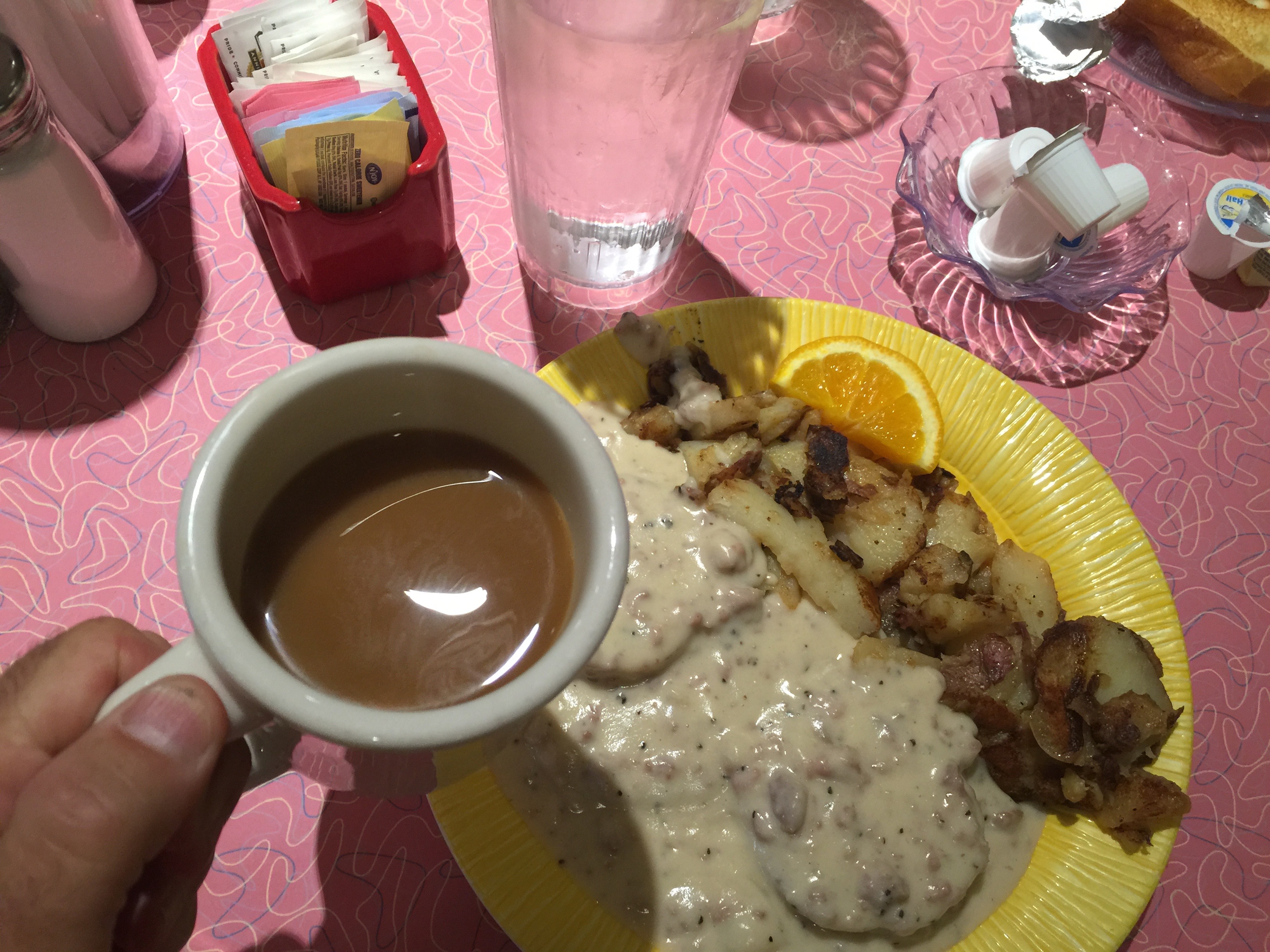
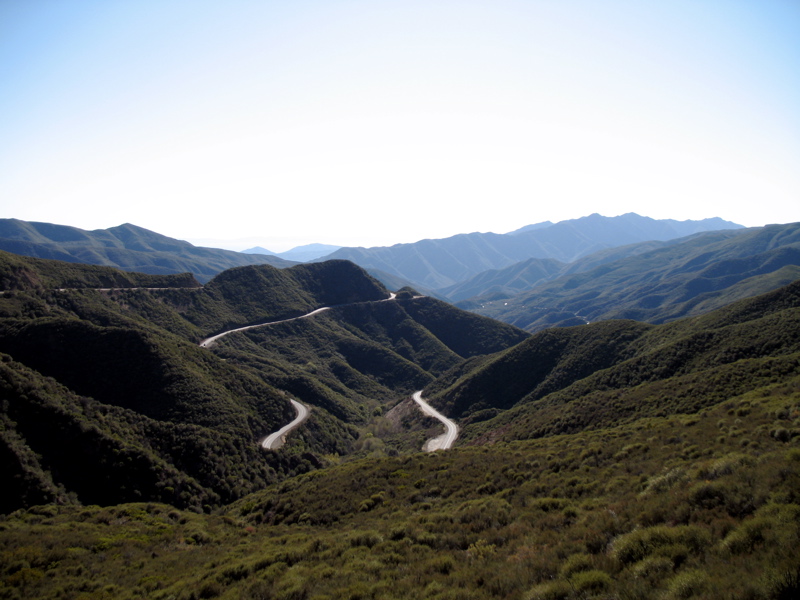
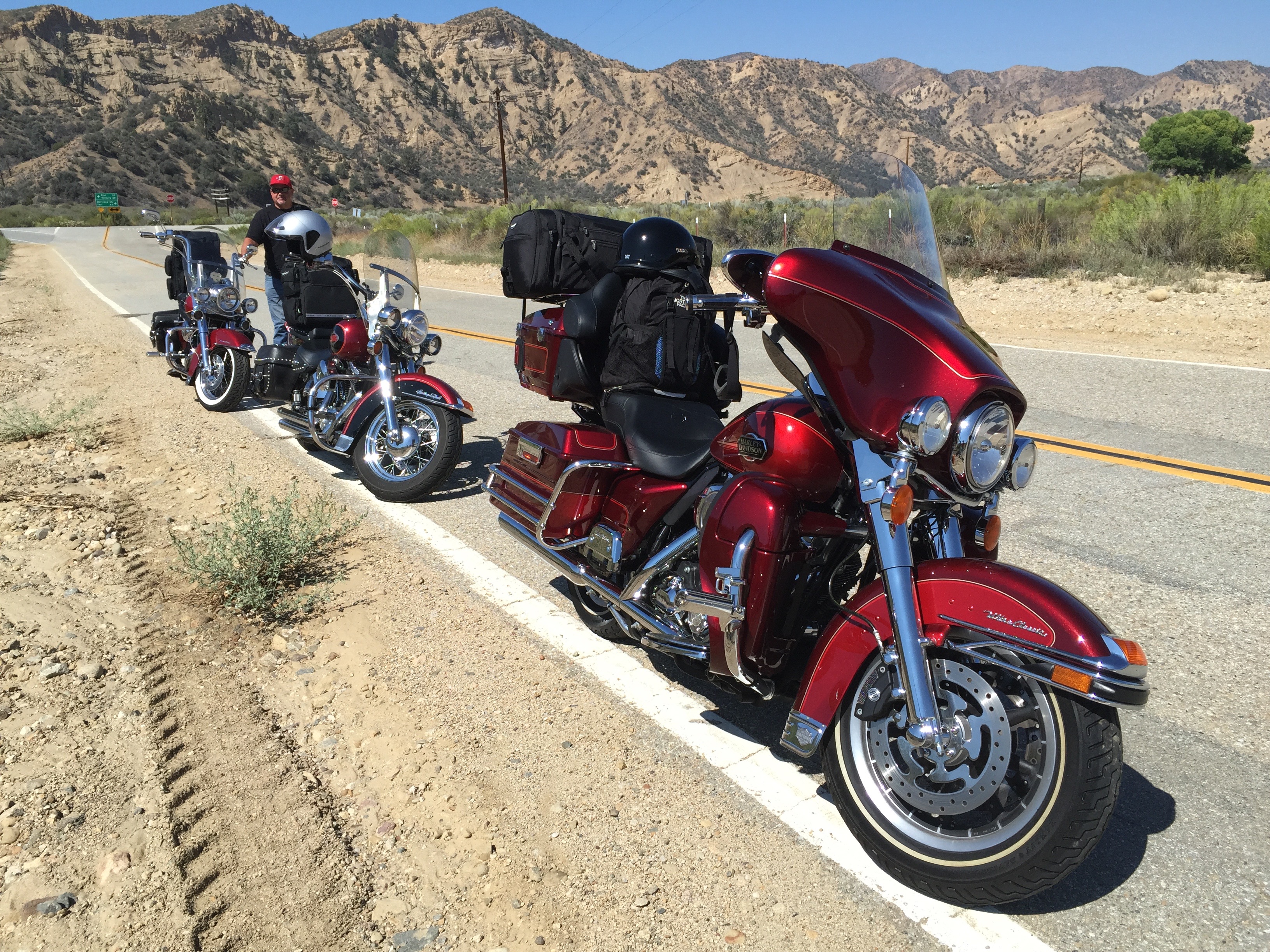
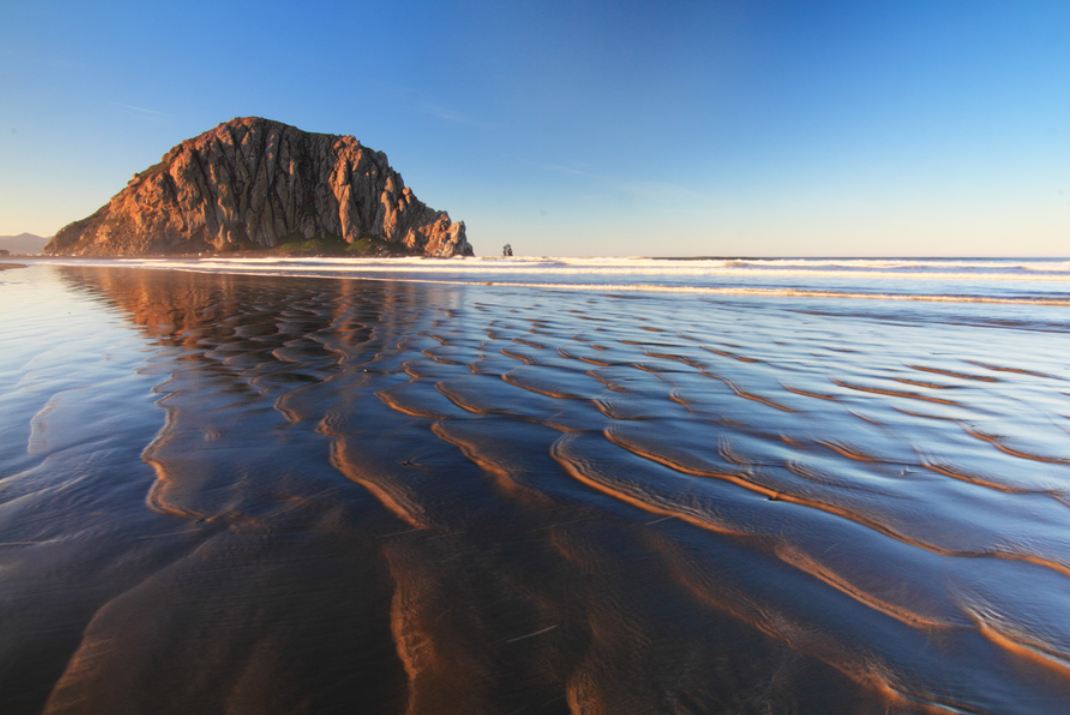
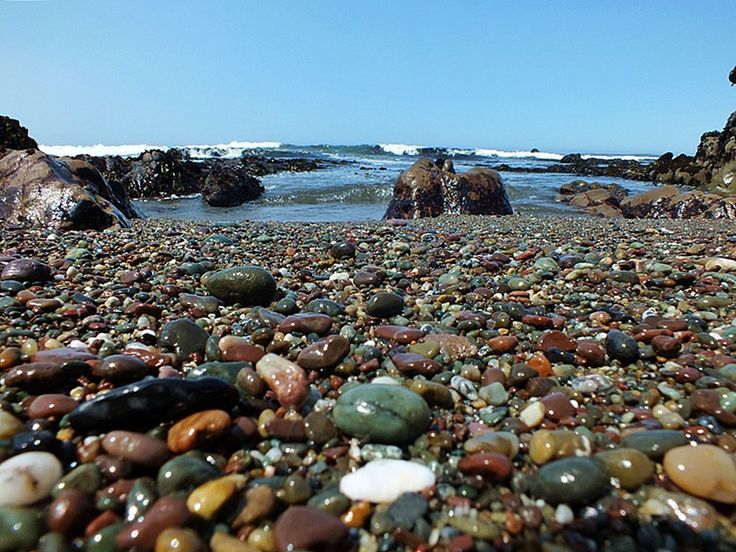
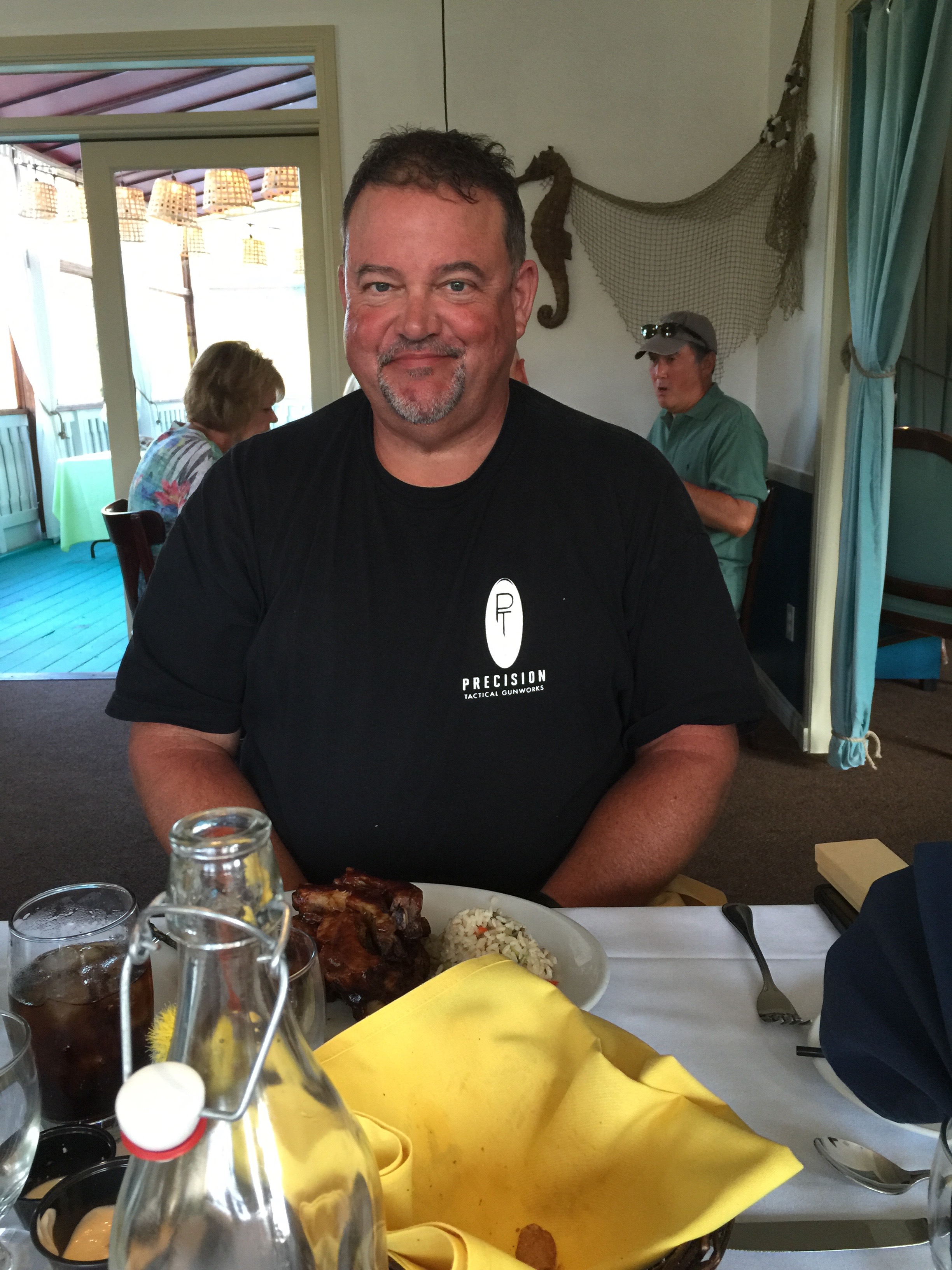
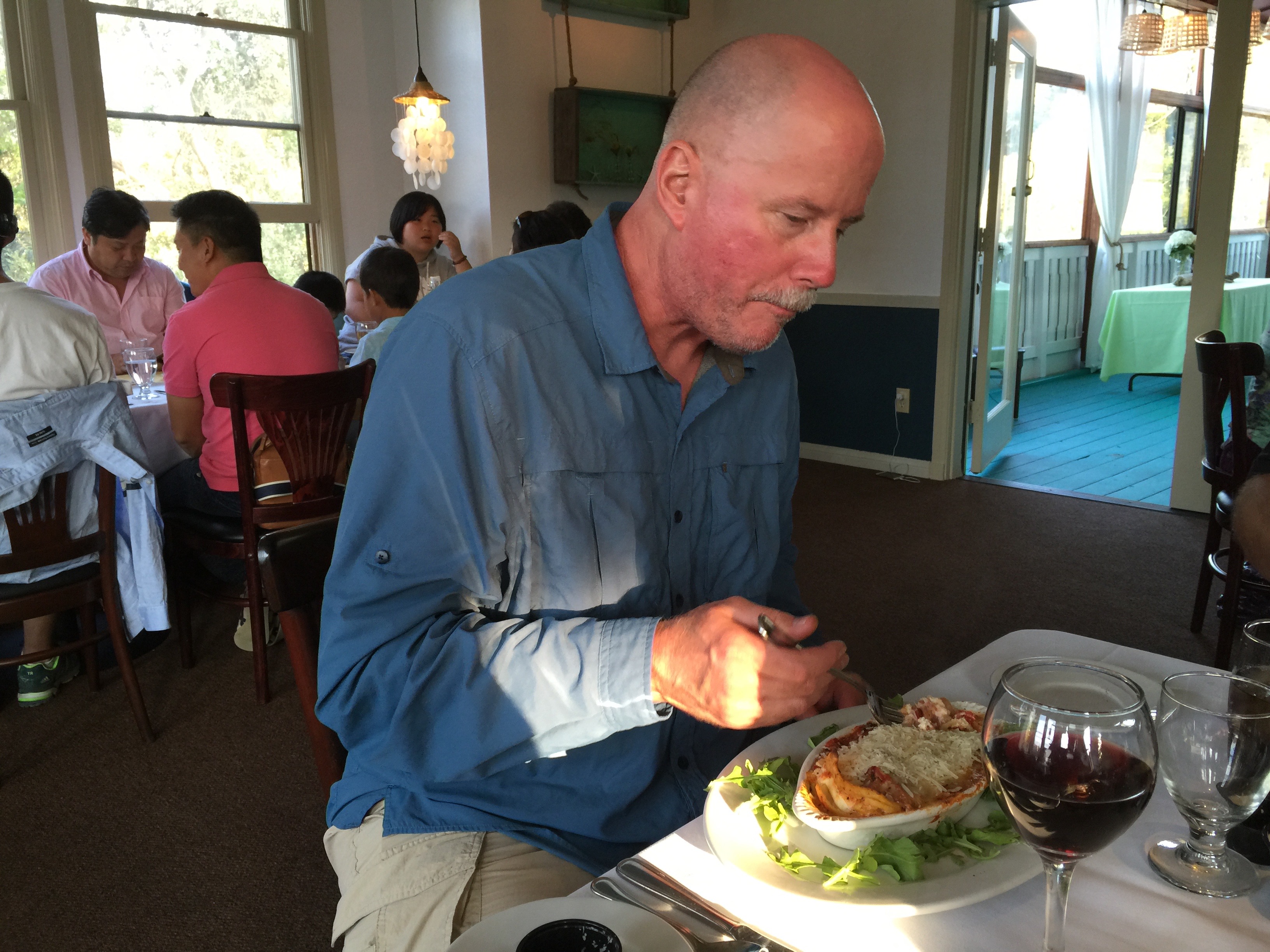
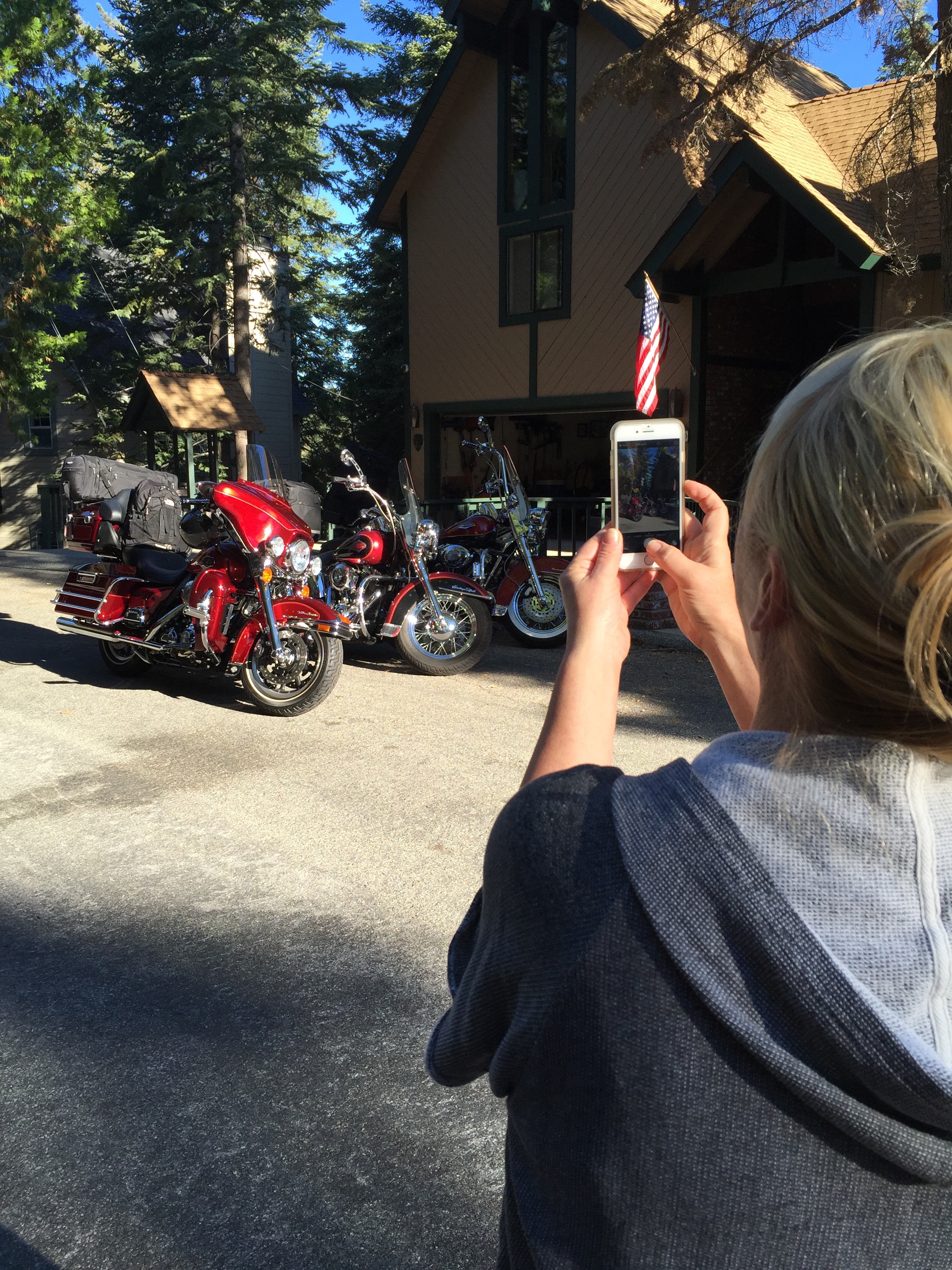
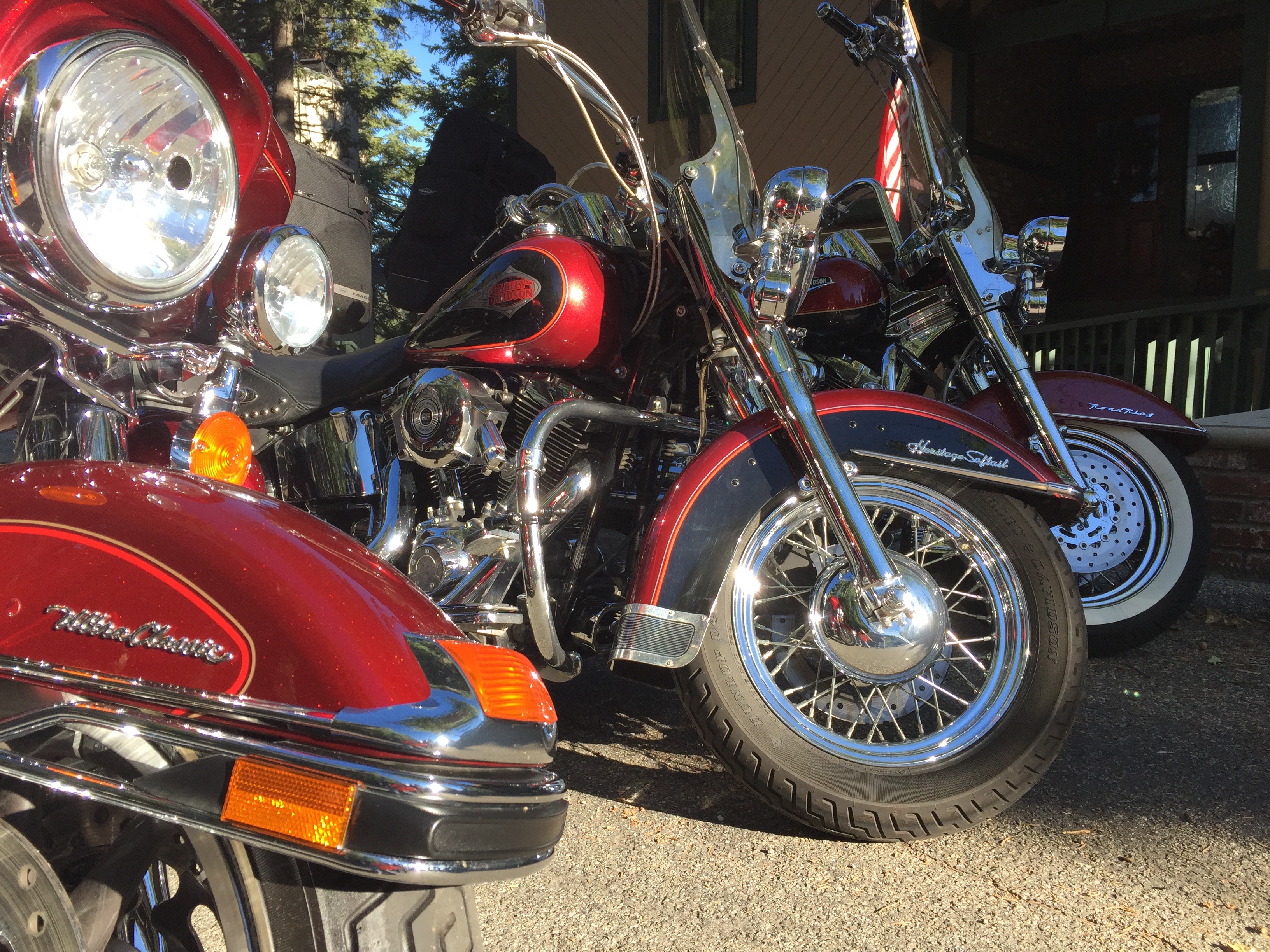
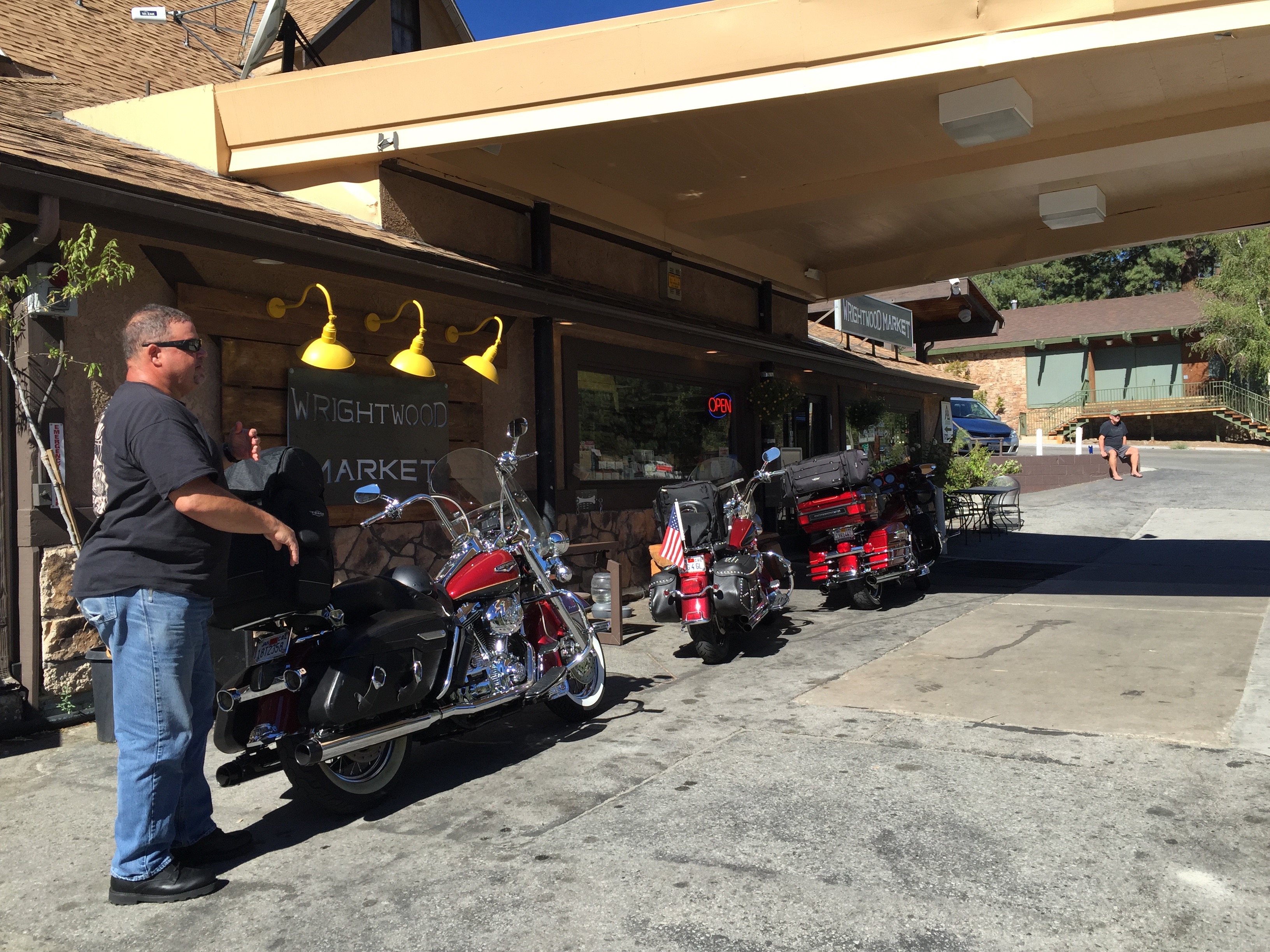
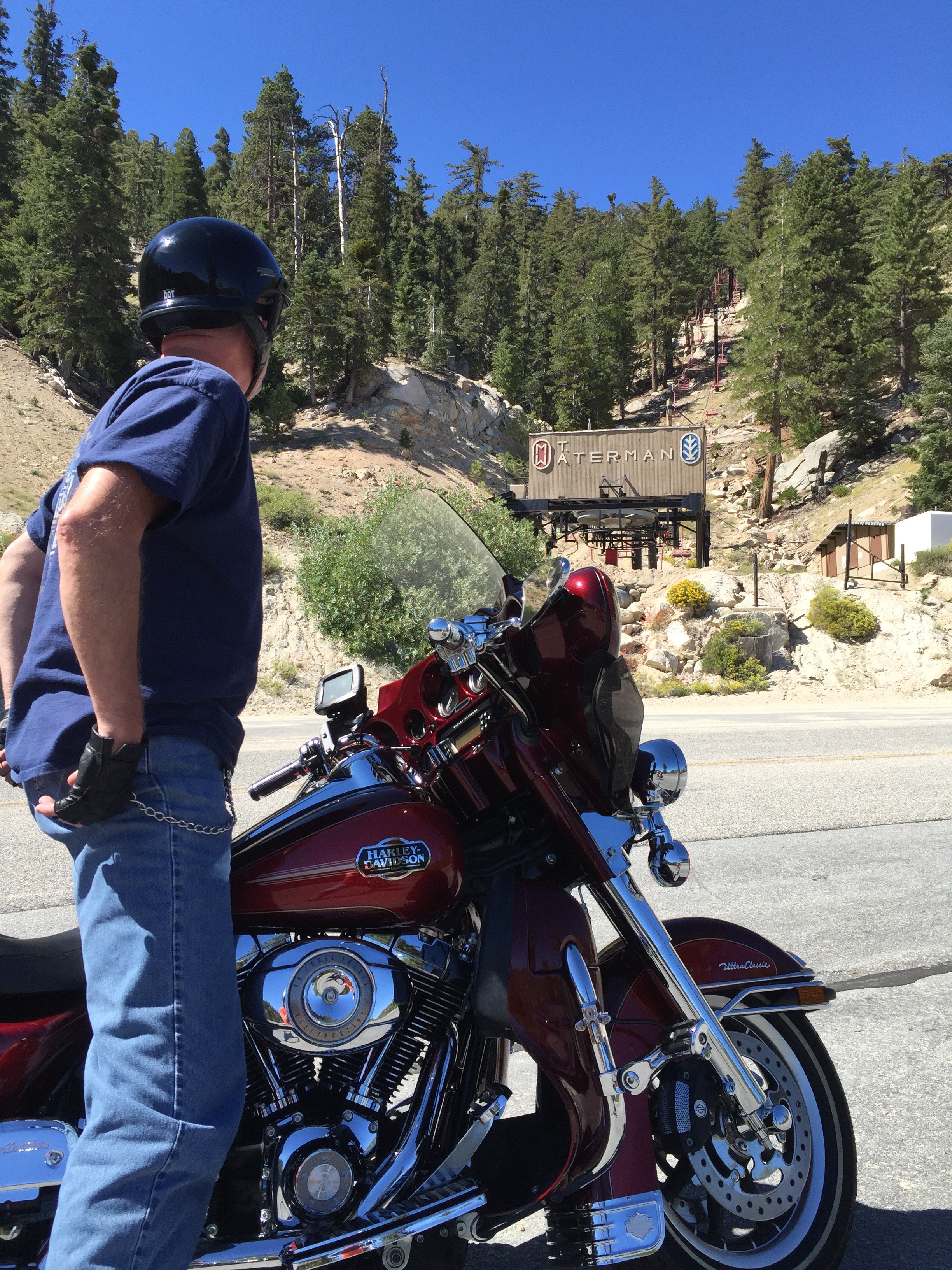
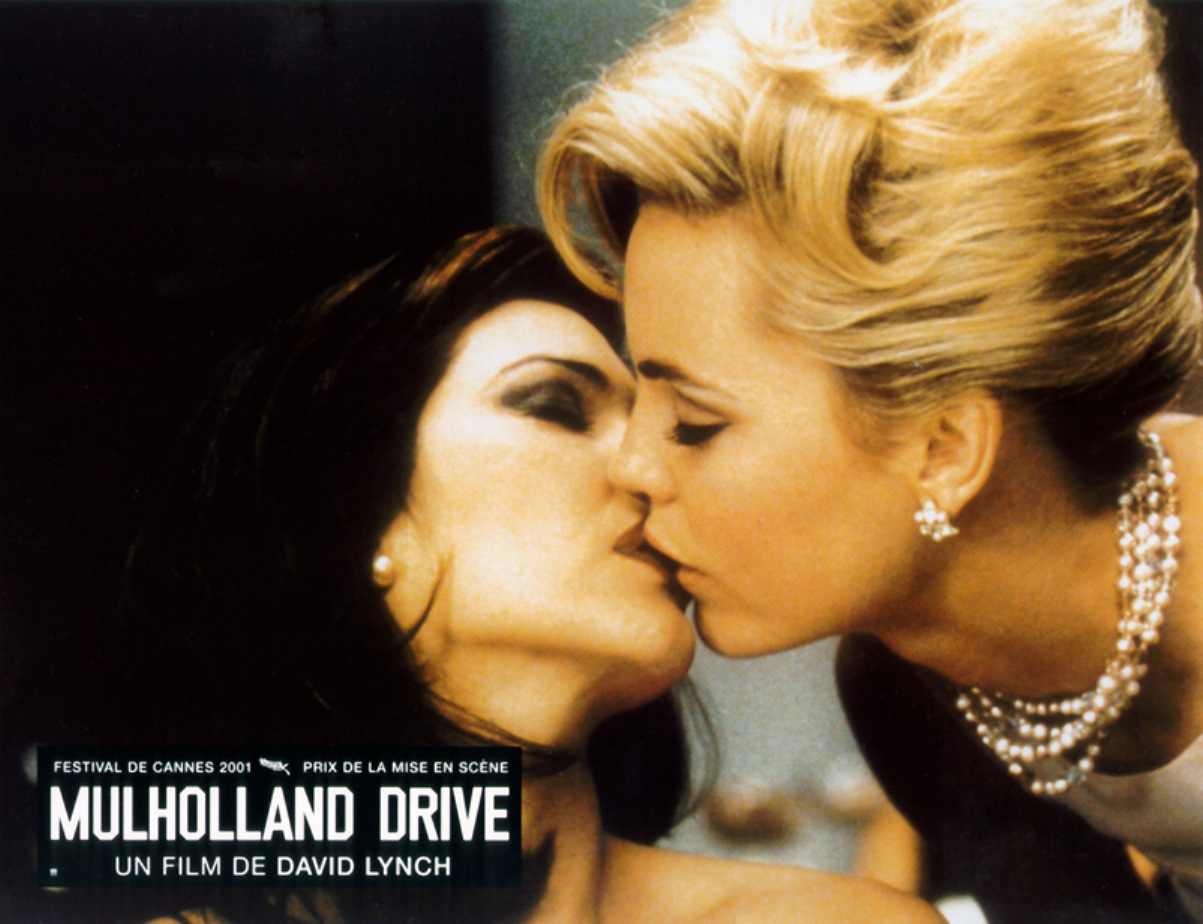
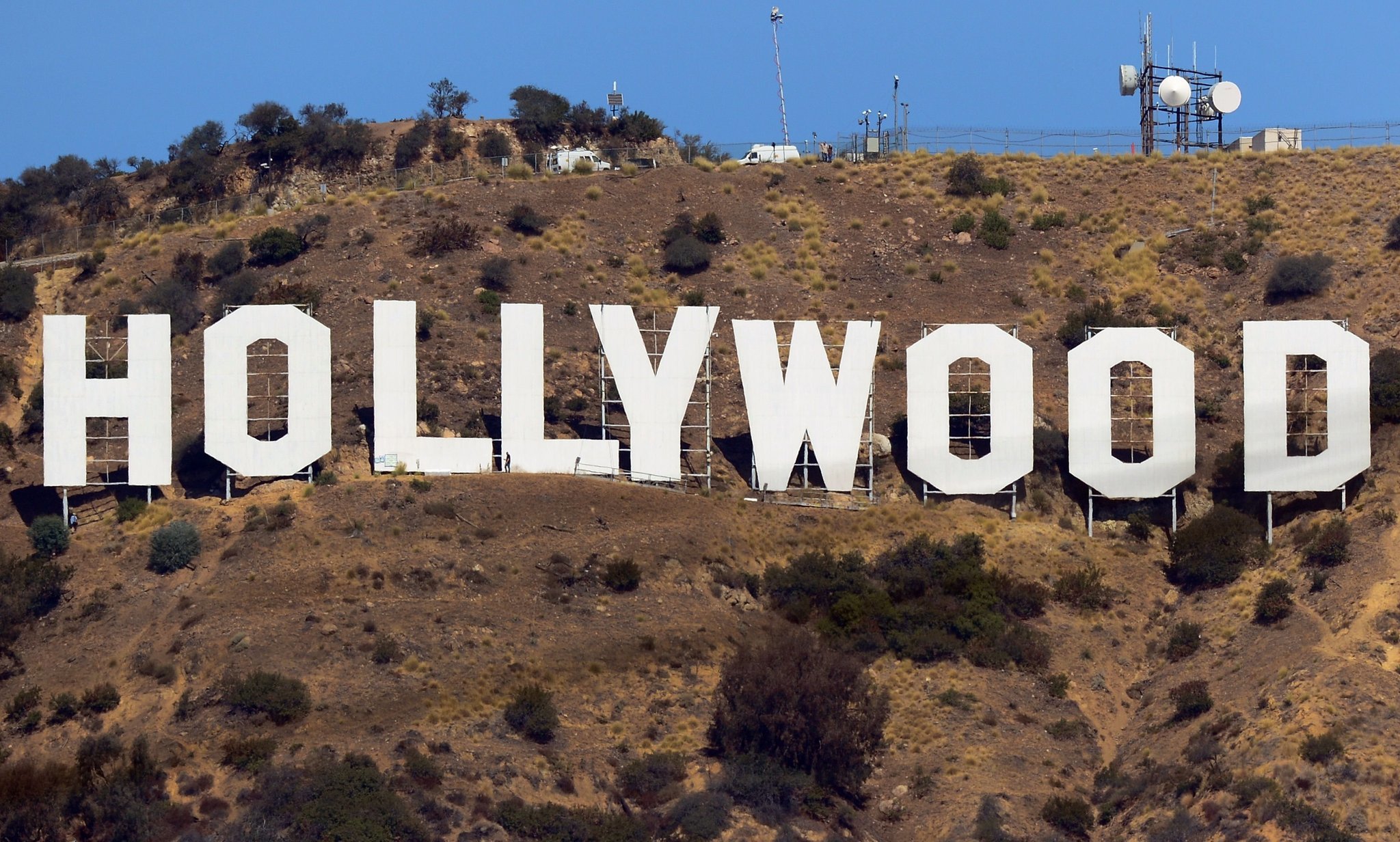
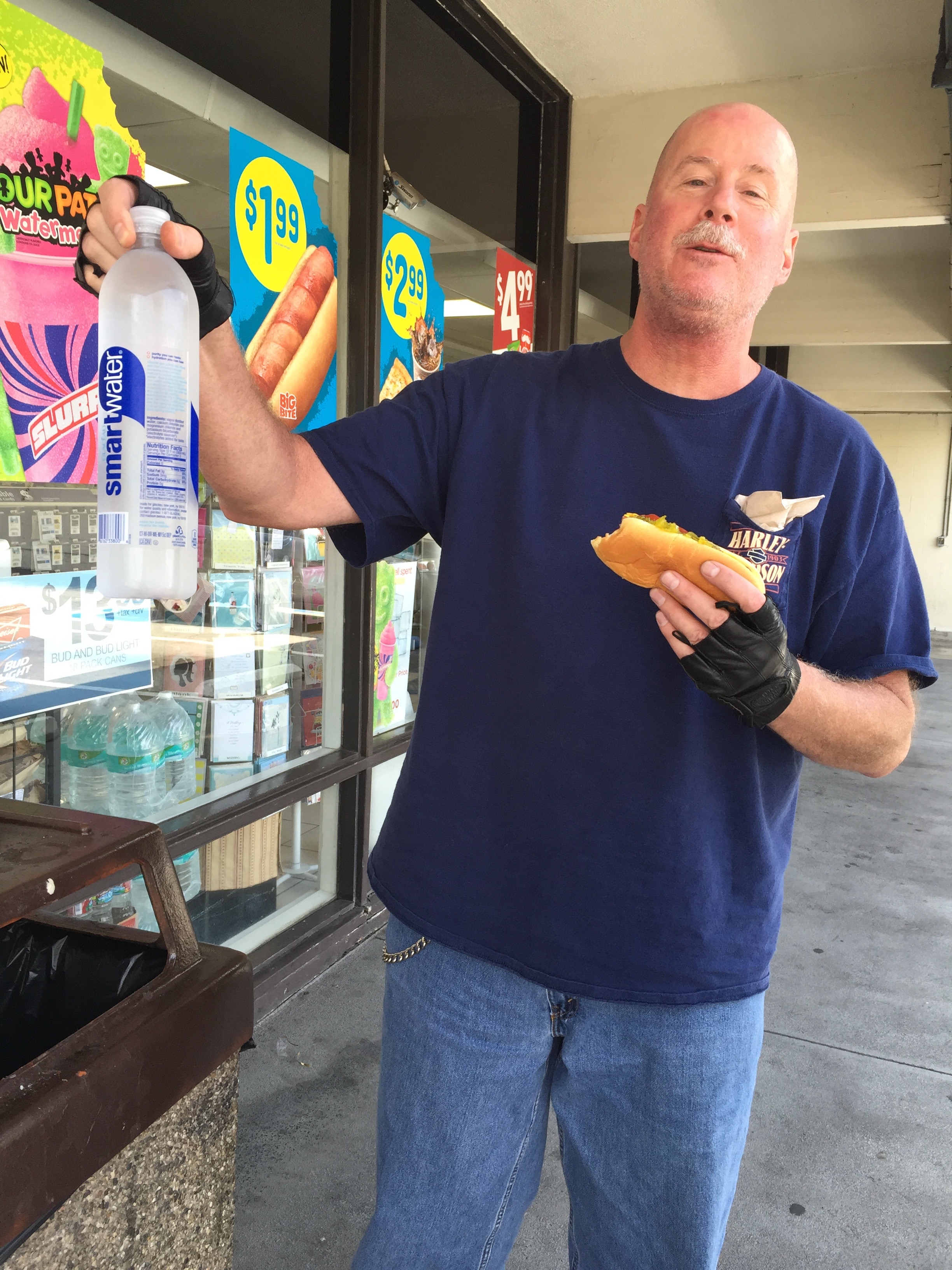
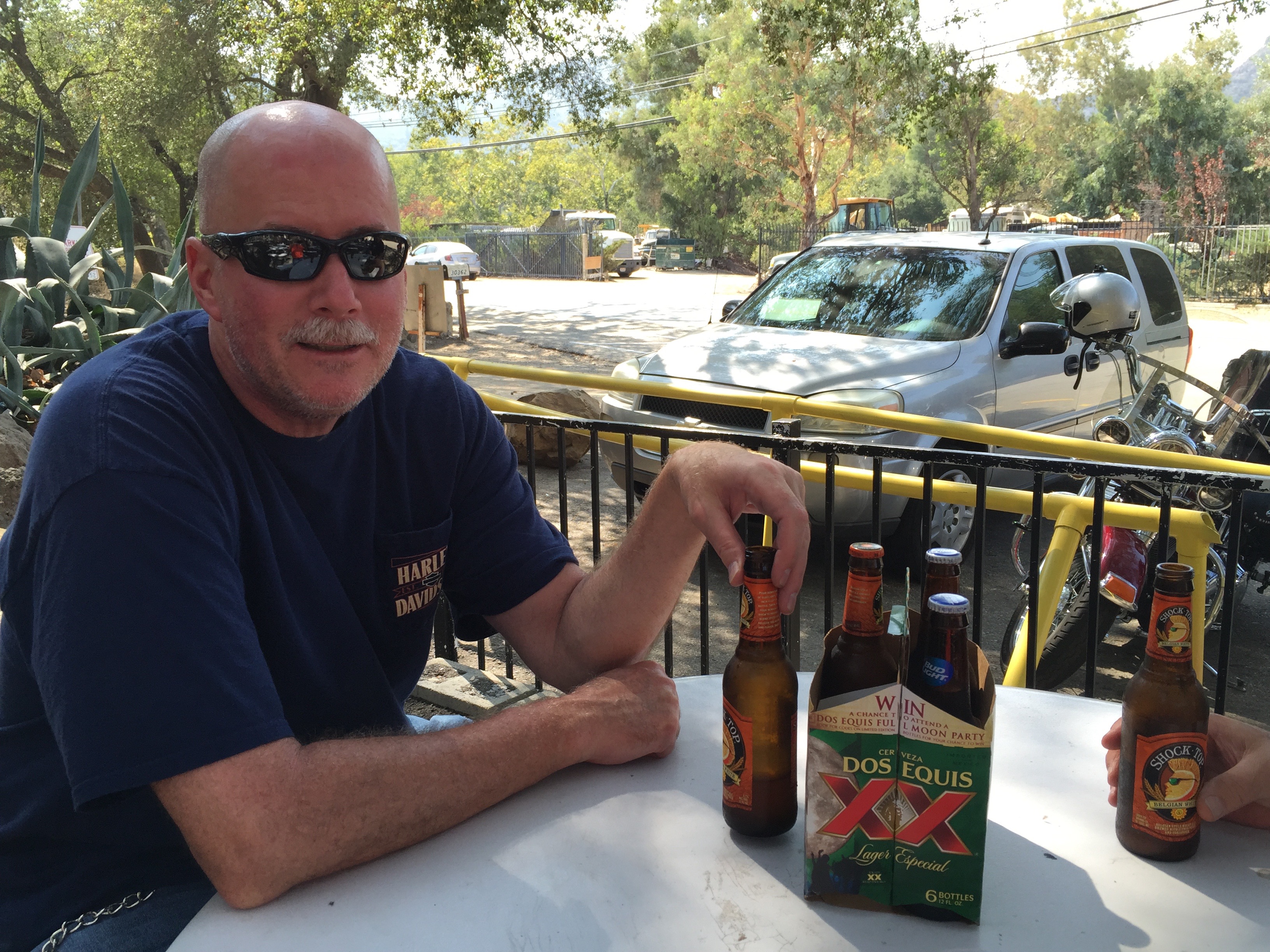
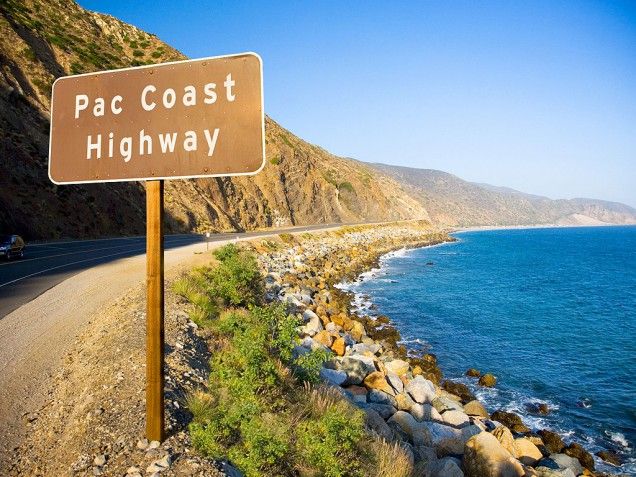
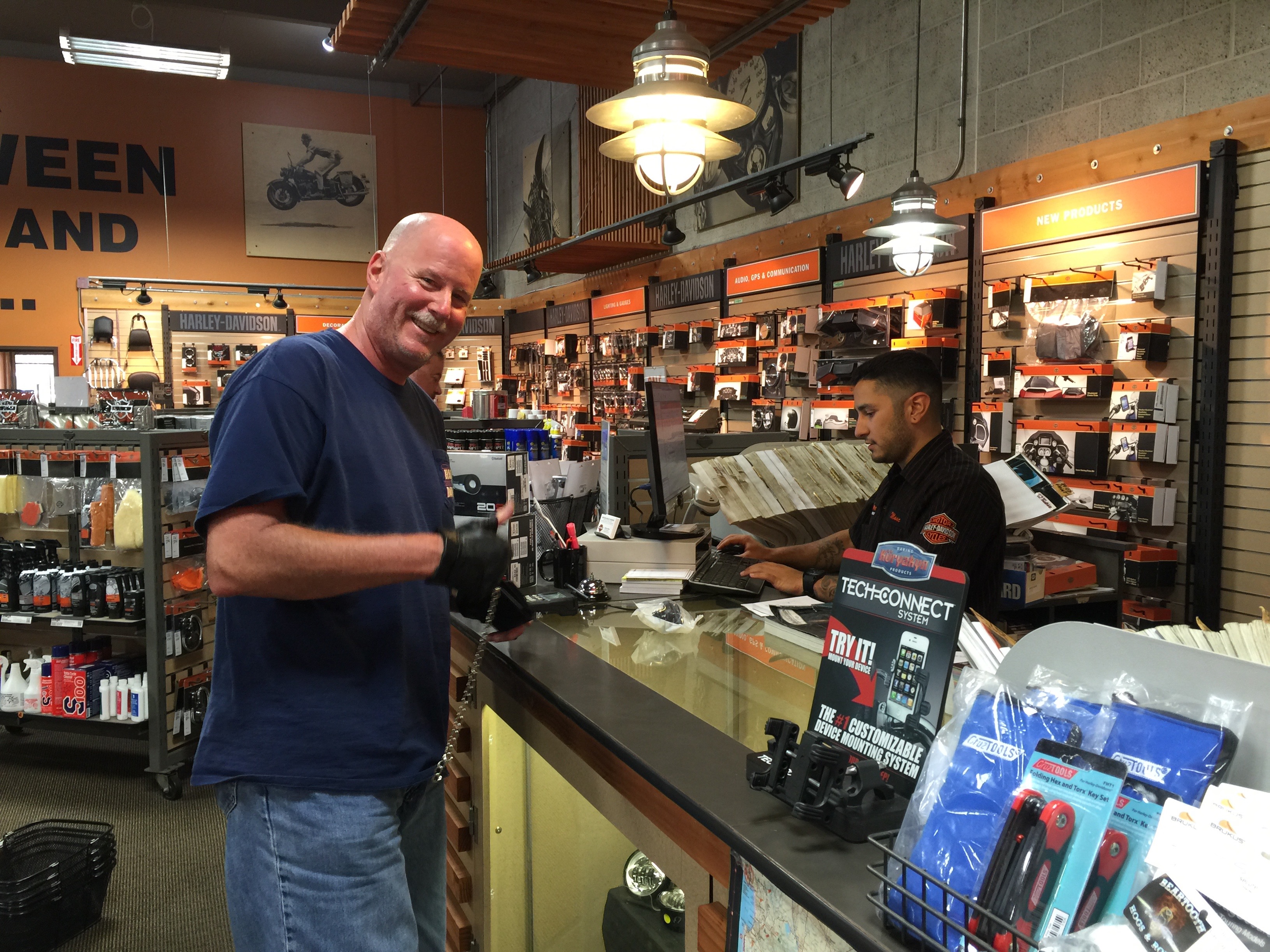
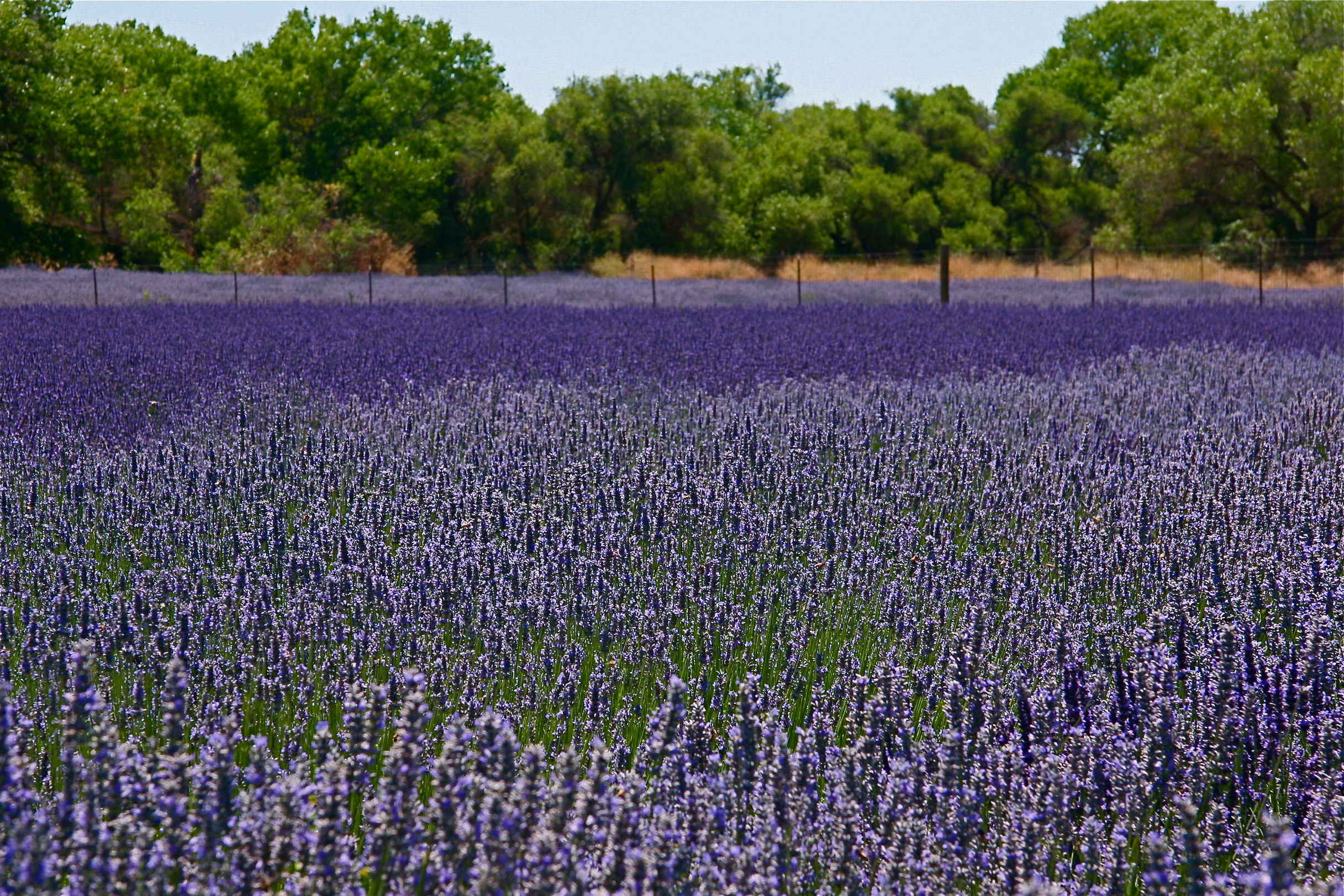
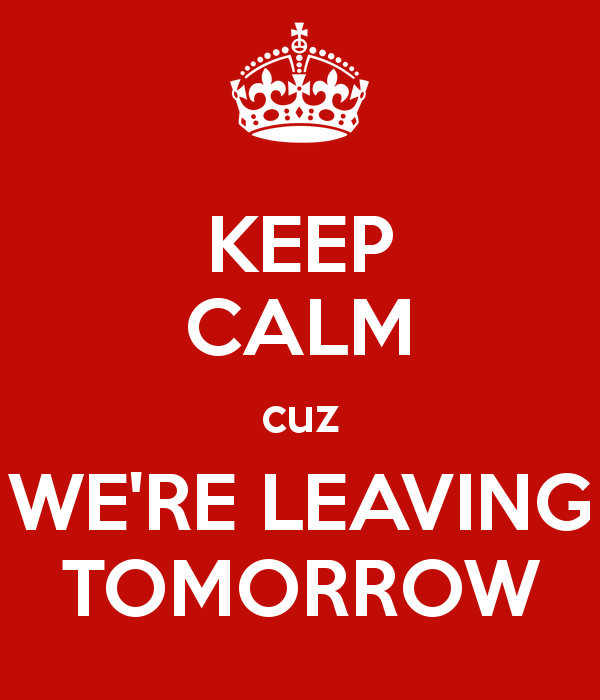
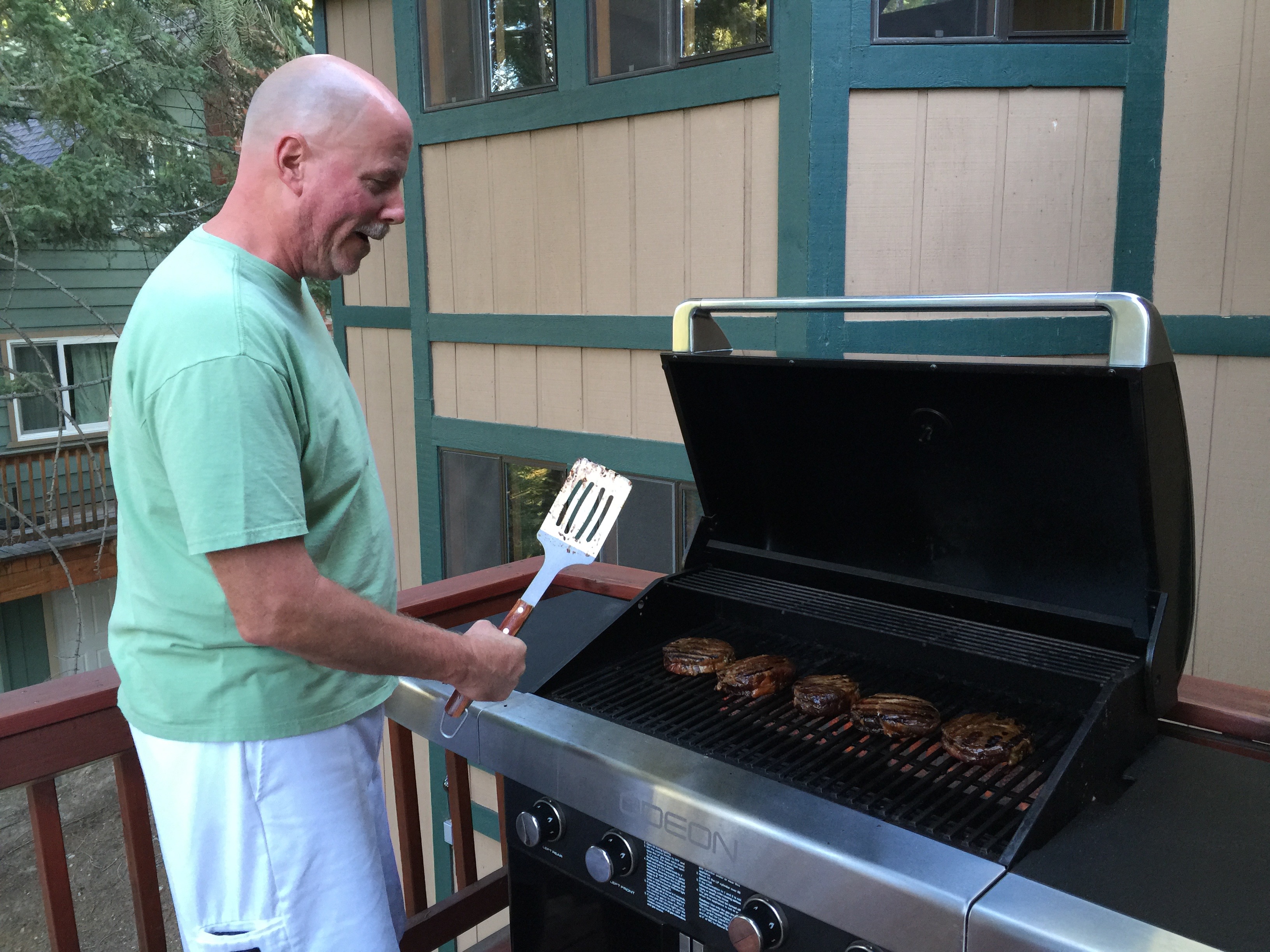
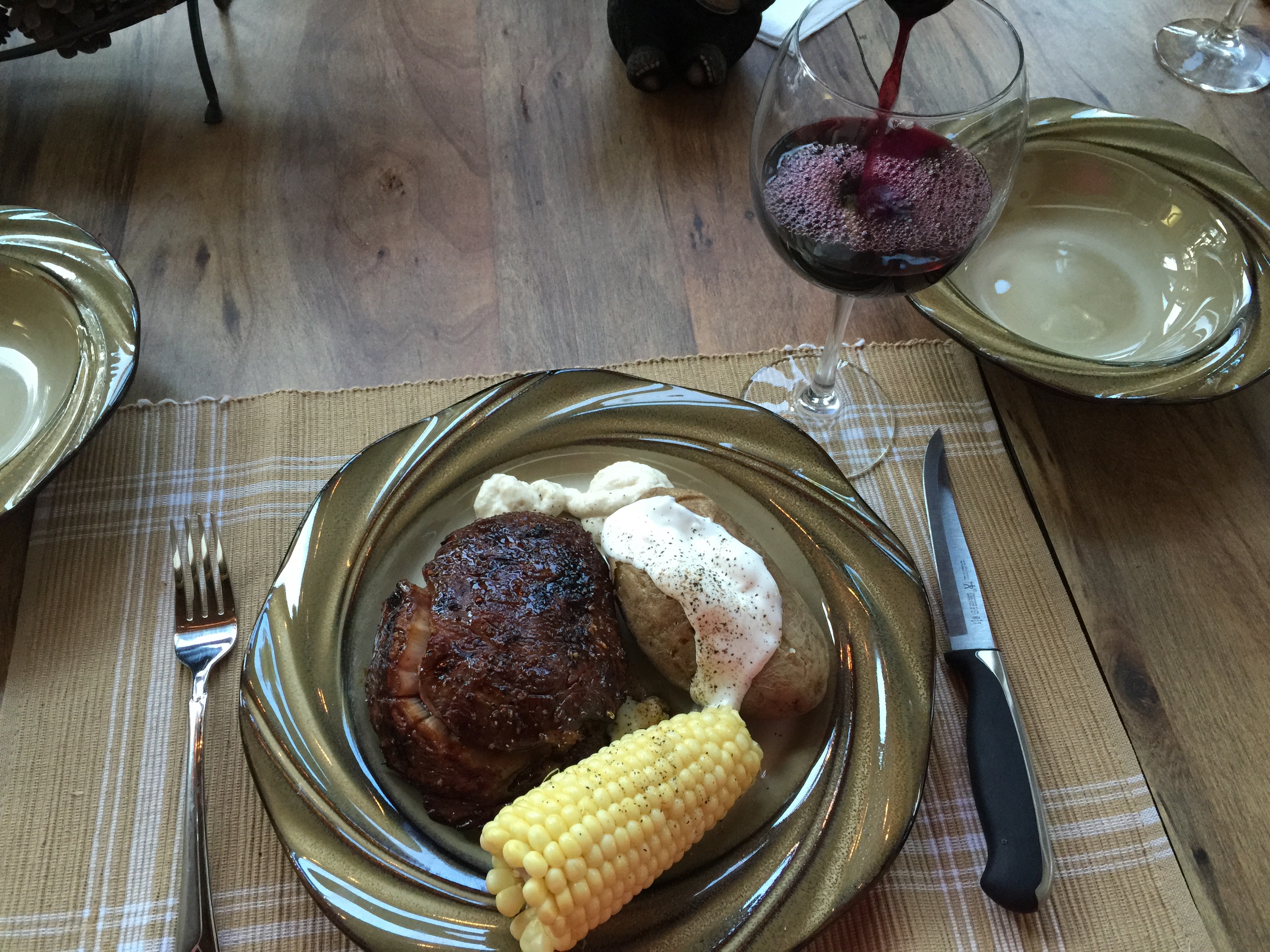
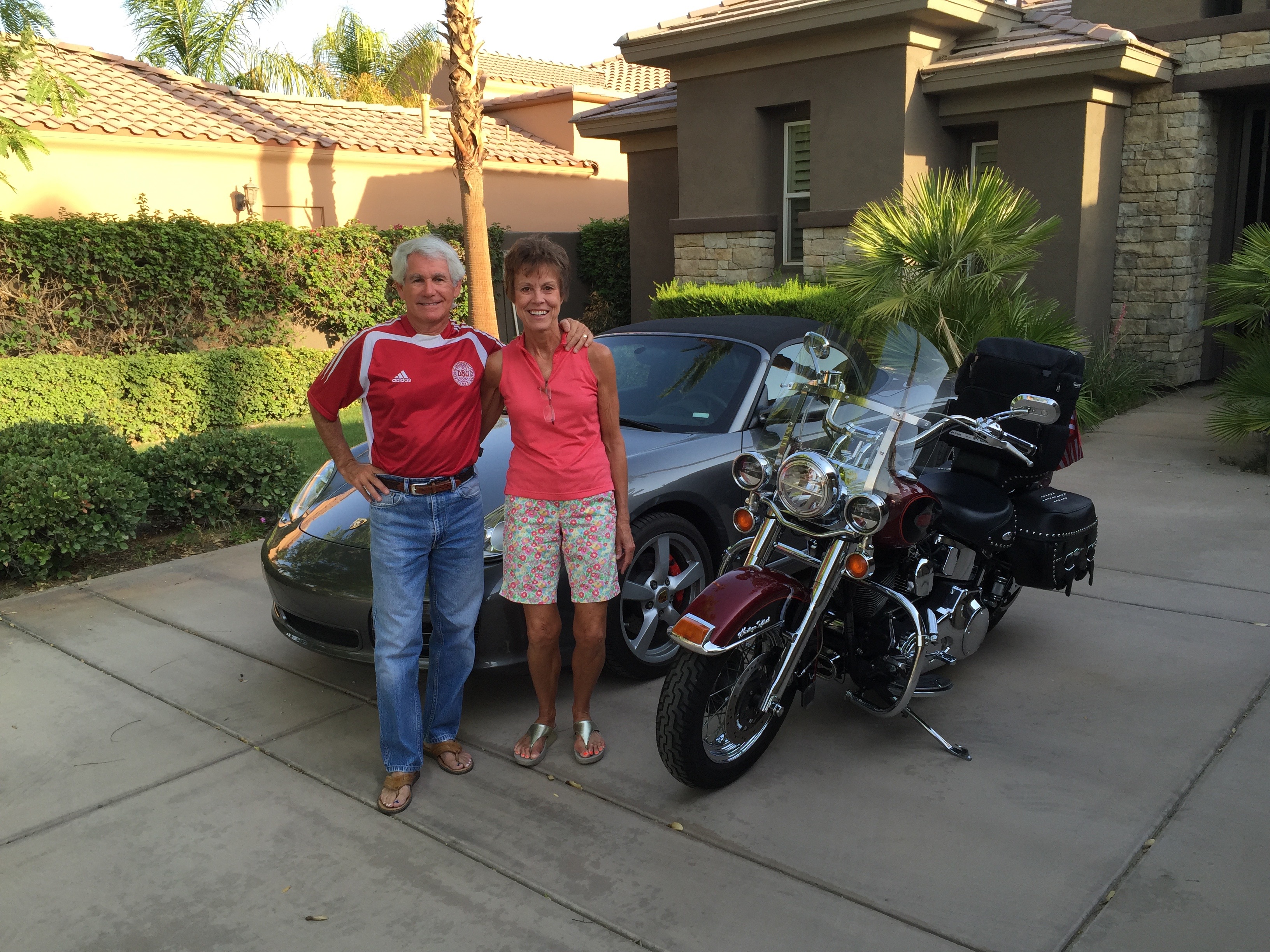
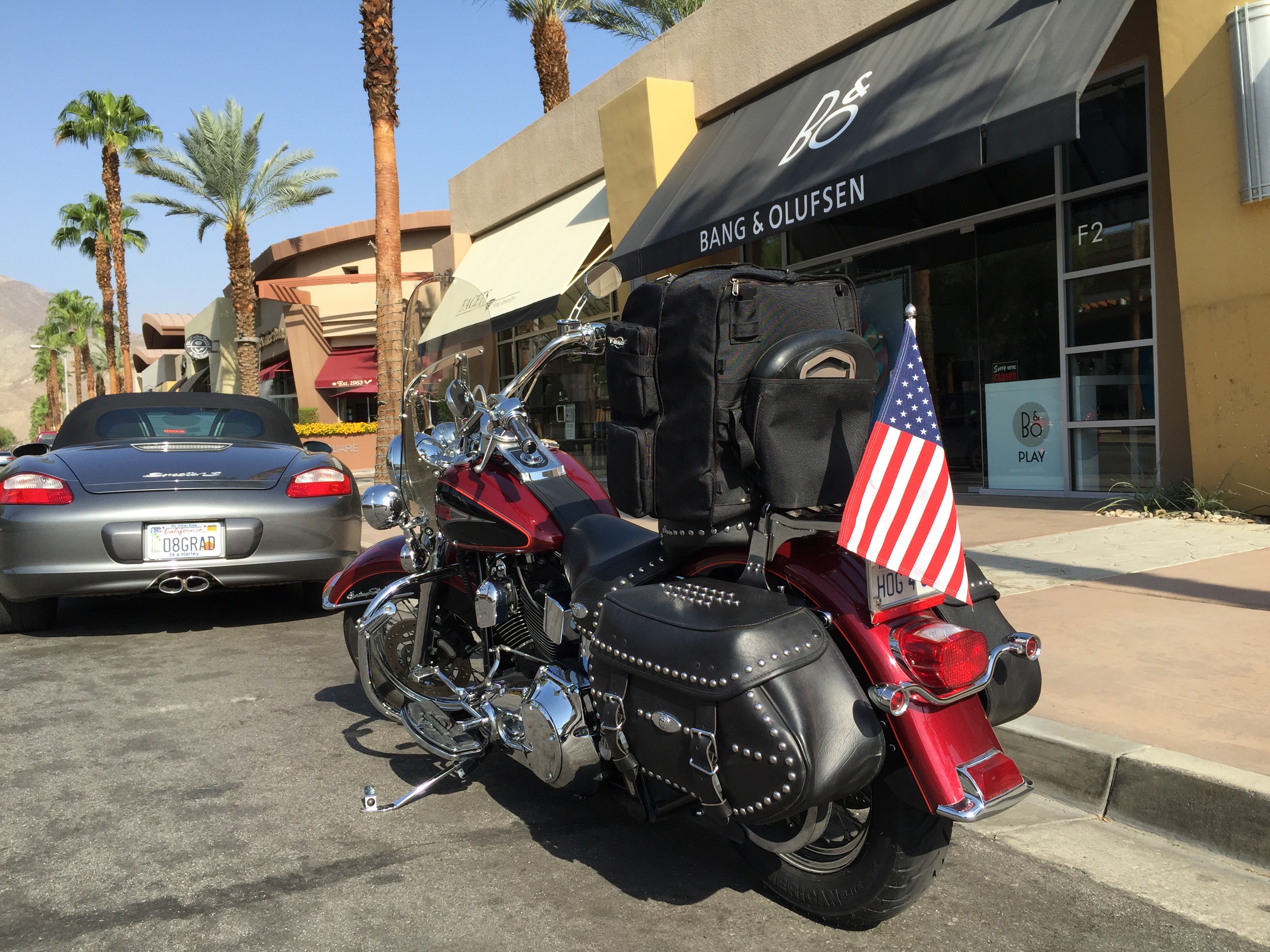
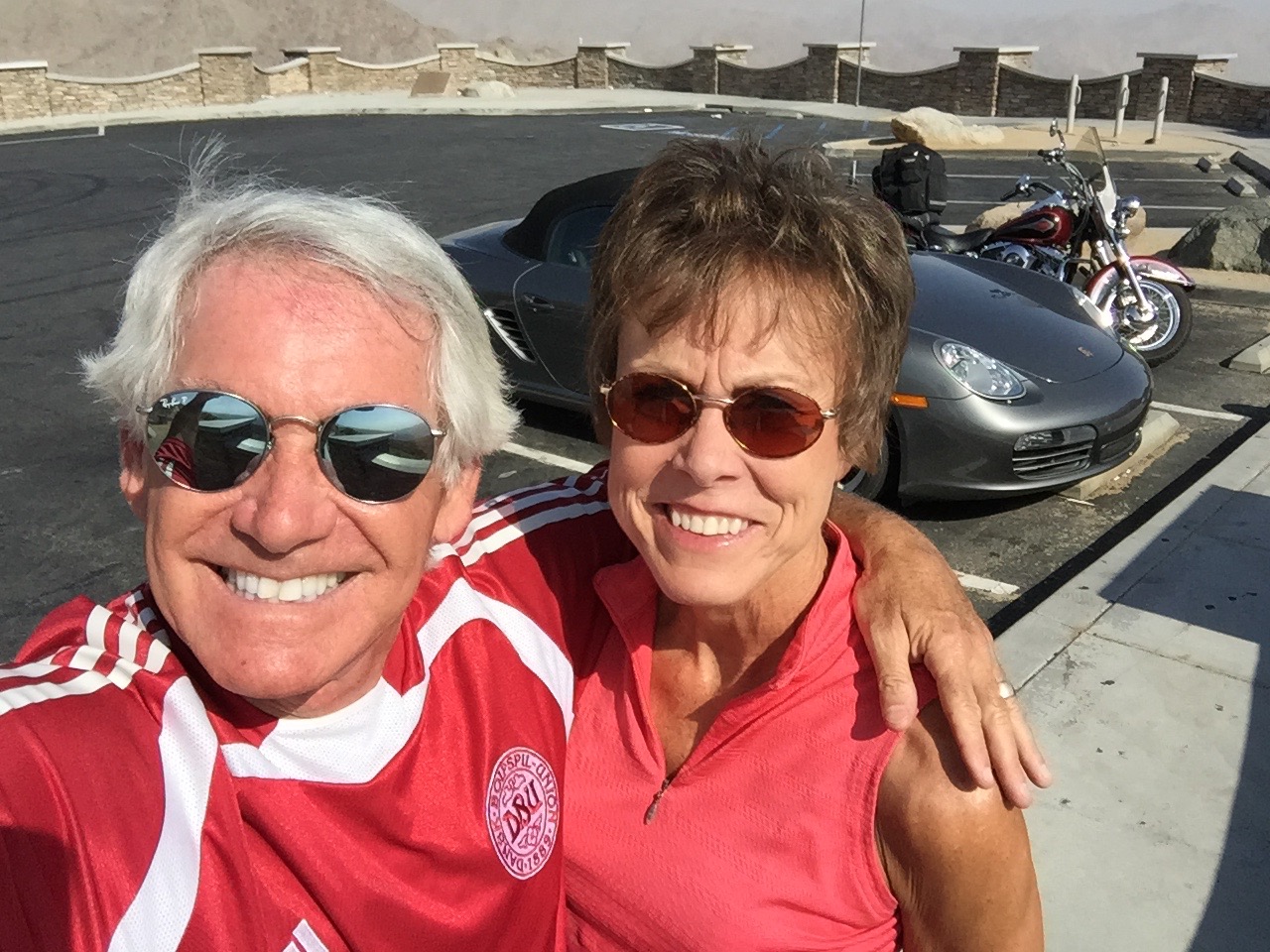
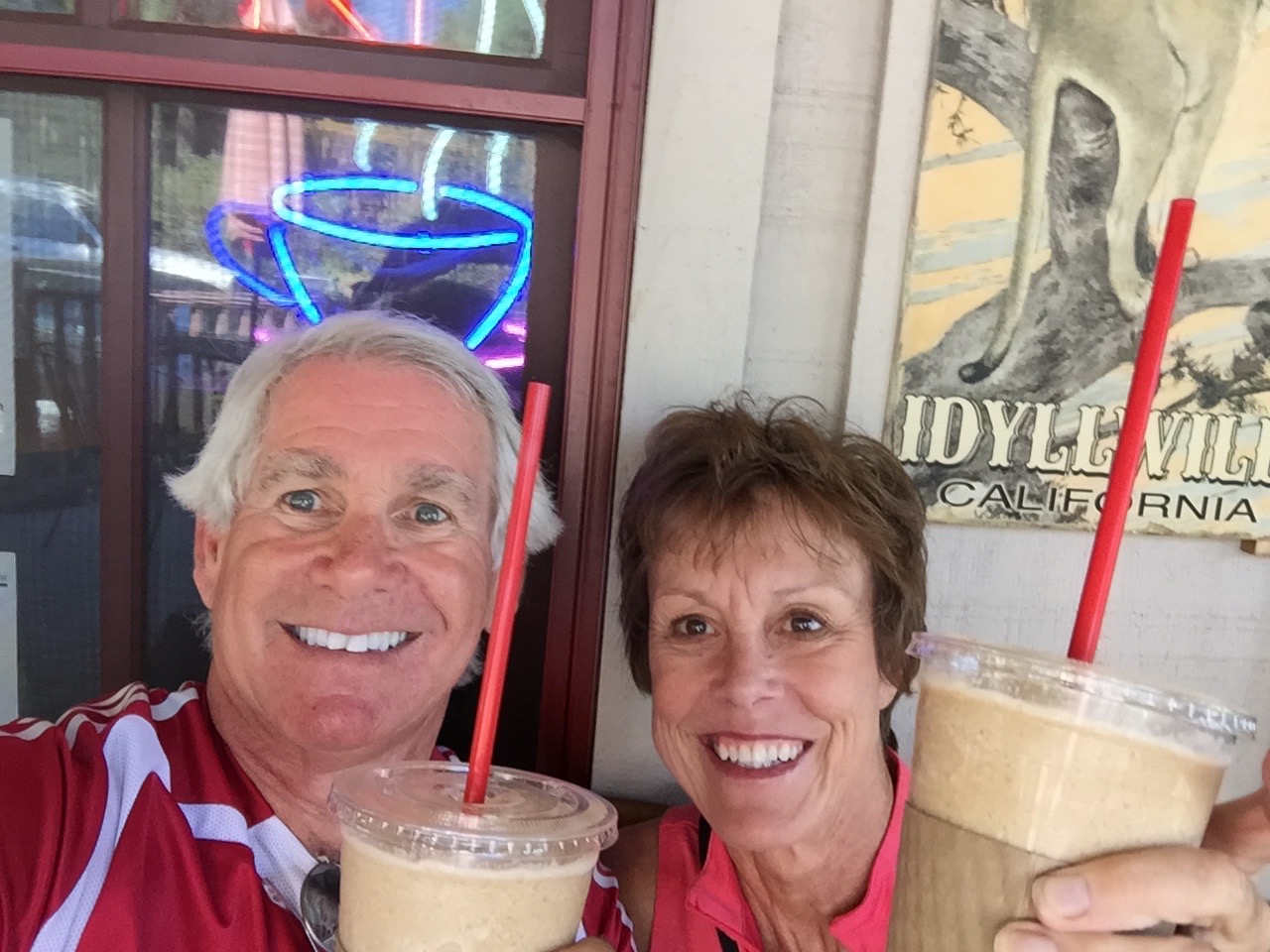
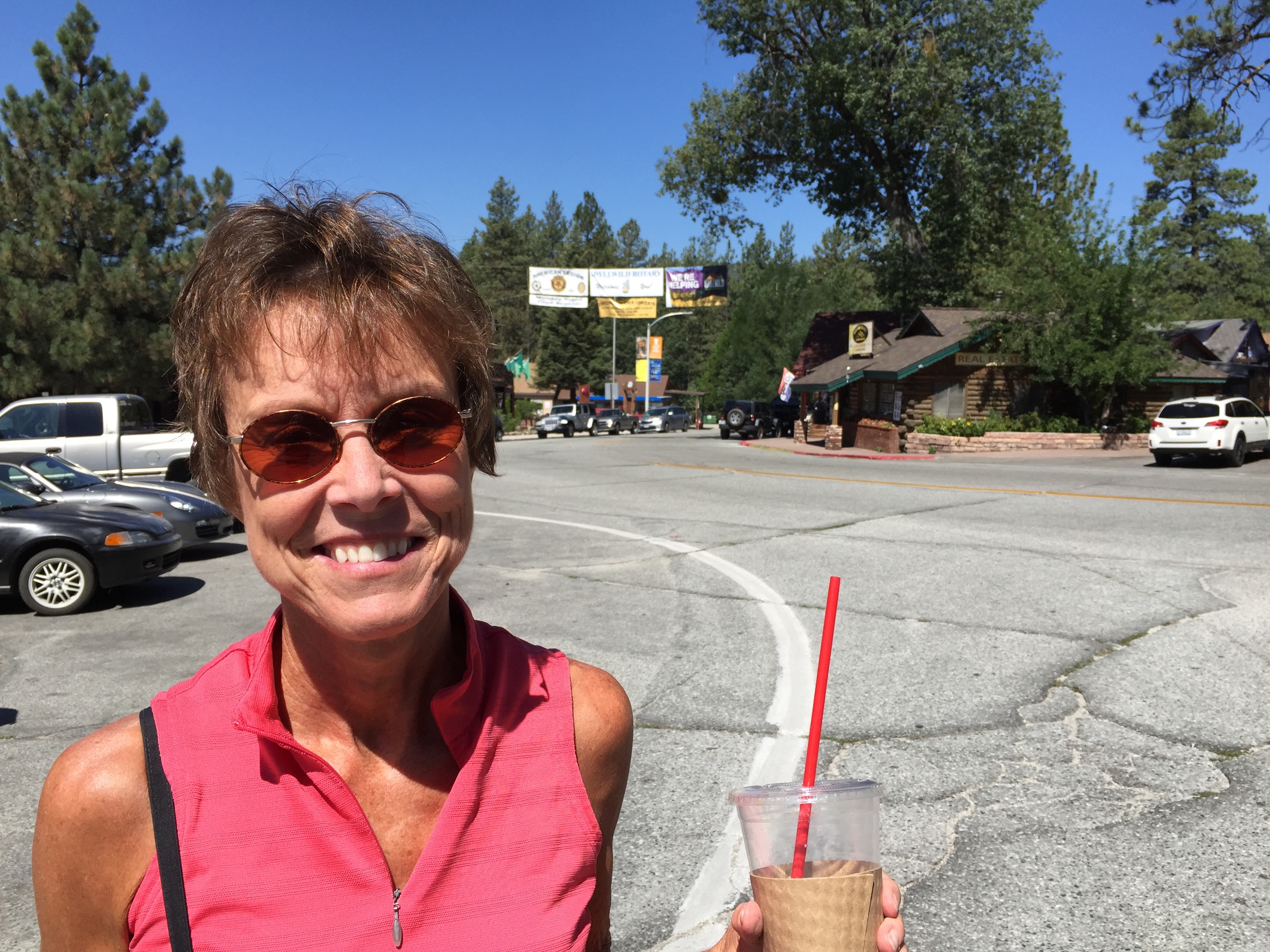
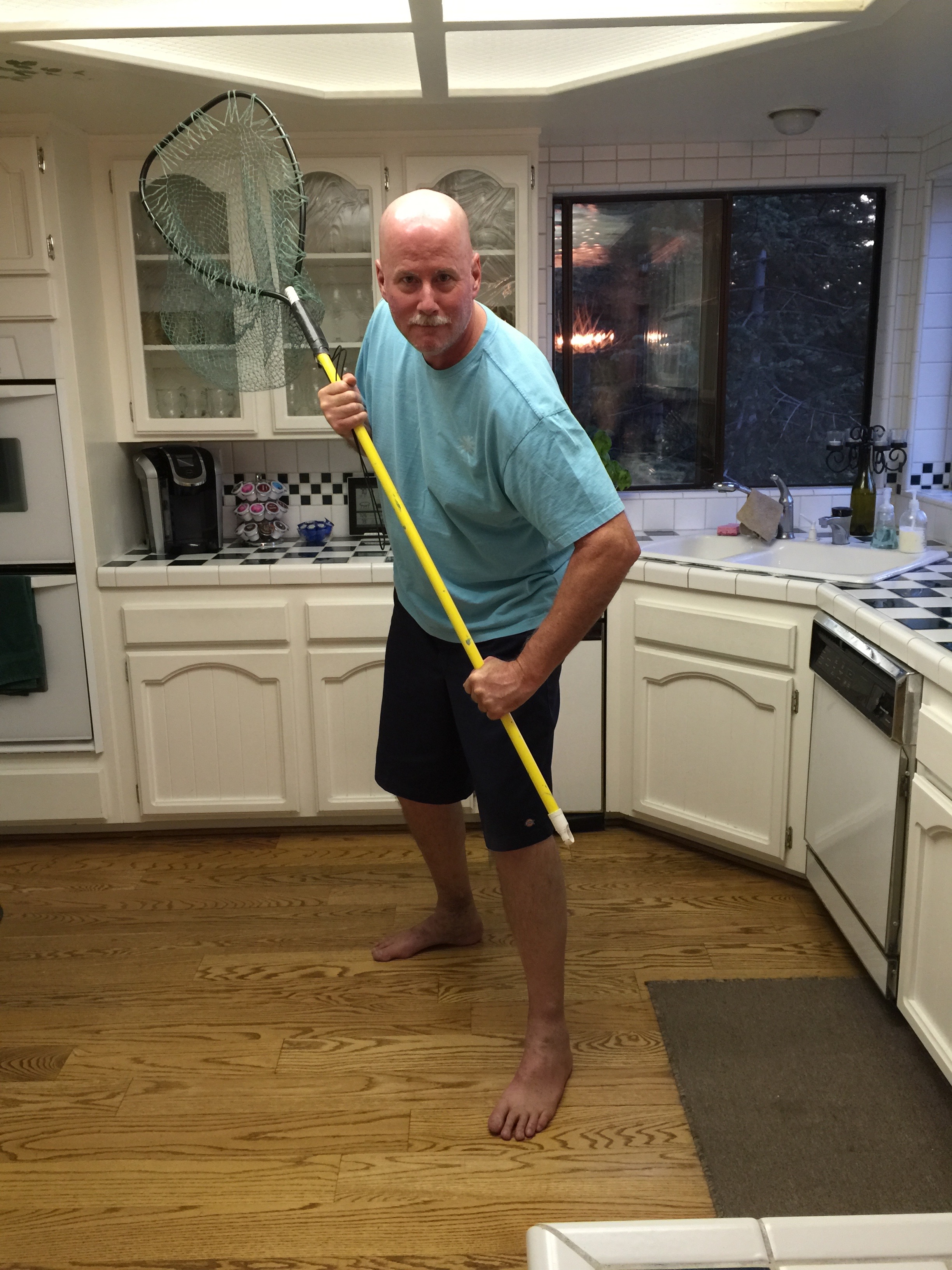
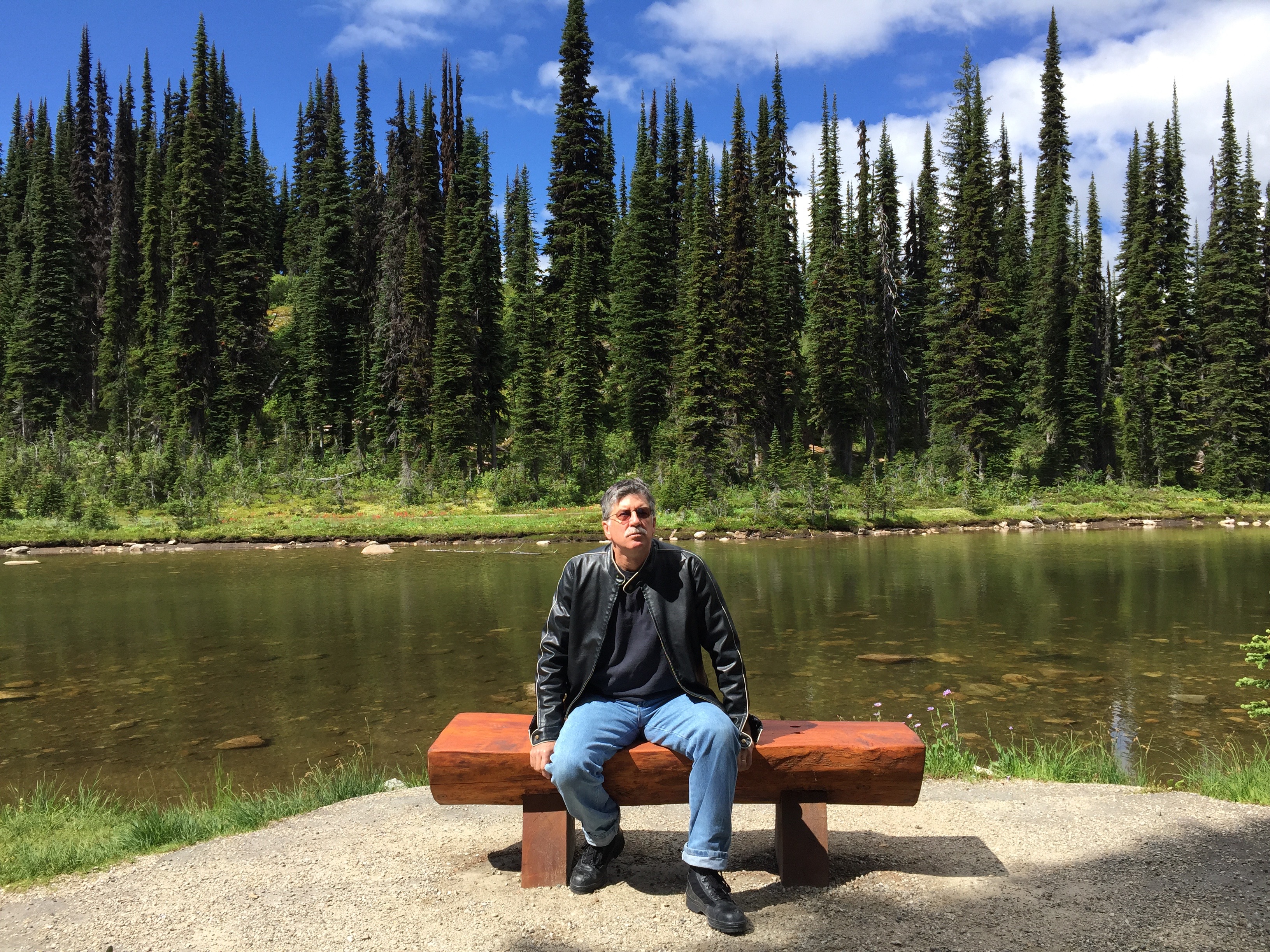
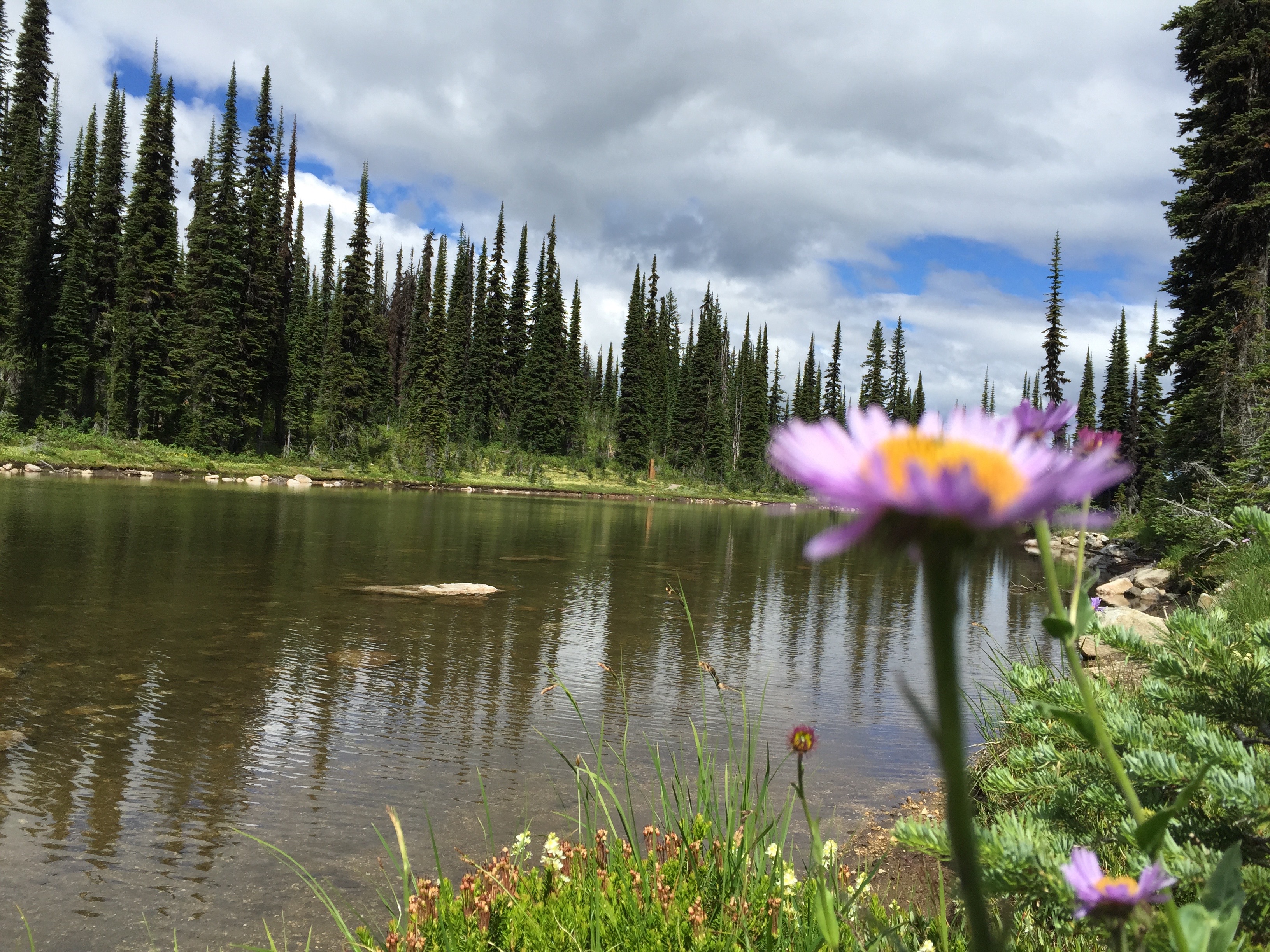
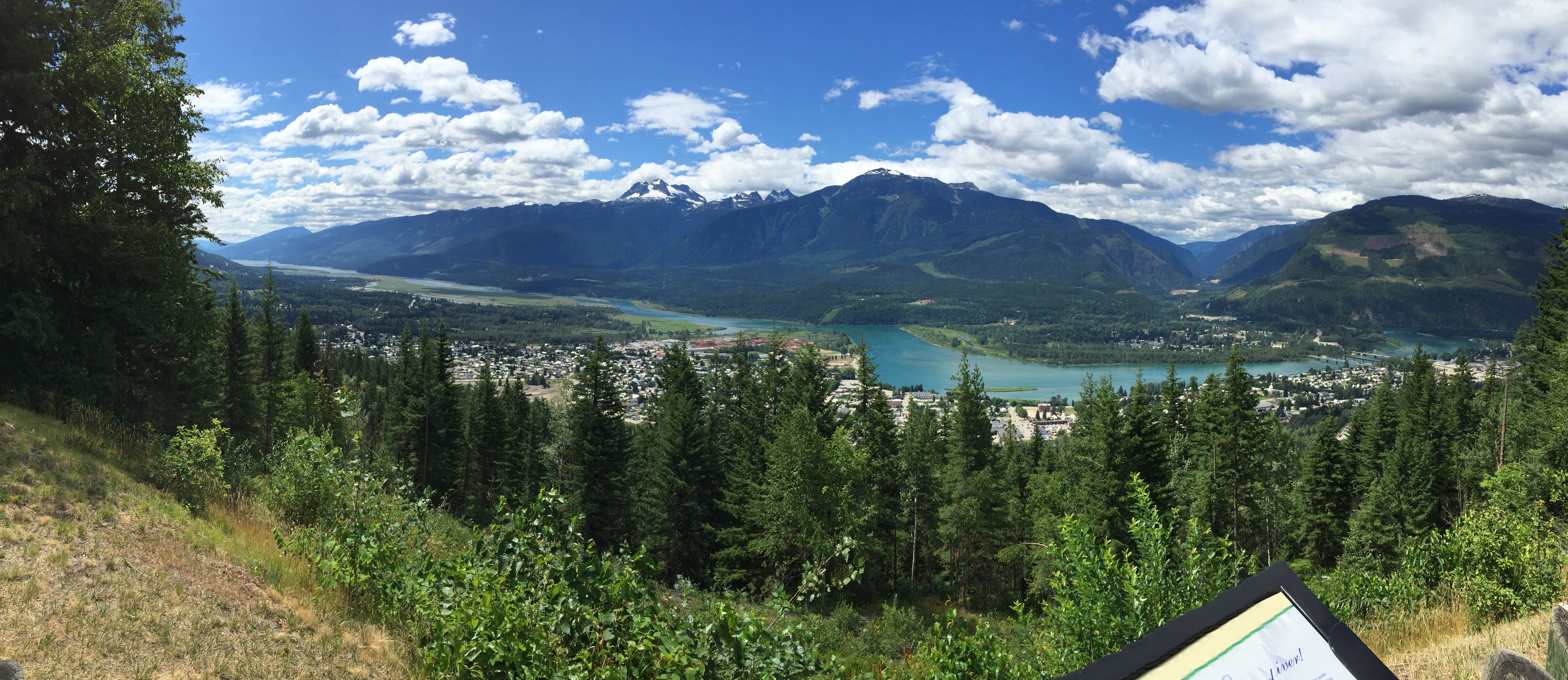
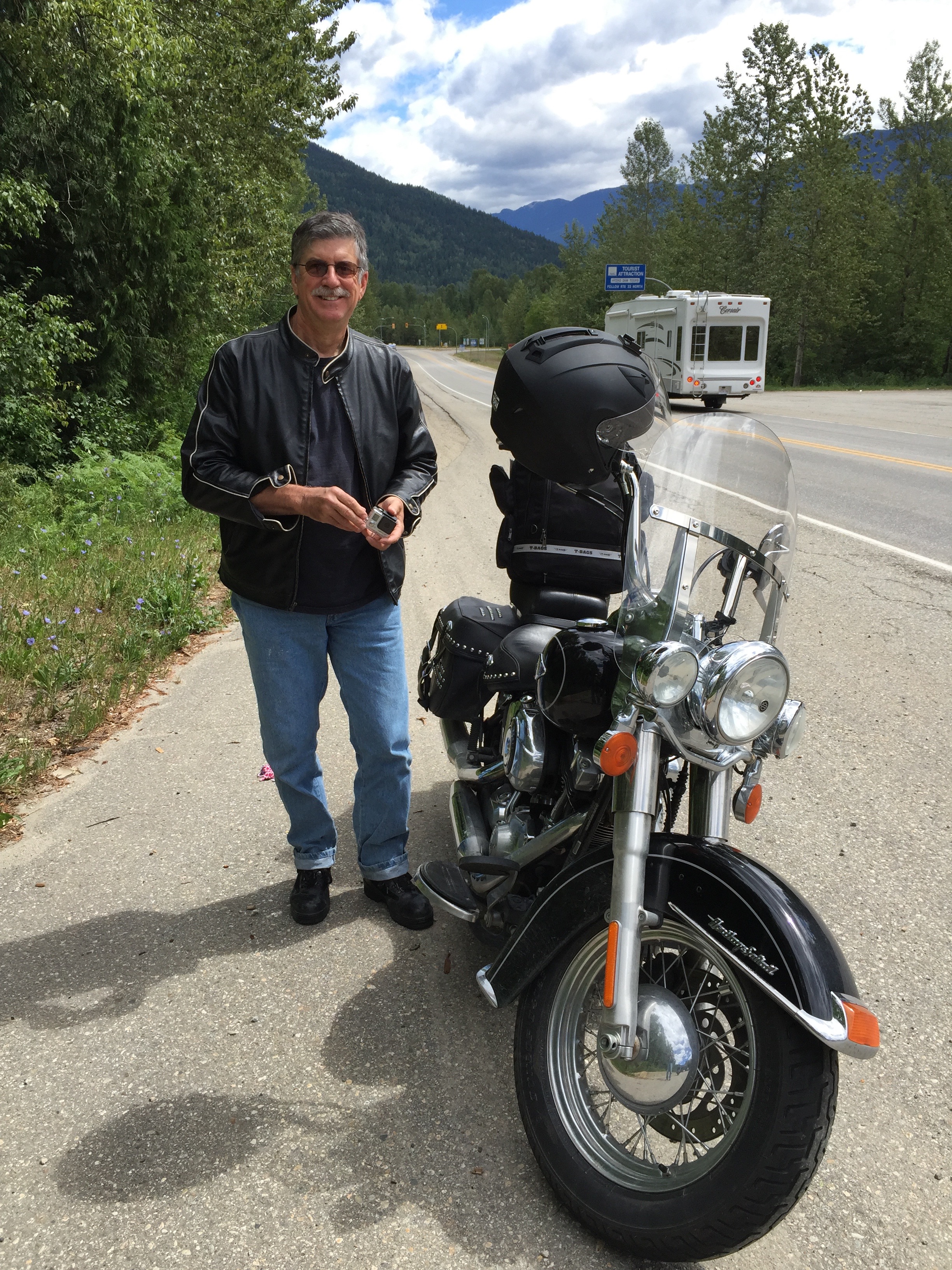
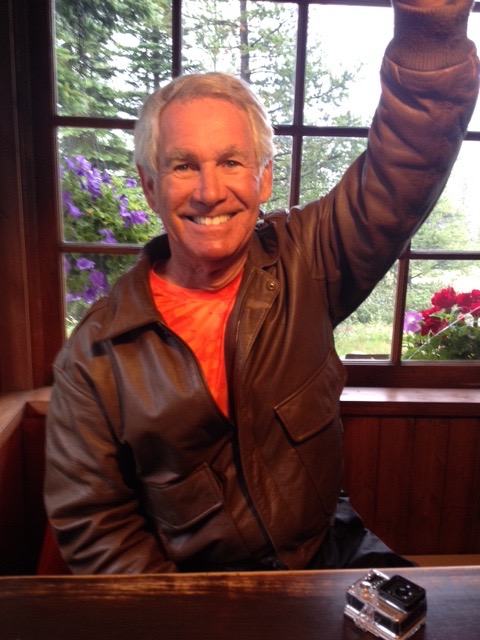
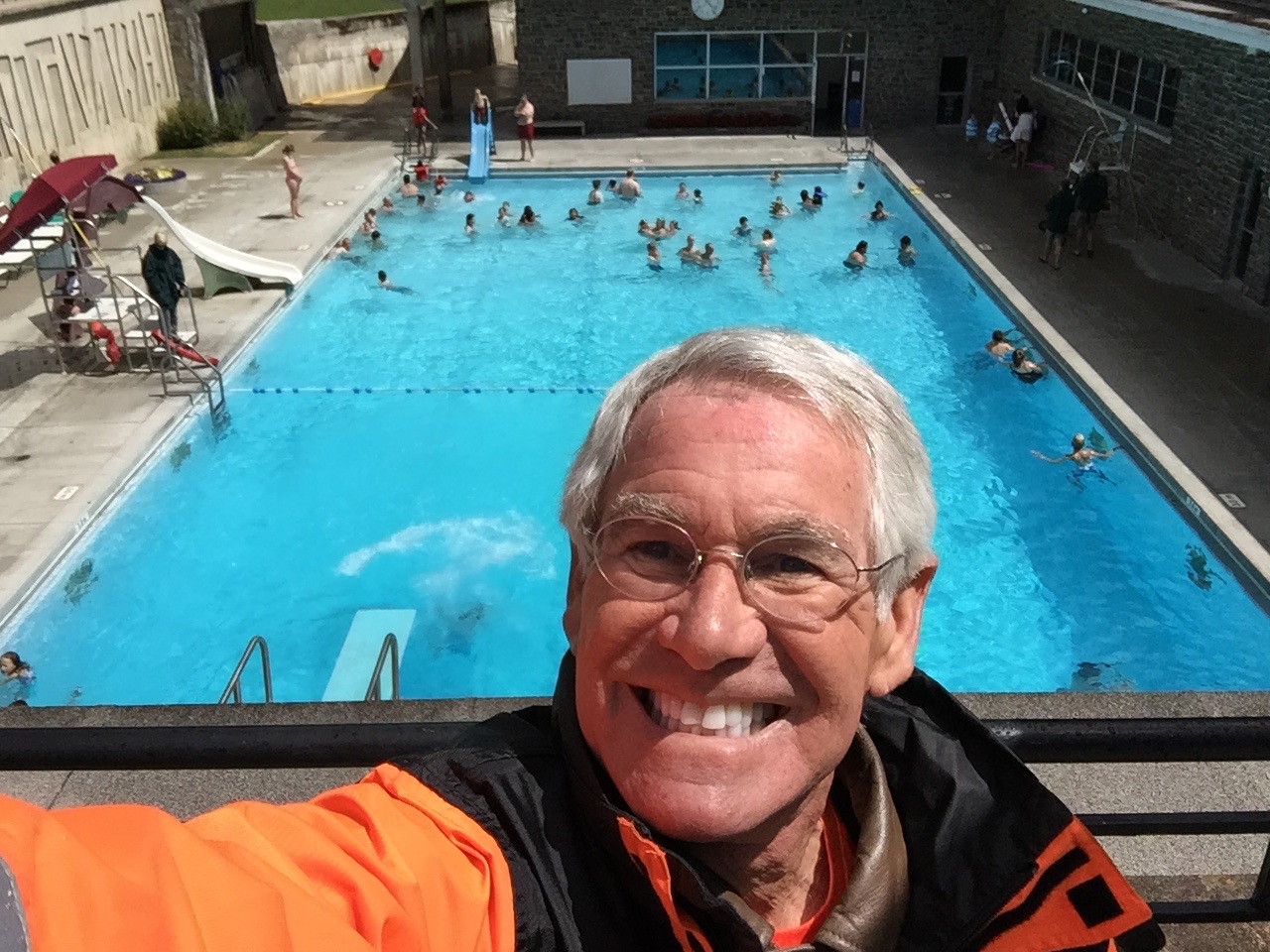
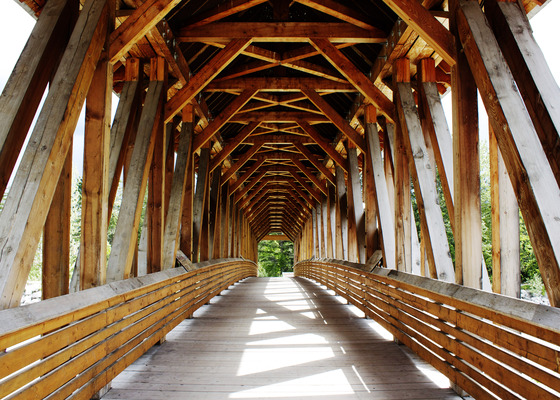
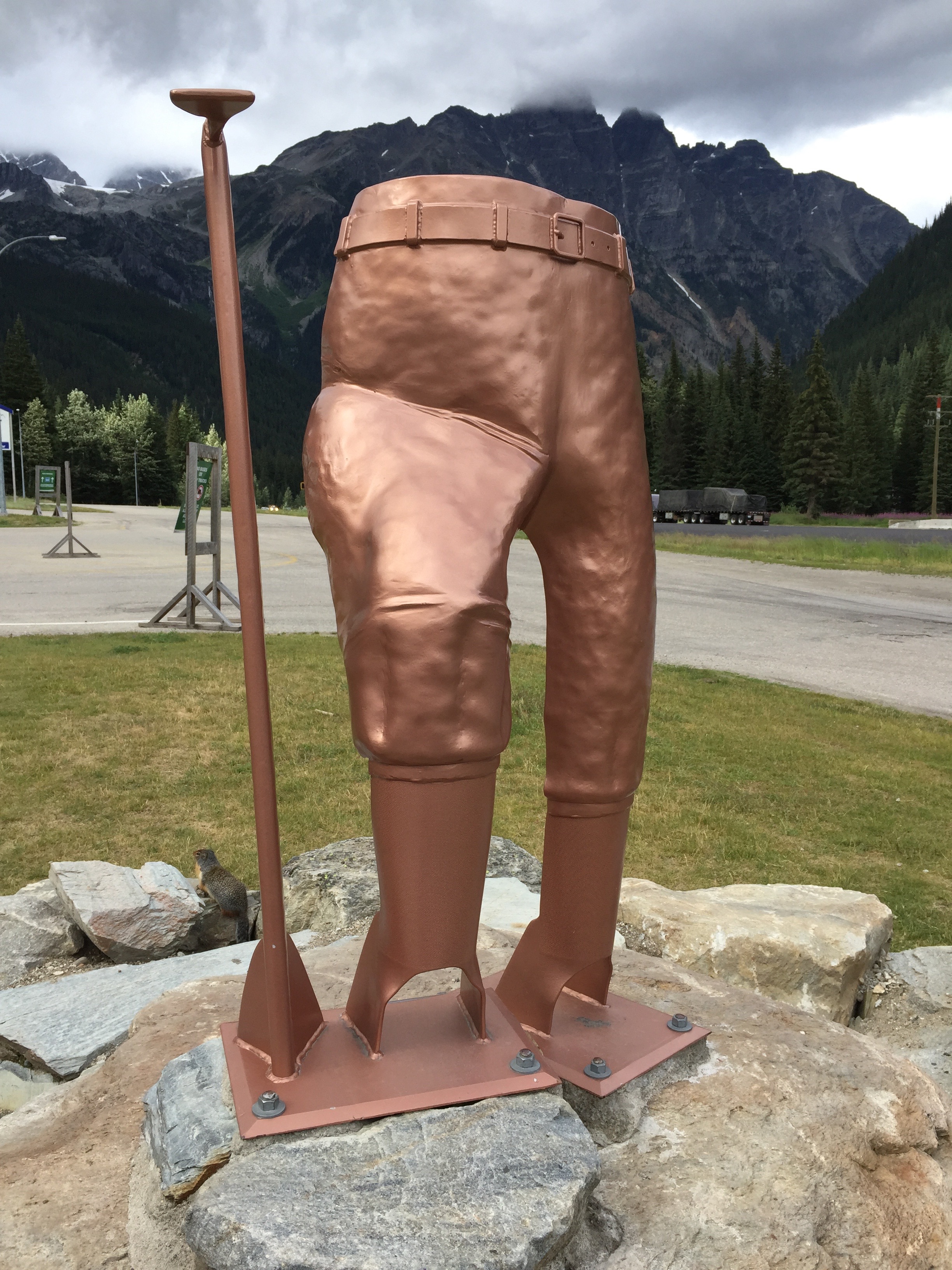
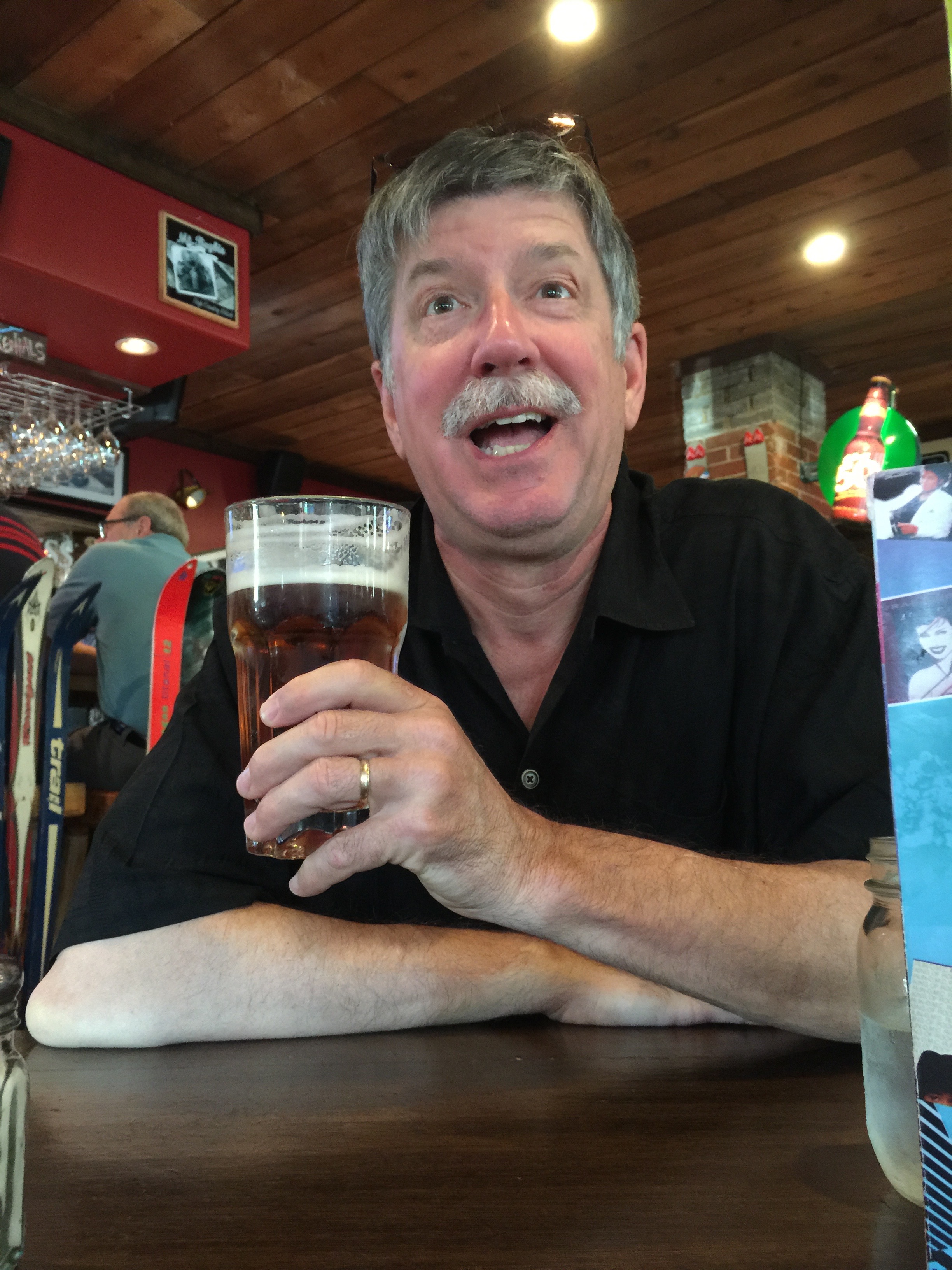
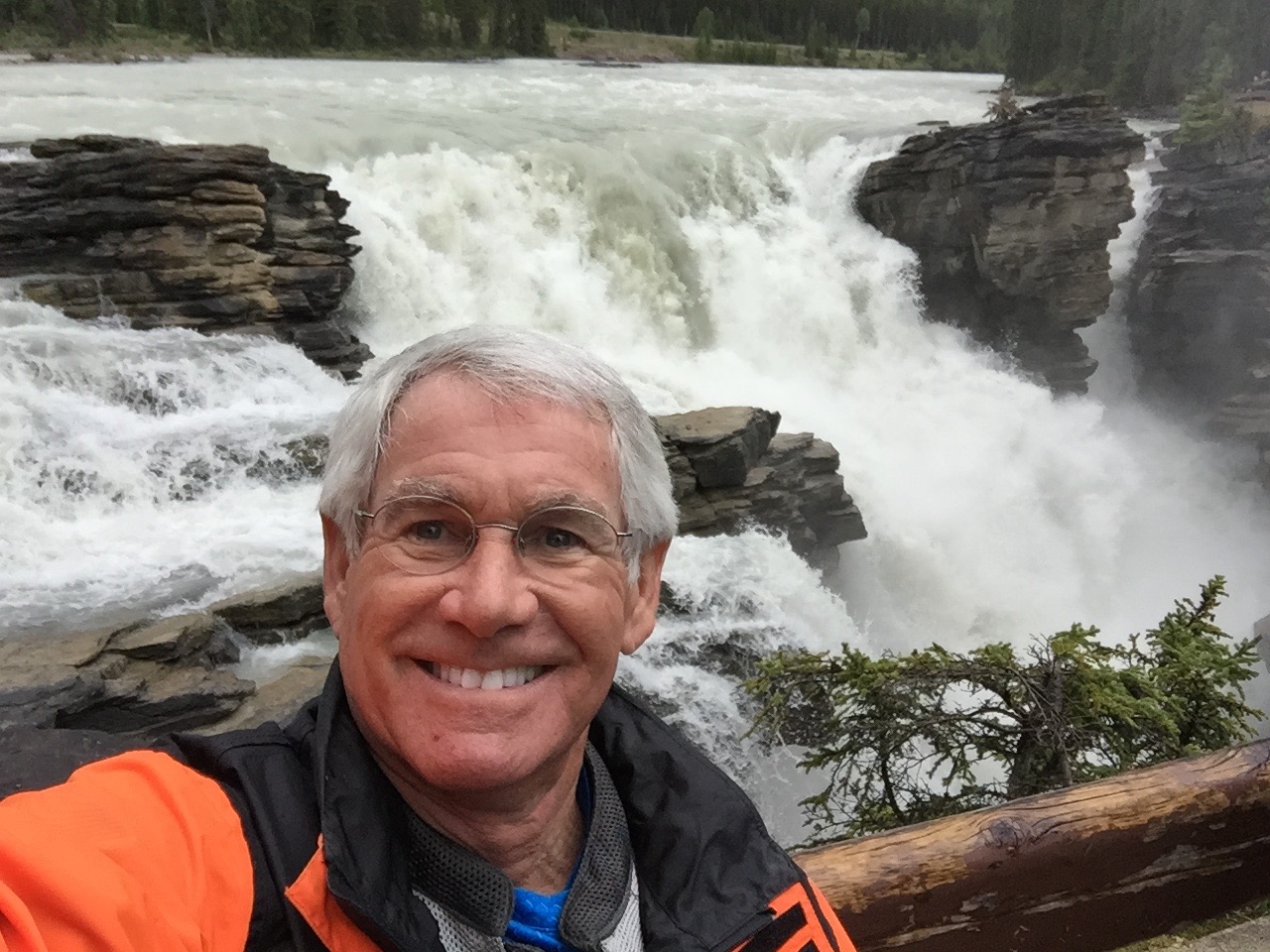
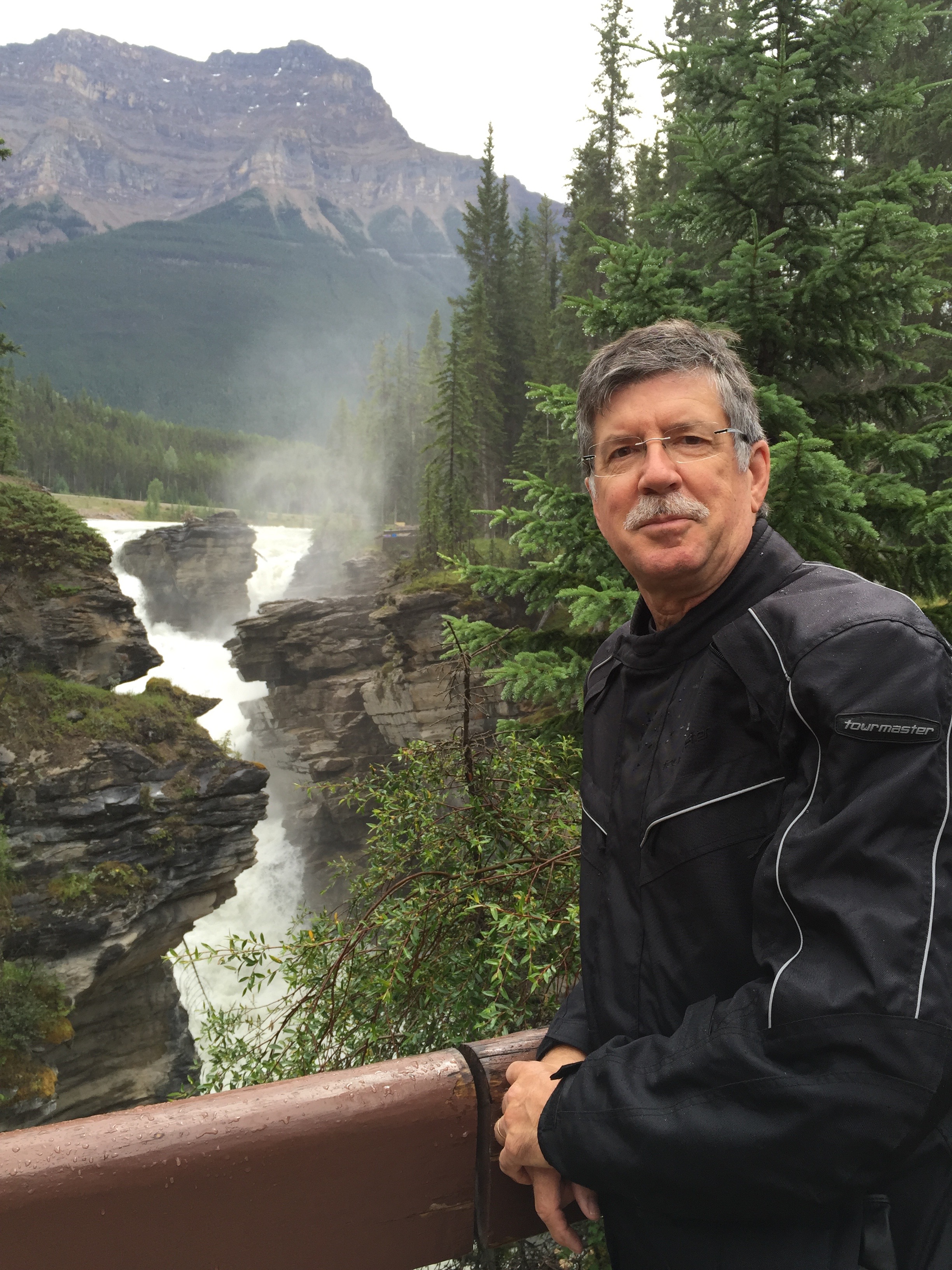
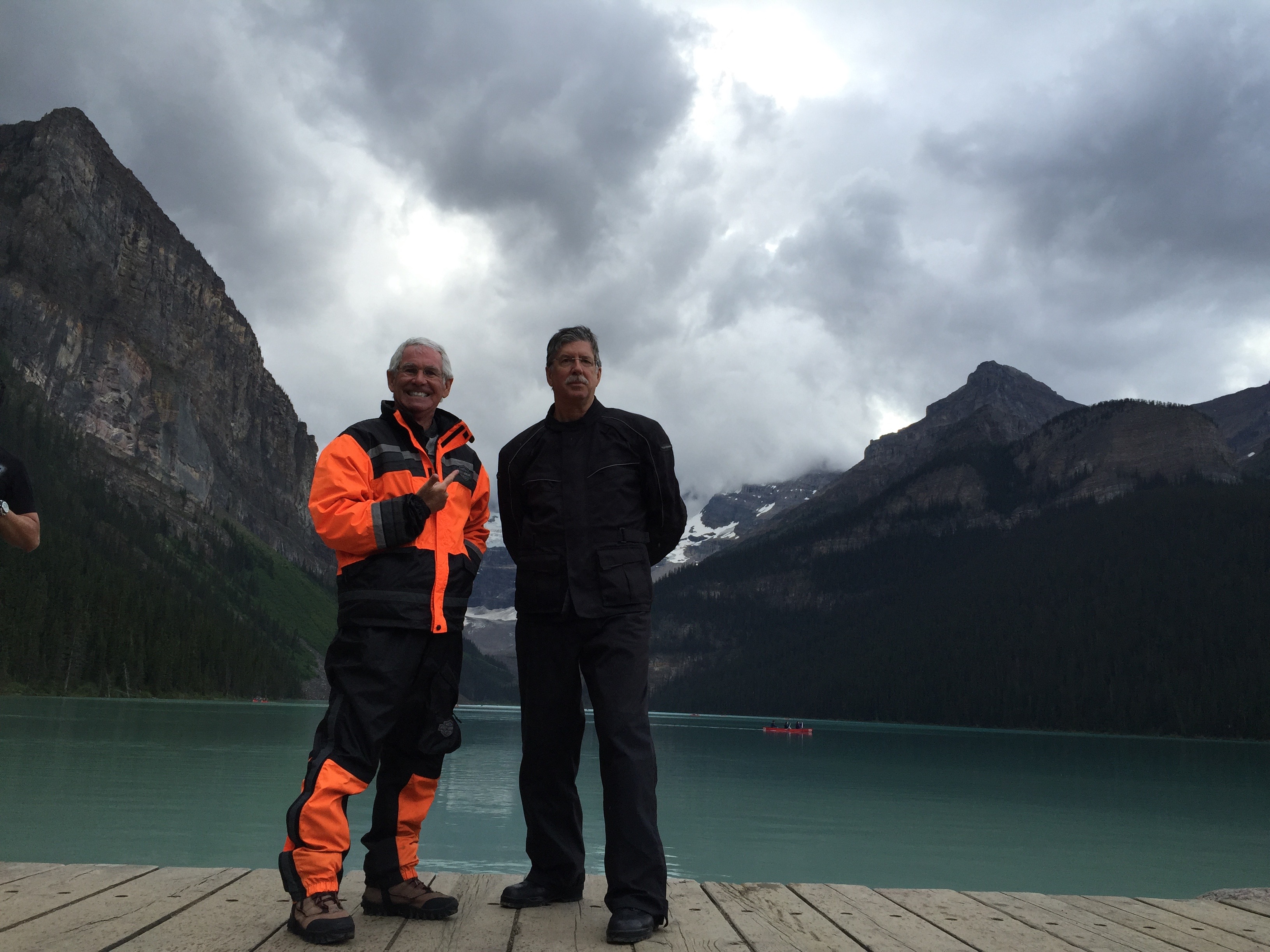
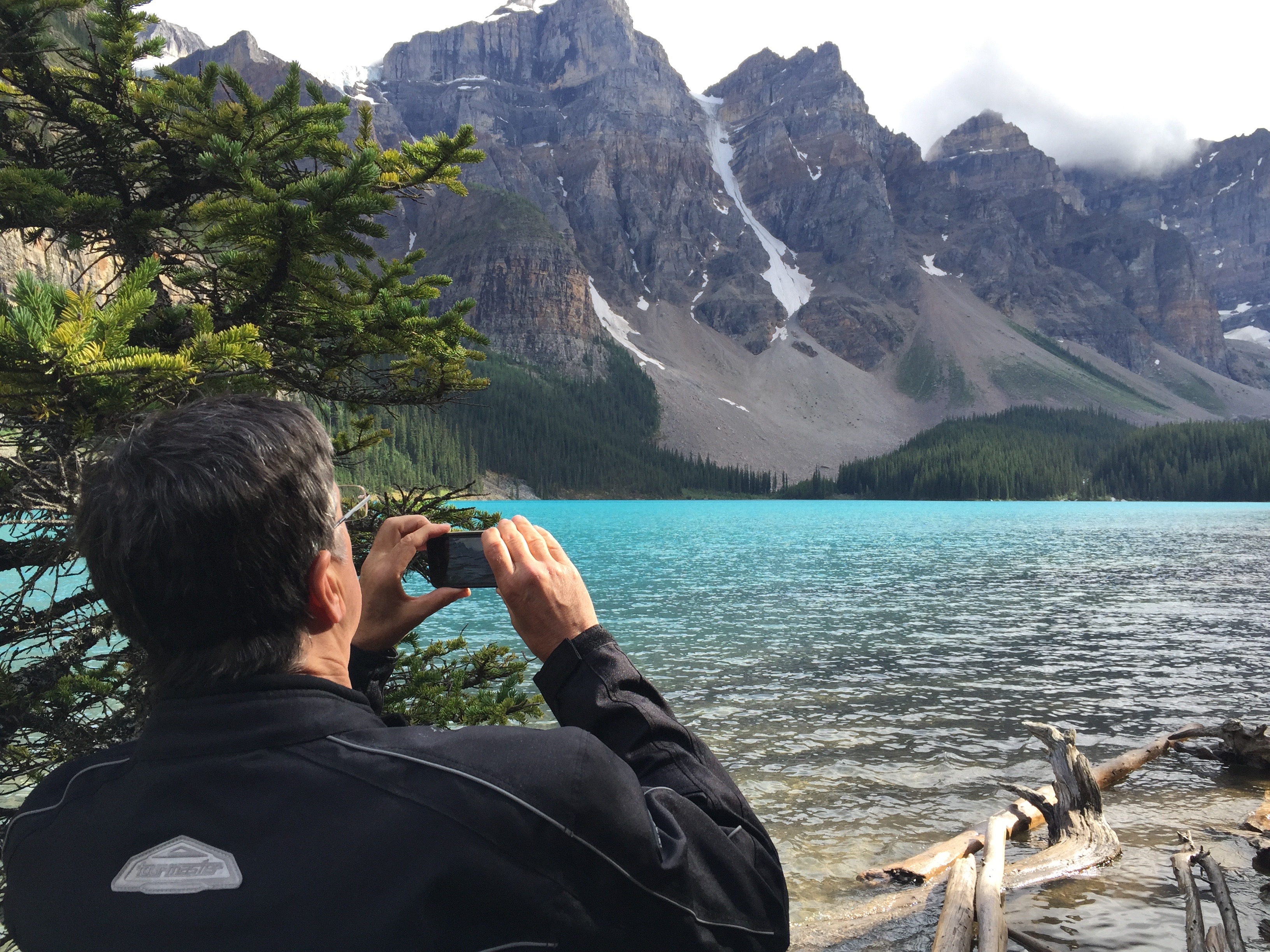
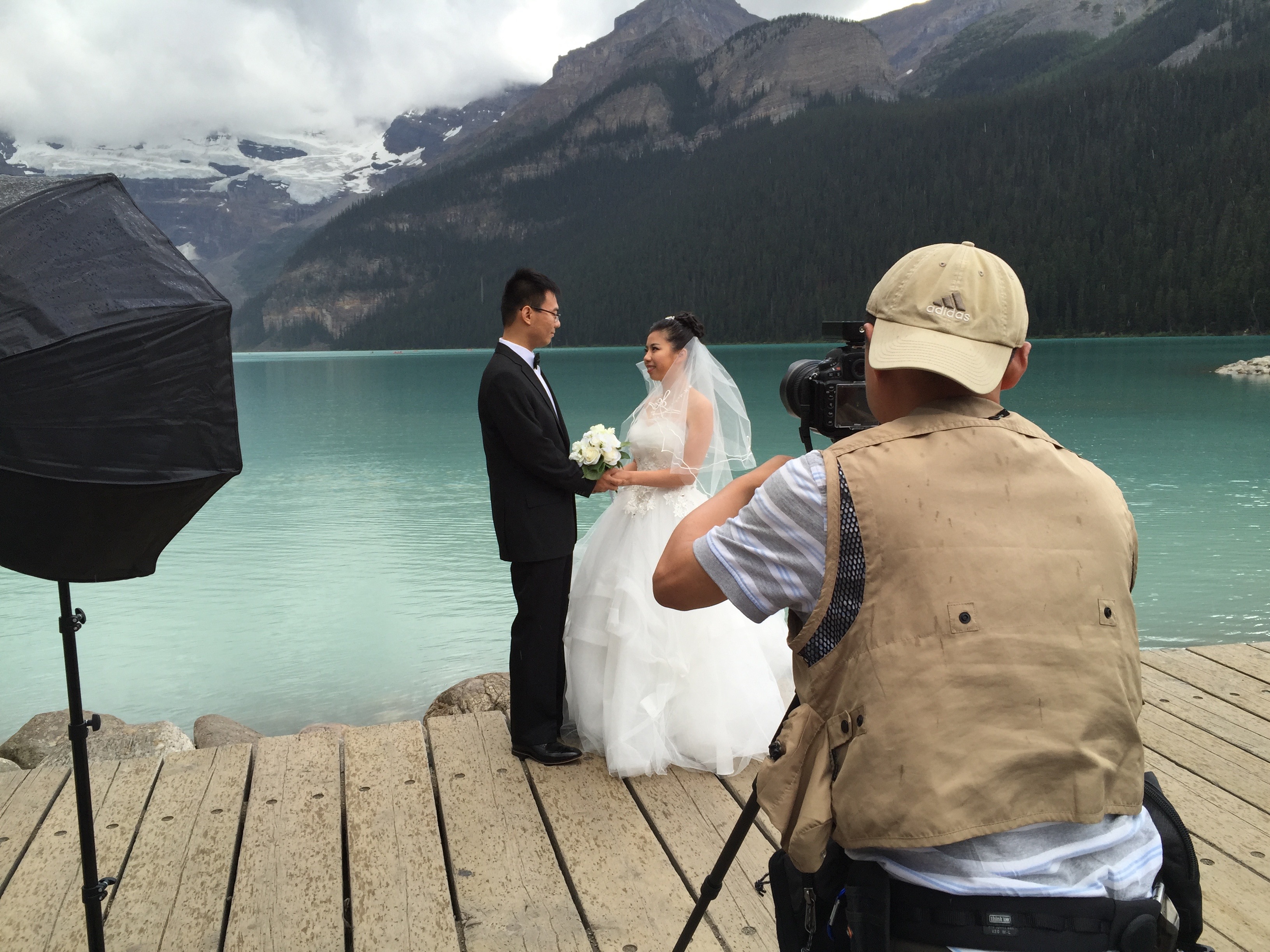
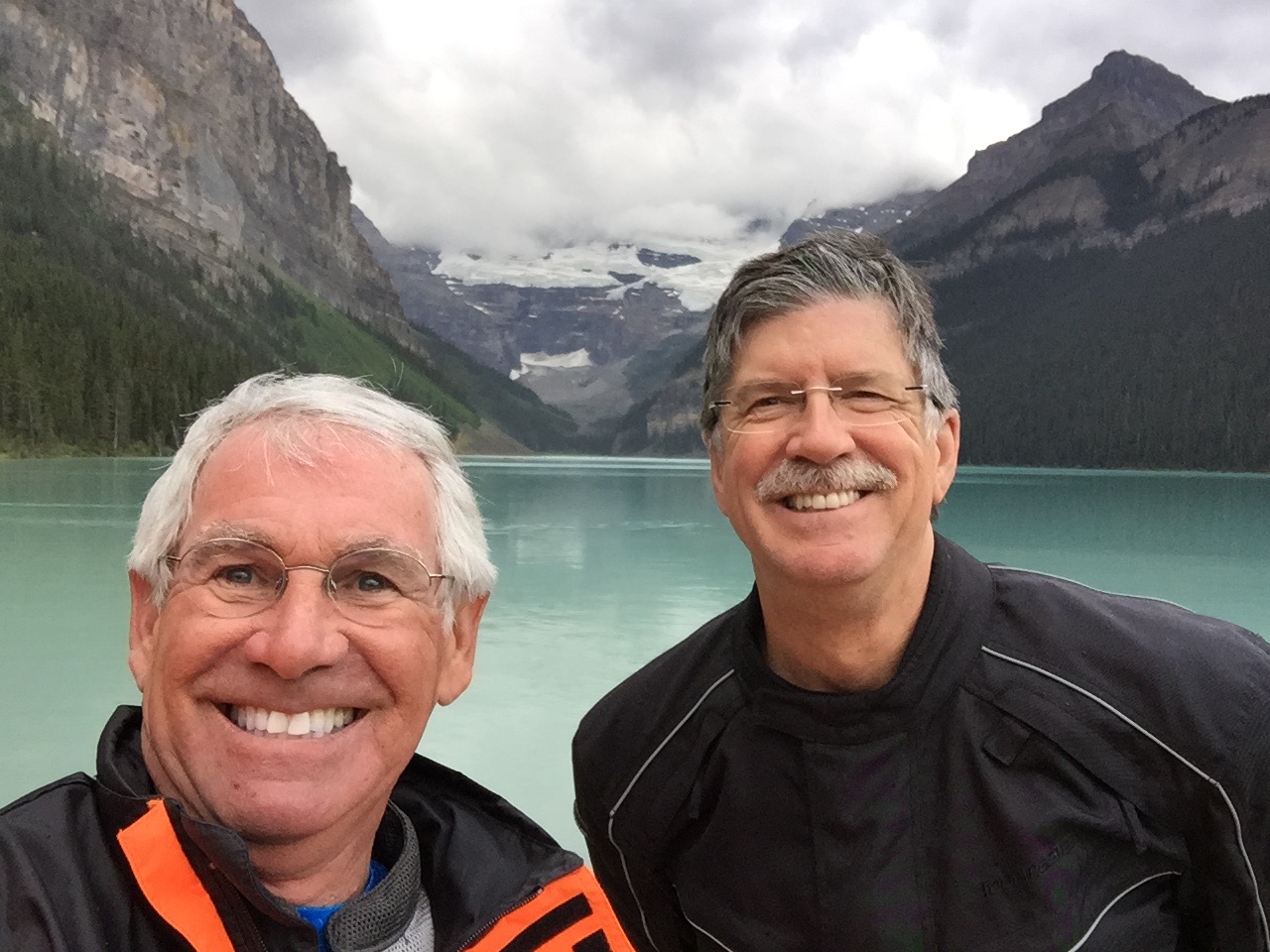

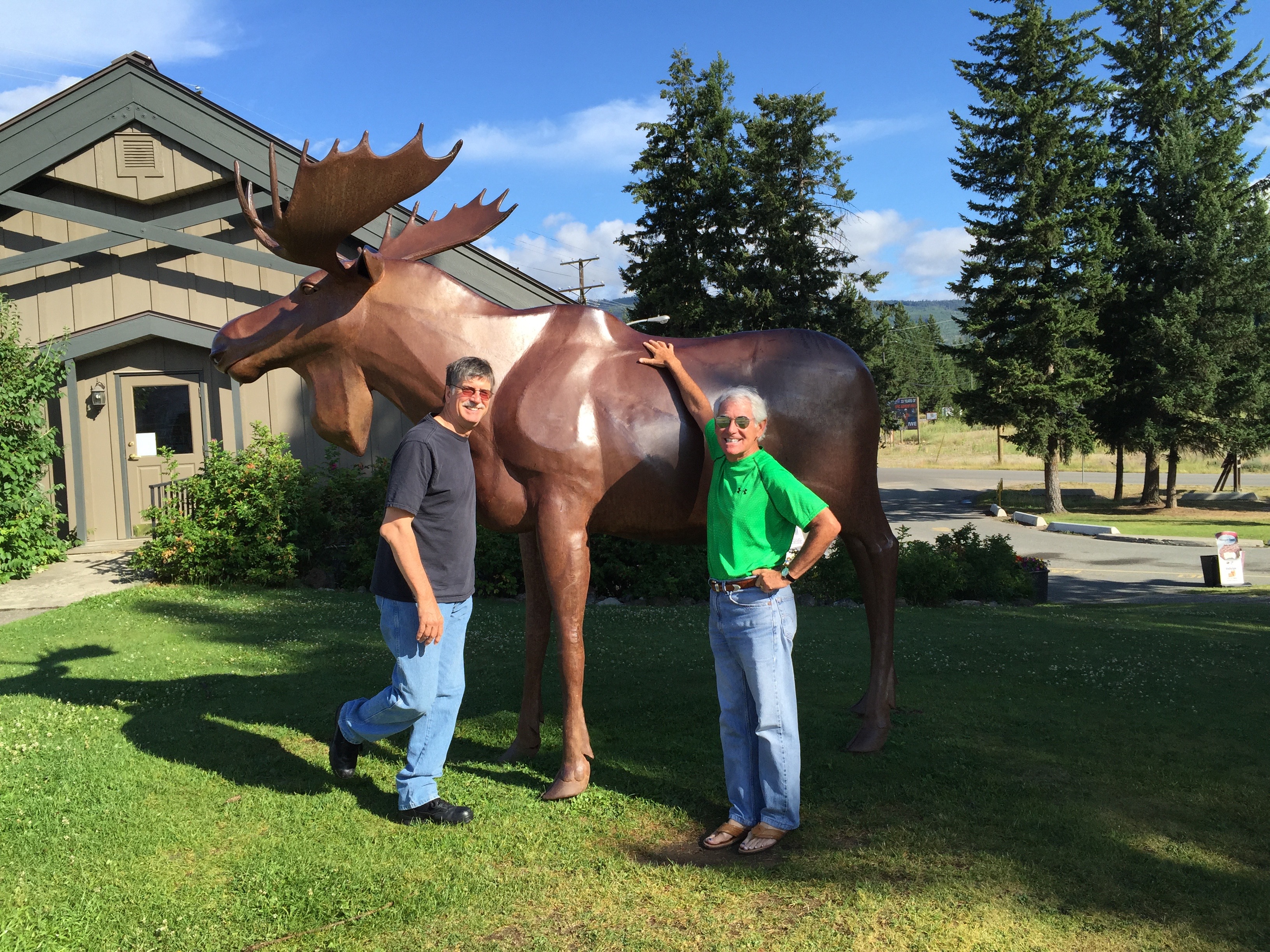
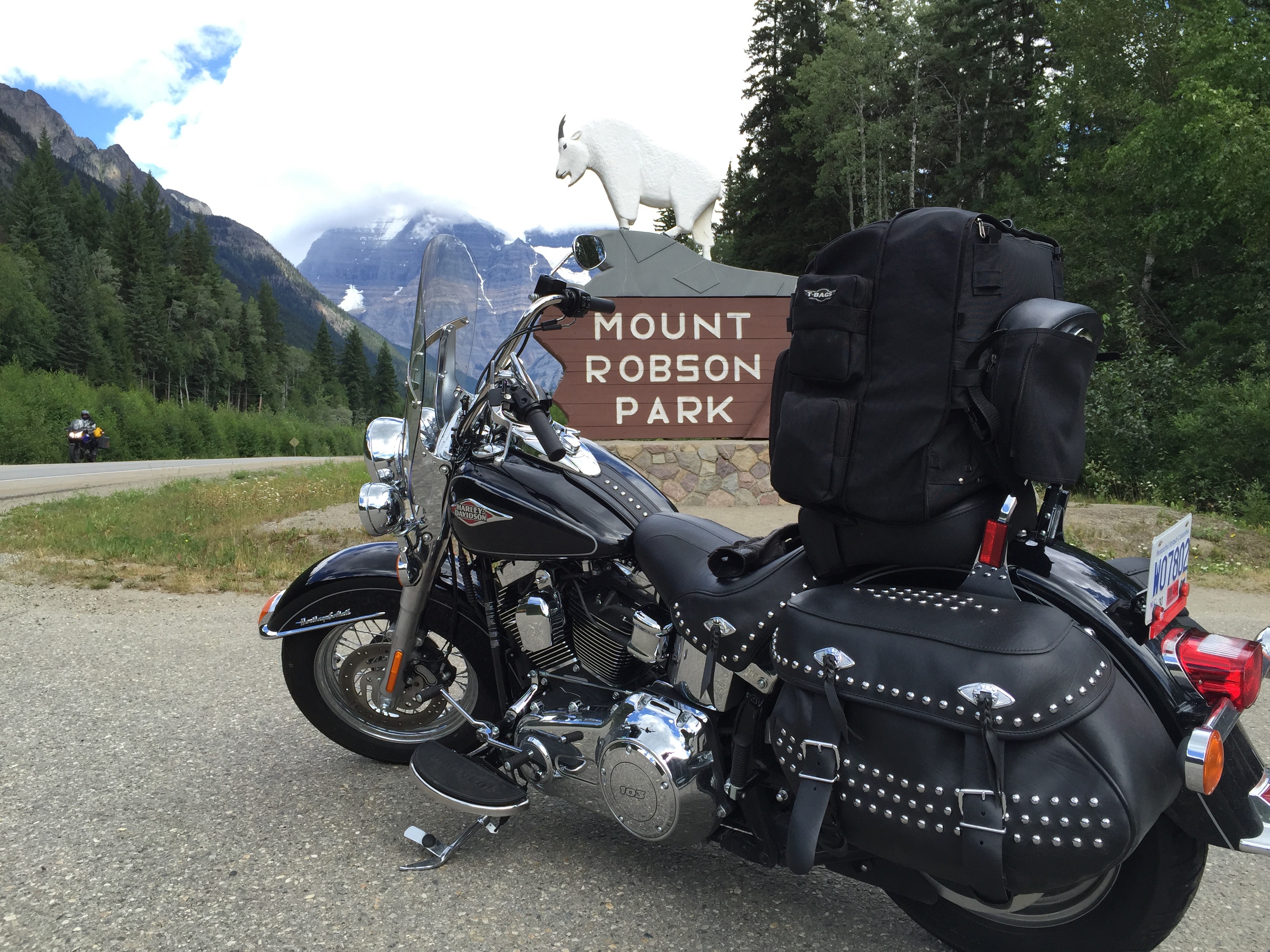
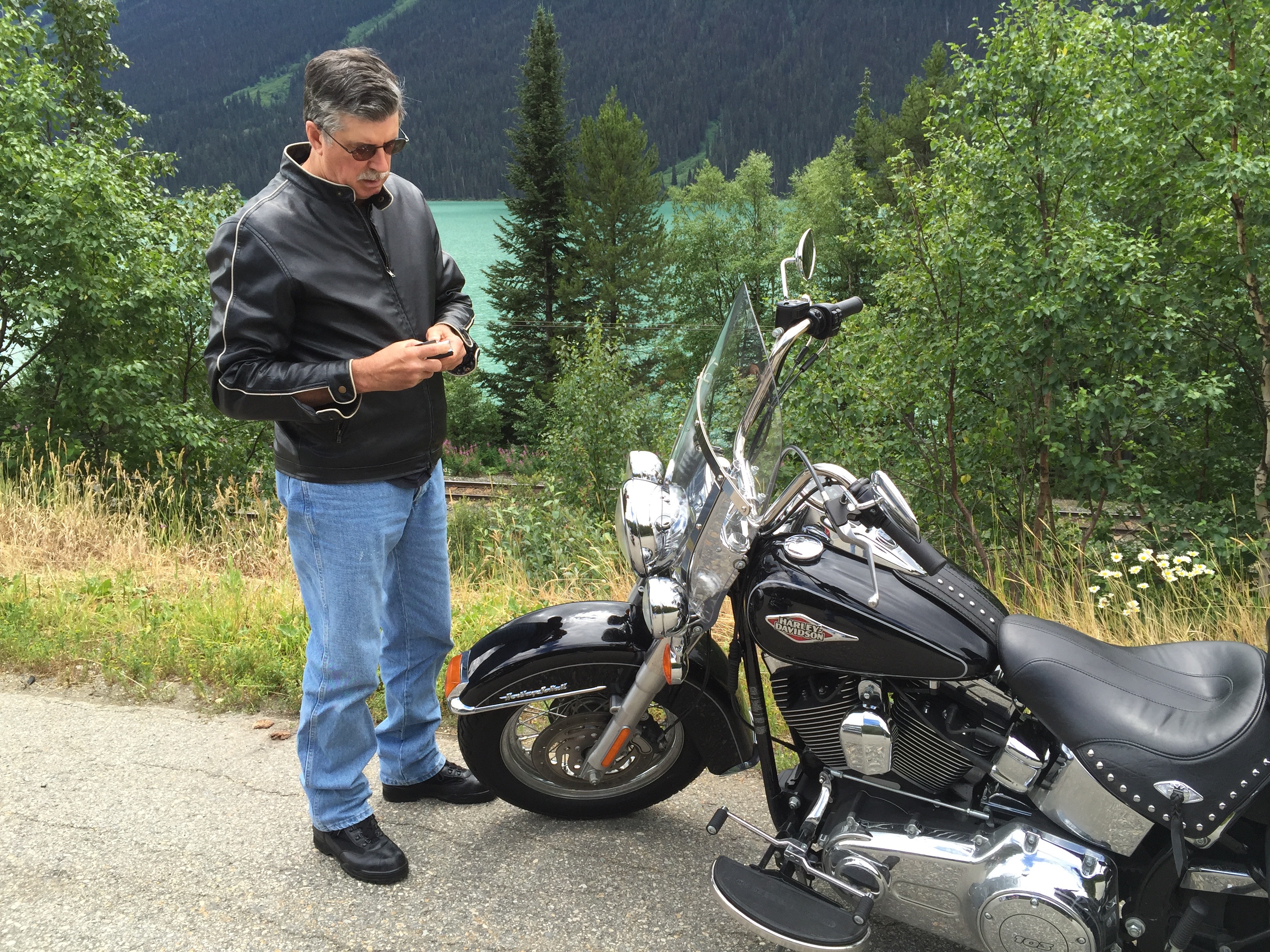
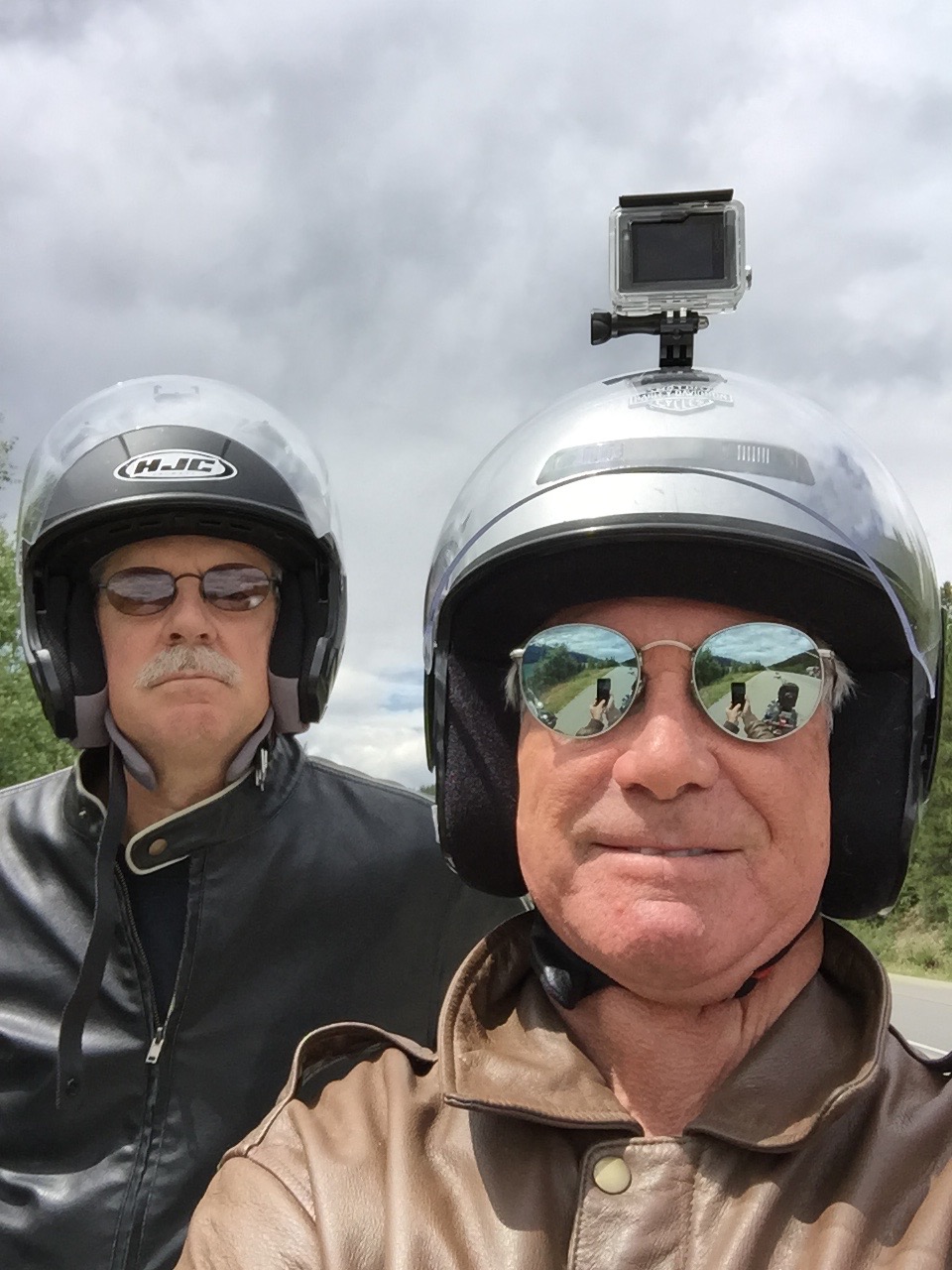
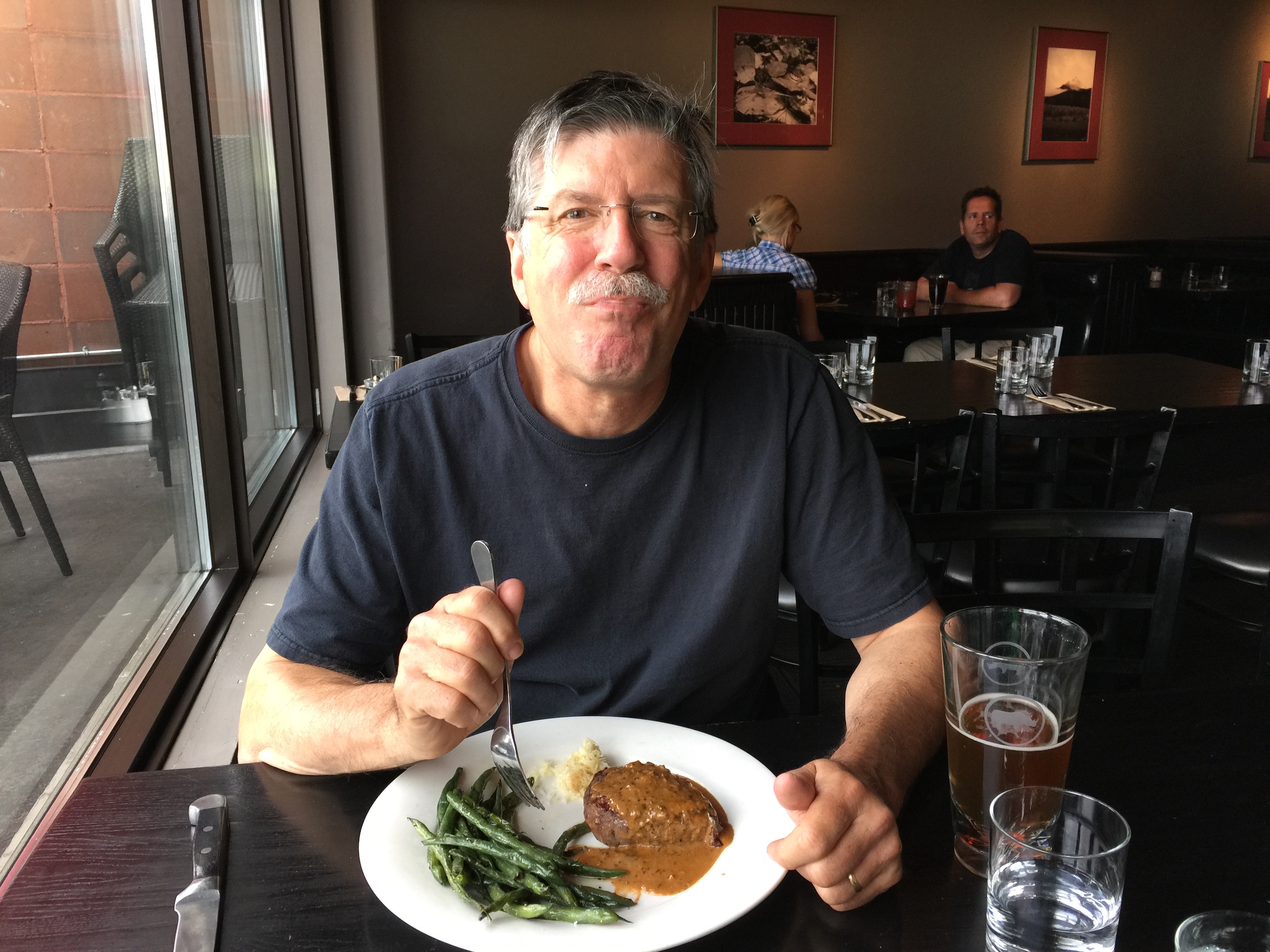
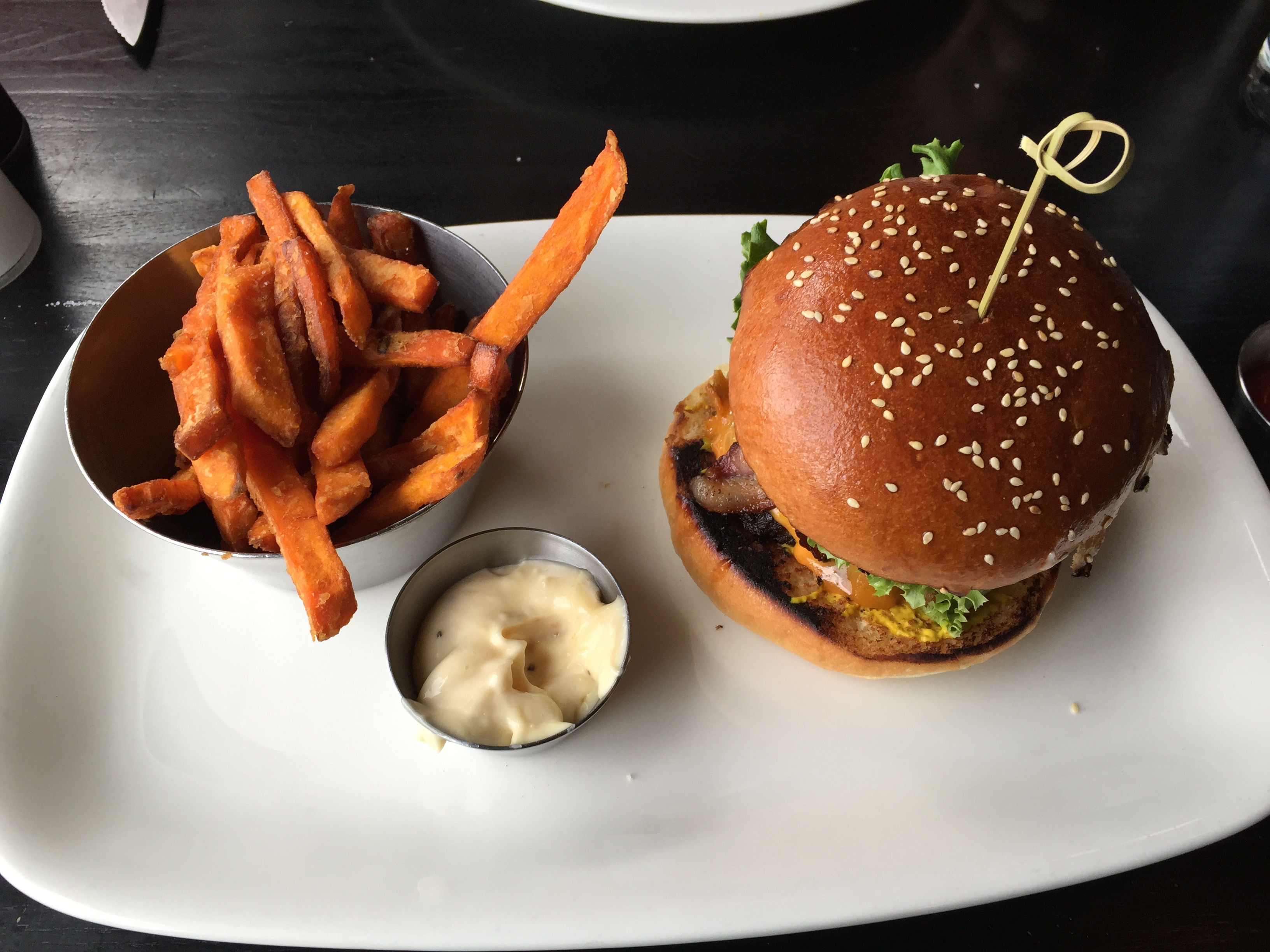
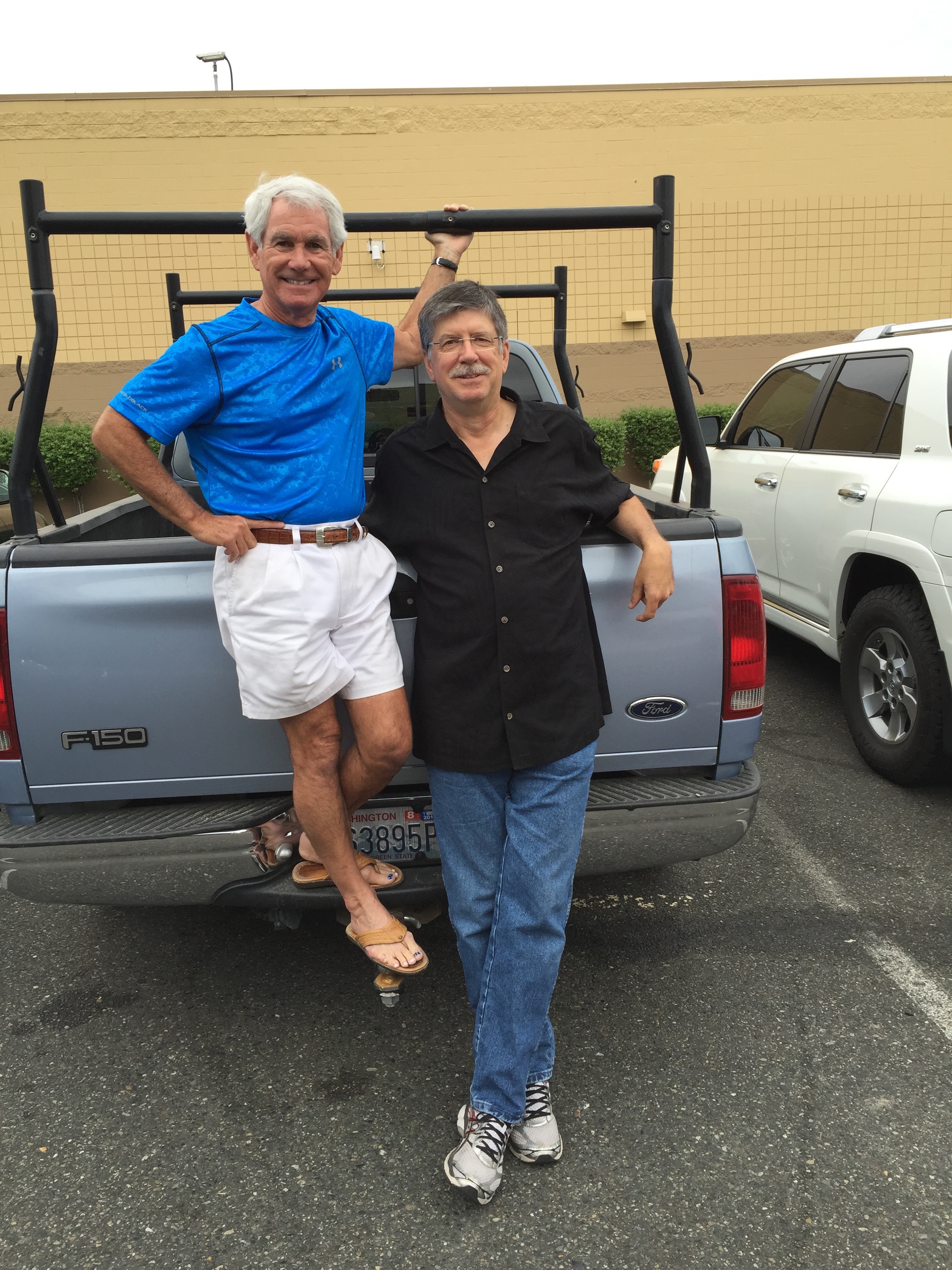
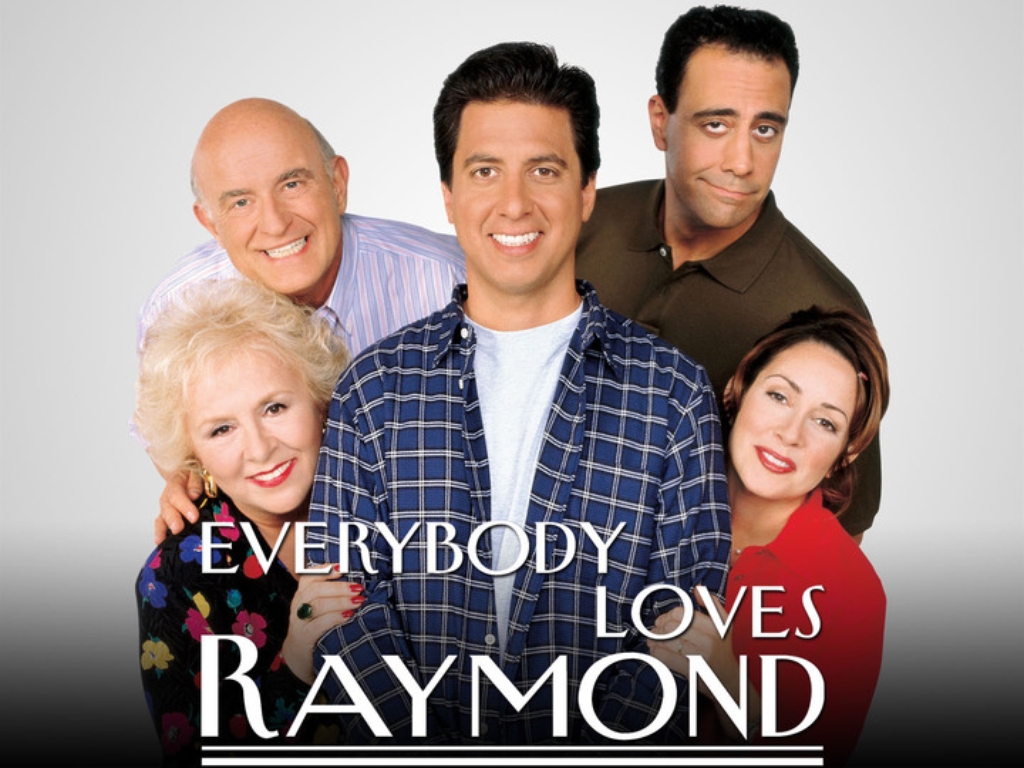
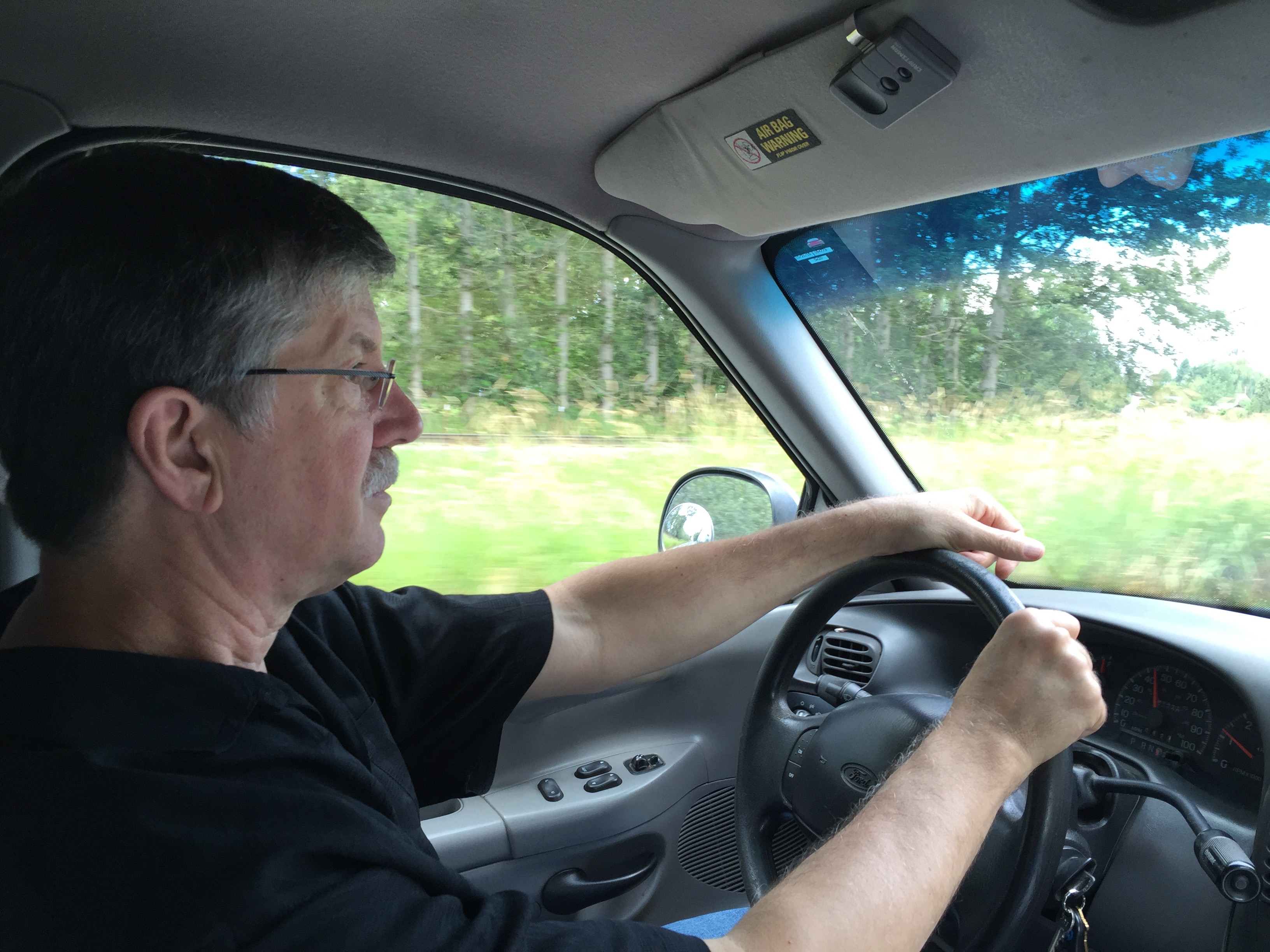
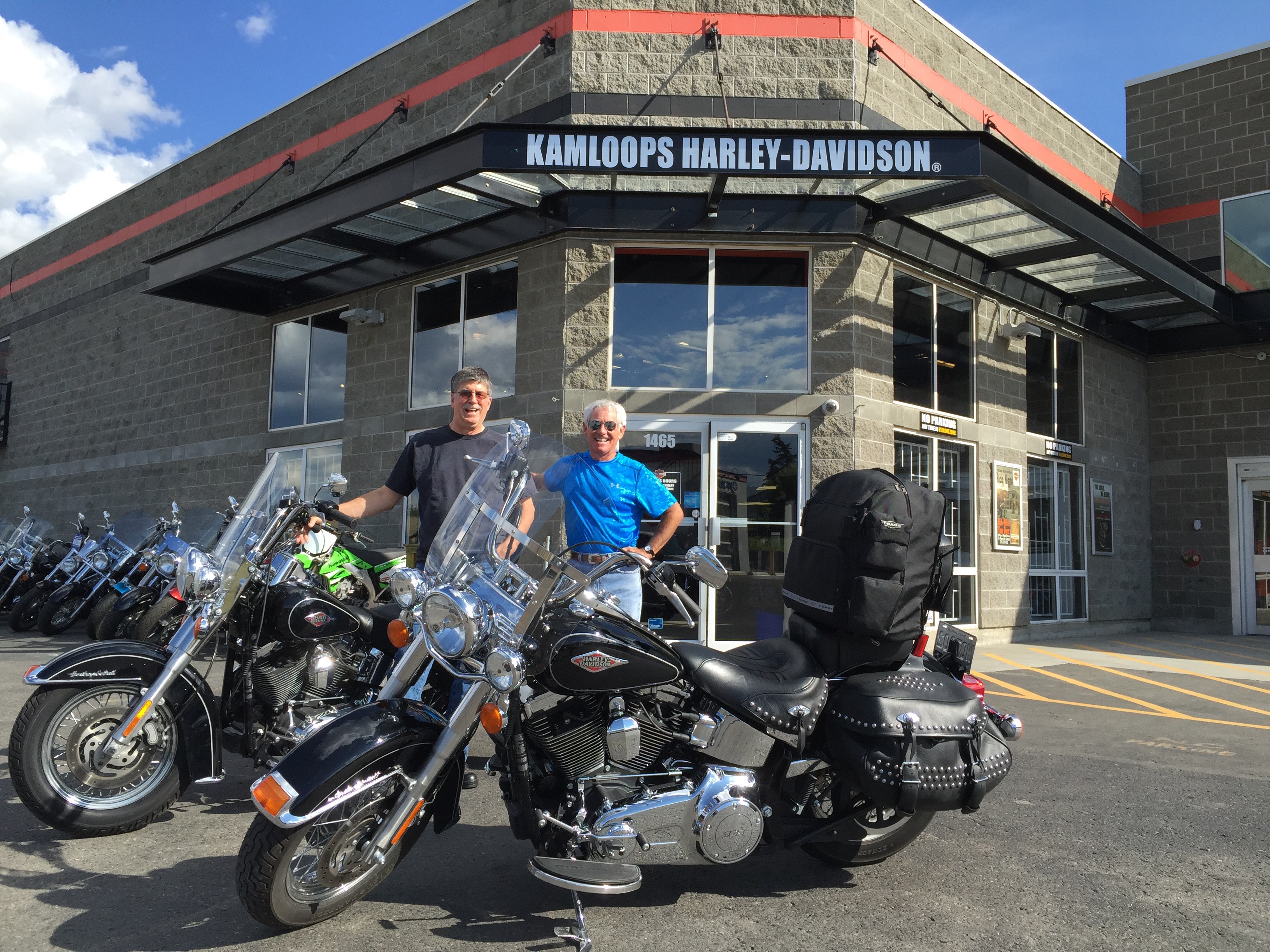
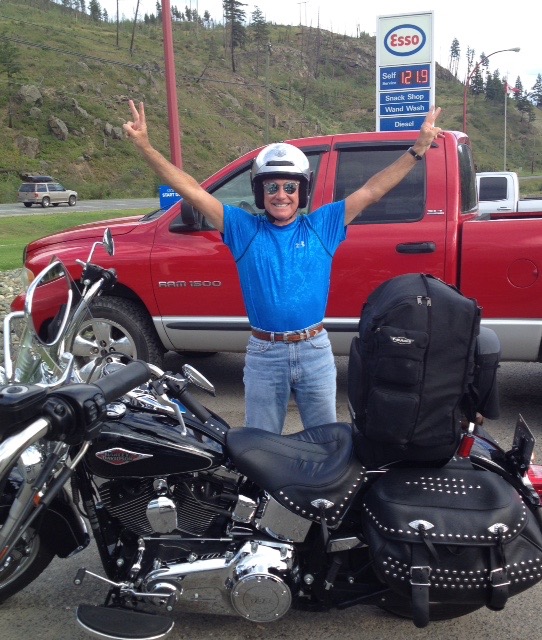
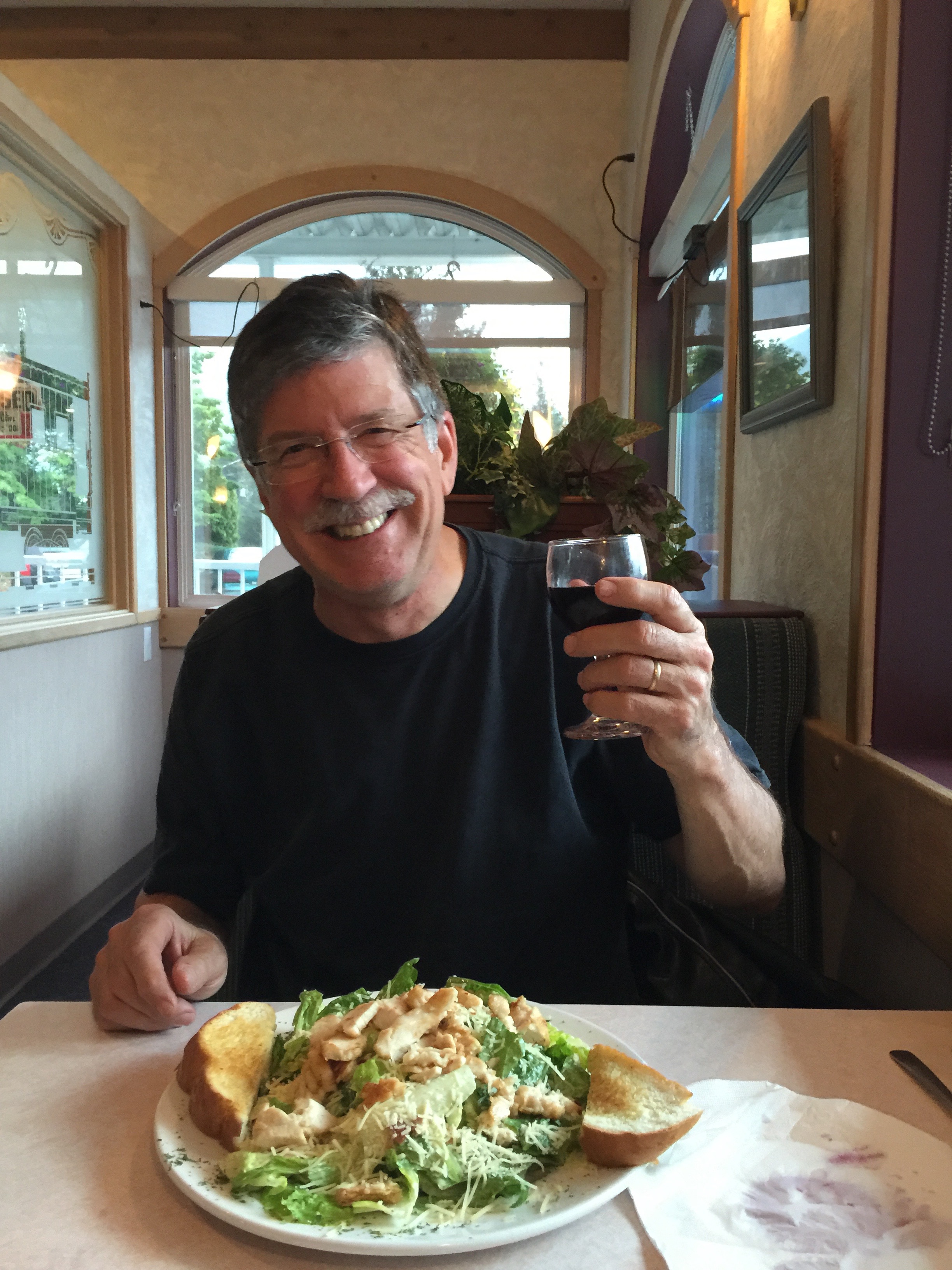
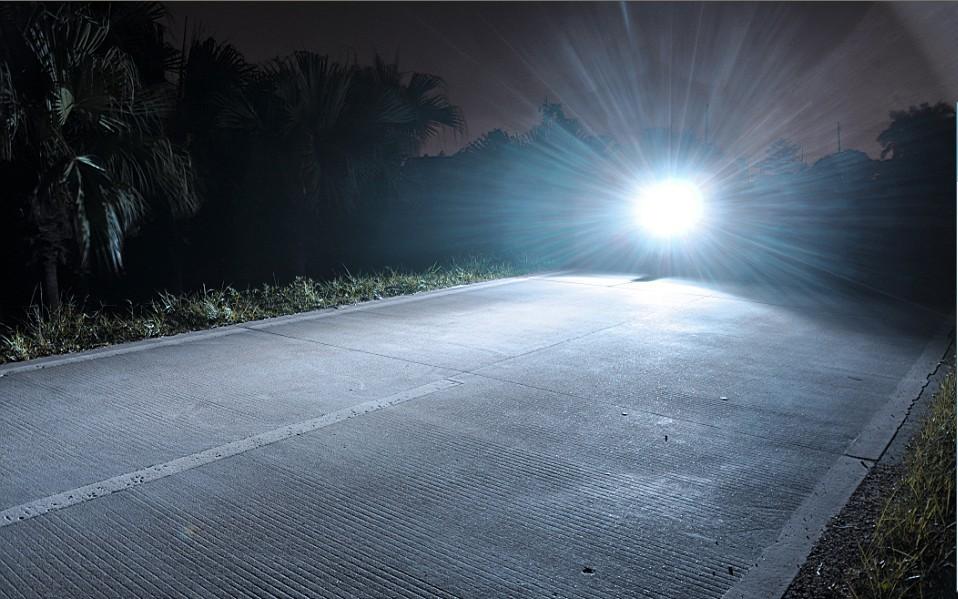
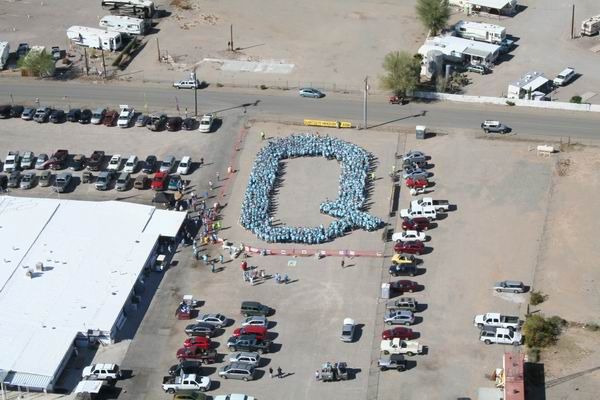
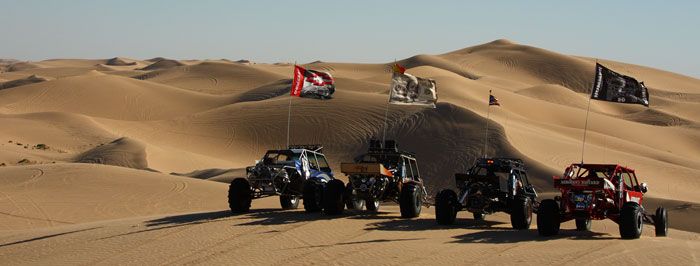
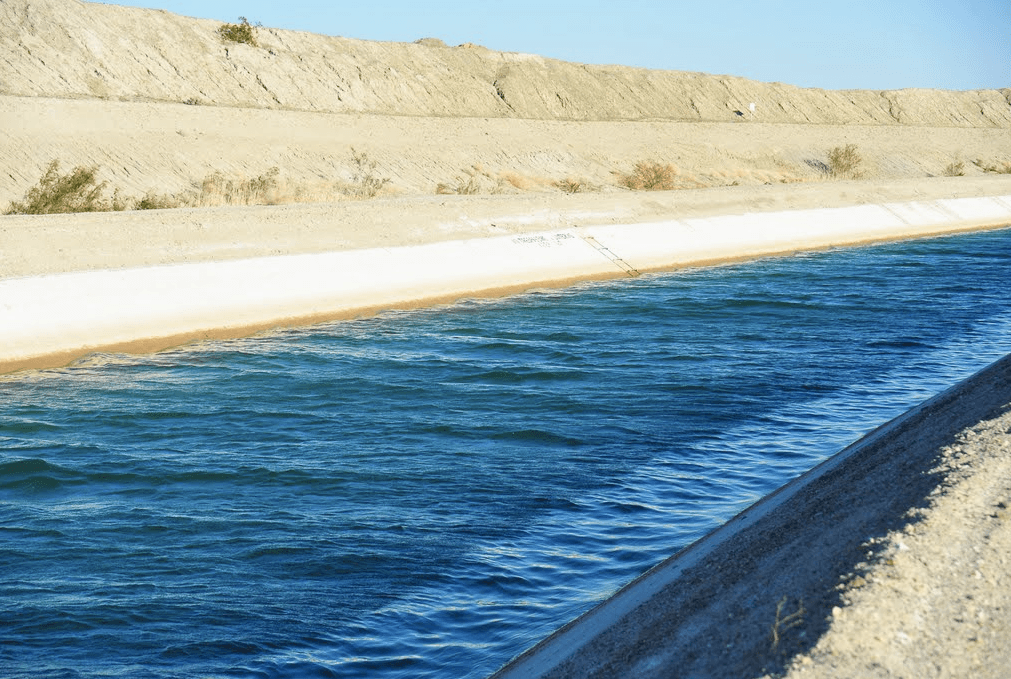
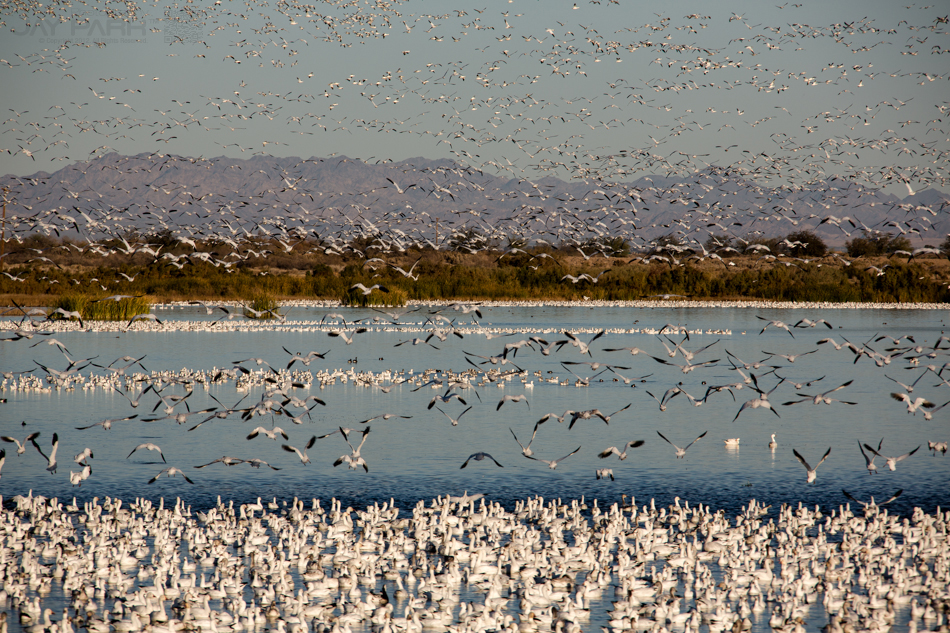
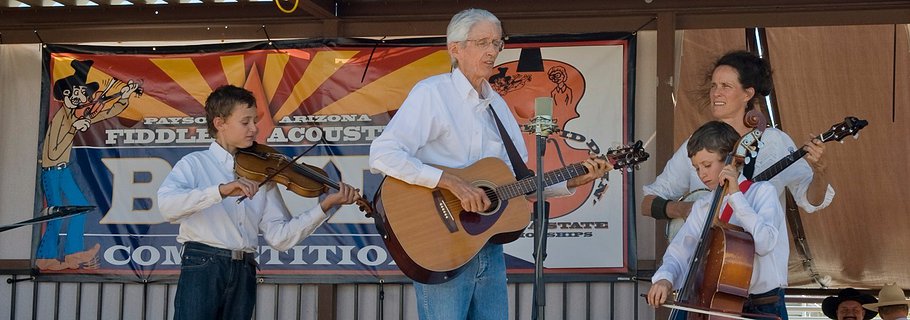
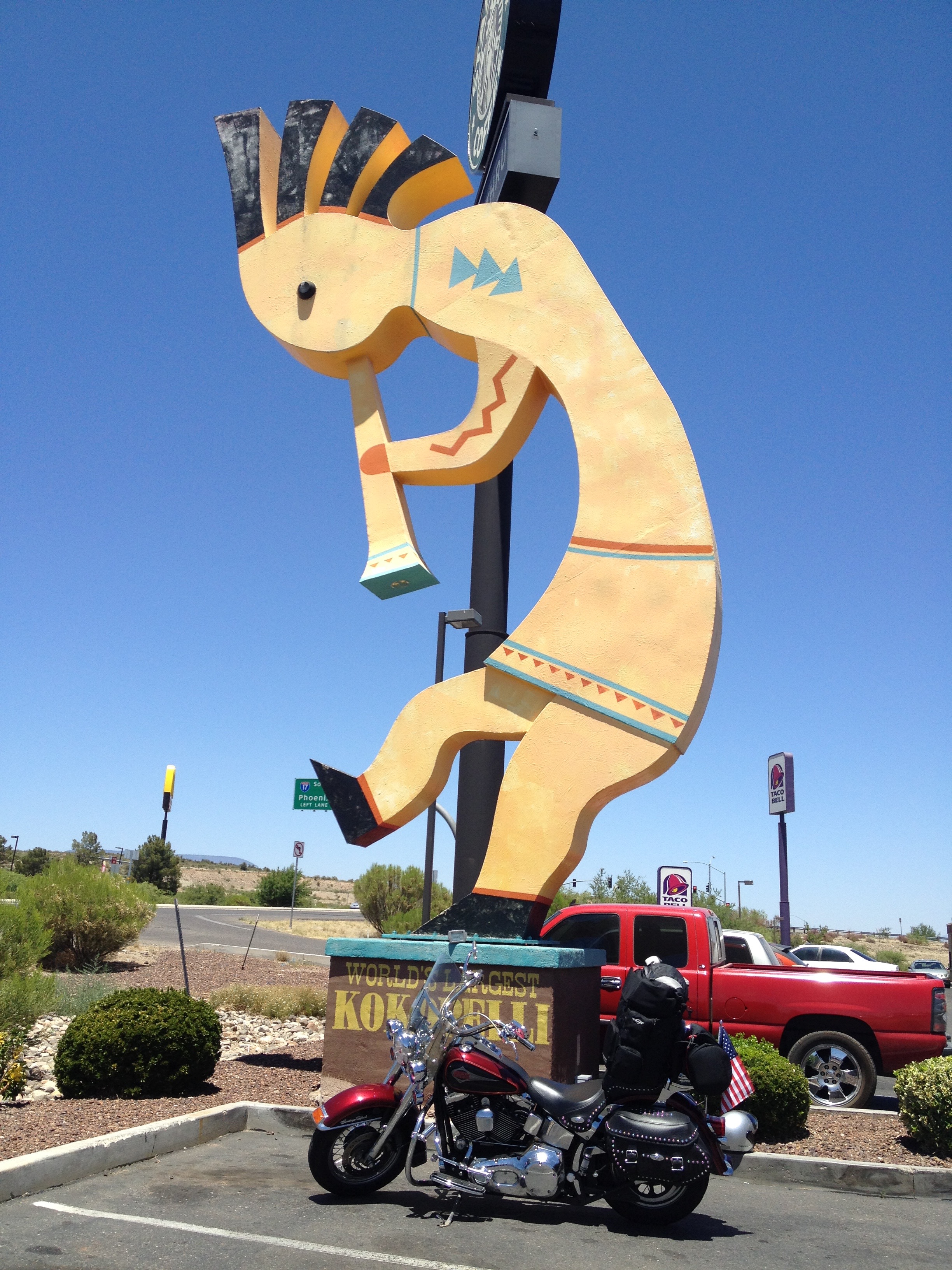
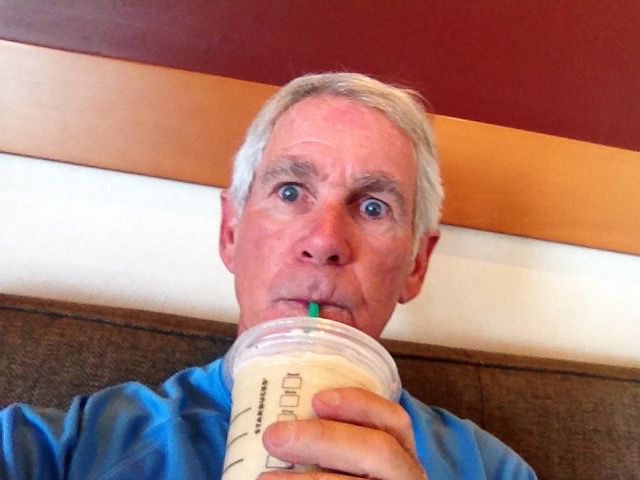
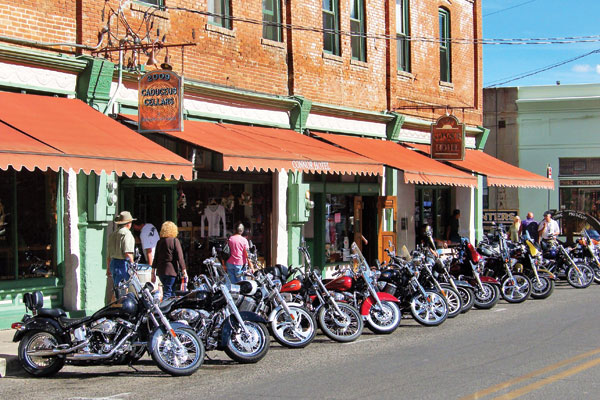
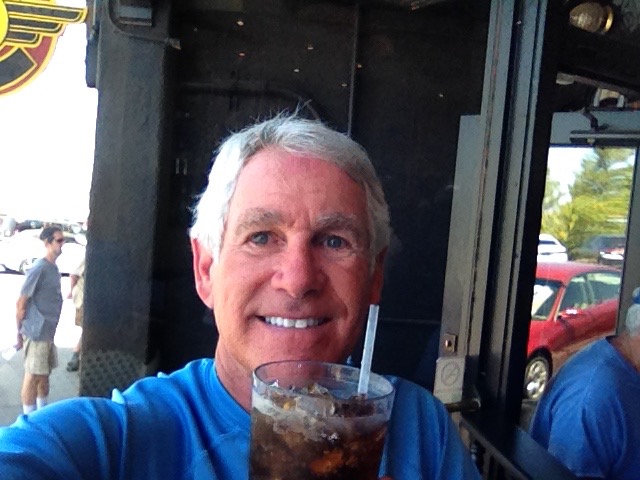
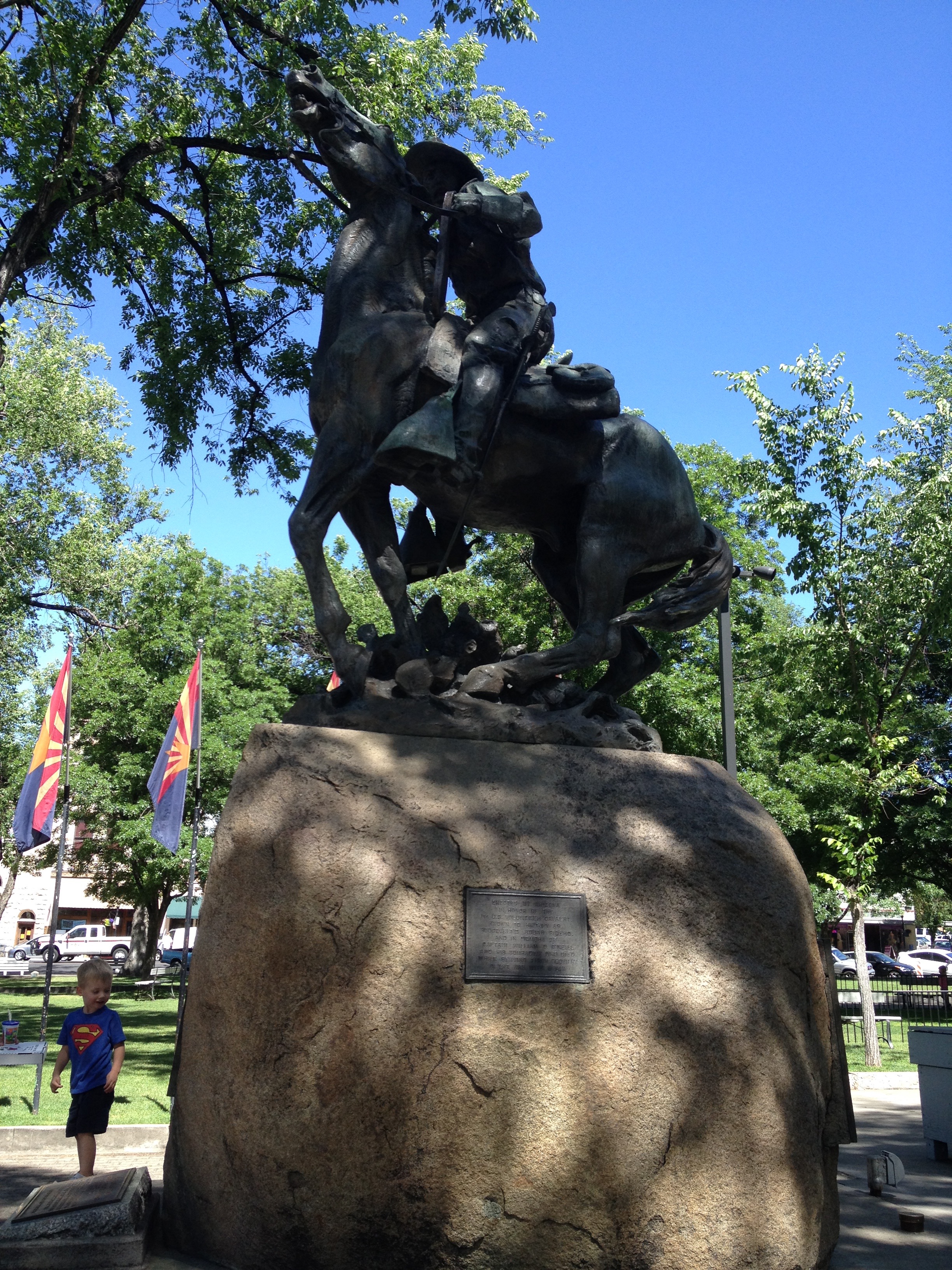
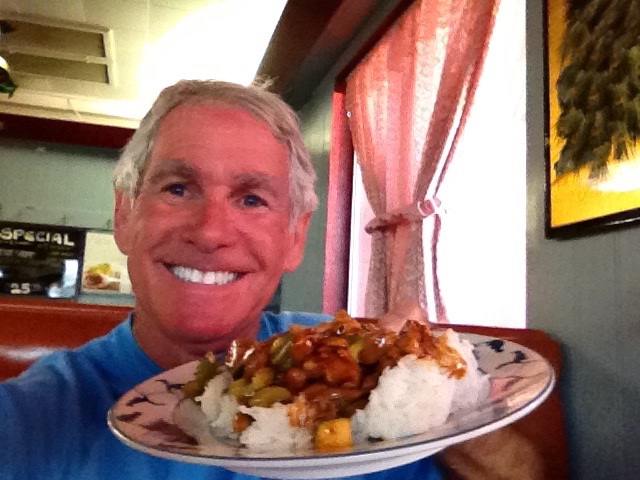

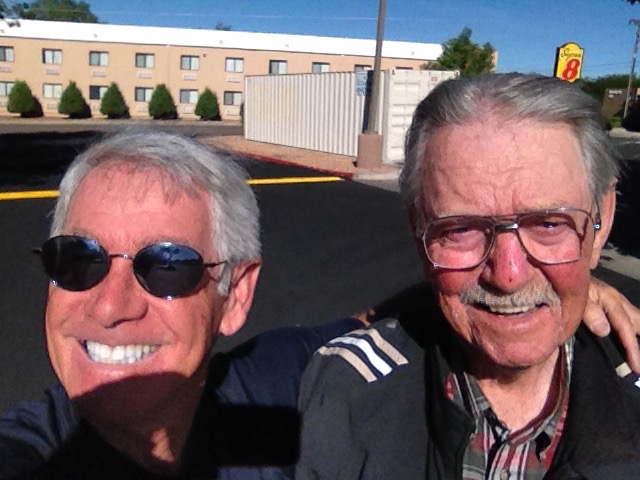
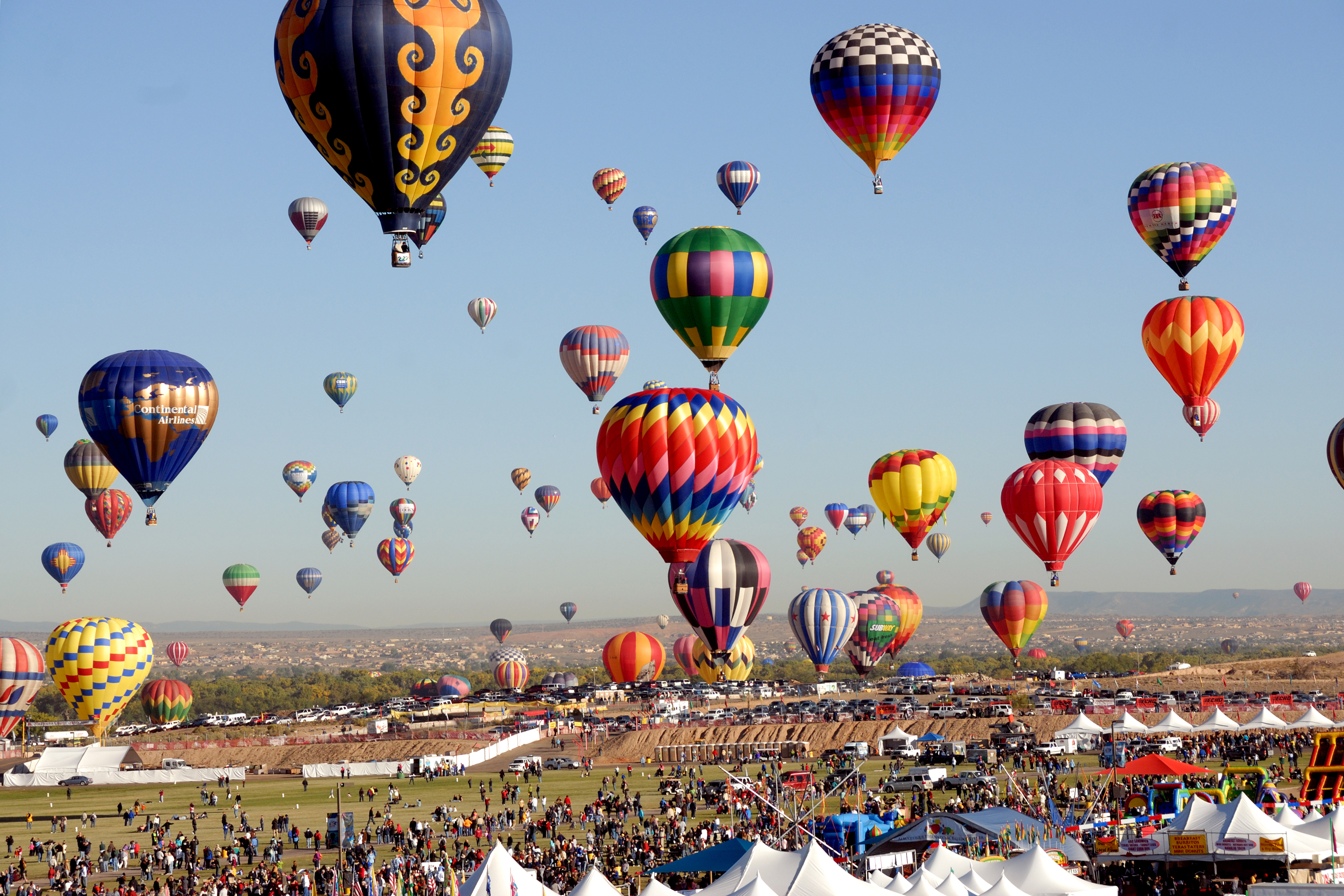
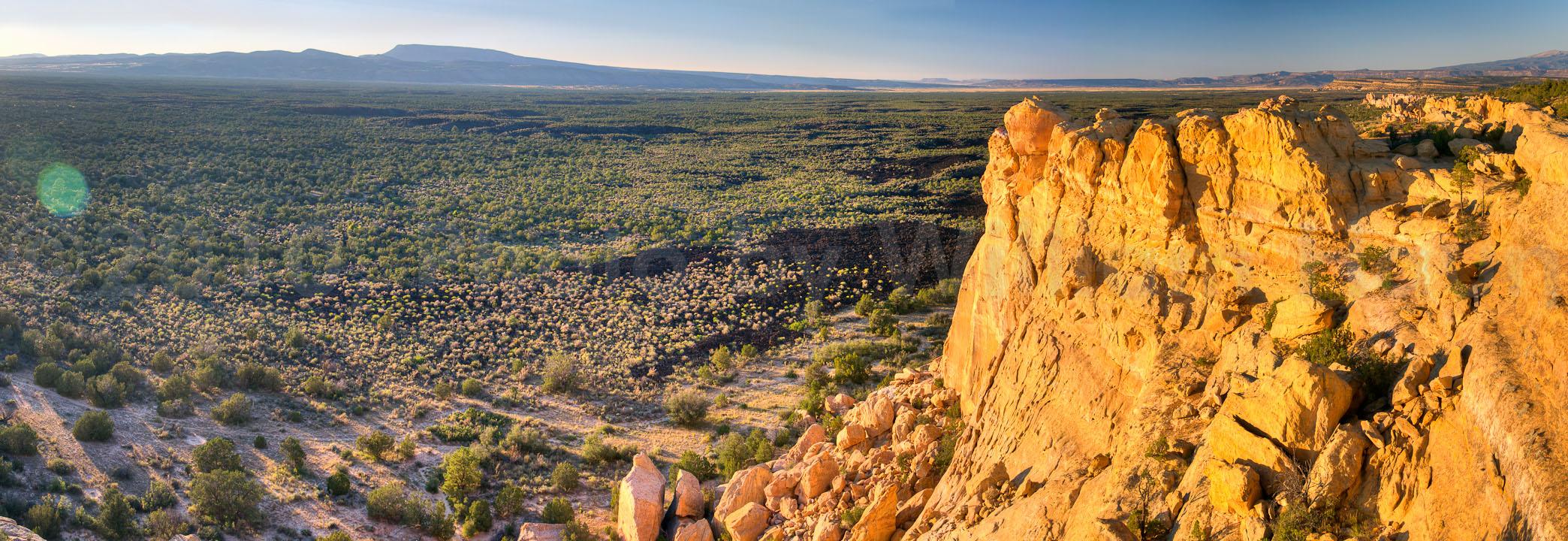
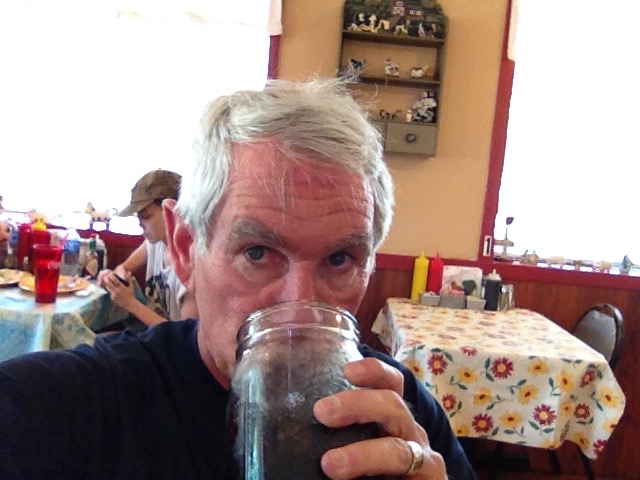
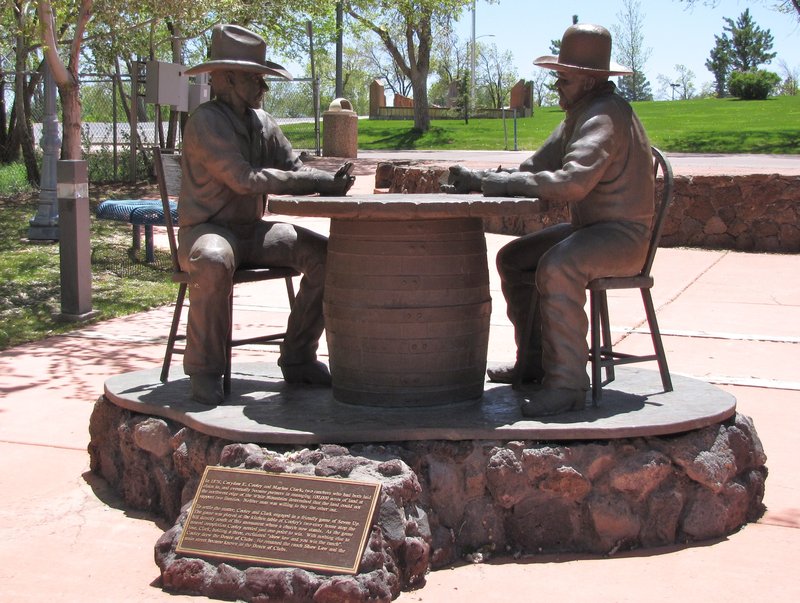
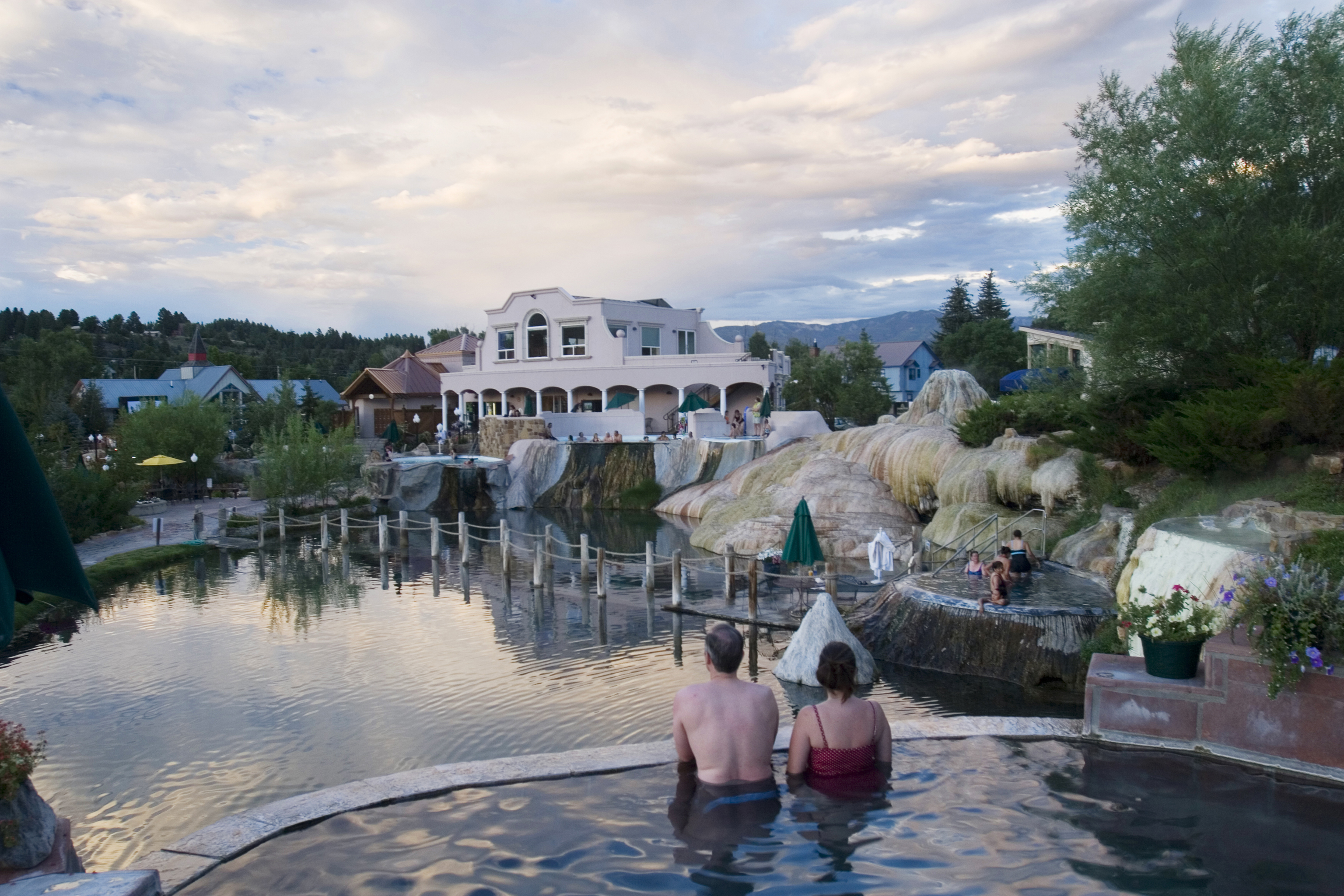
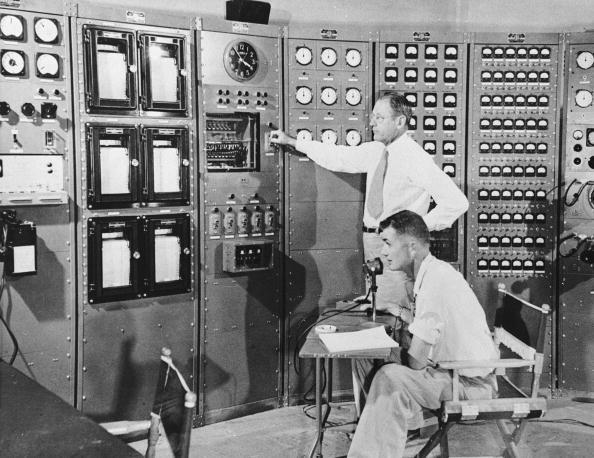
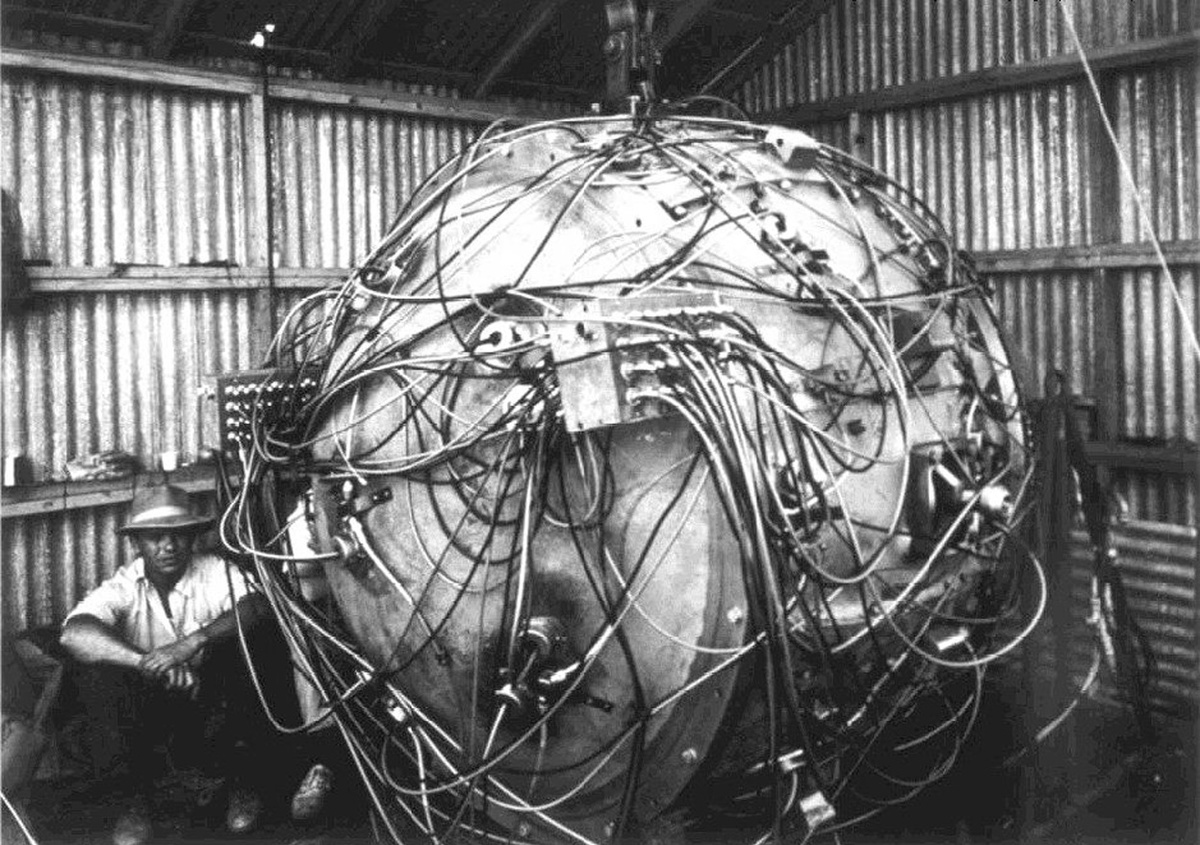
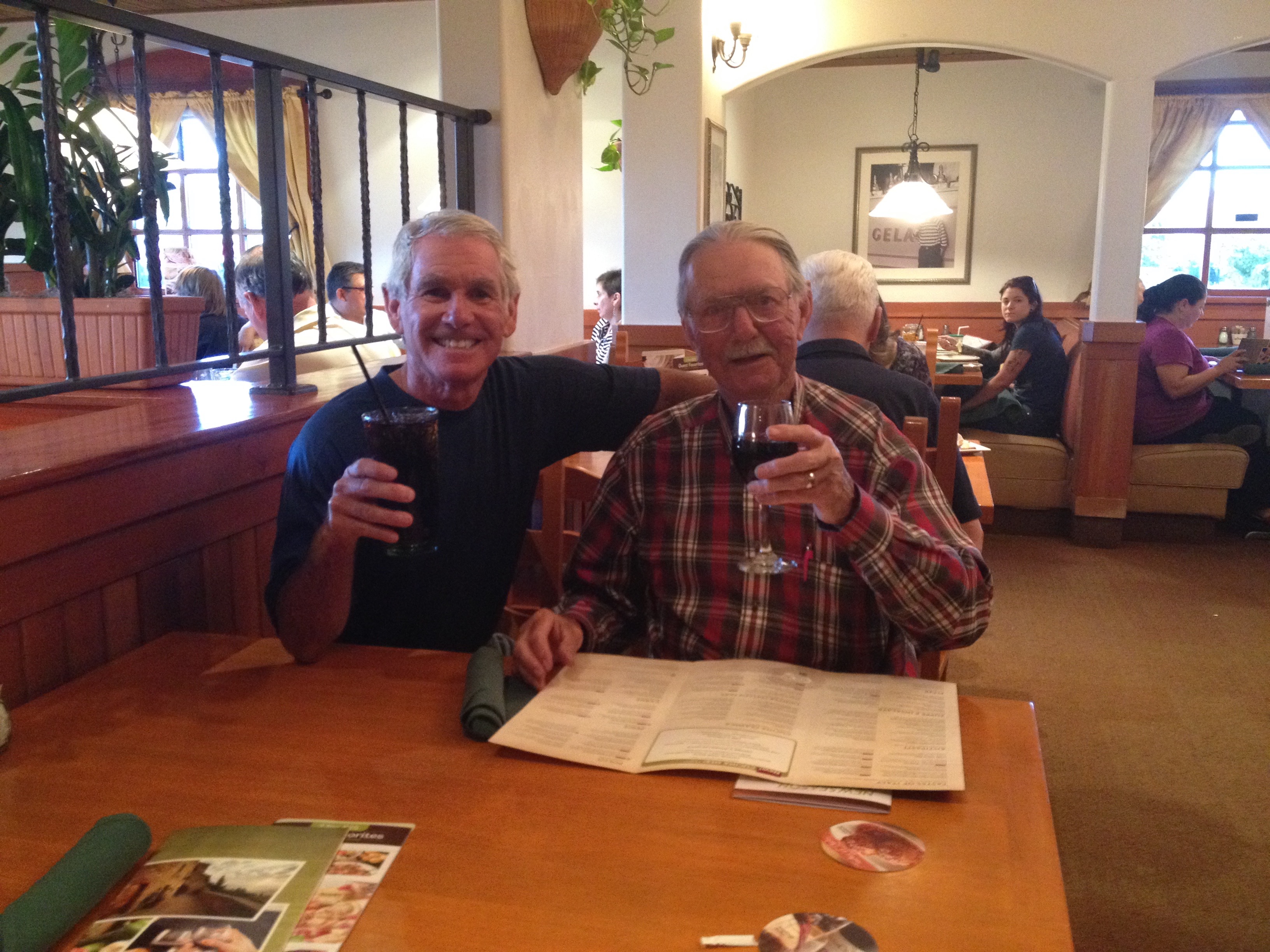
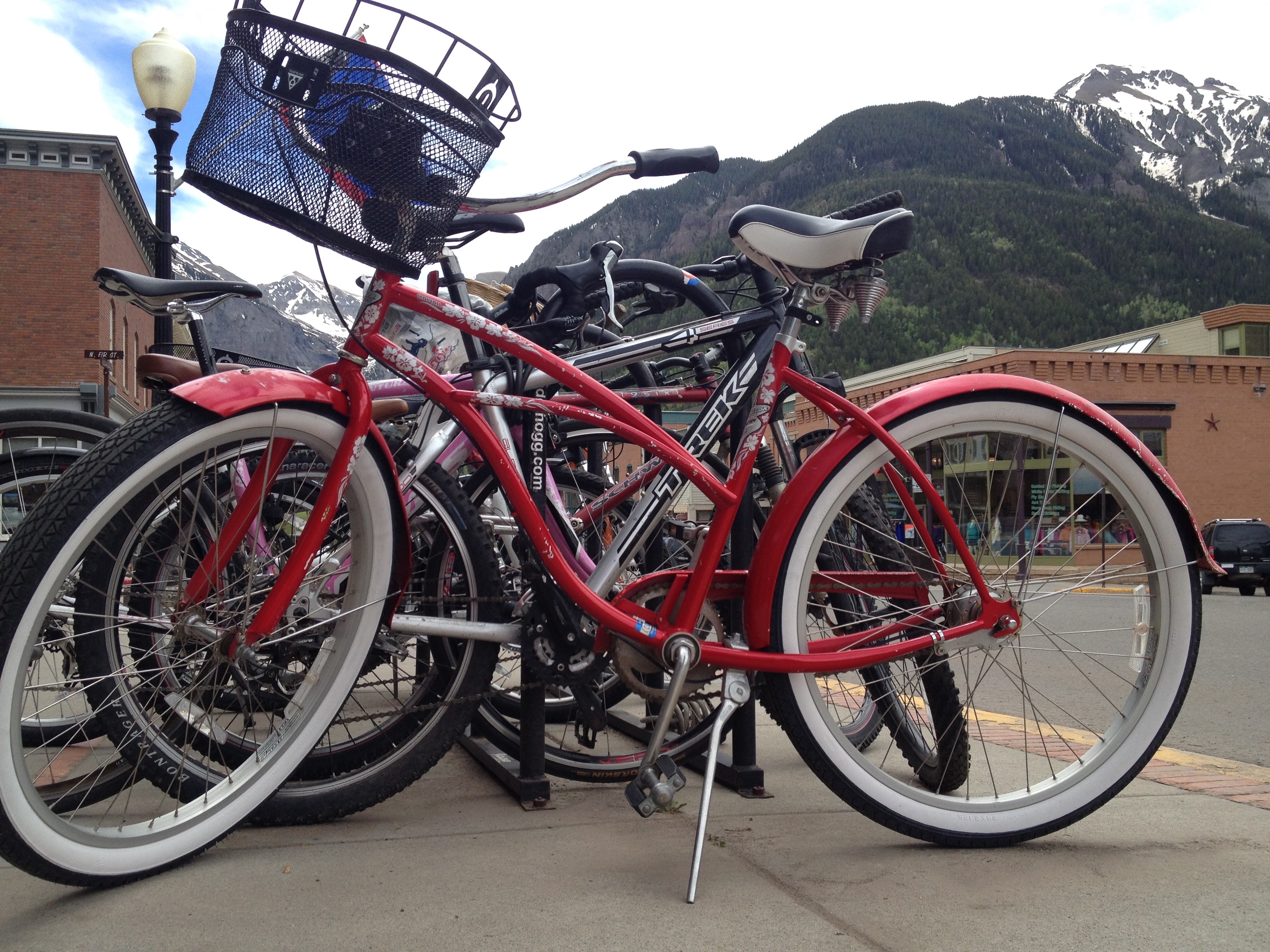
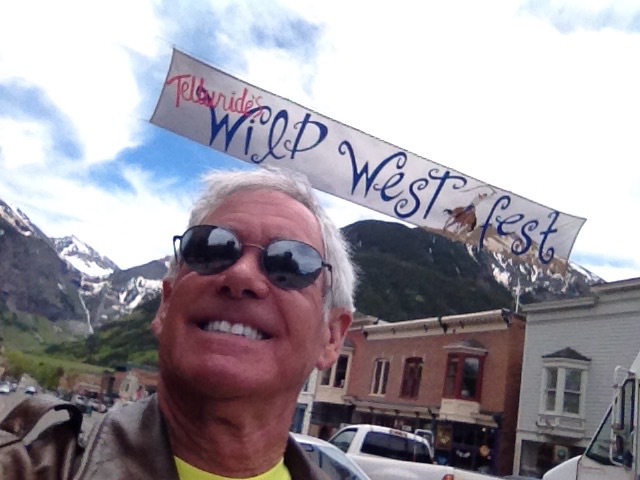
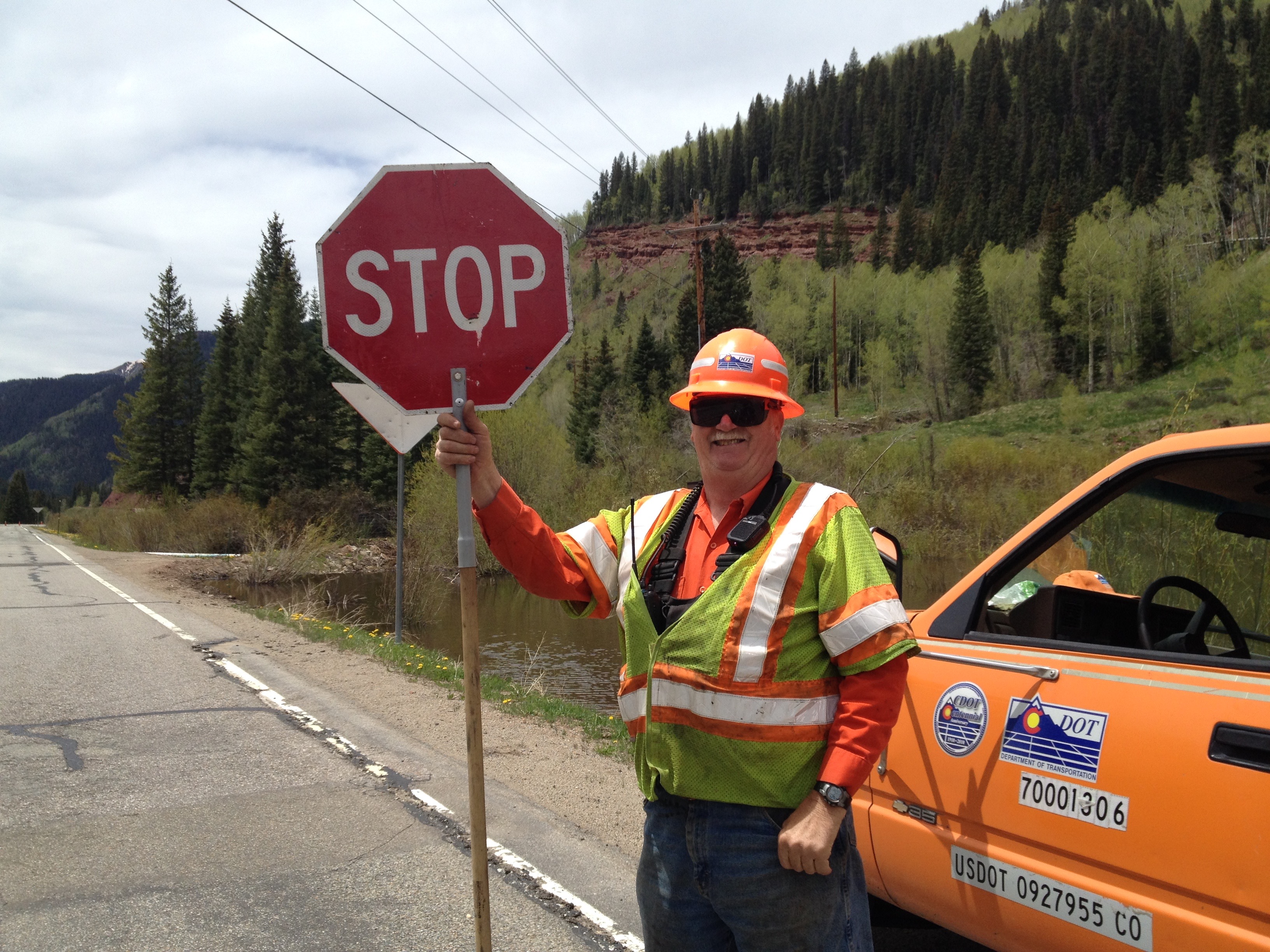
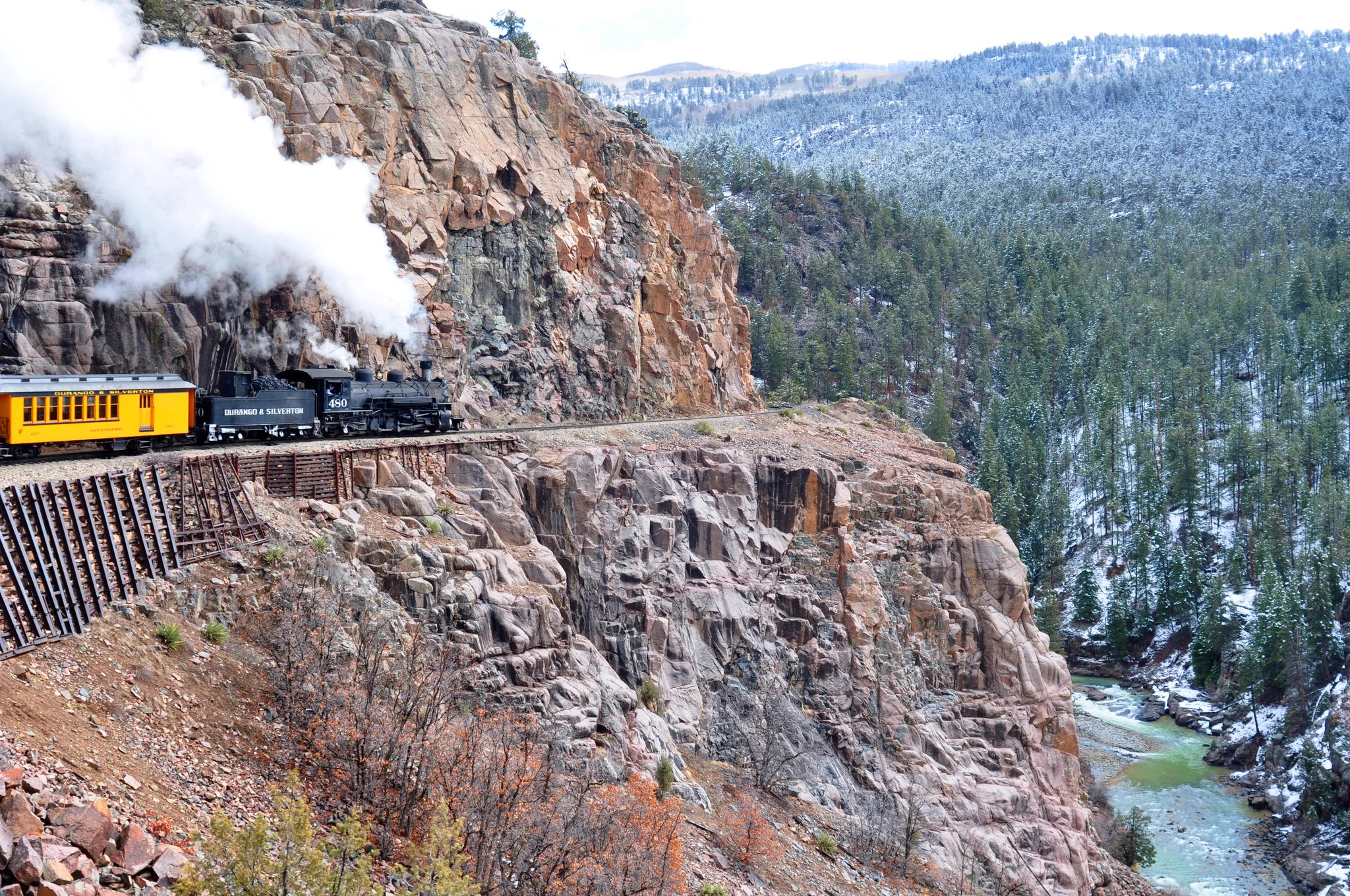
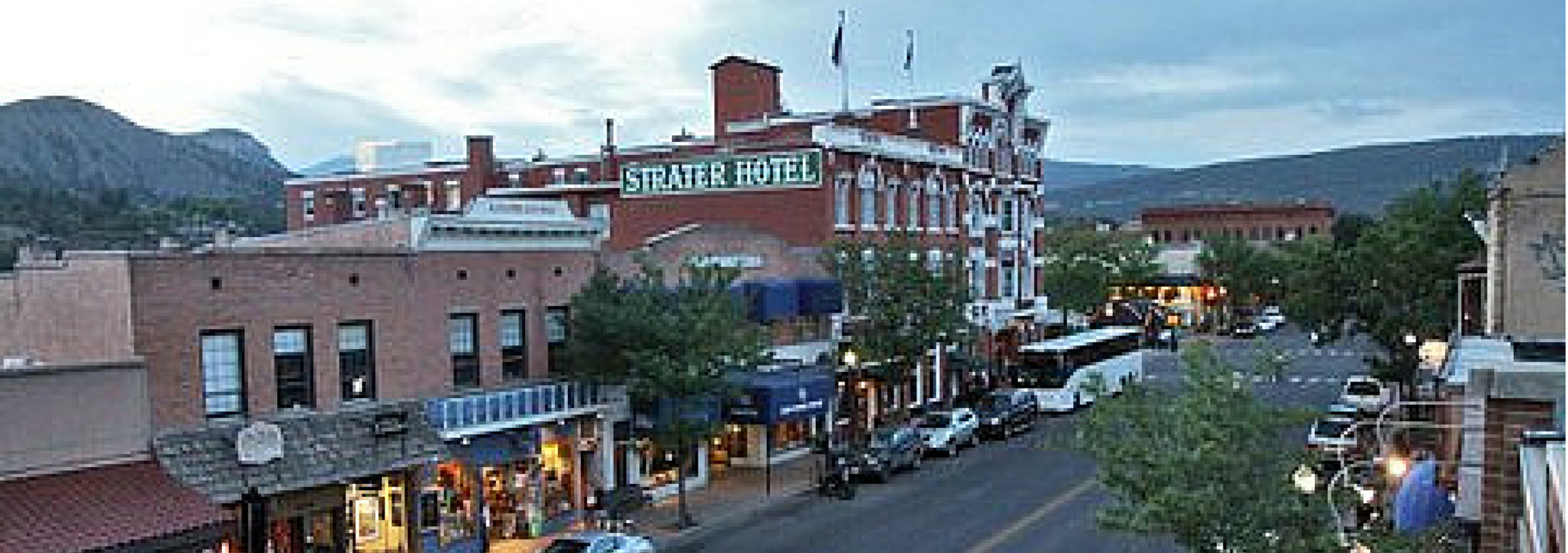
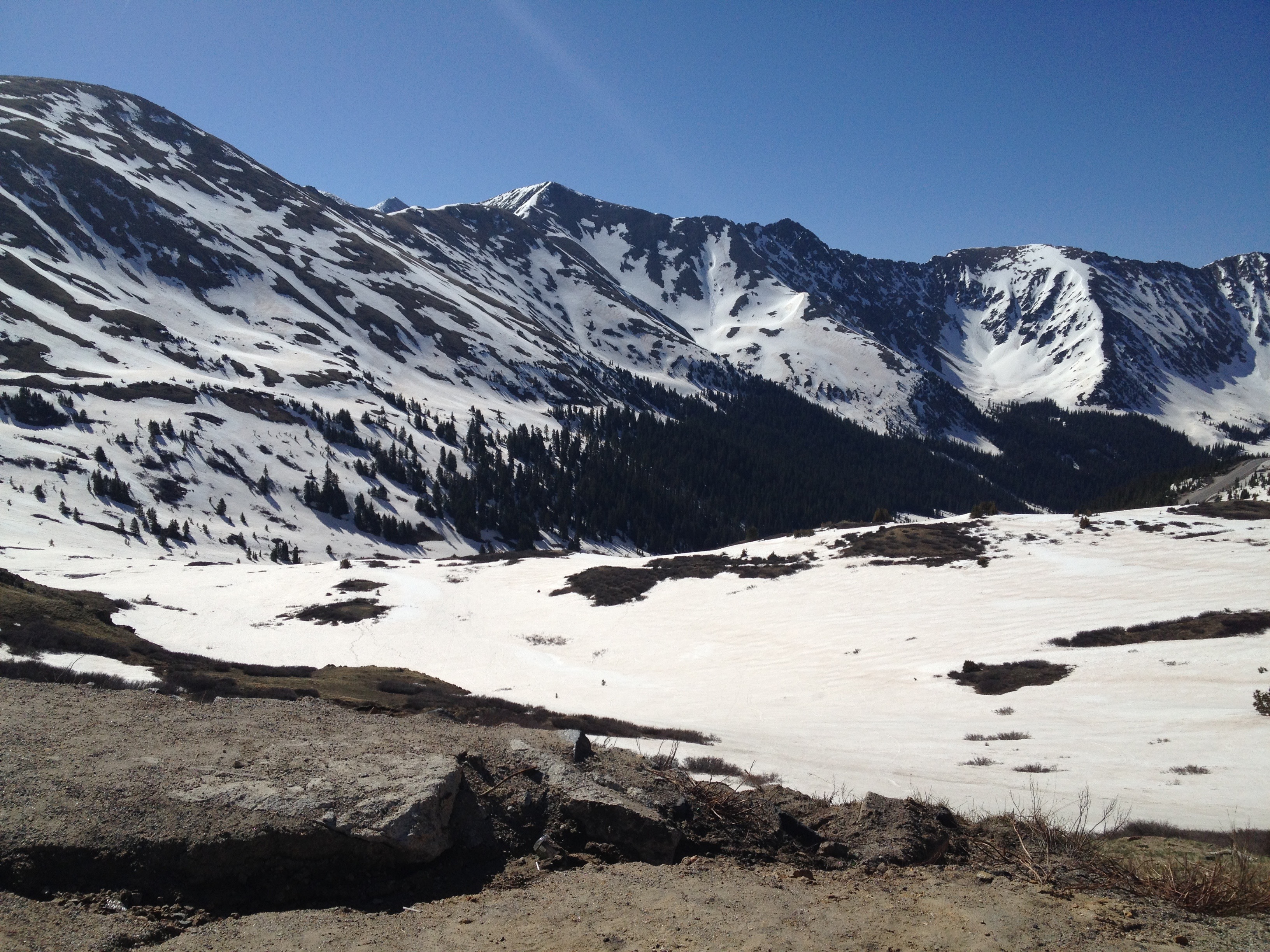
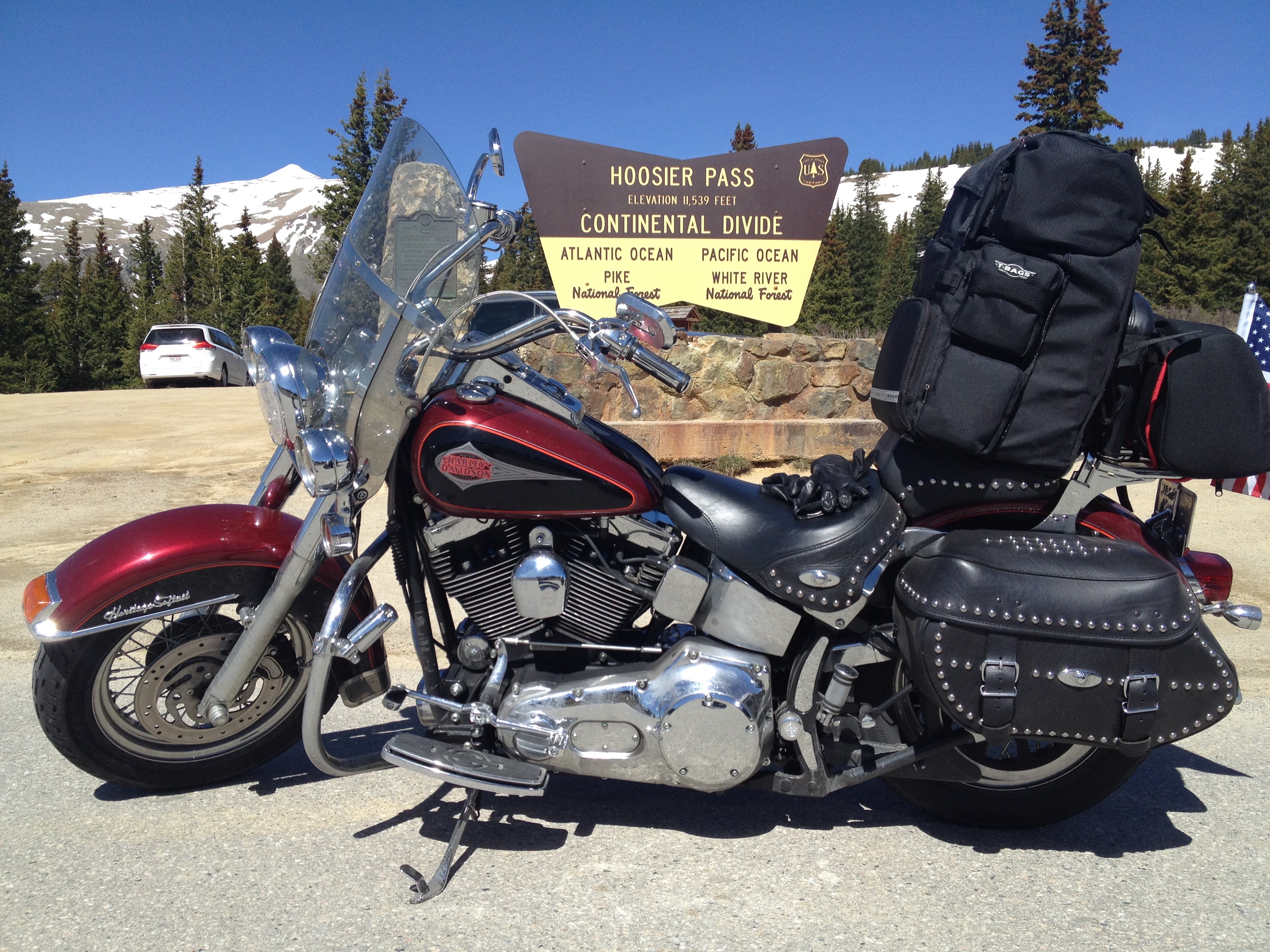
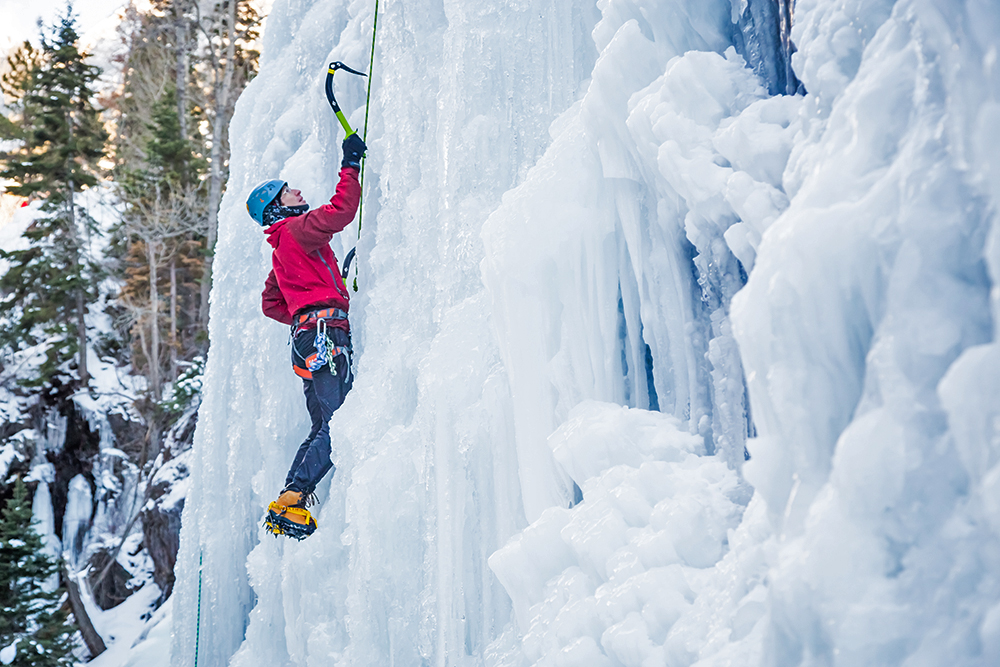
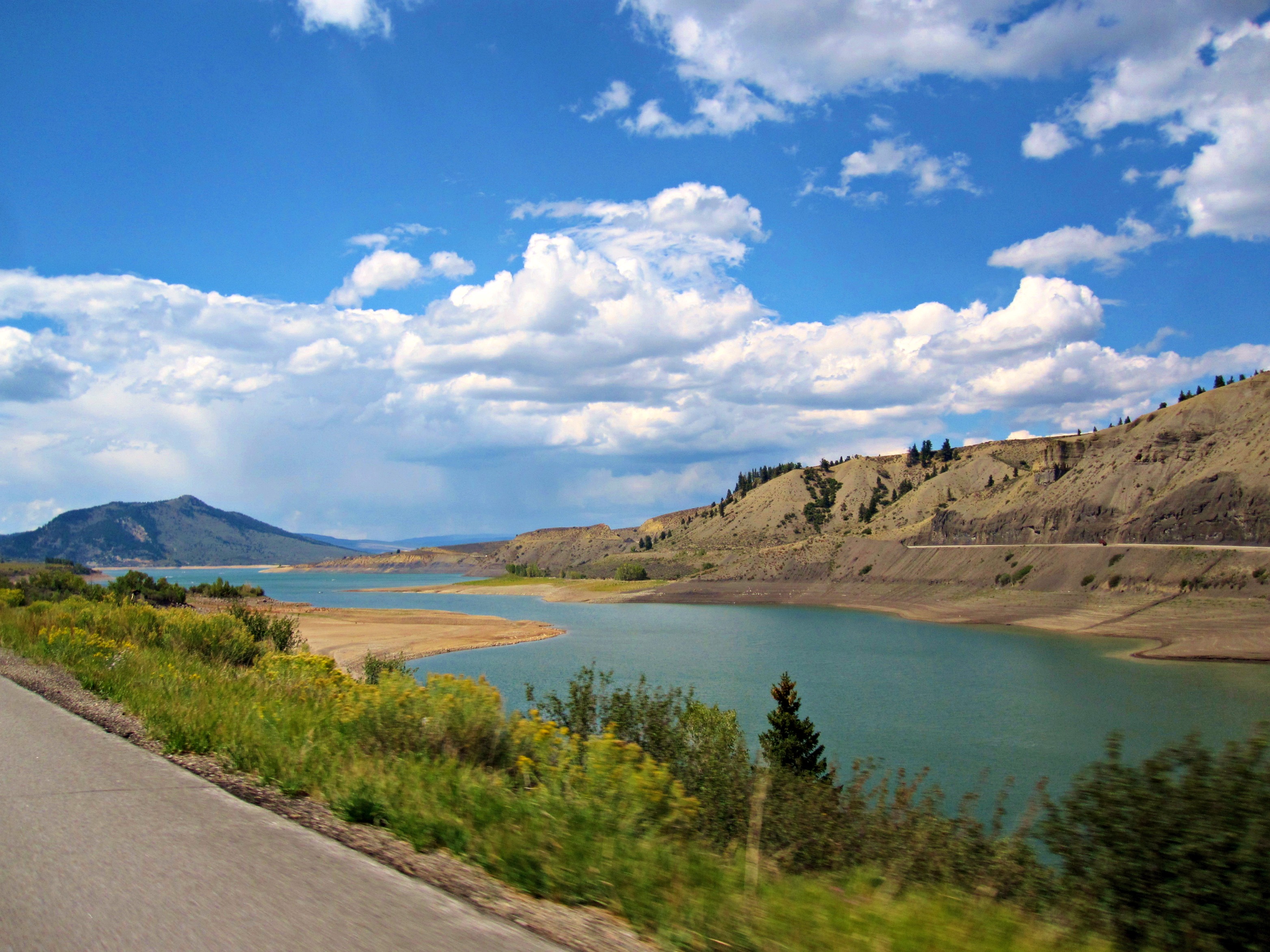
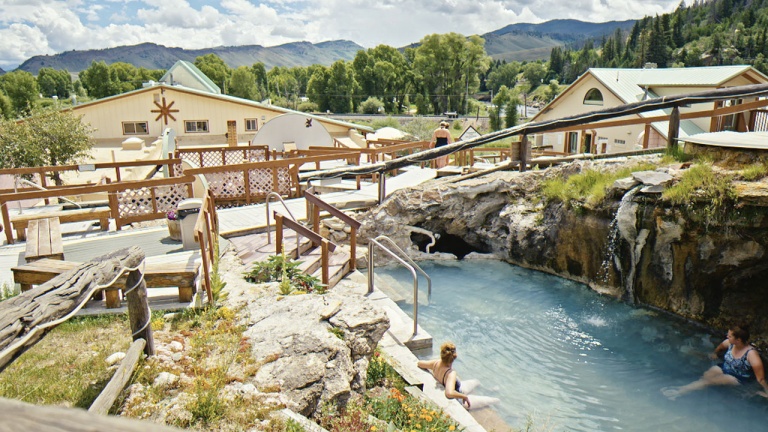
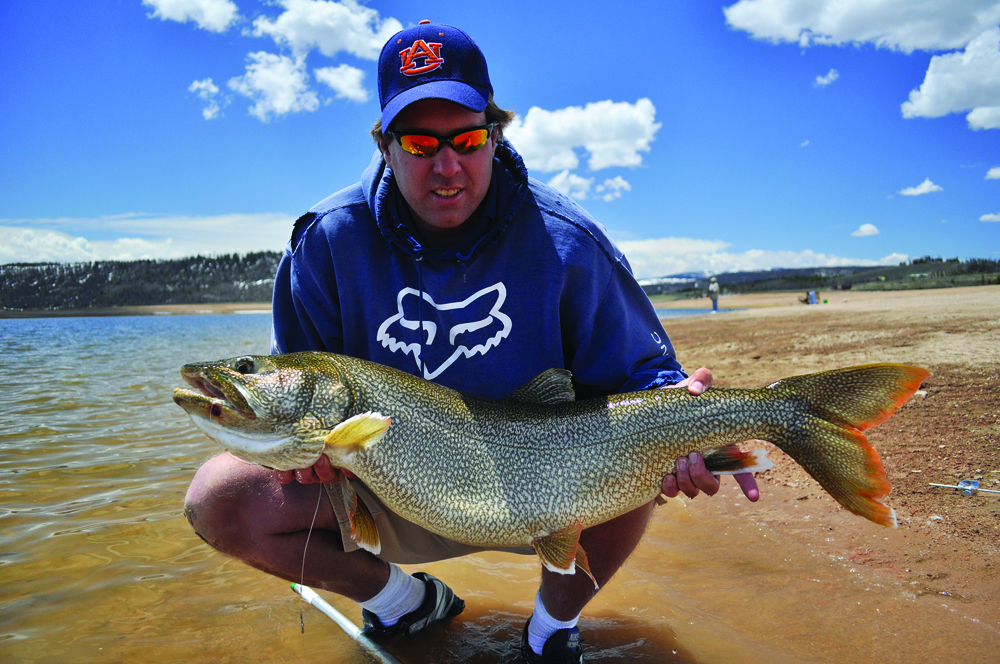
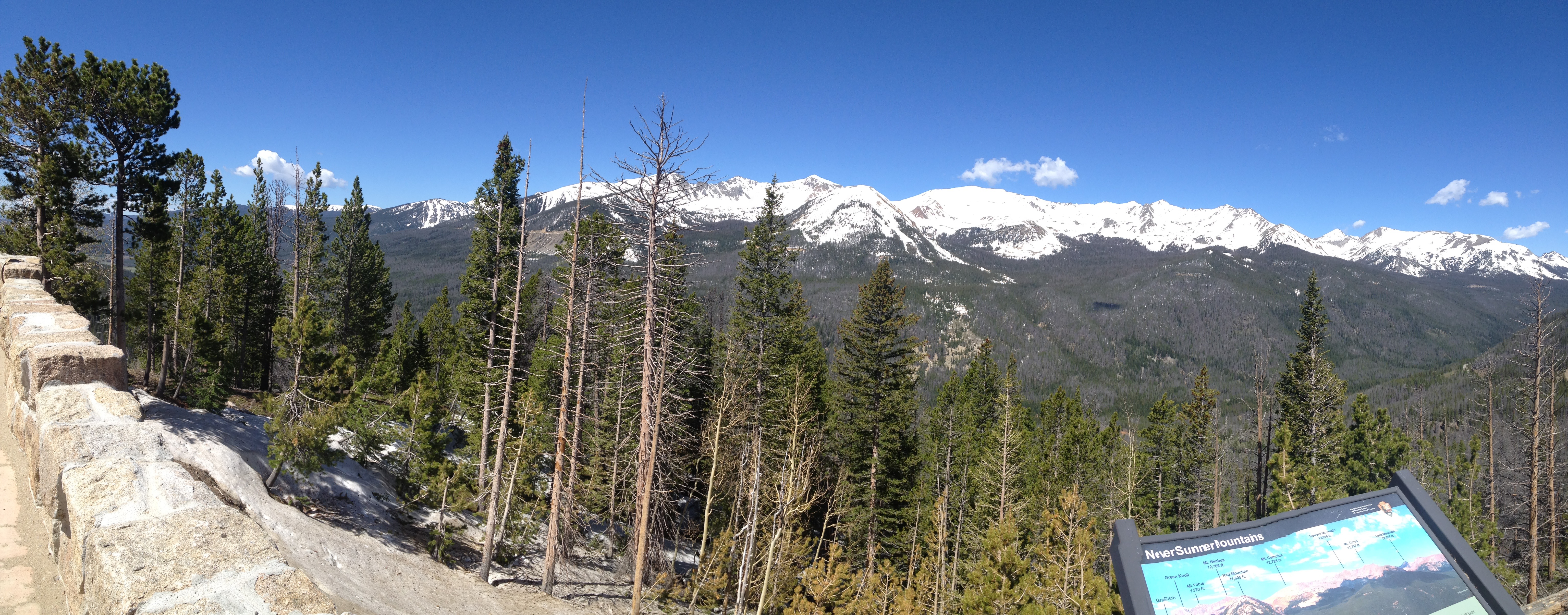
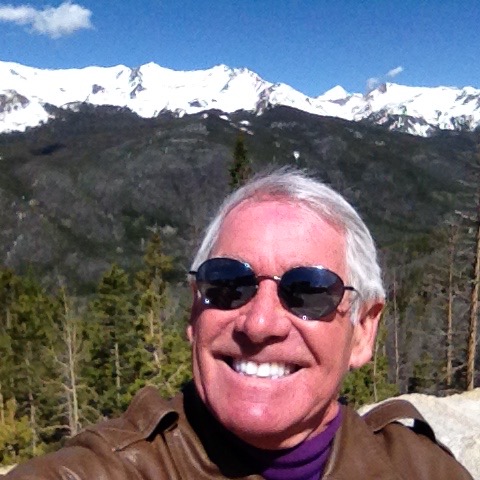
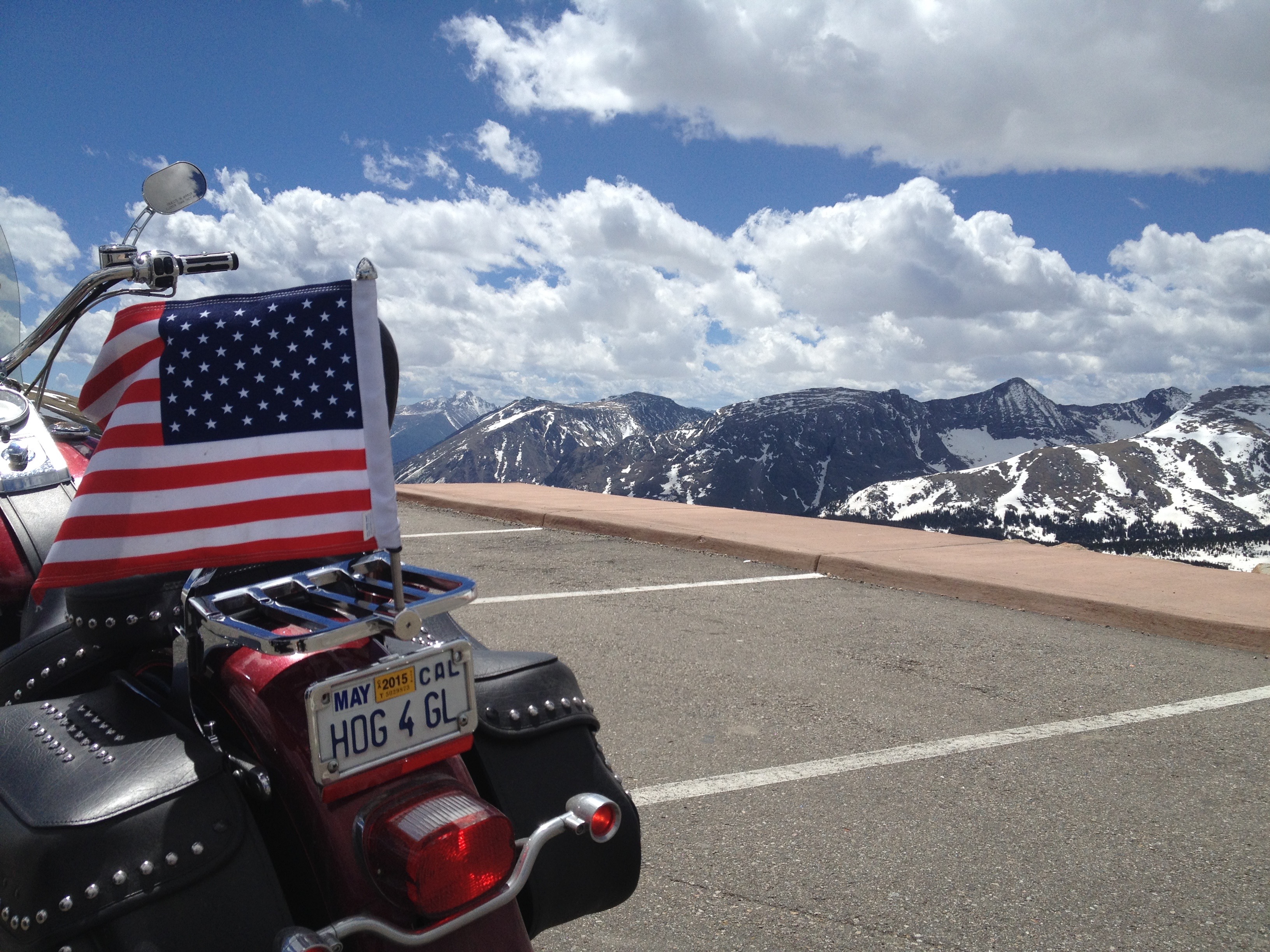
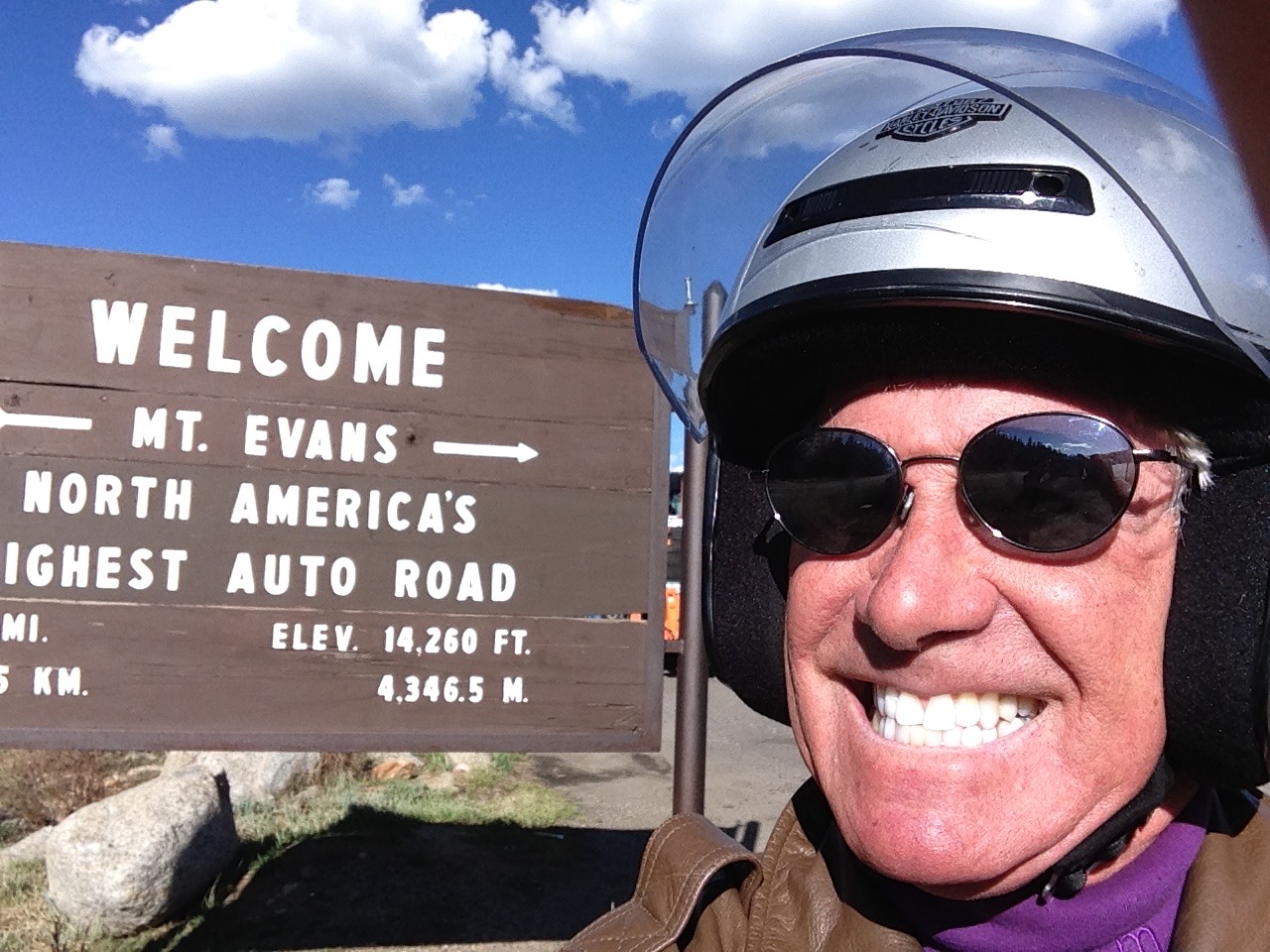
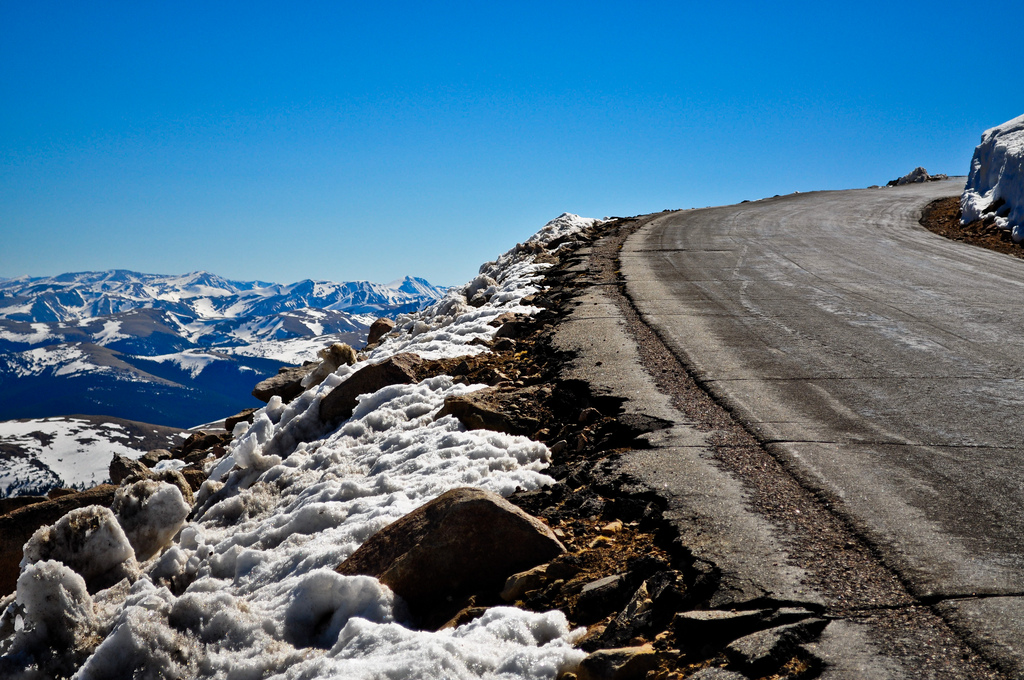
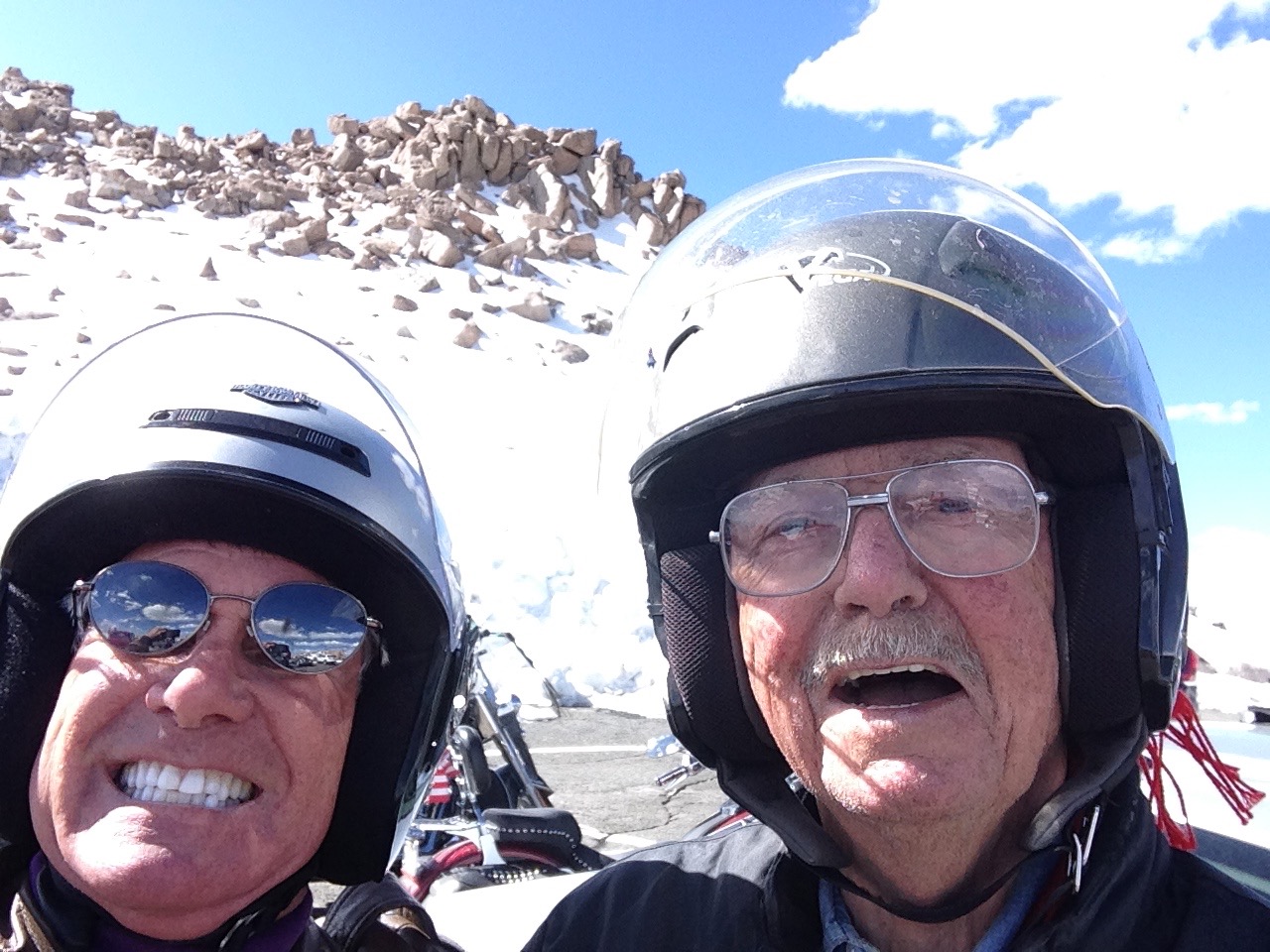
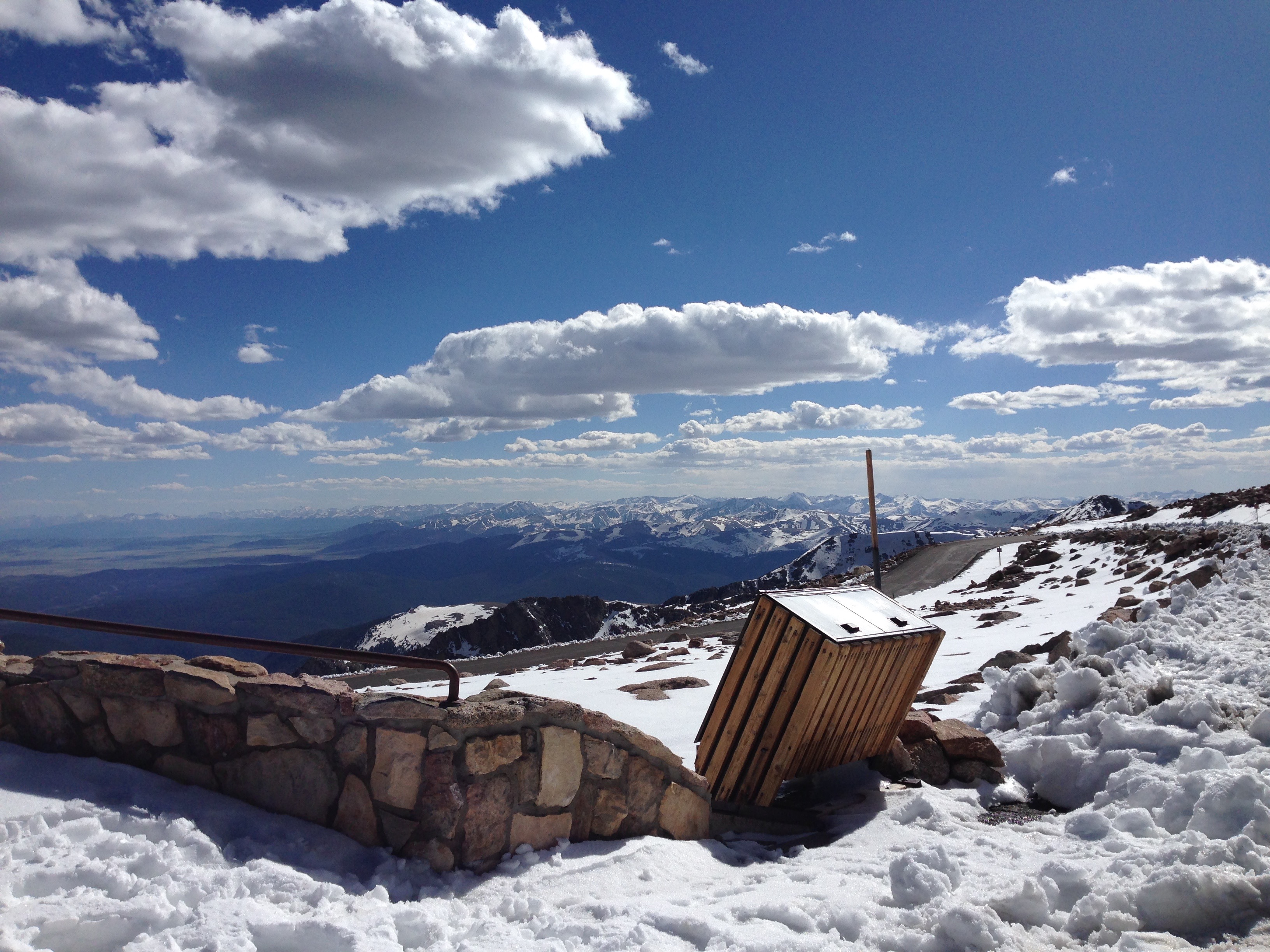
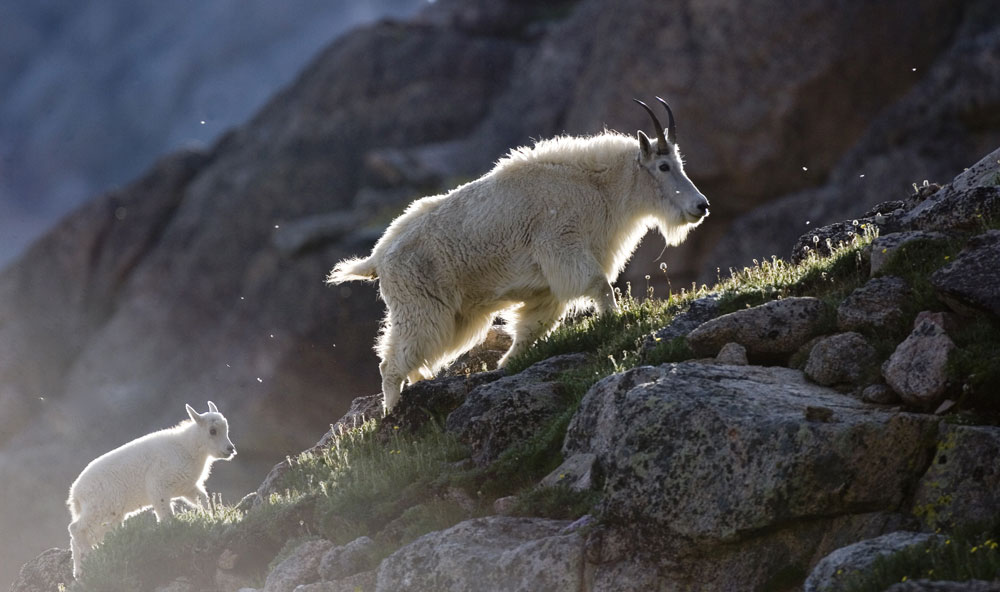
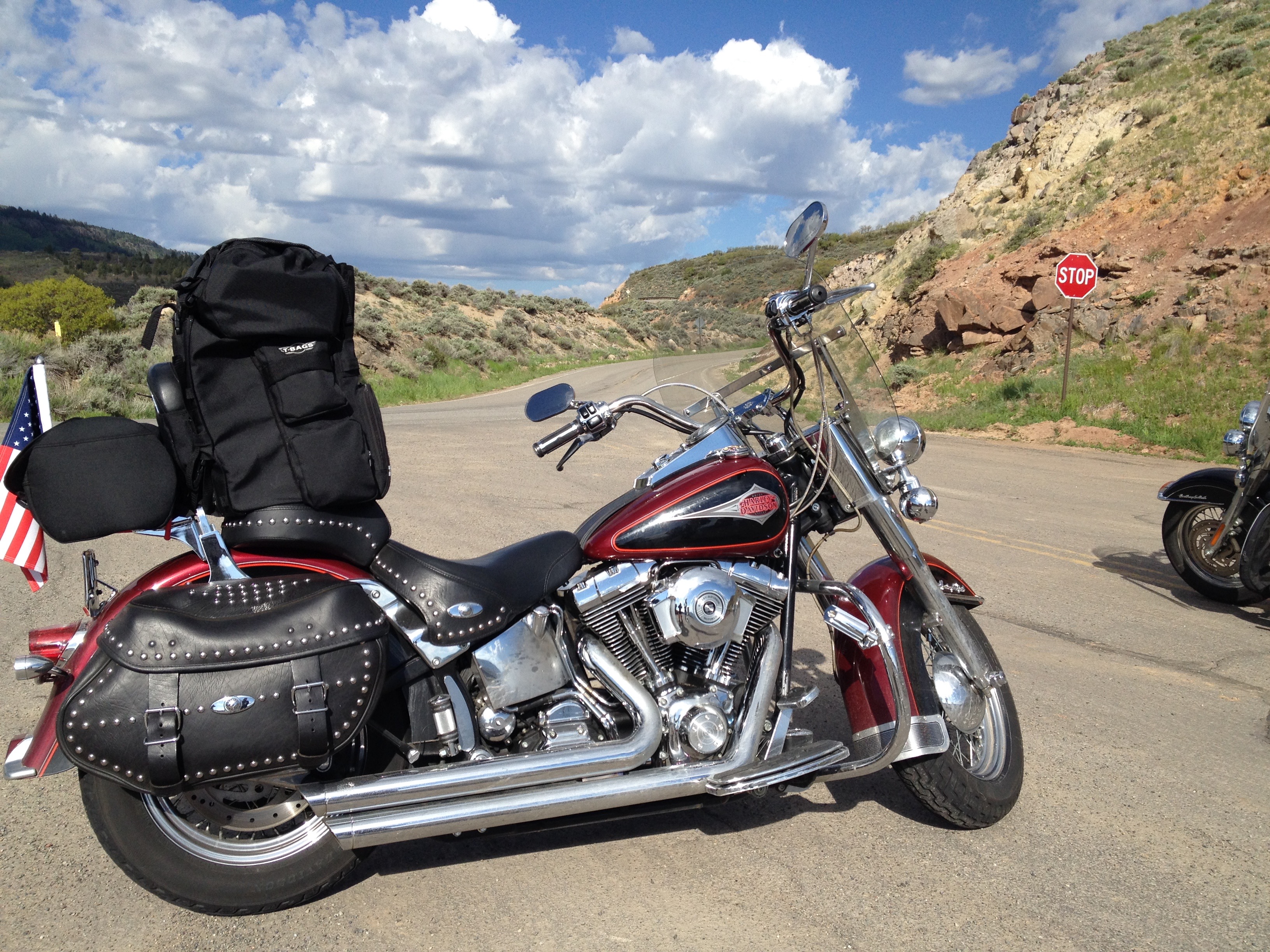
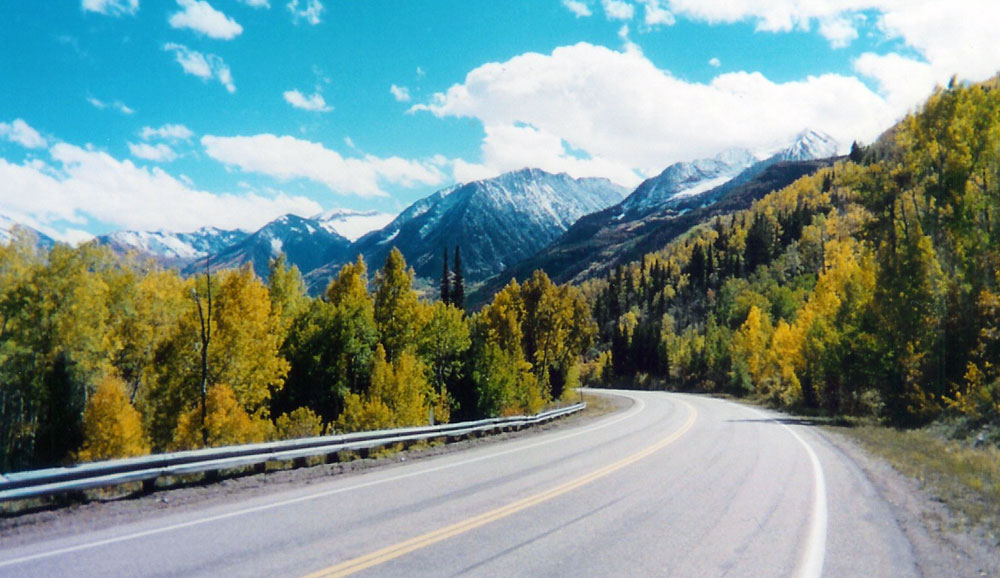
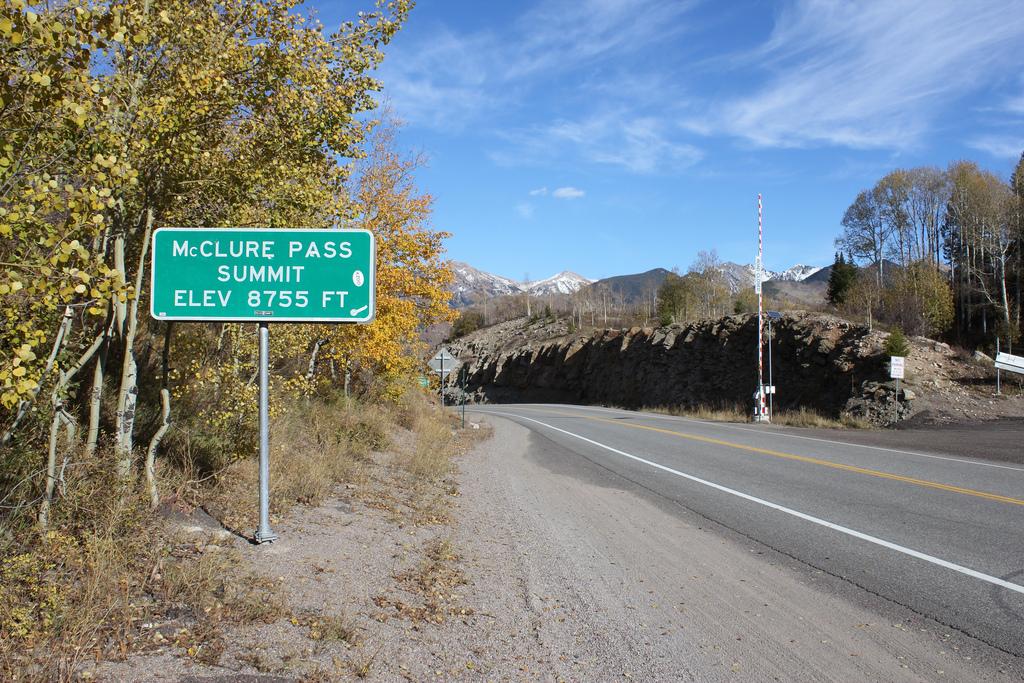
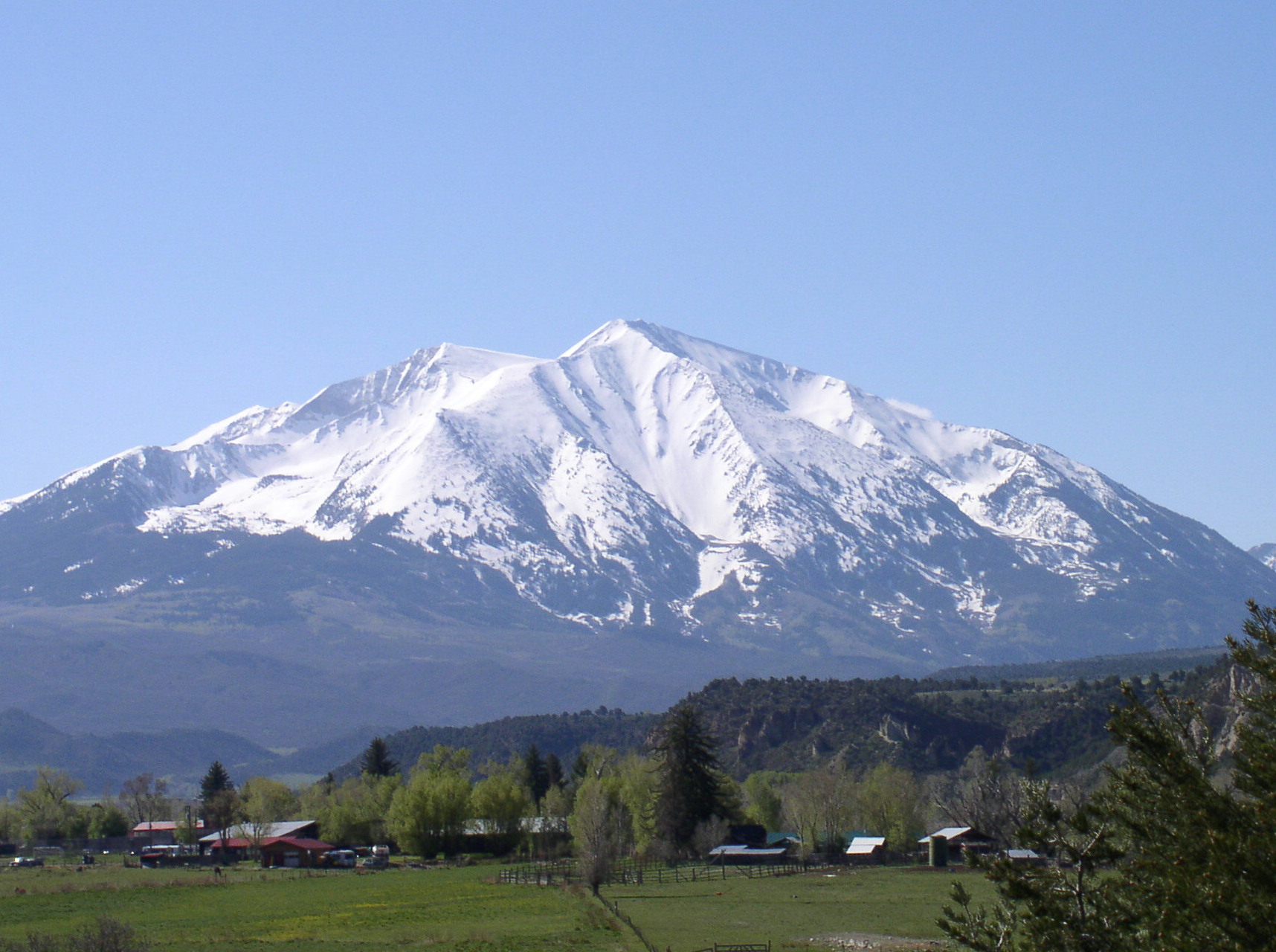
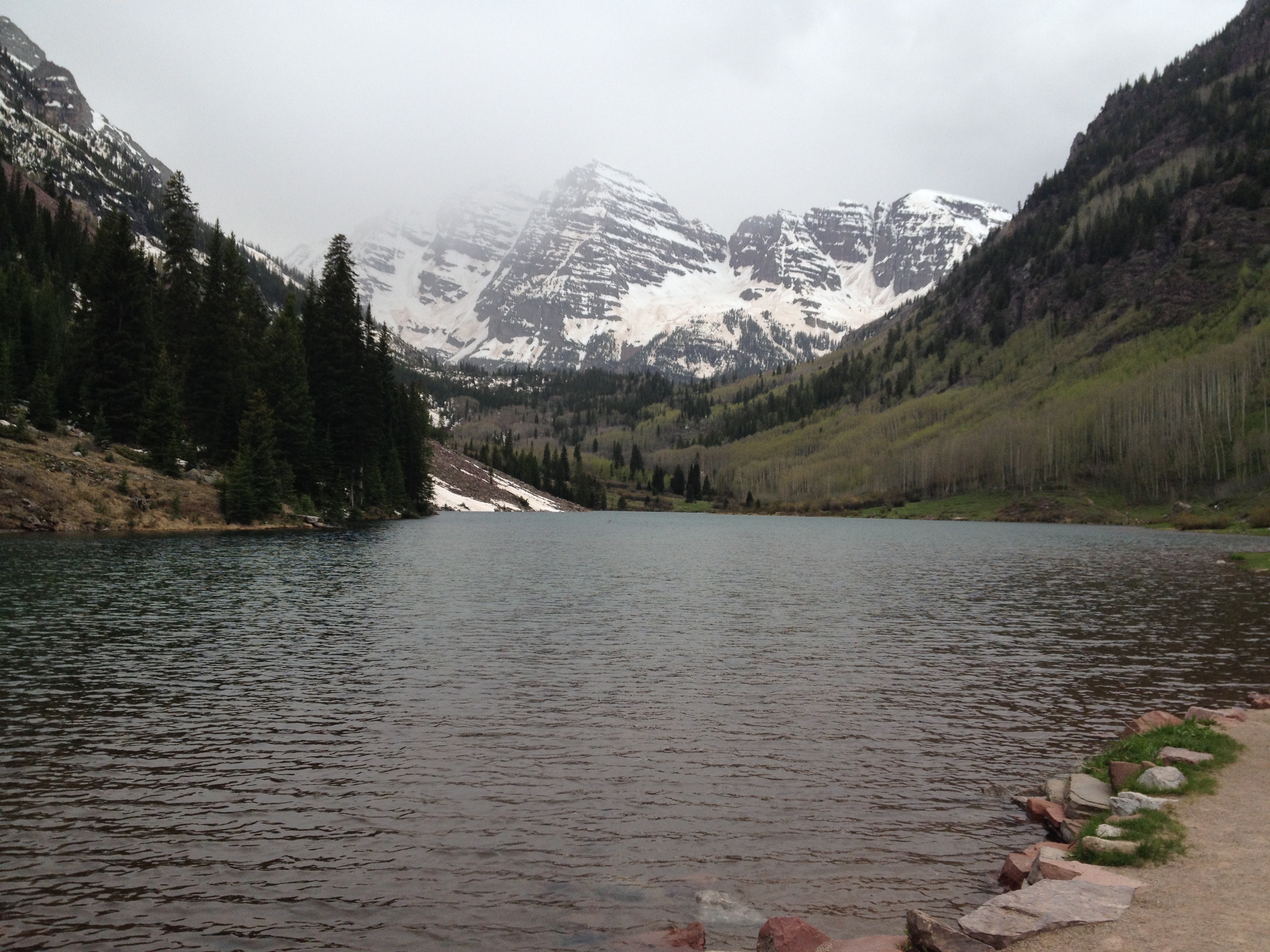
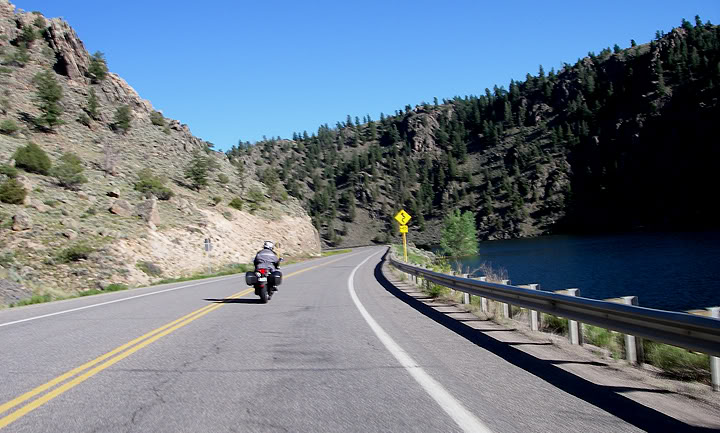
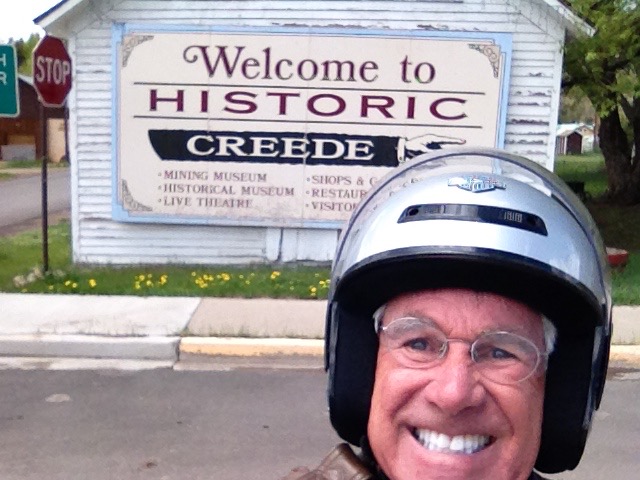
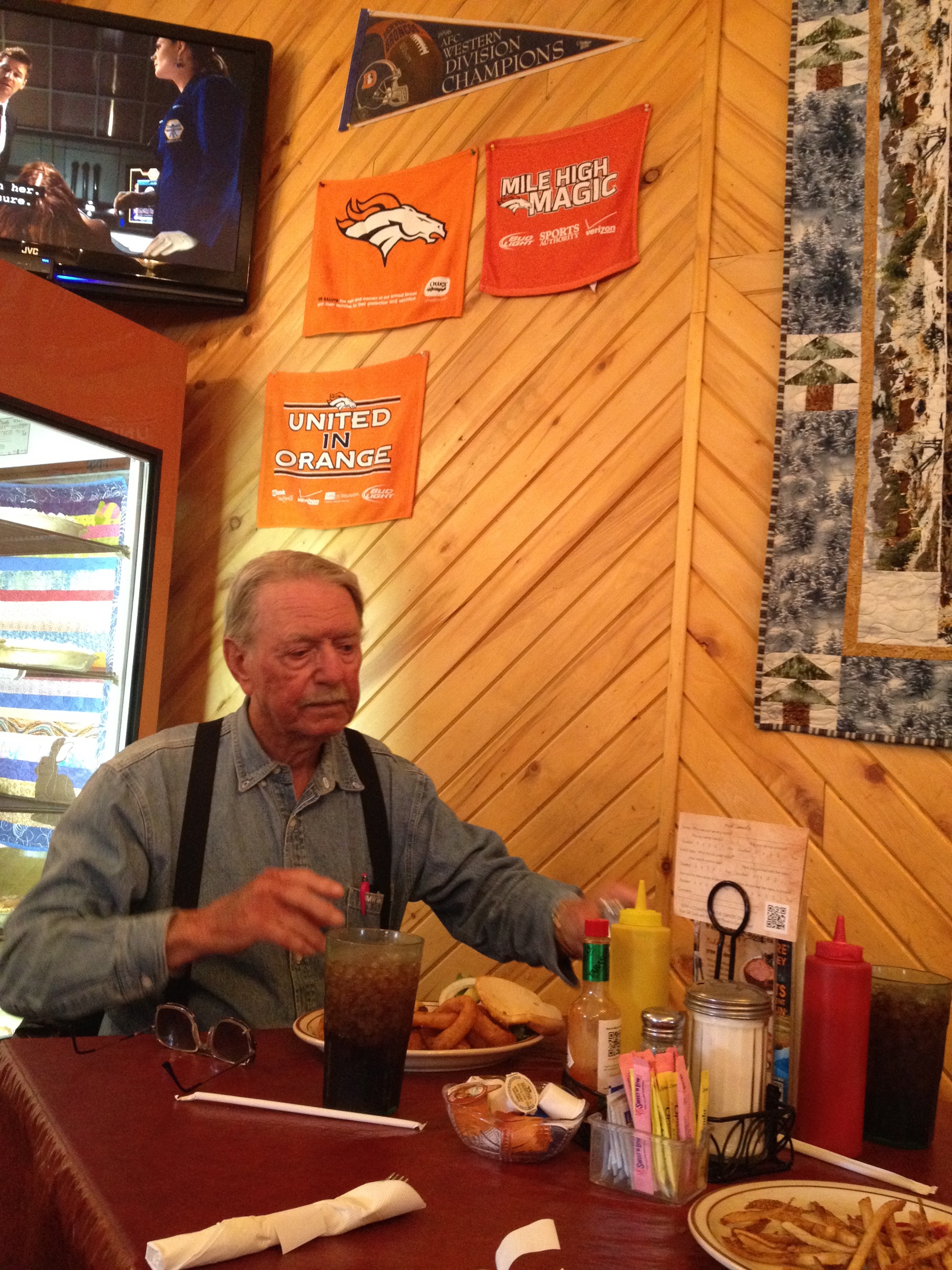
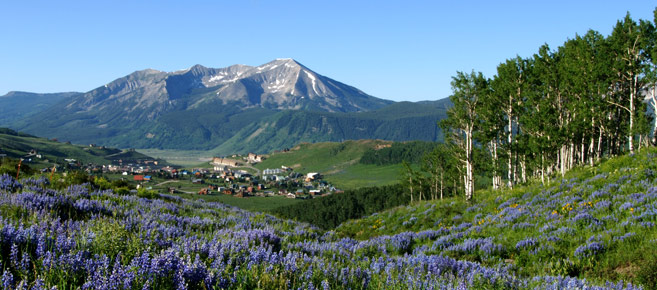
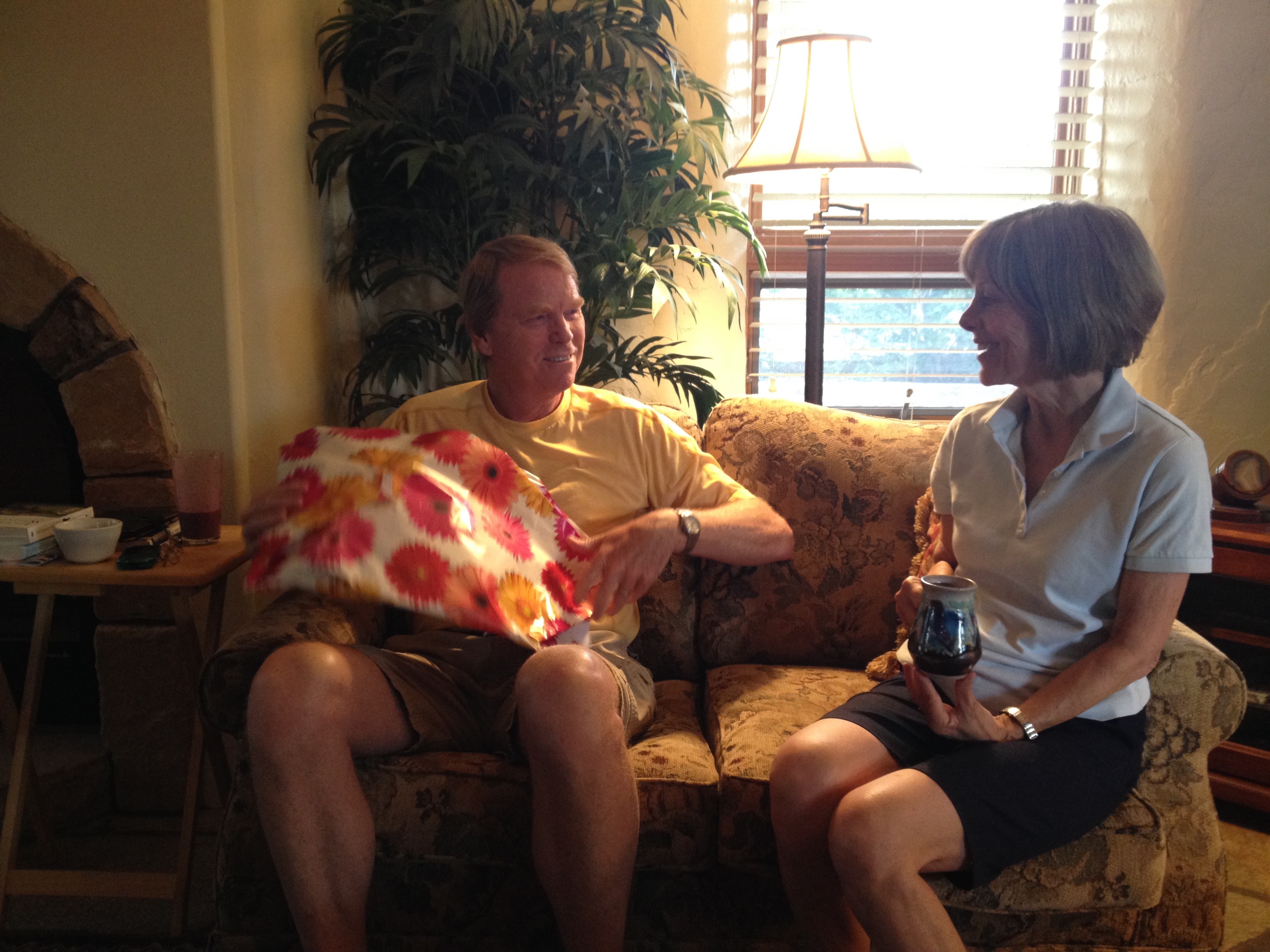
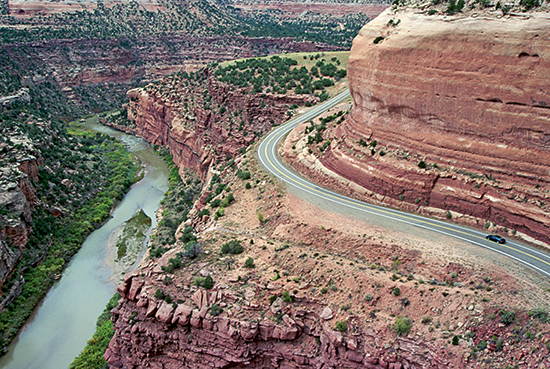

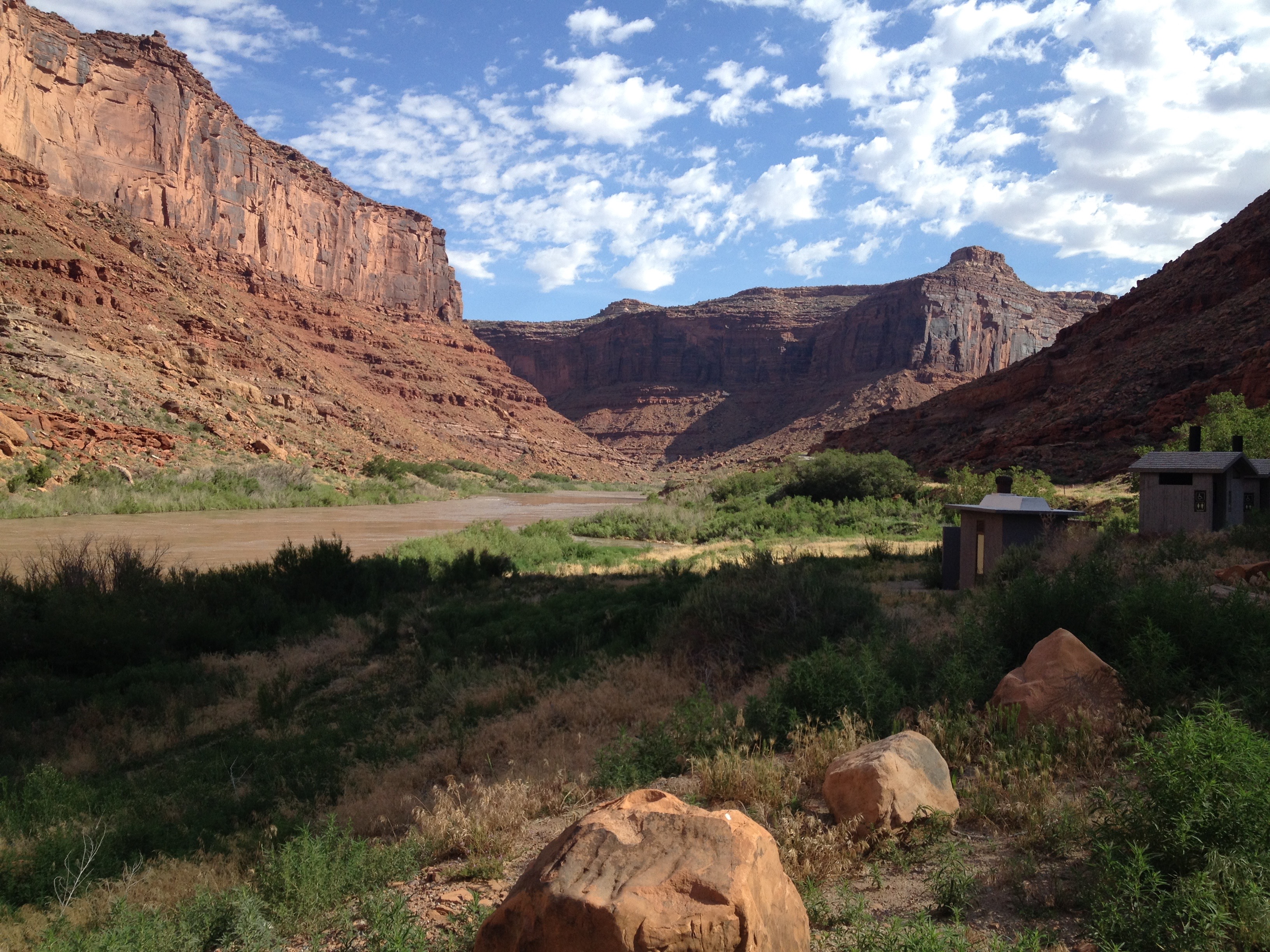
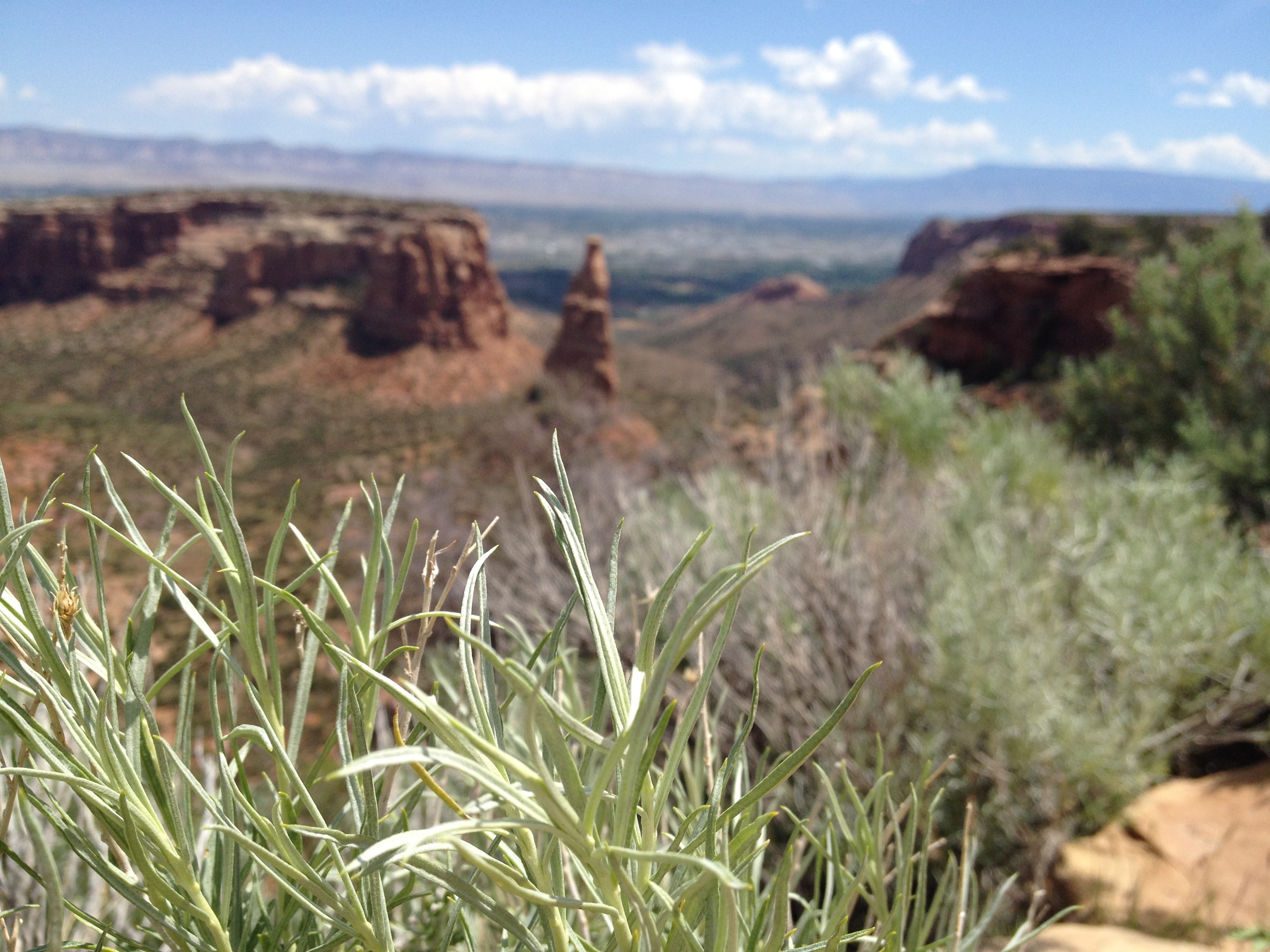
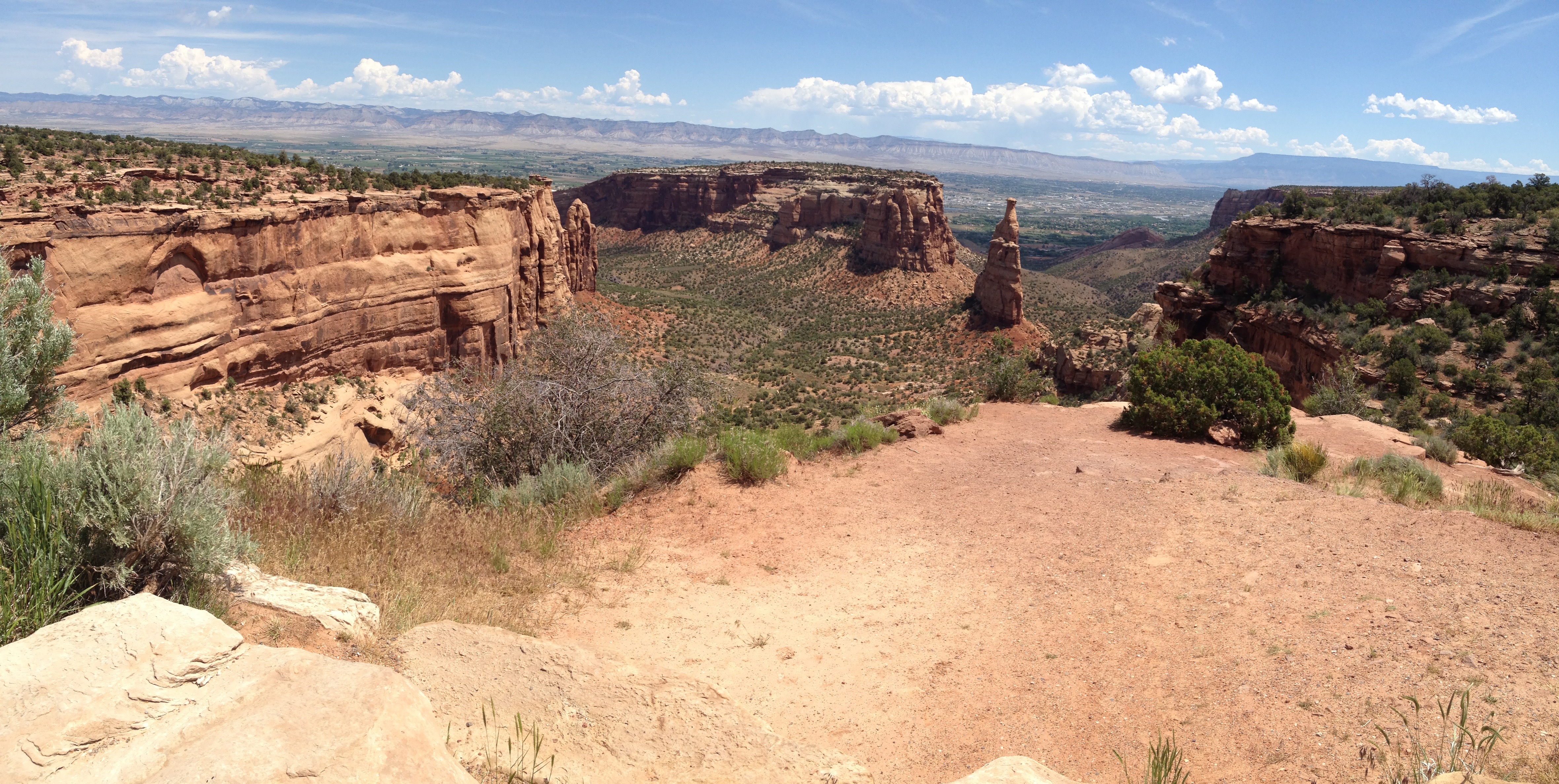
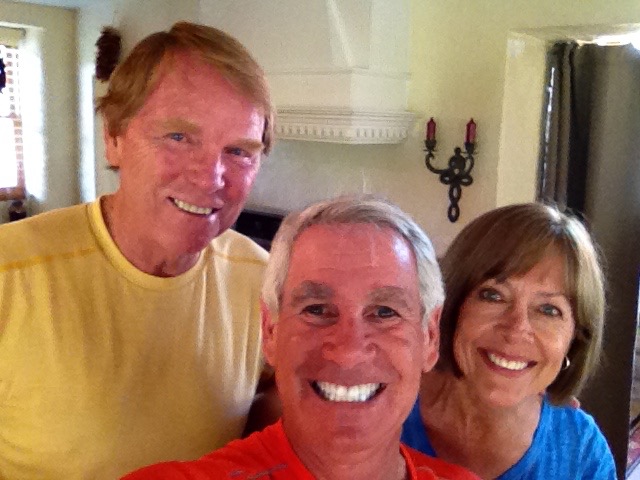
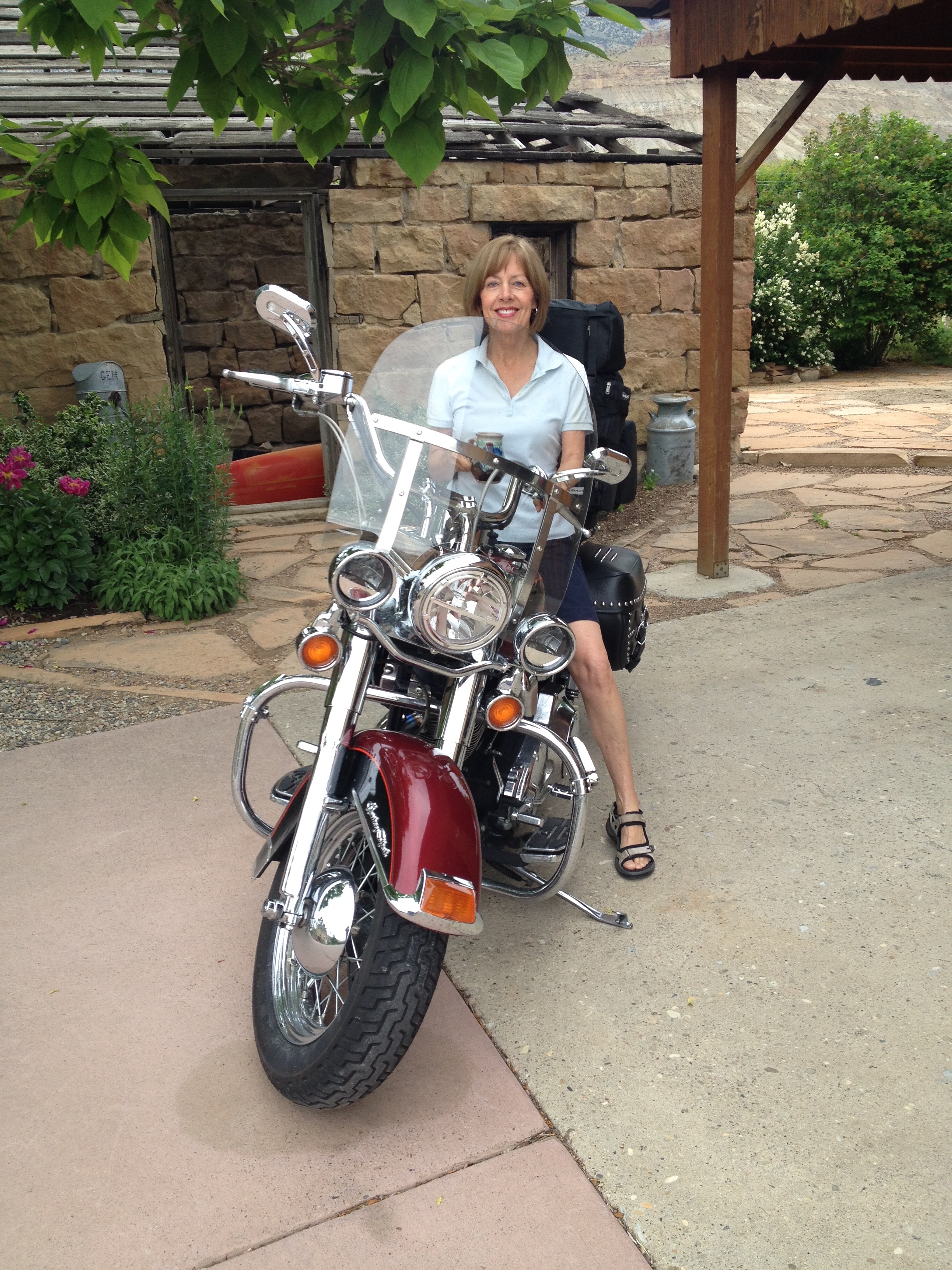
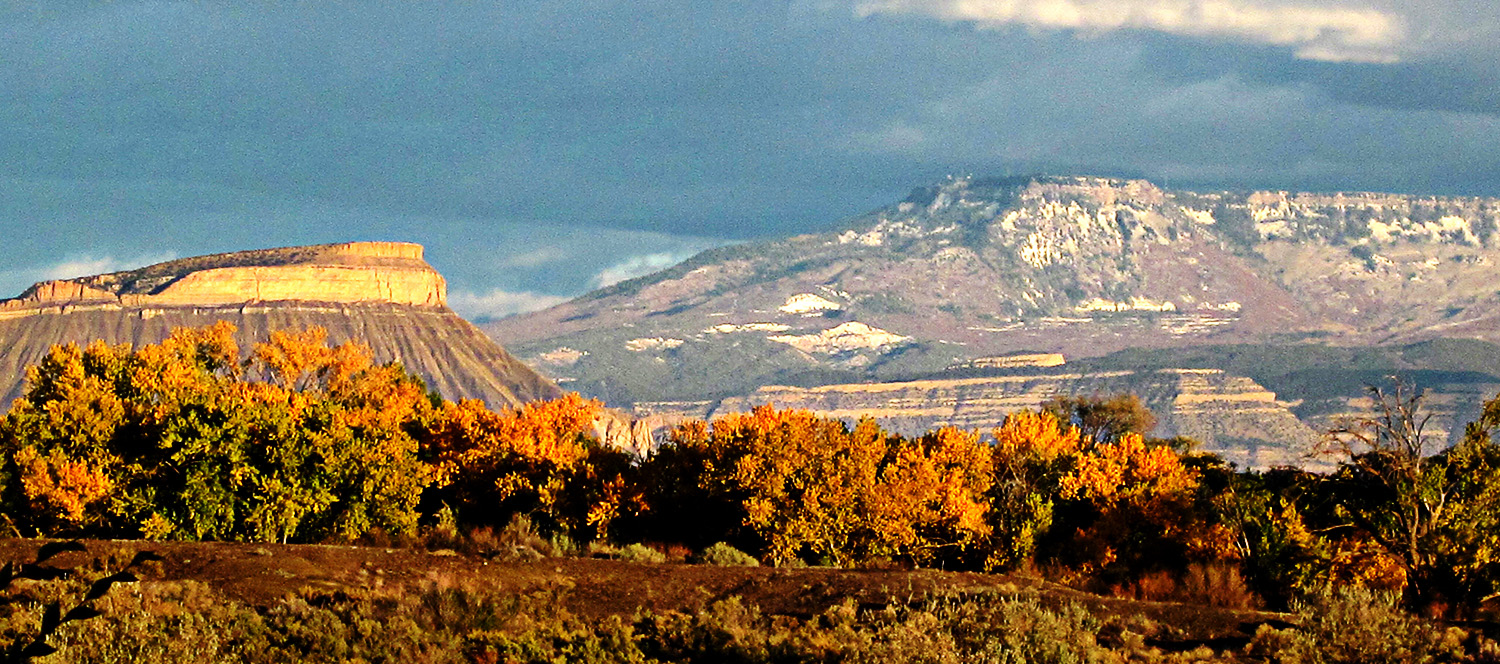
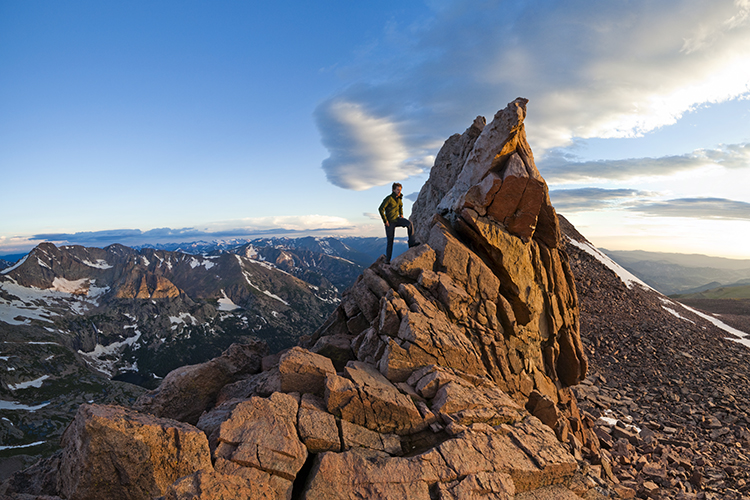
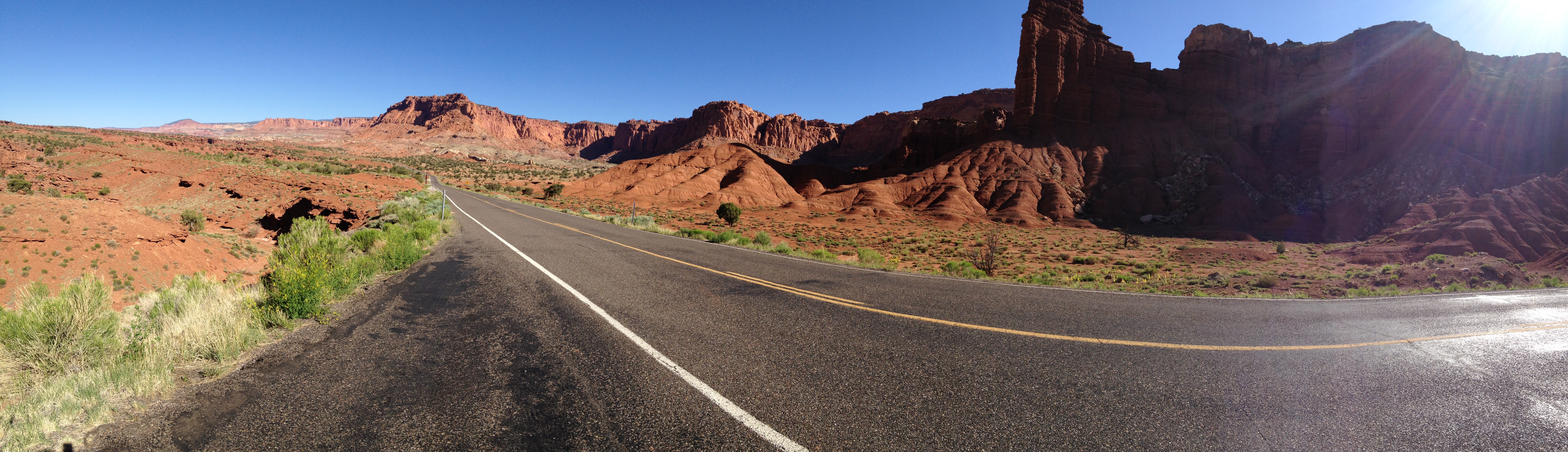
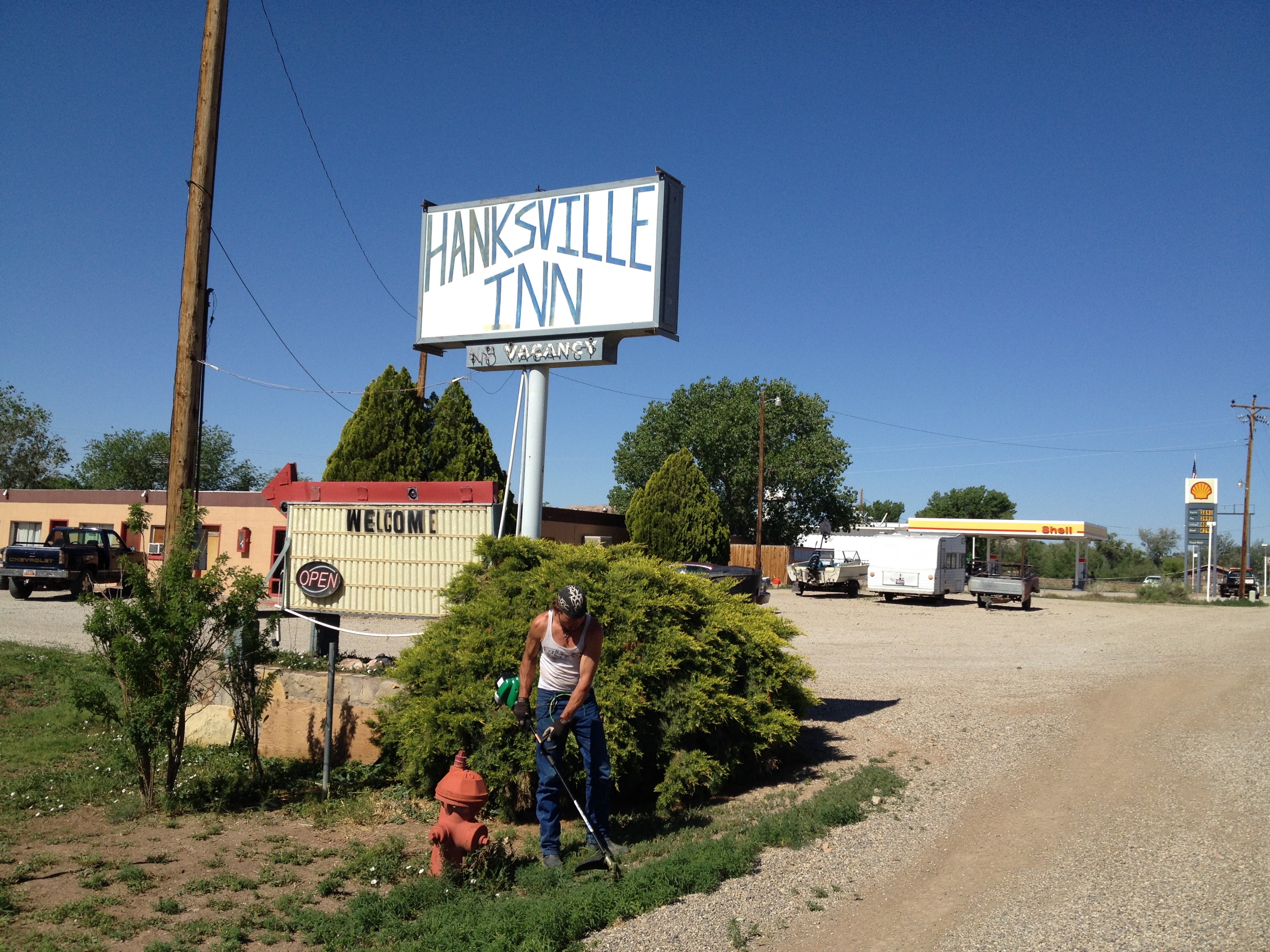
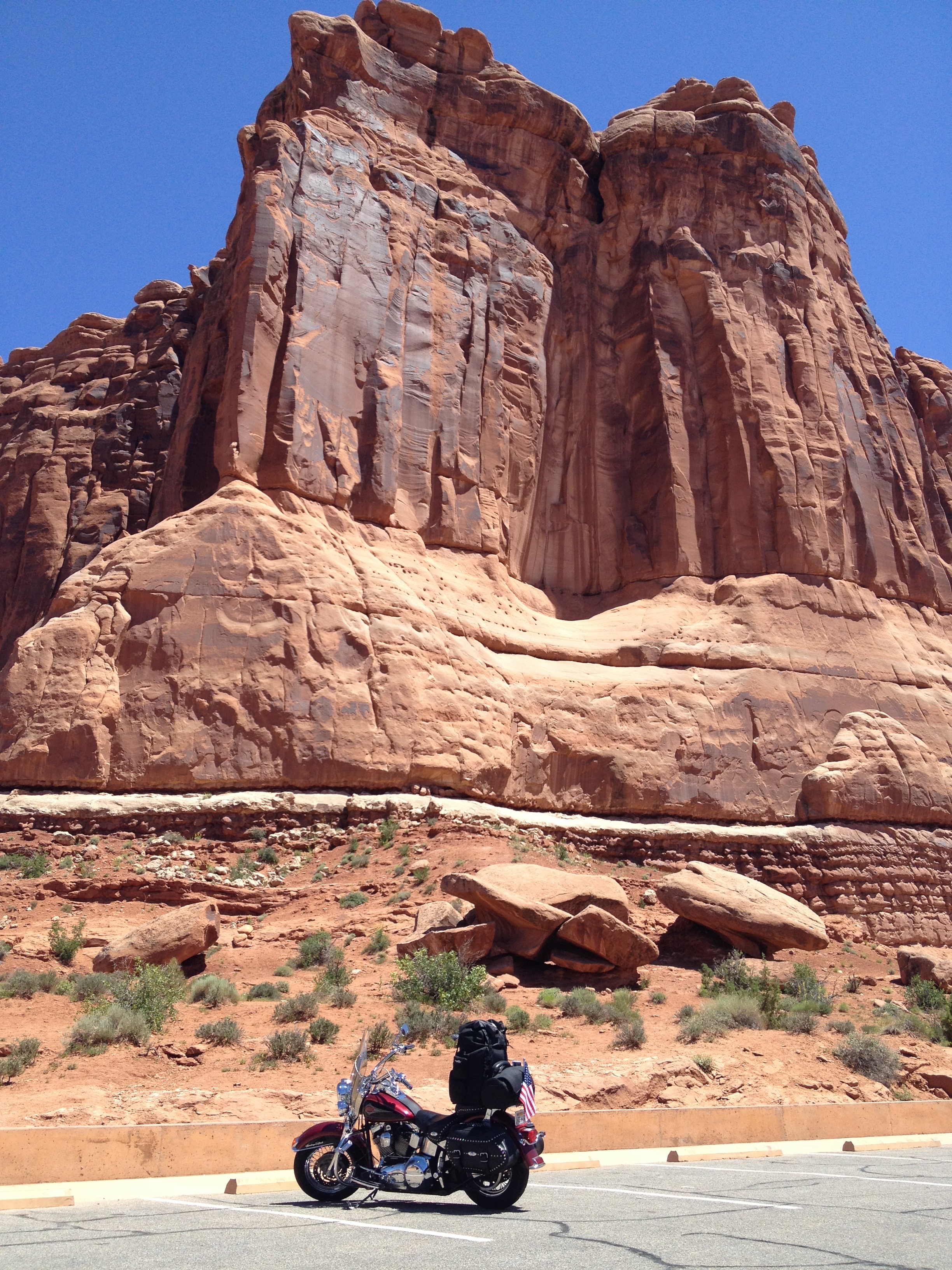
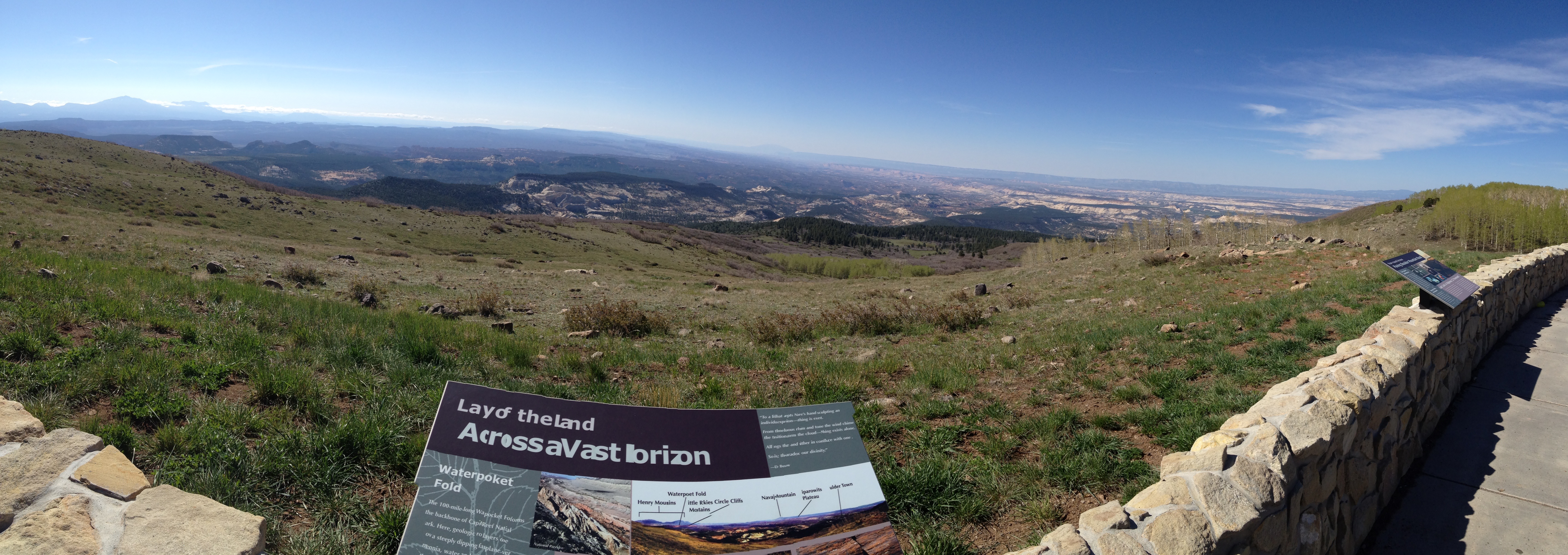
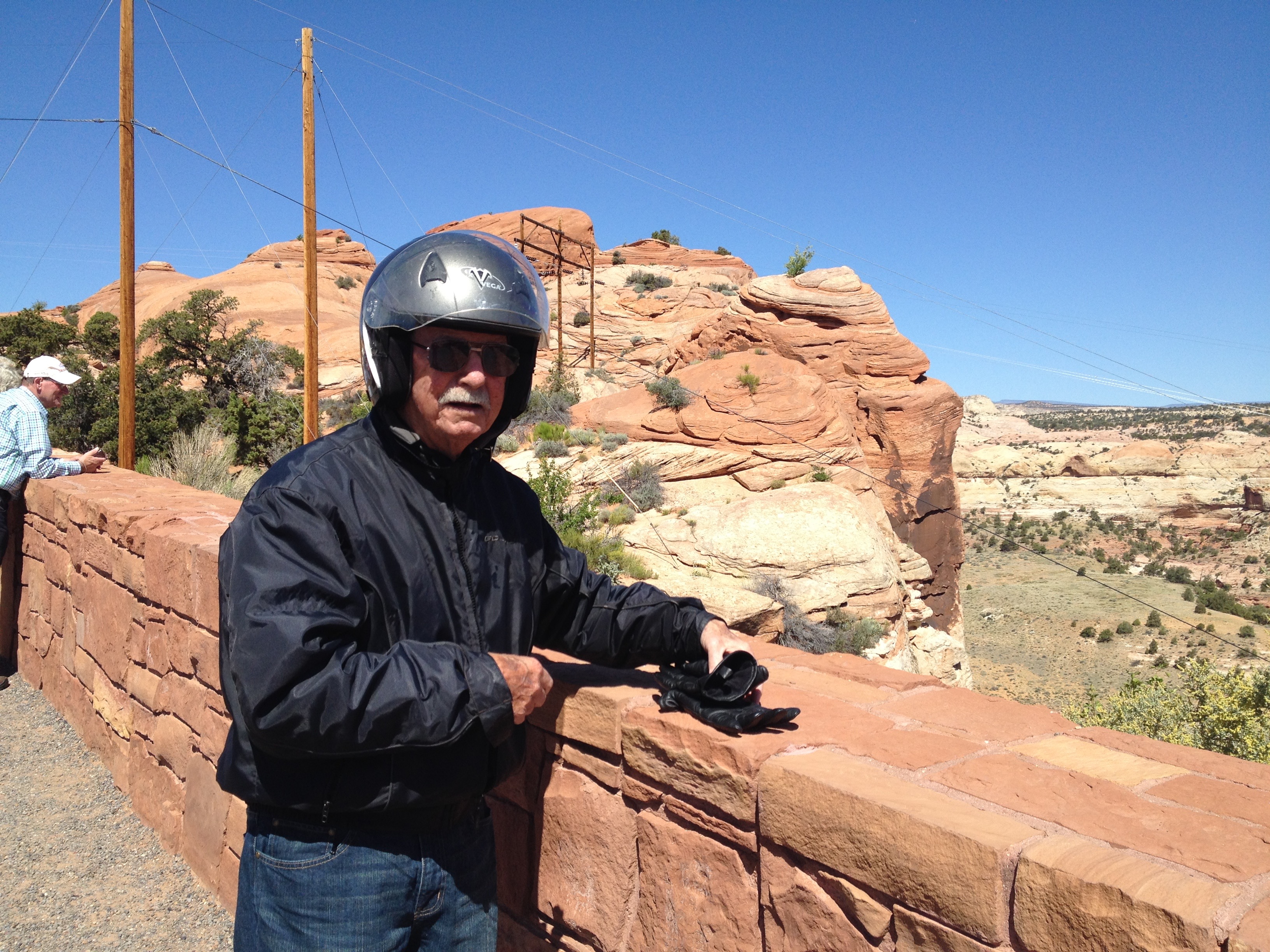
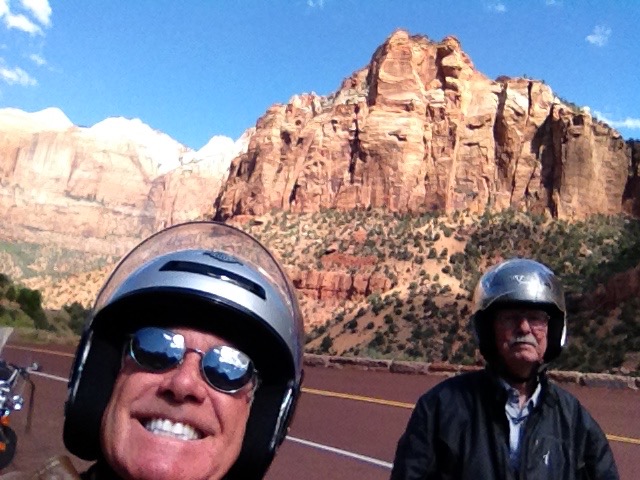
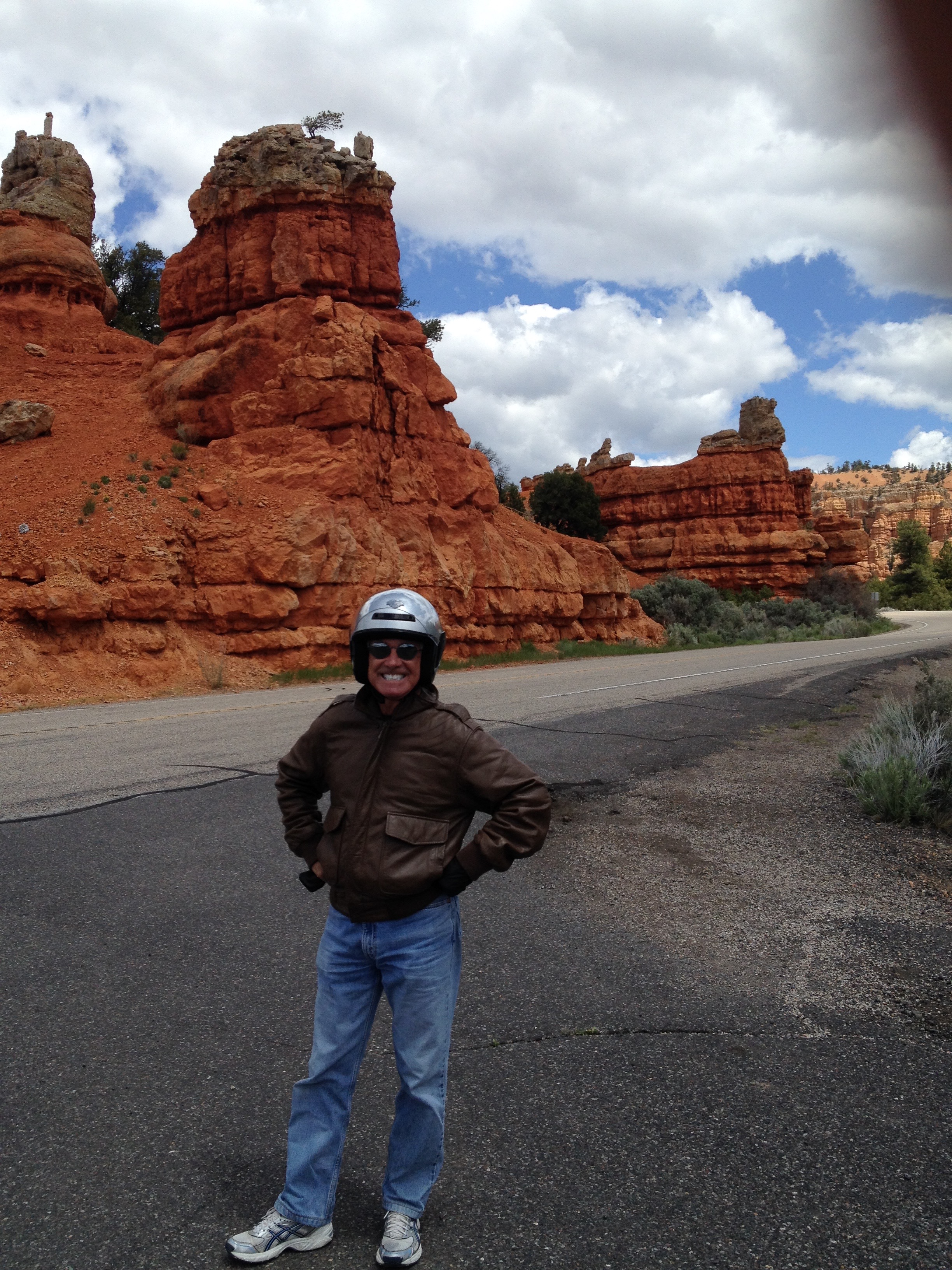
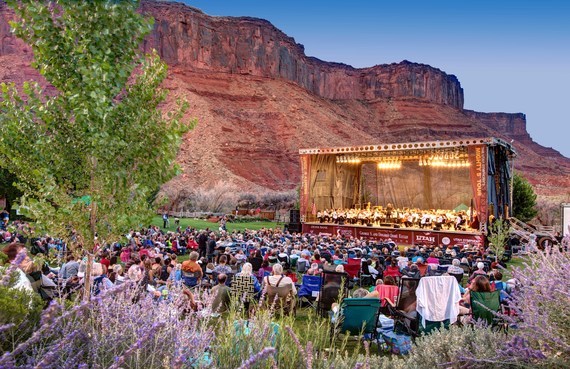
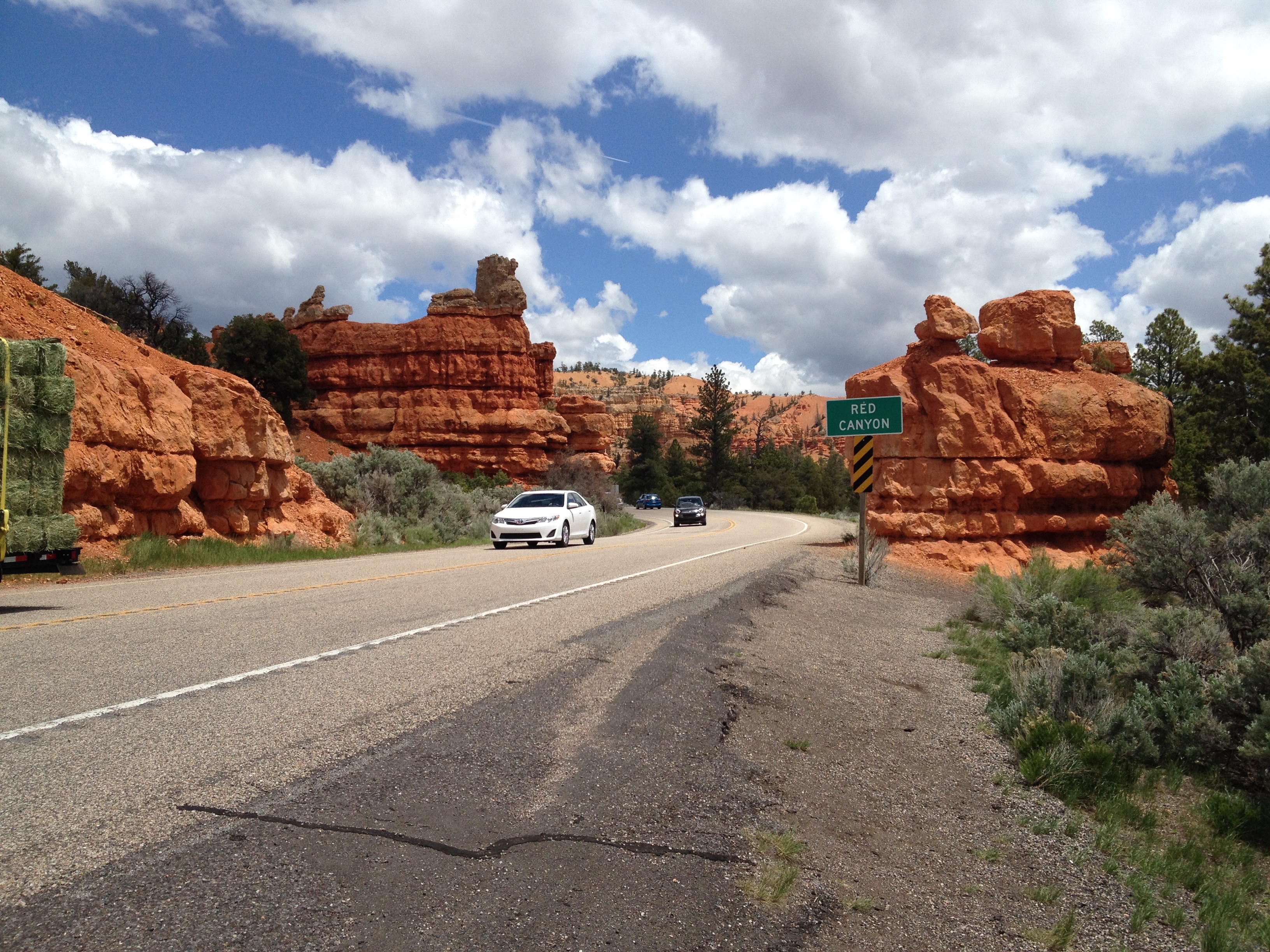
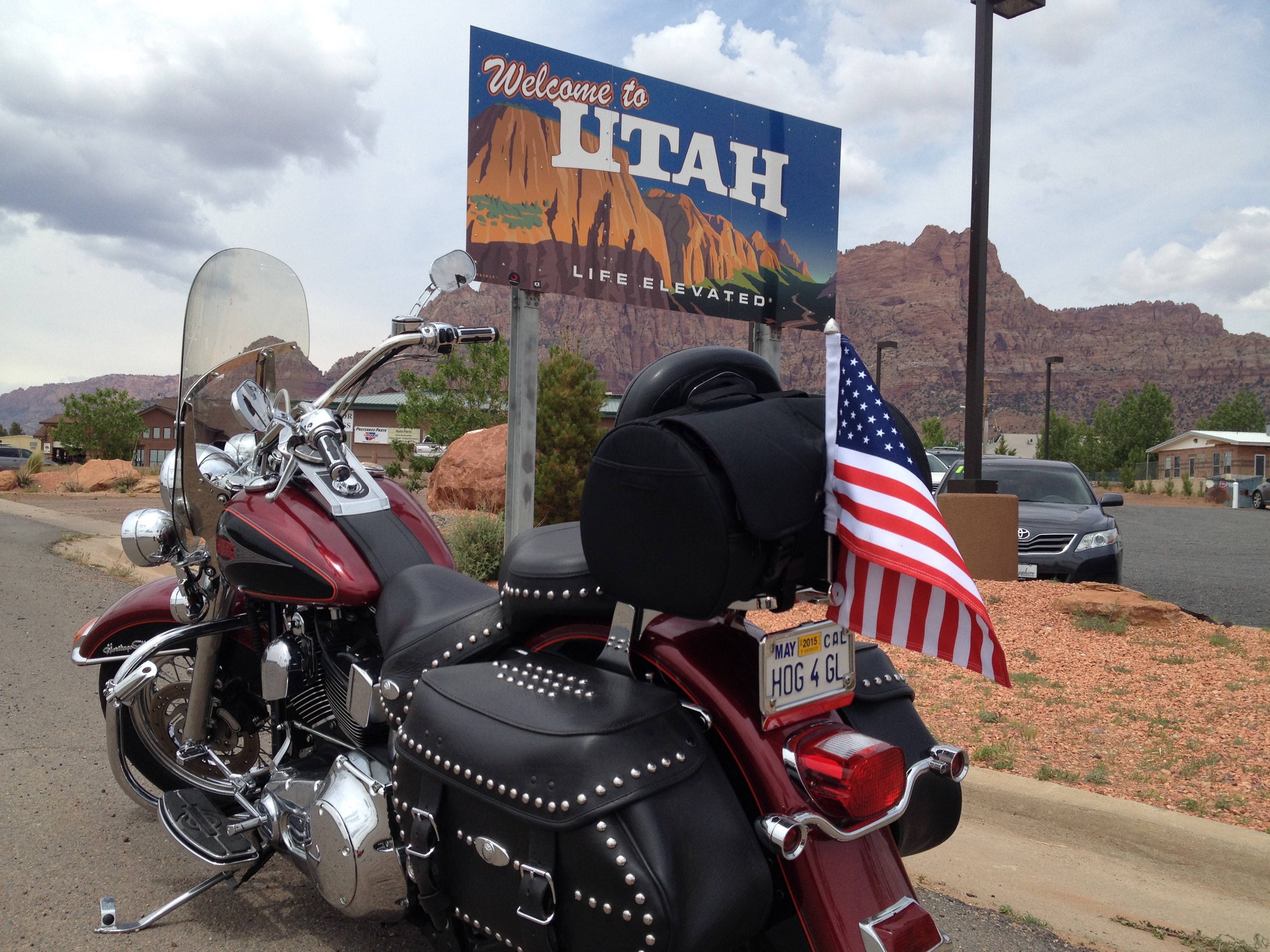
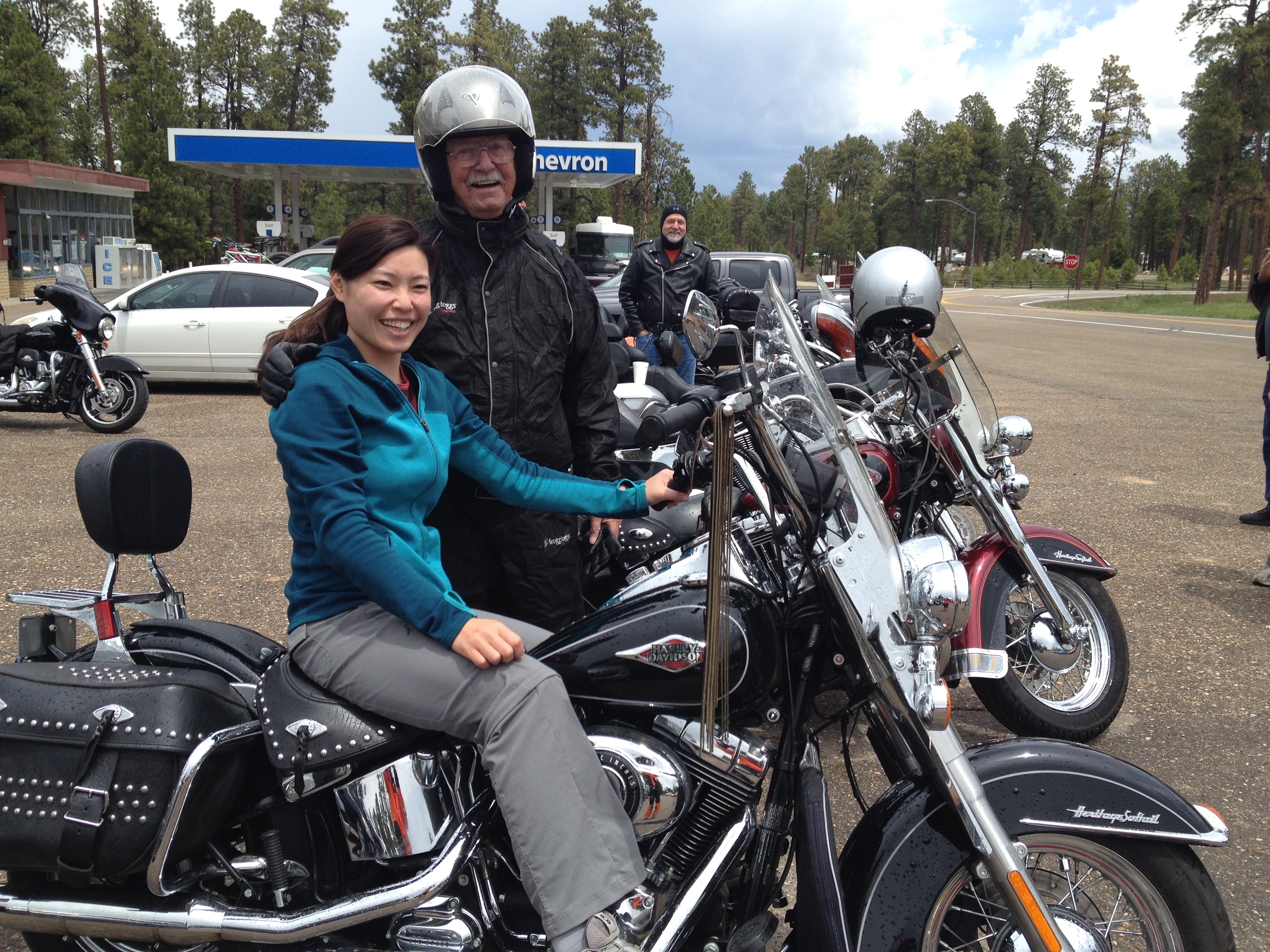
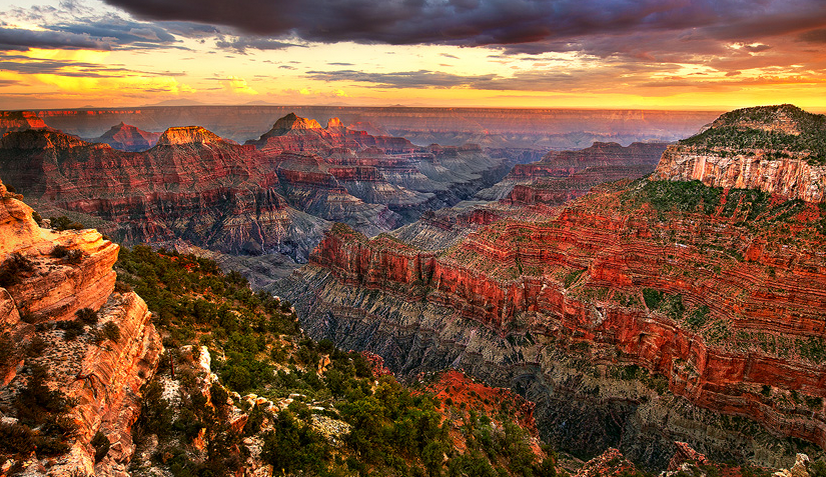
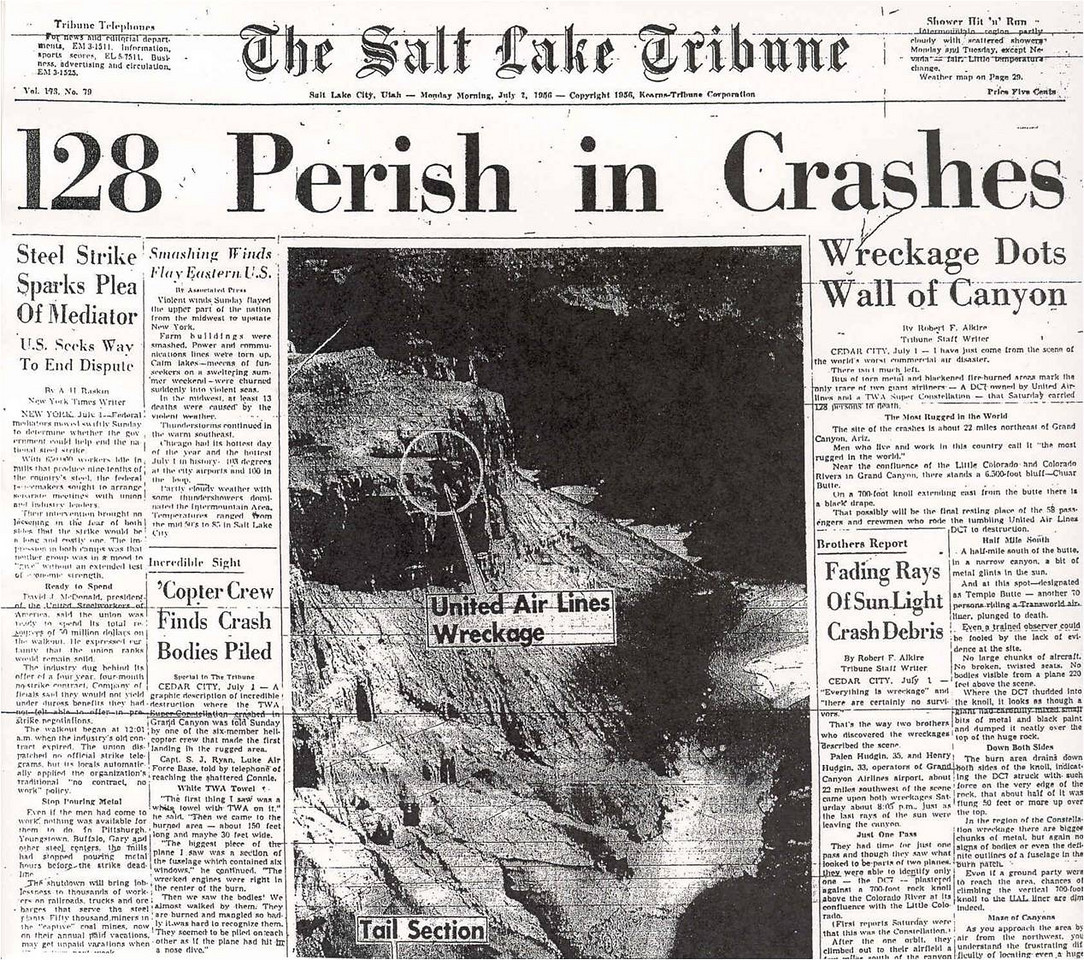
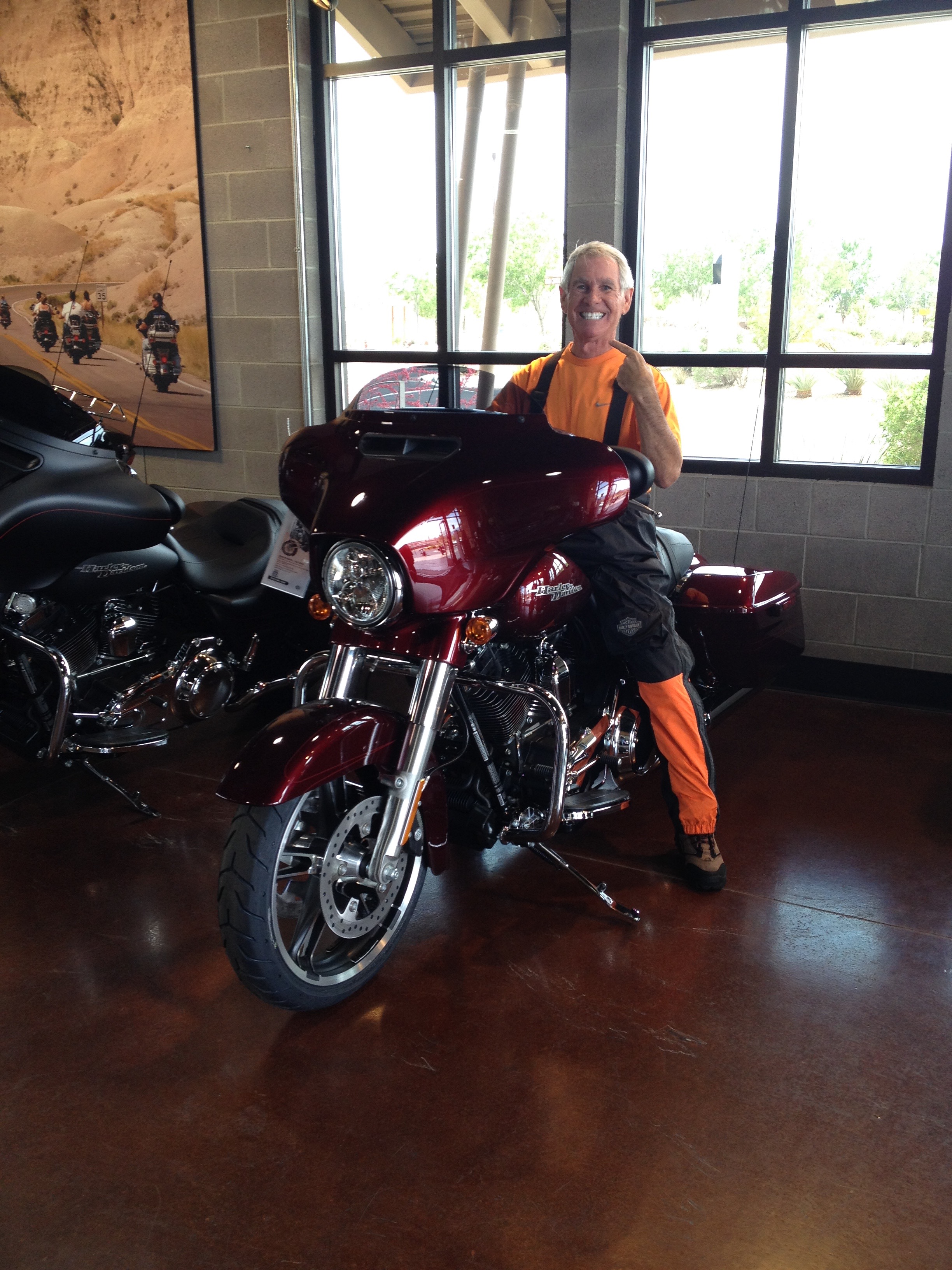
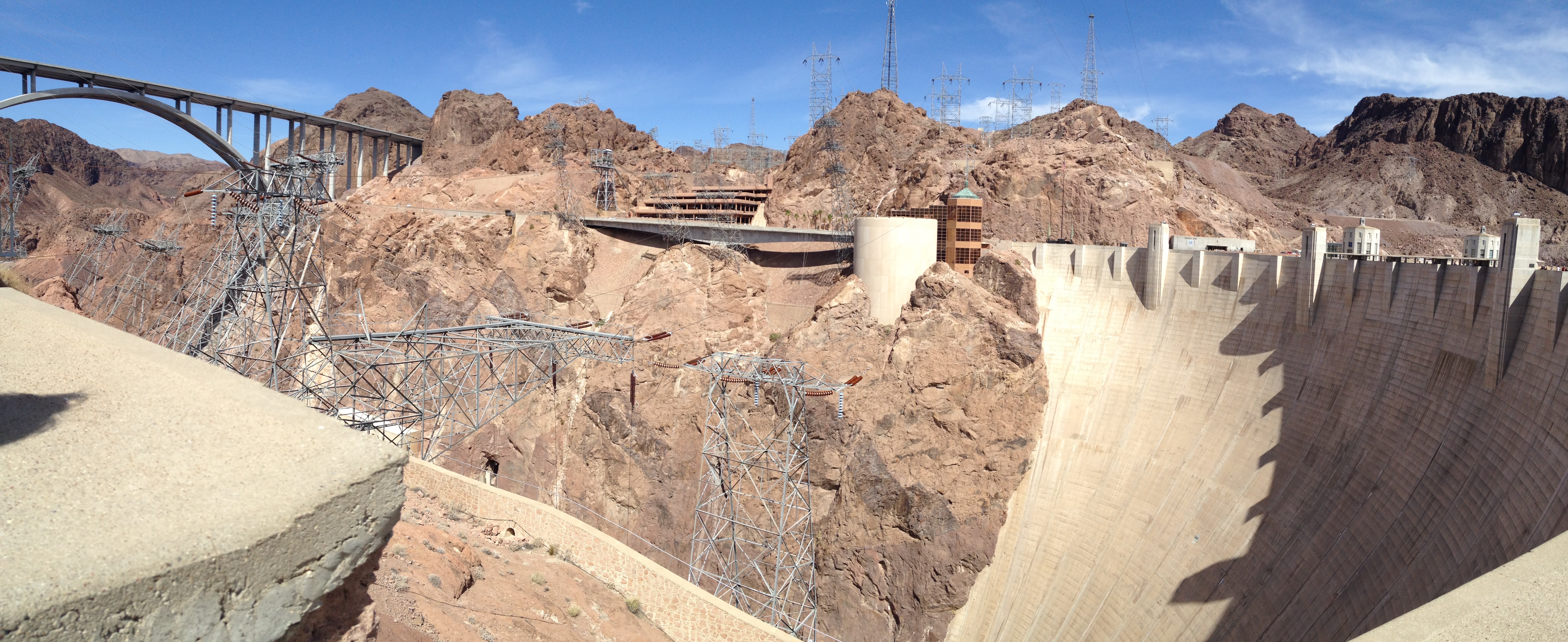
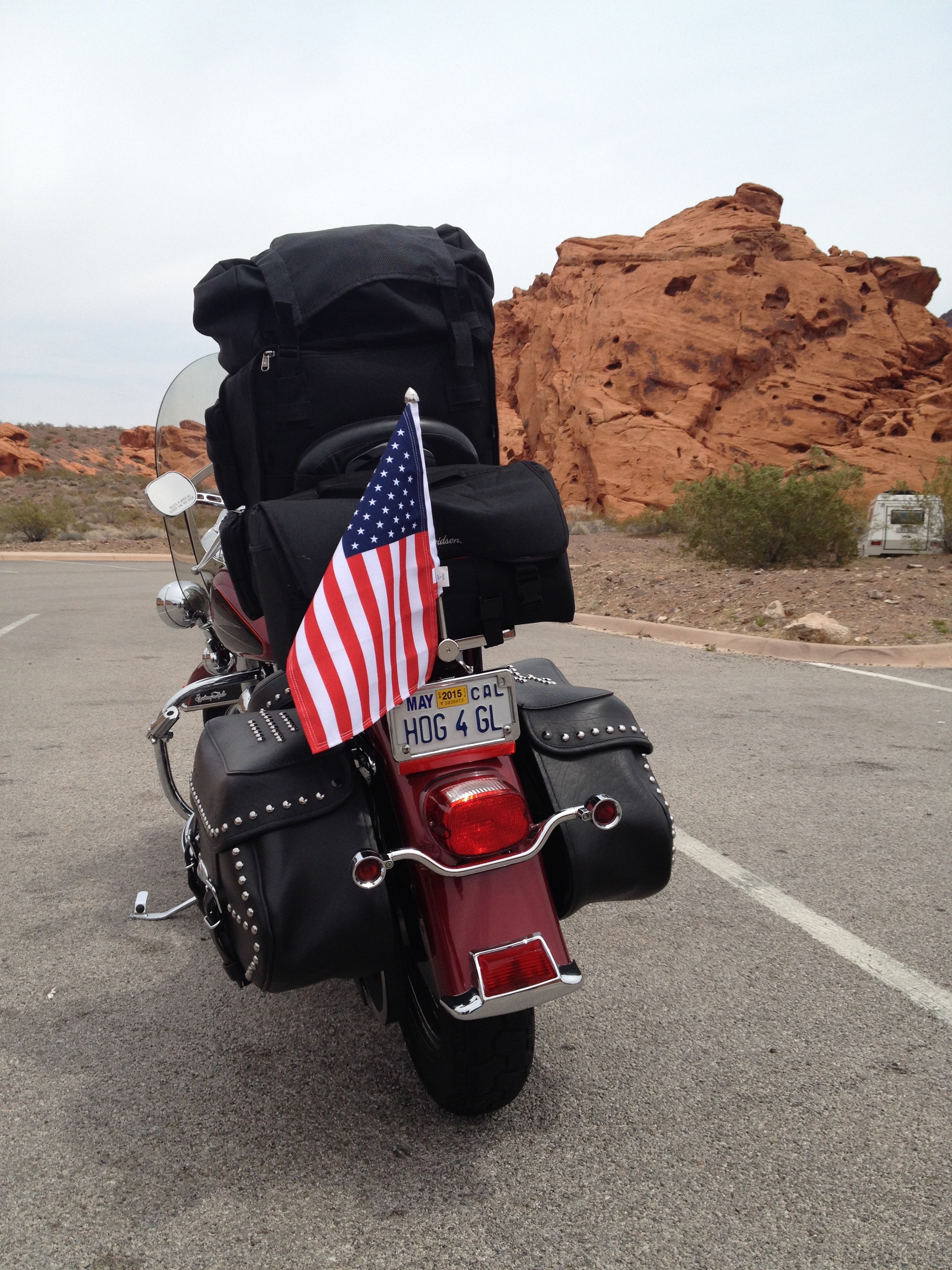
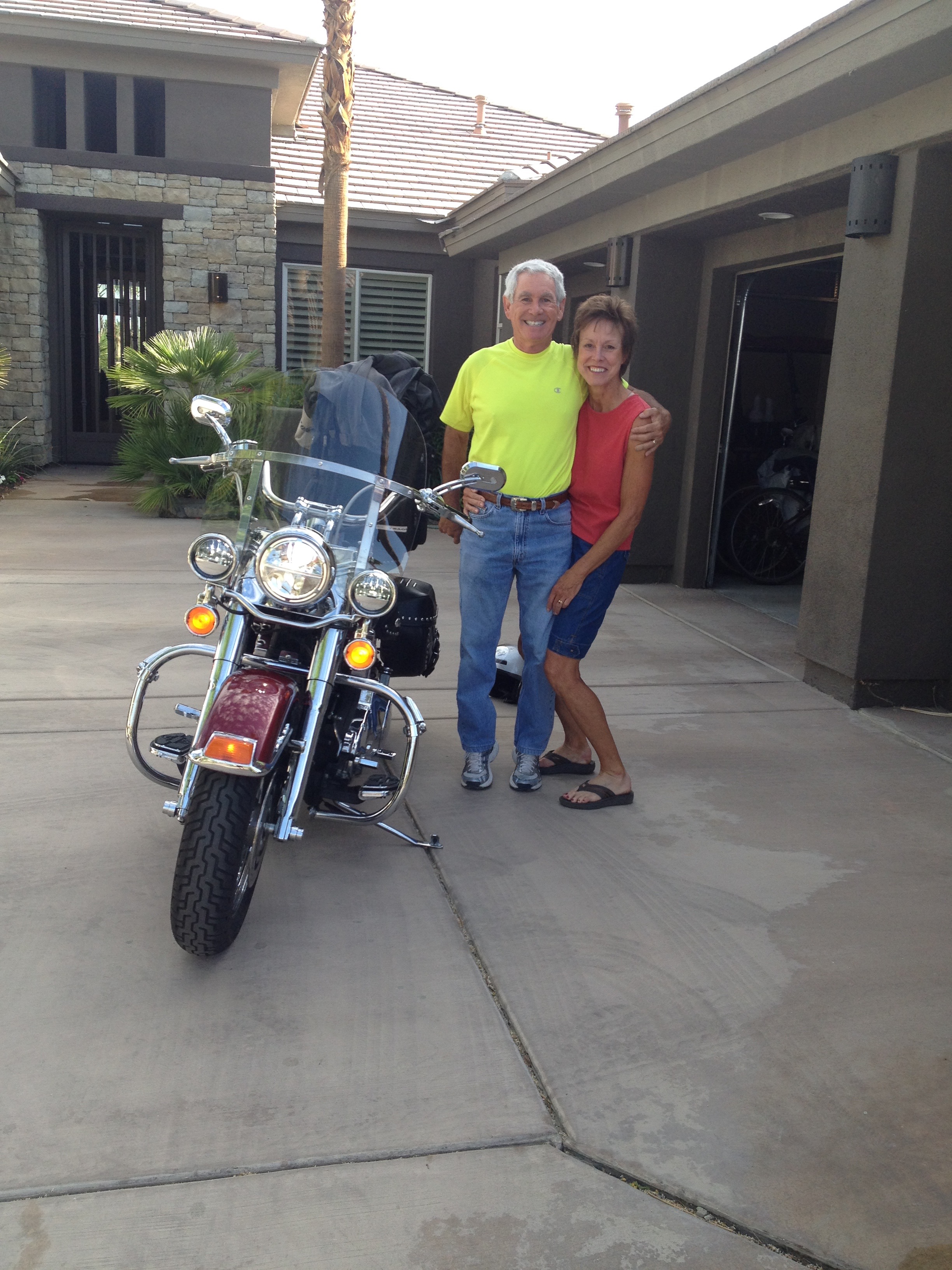
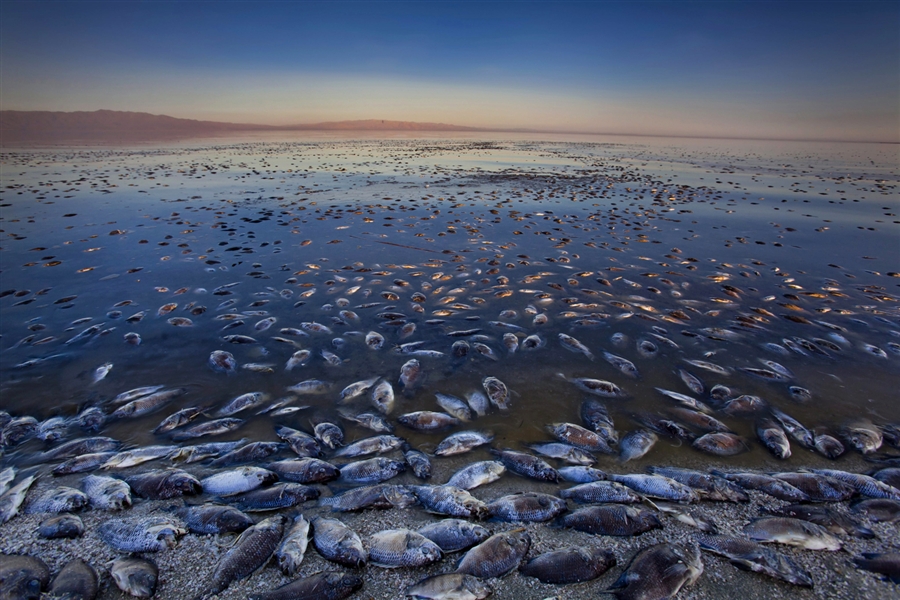
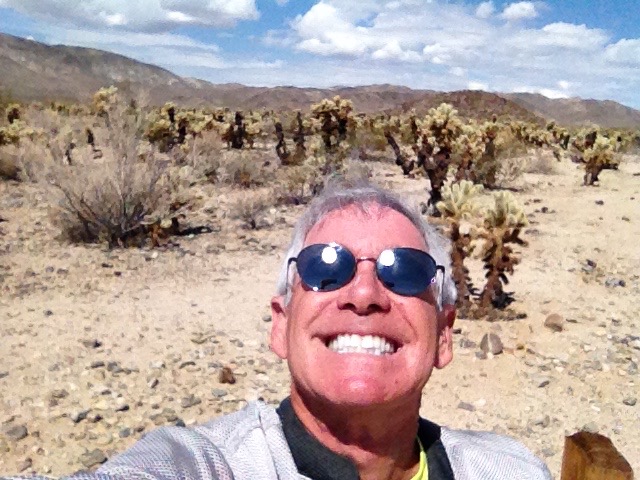
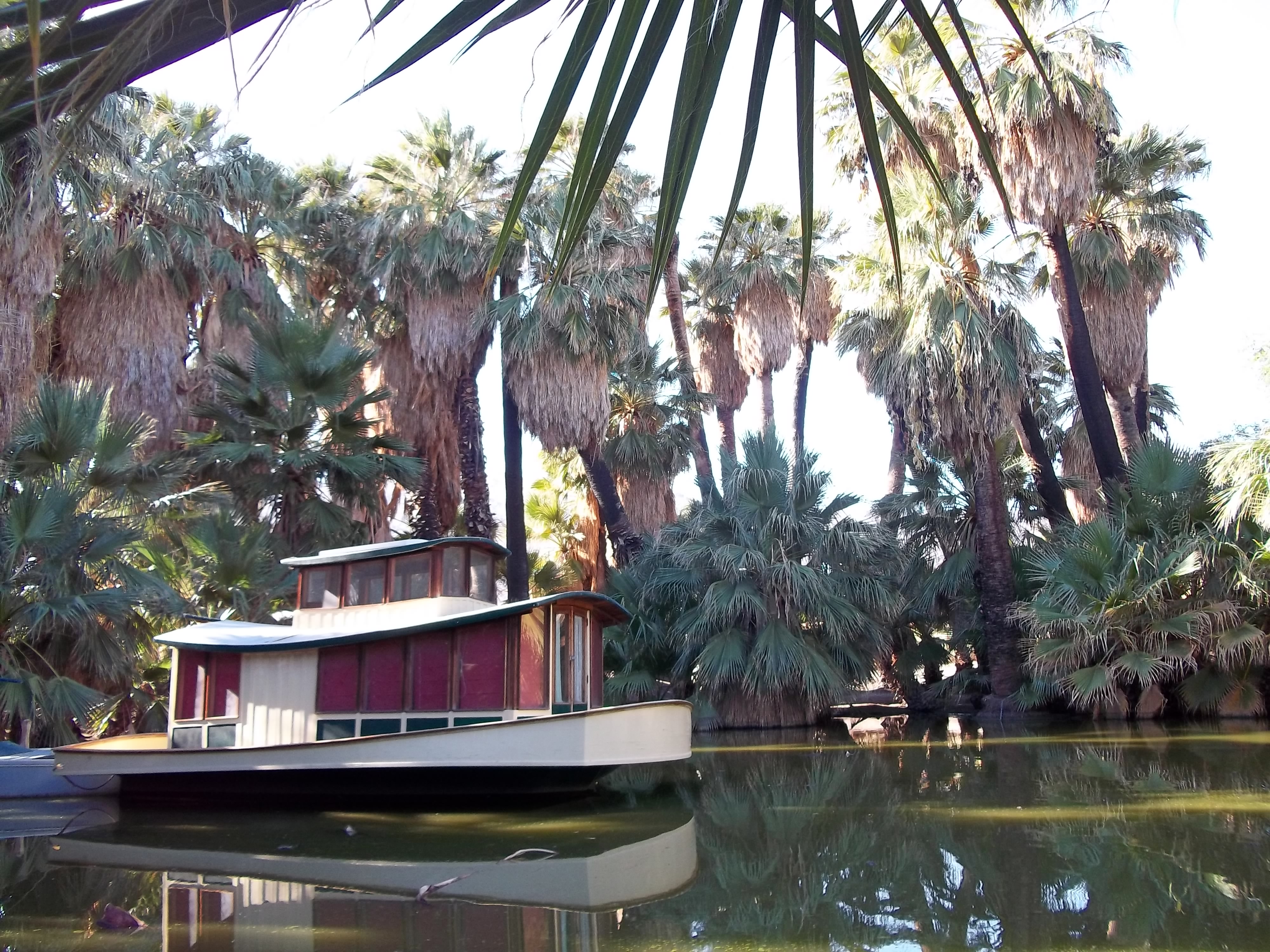
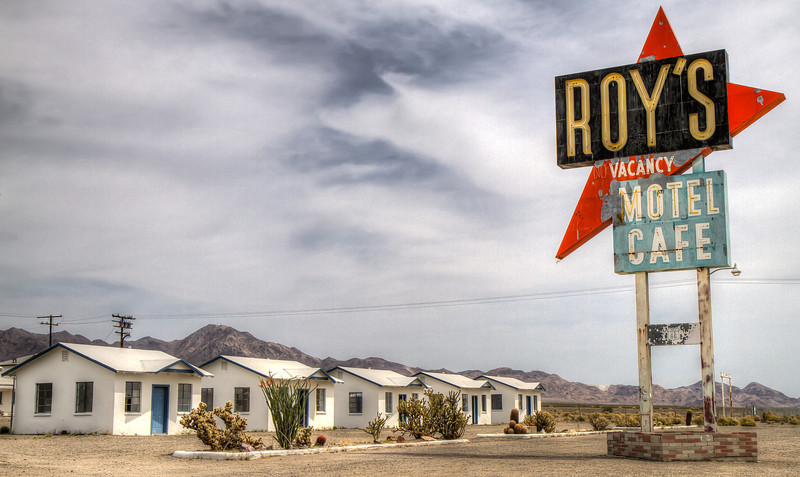
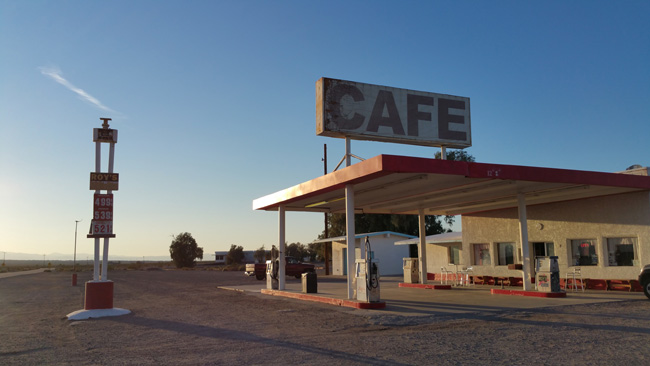
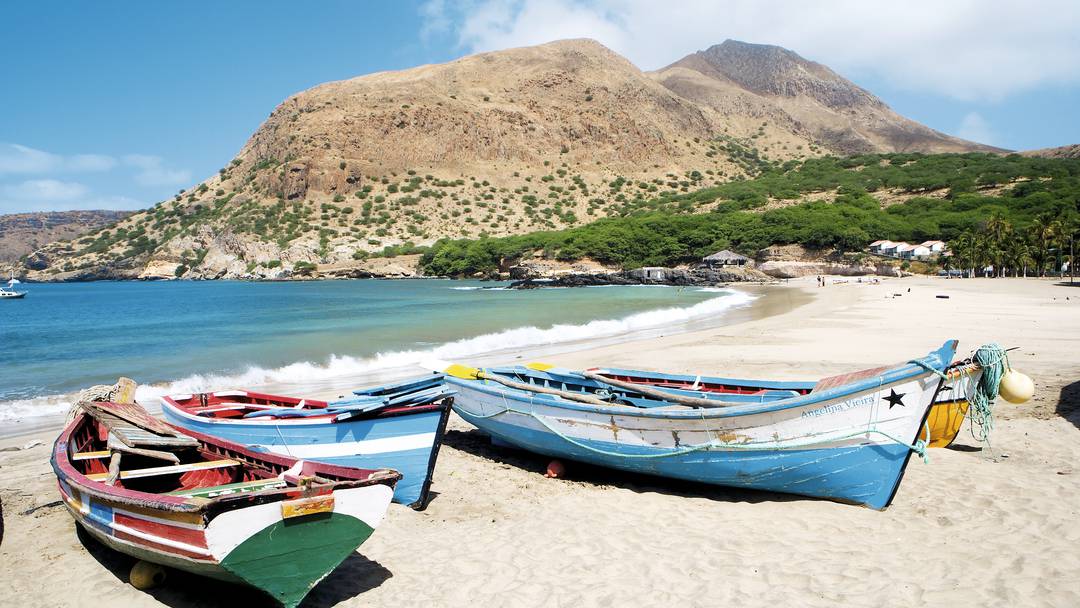
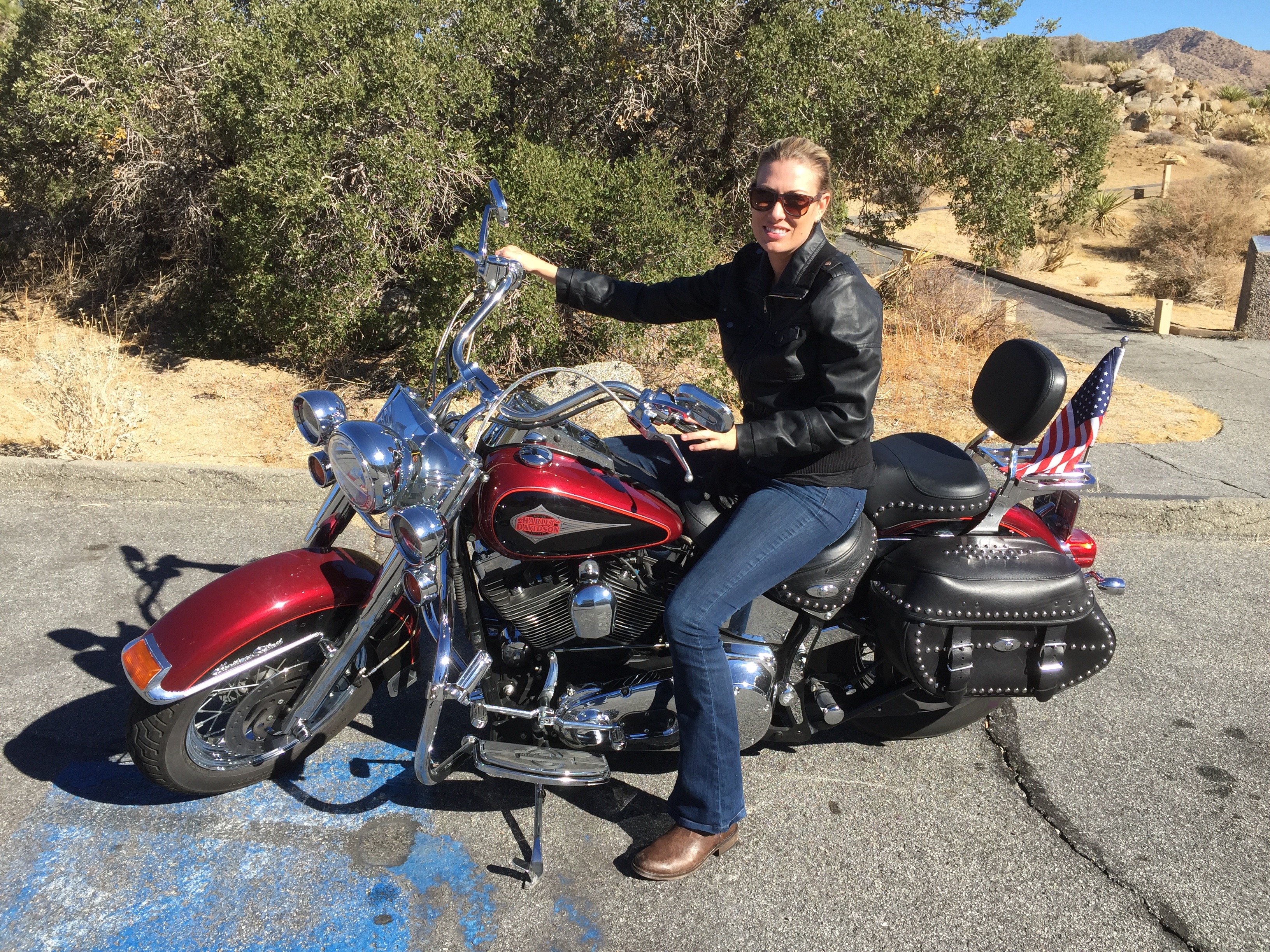

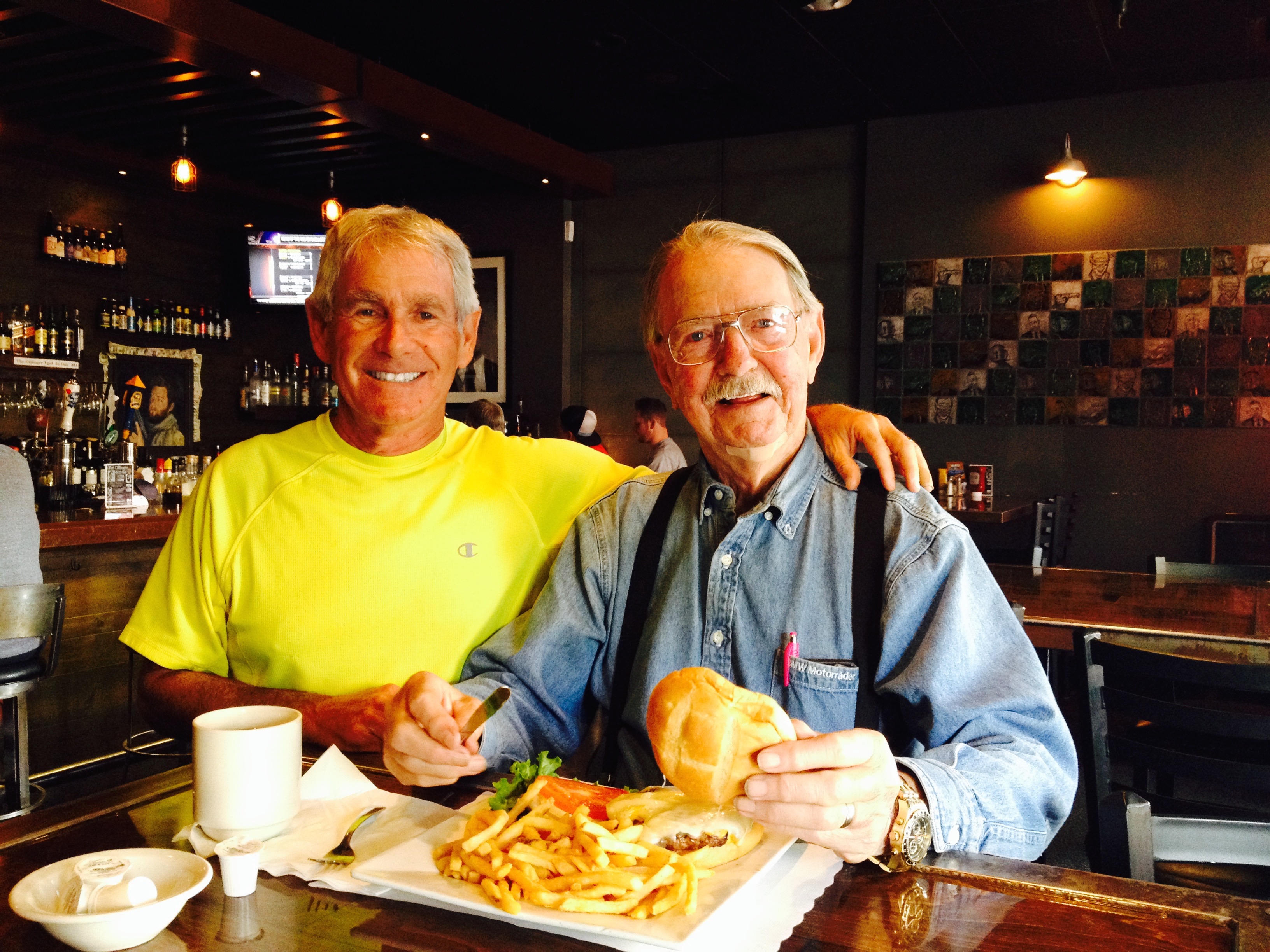
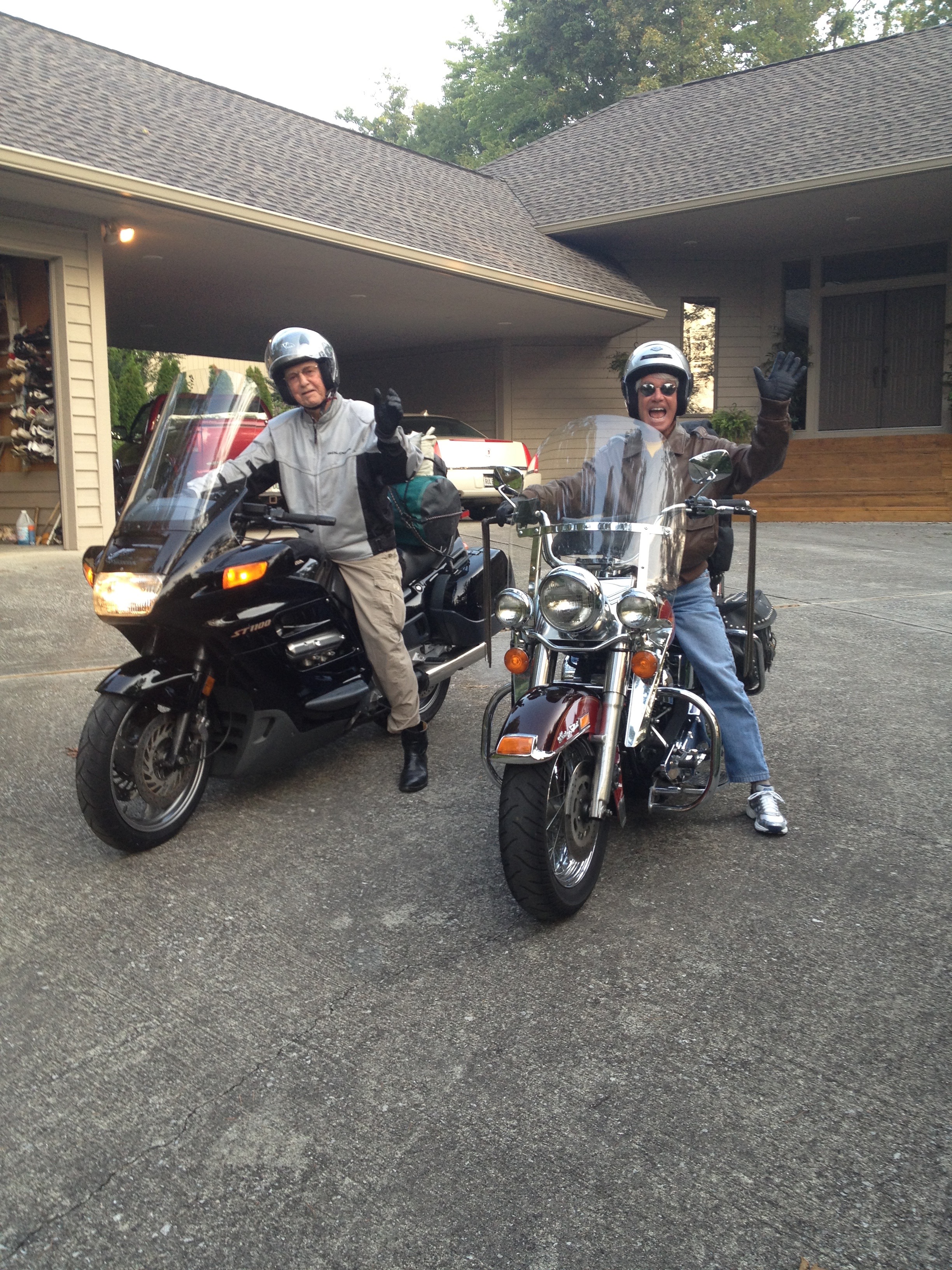
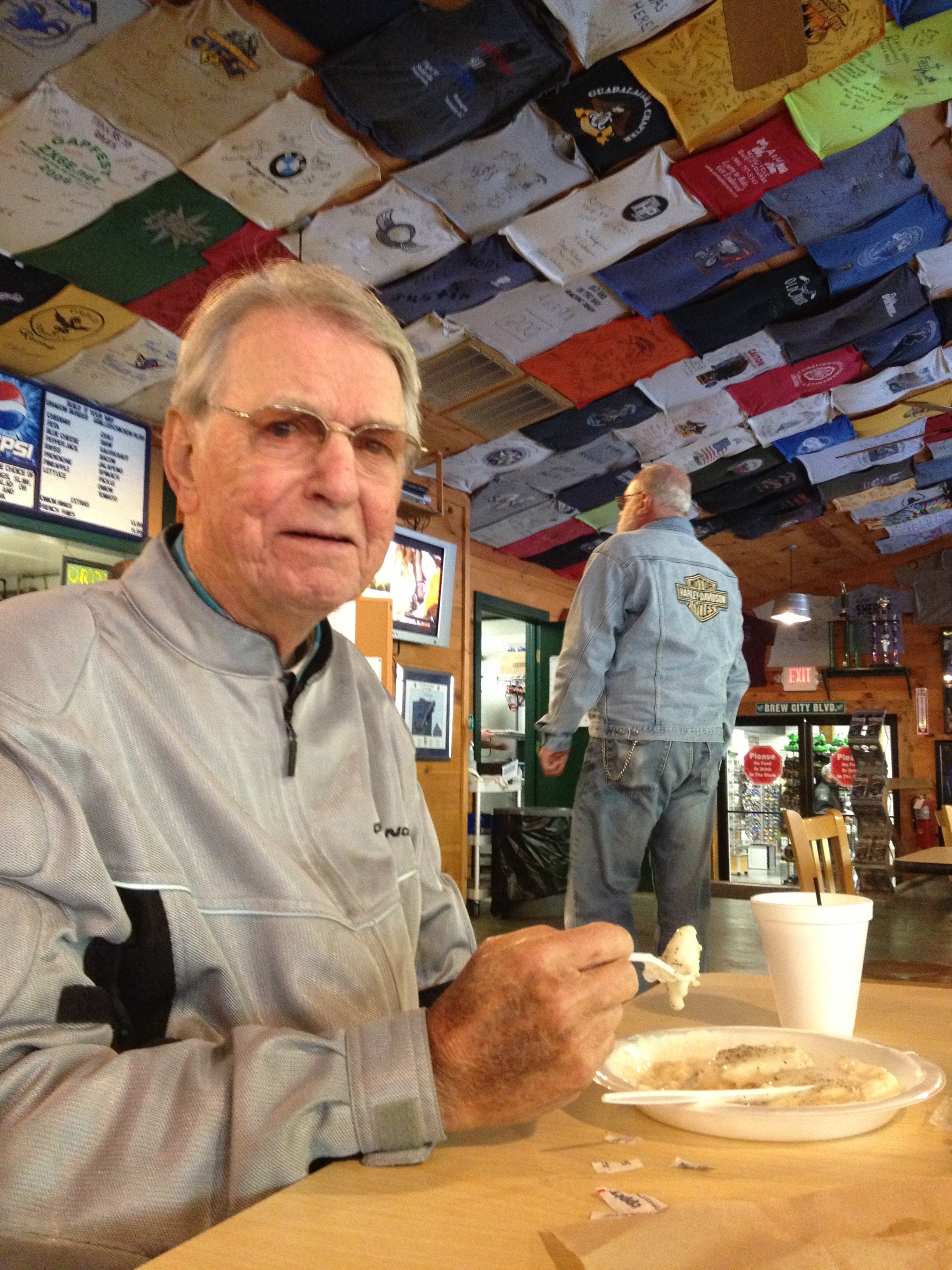
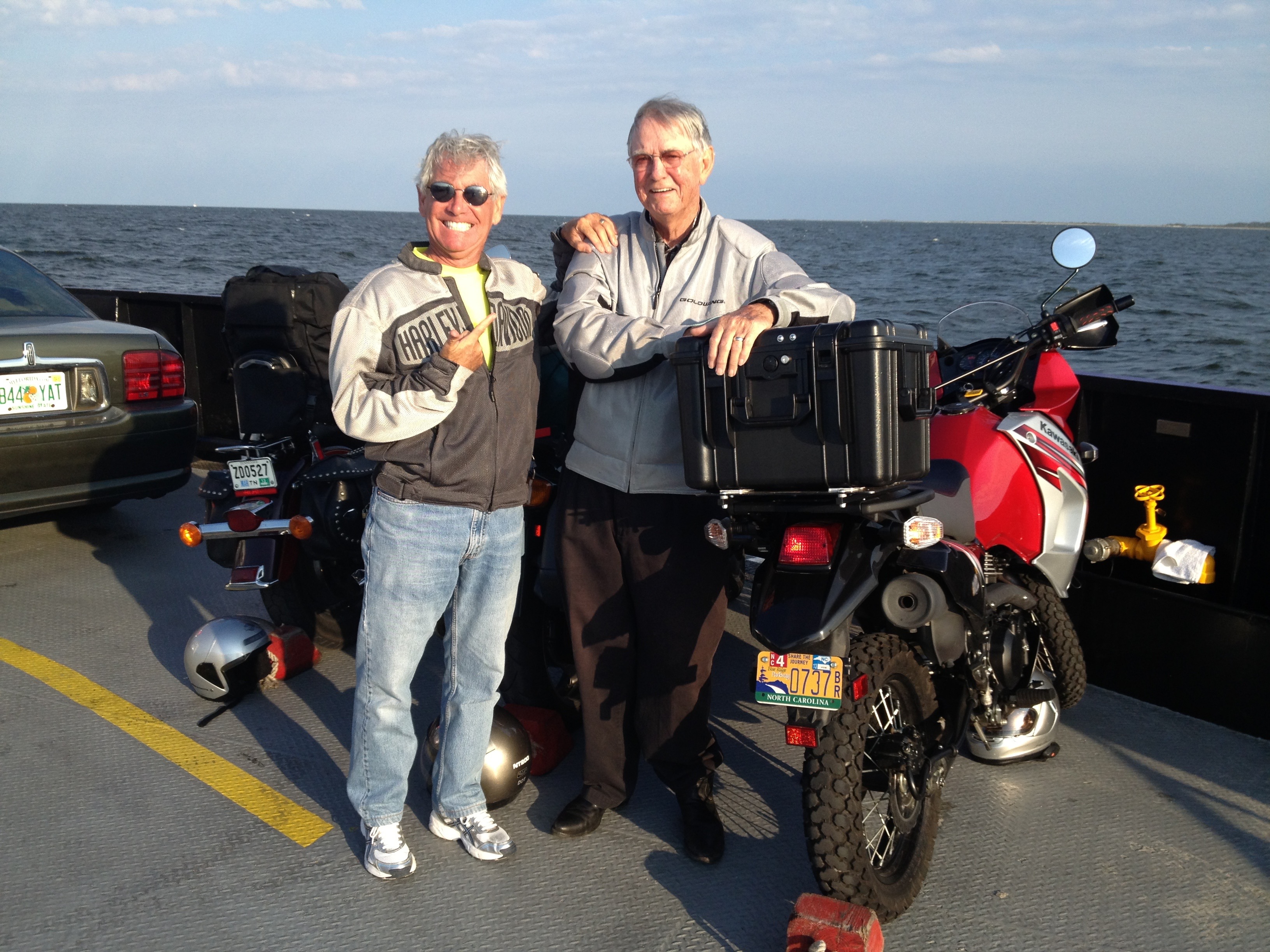
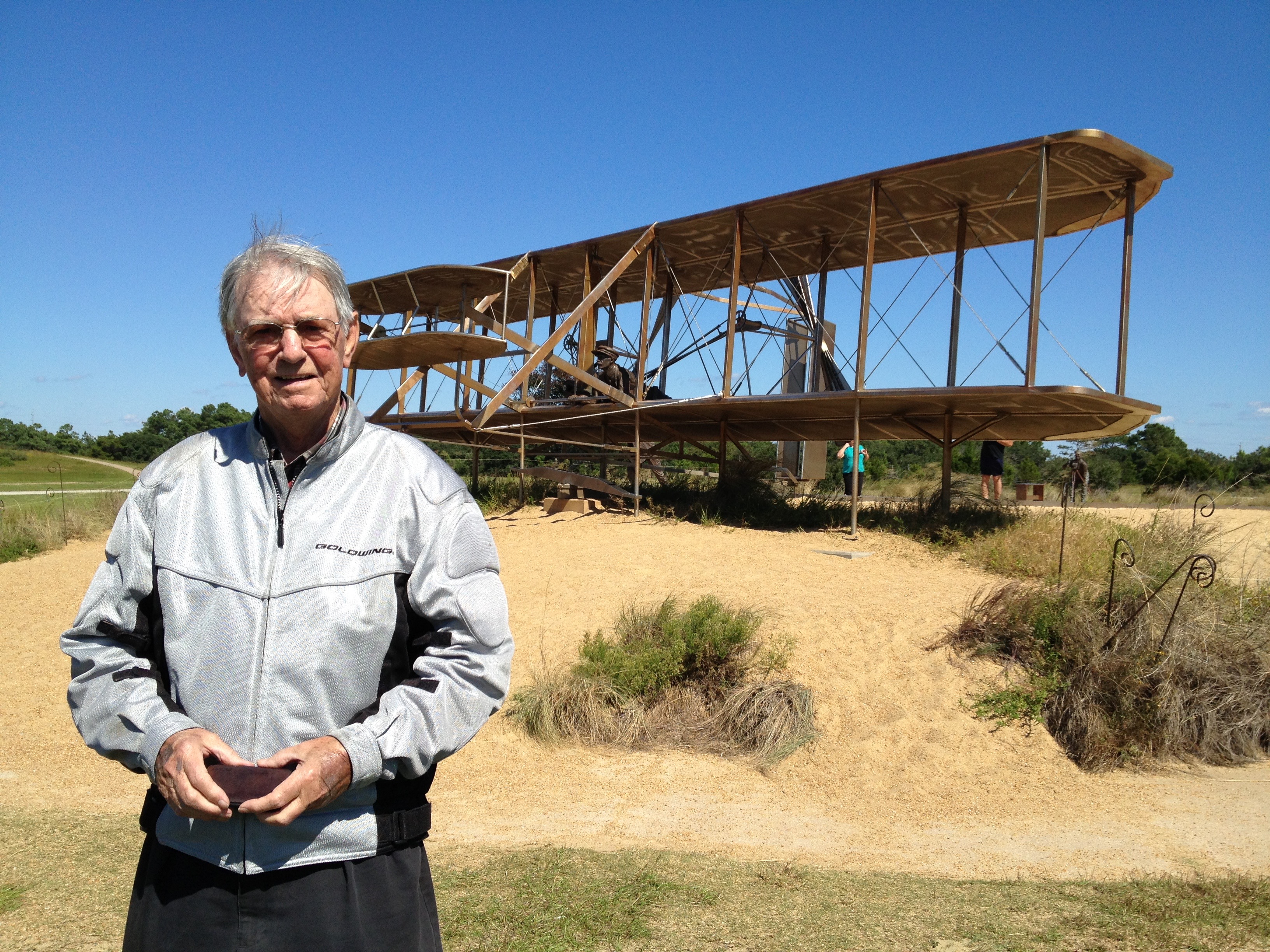
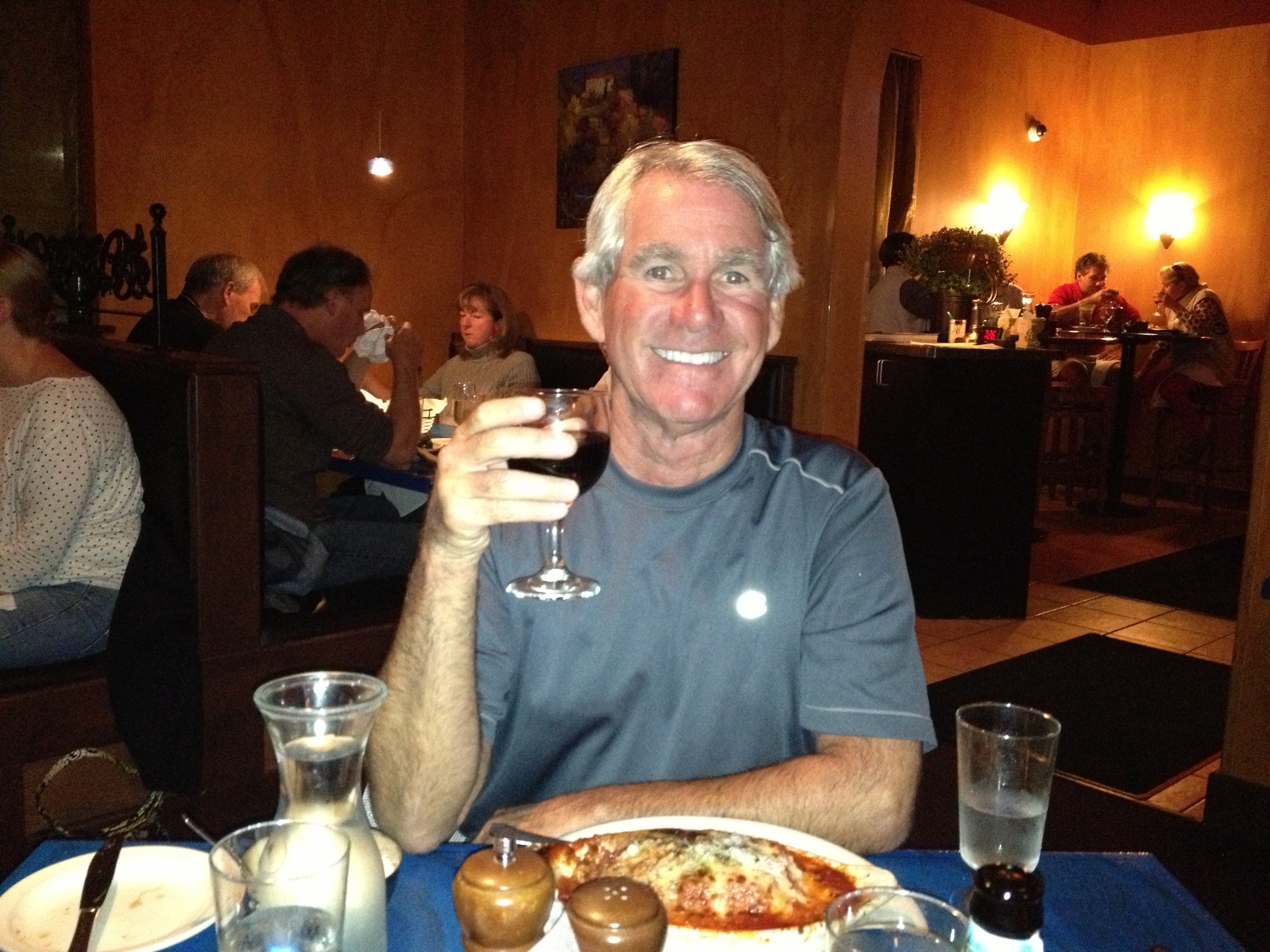
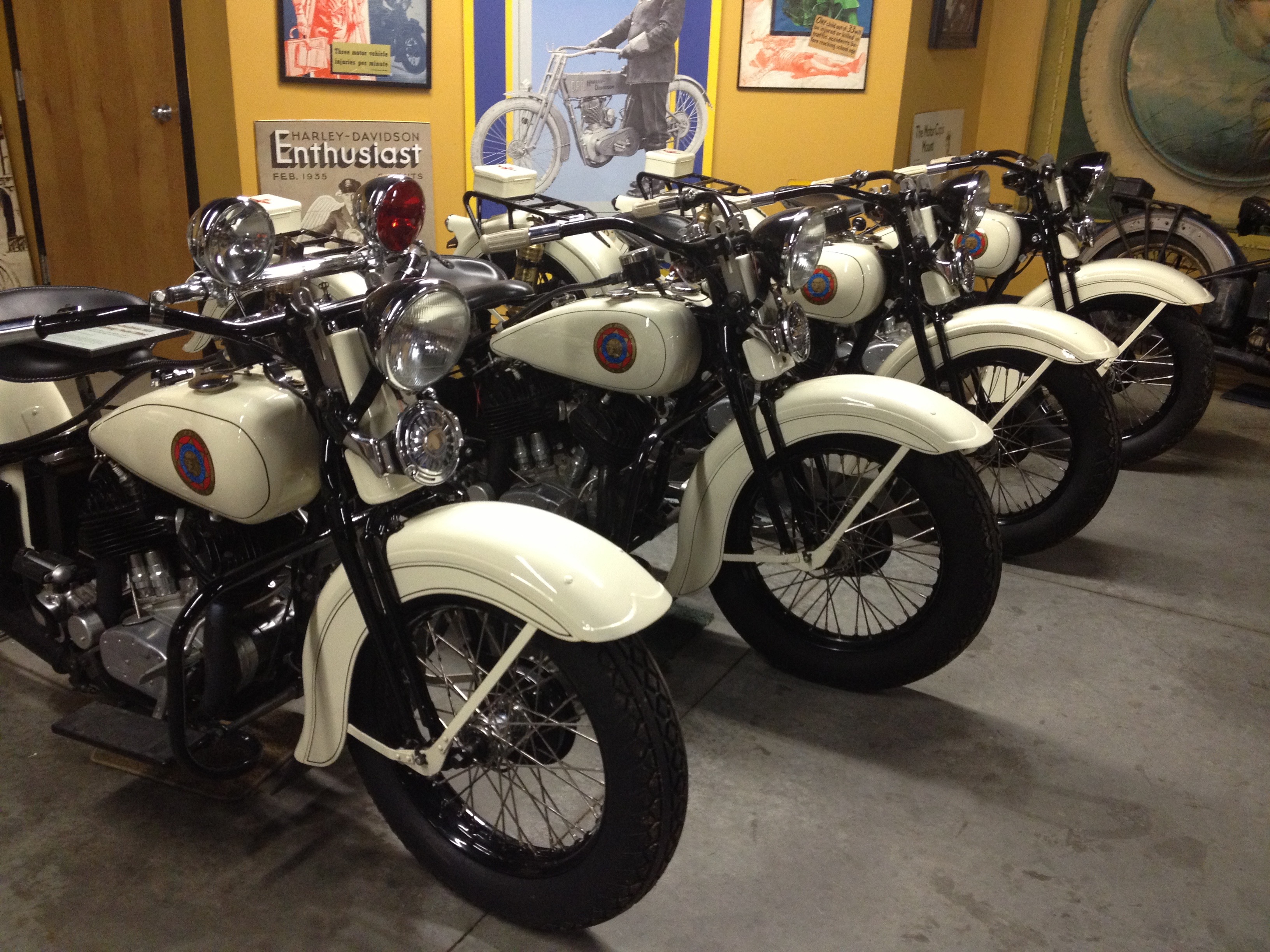
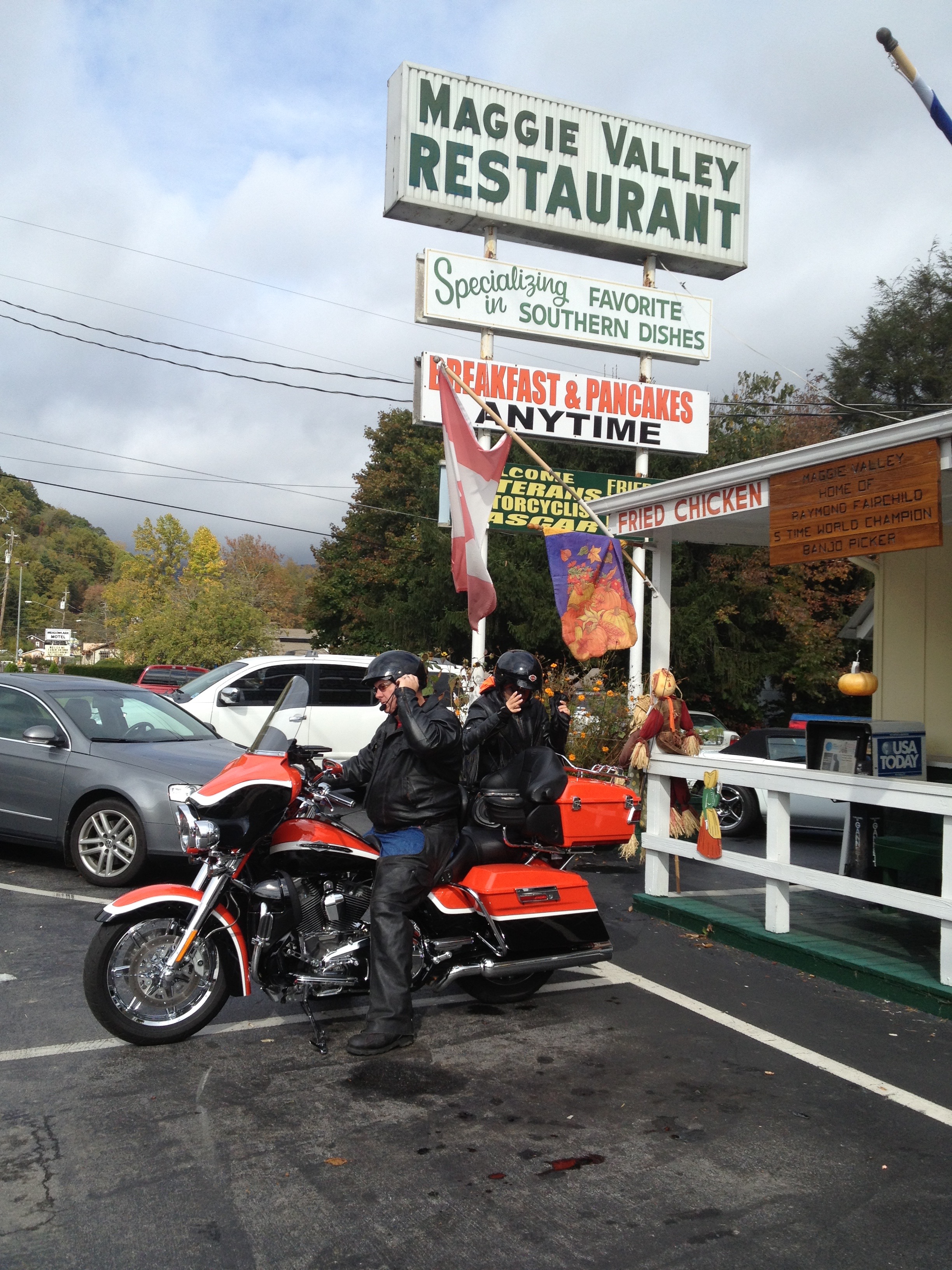
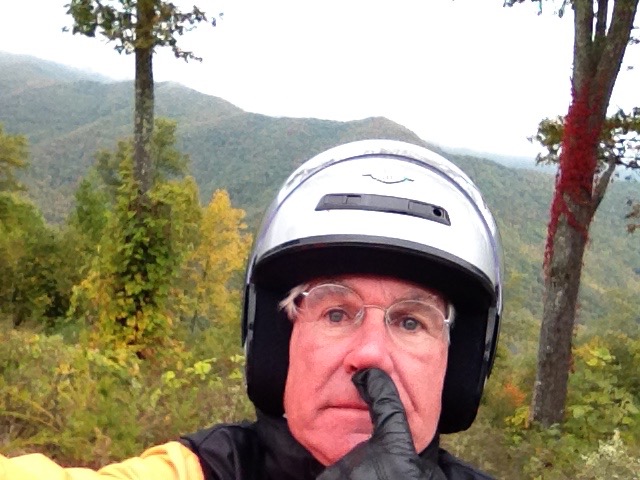
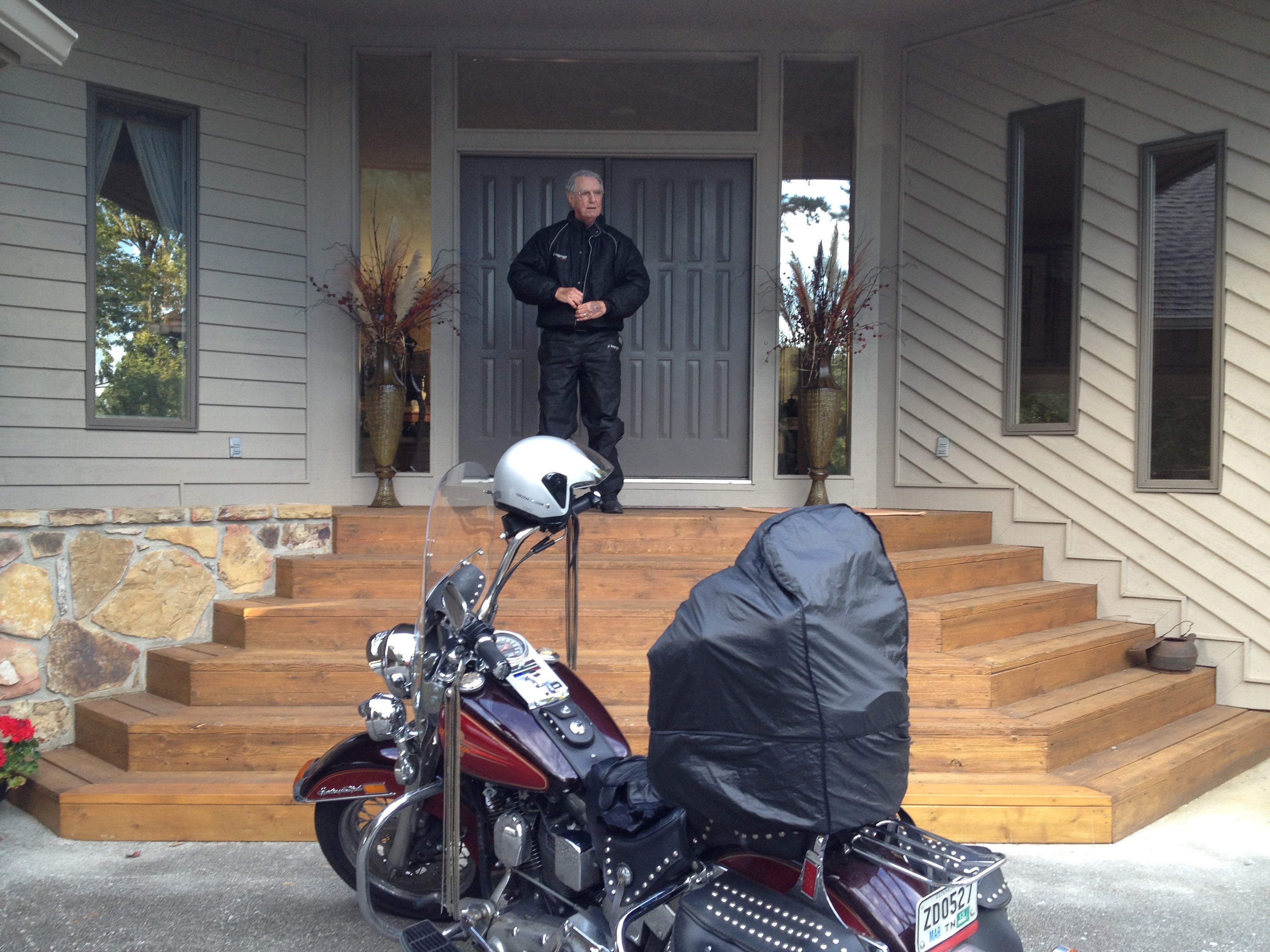
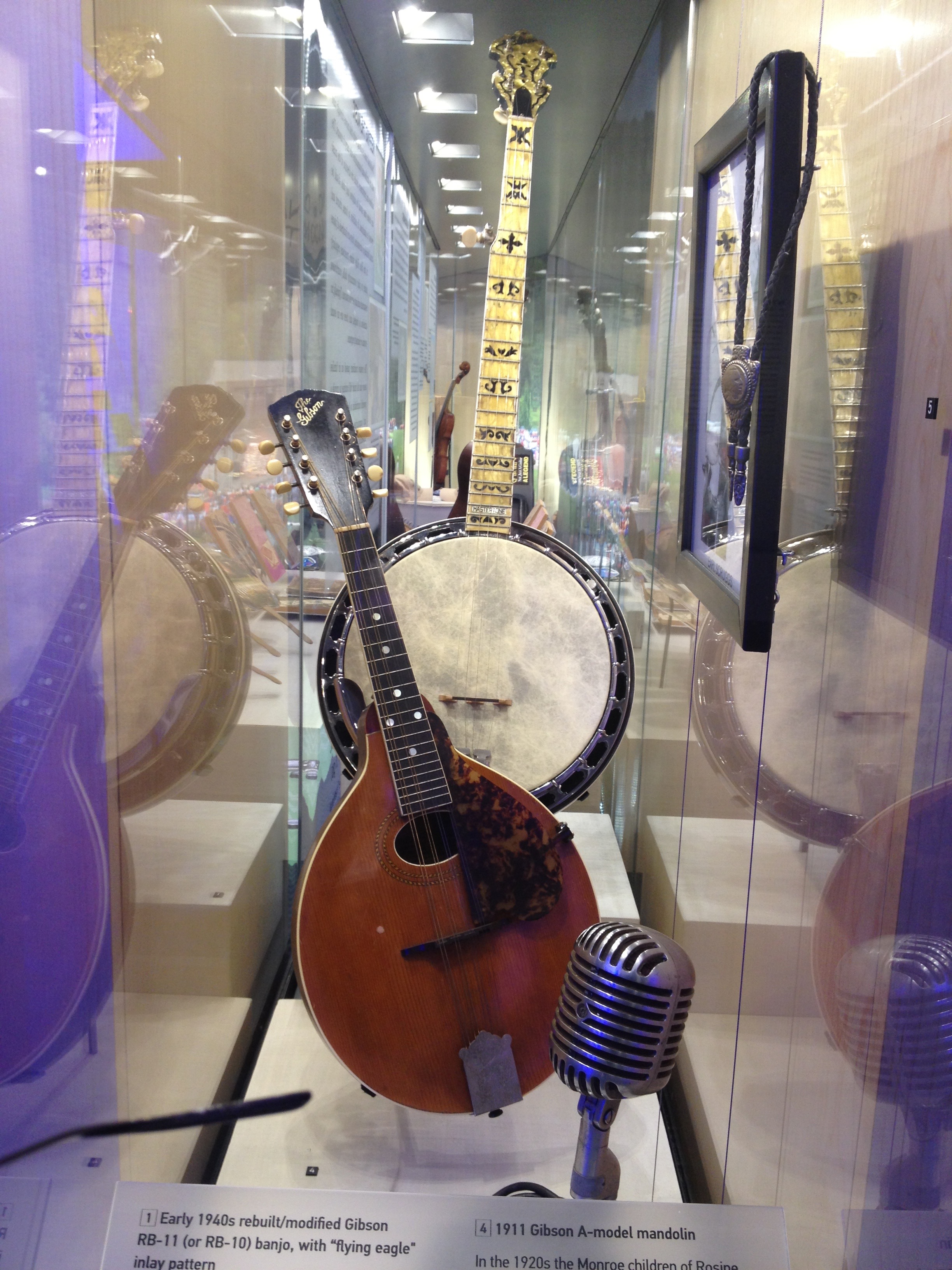
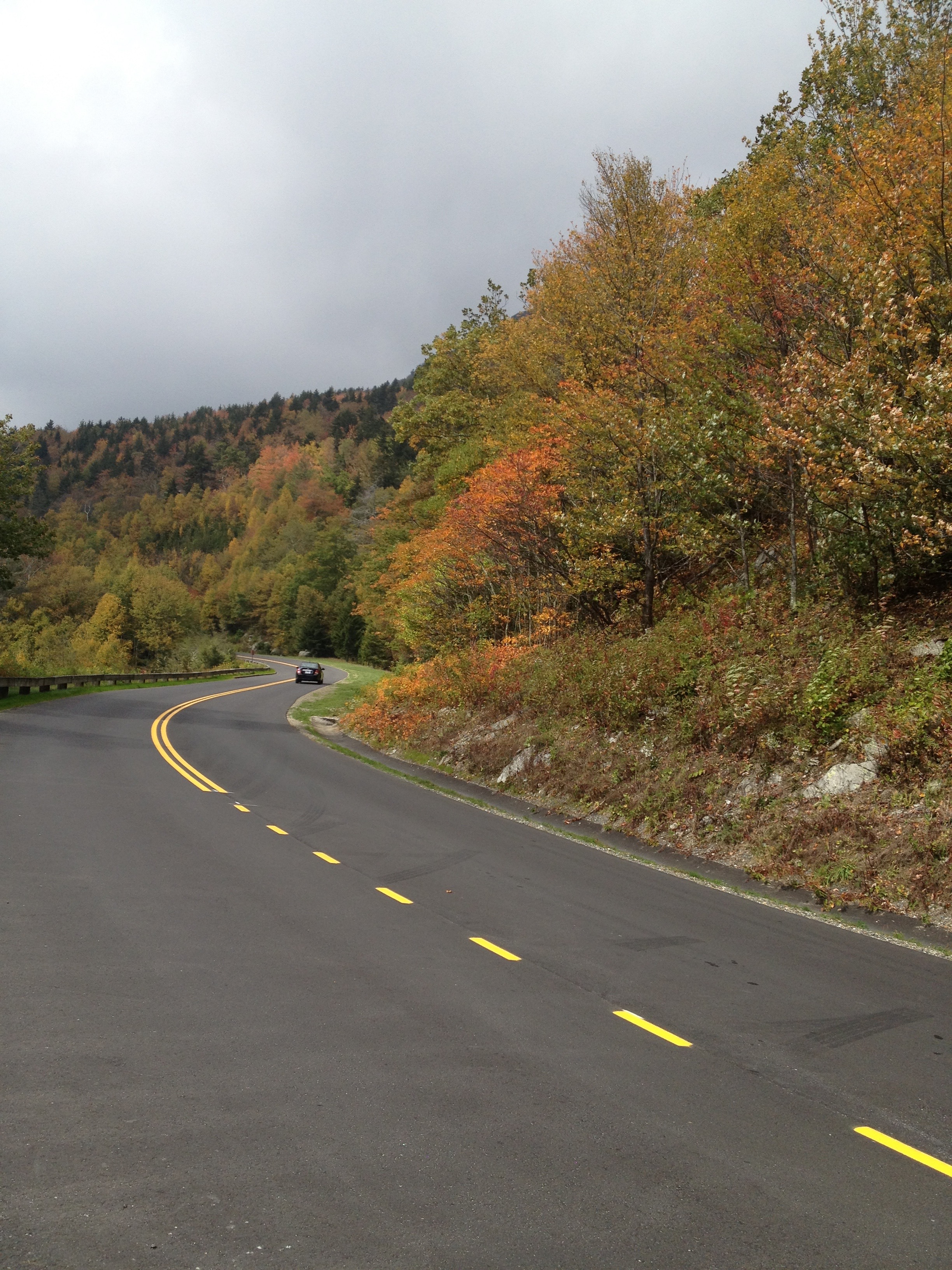
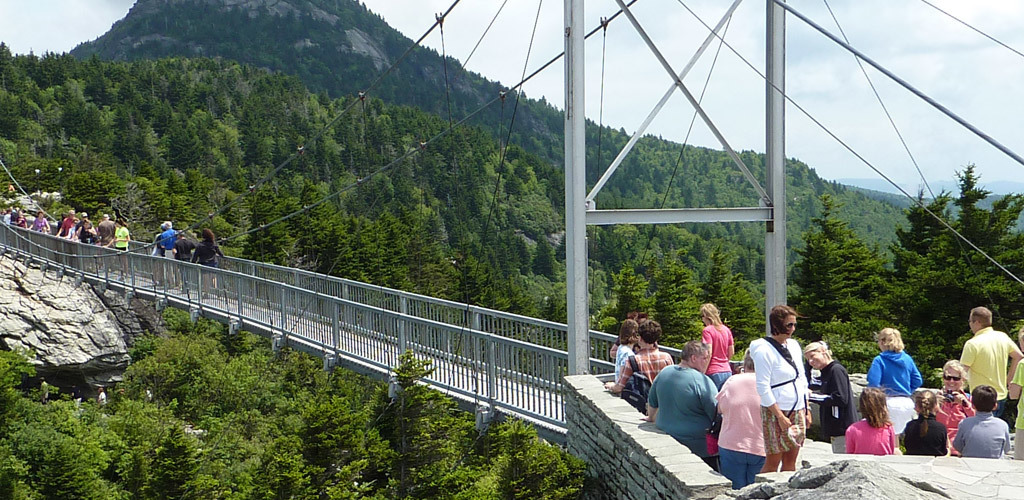
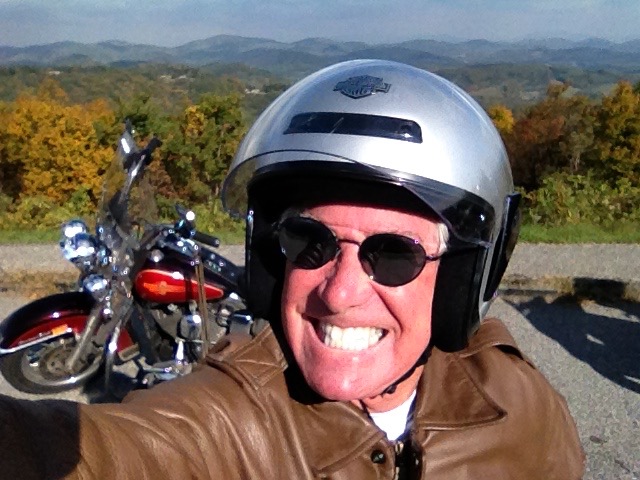
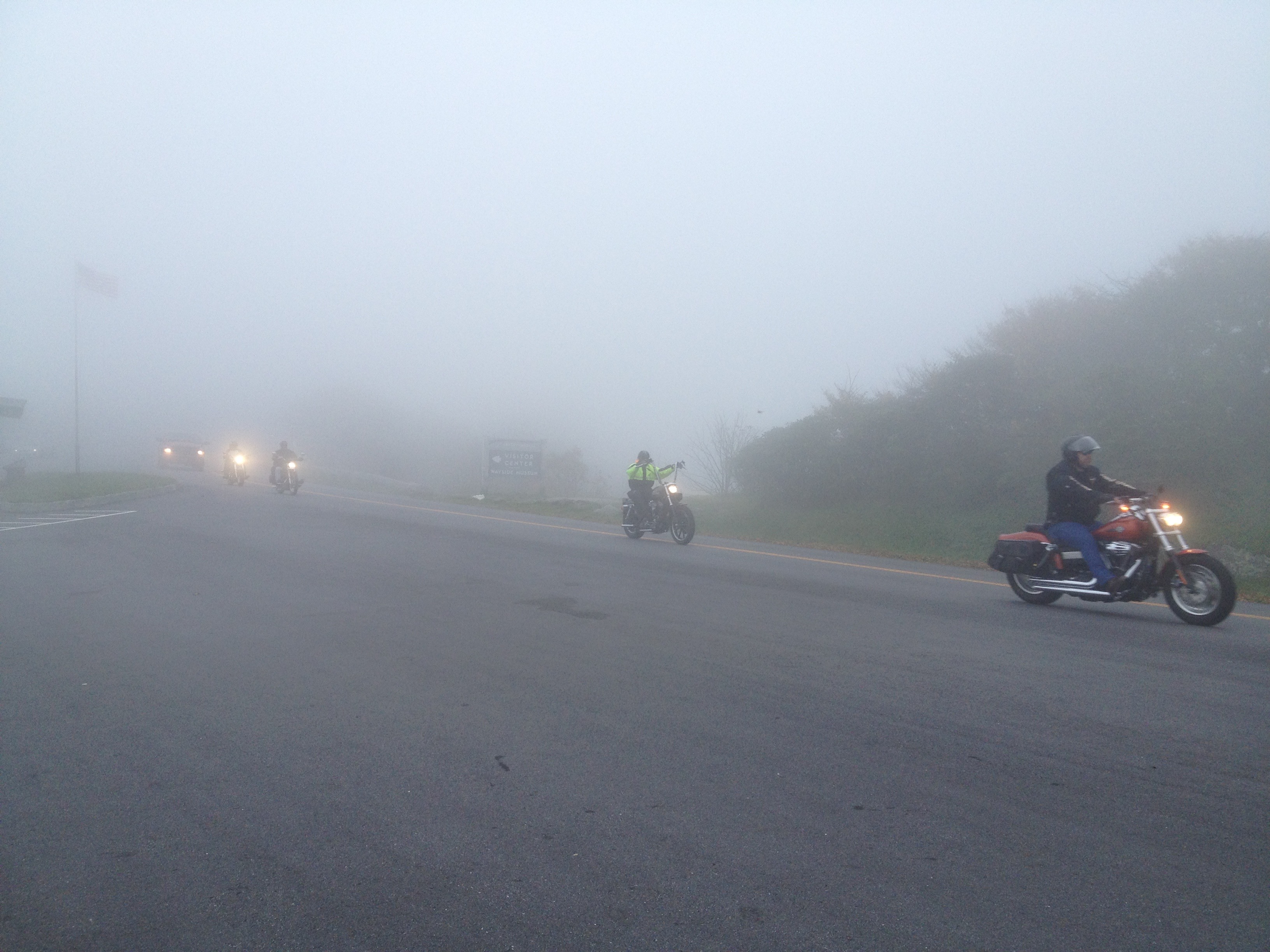
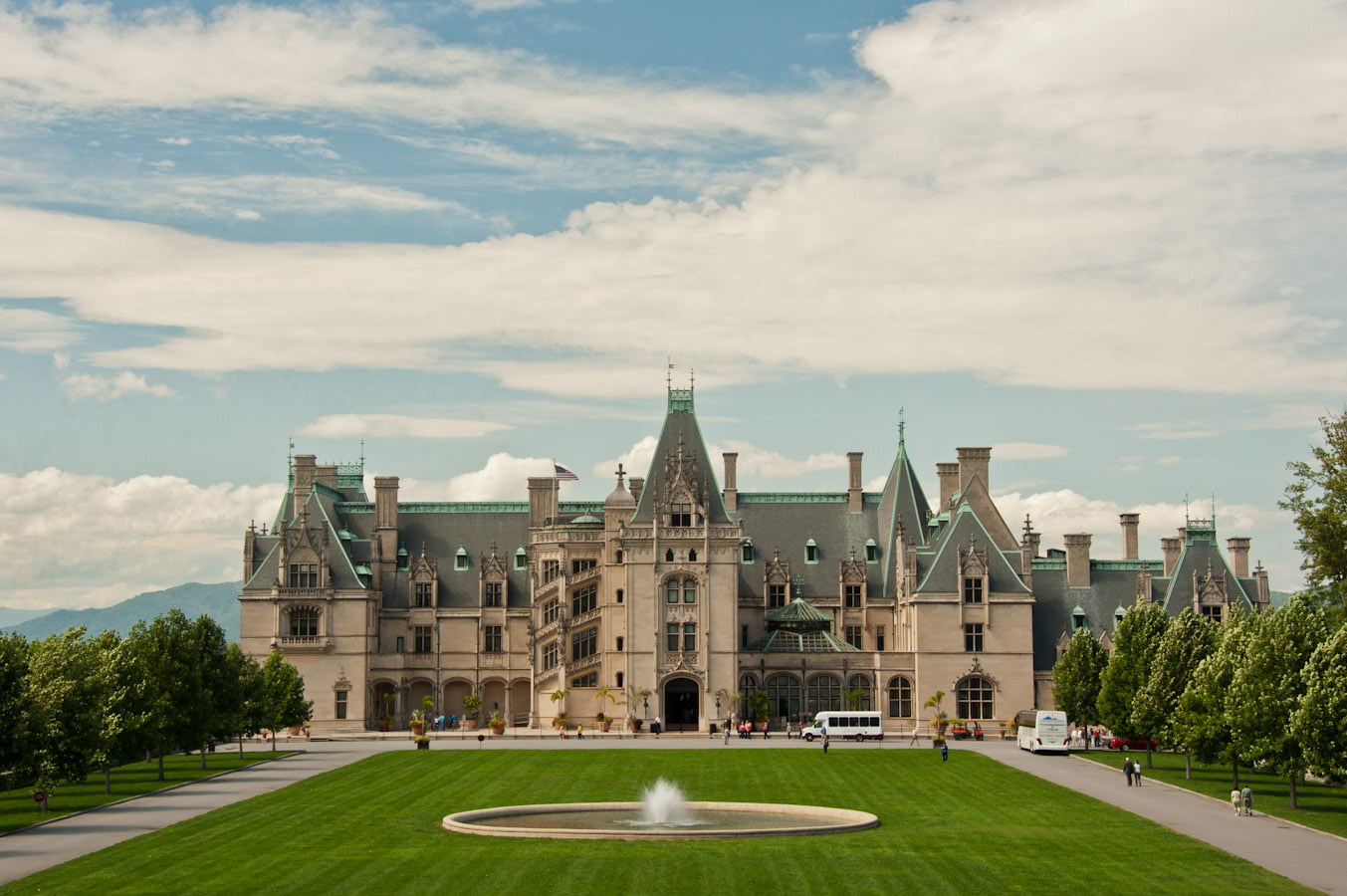
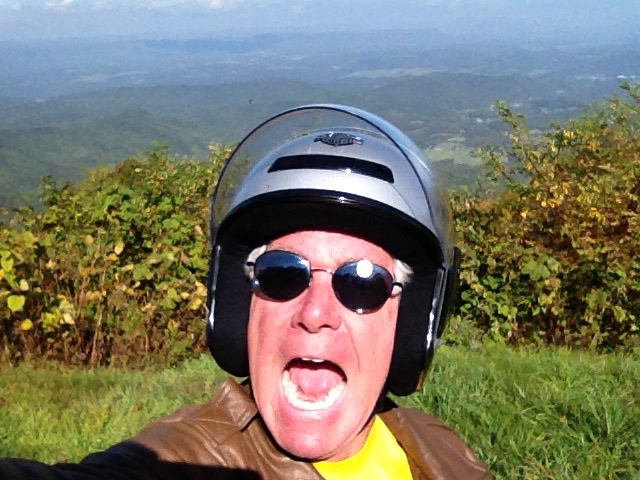
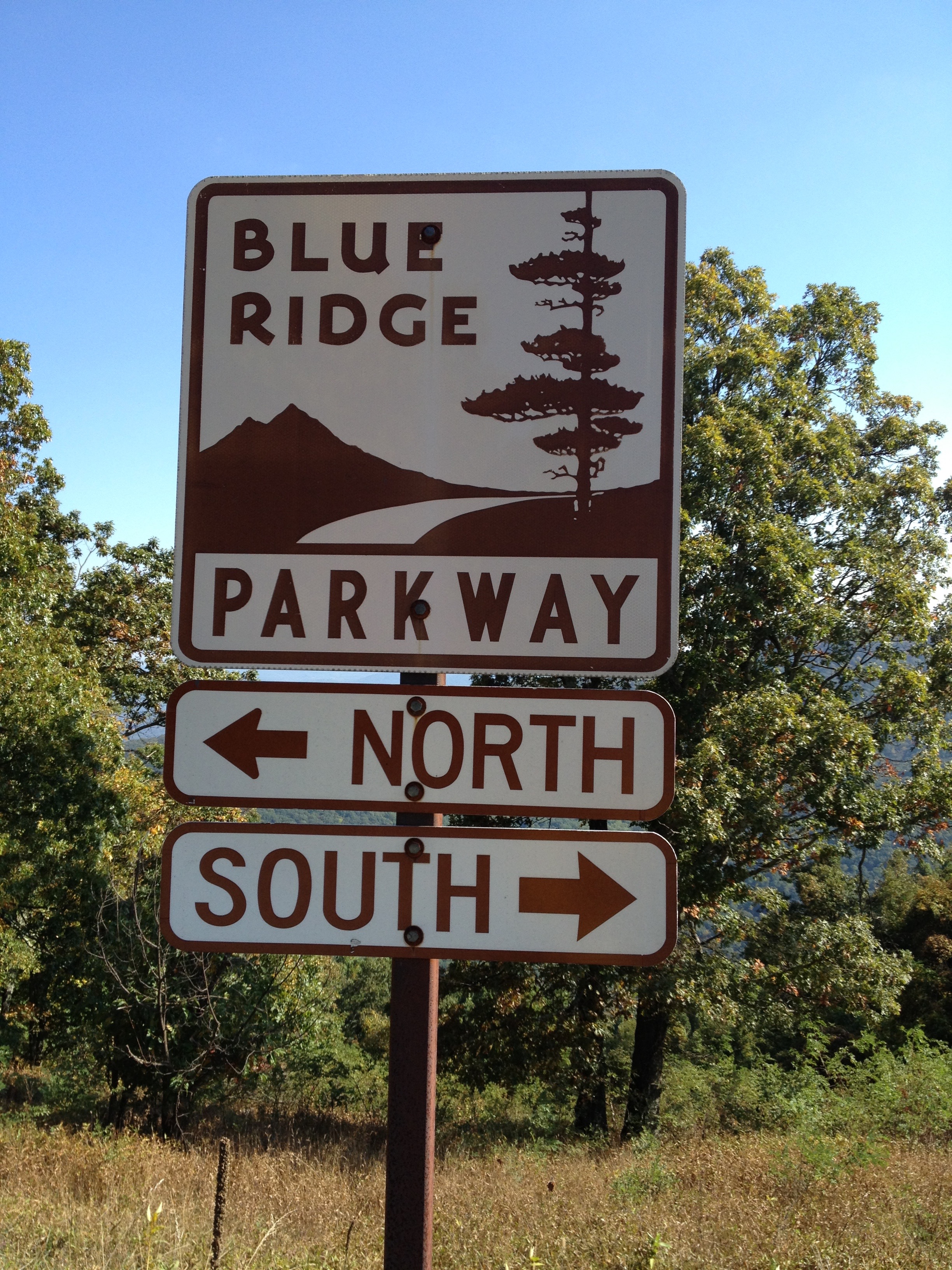
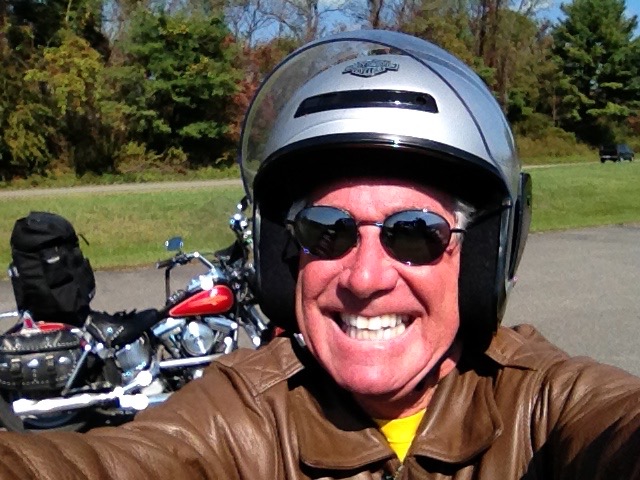
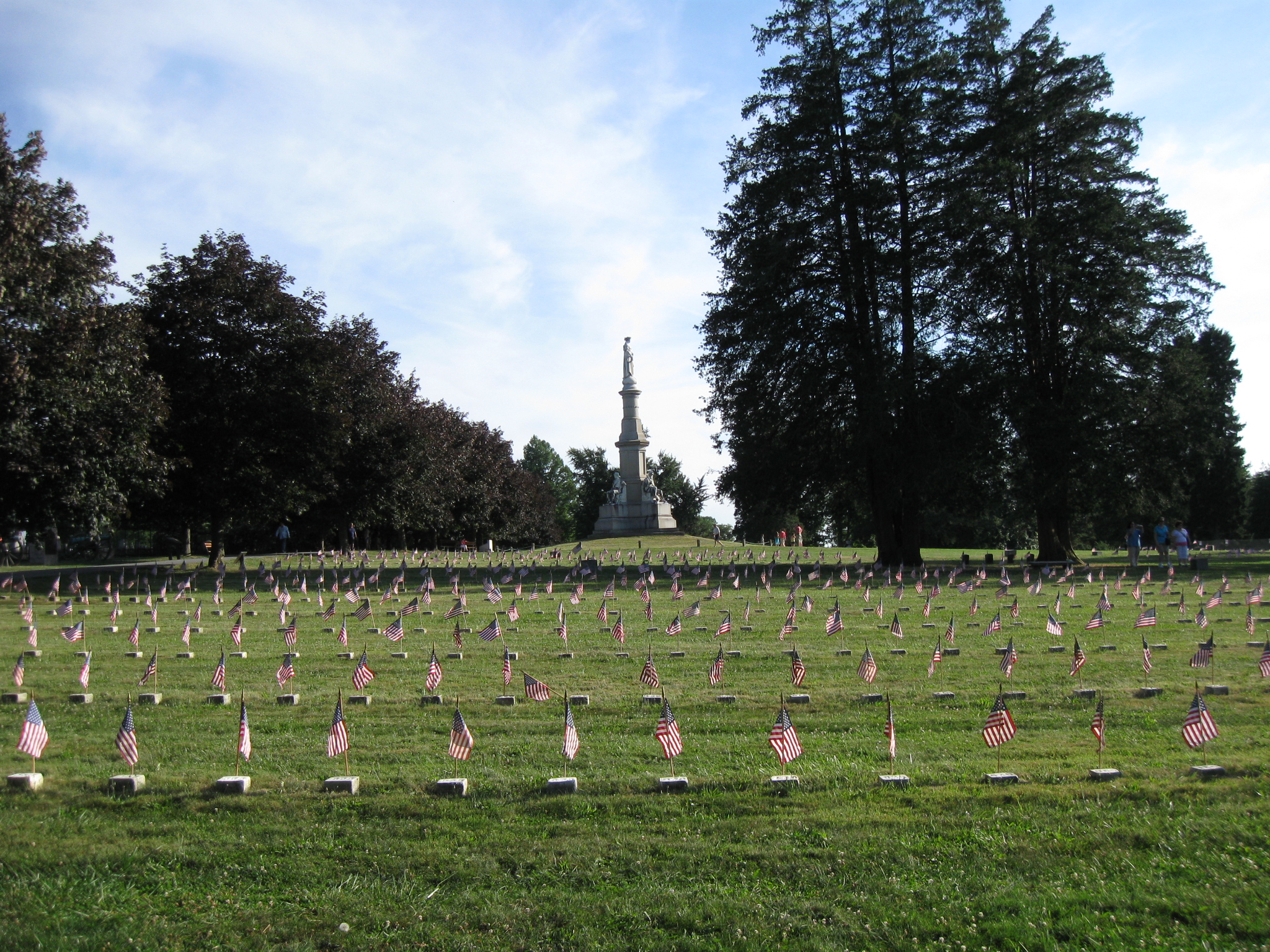
![34_dwight_d_eisenhower[1]](https://ridingwithgary.com/wp-content/uploads/2012/10/34_dwight_d_eisenhower1.jpg)
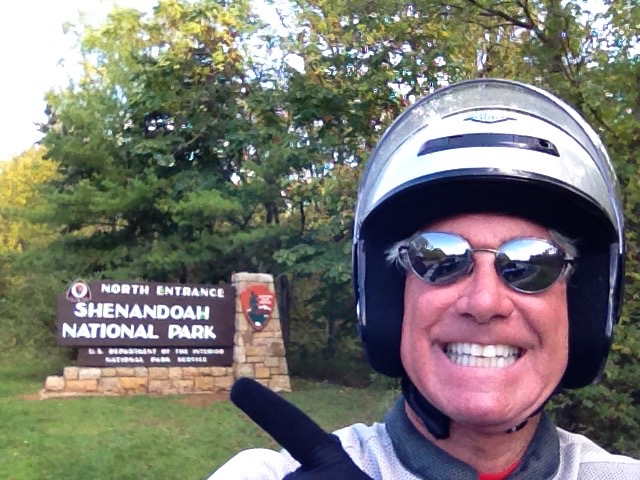
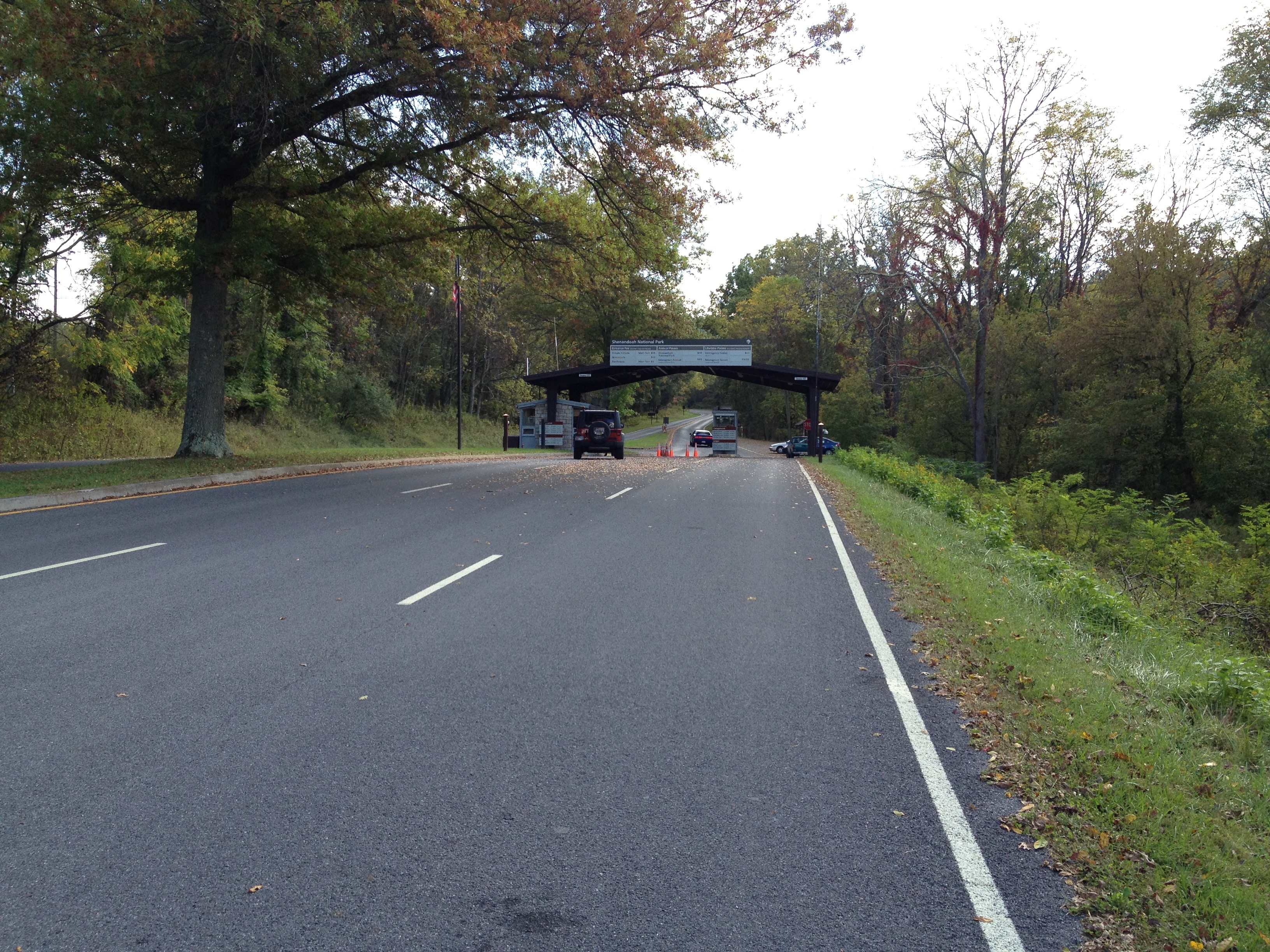
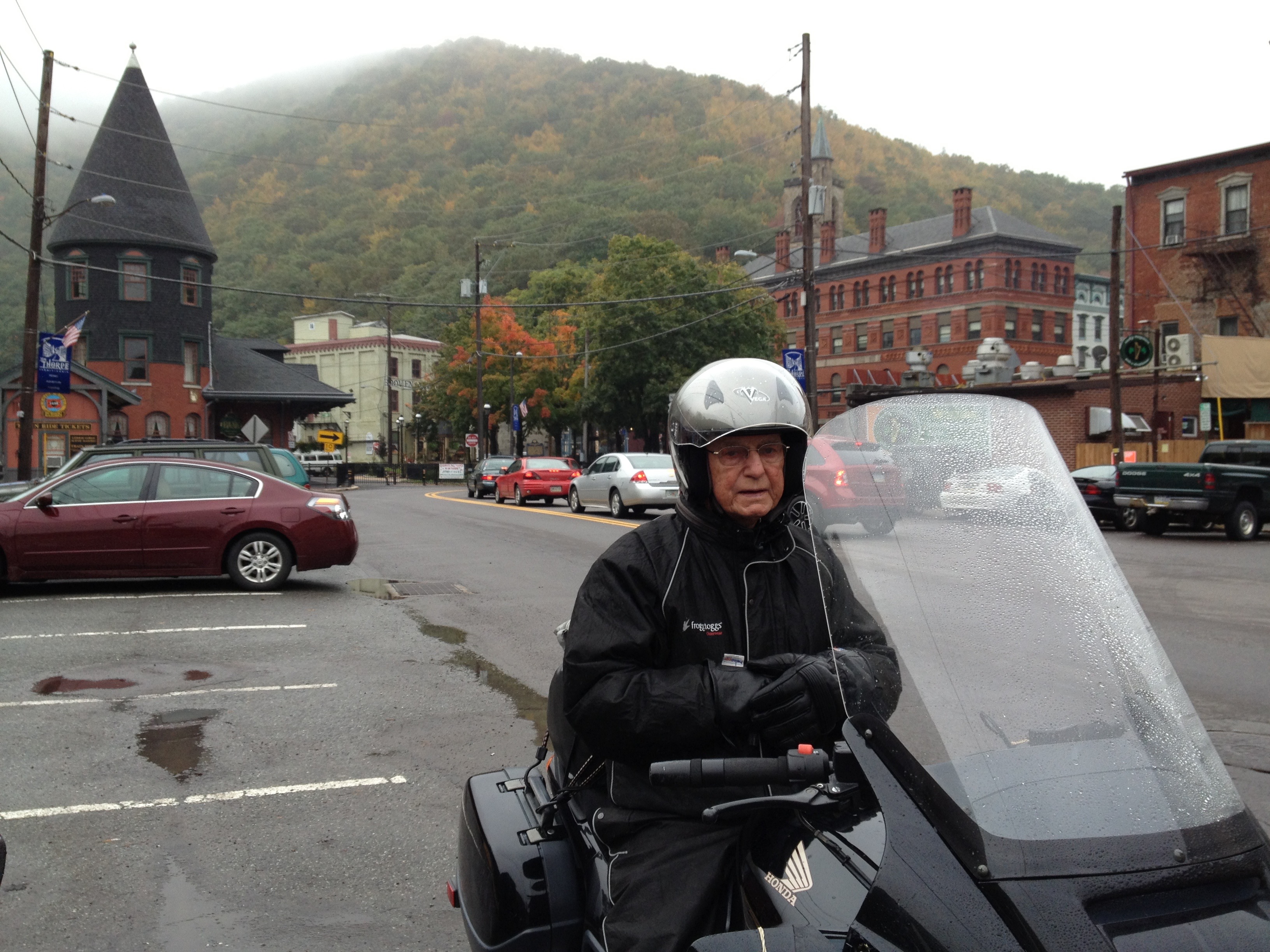
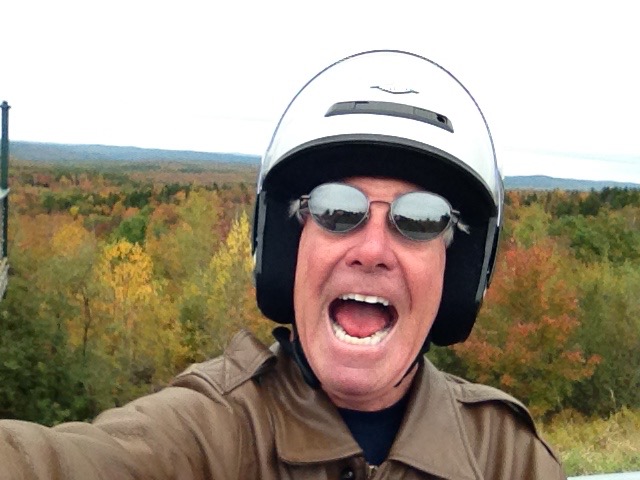
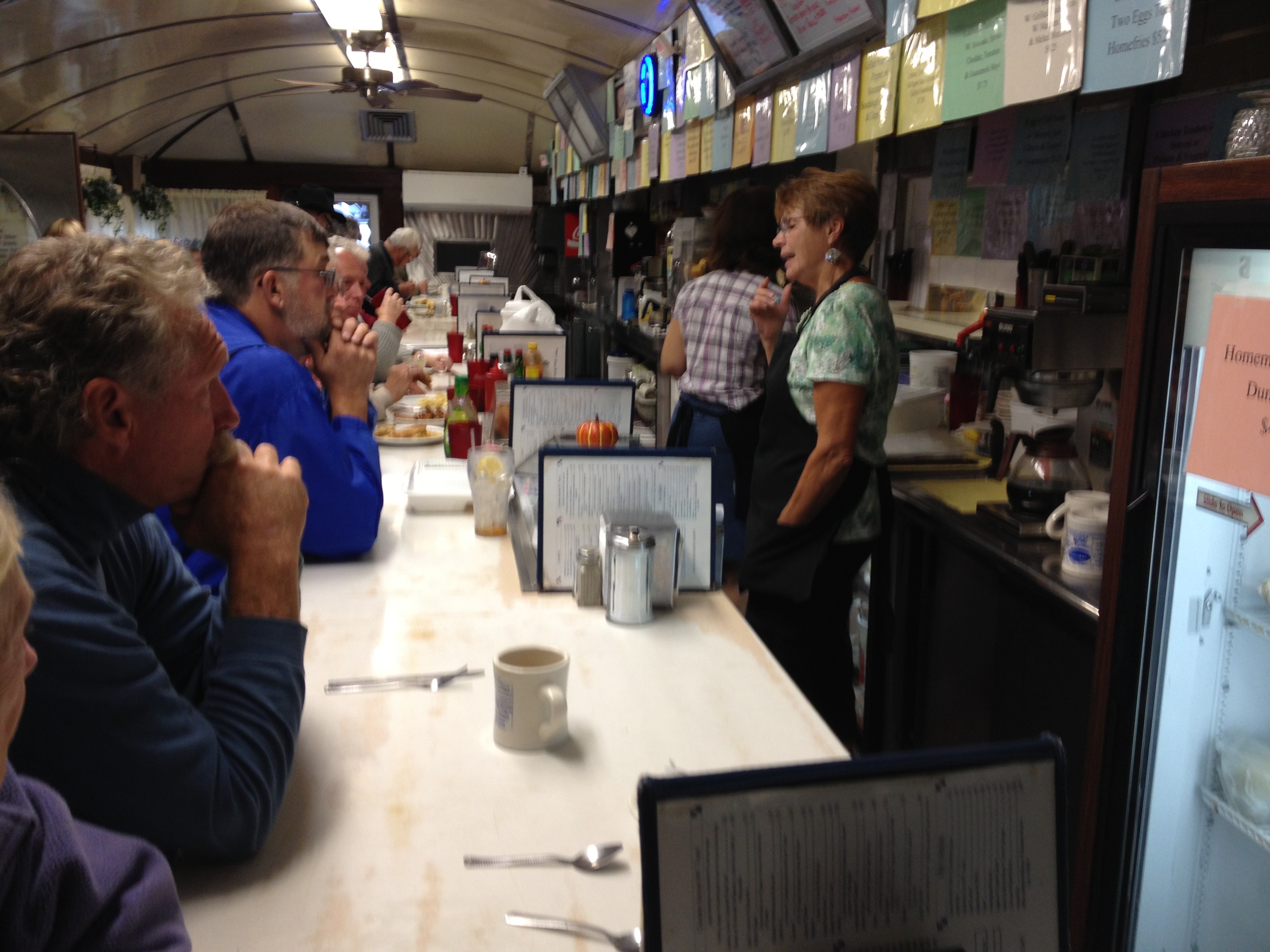
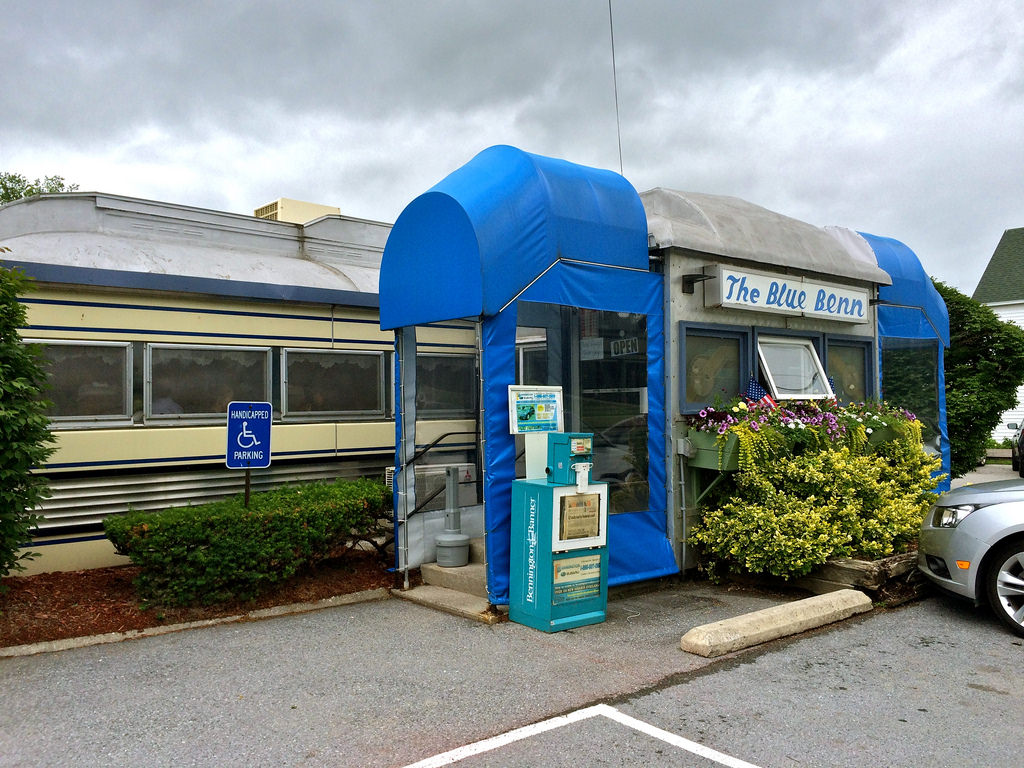
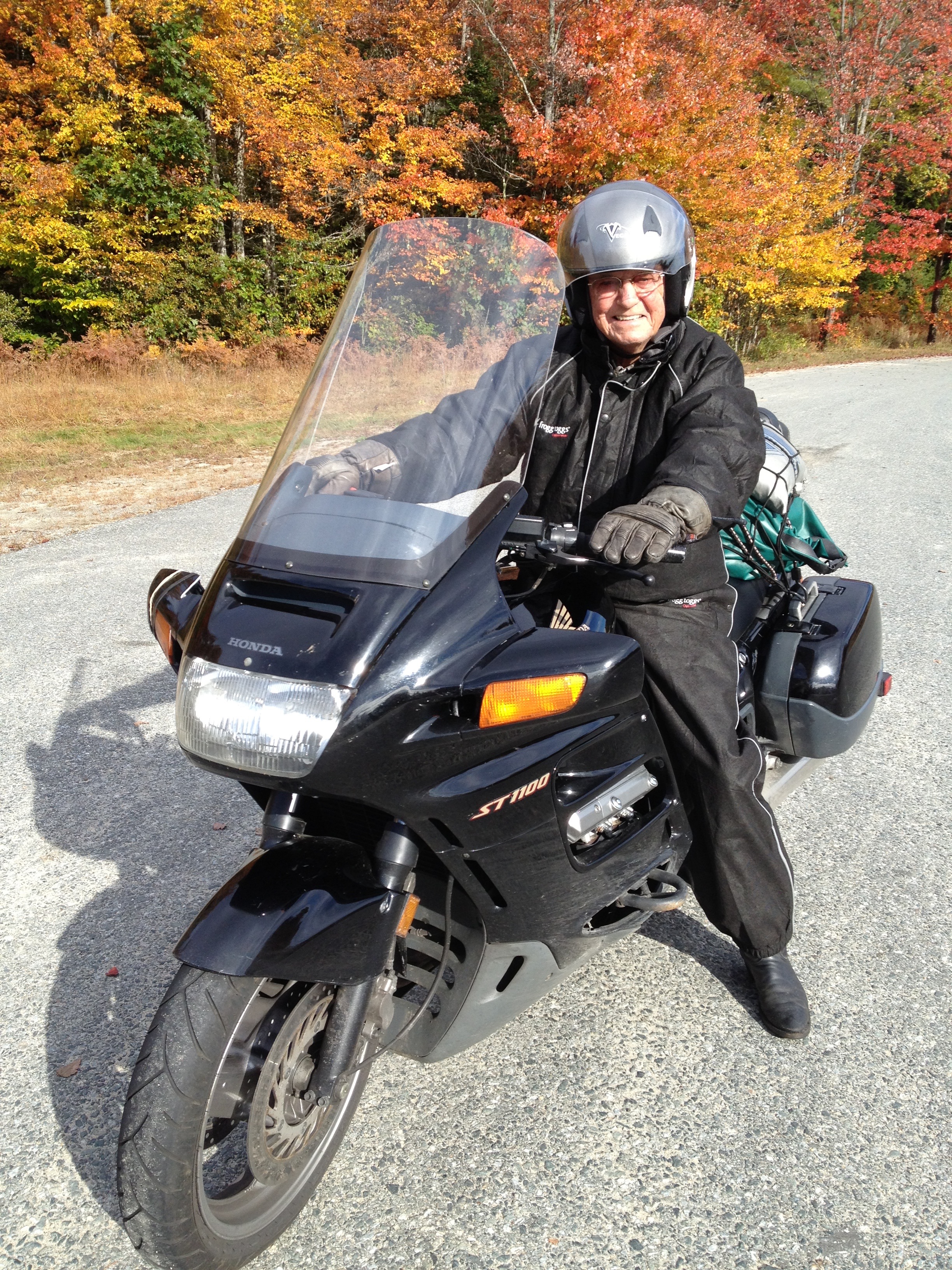
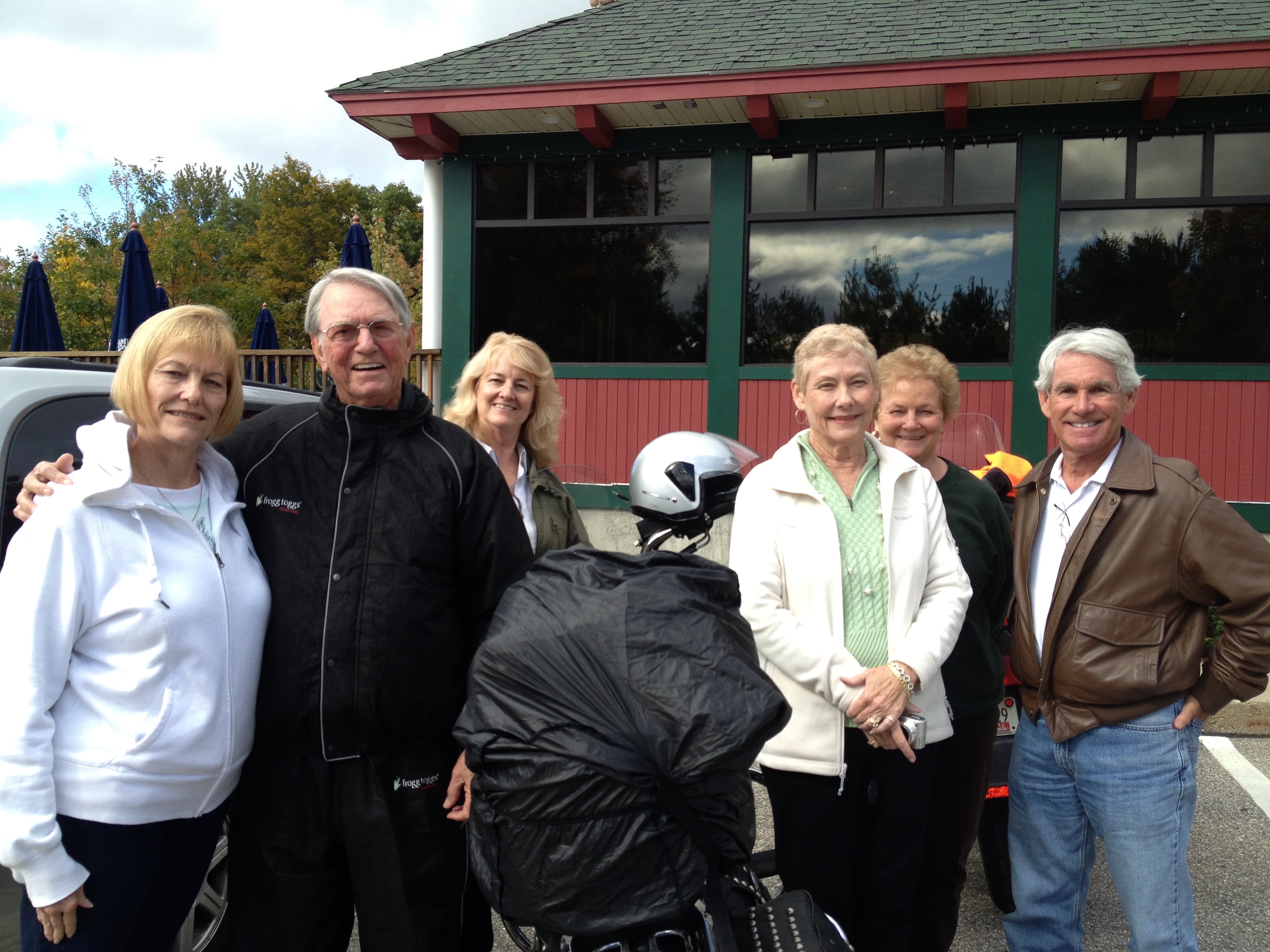
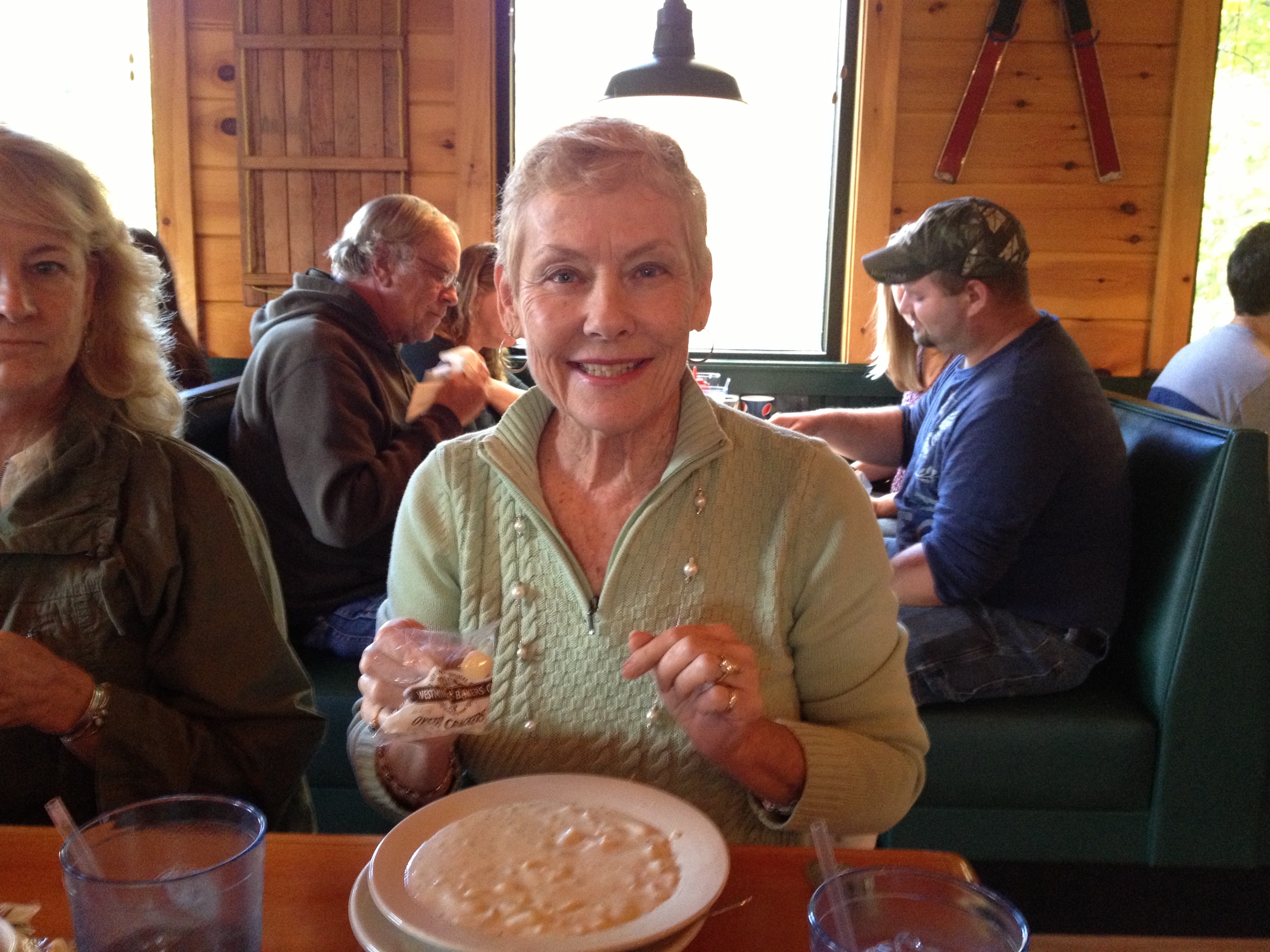
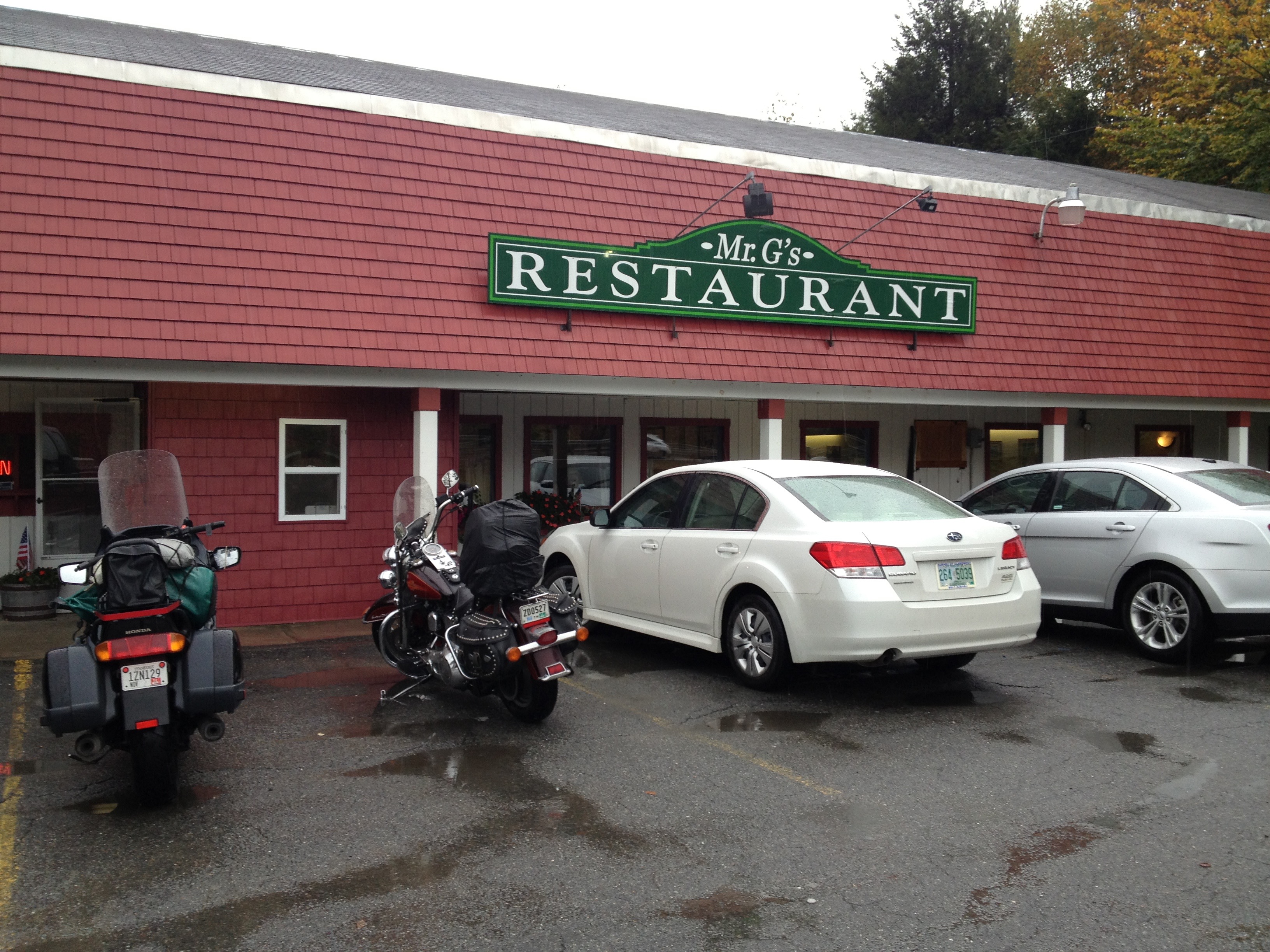
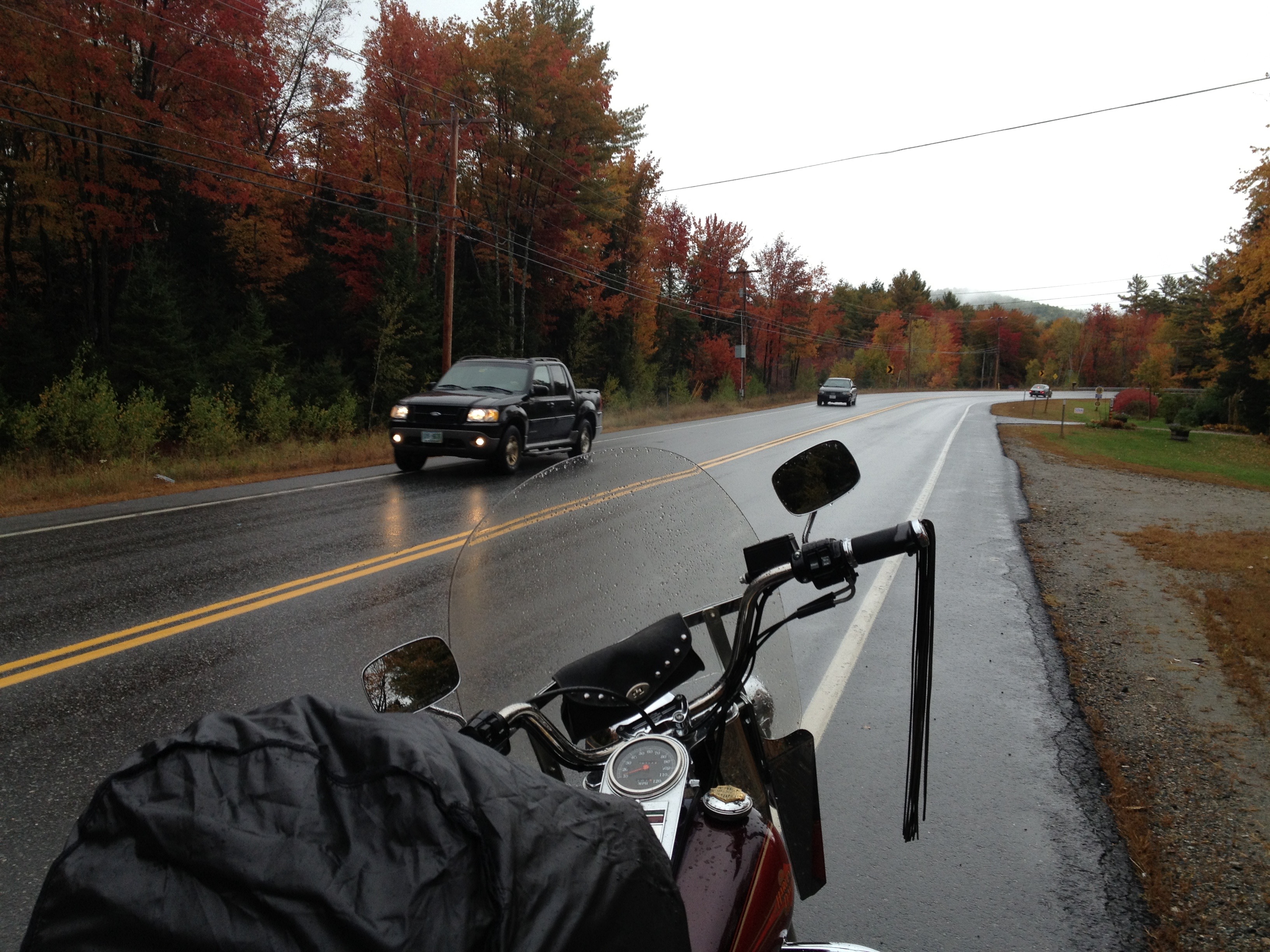
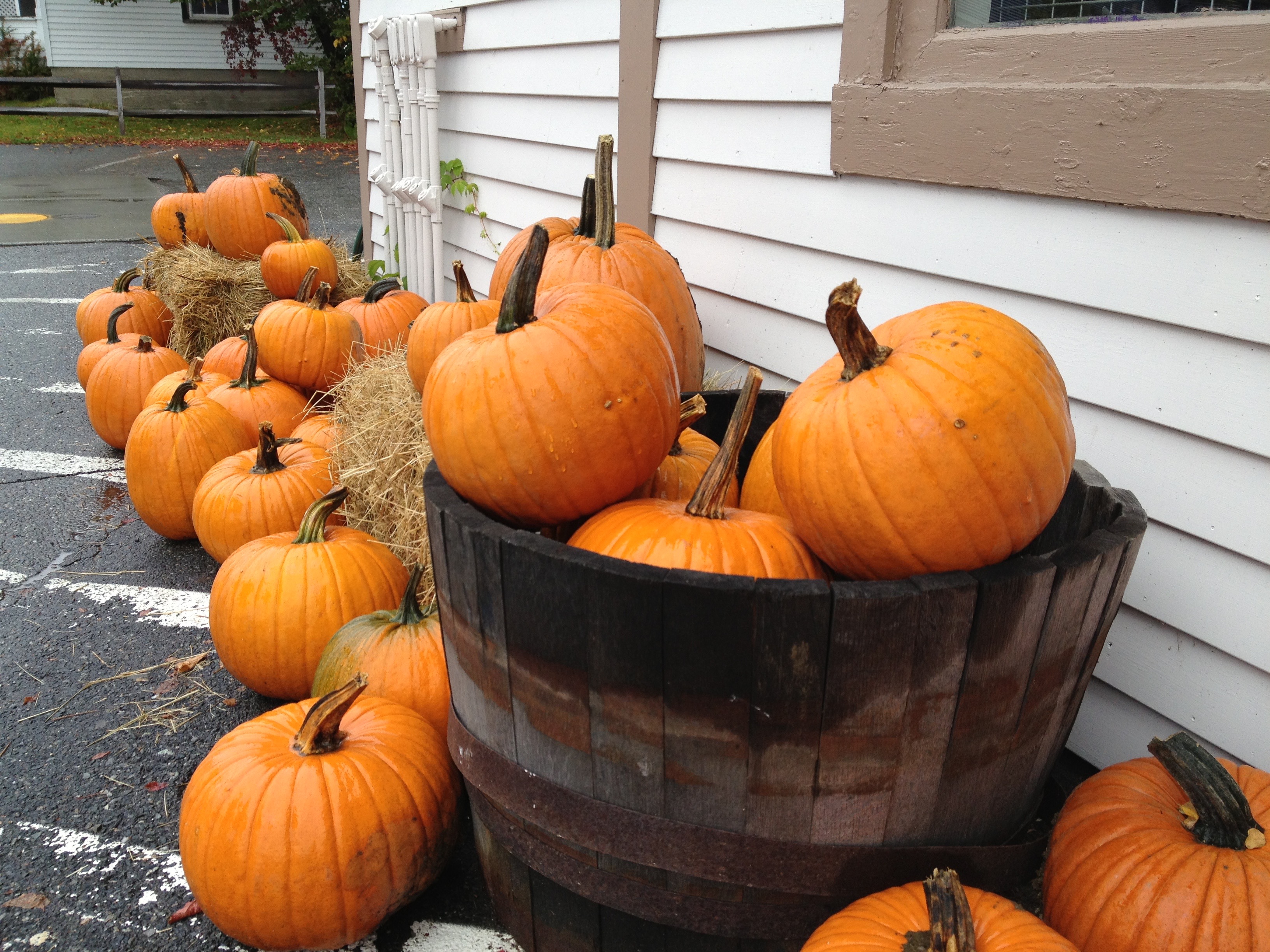
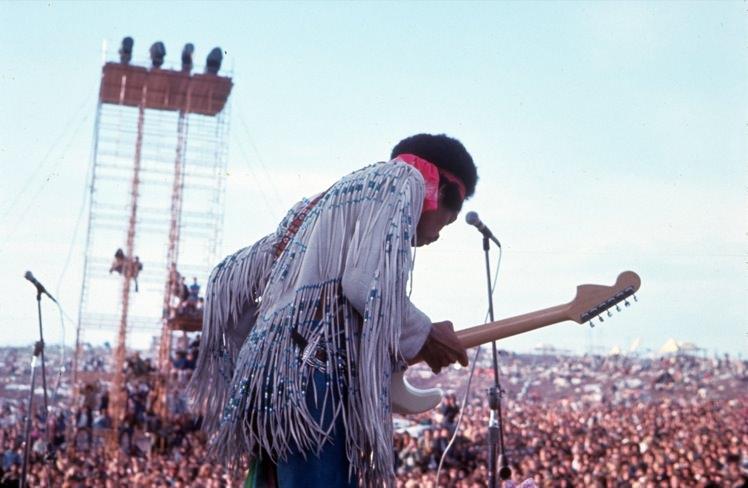
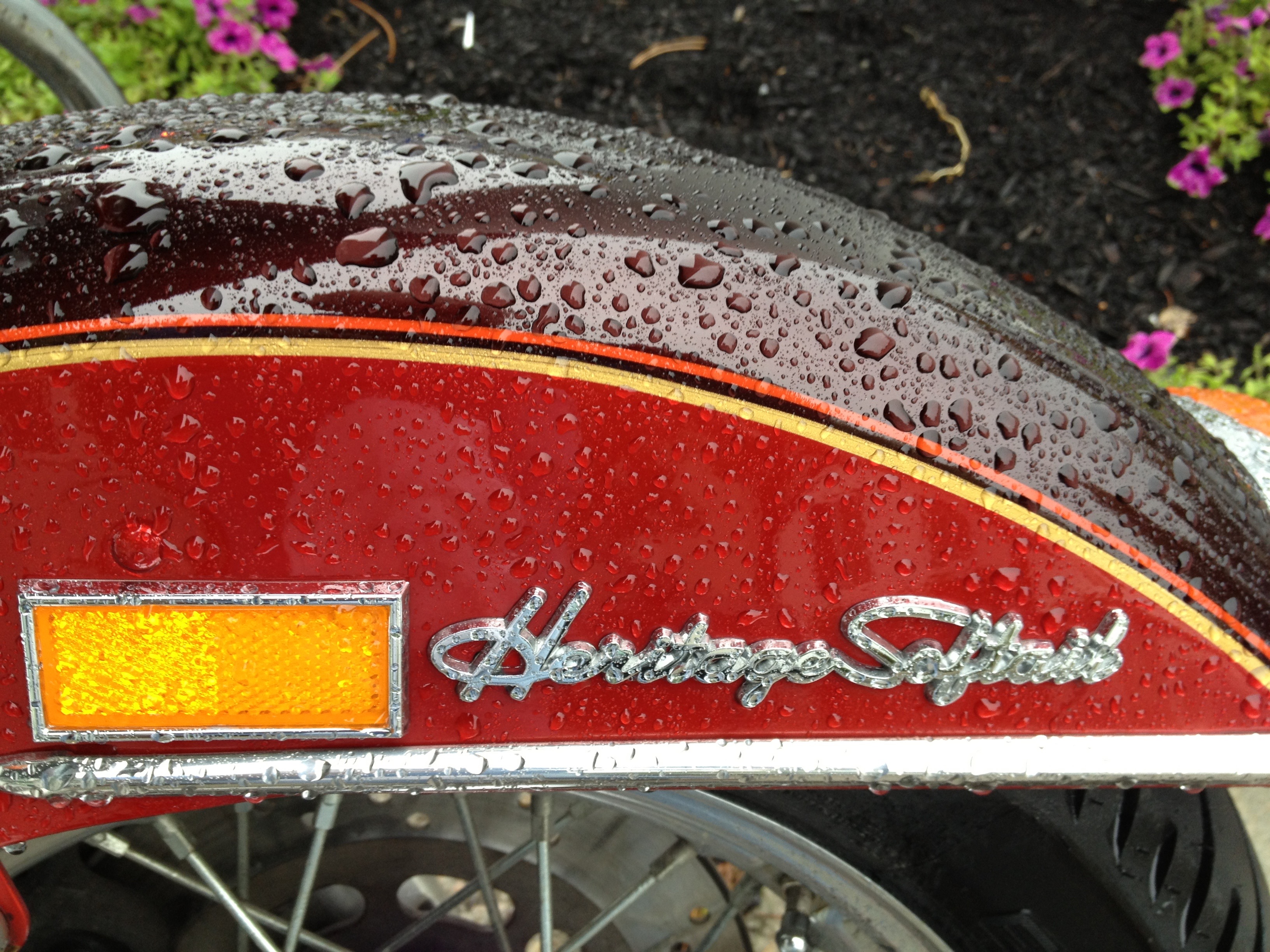
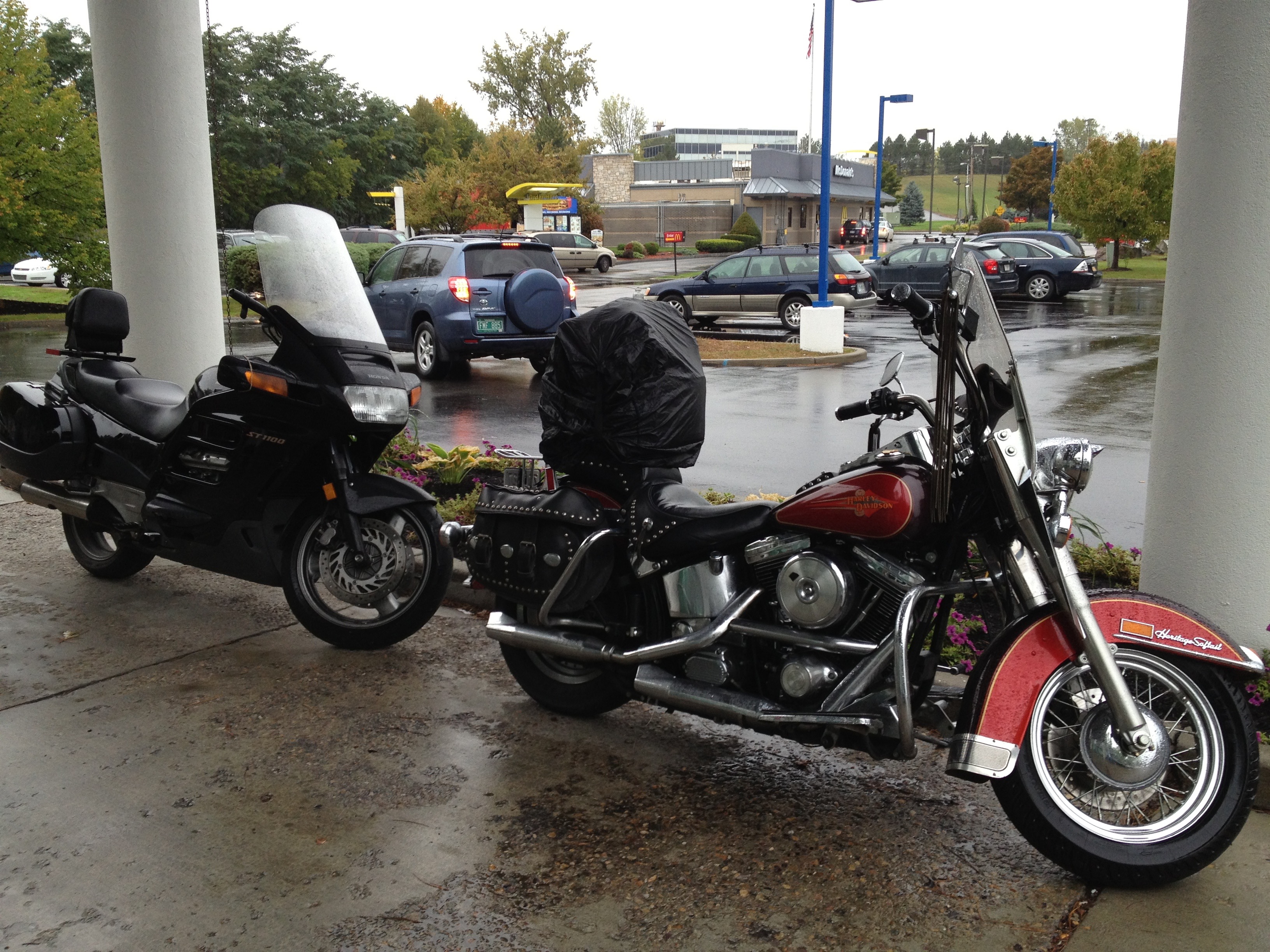
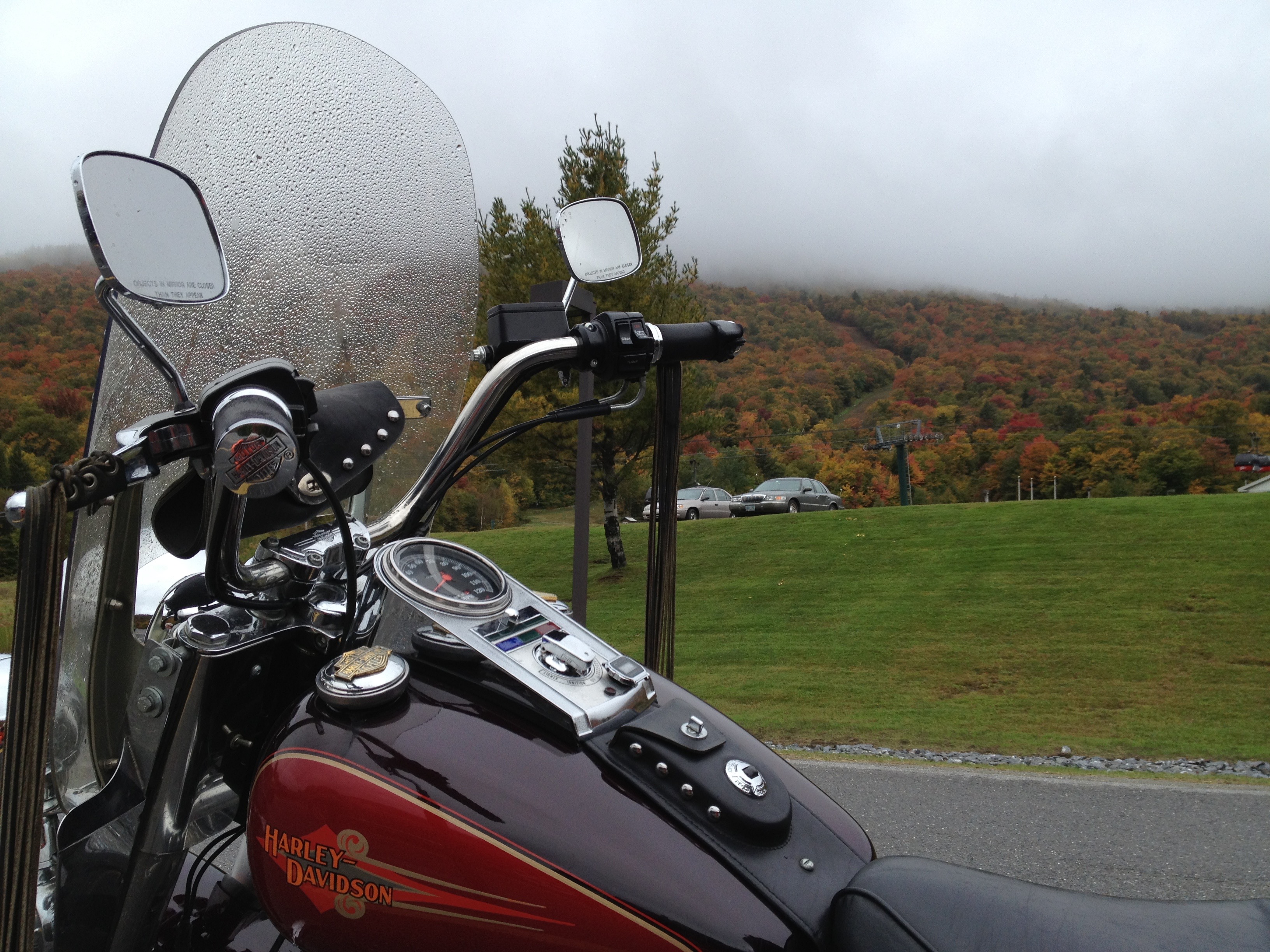
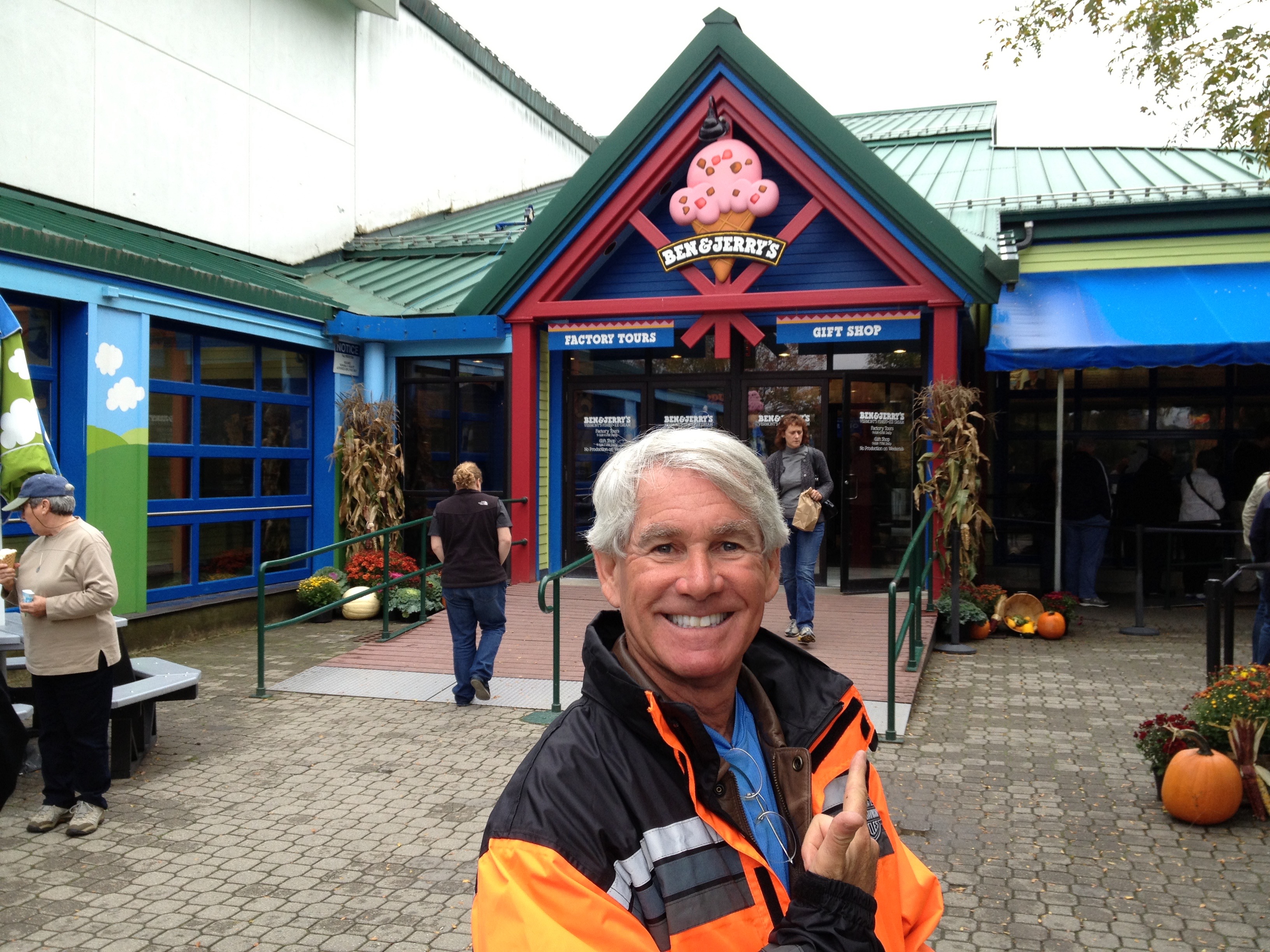
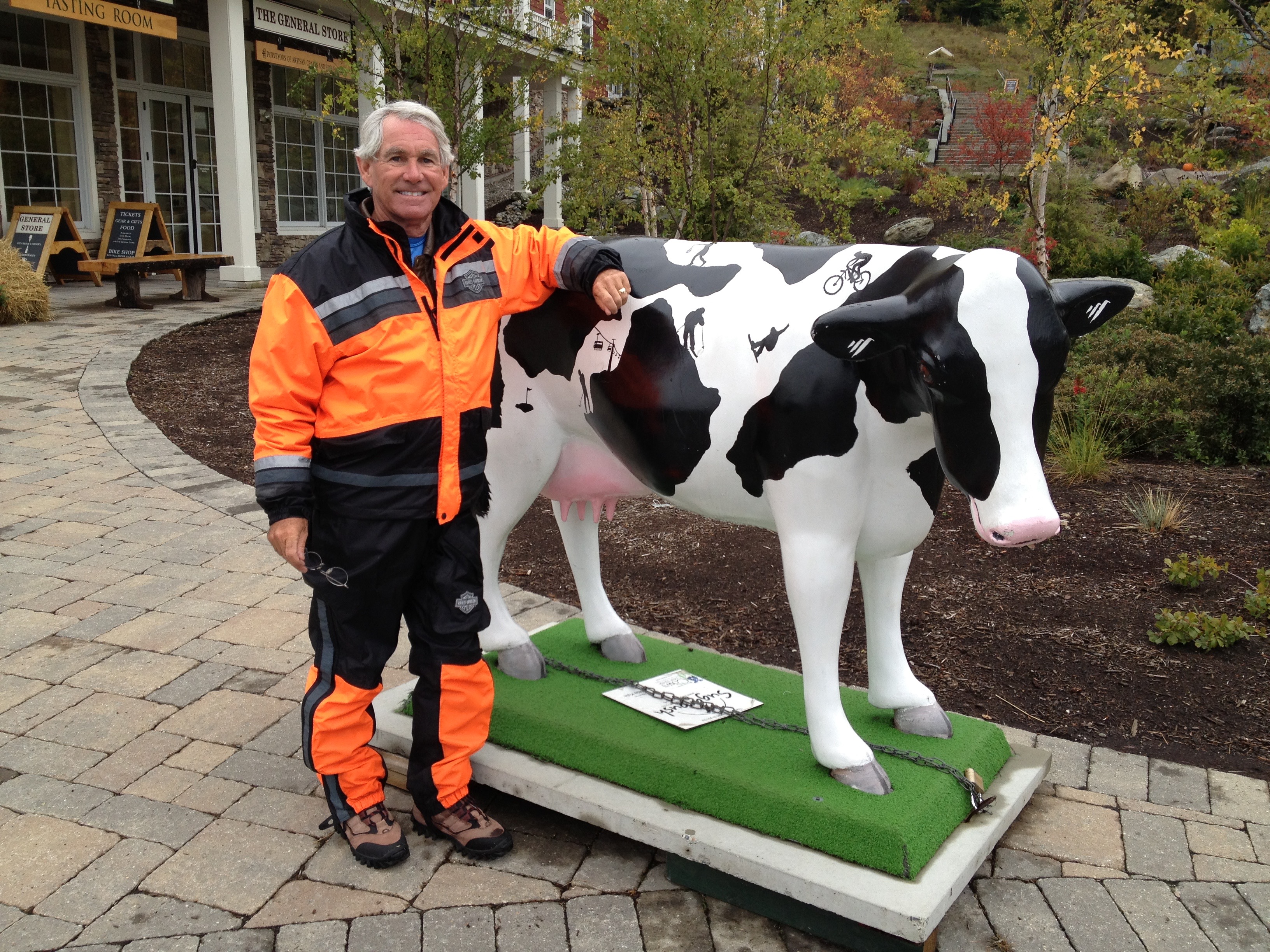
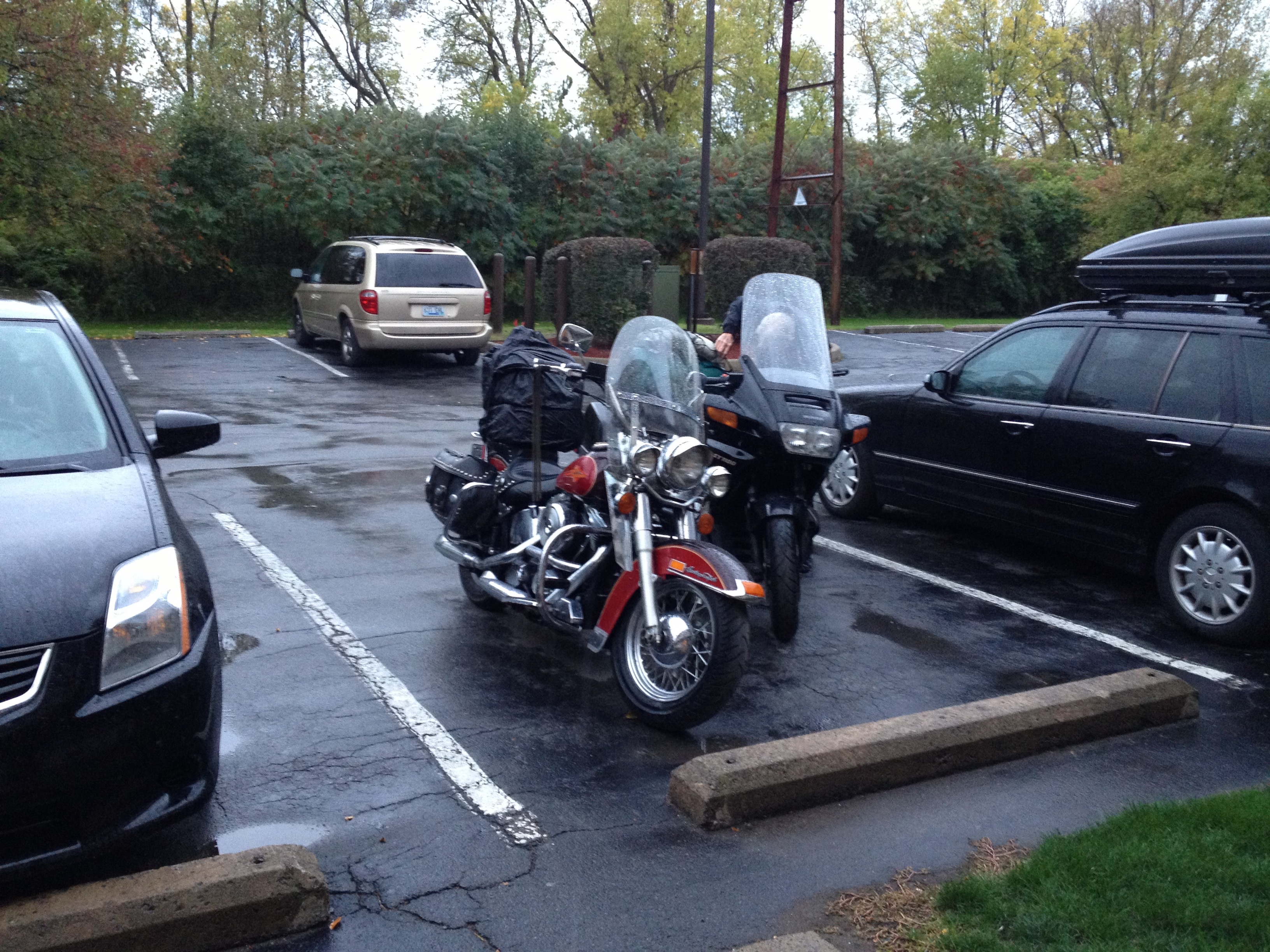
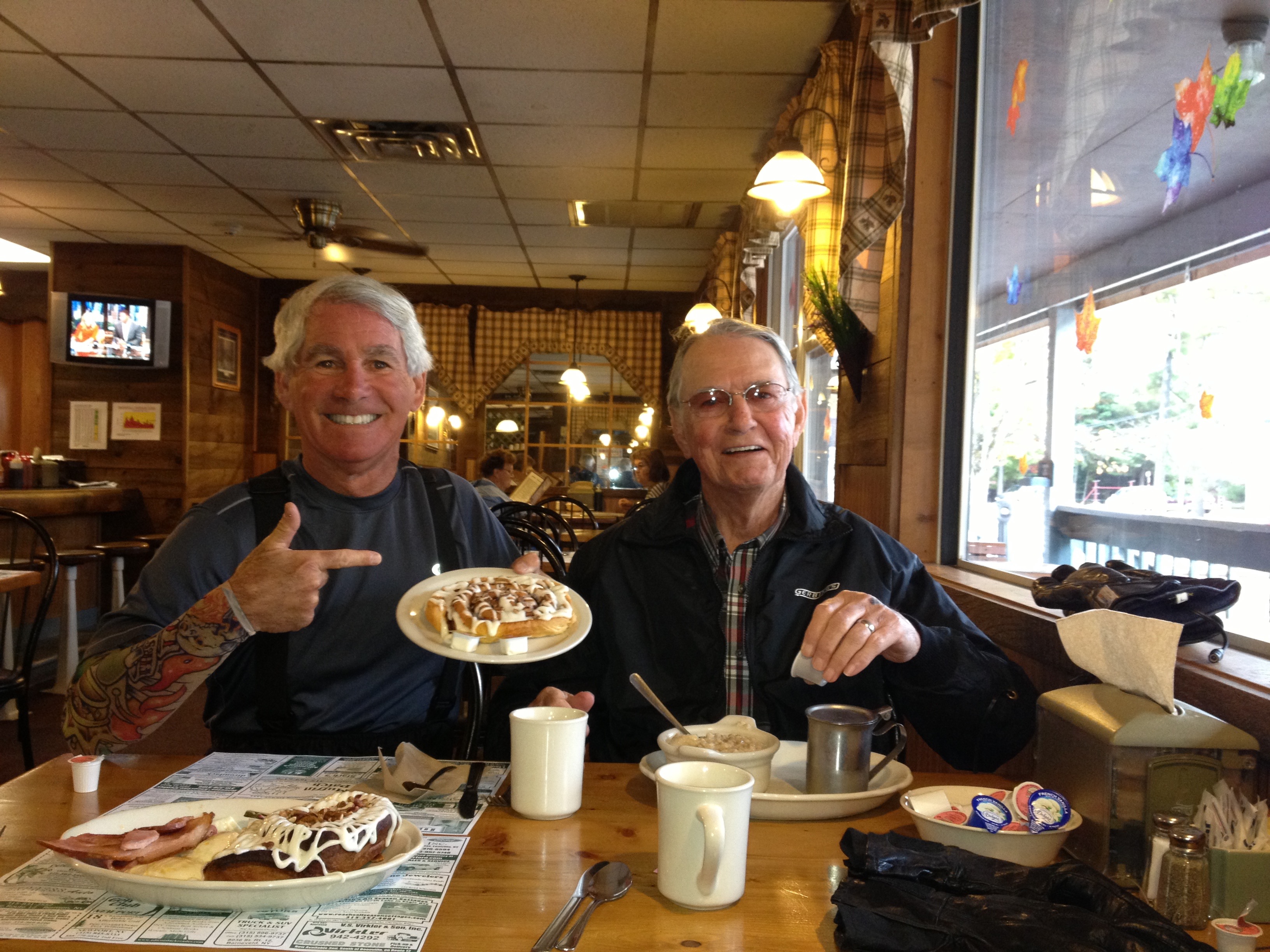
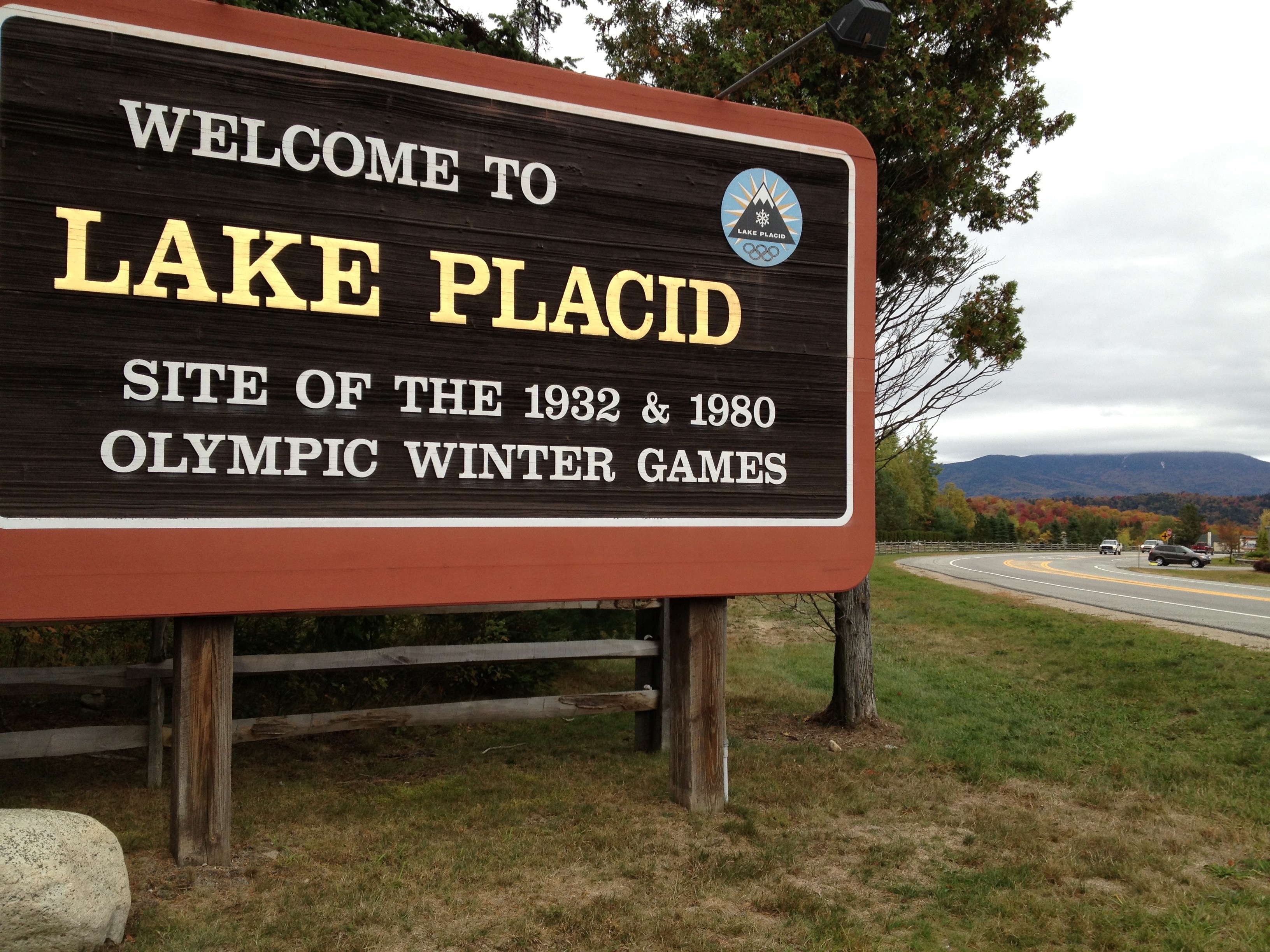
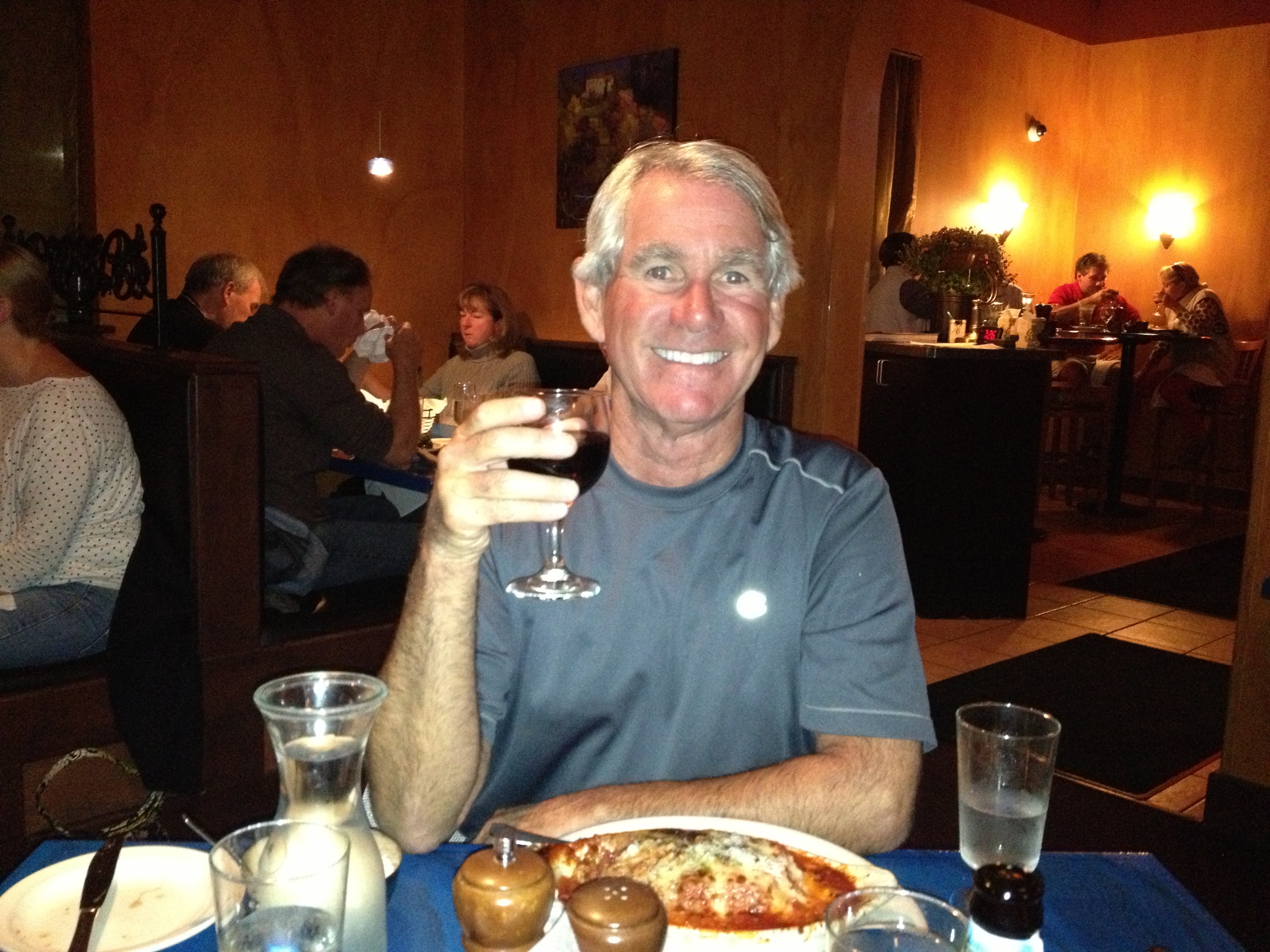
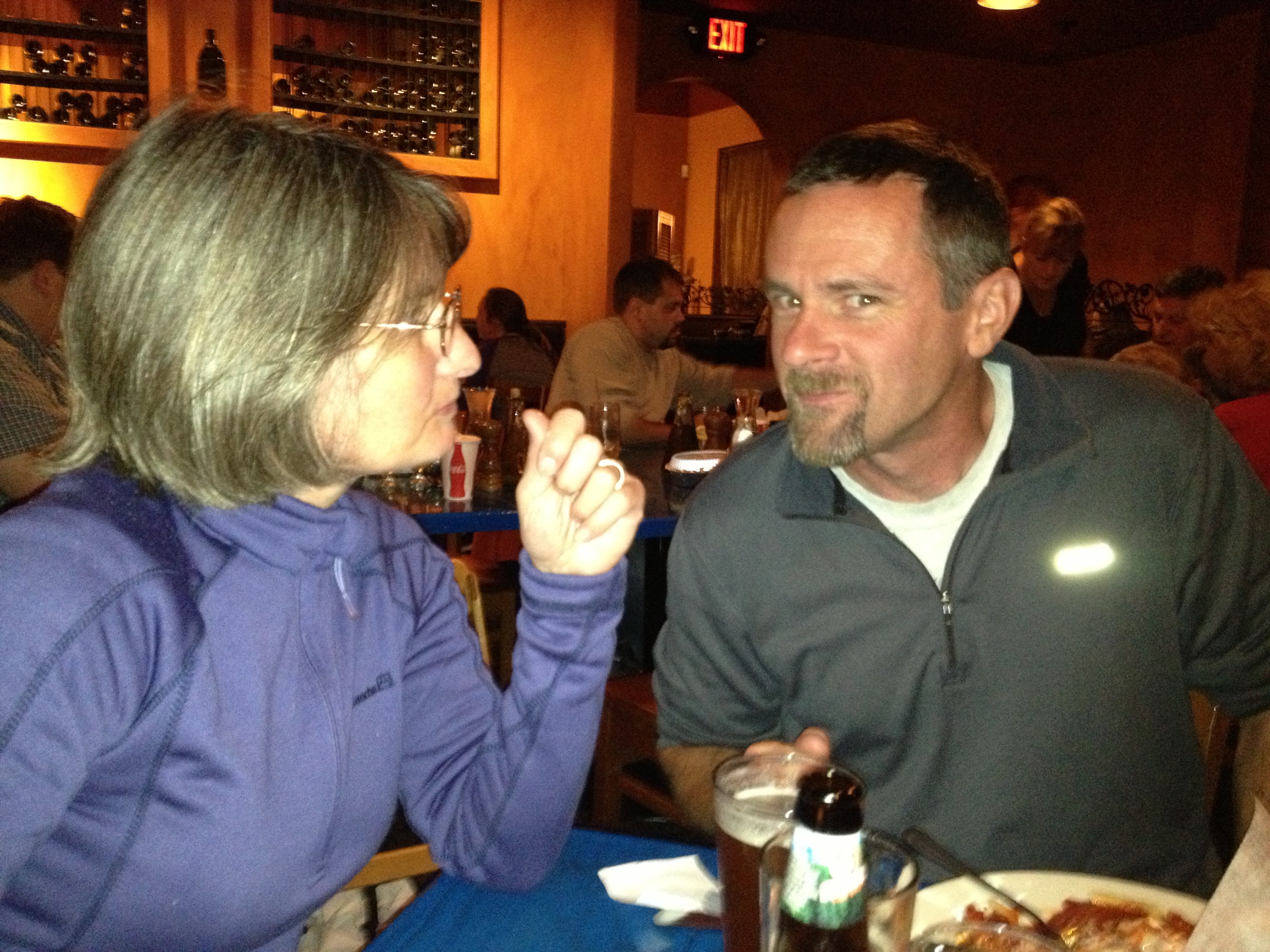
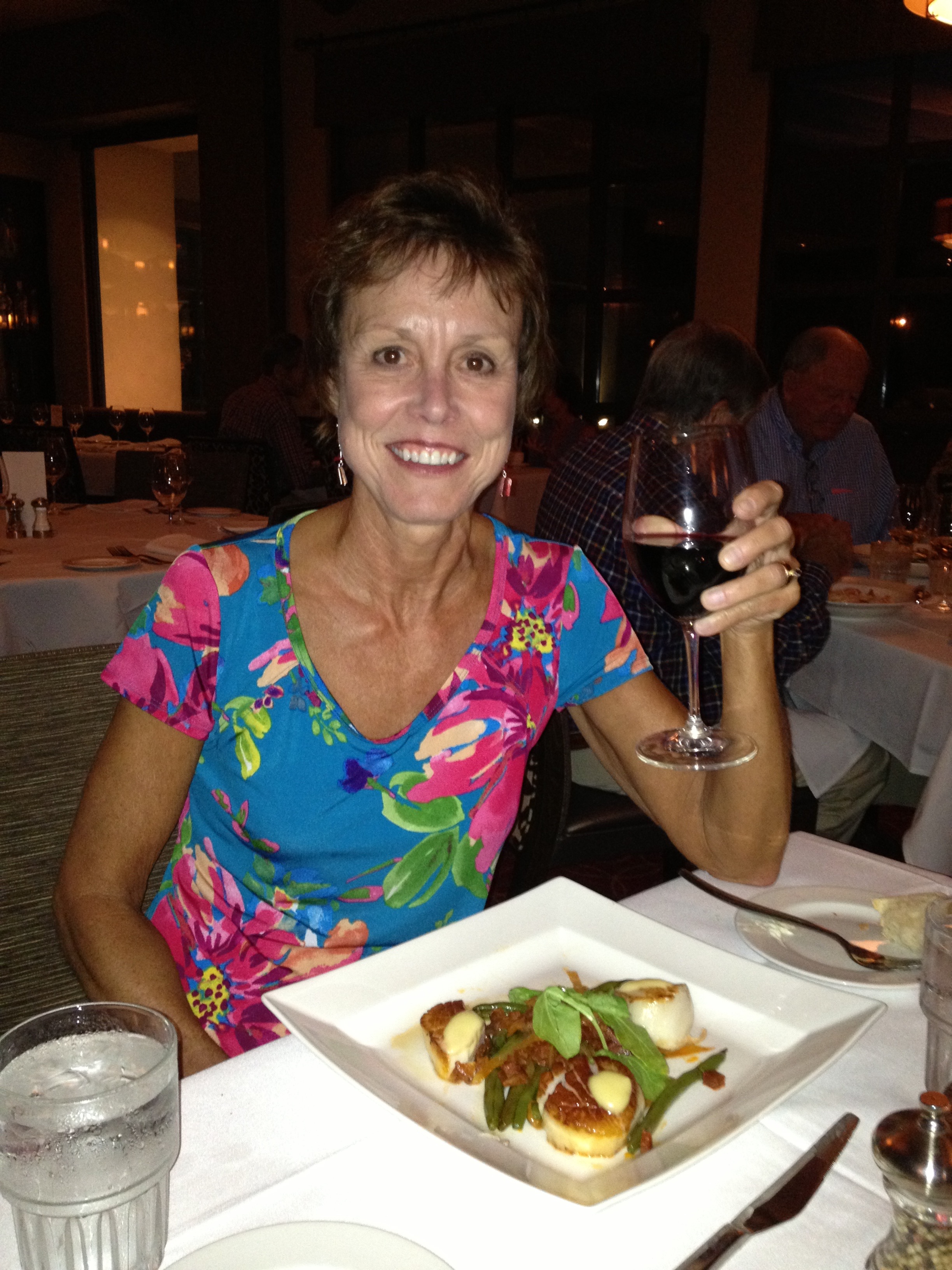
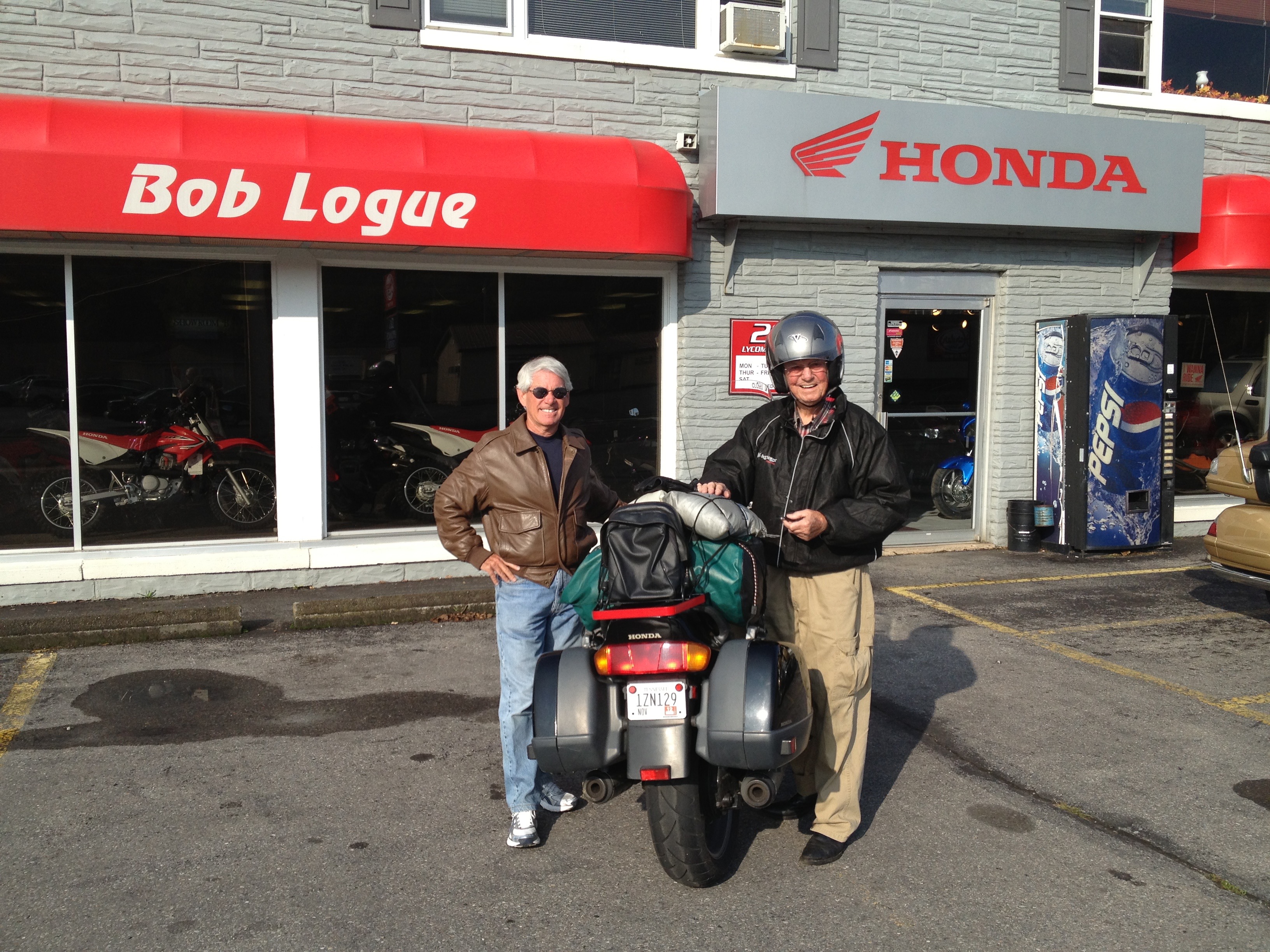
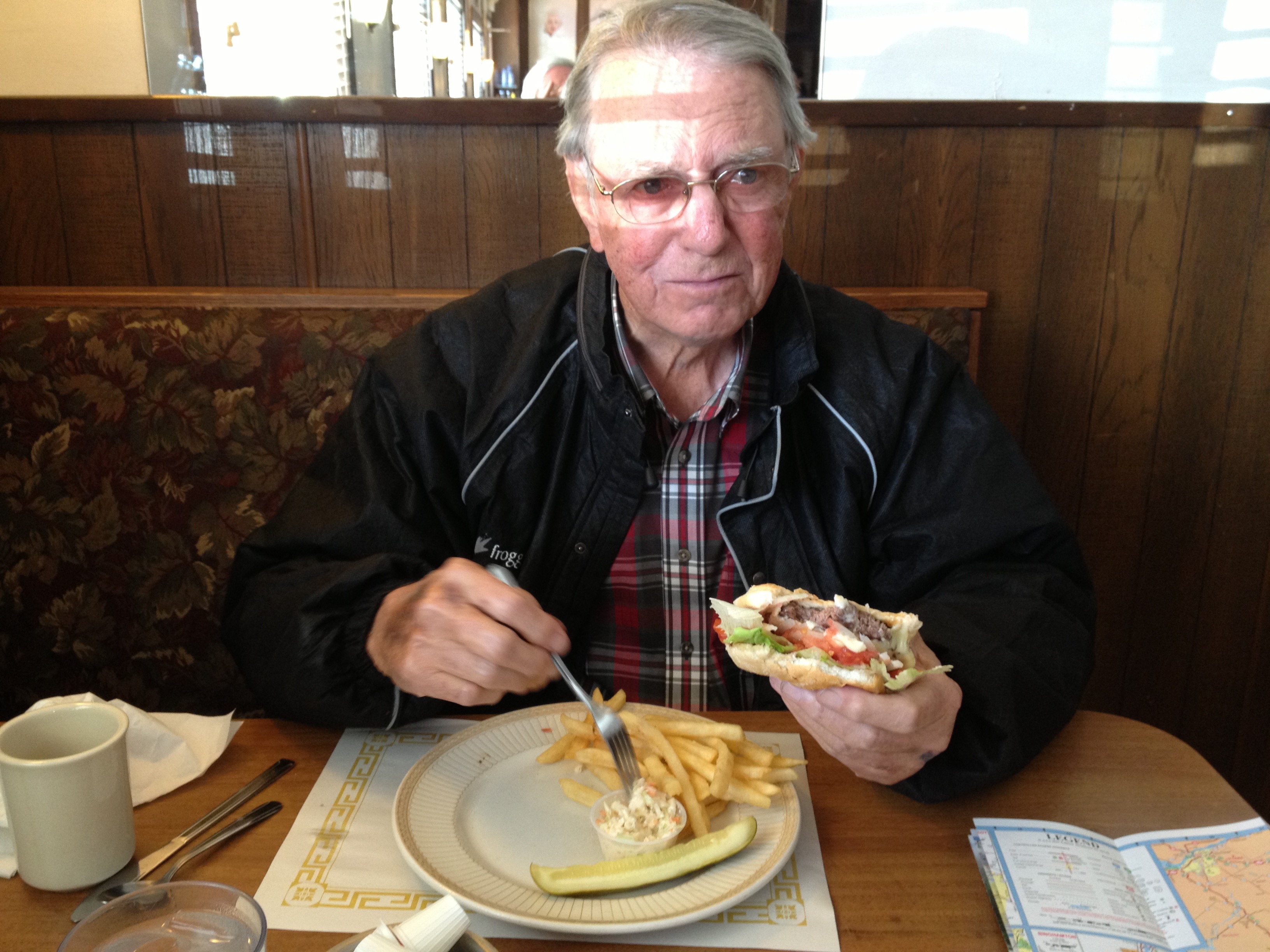
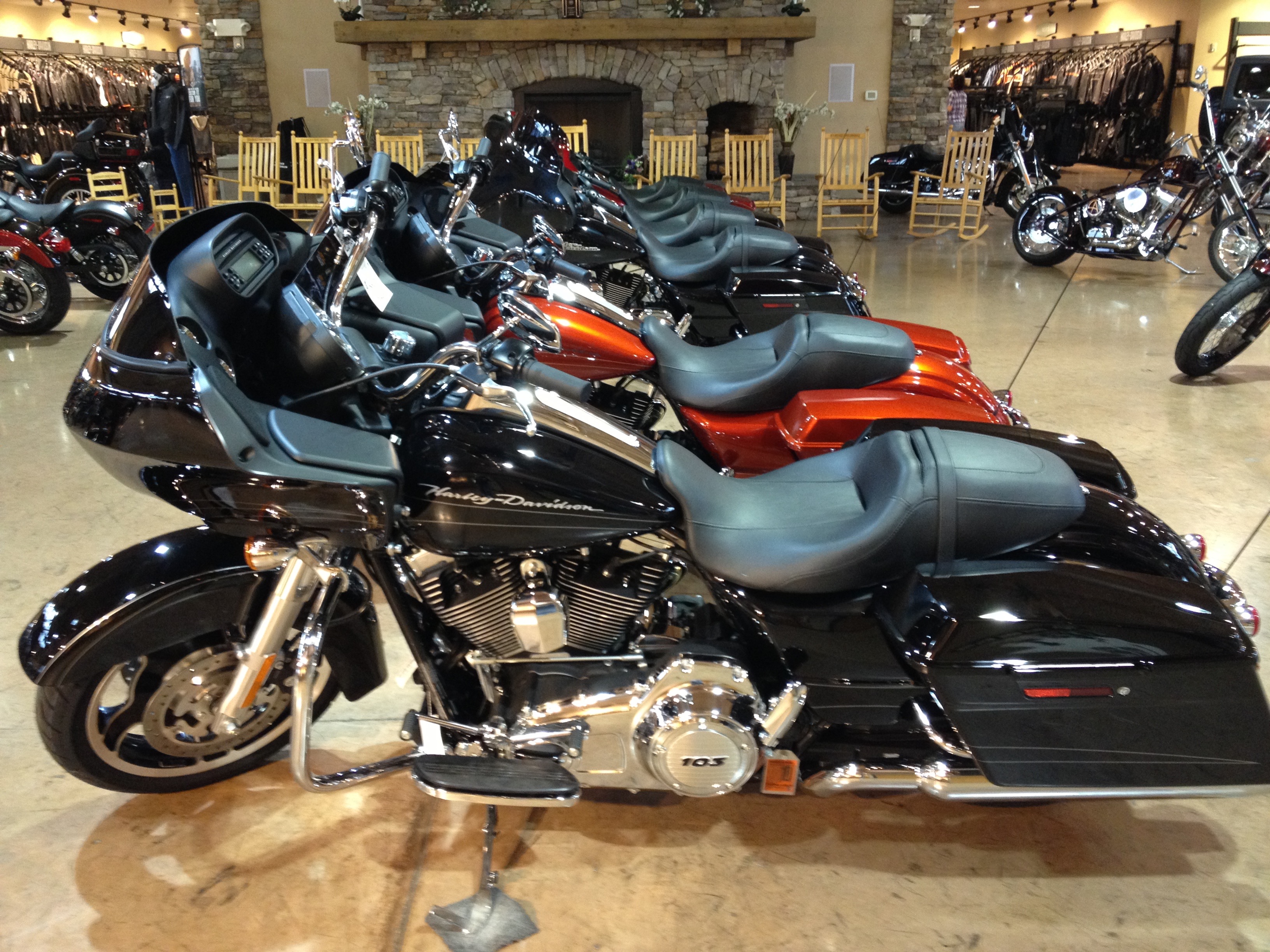
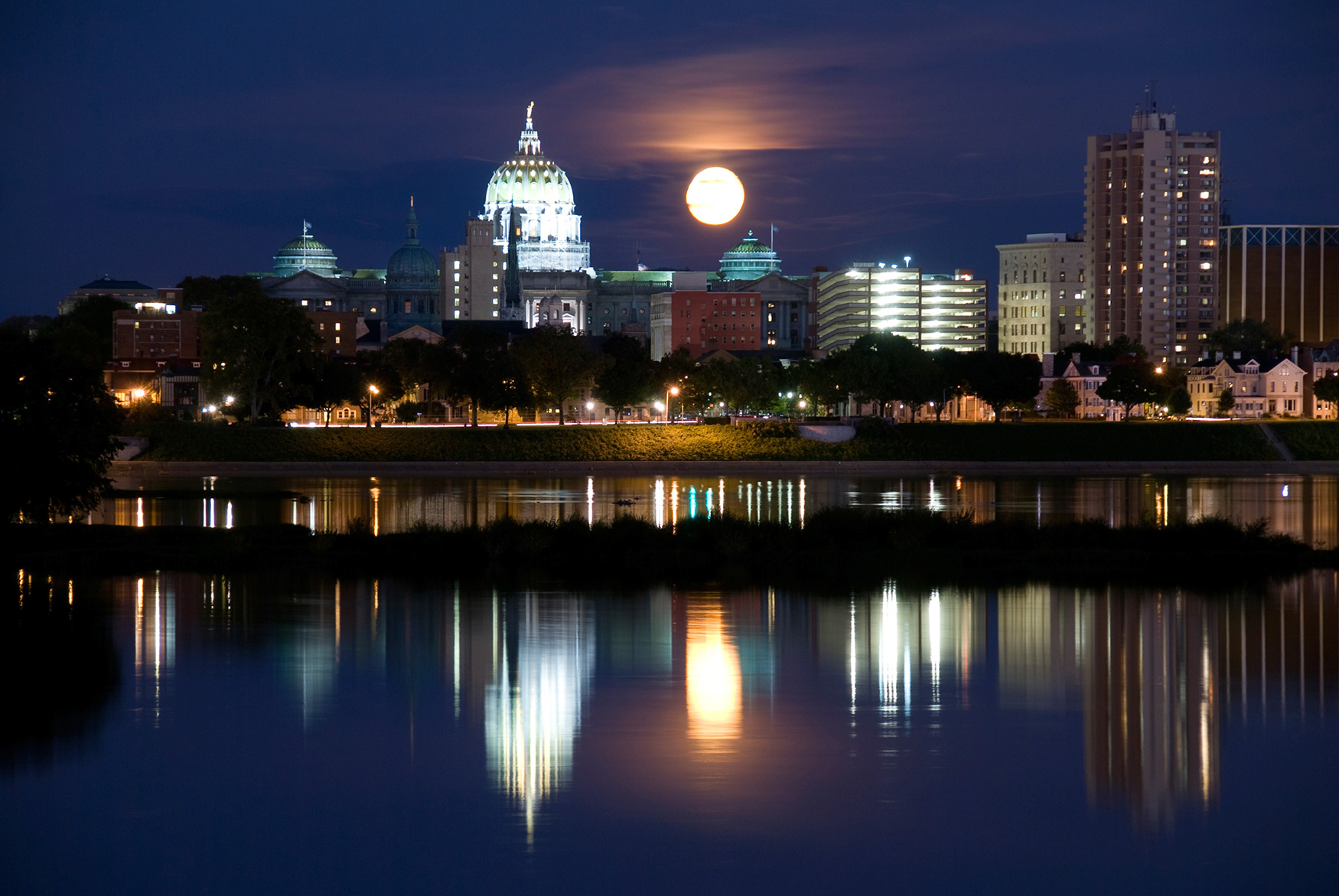
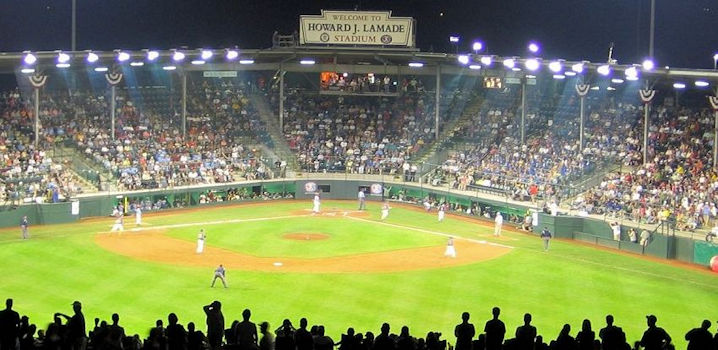
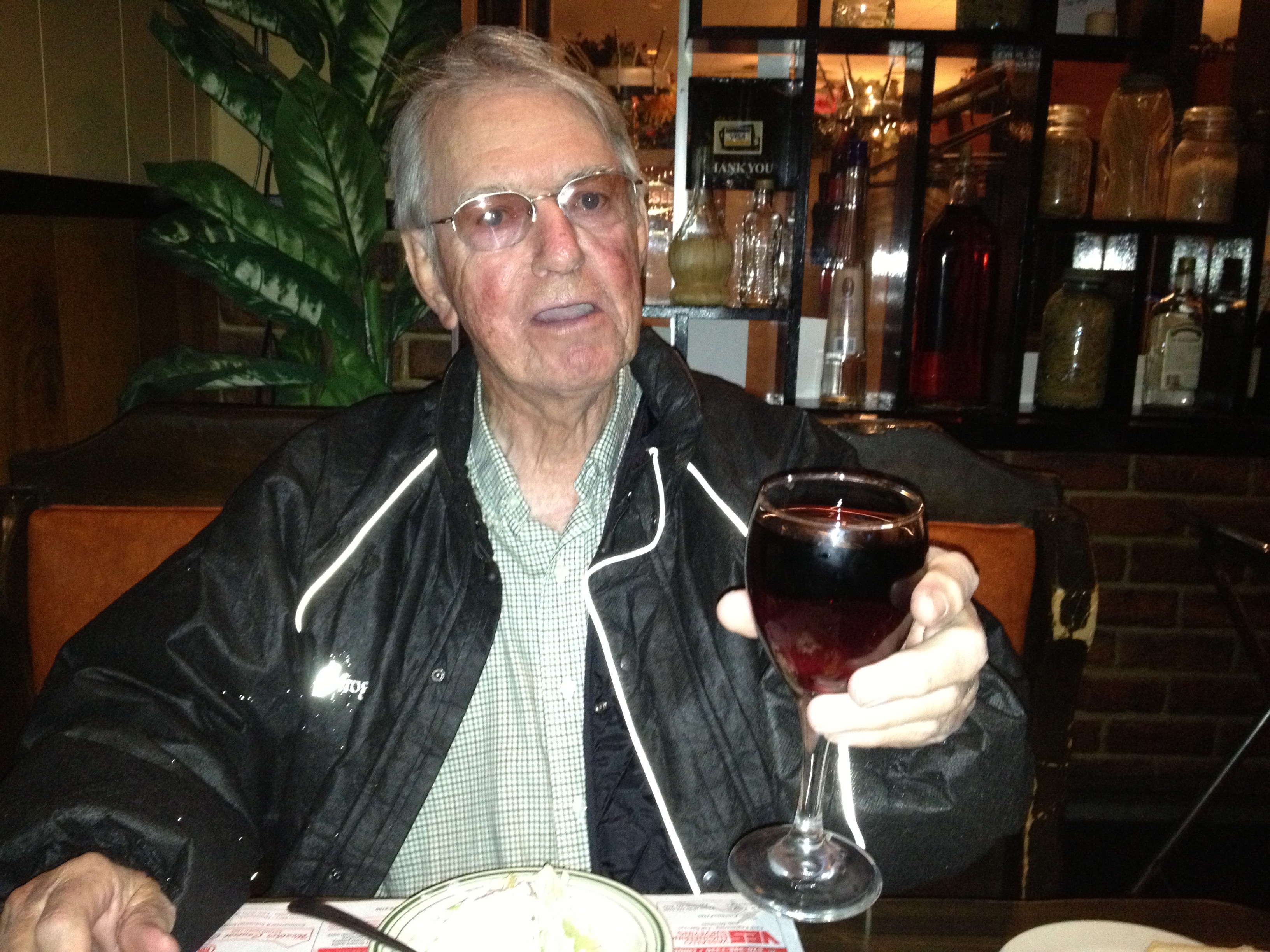

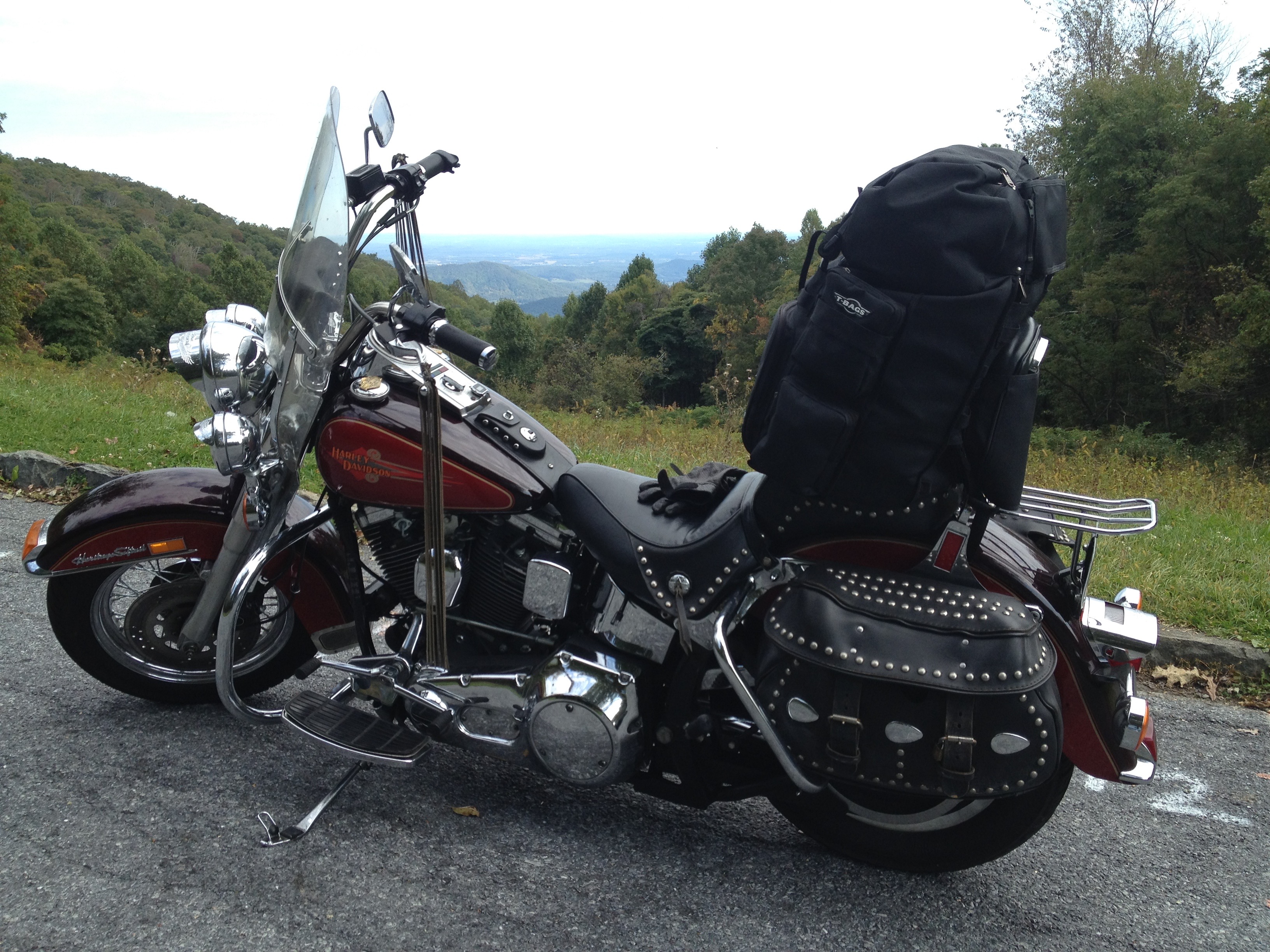
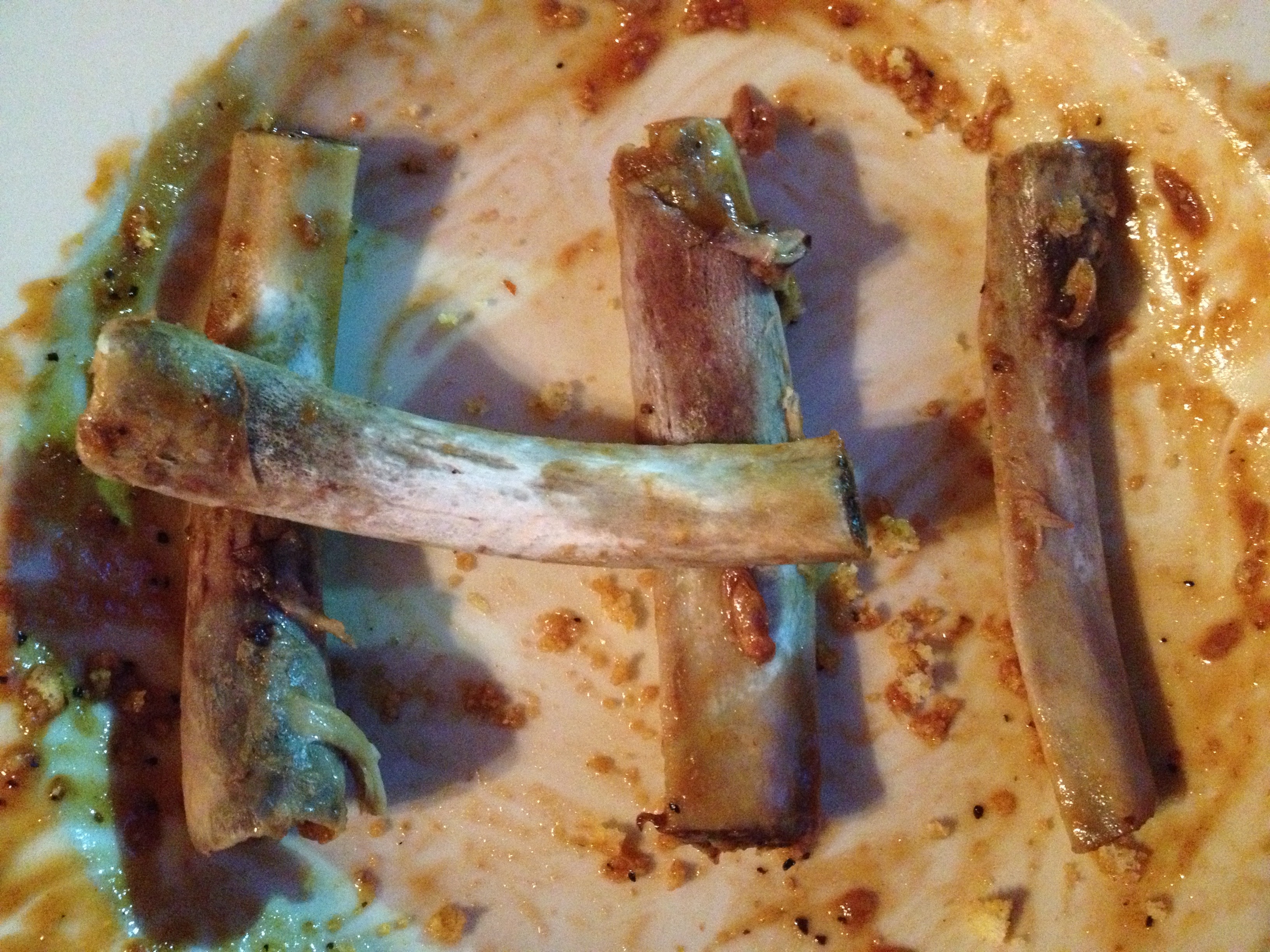
 Riding With Gary