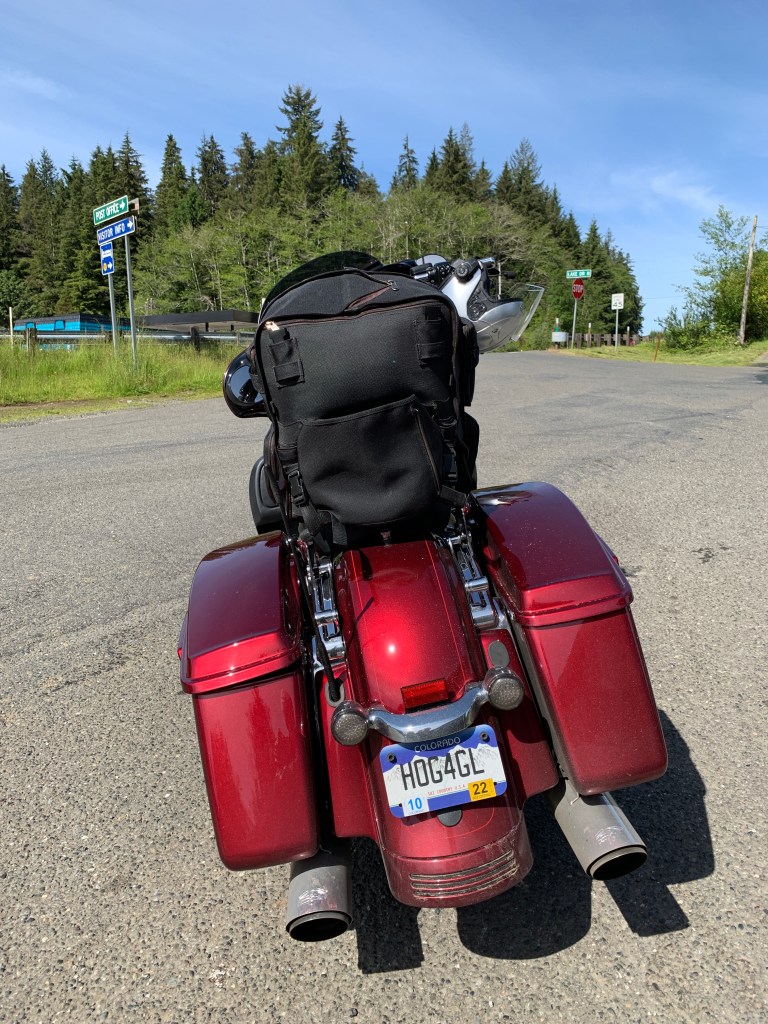
We leave Ocean Shores, heading north on Washington Highway 109. We roll through Ocean City, Copalis Beach, Seabrook, and Pacific Beach, before arriving in Moclips a half hour later.
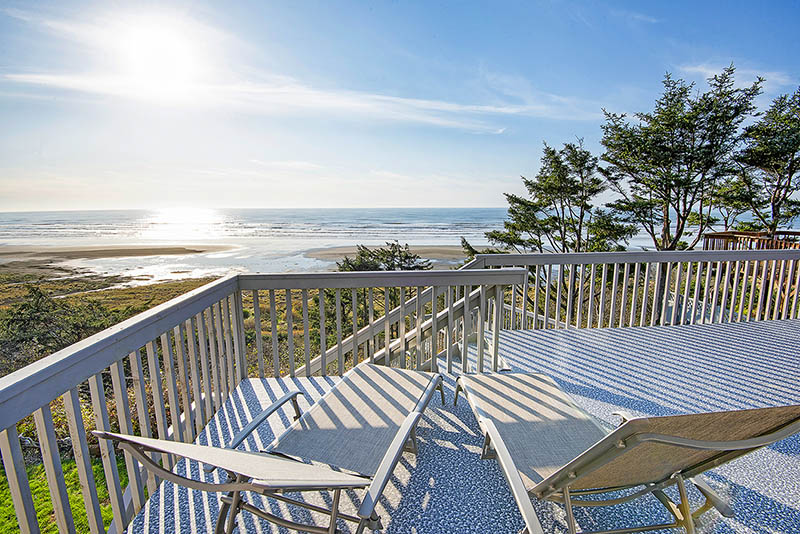
These towns all have a history rich in tourism dating back to the early 1900s. Moclips, population 47, and other nearby beach towns were once popular vacation destinations, until they were taken off the map by the US Navy during World War II, to be used as a base for the Navy.
Today, tourism is once again popular in these coastal towns.
According to early-20th century University of Washington history and botany professor, Edmond Meany, Moclips comes from a Quinault Indian word meaning a place where girls were sent as they were approaching puberty. William Bright, a professor of linguistics and anthropology who has written about Native American place names, says the name comes from the Quinault word meaning “large stream.”
You choose.
***
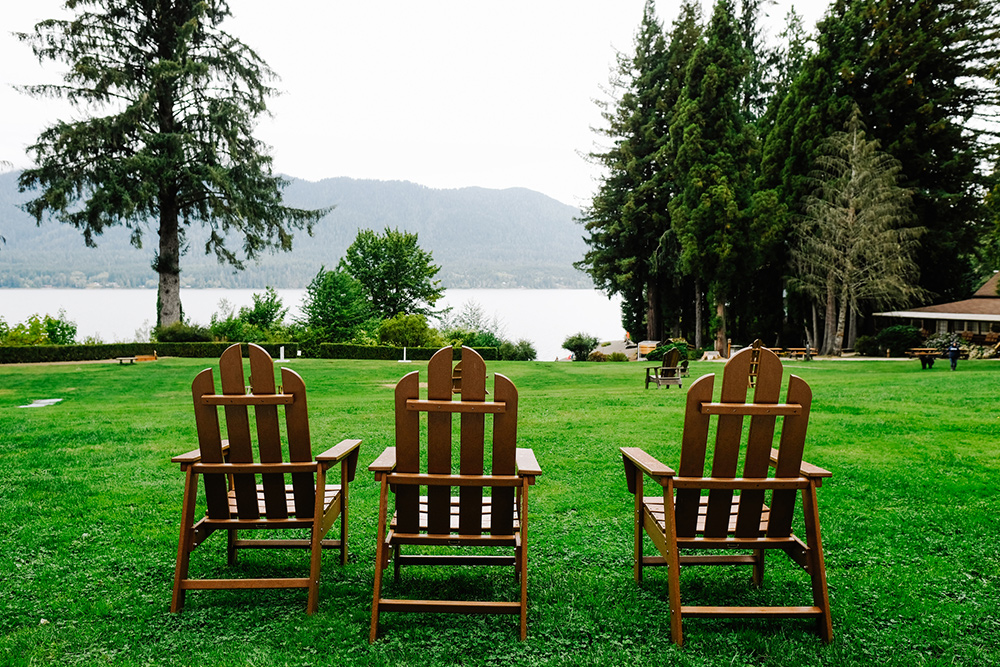
We turn northwest in the Moclips Highway, en route to Lake Quinault. The lake is at the southern edge of the Olympic National Park. The historic Lake Quinault Lodge, built in 1926, has a rustic style reminiscent of the Old Faithful Inn at Yellowstone National Park. They’re similar because the two lodges share the same architect: Robert Reamer.
The Lake Quinault Lodge is on the National Register of Historic Places. A fireplace room with a king bed and lake view goes for $546.76 a night, including taxes and fees.
From Moclips, northwest to the Lake Quinault Lodge, and west to Queets – it’s essentially a 53-mile detour around the Quinault Indian Reservation. There are no roads through the 208-thousand-acre reservation, which includes 23 miles of Pacific coastline.
The Quinault say they are among the small number of Americans who can still walk the same beaches, paddle the same waters, and hunt the same lands their ancestors did centuries ago. The Quinault Indian Nation consists of the Quinault and Queets tribes and descendants of five other coastal tribes: Quileute, Hoh, Chehalis, Chinook, and Cowlitz.
The town of Queets, population 174, sits on the northwest corner of the Quinault reservation. Its primary residents are members of the Quinault Indian Nation.
Here, we turn north and follow US Highway 101, first along the coast for 10 miles, where we pass the historic Kalaloch Lodge. The waterfront lodge is part of Olympic National Park, which may explain why rooms top out at $444 a night.
The highway takes us inland again, through the Hoh Rainforest, to Forks, population about 3,600. Like so many Pacific Northwest towns, Forks had an economy fueled by the local timber industry. As timber fell into a years-long slump, Forks re-thought its economic plan and turned to prisons. Today, Forks relies on the nearby Clallam Bay Corrections Center and Olympic Corrections Center for more than 400 jobs.
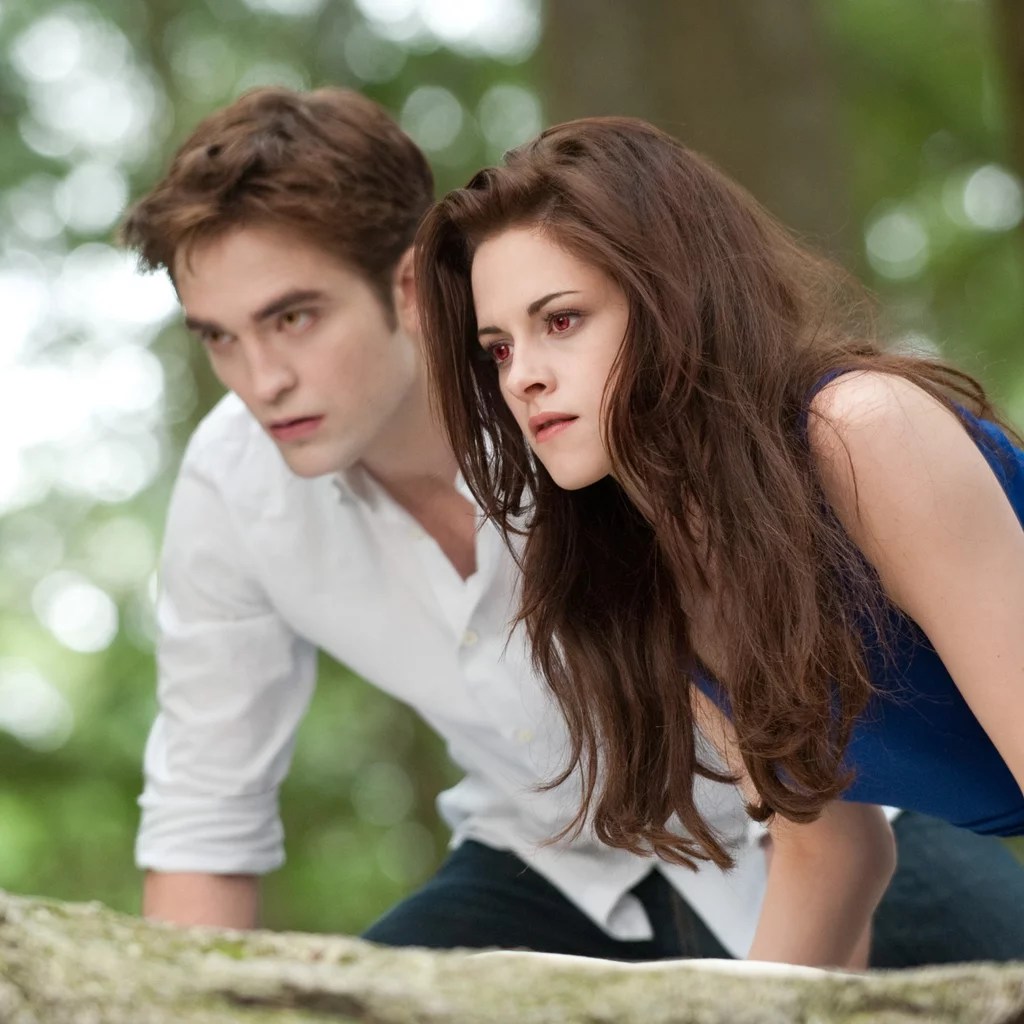
Another economic draw: tourism related to Stephenie Meyer’s 2005 novel series Twilight, and films of the same name – set in Forks.
***
We follow the Olympic Highway from Forks for 53 miles to Port Angeles. Along the way, we roll past the southern shore of Lake Crescent. With a maximum depth of 624 feet, it’s the second deepest lake in Washington state. Lake Crescent, known for its brilliant blue waters and exceptional clarity, is inside of Olympic National Park.
Soon, we arrive in Port Angeles, a Clallam County city of 20,000 residents that sits on the Strait of Juan de Fuca. Port Angeles connects to Victoria, British Columbia – Canada! – by a one-hour ride on the MV Coho ferry. The Coho suspended service for 18 months during the Covid pandemic, and has now resumed operations. The ferry infuses an average of more than $5 million a month into the Clallam County economy.
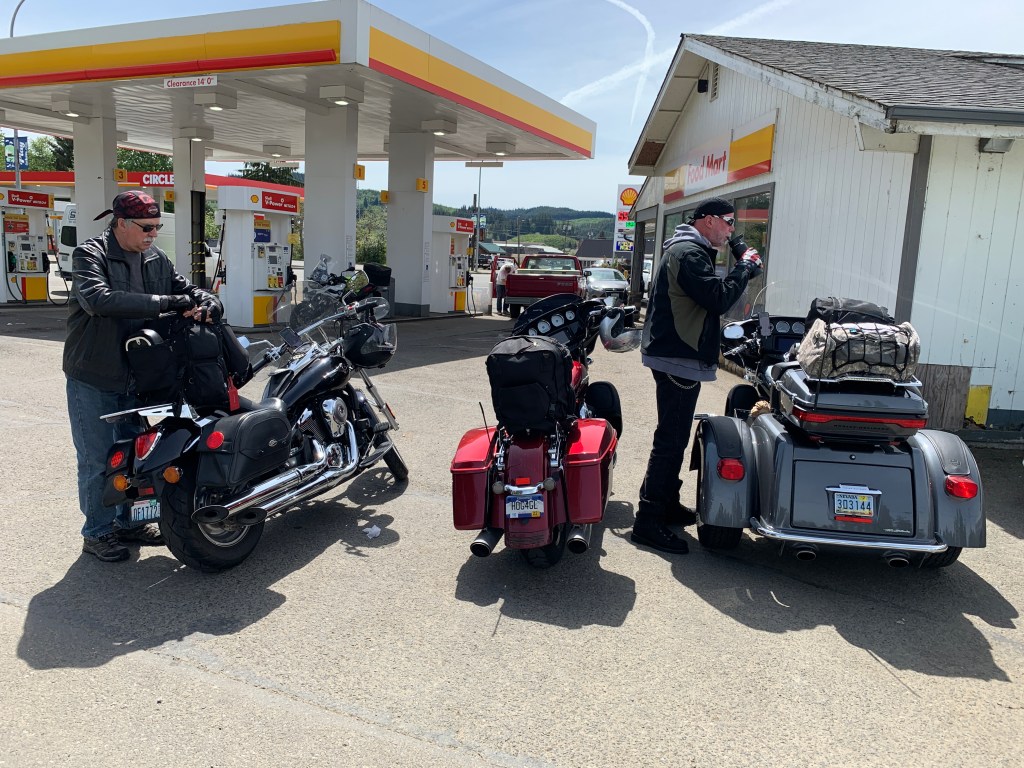
We inject about $150 into the Port Angeles economy, stopping to gas up our four bikes.
***
Leaving Port Angeles, we roll past Sequim Bay and Discovery Bay, small inlets off the Strait of Juan de Fuca. Ahead is the Victorian city of Port Townsend, where scenes from An Officer and a Gentleman were shot. The film celebrates its 40th anniversary this year.
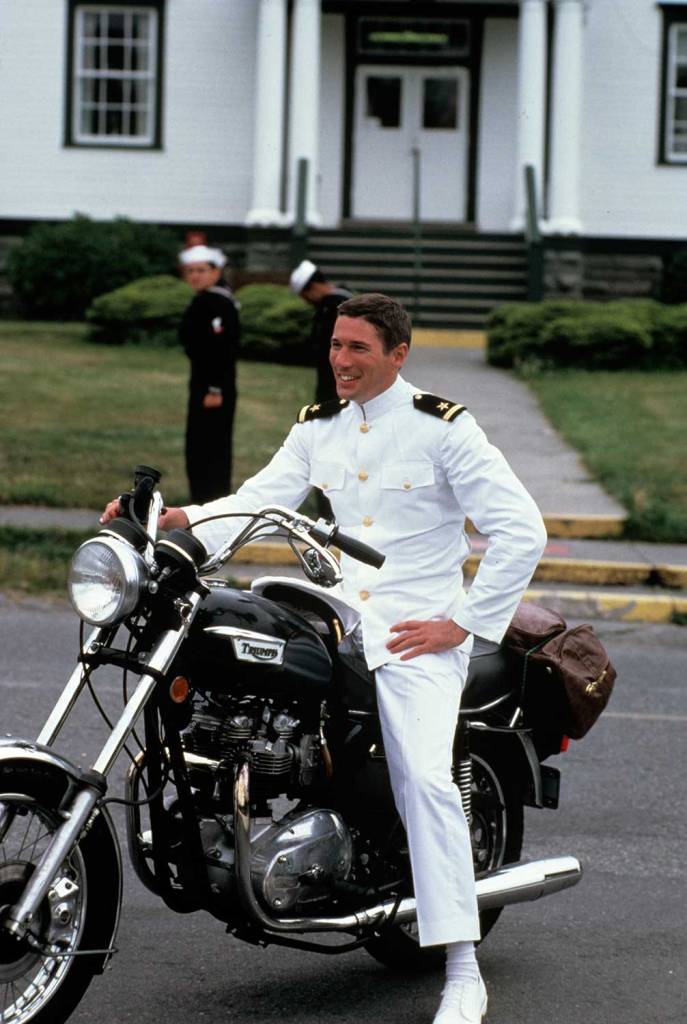
We’re in Port Townsend, not to catch a movie, but to board a ferry.
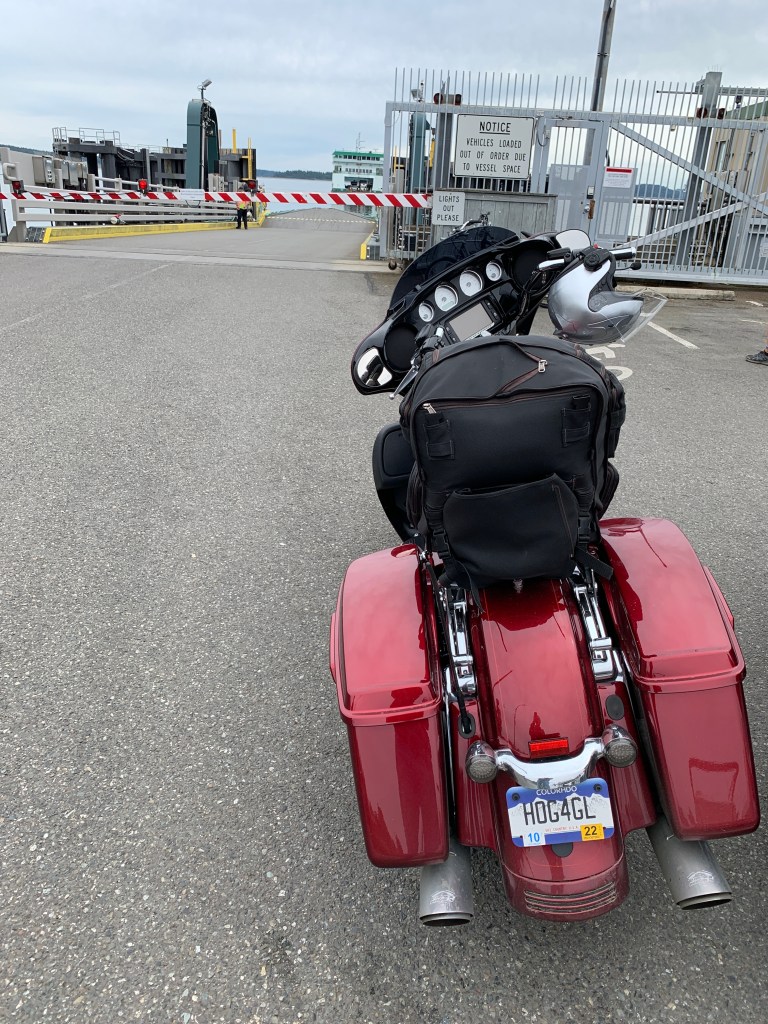
The Washington State Ferry, MV Kennewick, will be our 35-minute ride across the Puget Sound to Whidbey Island, fourth-longest island in the US, though that number is disputed.
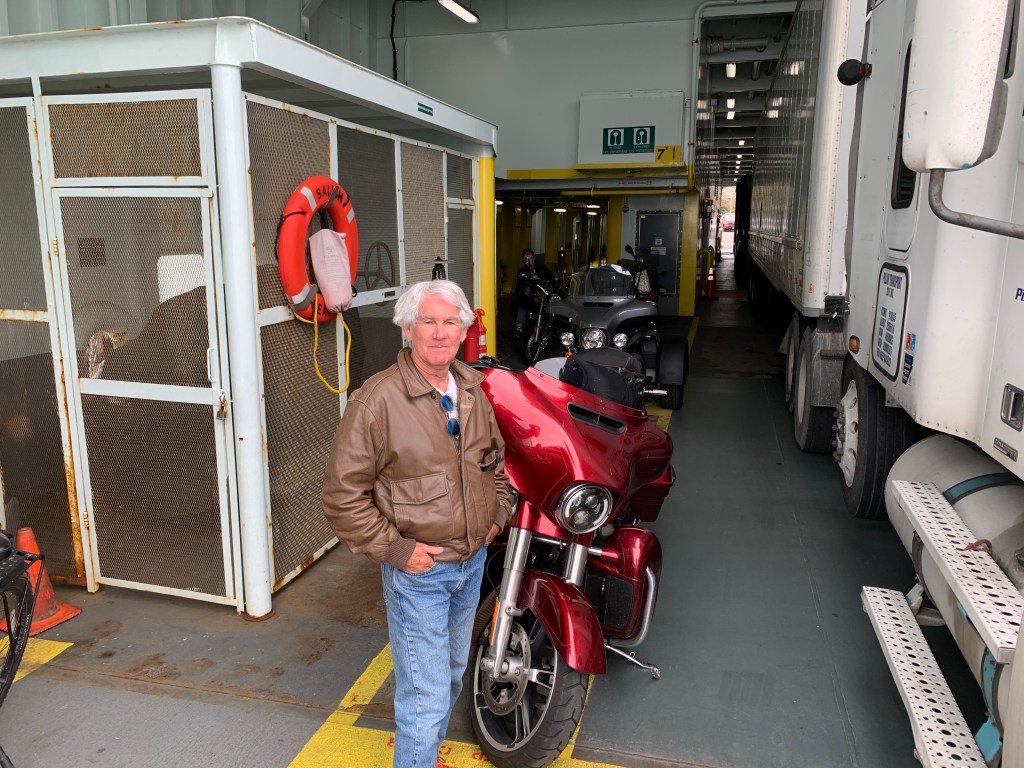
The 273-foot-long vessel was built in Seattle in 2011. It has room for 64 vehicles, including our four motorcycles.
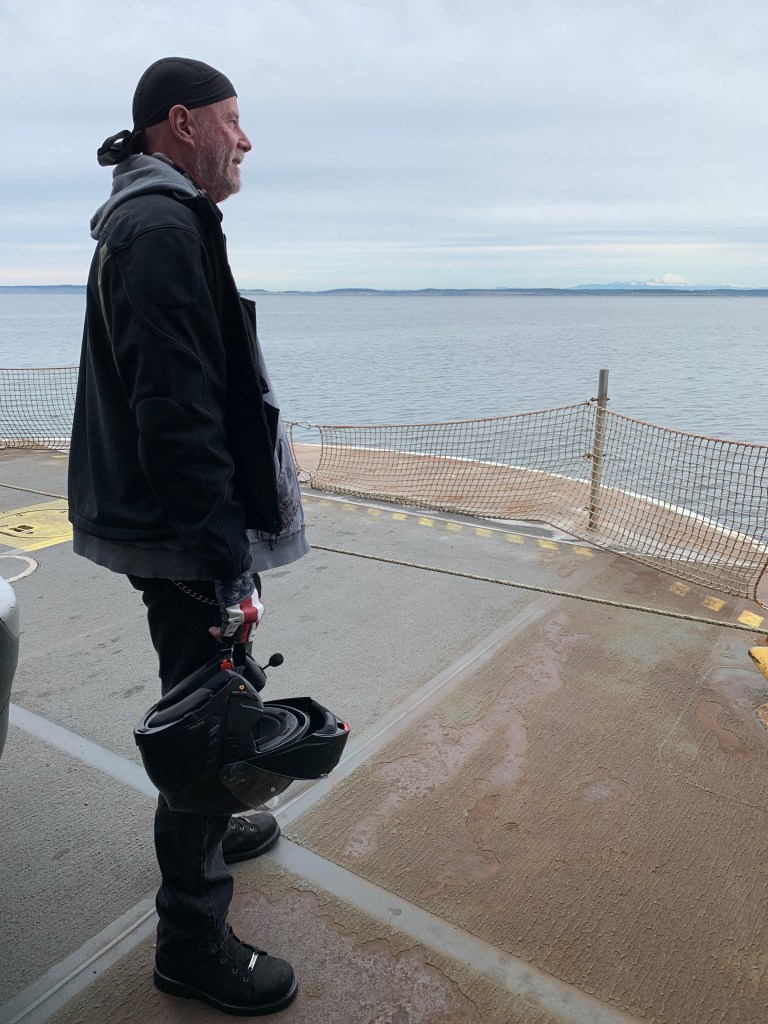
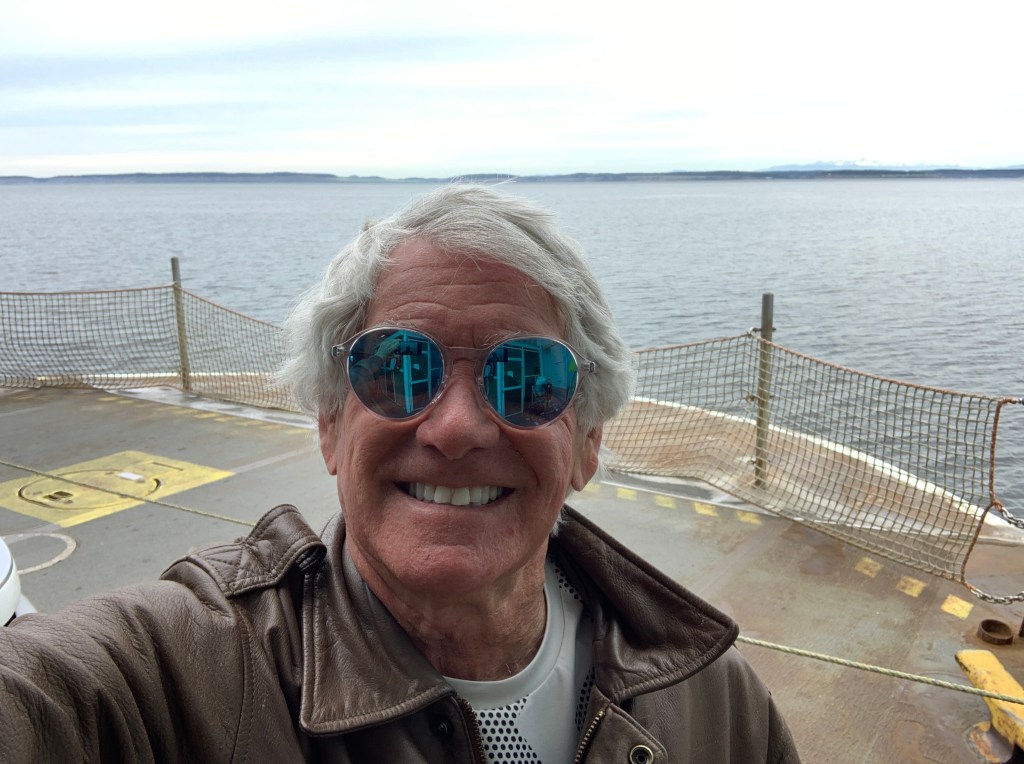
Technically, the ferry route is called Port Townsend-to-Coupeville. But we actually land at Fort Casey, a Washington State Park. Fort Casey sits next to the Admiralty Head Lighthouse. Admiralty Inlet was considered so strategic to the defense of Puget Sound in the 1890s that three forts, including Fort Casey, were built with the intention of deterring invading ships.
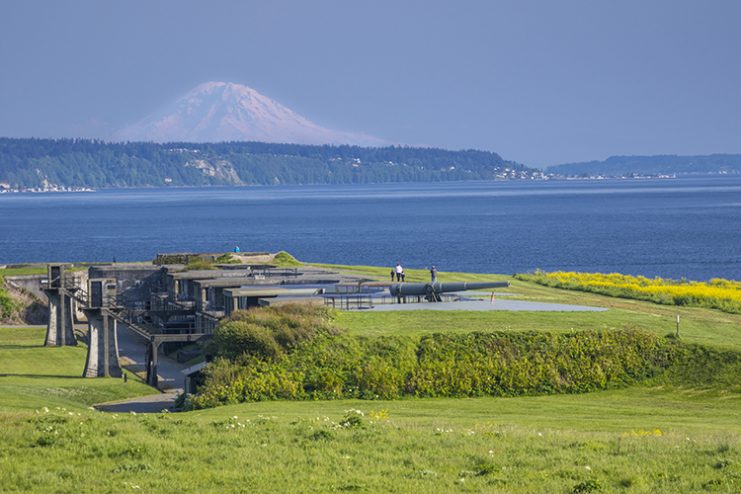
Fort Casey is a 467-acre marine camping park with a lighthouse and sweeping views of Admiralty Inlet and the Strait of Juan de Fuca.
Here, we depart the MV Kennewick, and begin the final leg on today’s journey – 15 miles to Oak Harbor, population 22,000. At 41 miles in length, north to south, Whidbey is said to be the fifth longest island in the continental US, behind only Long Island (New York), Padre Island (Texas), Hatteras Island (Texas), and Isle Royale (Michigan).
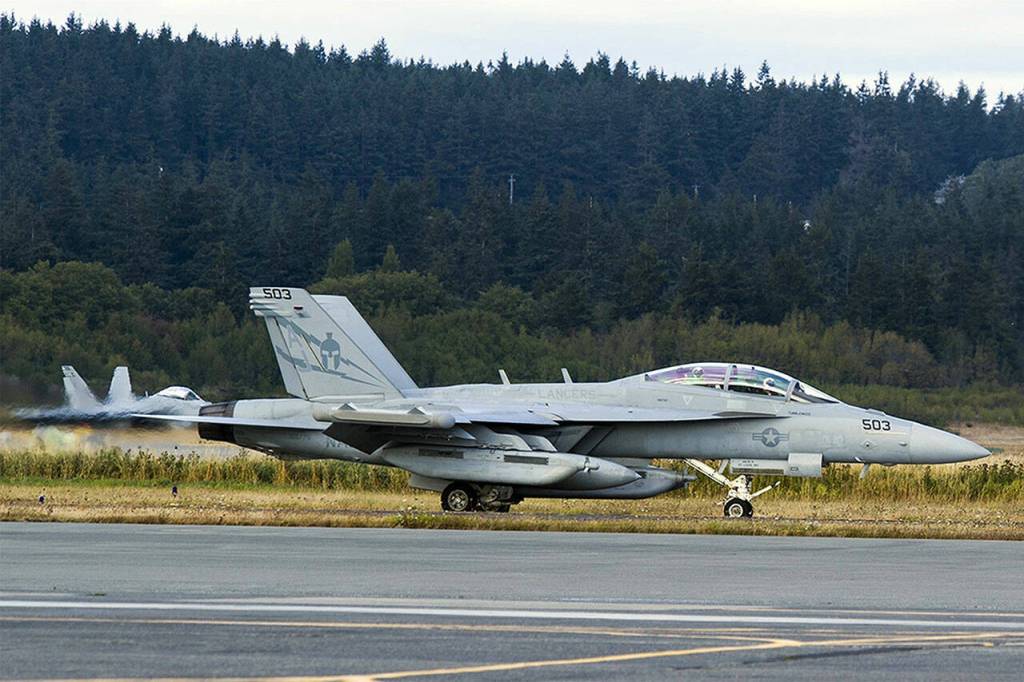
Oak Harbor is home to Naval Air Station Whidbey Island, where you’ll find all Navy tactical electronic attack squadrons flying the Boeing-built EA-18G Growler. The based also houses eight Maritime Patrol and Reconnaissance squadrons flying the P-3 Orion, P-8 Poseidon and EP-3E Aries.
***
Whidbey Island hosts festivals and celebrations throughout the year.
In March, there’s the Penn Cove Mussel Fest.
In April, try the Whidbey Island Marathon.
In July, do it up big at the Whidbey Island Fair.
In August, you can ride the Tour de Whidbey.
On Labor Day weekend, you can check out the Oak Harbor Music Festival.
Or in June, you can roll into Oak Harbor with Dave, Jim, Randy and me – and celebrate your arrival on America’s 40th largest island – Whidbey Island (169 square miles).
Let’s party!
***
To view today’s route in Google Maps, click here.
My number today: 4,028 (in square miles, size of largest island in the US – Hawaii, the Big Island)
What’s your number?
 Riding With Gary
Truly awesome ride today! So much beauty! My number today is 3. Three brave service members ahead of me at hotel laundry. Great guys! Gotta clean some travel clothes but our finest come first. Will be up late tonight. My pleasure!
LikeLike