***
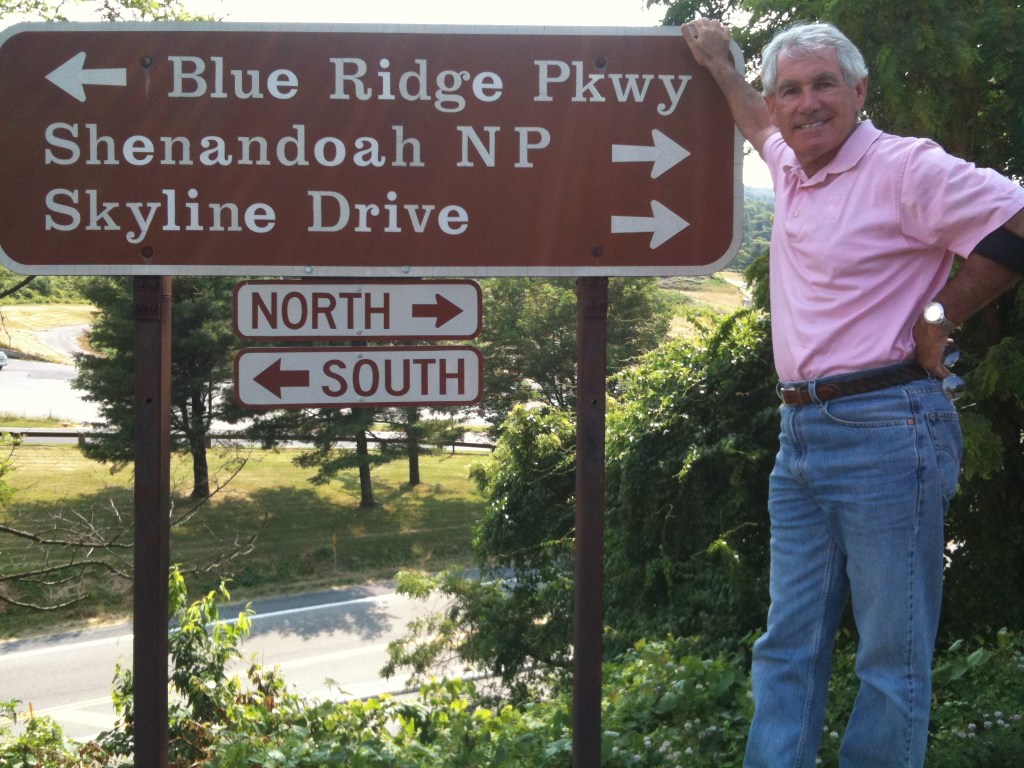
The Blue Ridge Parkway runs 469 miles from Cherokee, North Carolina, to Front Royal, Virginia. If you want to keep riding, and I did, you can continue on Skyline Drive for 105 additional miles through Shenandoah National Park.
I rode this route twice, in 2011 from South to North — and in 2012, from North to South. Both times I was with Ray Sanders, my riding mentor, who lived not far away in Farragut, Tennessee. Ray died in 2022.
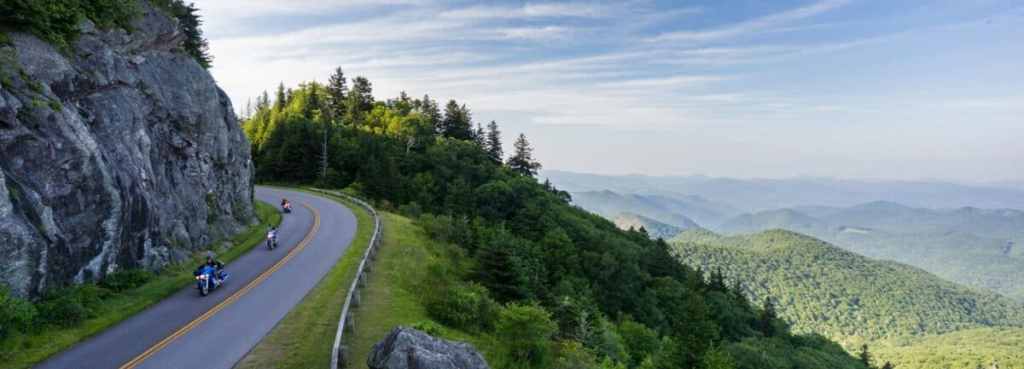
The Blue Ridge Parkway, known as “America’s Favorite Drive,” runs mostly along the Blue Ridge Mountains, a major mountain chain that’s part of the Appalachian Mountains. The Parkway includes the Great Smoky Mountains, the Balsams, the Pisgahs, the Craggies, and the Black Mountains. This place seems to have been constructed for motorcycles.
The Blue Ridge Parkway was actually built to connect Shenandoah National Park to the Great Smoky Mountains National Park. The Blue Ridge Parkway was constructed in the 1930’s as part of the New Deal programs President Franklin D. Roosevelt implemented to put Americans back to work following the Great Depression.
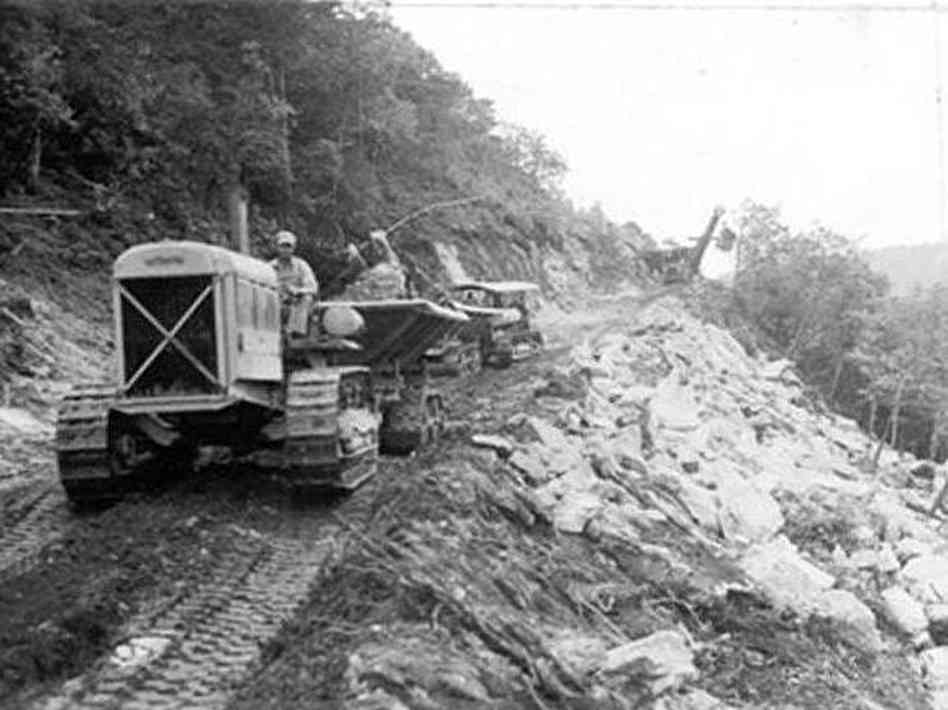
It began as a Civilian Conservation Corps project in the 1930s, and took more than 52 years to complete. Originally called the Appalachian Scenic Highway, construction began on September 11, 1935. During World War II, Civilian Conservation Corps crews were replaced by conscientious objectors in the Civilian Public Service program.
The Civilian Conservation Corps ran from 1933 to 1942 as part of FDR’s New Deal. It provided unskilled manual labor jobs related to the conservation and development of natural resources in rural lands owned by federal, state and local governments. The CCC was designed to provide employment for young men who had difficulty finding jobs during the Great Depression.
Over the program’s life, some 2.5 million young men participated. Among the Civilian Conservation Corps’ most famous alumni: actors Raymond Burr, Robert Mitchum and Walter Matthau; test pilot Chuck Yeager; and baseball players Stan Musial and Red Schoendienst. One of the most spectacular and enduring legacies of the CCC’s efforts is the Blue Ridge Parkway.
The Parkway is the most visited unit in the National Park System. It welcomed 16.7 million people in 2023.
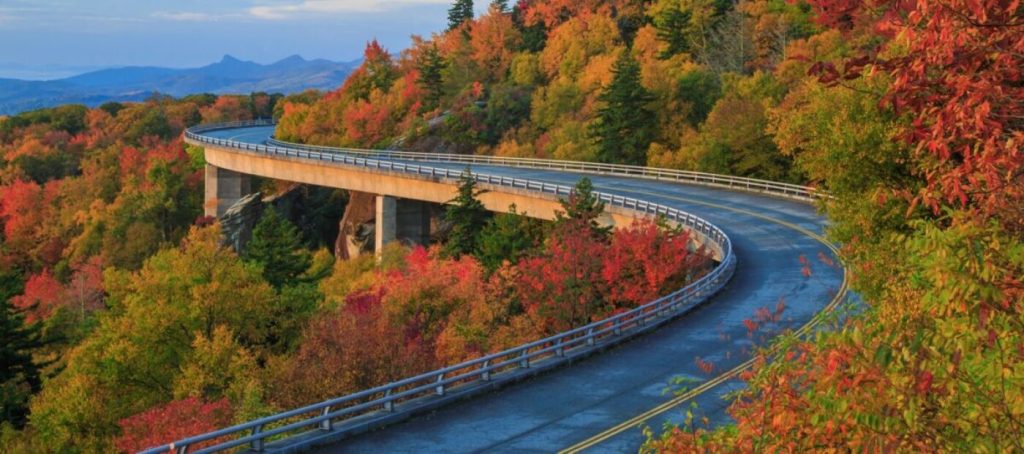
The Civilian Conservation Corps did not construct the entire Blue Ridge Parkway. The final stretch of the Parkway was completed around Grandfather Mountain, North Carolina, in 1983. The Parkway is entirely in two states: Virginia (our ride today) and North Carolina (our ride tomorrow). Its highest point is 6,053 feet on Richland Balsam Mountain. The speed limit is never above 45 MPH, which is a good way to guarantee a leisurely and safe ride.
There are 26 tunnels constructed along the Blue Ridge Parkway. On is in Virginia and the other 25 are in North Carolina.
The Parkway makes its way through 29 counties of Virginia and North Carolina, across streams, railway ravines, and cross roads with six viaducts and 168 bridges.
There are more than 200 overlooks along the Parkway. Some have spectacular scenic vistas; others just are small parking lots looking head-on at trees. The views may have been good when the Parkway was built, but the trees have grown up over the past 70-or-so years, all but destroying some views. But if you’re selective, you can easily find overlooks worth seeing.
The parkway has been the most visited unit of the National Park System nearly every year since 1946. Land on either side of the road is owned and maintained by the National Park Service, and in many places parkway land is bordered by US Forest Service property.
On my rides through the Blue Ridge Parkway, I allowed three days to complete the journey. You could do it in less time, but what’s your hurry?
To explore this route, click here.
 Riding With Gary