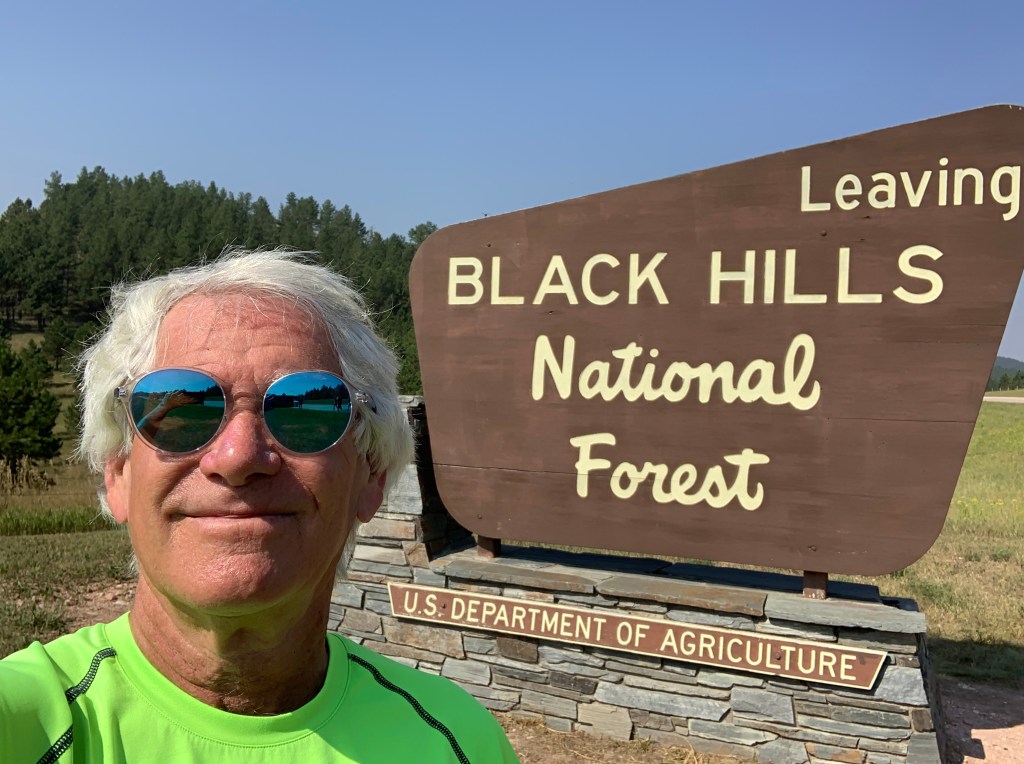
We say goodbye to Rapid City, our home for the past four days, as we head west on US Highway 16 one last time.
Mount Rushmore Road takes us past Reptile Gardens, Bear Country USA, through Rockerville, and on to Hill City, known as “Heart of the Hills.” The Hills, of course, are the Black Hills, which we’ll be riding through for another hour or so, as we start our long journey home.
Like so many towns and cities in the Black Hills, Hill City traces its roots to the mining rush of the late 19th century. In 1876, it was the first settlement established in conjunction with the initial discovery of Black Hills gold in French Creek, just 13 miles south of where Hill City sits today.
Tin mining was dominant in the 1880s, but the so-called “Tin Age” was short-lived, and as that industry waned, tourism and timber became increasingly important.
Today, with a population of around 1,000, Hill City comes alive every summer with the rumble of thousands of Harleys coming to town for the Sturgis motorcycle rally. The town even has its own Harley store, Hill City Harley-Davidson, located in an old funeral parlor on — wait for it — Harley Drive.
***
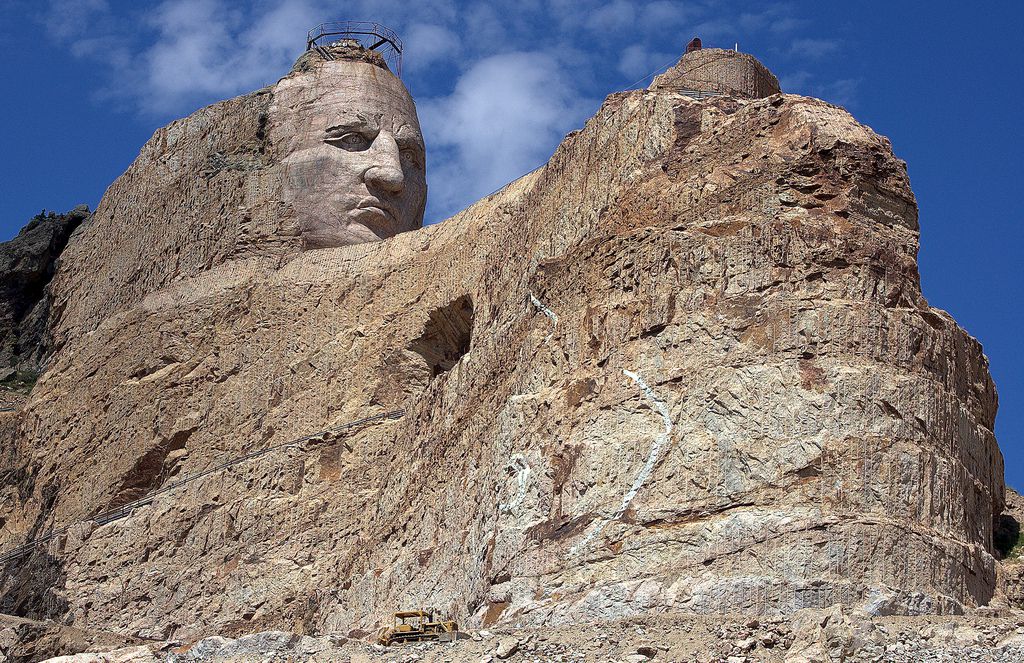
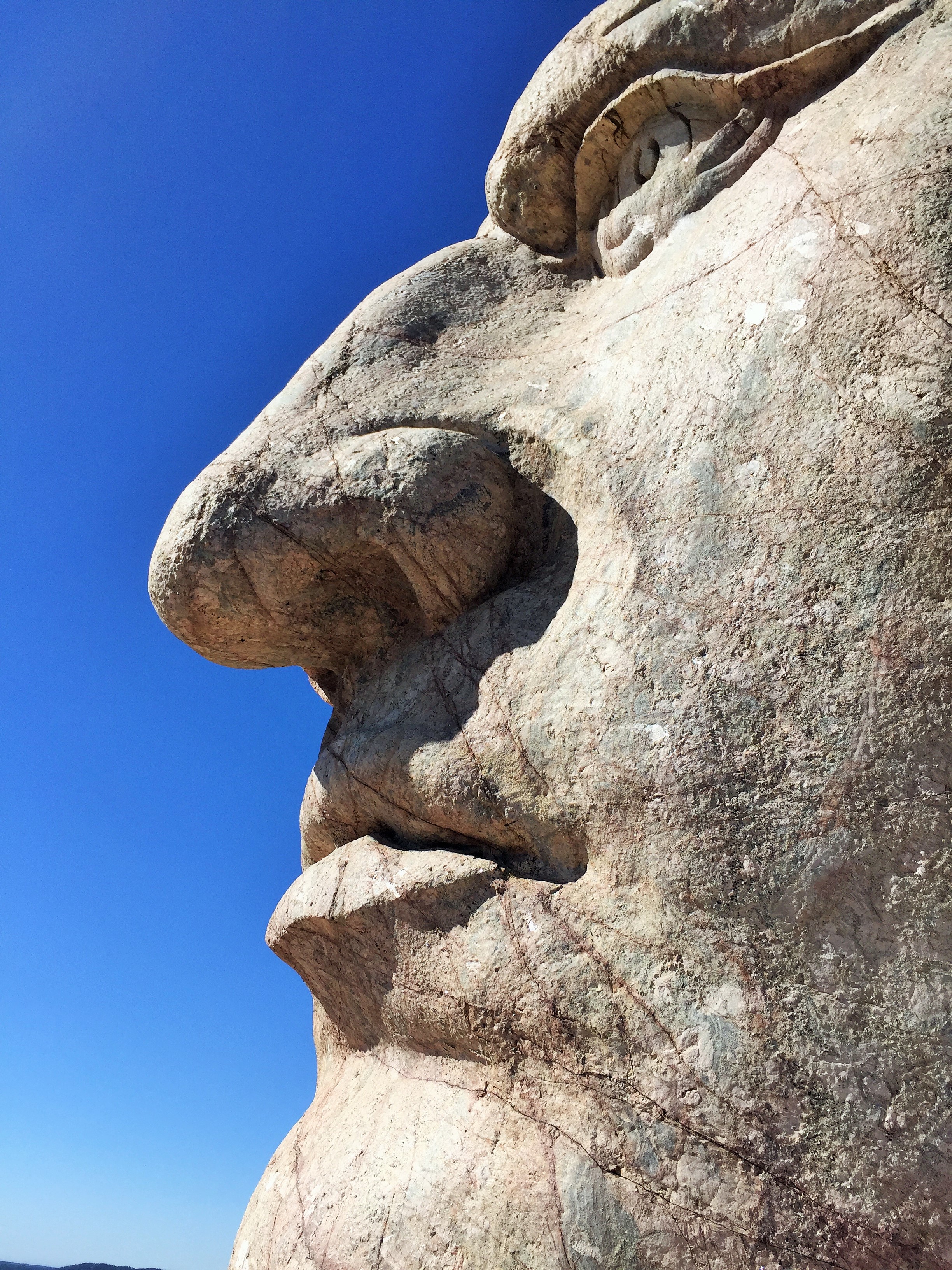
As we continue south on US Highway 385, we ride by a turnoff to the Crazy Horse Memorial – a monument that’s been under construction since 1948 and is still decades from completion.
The Crazy Horse Memorial will depict Crazy Horse, an Oglala Lakota warrior, riding a horse and pointing into the distance. The sculpture’s final dimensions are planned to be 641 feet wide and 563 feet high. If it’s ever completed, the Crazy Horse Memorial could become the world’s largest sculpture, dwarfing nearby Mount Rushmore. For now, the Crazy Horse Memorial is just considered the world’s largest mountain carving in progress.
The carving began more than 70 years ago, the work of Korczak Ziolkowski, a Polish-American sculptor and designer of the memorial. “By carving Crazy Horse,” he said, “if I can give back to the Indian some of his price and create a means to keep alive his culture and heritage, my life will have been worthwhile.”
Ziolowski died in 1982, at age 74. His family is carrying on the tradition. Monique Ziolkowski, the ninth child of Korczak and Ruth Ziolowski is now the CEO and Director of Mountain Carving, Construction and Maintenance. Her sister, Jadwiga, the fourth of the nine Ziolowski children, is the CEO of the Crazy Horse Memorial. It’s a family business their dad would have been proud of.
Every year, more than a million people visit the memorial. It’s become a controversial and divisive symbol. Some think it’s become a tribute not to Crazy Horse, but to the Ziolkowski family. If this blog post seems short on detail, here’s a really interesting read.
***
A few miles south of the Crazy Horse Memorial, we roll through Custer, generally considered to be the oldest town established by European Americans in the Black Hills. Custer claims to have the widest Main Street in the United States. The 100-foot roadways were built in the 19th century to accommodate a team of oxen pulling a wagon to turn completely around.
Custer is named for Major General George Custer, a cavalry commander in the Civil War and American Indian Wars. Custer was admitted to the US Military Academy (West Point), where he graduated last in his class of 1861. He died at the Battle of Little Bighorn in Montana, at the age of 36, fighting a coalition of Lakota and Cheyenne Indians.
The 1876 Battle of Little Bighorn has come to be popularly known as “Custer’s Last Stand.” It was the most decisive Native American victory and the worst US Army defeat in the long Plains Indian War. Within five years, almost all of the Sioux and Cheyenne involved in that battle would be confined to reservations.
From Custer, we continue south. Next stop is the oddly named ghost town of Sanator. The US Postal Service established a post office here in 1921, and called it Sanator – after the local South Dakota Tuberculosis Sanitorium. For blog readers too young to remember, a sanatorium is a medical facility for long-term illness, most typically associated with treatment of tuberculosis. The Sanator post office has been closed since 1962.
***

The town of Pringle, population 112, is seven miles ahead.
Pringle is named after the stackable potato chips that have been a snack staple since 1967. Originally developed by Procter & Gamble in 1967, and marketed as “Pringle’s Newfangled Potato Chips,” the name was changed for introduction to the national market. Procter & Gamble chose the Pringles name from a Cincinnati telephone book, selecting Pringle Avenue in Finneytown, Ohio, for its pleasing sound.
The brand was sold to Kellogg’s in 2012. Pringles are now sold in more than 140 countries, and are said to be the fourth most popular snack brand after Lay’s, Doritos and Cheetos.
There’s a lot of internet debate over whether Pringles are actually potato chips. Turns out they are made of about 42% potatoes. Among the other ingredients are wheat starch and flowers, vegetable oils, an emulsifier, salt, and seasoning. This mix is then made into a mushy paste, which is extruded out of a machine in precise quantities – meaning every Pringle is exactly the same size, shape and consistency.
The consistent saddle shape is mathematically known as a hyperbolic paraboloid. This allows them to stack perfectly in the can. Technically, they contain something that was once part of a potato, but it’s probably reasonable to make a distinction between them and ordinary potato chips.
Pringles come in an avalanche of flavors, from basic potato chips, to Mac ‘N Cheese, Honey Mustard, BBQ, Buffalo Ranch, Jalapeno and more. In 2019, the website Delish taste-tested 21 Pringles flavors. Their favorite: the Original.
The website Thrillist did a similar taste test of 35 Pringles flavors. Their testers came to a slightly different conclusion, opting for Cheddar Cheese as the Number One choice. Said one of the tasters: “The flavor of the Original – that potato taste coupled with glorious salt – meshes beautifully with a generous dusting of bright-orange Cheddar dust that melts in your mouth.” Mmmmmmmmmm, good.

Oops. I must have taken my eye off the ball while writing today’s blog post.
Pringle, a semi-ghost town in Custer County, got its start as a stage stop on the Sidney-Custer Trail. Operated by cattleman Henry Pringle, the town was actually named after Anna Carr Pringle, who provided hospitality to the railroad crews when they came through town in the 1890s.
So Pringle really has no connection to Procter & Gamble, Kellogg’s, or any other 20th century food-processing giant. Still, you now know much more about Pringles chips than you did a few minutes ago.
My error. You’re welcome.
***
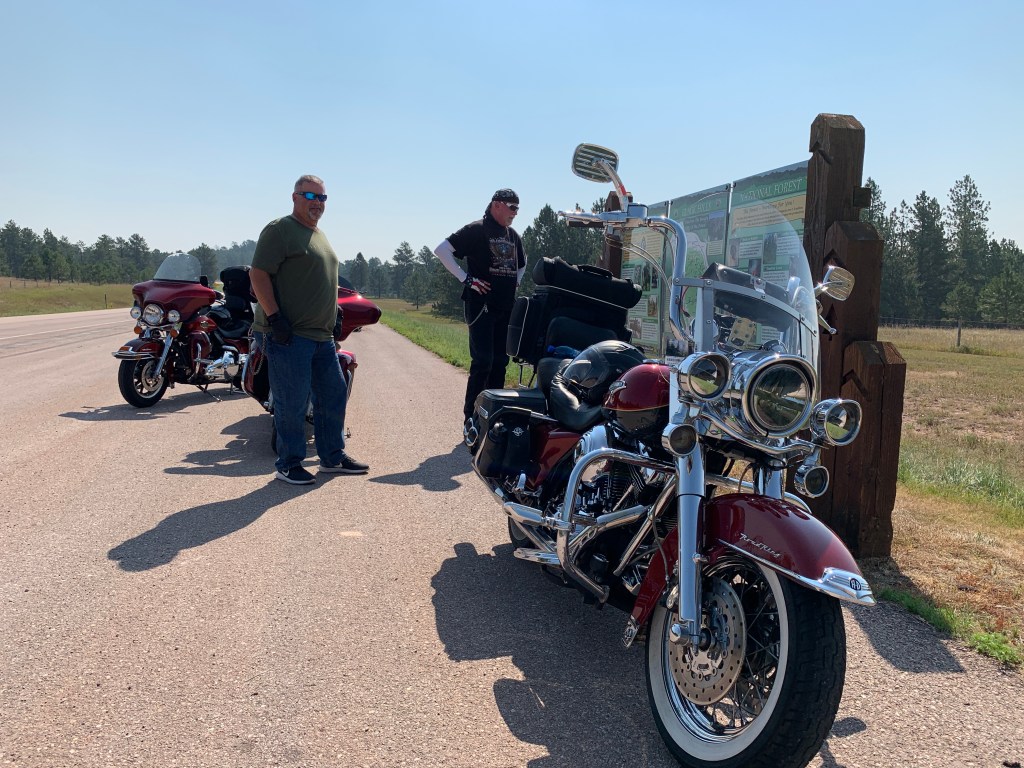
In Pringle, we turn off of US Highway 385 and make our way toward the South Dakota / Wyoming border. The last South Dakota town we pass through on our journey is Edgemont, population a little under 800.
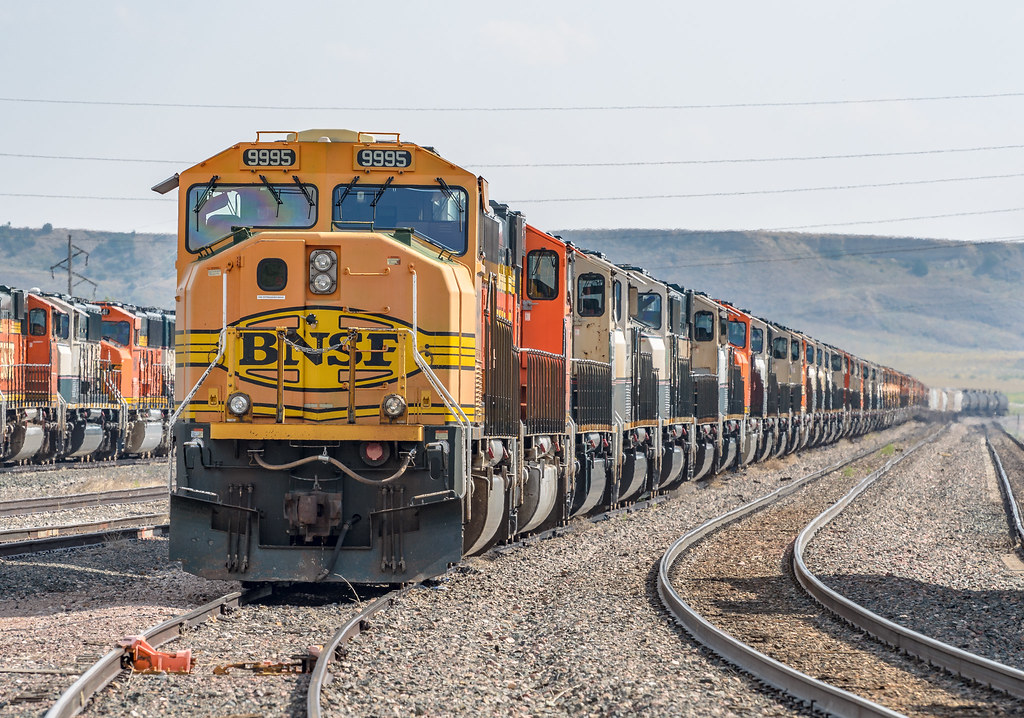
Edgemont is a crew change point for Burlington Northern Santa Fe freight trains. Railroads have always been a part of Edgemont’s history. The town was established with the arrival of the railroad, three days before South Dakota became a state on November 2, 1889.
Since then, its fortunes have been dependent on a industries ranging from a World War II ammunition depot that employed 5,000 people, to uranium mining in the 1960s and ‘70s.
Today, Edgemont is about trains. And Harleys.
We cross into Wyoming, nicknamed the “Equality State” because of its historical role in establishing equal voting rights for women. “Equal Rights” is the state motto.
Wyoming was the first territory to grant “female suffrage” and became the first state in the nation to allow women to vote, serve on juries and hold public office. Pretty progressive place. Sort of. A solidly Republican state, Wyoming has not voted for a Democrat in a presidential election since it went for Lyndon Johnson in 1964.
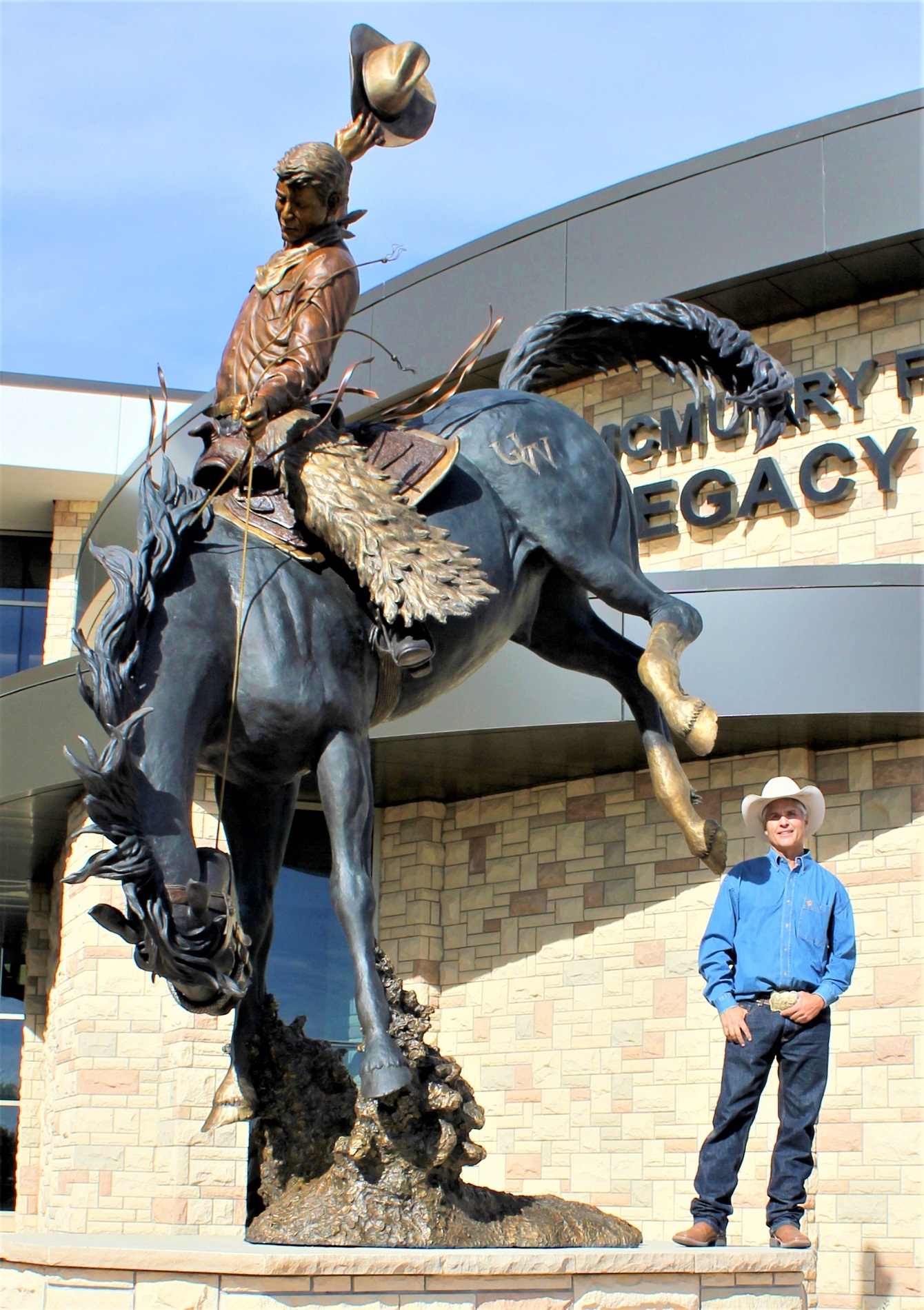
To those who live here, Wyoming is more about cowboys than politics. Known as the Cowboy State, the official state symbol is a cowboy on a bucking horse. The cowboy culture is everywhere you look. Except maybe here in Edgemont, railroad town.
***
There’s little culture in this sparsely populated corner of the state – cowboy or otherwise.
We begin riding south on US Highway 18, part of the CanAm Highway, unaware of horses or anything considered western. The CanAm Highway stretches 1,479 miles from El Paso, Texas, all the way up into Canada. Along the way, it cuts through South Dakota on US Highways 18 and 85. The highway passes through six states: Texas, New Mexico, Colorado, Wyoming, South Dakota, and North Dakota.
The landscape here in the high plains is barren, to put it mildly. This is eastern Wyoming.
In 45 miles, we arrive in Lusk, population 1,600. Lusk is known for being the county seat of the least populated county in the least populated state of the US. That’s quite a claim to fame.
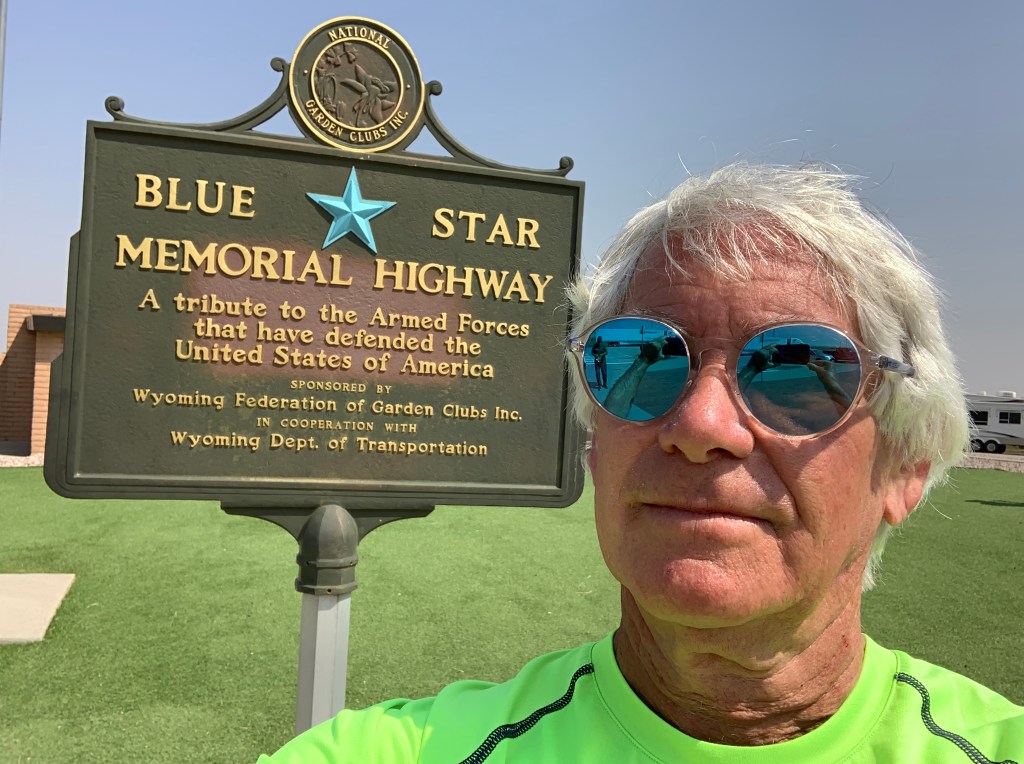
Lusk was founded in 1886 by Frank Lusk, a renowned Wyoming rancher and partner in the Western Live Stock Company. Apparently, little has changed; the primary industry in Lusk is still cattle ranching.
Lusk’s motto: “Little Town with Big Possibilities.”
For us, it’s a good place to fill up with gas, rest, and prepare for our push south toward Cheyenne, 140 miles away.
***
As we continue south on the CanAm Highway, there’s little to see in the 47 miles between Lusk and Lingle. Well, we do pass through Jay Em, a deserted town that has a post office, and little else.
Jay Em was established in the 1860s around a watering hole claimed by Jim Moore, who had the second-largest cattle ranch in the Wyoming Territory. He used the brand “J Rolling M,” from which the community and “Jay Em Creek” would later take their names.
Jay Em is almost exactly half way between Lusk and Lingle. If you blink, you’ll miss Lingle. We don’t blink, and 10 miles later, arrive in Torrington, population 6,500. Torrington is the last city of any consequence we’ll see on our way to Cheyenne, tonight’s destination.
Torrington was founded in 1900 by W.G. Curtis, and named by him for his hometown of Torrington, Connecticut (which is named after Torrington, in Devon, England). Torrington is situated on the historic Mormon Trail and near the Oregon and California Trails along the banks of the North Platte River. Here, we’re only about five miles west of the Nebraska border.
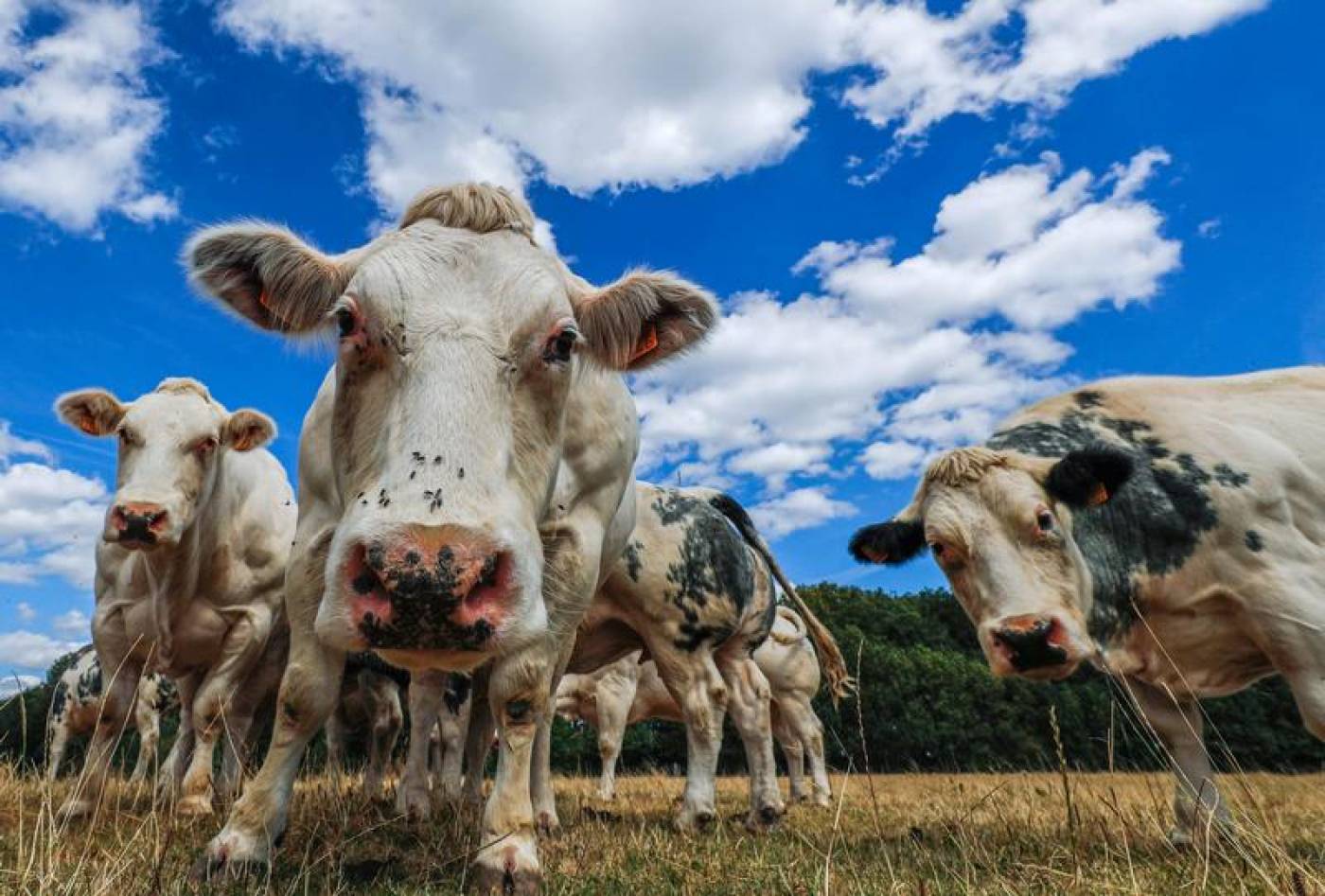
The Torrington Livestock Commission holds weekly livestock auctions here. They’re among the largest auctions in Wyoming, and in the US. Yearling and calf sales are held every Wednesday, August through March. The auctions draw cattle from a nine-state region. Buyers come from all over the US.
***
From Torrington, it’s a little more than 80 miles to Cheyenne, the Wyoming state capital. In all my Harley rides, this is the only the second state capital I’ve stayed in (I spent a night in Santa Fe, New Mexico in 2014.) What are the odds of that happening? Over the years, I’ve ridden through 21 states. Apparently, I take the roads less traveled.
With a population of around 60,000, Cheyenne is Wyoming’s most populous city – and the 589th-largest in the US. It was named for the Native American Cheyenne nation. Cheyenne is a term meaning “people of different speech” or “red talkers.”
The construction of the Union Pacific Railroad brought hopes of prosperity to the region when it reached Cheyenne on November 13, 1867. The population at the time numbered over 4,000, and grew rapidly. This rapid growth earned the city the nickname “Magic City of the Plains.”

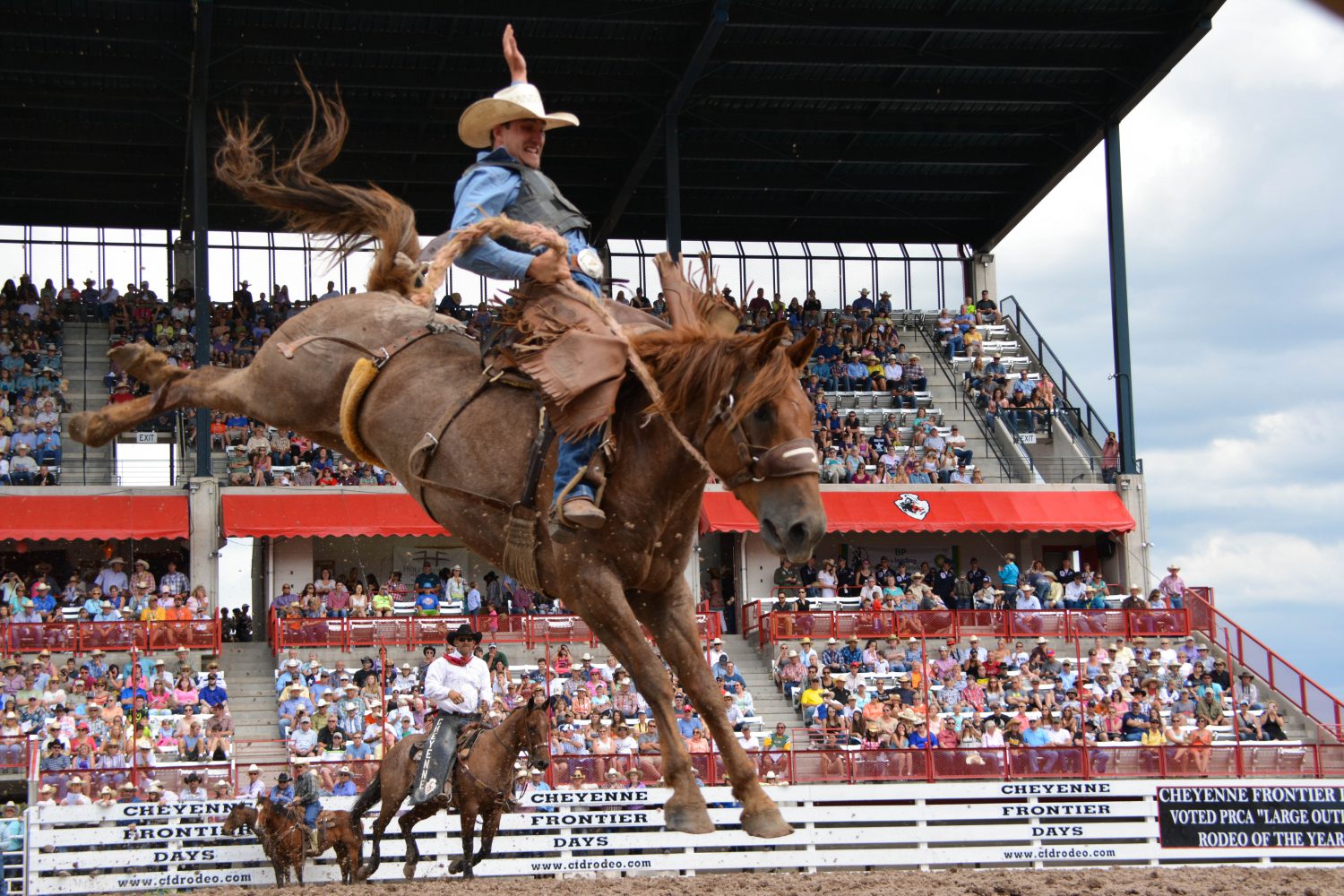
Cheyenne claims to be home of the world’s largest outdoor rodeo, Cheyenne Frontier Days. It’s a 10-day event held every year the last full week of July. Frontier Days includes Professional Rodeo Cowboys Association rodeo, concerts, Professional Bull Riders, US Air Force F-16 Thunderbird fly-bys, parades, pancake breakfasts, and a carnival.
The cowboy fest begins annually with a cattle drive, as cowpokes drive 550 head of steer more than four miles from their pasture north of Cheyenne to their stalls at Frontier Park.
There’s even a world-class concert lineup, which often includes the top names in country music. This year’s entertainment included Eric Church, Garth Brooks, Rhett Akins and Blake Shelton.
2021 Frontier Days ended on August 1. We just missed it, by a week. So close!
So, we mosey on down to our hotel, and call it a day. Tomorrow, we return to Colorado.
***
Day Sixteen Summary: 295 miles. A memorial in progress, Pringles confusion, a little late for Frontier Days.
Click here to see today’s complete route from Rapid City, South Dakota, to Cheyenne, Wyoming.
Today’s fun facts, favorite foods, funky place names and famous folks:
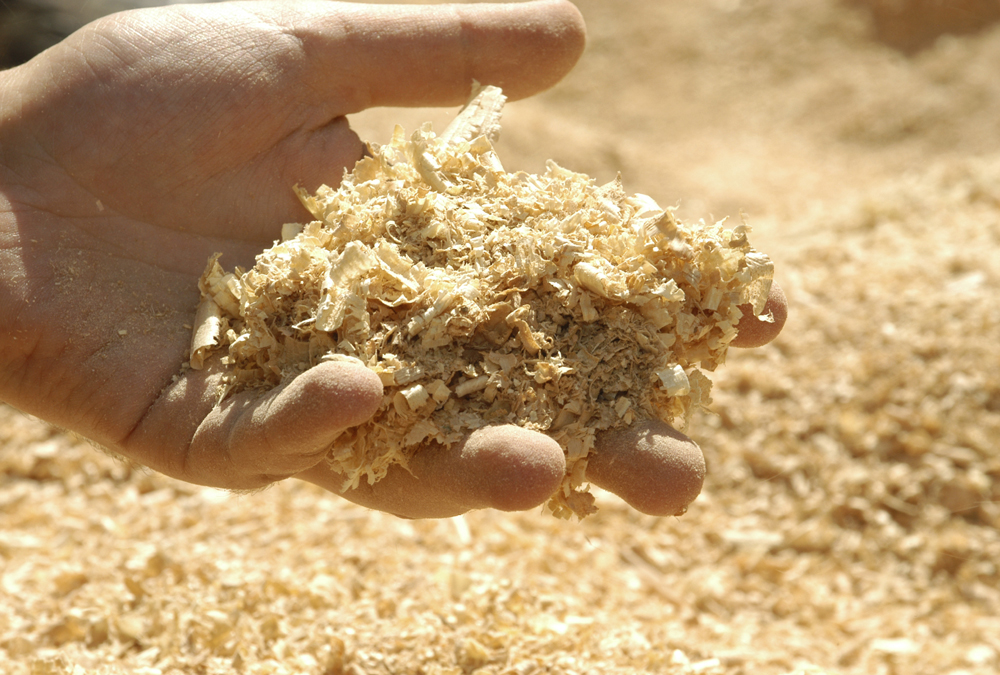
South Dakota fun fact: The tradition of spreading sawdust on the floors of bars and saloons started in Deadwood, South Dakota, due to the amount of gold dust that would fall on the floor. The sawdust was used to hide the fallen gold dust and was swept up at the end of the night.
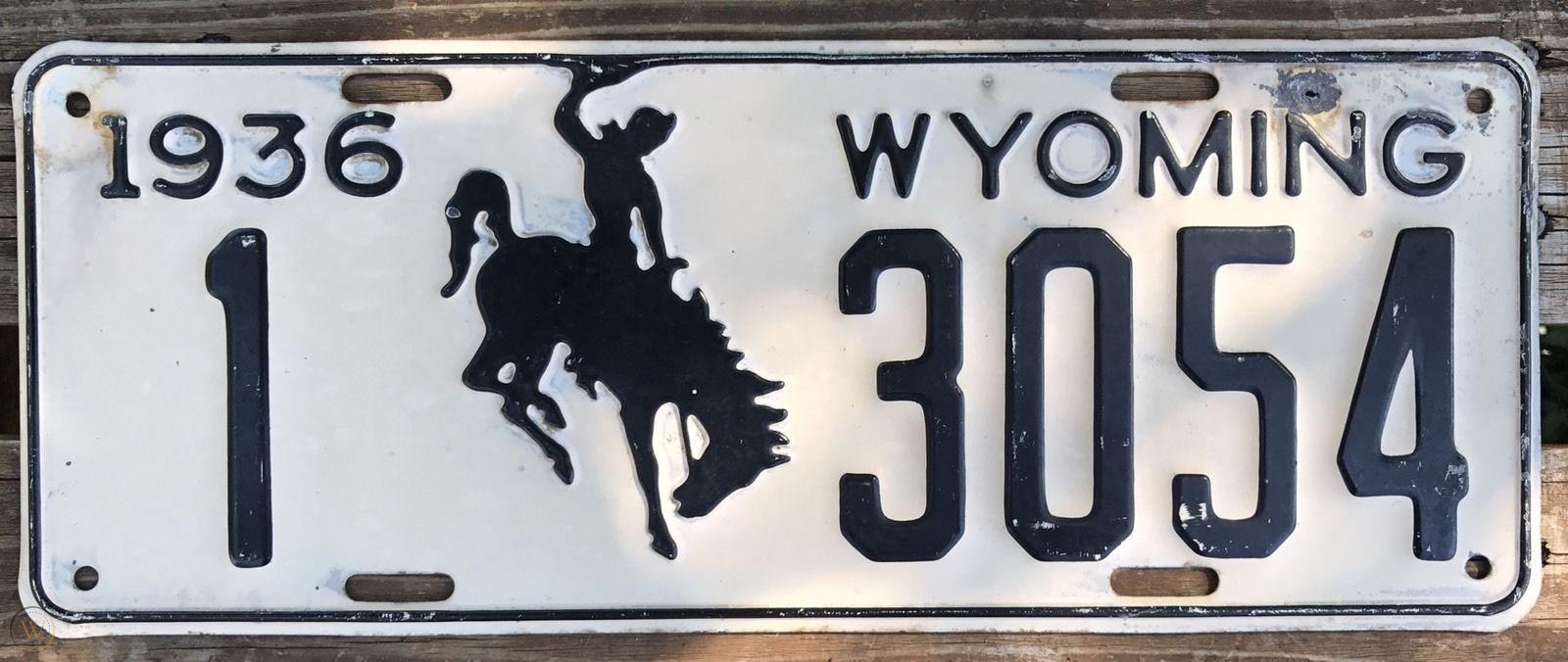
Wyoming fun fact: The “Bucking Horse and Rider” is a registered trademark of Wyoming. This logo consists of a silhouette of a cowboy riding on a bucking horse. In 1936, Wyoming made it a trademark for its license plates. It has been used as the state’s popular insignia since 1918. Wyoming is the Cowboy State, after all.
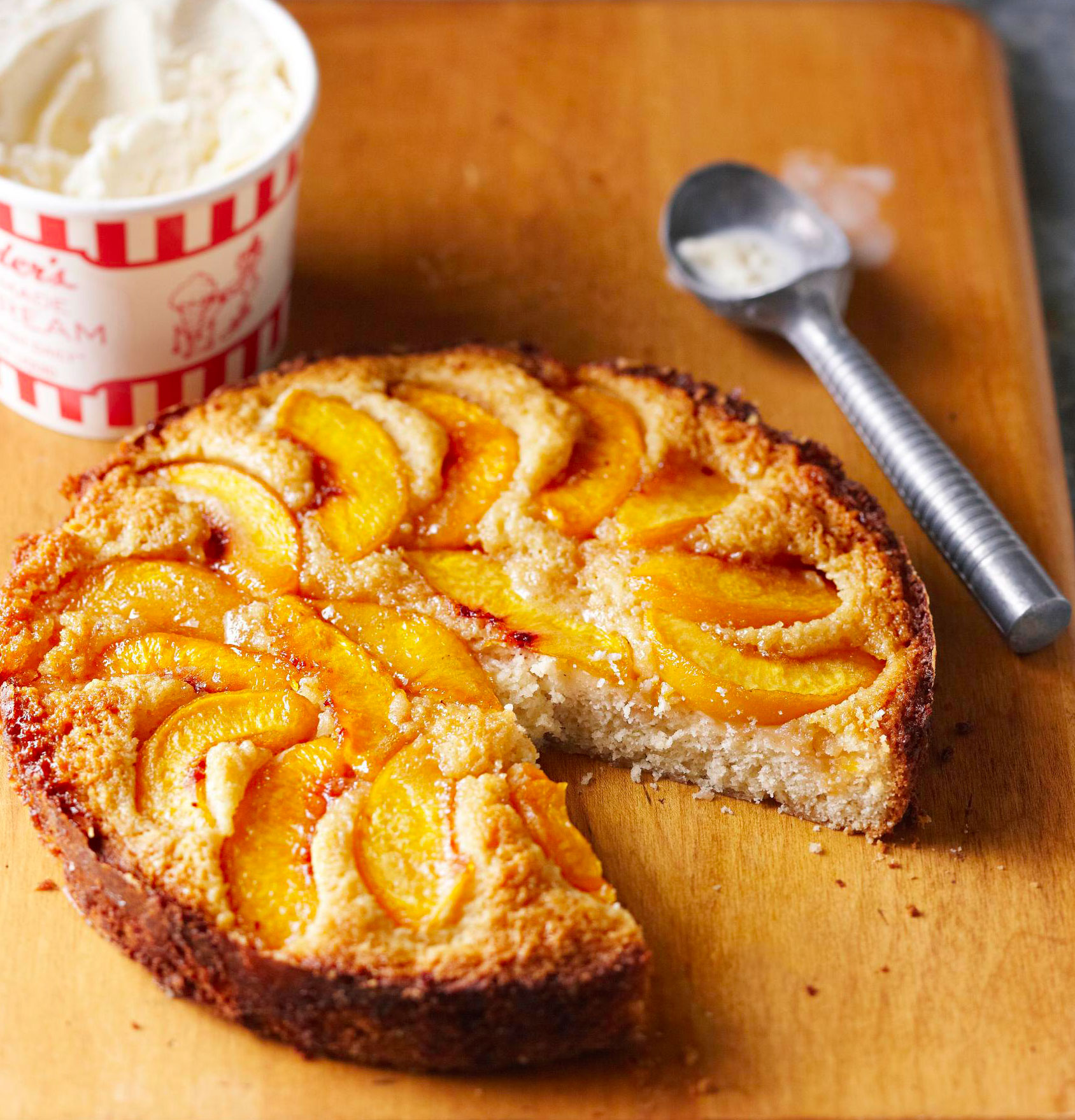
South Dakota favorite food: Kuchen is South Dakota’s official state dessert. This pie-like pastry features rich custard poured over your choice of fruit. Made with sweet dough and a filling of custard, fruit or nuts – was first introduced to the area in the 19th century and has been a favorite among locals ever since. The Cedar Pass Restaurant in Badlands National Park offers a daily selection of kuchen.
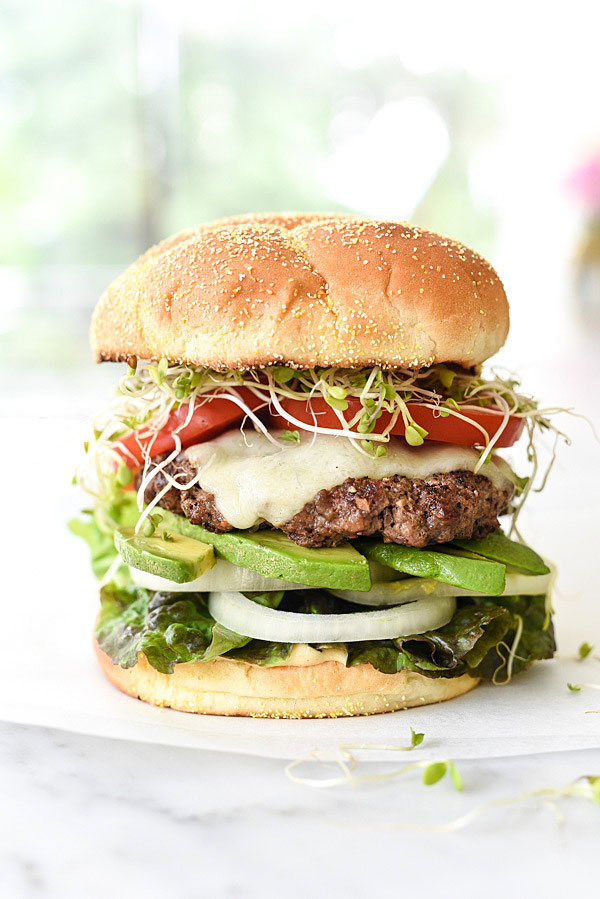
Wyoming favorite food: Bison burgers are quite a thing in Wyoming. Recently, the National Bison Association and the Food Channel collaborated to identify the state’s best bison burgers. The result: go to the Senator’s Steakhouse in Cheyenne, which gets its meat locally from the Terry Bison Ranch. At the Senator’s Steakhouse, any burger on the menu can be upgraded to a bison burger – including mushroom Swiss burger, jalapeno burger or peppercorn bleu cheese burger.
South Dakota funky place name: Akaska. You read that right. Akaska, not Alaska. While this looks like a typo of Alaska (which would be very easy to make considering the keyboard layout), the true meaning is “uncertain” in the Sioux language. Only 42 people live there and railway service stopped going to Akaska in 1940.

Wyoming funky place name: Medicine Bow is named after the Medicine Bow River. Native Americans made their bows using material from the river. Anything good was considered medicine to them. Seems reasonable.
South Dakota famous folk: New England Patriots and Baltimore Colts placekicker Adam Vinatieri grew up in Rapid City, and played football at South Dakota State (go Jackrabbits!). He holds more than 25 NFL records, including most consecutive field goals in history: 44! Today, at age 48, Vinatieri is recently retired as the oldest active player in the NFL.

Wyoming famous folk: Like many wealthy Hollywood celebrities, actor Harrison Ford has a home in Jackson Hole. The 79-year-old onetime heartthrob gained worldwide fame for his starring role as Han Solo in the original Star Wars trilogy. The box office grosses of his films total more than $5.1 billion.

Vroom.
A look ahead @ tomorrow: Rocky Mountain splendor.
 Riding With Gary
Riding on I 25! What a disappointment.
No wonder you ended up in the state capital.
LikeLike
Hey Clarence, I-25 isn’t great, but it beats having the bike in a garage in Carbondale!
LikeLike
You got me there!
Hope you can avoid the smoke we are having.
LikeLike
Will be laughing for awhile re Pringles comments…happy to debate anyone (and Ole does NOT agree with me on this!) but Pringles are definitely NOT a potato chip (surprised they’re even 42%!)…potato chip lovers, back me on this!
Continue loving “living vicariously” through all adventures and your brilliant descriptions-thanks for sharing! Marde and Ole
LikeLike
Fun to watch the Olsens bicker over taters. Glad you’re living vicariously, but even better to do it for real for yourself. Vroom.
LikeLike