***
Today, we’re eastward bound.
As we leave our Rapid City base of operations, we’ll head as far east as this 2021 trip will take us.
If we get on Interstate 90, by the end of the day, we’ll be in Sioux Falls, South Dakota’s most populous city with more than 180,000 residents. Sioux Falls is about 350 miles from here.
Even closer on I-90, about 10 miles east of here, is Ellsworth Air Force Base, a major employer in the Rapid City area. Ellsworth is home of the US Air Force’s 28th Bomb Wing and the California-built B-1B bomber. Ellsworth is one of only two hosts to the B-1B; the other is Dyess AFB in Texas.
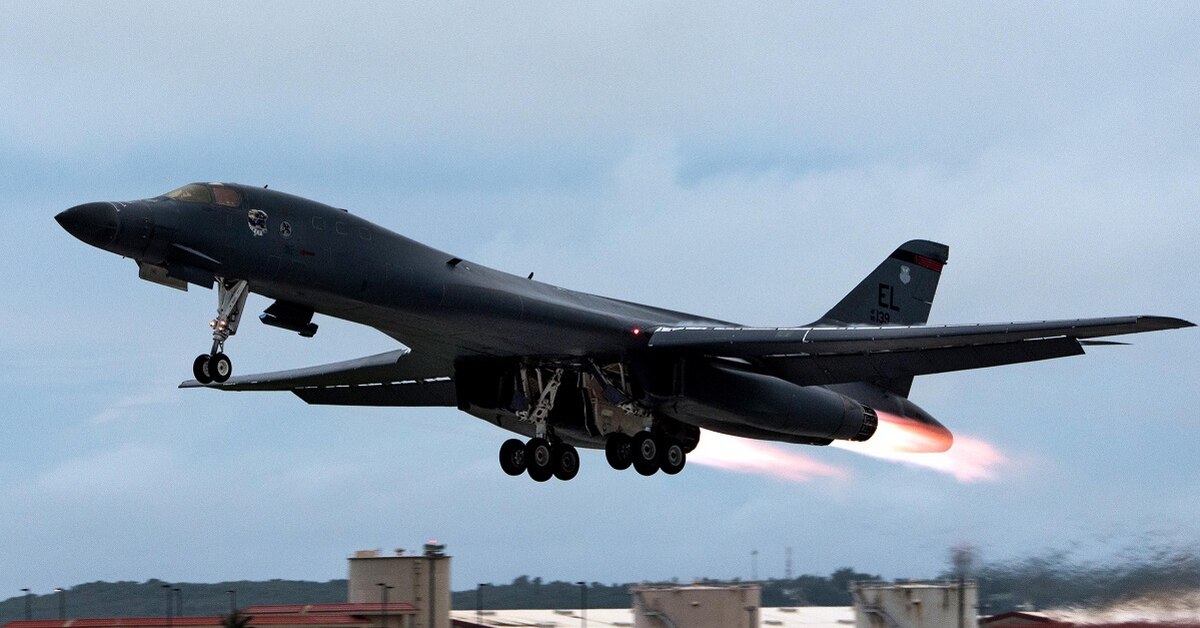
Ellsworth was established in 1941 as Rapid City Army Air Base. It was later named in honor of Brigadier General Richard Ellsworth, who was killed when his RB-36 bomber crashed during a 1953 training flight in Newfoundland, Canada.
Over the years, Ellsworth has hosted various missile systems (Nike, Titan, Minuteman) and the B-52 Bomber. Today, the base’s population of 8,000 includes military members, family members and civilian employees.
We could go to Ellsworth, and probably get turned away at the front gate. Big bad dudes on Harleys? Probably outlaws.
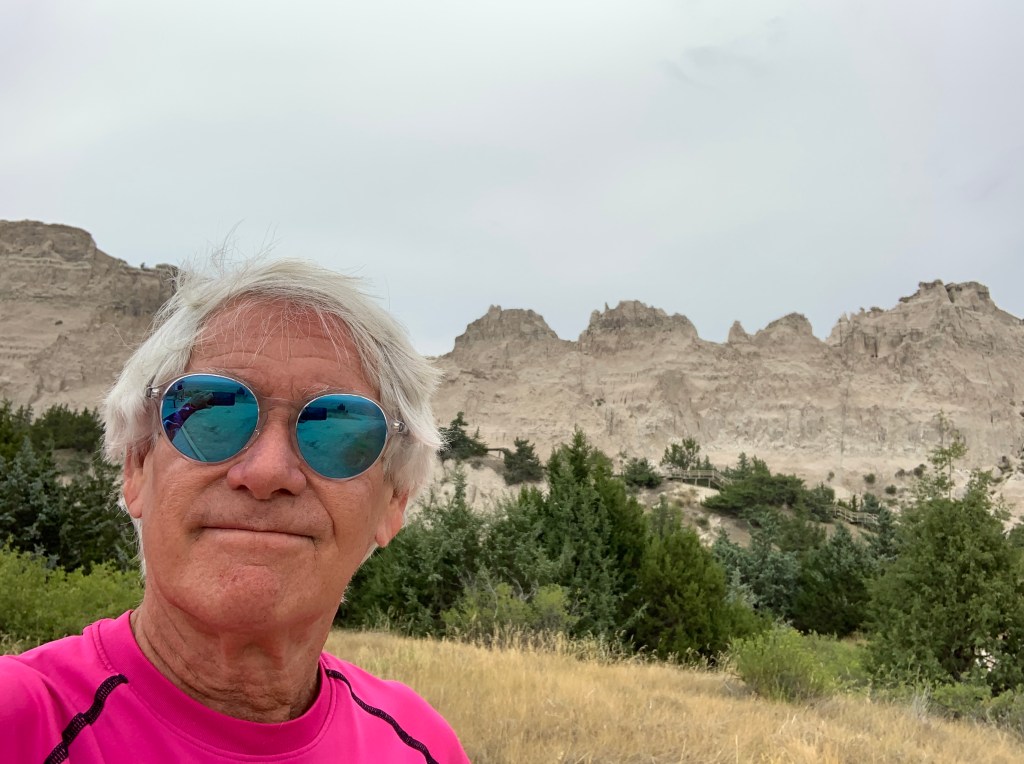
A much better destination east of Rapid City is Badlands National Park. It involves no Interstate highway travel, and it’s a National Park! We should be there in an hour and a half.
***
So, we leave Rapid City and head southeast on South Dakota Highway 44, quickly rolling past Rapid Valley, Green Valley, and the Rapid City Regional Airport. Seventy-three miles later, we arrive in the tiny town of Interior, population 94.
Interior is less than a mile from the entrance to Badlands National Park. We turn northeast on South Dakota Highway 377 and quickly enter the park.
First thing we see is the Ben Reifel Visitor Center, named for a Lakota Sioux man, born in a log cabin on South Dakota’s Rosebud Indian Reservation, to a Brule Sioux mother and a German-American father. Life on the reservation wasn’t easy. Ben Reifel’s parents told him he couldn’t go to high school, so he ran away from home, traveled 250 miles to enroll in school, and eventually graduated from South Dakota State University with degrees in chemistry and dairy science.
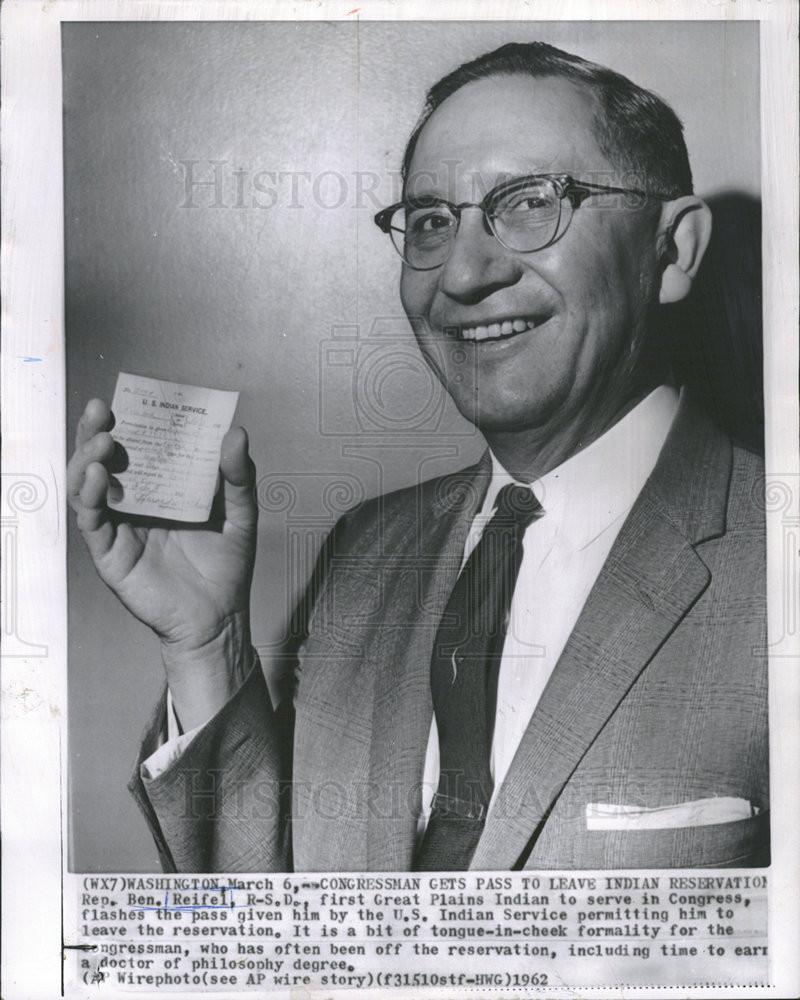
Reifel, also known as Lone Feather, achieved the rank of Lieutenant Colonel in the US Army during World War II, earned a PhD from Harvard, and became the first Commissioner of the Bureau of Indian Affairs. He served five terms as a US Congressman, the first Lakota to be elected to the House of Representatives.
While in office, and during his time at the Bureau of Indian Affairs, Reifel pushed for better education on reservations and recommended that reservation and county schools be merged so Native Americans and non-Natives could be educated together. His lasting legacy is Ben Reifel Middle School, set to open this fall in Sioux Falls.
***
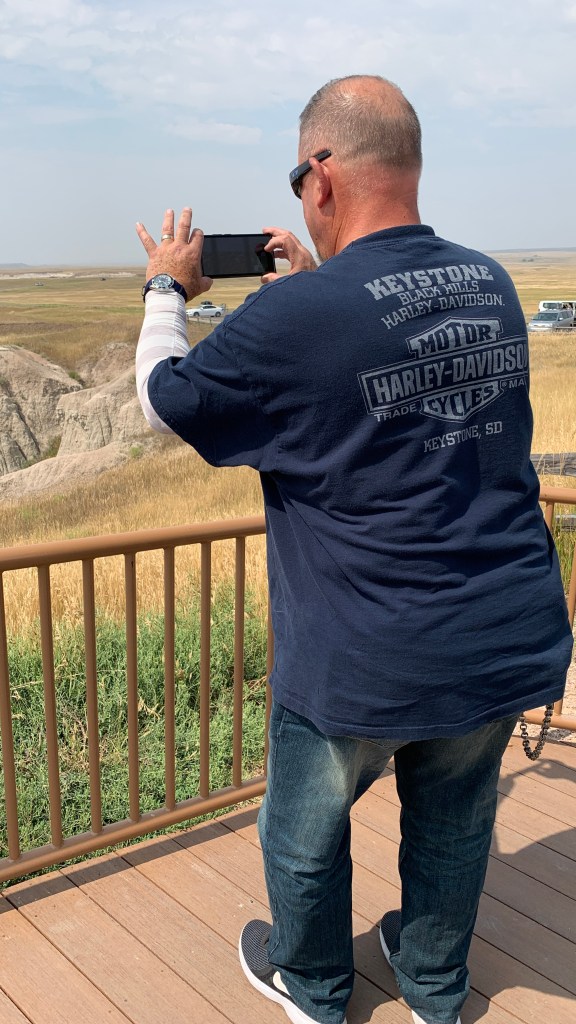
Native Americans have been here a long time, long before Badlands became a national park.
Bordering the south side of Badlands National Park is the Pine Ridge Indian Reservation, home to about 60,000 Native Americans who are part of the Oglala Lakota Sioux Nation. These people have called the area home for more than 11,000 years.
Badlands National Monument acquired 133,000 acres of Lakota land in 1976, two years before the monument was established as a national park. That’s nearly half of the park’s size.
Oglala Lakota County, which is entirely within the Pine Ridge Indian Reservation. It is the poorest county in the US, with a per capita annual income of $8,768. And, it has the lowest life expectancy in the US. Life on the Pine Ridge Reservation is not easy.
Much of what we’ll see today in Badlands National Park was once Native American lands.
***
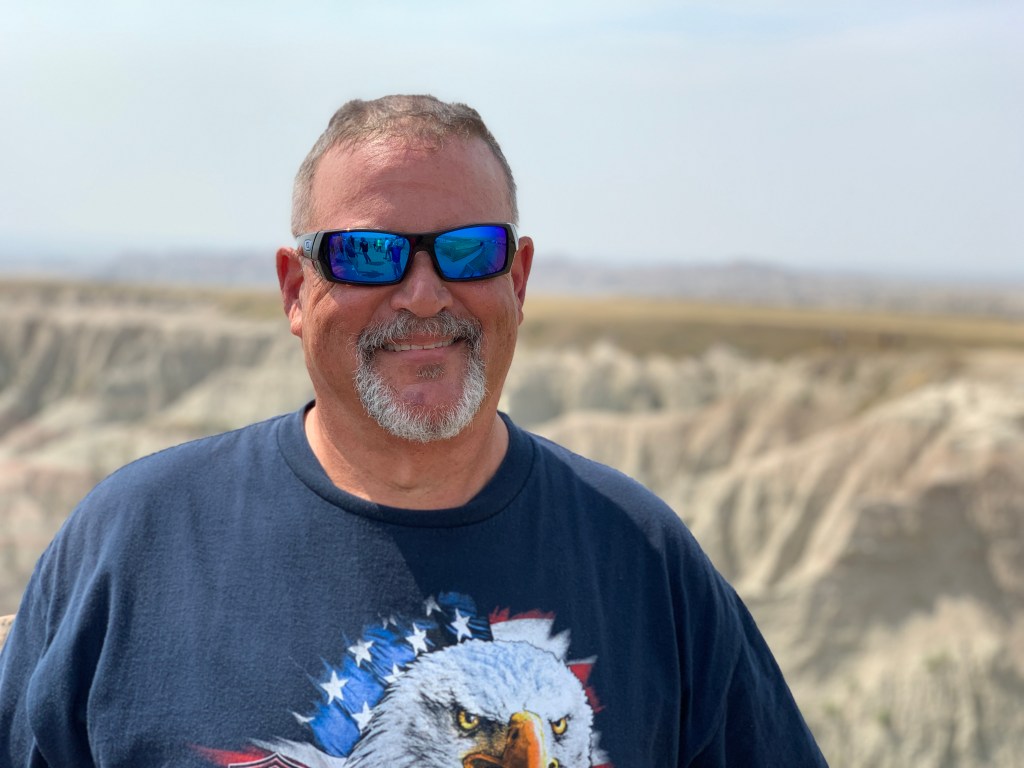
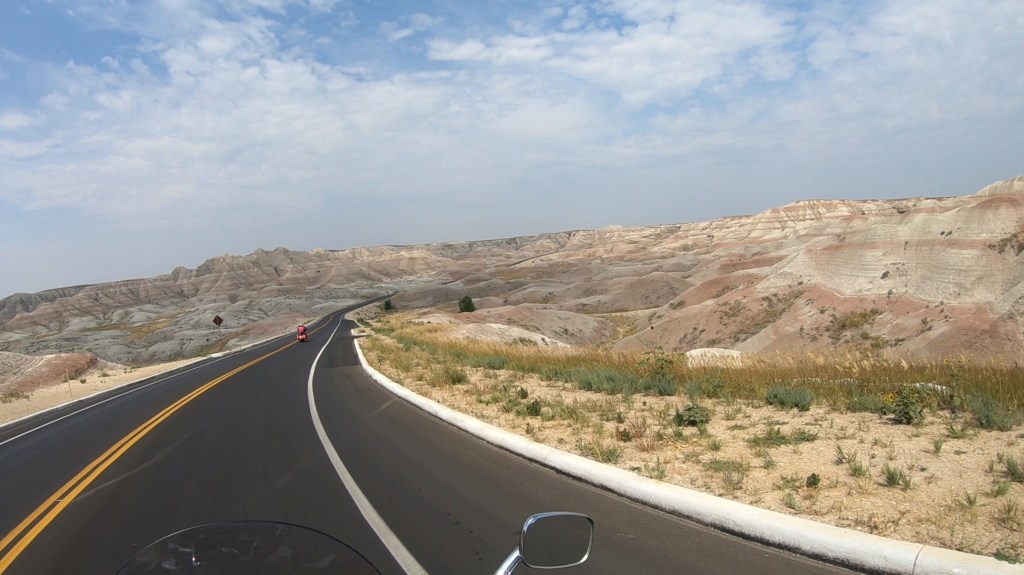
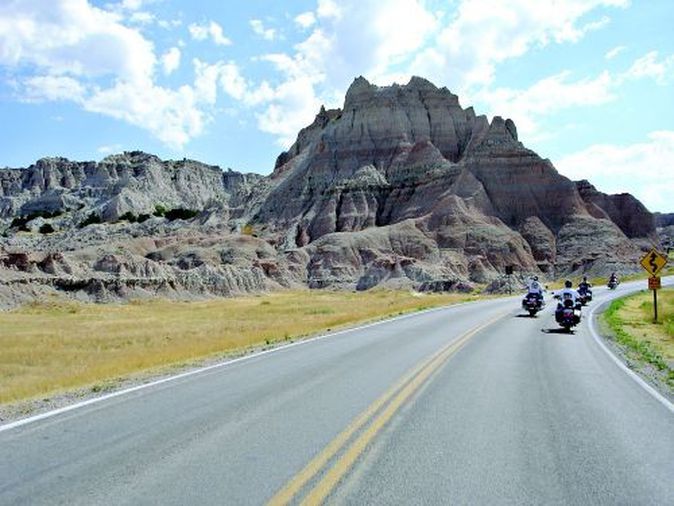
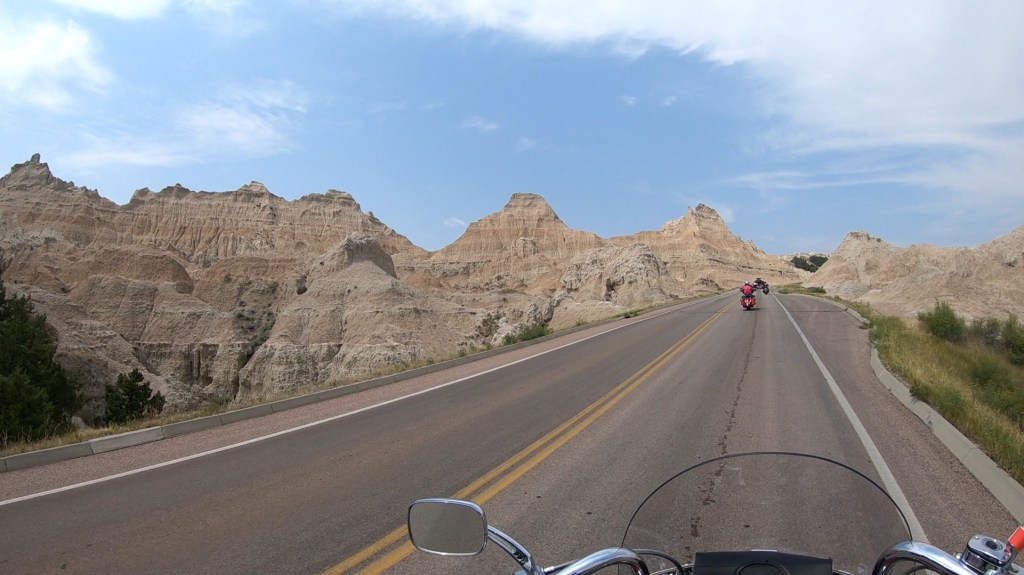
We step out of the Ben Reifel Visitor Center, saddle up, and head west on South Dakota Highway 240, part of the Badlands National Park Scenic Byway. The road will take us past spectacular buttes, cliffs and multi-colored spires.
The 38-mile byway has numerous passes, 15 overlooks, hiking trails, and untold beauty. The landscape is harsh, rugged, and very photogenic.
As we begin to roll through the park, we wonder about the name, Badlands.
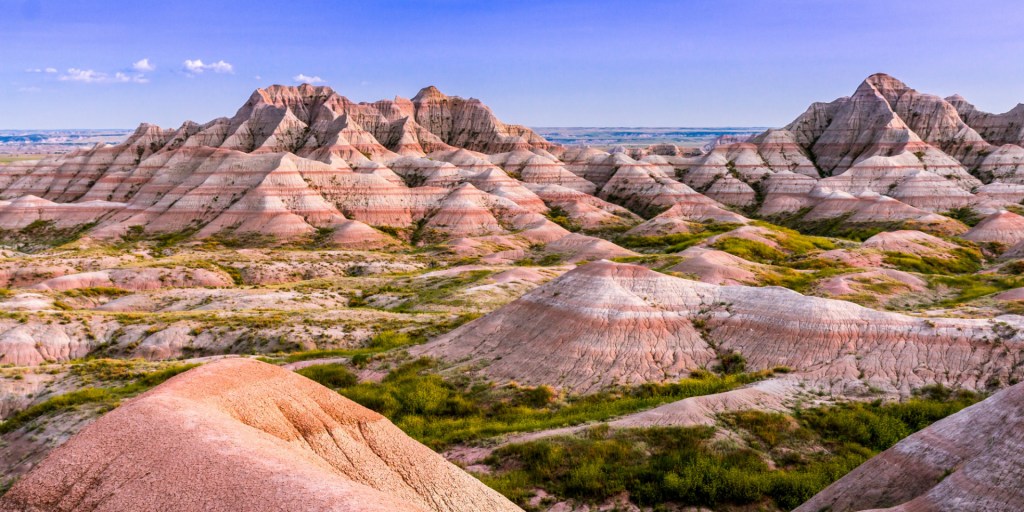
The Lakota people were the first to call the area mako sica, or “land bad.” Extreme temperatures, lack of water, and the exposed rugged terrain led to this name. In the early 1900s, French Canadian fur trappers called it les mauvais terres pour traverse, or “bad lands to travel through.”
It’s not so bad to travel through today. We continue on the scenic byway, heading northwest through a labyrinth of sand buttes and spires that appear to come from another planet.
It is a truly desolate place. The land has been ruthlessly ravaged over millions of years by wind and water, giving it a look seldom seen on this planet. You can scour the land for miles and see no sign of civilization.
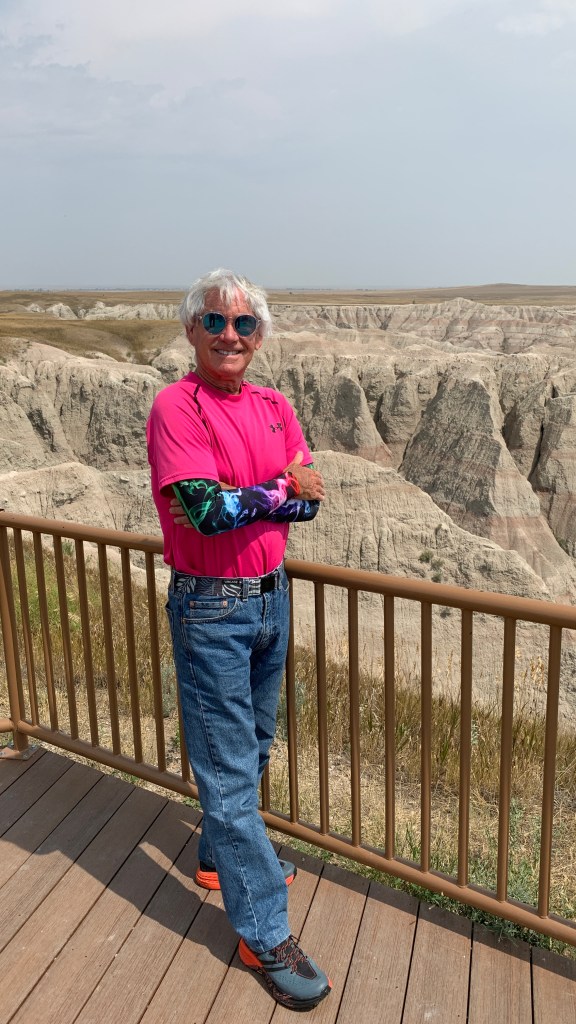
But the cool thing is, you can see for miles and miles.
***
The largest feature in the park is known as “The Wall.” It’s a 60-mile stretch of tiered cliffs, a huge natural barrier ridging the landscape, sculpted into pinnacles and gullies by the forces of water. National Geographic compares the Wall to an enormous stage set – colorful, dramatic, and not quite real. Water has been carving away at the cliffs for ages, and even today, it continues to erode the cliffs an inch or more every year.
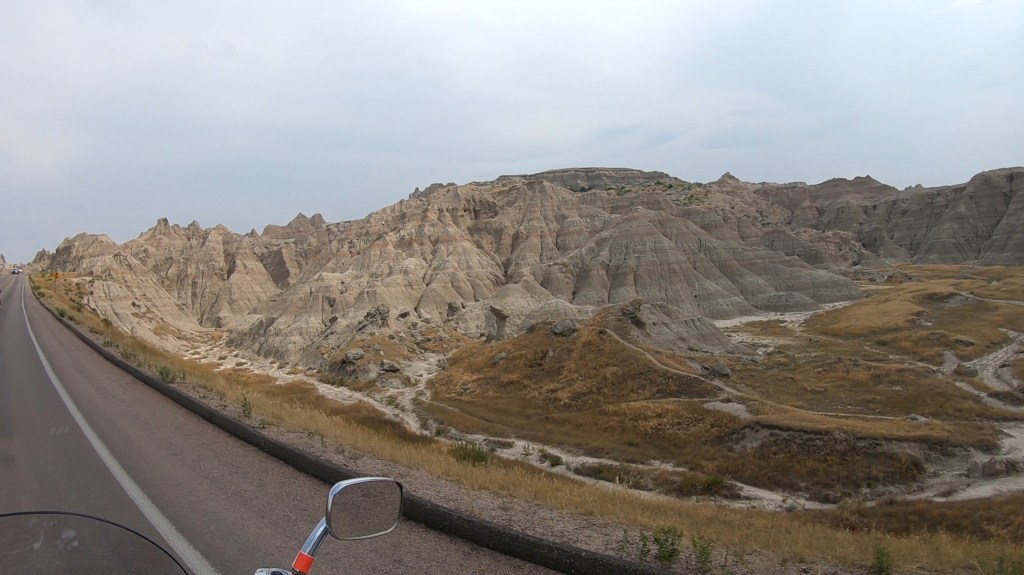
The Wall is the heart of the Badlands landscape, the heavily eroded escarpment that defines the namesake topography. The Wall stretches roughly from the towns of Scenic in the west to Kadoka in the east. These colorful cliffs are a half-million years old.
About 25 miles after entering the park, the scenic byway turns north, toward the town of Wall – named for the wall of rock formations that’s within Badlands National Park.
You know, The Wall.
***
We soon arrive in Wall, the town.
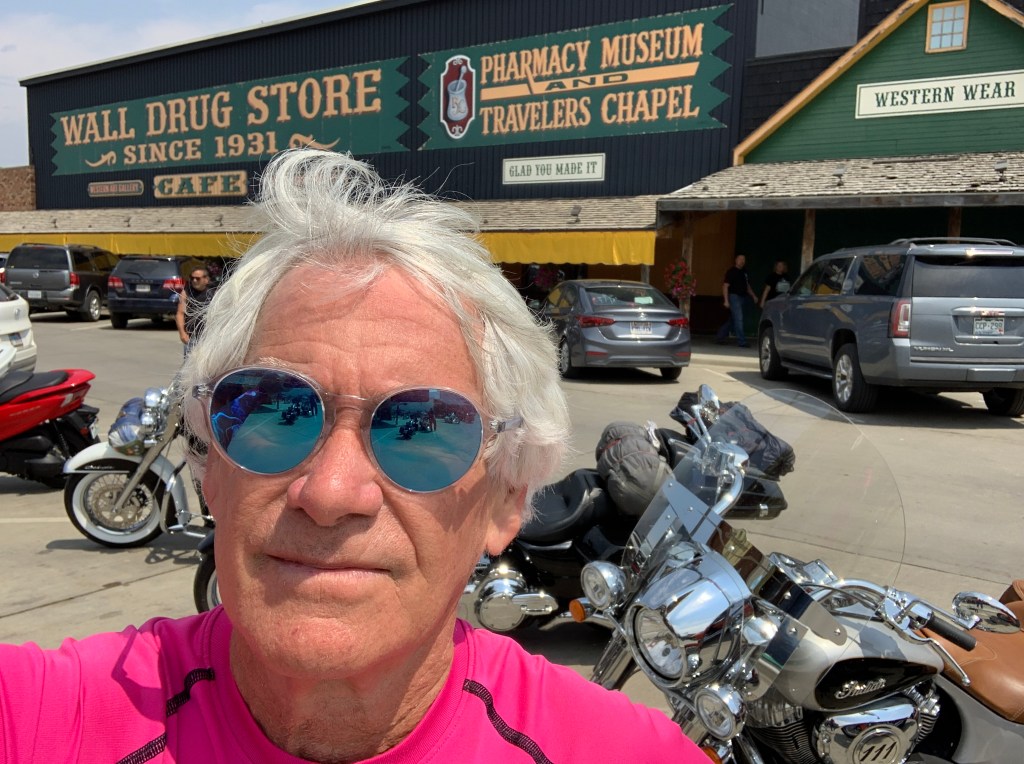
Wall is most famous for Wall Drug Store, which opened as a small pharmacy in 1931 and eventually developed into a large roadside tourist attraction.
Anyone who’s ever driven through South Dakota, Nebraska, Montana, Wyoming or other neighboring states, is familiar with the ubiquitous signs and billboards that remind you, “785 Miles to Wall Drug. Free Ice Water.” Most of the hand-painted billboards are on a 650-mile stretch of Interstate 90 from Minnesota to Billings, Montana. At its peak in the 1960s, Wall Drug had more than 3,000 highway signs!
Wall Drug struggled for years until the owner’s wife thought of advertising – and offering – free ice water to parched travelers heading to the newly opened Mount Rushmore monument 60 miles to the west. To this day, tourists like us still drink the free ice water, though it’s no longer the main attraction.
At Wall Drug, there’s also a cowboy-themed shopping mall, western art museum, a chapel and an 80-foot Apatosaurus – a dinosaur that lived in North America during the Late Jurassic period.
More than two million visitors cruise through Wall Drug each year. Less than one million visit Badlands National Park.
Many of those who come to Wall, particularly during Sturgis Rally Week, also visit Badlands Harley-Davidson. This Harley store has no bikes for sale – not that we need any – just a lot of t-shirts, chachkas, and over-priced Harley-branded items. Who needs a $45 t-shirt commemorating their visit to Wall? Scott does.
***
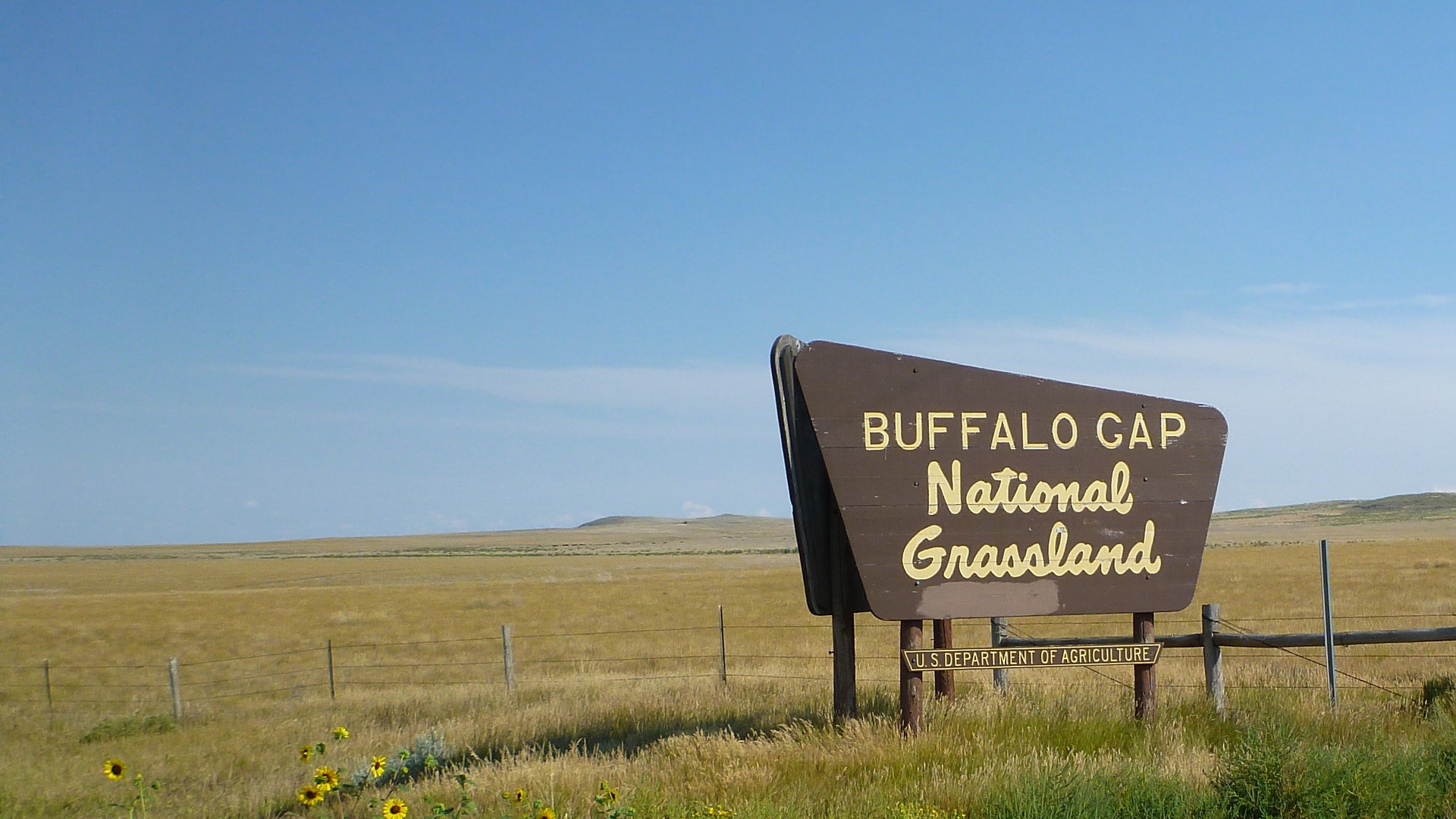
Also in Wall, is the National Grasslands Visitor Center. It’s where you can learn about the Buffalo Gap National Grassland, which includes nearly 600,000 acres – many surrounding Badlands National Park.
The grasslands start at the park’s northern border. They’re the second-largest protected national grassland, dotted with endless miles of prairie, open skies, rolling plains, and chalk-colored geological formations similar to those found in Badlands National Park.
The Buffalo Gap National Grassland is managed by the US Forest Service. It has two tracts: one at the north end of Badlands National Park, and one along South Dakota’s southwest border with Wyoming.
The US has 20 national grasslands, totaling nearly four million acres. The grasslands are similar to other lands managed by the forest service, except the lands consist of prairie vegetation, not trees.
***
We had a nice break in Wall, but there’s more to see in Badlands National Park.
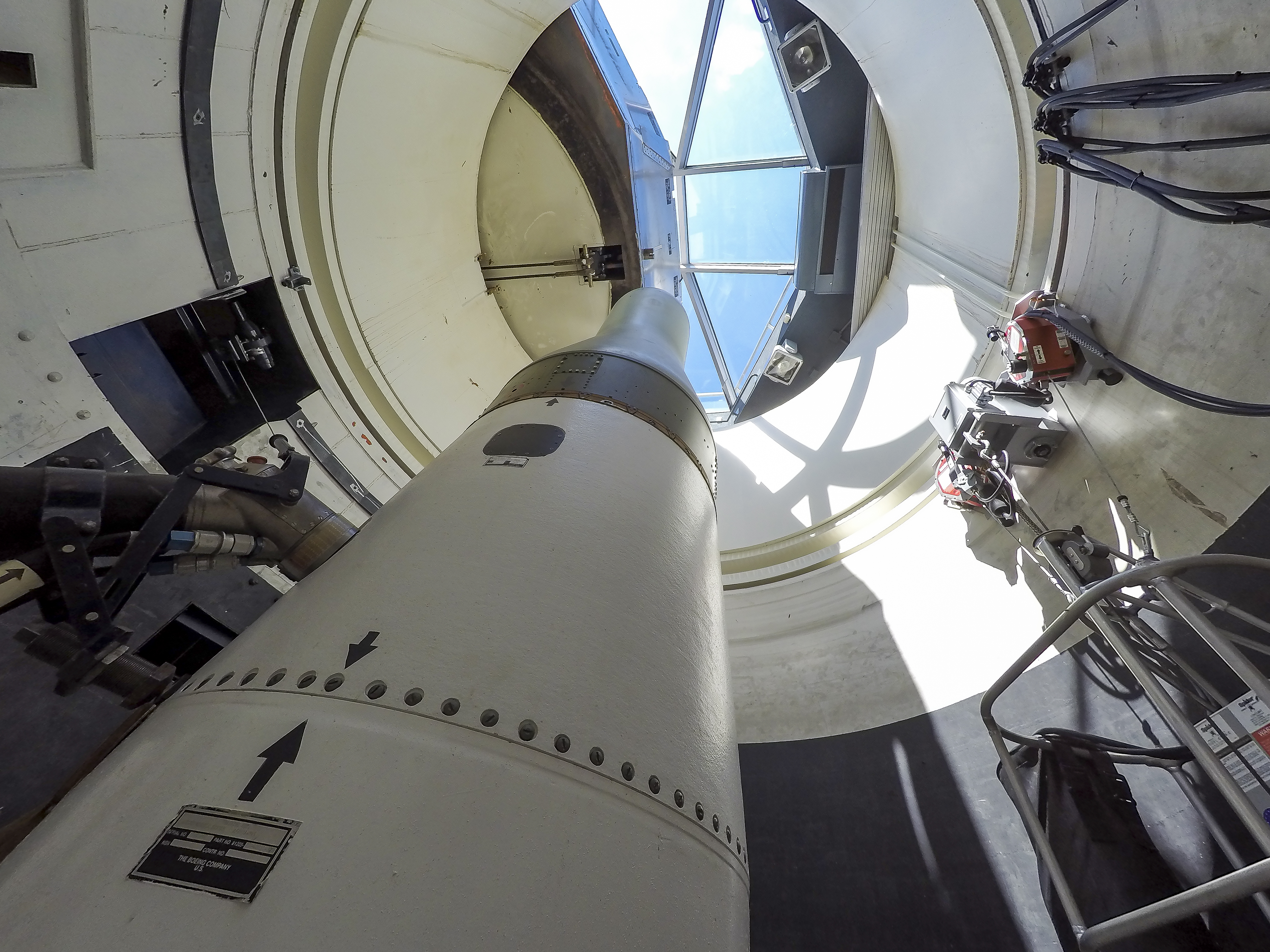
To return to the park, we could head east on Interstate 90 for 20 miles, and exit by the Minuteman Missile Visitors Center, a historic site designed to give you a first-hand look at a relic of the Cold War. Here, you can see how the end of the world might have begun.
The site was established in 1999 to illustrate the history and significance of the Cold War, the arms race, and missile development.
It’s believed to be the world’s first national park dedicated to commemorating the events of the Cold War. Two 1960s-era Intercontinental Ballistic Missile sites have been preserved for public viewing. Delta-09, an underground missile silo on the edge of Badlands National Park, still holds a Minuteman II missile that, when active, could have sent a nuclear weapon to the Soviet Union in 30 minutes.
Those were the days!
As a postscript, 450 of the newer Minuteman III missiles are still on active duty at Malmstrom Air Force Base near Great Falls, Montana, Minot Air Force Base in North Dakota, and Warren Air Force Base near Cheyenne, Wyoming.
Minuteman IIIs, made by Boeing, have a range of more than 8,000 miles, a speed of more than 15,000 miles an hour, and the ability to carry up to three independently targeted nuclear warheads. That would be more than enough to obliterate the world many times over.
Ka-boom!
***
Just south of the missile site, is a return to South Dakota Highway 240 where riders re-enter Badlands National Park at the Northeast Entrance Station.
Immediately, riders arrive at the Big Badlands Overlook, the first grand view upon entering the park from the east. From there, it’s about mile to several trailheads that take you to a boardwalk with spectacular views of the Badlands Wall.
After a welcome hike, you can get back on your bikes and complete the Badlands Loop Scenic Byway. It takes you past the Ben Reifel Visitor Center, and dumps us out of the park at the southern entrance, in Interior.
This is where we began our day in the park, and now it’s time to head back to Rapid City. Seventy-three miles later, we arrive in Rapid City, and prepare for tomorrow – a day in Sturgis!
***
Day Fourteen Summary: 213 miles. Badlands, Wall Drug, missile town.
Click here to see today’s complete route from Rapid City to Badlands National Park and back.
We’re on our way to Sturgis!
***
Today’s fun facts, favorite foods, funky place names and famous folks:
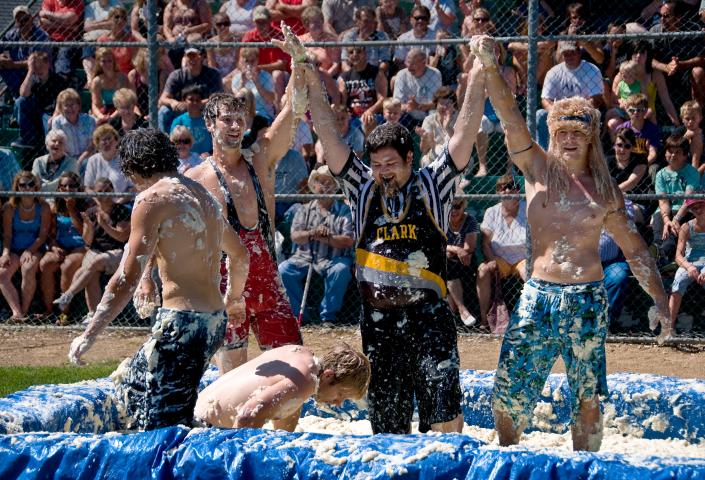
South Dakota fun fact: A South Dakota tradition is the annual Potato Days in the town of Clark, known as the Potato capital of South Dakota. One of the highlights of Potato Days since it began in 1997, is the mashed potato wrestling contest, held in a large pit filled with, of course, mashed spuds. Wouldn’t you think this is more appropriately done in Idaho?
South Dakota favorite food: The state’s official state bird is the ring-necked pheasant, and its official state fish is walleye – a terrific meal combination. Pheasant is typically prepared with herbs and vegetables, while walleye can be grilled, fried, broiled or baked. Few places serve it better than the appropriately named Pheasant Restaurant in Brookings, whose specialty is the Pheasant Salad Sandwich, served on grilled marble rye.

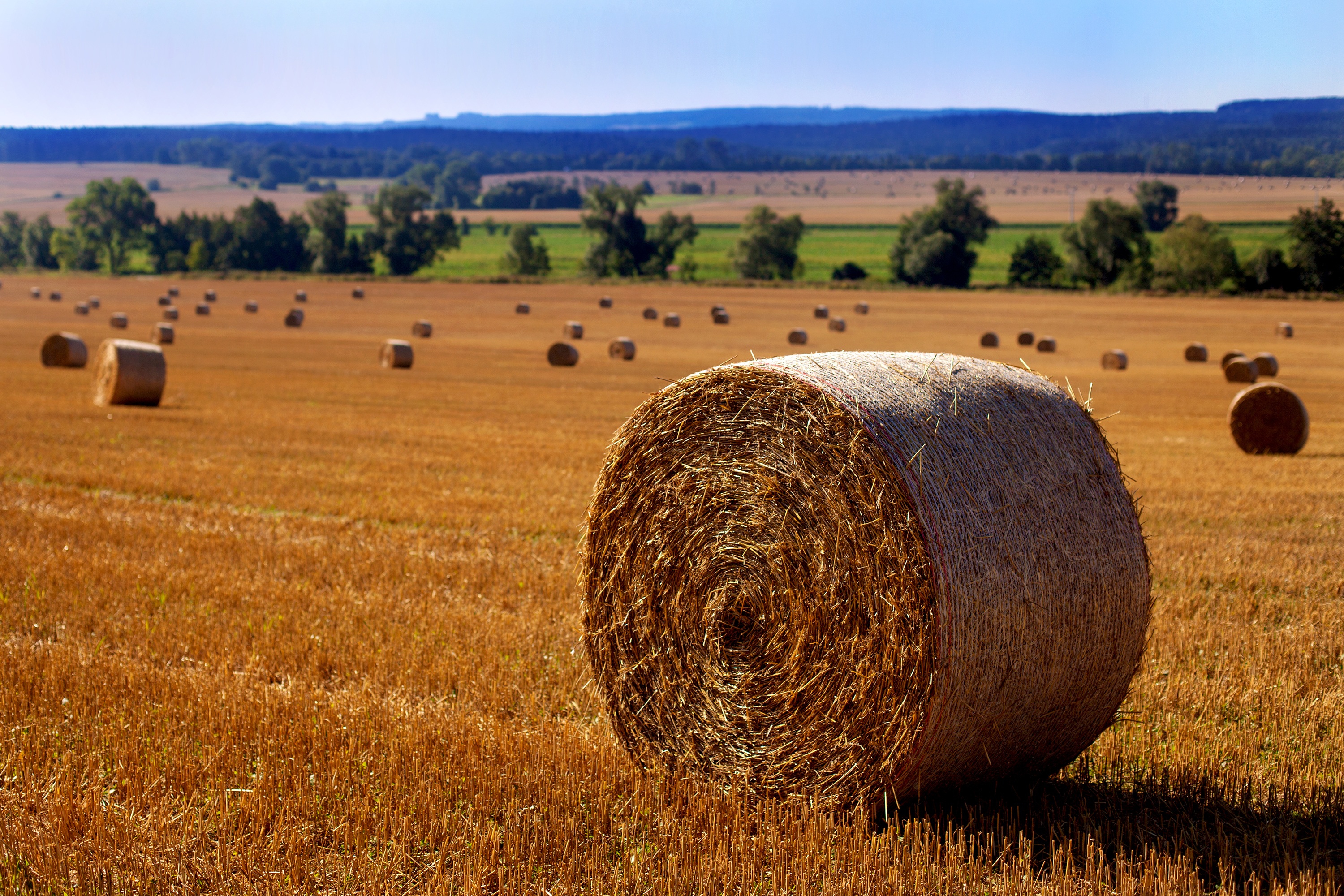
South Dakota funky place name: Gayville, a small town in Yankton County in southeastern South Dakota, was originally settled by Scandinavian farmers. The town got its name in 1873 from Elkanah Gay, an early postmaster. Gayville is the self-proclaimed “Hay Capital of the World.”
South Dakota famous folk: Mary Hart, born Mary Johanna Harum, was a long-time host of the syndicated TV show, Entertainment Tonight. She was born in Madison, South Dakota, and lived in Sioux Falls as a child. As Mary Harum, she was crowned Miss South Dakota 1970. Mary Hart is not a made-for-TV name; she became Mary Hart when she married Terry Hart in 1972. Now 70, Hart splits her time between the ritzy Yellowstone Club in Montana, and a mega-home at the exclusive Bighorn Country Club in Palm Desert, California.

Sturgis, anyone?
Vroom.
A look ahead @ tomorrow: Sturgis!
 Riding With Gary
It’s been a while (more decades than I’d like to remember), but forgot how beautiful Badlands is. Thanks for reminding us. Maybe warrants another visit??
Keep on vrooming.
LikeLike
Hey Mama Bear! Yes, you should visit Badlands every 60 years or so. At least check out Wall Drug. Free (ice cold) drinking water 🤪
LikeLike
as always a wonder blog. Did you get to go into the Missile museum? You could have led with that to get me to continue riding. Have a HD time st sturgis. Happy Anniversary to Dave and Gail……
LikeLike
Thanks Randy! Missing you here but glad you made the ride home safely.
LikeLike
I’ve never passed up the chance to visit a missile museum. How’s the remodeling project going? Vroom!
LikeLike
Great photos and facts! Happy anniversary Gail and Dave, love you both! Thanks Gary, I love reading about your trip. My only regret is I am not there with all of you. 🙂
LikeLike
If you regret not being with us, there’s always 2022. We’re not getting any younger (except Dave and Gail)!
LikeLike