Savvy followers of this blog noticed there was no post on Sunday. “WTF?” a few you said.
Well, no Wi-Fi, no post.
We stayed in the middle of freakin’ nowhere, without a signal. Very old school. No TV, no phone, no nuthin’. So am now catching you up on Sunday’s happenings. Here goes (and then stand by for today’s real post; you get two on Monday, at no extra charge).
***
After Saturday’s transit day, we’re in for a treat: Yellowstone National Park.
We head south from Belgrade, following the Gallatin River. The river is one of the best whitewater runs in the Yellowstone-Teton area. In June, when the snowmelt is released from the mountains, the Gallatin has a class IV section called the “Mad Mile,” whose nickname should speak for itself.
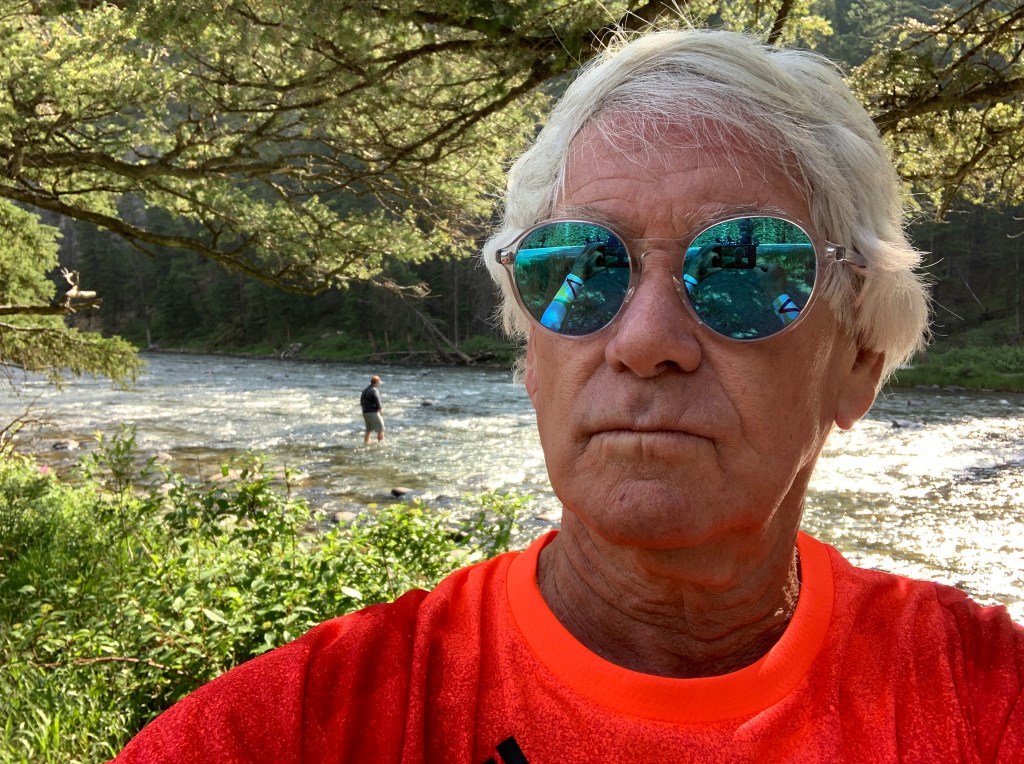
For river neophytes, there’s an international scale of river difficulty used to rate the difficulty of navigating a stretch of water, or a whitewater rapid. Class IV includes intense, power, but predictable rapids requiring precise boat handling.
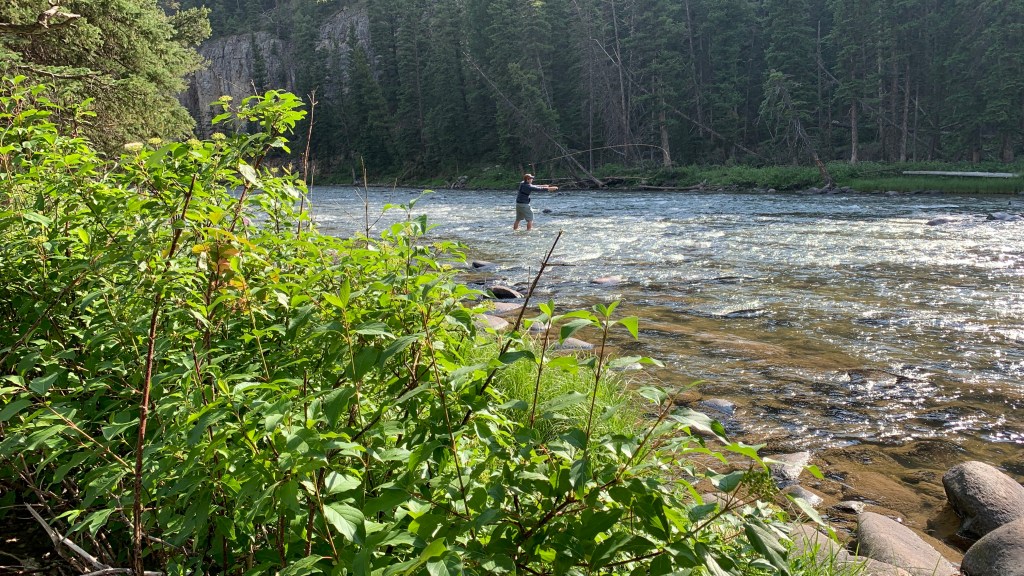
The Gallatin is also a popular fly-fishing destination for rainbow trout, brown trout and mountain whitefish. Parts of the movie, A River Runs Through It, were filmed on the Gallatin.
US Highway 191, also known as Gallatin Road, takes us south through the Madison mountain range toward the Big Sky resort, at 5,850 skiable acres, the second-largest ski resort in the United States by acreage. (The largest is Park City, Utah.)
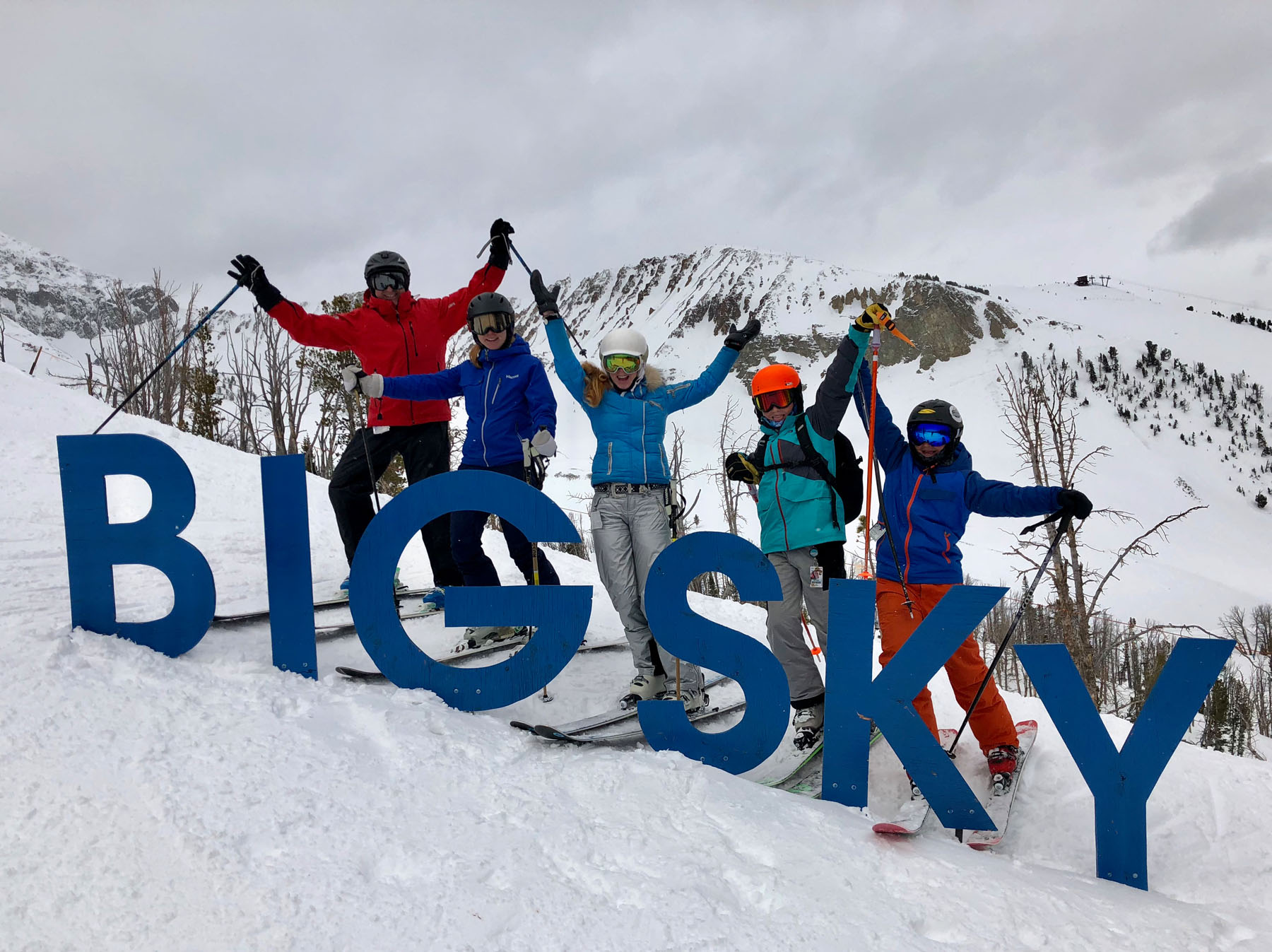
The Big Sky resort was founded by Montana native Chet Huntley, the co-anchorman of The Huntley–Brinkley Report on NBC News. Big Sky opened in December 1973, three years after Huntley retired from NBC.
Big Sky? The State of Montana is known as Big Sky Country. The nickname originated with a 1962 promotion by the Montana State Highway Department. Big Sky is a reference to the unobstructed skyline in the state that seems to overwhelm the landscape at times. “Big Sky Country” appeared on Montana license plates from 1967 to 1975. The moniker was shortened on license plates to simply “Big Sky” from 1976 to 2000.
Today, Montana’s plates simply say “Treasure State,” a reference to Montana’s rich natural reserves. The mountains of Montana have yielded fortunes in minerals, one reason the state motto is “Oro y Plata,” Spanish for gold and silver.
***
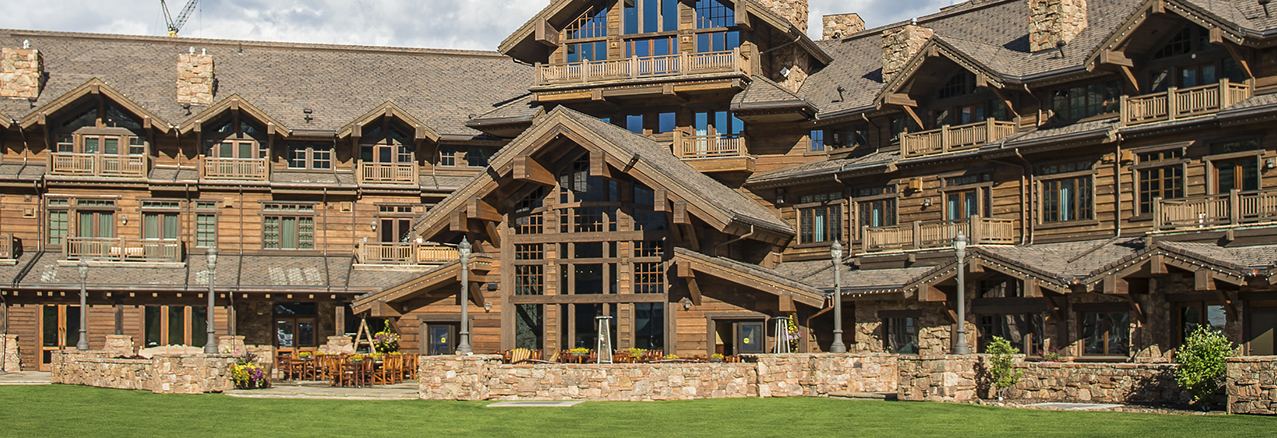
A few miles west of Big Sky is the Yellowstone Club, a 15,000-acre private playground for the rich and famous. Really rich, and really famous. To become a member, you must first own property within the grounds. That’ll cost you anywhere from $2 million to $25 million. Then, initial membership fees are $300,000. On top of that, there’s an annual fee of $37,500.
As the saying goes, if you have to ask how much it costs, you can’t afford it.
That’s why Yellowstone Club members include the soon-to-be divorced Bill and Melinda Gates, Justin Timberlake and Jessica Biel, and former vice president Dan Quayle, the guy who spells potato with an “e” on the end.
The Yellowstone Club has several lifts and ski runs that tie it directly into Big Sky Resort’s lift system. The Big Sky ski area and the Yellowstone Club share a five-mile border. The ski resorts are surrounded by 250,000 acres of the Gallatin National Forest. The Yellowstone club also has its own private ski area, as well as its own golf course, designed by Tom Weiskopf. During the winter, members and other ski snobs call the area “Private Powder.”
We continue south on US Highway 191, past the community of Big Sky, toward the Montana/Wyoming border. As we approach West Yellowstone, Montana, we slip into Wyoming for a few miles, then return to Montana for the ride past Yellowstone Airport and into West Yellowstone.
Because of the harsh winter climate here, the airport is open only from June through September, with limited commercial passenger service on SkyWest Airlines.
West Yellowstone is the jumping off point for Yellowstone National Park, whose entrance is less than a mile to the east.
***
We enter the park, and within a mile we cross into Wyoming. Ninety-six percent of Yellowstone National Park is in Wyoming. The rest is in Montana (three percent) and Idaho (one percent).
Contrary to popular belief, Yellowstone was not named for the abundant rhyolite lavas in the Grand Canyon of Yellowstone that have been chemically altered by reactions with steam and hot water to create vivid yellow and pink colors. Instead, the name was attributed as early as 1805 to Native Americans who were referring to yellow sandstones along the banks of the Yellowstone River in eastern Montana, several hundred miles downstream and northeast of the park.
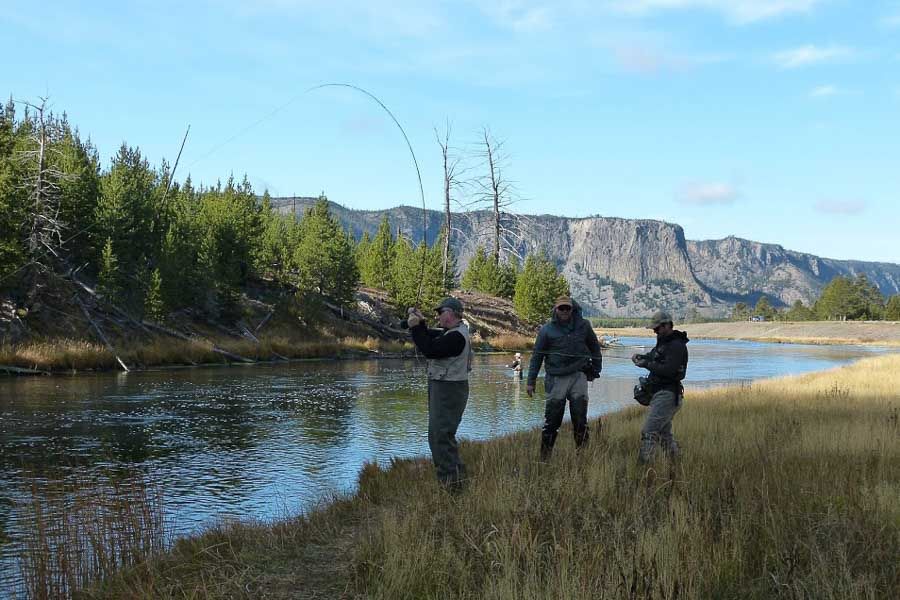
We cruse eastward along the banks of the Madison River. The river, which is a fly-fishing mecca, was named in 1805 by Meriwether Lewis, of Lewis-and-Clark fame. He named the river after then-Secretary of State James Madison, who four years later succeeded Thomas Jefferson as President.
The Madison River has great fishing for rainbow and brown trout. Within Yellowstone National Park, the river is fly fishing only. All fishing in the park is catch-and-release. Fishing is a hugely popular activity within Yellowstone. More than 50,000 park fishing permits are issued annually. Yellowstone has hundreds of miles of fishable creeks, streams, rivers and lakes.
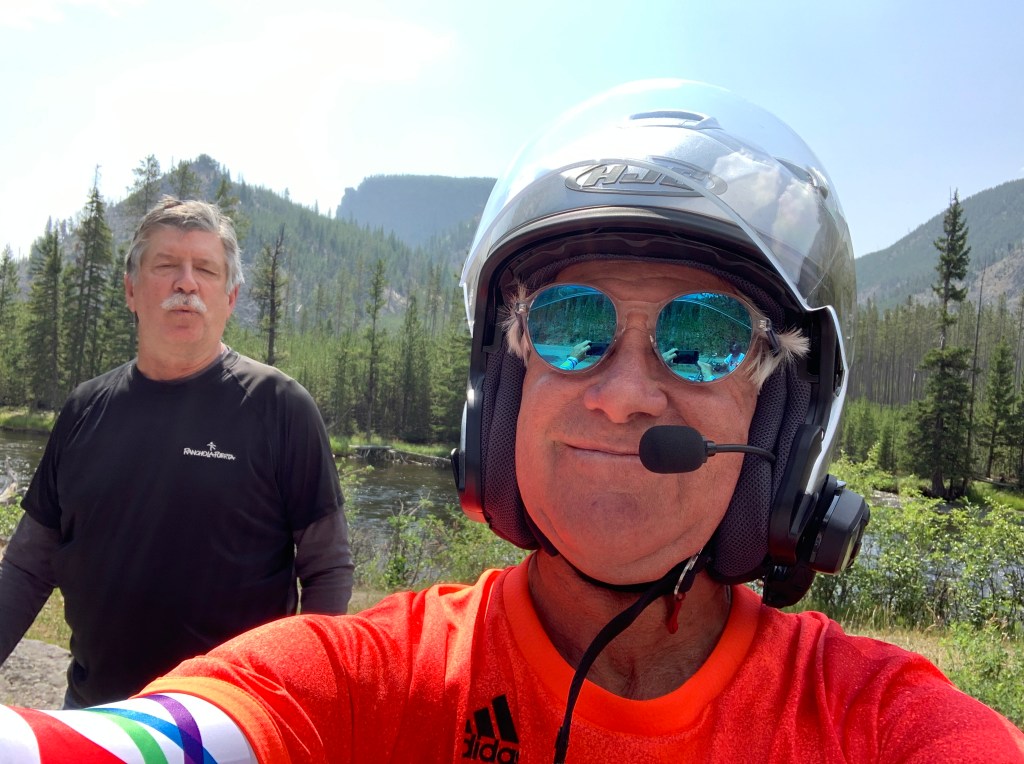
Yellowstone was the world’s first national park, established by Congress and signed into law by President Ulysses S. Grant in 1872. The park is known for its wildlife and 10,000 geothermal features, especially the Old Faithful Geyser, which we will visit today.
Its establishment as the first national park would lay a foundation for 62 additional national parks to eventually follow. From Yellowstone’s beginnings came 100 nations who would subsequently protect more than 1,200 parks and preserve areas spanning the globe. It was the start of a worldwide movement – and it all began at Yellowstone.
***
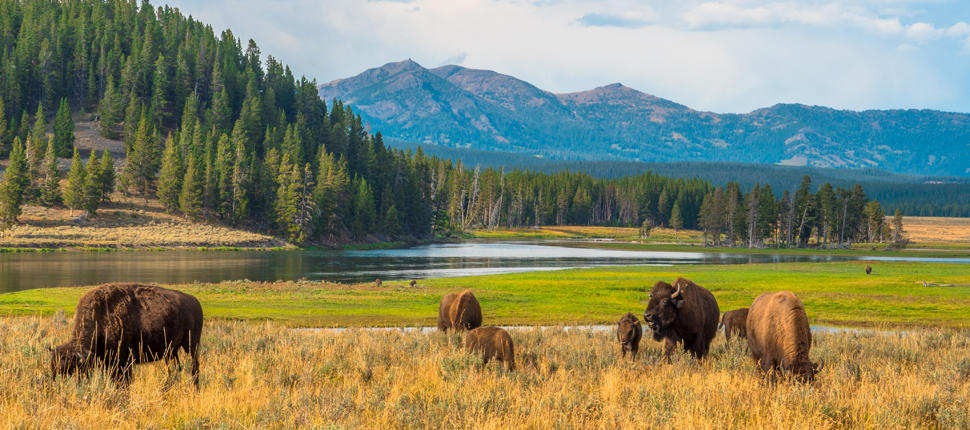
Grizzly bears, wolves and free-ranging herds of bison and elk live in the park. The Yellowstone Park bison herd is the oldest and largest public bison herd in the US. More than 6,000 bison roam freely inside the park’s boundaries.
The bison’s resurgence in the park is a success story for nature lovers. After a mass slaughter of tens of millions of bison on the Great Plains in the late 1800s, conservationists brought about the nation’s first efforts to successfully recover a species teetering on the brink of extinction.
While only 23 bison were left in Yellowstone in 1916, the herd today is thriving. In May 2016, the bison became America’s official national mammal, so named because of its historic, economic, ecological, and cultural value.
Almost every country on earth has a national animal, from Afghanistan’s snow leopard to Zimbawbe’s sable antelope. Some countries share their national animal. England, Ethiopia, Gambia, Kenya, Libya, Luxembourg, Morocco, Sierra Leone, Singapore, Sri Lanka, and Togo all have the lion as their national animal.
The bison is so cool, we have it all to ourselves.
***
National Park Mountain is just west of Madison Junction, where we turn south and follow the Firehole River. Early trappers named it the Firehole for the steam that makes it appear to be smoking, as if on fire. The steam, of course, is a result of the river flowing through several significant geyser basins in the park.
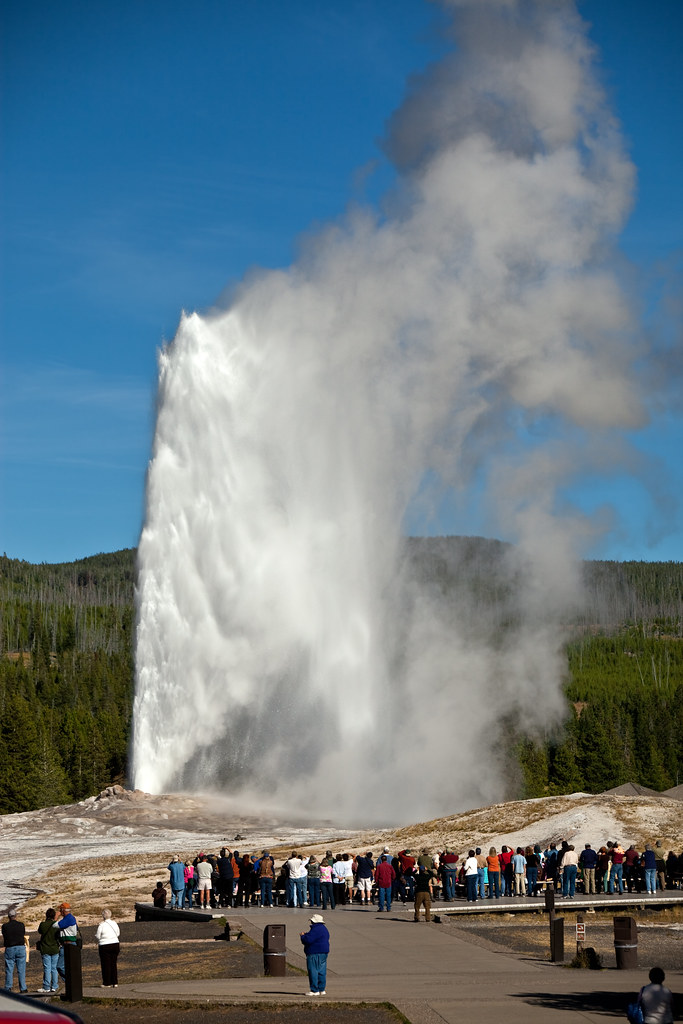
One of those geyser basins is the Upper Geyser Basin, which contains the world-famous Old Faithful – the first geyser in the park to receive a name. It’s faithful, for sure, erupting every 44 to 125 minutes, 365 days a year. The reliability of Old Faithful can be attributed to the fact that it’s not connected to any other thermal features of the Upper Geyser Basin.
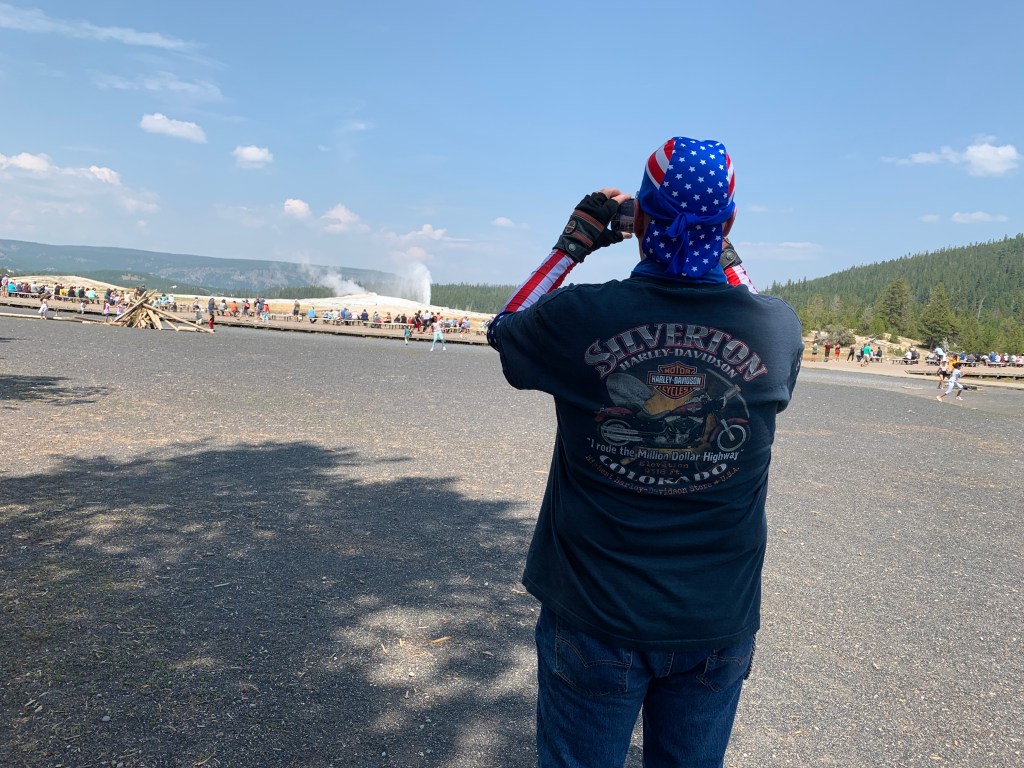
Each eruption shoots up to 8,400 gallons of boiling water to a height of up to 185 feet. The eruptions generally last from a minute and a-half to 15 minutes. It’s a great show.
Old Faithful is one of nearly 500 geysers in Yellowstone – the greatest concentration of geysers in the world. Old Faithful is one of six geysers that park rangers can predict; its eruption pattern is so reliable that early developers built special viewing areas, lodging and concessions for visitors to watch eruptions.
***
We leave Old Faithful after its most recent eruption, and continue east on Grand Loop Road, which takes us to the West Thumb of Yellowstone Lake.
West Thumb is an arm of Yellowstone Lake. It’s home to the West Thumb Geyser Basin, formed by a large volcanic explosion about 150,000 years ago.
The resulting collapsed volcano, called a caldera, later filled with water, forming an extension of Yellowstone Lake. That extension is known as the West Thumb, which is about the same size as another famous volcanic caldera, Crater Lake in Oregon.
From West Thumb, we continue south, past Lewis Lake – named after Meriwether Lewis, commander of the Lewis and Clark Expedition. Ten miles down the road, we leave Yellowstone National Park at the park’s south entrance, and follow the Snake River.
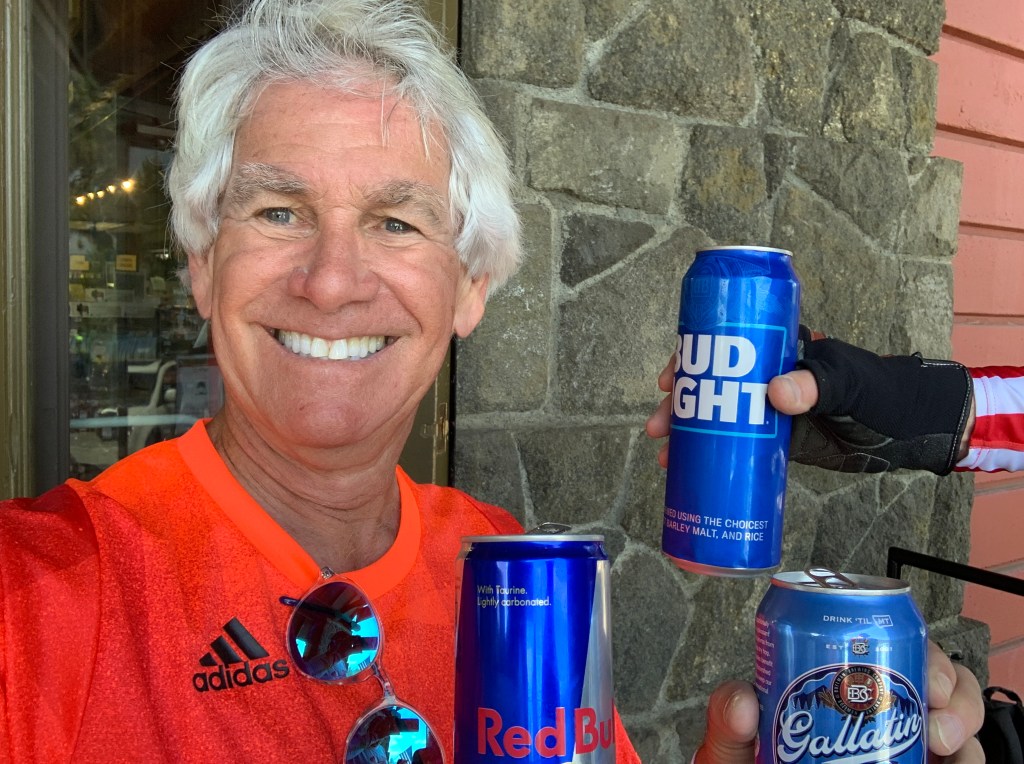
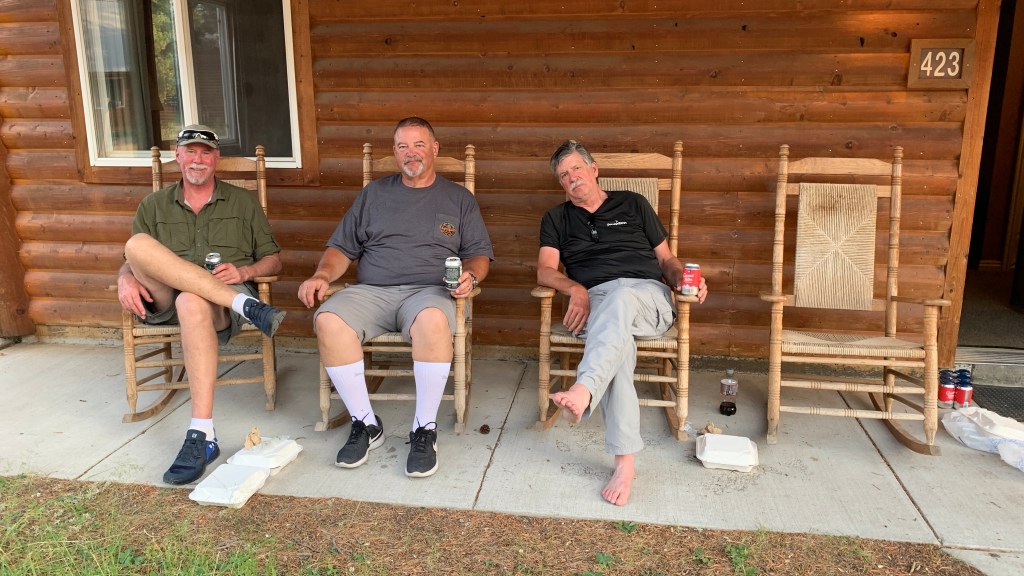
We are again on the John D. Rockefeller Jr. Parkway, which takes us the remaining two miles to tonight’s destination: Headwaters Lodge at Flagg Ranch. It’s actually just outside Yellowstone National Park, between Yellowstone and Grand Teton National Park.
Tonight’s lodging is only a few miles from where we were a week ago, when we visited Jackson Lake, riding up from Afton, Wyoming – home of the elk antler arch.
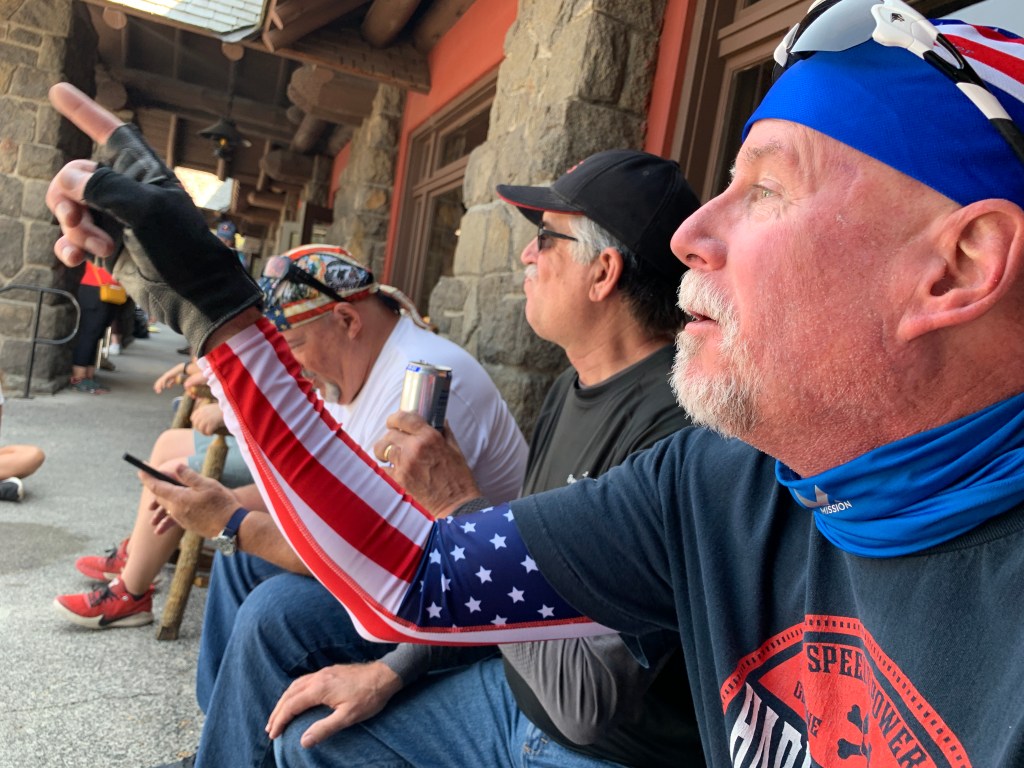
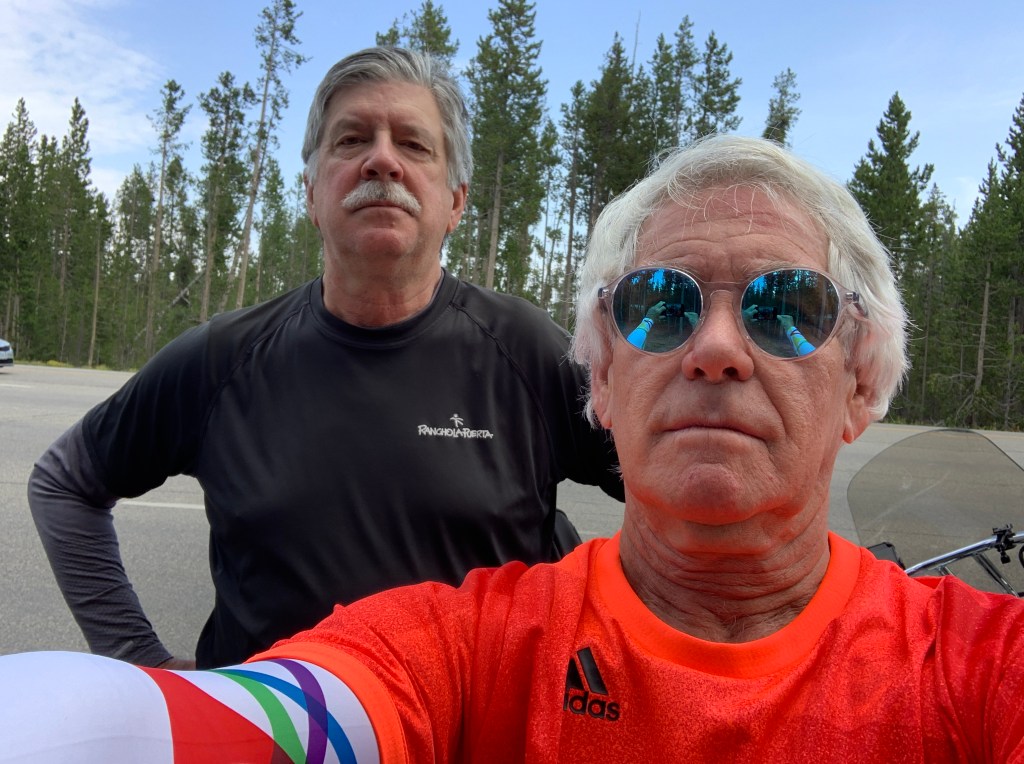
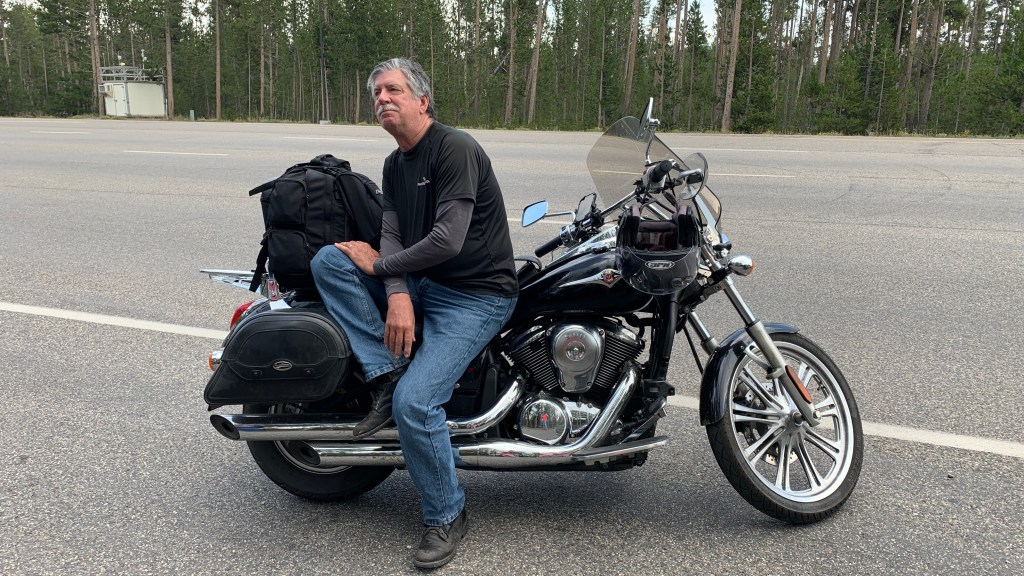
We park our bikes outside the lodge, after a 160-mile ride – the shortest of our trip – and call it a day.
***
Day Nine Summary: 160 miles. Big skies, Old Faithful, a bison resurgence.
Click here to see today’s complete route from Belgrade, Montana, to Yellowstone National Park, Wyoming.
Today’s fun facts, favorite foods, funky place names and famous folks:
Montana fun fact: Montana holds the world record for the greatest temperature change in 24 hours. On January 14-15, 1972, the temperature went from -54°F to 49°F, a whopping 103 degree change. This happened in Loma, a tiny town (population 85) in central Montana, whose only claim to fame is this temperature variation.
Wyoming fun fact: Wyoming may be landlocked, but it’s still home to dozens of islands. There are 32 named islands within the state’s borders, most of which are located in Green River, Yellowstone Lake, and Jackson Lake.
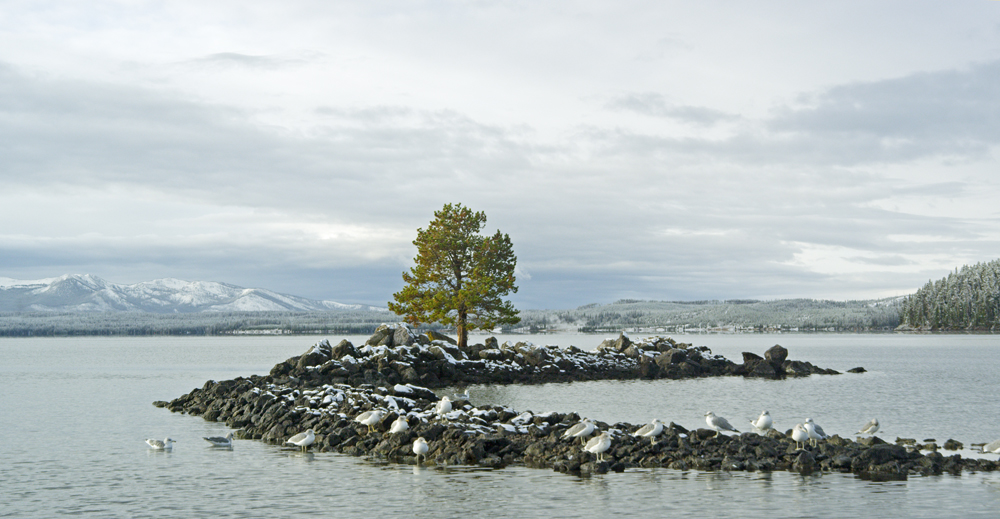
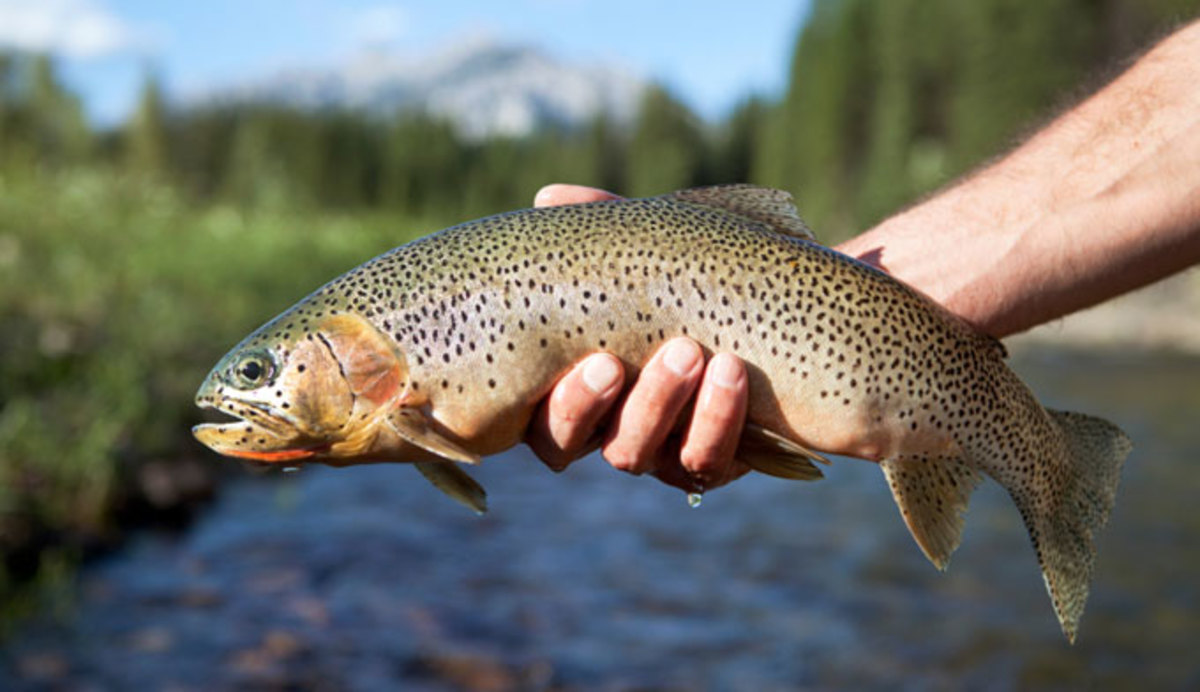
Montana favorite food: Blackspotted cutthroat trout is the official state fish of Montana. Also called westslope cutthroat trout and Yellowstone cutthroat trout, the fish are native to Montana. The average size of these fish is 6 to 16 inches, depending on habitat, but they rarely exceed 18 inches in length. Most are catch-and-release; eat at your own risk.
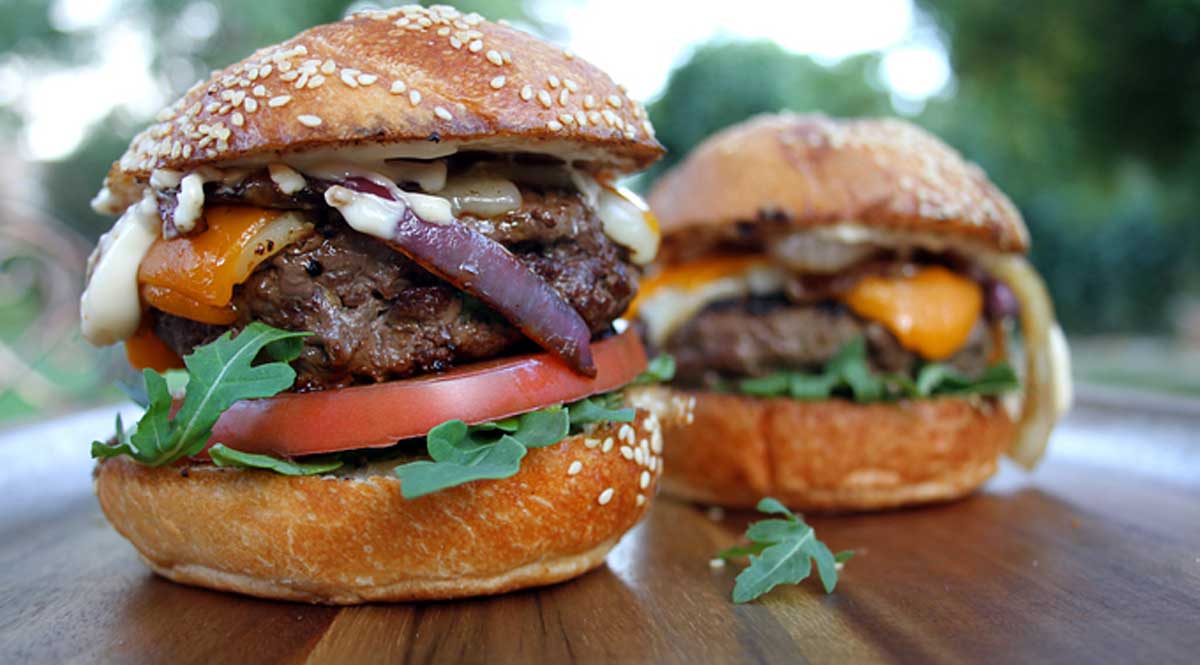
Wyoming favorite food: You can seldom go wrong with an elk burger in Wyoming. Elk is best cooked medium rare. To do that, the internal temperature of the elk burger should be less than 140 degrees F. Before you serve the burger, it should immerse in its juices for 10 to 15 minutes. For a tasty elk burger, try Snake River Brewing in Jackson, or the Mangy Moose Steakhouse in Teton Village.
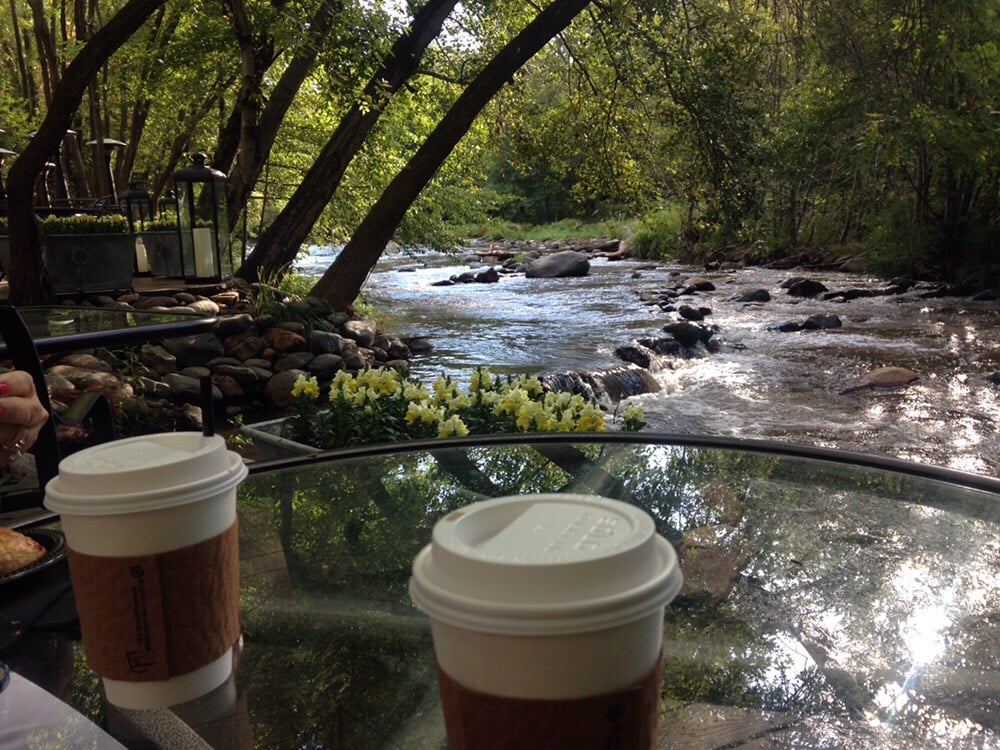
Montana funky place name: Coffee Creek is an unincorporated community in Fergus County, in north central Montana, about 50 miles east of Great Falls. The town was named after the creek, which got its name because its waters were a dark, coffee-brown color.
Wyoming funky place name: Bar Nunn was named for the town’s founder, Ronnie Nunn, it was built in the 1950s on the runways of Casper’s original airport, Wardwell Field, near Casper, Wyoming. The town’s streets are former runways at the abandoned airfield.
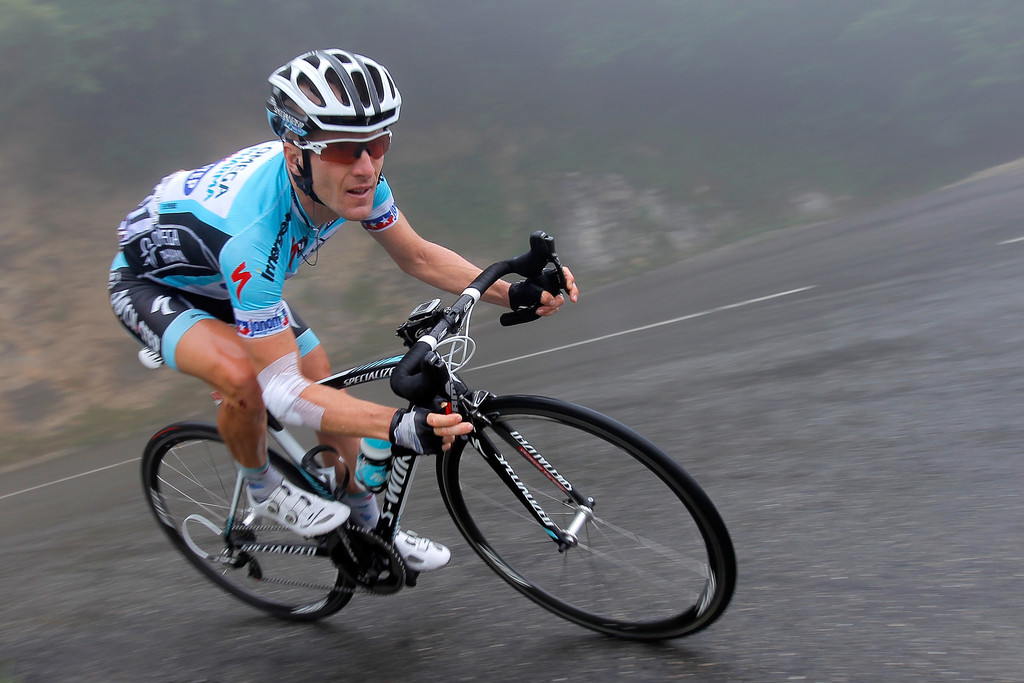
Montana famous folk: Former professional road racing cyclist Levi Leipheimer grew up in Butte. He is a two-time US national champion and a bronze medalist in the time trial at the 2008 Beijing Summer Olympics. Leipheimer, like so many other riders, was caught up in the doping scandals of the Lance Armstrong era. Today at age 47, he lives in Santa Rosa, California.
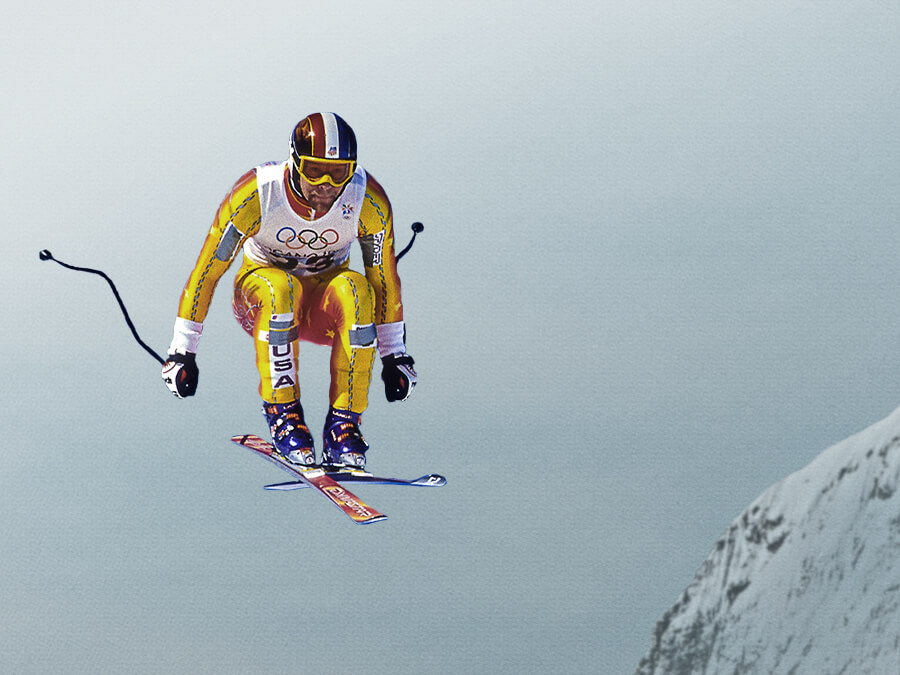
Wyoming famous folk: Former World Cup ski racer Tommy Moe lives in Jackson Hole, though he has a Montana connection as well. He was raised in Missoula, Montana and learned to race at Big Mountain, near Whitefish. Moe won gold and silver medals in the 1994 Winter Olympics at Lillehammer, Norway. He was a specialist in the speed events of downhill and super G. Now 51 years old, Moe works as a mountain ambassador at the Jackson Hole ski area. He also owns, operates and guides at a heli-ski lodge in Alaska.
Sturgis, anyone?
Vroom.
A look ahead @ tomorrow: Summer skiing.
 Riding With Gary