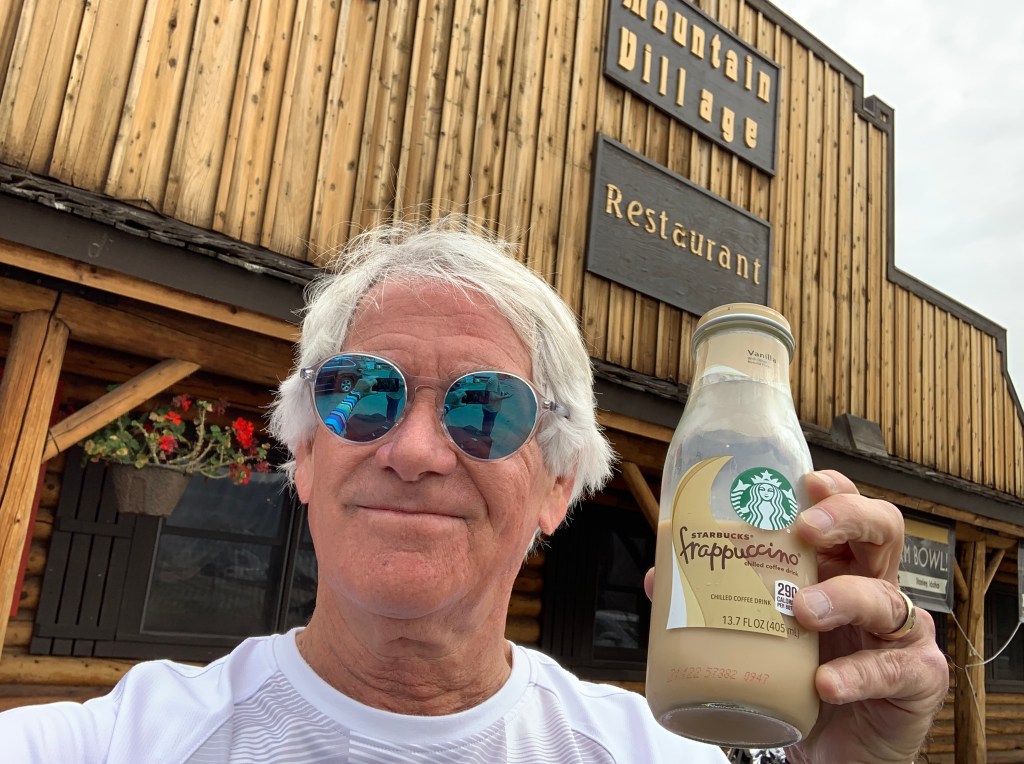
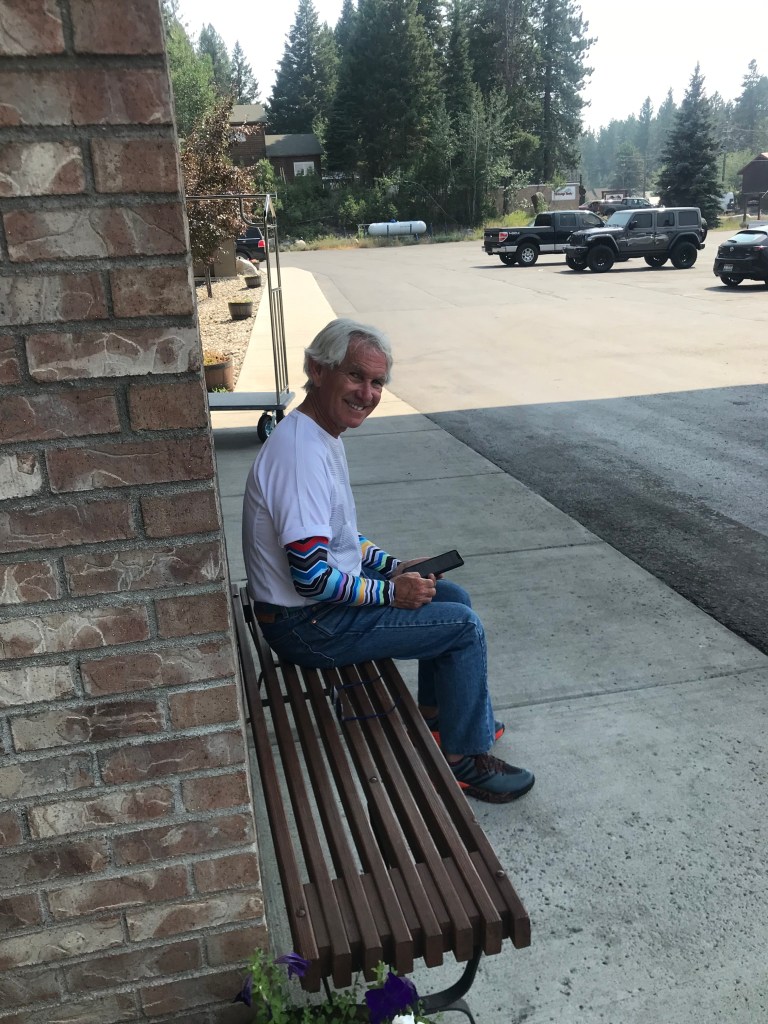
An unexpected treat got my day off to a special start.
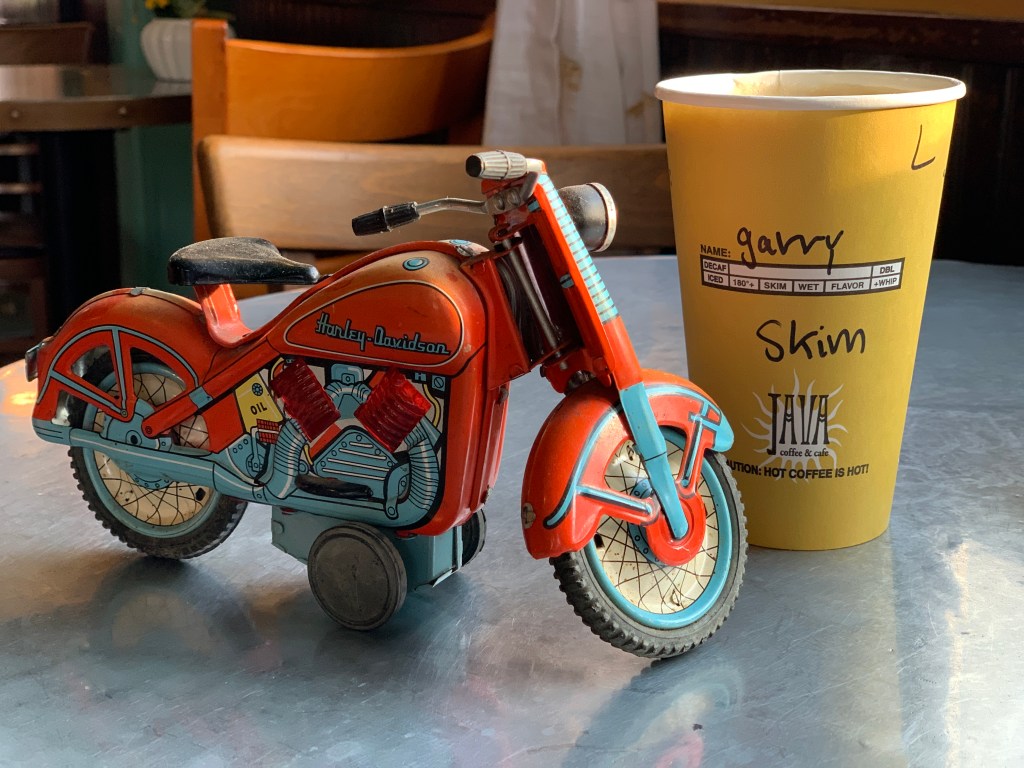
What are the chances of bumping into River Valley Ranch neighbors, hundreds of miles from home?
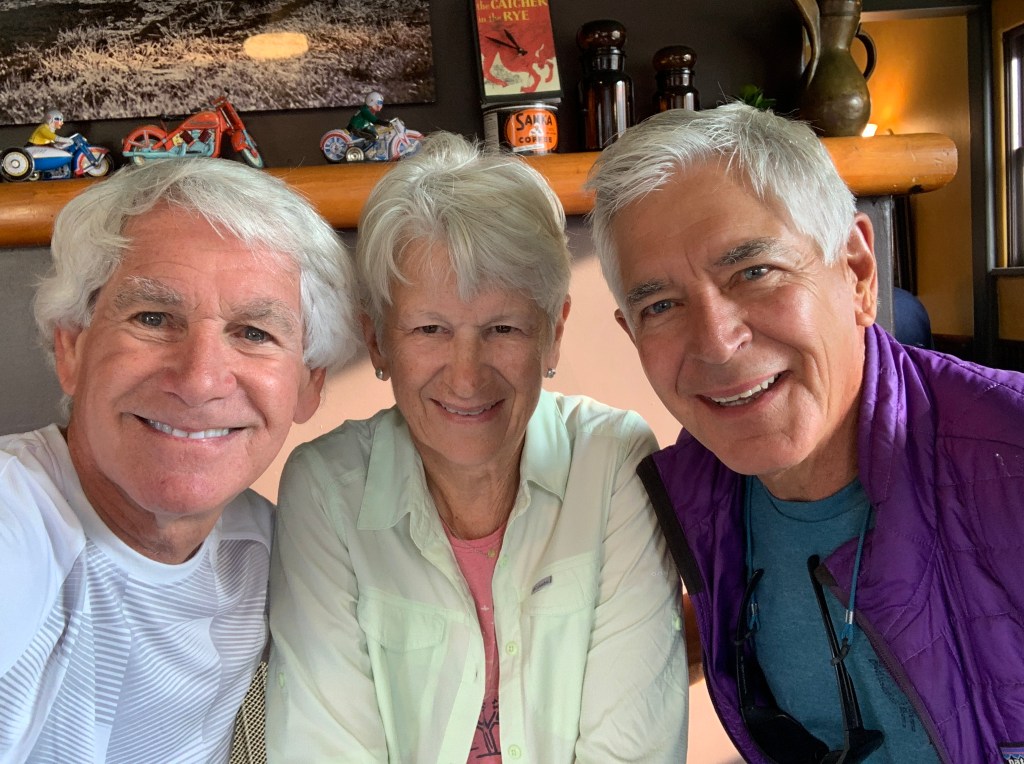
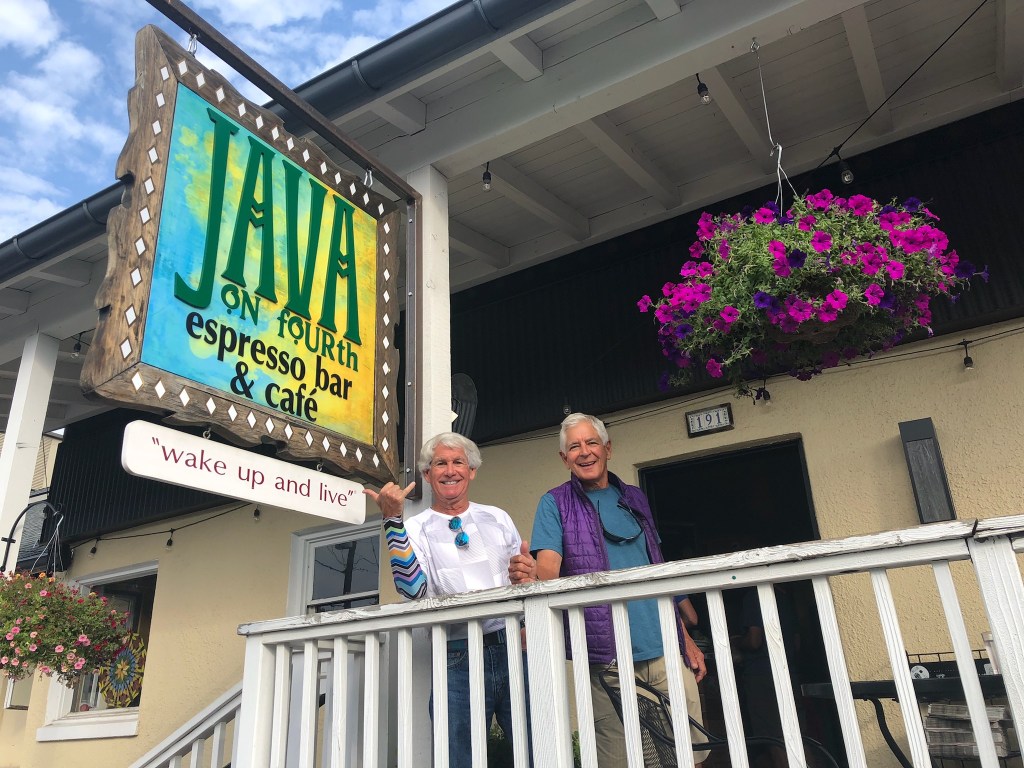
Turns out they’re heading the same direction we are: Stanley, Idaho.
***
The road north from Ketchum, Idaho Highway 75, will take us to Galena Summit, 30 miles away. We’re on the Sawtooth Scenic Byway, which has the distinction of being the 100th National Forest Scenic Byway.
We’re riding through the Boulder Mountains, in the Sawtooth National Recreation Area – three quarters of a million acres of scenic mountain country.
The Sawtooth Scenic Highway delivers us to Galena Summit, on our way to the town of Stanley.
The Sawtooth Range, covering 678 square miles, is part of the Rocky Mountains in central Idaho. There are 57 peaks over 10,000 feet in the Sawtooth Range, about the same number of peaks in Colorado that are over 14,000 feet.
On our way to Galena Summit, 23 miles from Ketchum, we encounter the famous Galena Lodge. It’s a county-owned treasure with cross-country skiing in the winter, and hiking, mountain biking and horseback riding in the summer.
In Galena, we begin riding along the Big Wood River, and follow it to Galena Summit, 8,701 feet above sea level. It’s the highest summit in the Northwest US.
Galena is a mineral, lead sulfide. It’s the most important ore of lead and an important source of silver. The name Galena means “calm,” and it’s become an occasional 21stcentury name for newborn girls. Galena is the female version of the more typically male name, Galen.
***
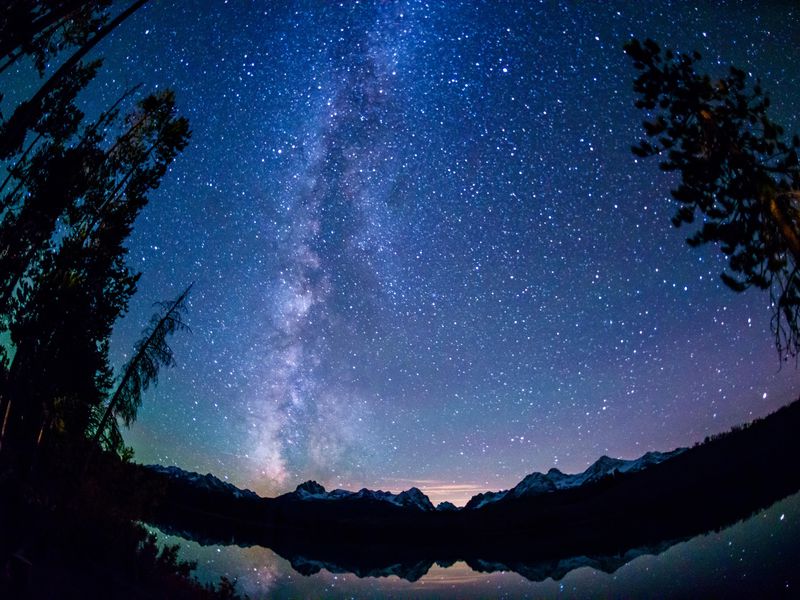
Galena Summit is a great place to view the night sky. It’s part of the Central Idaho Dark Sky Reserve, the first and so far, the only International Dark Sky Reserve in the US. At 1,416 square miles, it’s the third-largest such reserve in the world. Only wilderness areas in Quebec, Canada, and New Zealand’s South Island are larger.
Since its establishment in 2017, tourists flock to the reserve to get views of the stars. Here, the skies are the clearest you’ll find in the continental US. The International Dark Sky Association has given the Idaho reserve a gold-tier designation, meaning the inhabited areas at the periphery of the wilderness have appropriate laws in place to cut down light emissions.
One of those inhabited areas is the Ketchum / Sun Valley metropolis, where the high altitude and low humidity help to make for a brilliant night sky. Ketchum was the first city in Idaho to have a dark sky ordinance, which requires urban lighting fixtures to divert light down rather than up, and limits the time frames for holiday lights. Those who violate this law can be fined up to $300 for a “light trespass,” classified as a misdemeanor. (Carbondale, Colorado, where I live, has similar dark sky restrictions. Our lighting is in compliance!)
We stayed in Ketchum last night, and somehow forgot to gaze into the night sky. Damn! Sunset here at Galena Summit is 9:05 pm tonight, so we can have a do-over by pulling over, waiting about 12 hours, and enjoying the beautiful night sky. We chose to ride on.
***
Descending from Galena Summit, we continue through the Sawtooth Mountains, named for their jagged peaks, reminiscent of serrated teeth on a saw.
In 32 miles, we’ll be in Stanley, which calls itself the “Trailhead to Idaho Adventure.” Stanley, with a population of less than 100, is in Custer County (7C license plates). It’s said to be the geographical center of Idaho’s population.
Fur trappers from the Hudson’s Bay Company discovered the Stanley Basin in the 1820s. The area was named after Captain John Stanley, a Civil War veteran, who led a party of prospectors through the area in the early 1860s.
To call this area wild is an understatement.
Just north of Stanley is the largest contiguous wilderness area in the US, outside of Alaska, the Frank Church River of No Return Wilderness. Congress created the 2,366,757-acre wilderness area in 1980. Four years later, it was re-named, in honor of US Senator Frank Church, less than four weeks before his death at age 59. Church represented Idaho in the Senate from 1957 to 1981. His 1974 election was the last time a Democrat won a Senate seat in this flaming red state.
There are more acres of road-less wilderness in this region than anywhere else in the lower 48 states.
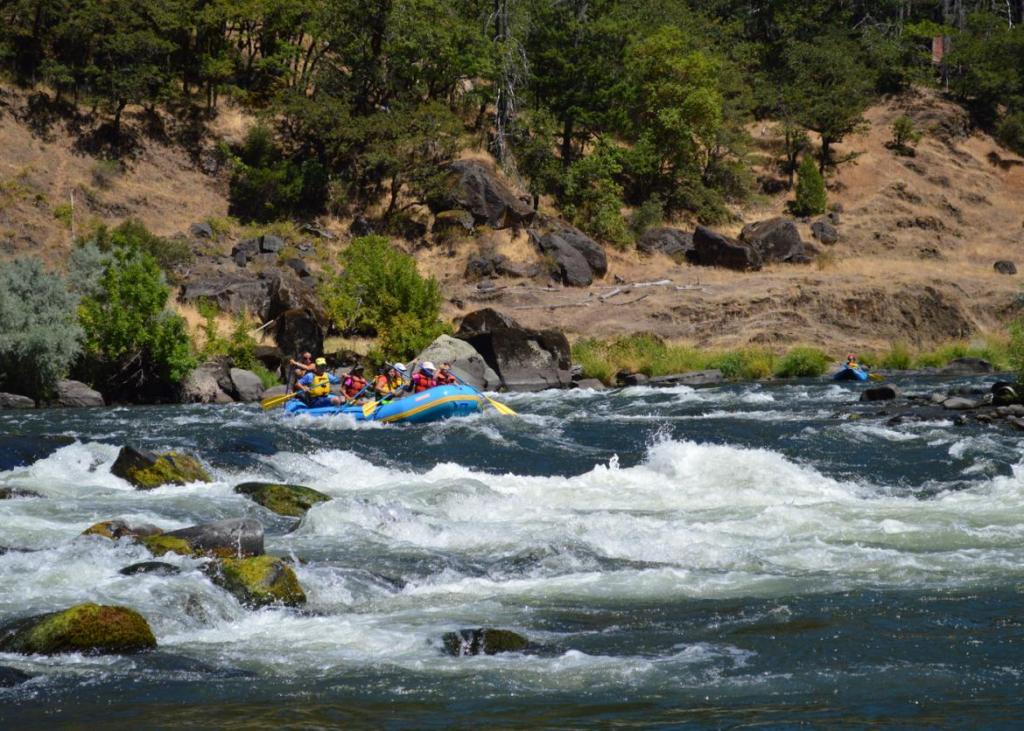
Much of the ride toward Stanley is along the Salmon River. The Salmon flows for 425 miles through central Idaho. It’s one of the largest rivers in the continental US without a single dam on its mainstem.
In August 1805, just after crossing the Continental Divide, Lewis and Clark ventured down the Salmon River, but found it too rough to safely navigate. They found its swift current and large rapids more than a little challenging.
Lewis and Clark had trouble with the river, but their difficulties were unrelated to the Salmon’s nickname: “The River of No Return.” In the mid-1800s, when the gold rush flooded Idaho, miners arrived in droves. There was a growing demand for lumber.
Due to the wild nature of the river, simply floating logs from one location to another was out of the question. Men with the familiarity of flatboats and their ability to transport huge loads, created the sweep scow – a large wooden boat with a flat bottom, ranging in length from 26 to 38 feet.
Each boat was hand built out of green lumber, then loaded with logs and driven downstream from Salmon City. Upon arrival in Shoup, Riggins or Lewiston, the load of lumber was sold, the sweep scow was dismantled and then also sold as lumber. And that’s why the Salmon was called “The River of No Return” – because once dismantled and sold, the boats would never return.
***
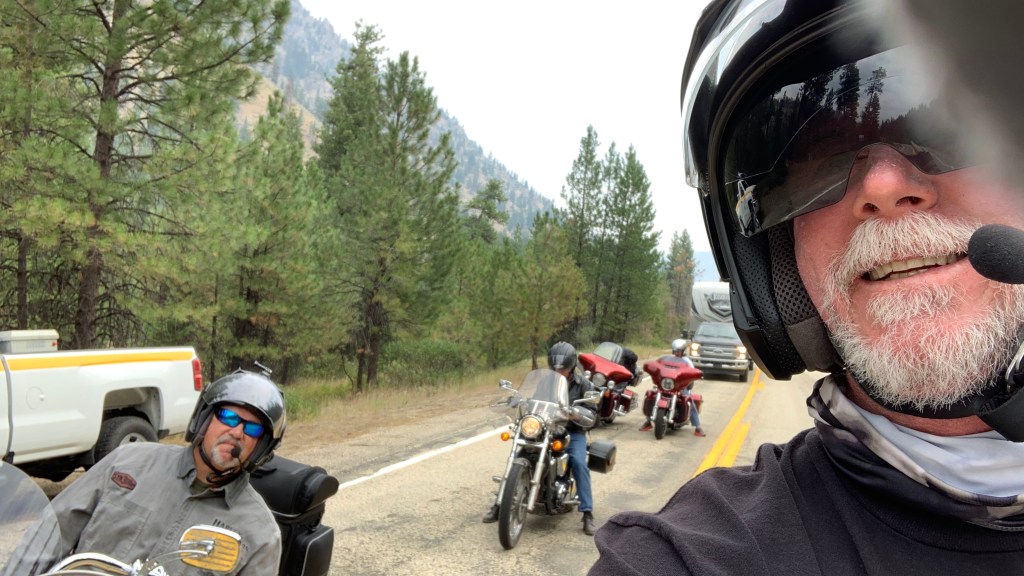
We turn west in Stanley on Idaho Highway 21, which will take us to Lowman, about 58 miles away. Lowman is in Boise County (6B license plates), nestled along the South Fork of the Payette River.
To get to Lowman, we ride the Ponderosa Pine Scenic Byway, which winds through the Boise National Forest, taking travelers through wide open spaces. More than two-thirds of the state is public lands, and almost a tenth of its acreage is federally protected wilderness.
In Lowman, we turn off of Highway 21 and head west on Banks Lowman Road. It follows the course of the Payette River, until arriving at the town of Banks, 34 miles later. The North and South forks of the Payette River meet at Banks, which makes it a popular destination for people rafting or kayaking on the Payette River.
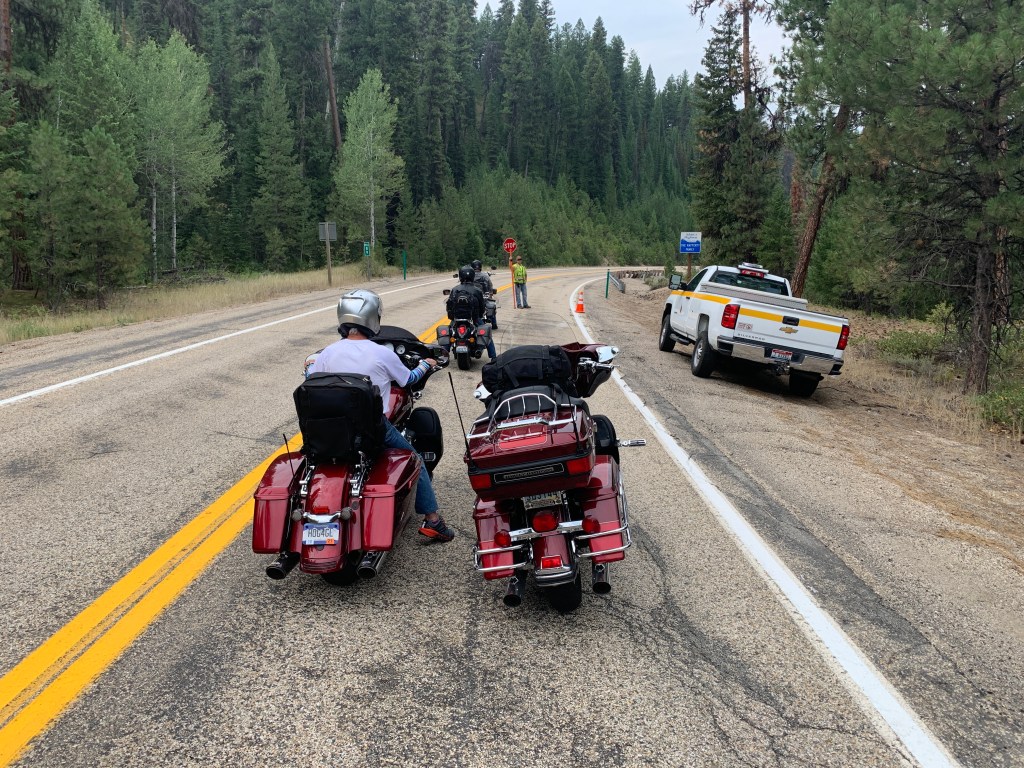
The Banks Lowman Road is so named, because it starts in Lowman, and ends in Banks. Here, we turn onto Idaho Highway 55, the Payette River Scenic Byway. We head northward, following the North Fork of the Payette River on its winding course to Lake Cascade, into which it empties.
Here, on Highway 55, I reached 100 miles an hour on a motorcycle for the first and last time — on my 1976 Honda CB550F. C’mon, it was the ’70s; I was young and reckless. Now I’m old and ride like Grandma, which is key to my survival.
The Payette River is named for Francois Payette, a Canadian fur trapper who was one of the first people of European descent to explore the Payette River Basin in the early 1800s. Before Payette and other Europeans began exploring western Idaho, the river’s watershed was originally settled by the Shoshone, Nez Perce, Paiute, and Bannock Indian tribes.
About halfway to Lake Cascade, we pass through Smiths Ferry, population about 75. In 1891, the settlement was named after Jim Smith, who owned a ferry that transported livestock across the Payette River to their summer pasture.
Smith’s Ferry, home to the Cougar Mountain Lodge, is in Valley County (V license plates).
We roll past Lake Cascade, a 47-square mile reservoir that has perch, trout, smallmouth bass, Kokanee salmon and Coho salmon fishing in the summer, and an ice fishing season in the winter.
***
Donnelly, population 150, is at the far northern end of Lake Cascade. From here, it’s only 14 miles to tonight’s destination: McCall.
McCall, established by Thomas and Louisa McCall in 1889, is an all-season tourist town on the southern shore of Payette Lake. It was originally a logging community whose last sawmill closed in 1977, when I lived in the Boise area, about 100 miles away.
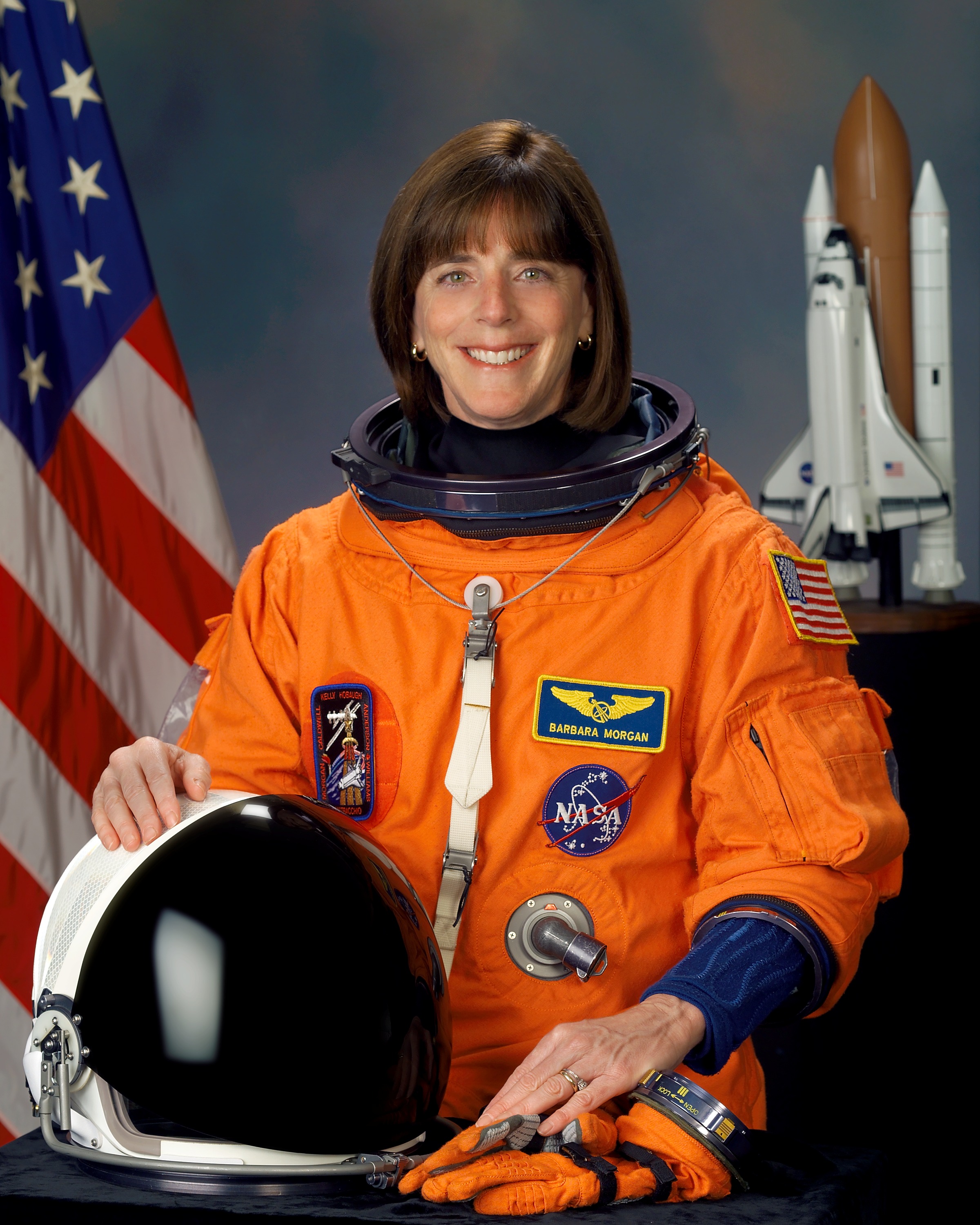
At that time, McCall’s most famous resident was a teacher at McCall-Donnelly Elementary School. Barbara Morgan, a Stanford graduate who taught there for more than 20 years, is a former NASA astronaut. She participated in the Teacher in Space Program, and was a backup to Christa McAuliffe for the 1986 ill-fated Space Shuttle Challenger mission.
After McAuliffe’s death, Morgan trained as a Mission Specialist, and eventually flew on the Space Shuttle Endeavour in August 2007. She was in space on that mission for 12 days, 17 hours and 53 minutes. The mission was an assembly-and-repair trip to the International Space Station.
Morgan operated the shuttle’s and space station’s robotic arms to install hardware on the space station. In addition, schoolchildren enjoyed the lessons she conducted while in space.
Morgan, who will turn 70 in November, left the astronaut corps in 2008 to become a Distinguished Educator in Residence at Boise State University, a position created specifically for her that entailed a dual appointment to the Colleges of Engineering and Education.
Her legacy in McCall: Barbara Morgan Elementary School, which has been enriching kids’ lives there since 2008.
***
McCall, population around 3,000, is home to an annual winter carnival, inspired by the Payette Lake Winter Games, first held in 1924. It has one of the highest average snowfalls in the state. You can imagine it must be a good place for skiing.
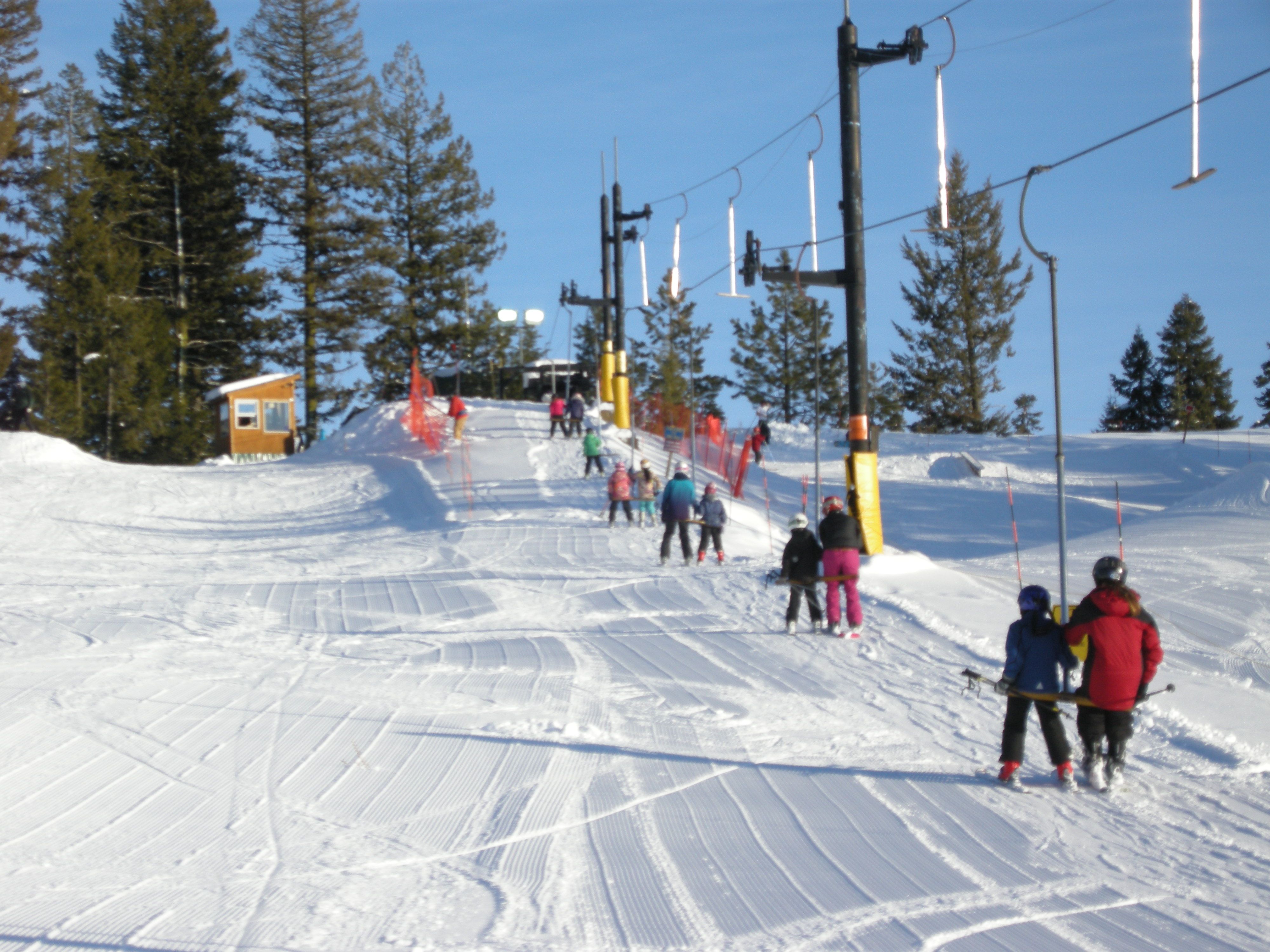
Just two miles from town is Little Ski Hill, opened in 1937 as a diversion for local forest workers. Little Ski Hill was the second ski area in Idaho, after Sun Valley, which opened a year earlier. The appropriately named Little Ski Hill has one T-bar lift, and a vertical drop of 405 feet.
Nine miles from McCall is Brundage Mountain, whose five chairlifts and 1,800-foot vertical rise make it more than a little ski hill.
It’s about 80 degrees as we pull into McCall, not exactly optimal skiing temperatures.
So we park the bikes, explore town, and prepare for dinner.
***
Day Five Summary: 217 miles. Steaming to Stanley, tracing Lewis and Clark’s steps, a teacher in space.
Click here to see today’s complete route from Ketchum, Idaho, to McCall, Idaho.
Today’s fun facts, favorite foods, funky place names and famous folks:
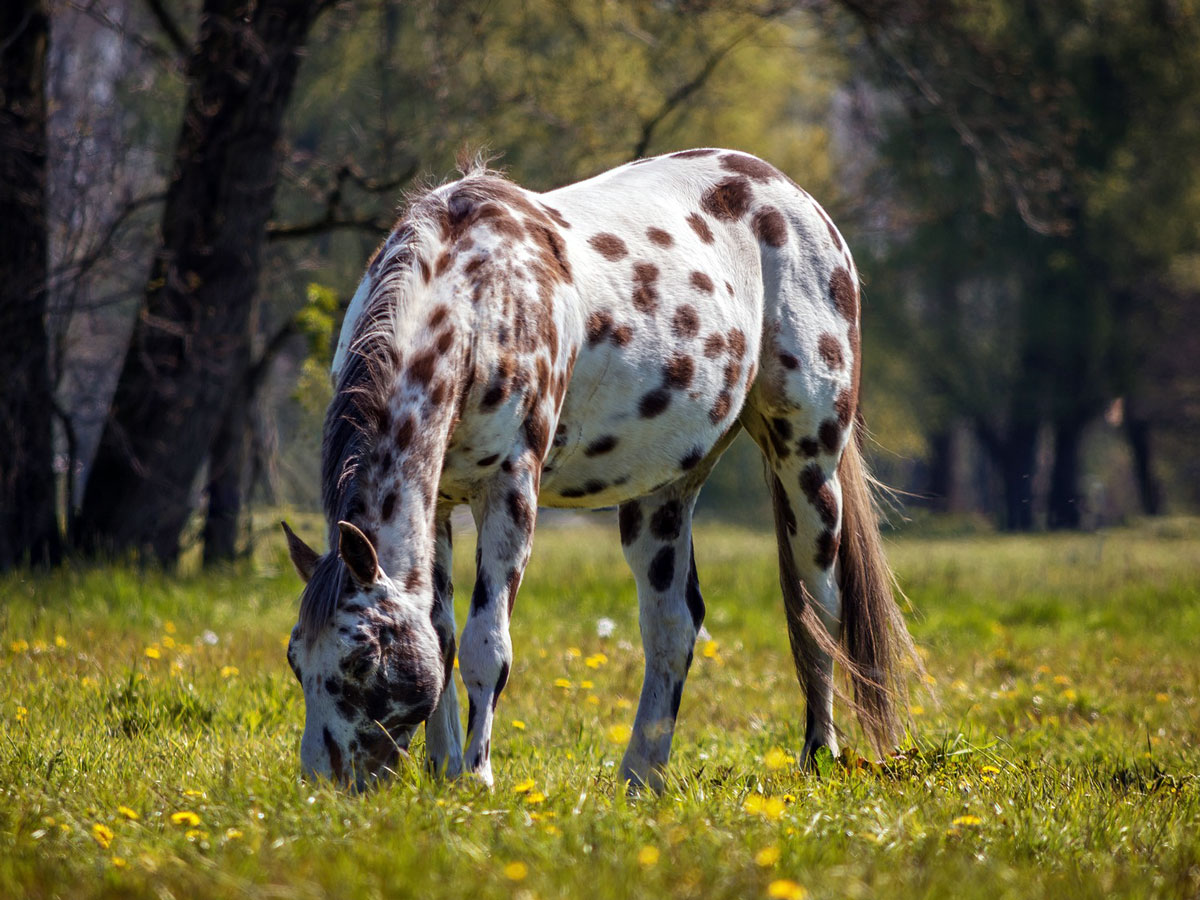
Idaho fun fact: The state horse, the Appaloosa, was brought over by the Spaniards in the 1700s and embraced by the Nez Perce tribe. Settlers called the spotted equines “Palouse horses” after the Palouse River, and the name stuck. Gradually a Palouse horse evolved into Apalouse horse, and eventually Appaloosa.
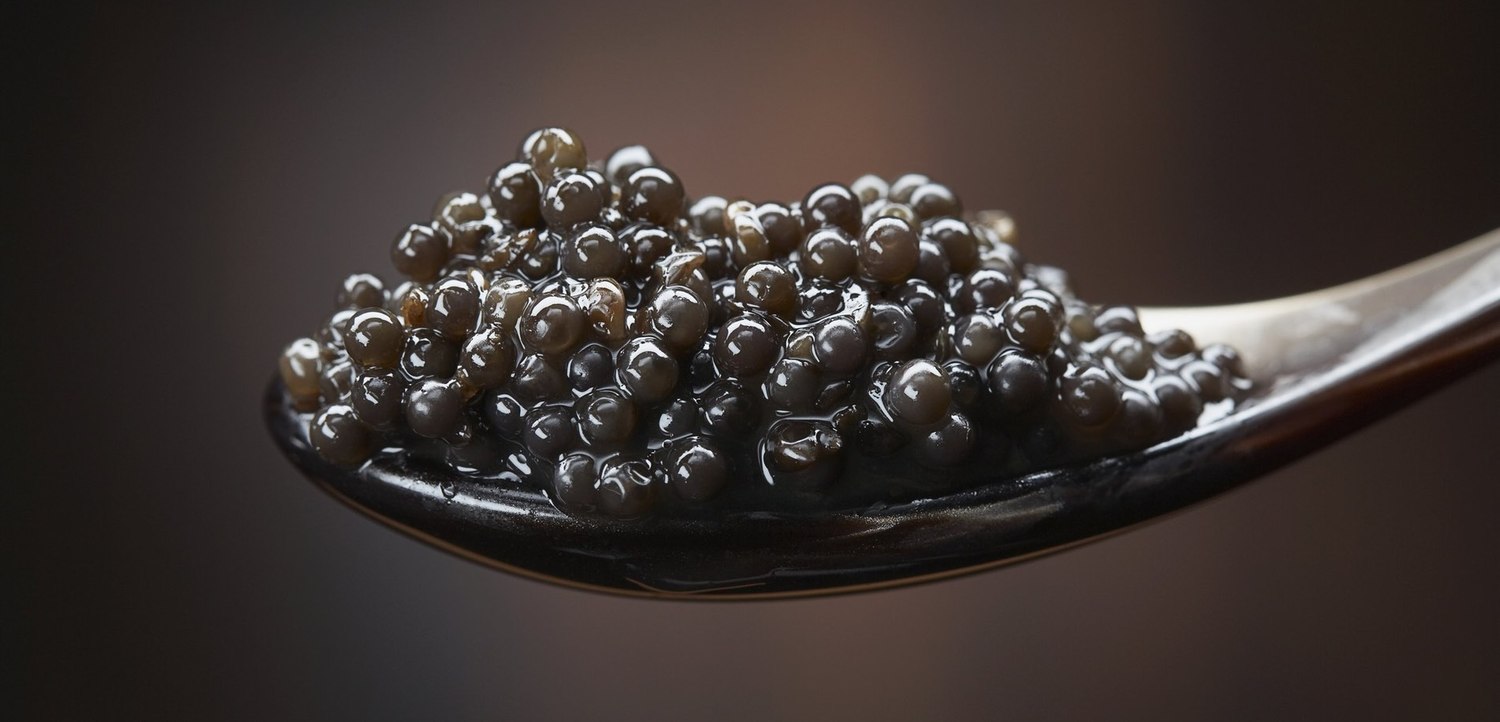
Idaho favorite food: You haven’t lived until you’ve tried Idaho sturgeon caviar. Raised near Hagerman, Idaho, by Fish Breeders of Idaho, these dinosaur-like fish produce the phenomenal Idaho White Sturgeon Caviar known as The American Beluga. These fish eggs don’t come cheap; the retail price often reaches $125 per ounce. If you’re having a party and want to go big, you can get a four-ounce tin for $380 from the Seattle Caviar Company.
Idaho funky place name: The community of Dickshooter is in southwest Idaho, in Owyhee County. Dickshooter is not a typo. The place is named for Dick Shooter, a pioneer settler. It’s on many lists of “unusual place names.” To get there, go to Nampa, about 20 miles west of Boise, drive south for four hours, and there it is, in the middle of the Owyhee Desert. Truly in the middle of nowhere.
Idaho famous folk: Former Alaska Governor Sarah Palin was born in Sandpoint, Idaho, and attended the University of Idaho in Moscow. Before entering politics, she worked as a sportscaster for KTUU-TV in Anchorage, for my friend John Tracy. Anything you’ve read or heard about Palin is pretty much John’s fault, including Senator John McCain’s selection of her as a 1998 running mate. Today, at age 57, Palin is a divorced mother of five who apparently still lives in Alaska and has thankfully faded into well-deserved obscurity.

Sturgis, anyone?
Vroom.
A look ahead @ tomorrow: Come See For Yourself.
 Riding With Gary
Thanks for the shout out Gary, but I assume no responsibility for Ms Palin. She quit after one weekend sportscast. A pattern she would come to repeat. Randy texted yesterday, which was the first I realized the Posse was back on the road. Found all the posts and have been catching up. Looks like a great ride so far. Please wear a mask in Sturgis. Nobody else will, but please do. Donna and I are now in Camden, Maine, midway through week 8 of our own 22 state tour. My best to the boys and love to Ms. Sarah. The good Sarah!
LikeLike
Dude! Where are you?
LikeLike
Keep looking for you and you’re nowhere to be found. WTFO?
LikeLike