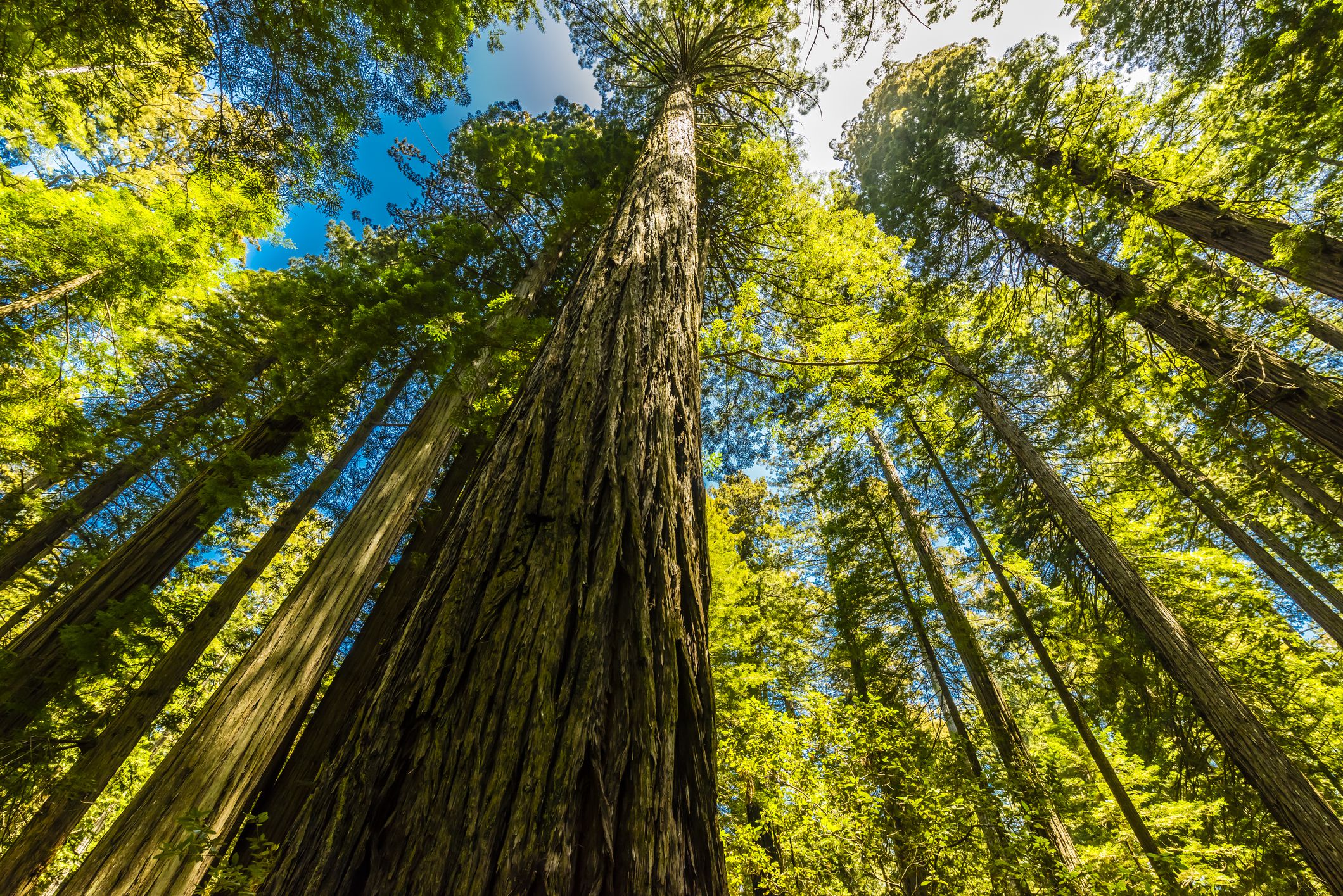
Today is about trees.
Big trees.
Thousands upon thousands of huge redwoods, Sitka spruce, Sequoias and more.
***
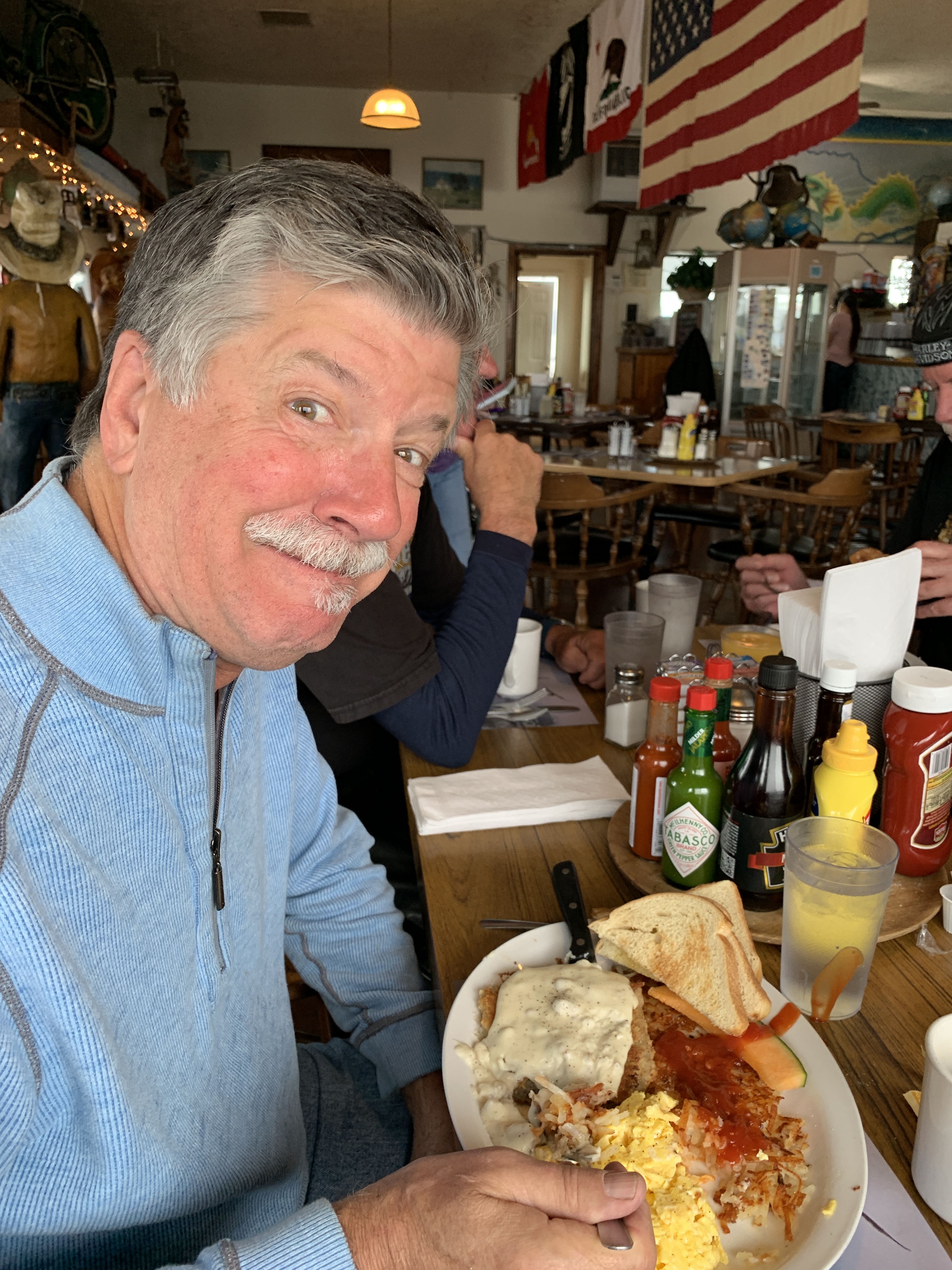
But before we see any trees, we have a goodbye breakfast at the Chart Room restaurant. We’re wishing Randy safe travels as he heads home to Seattle.
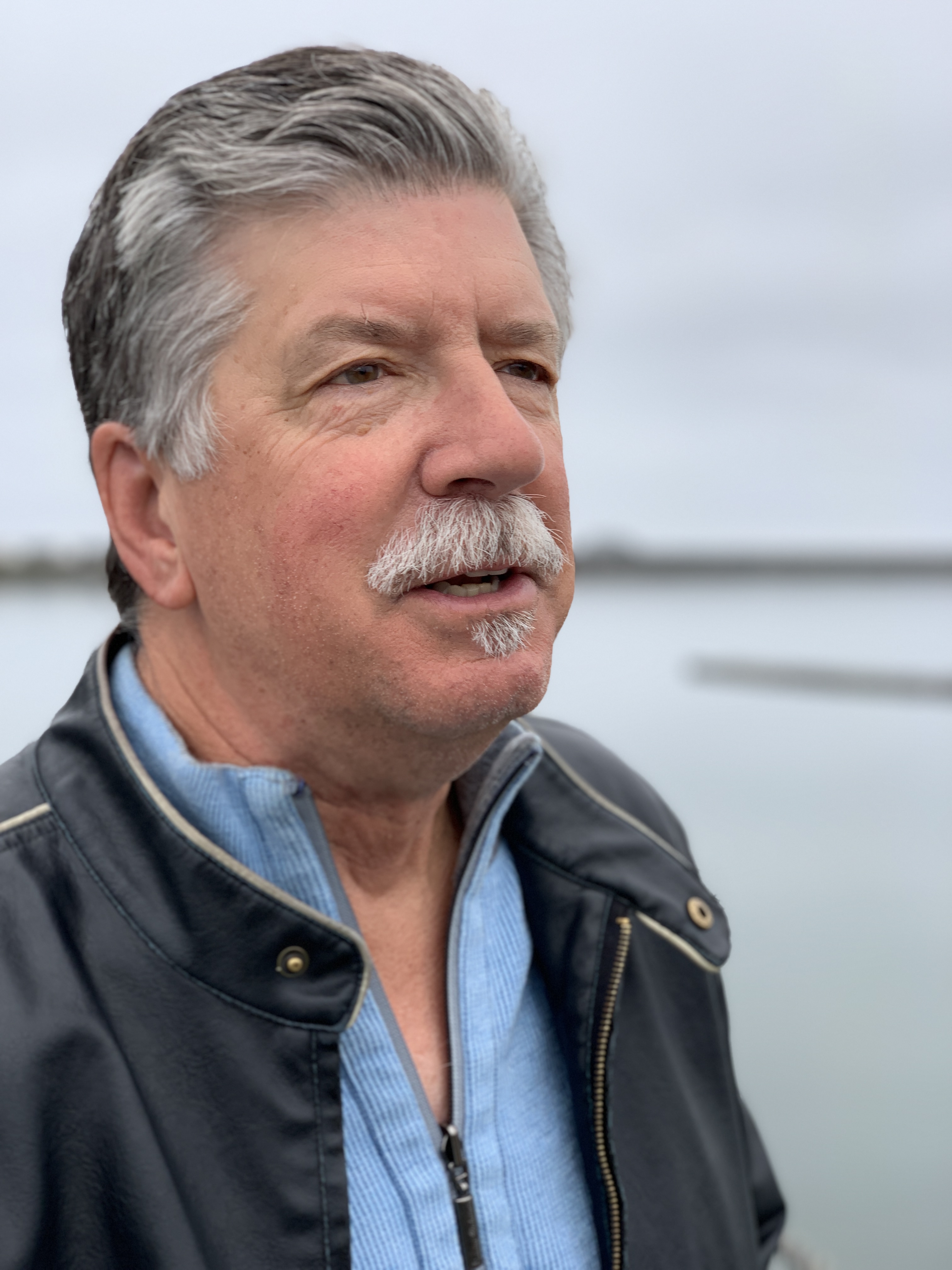
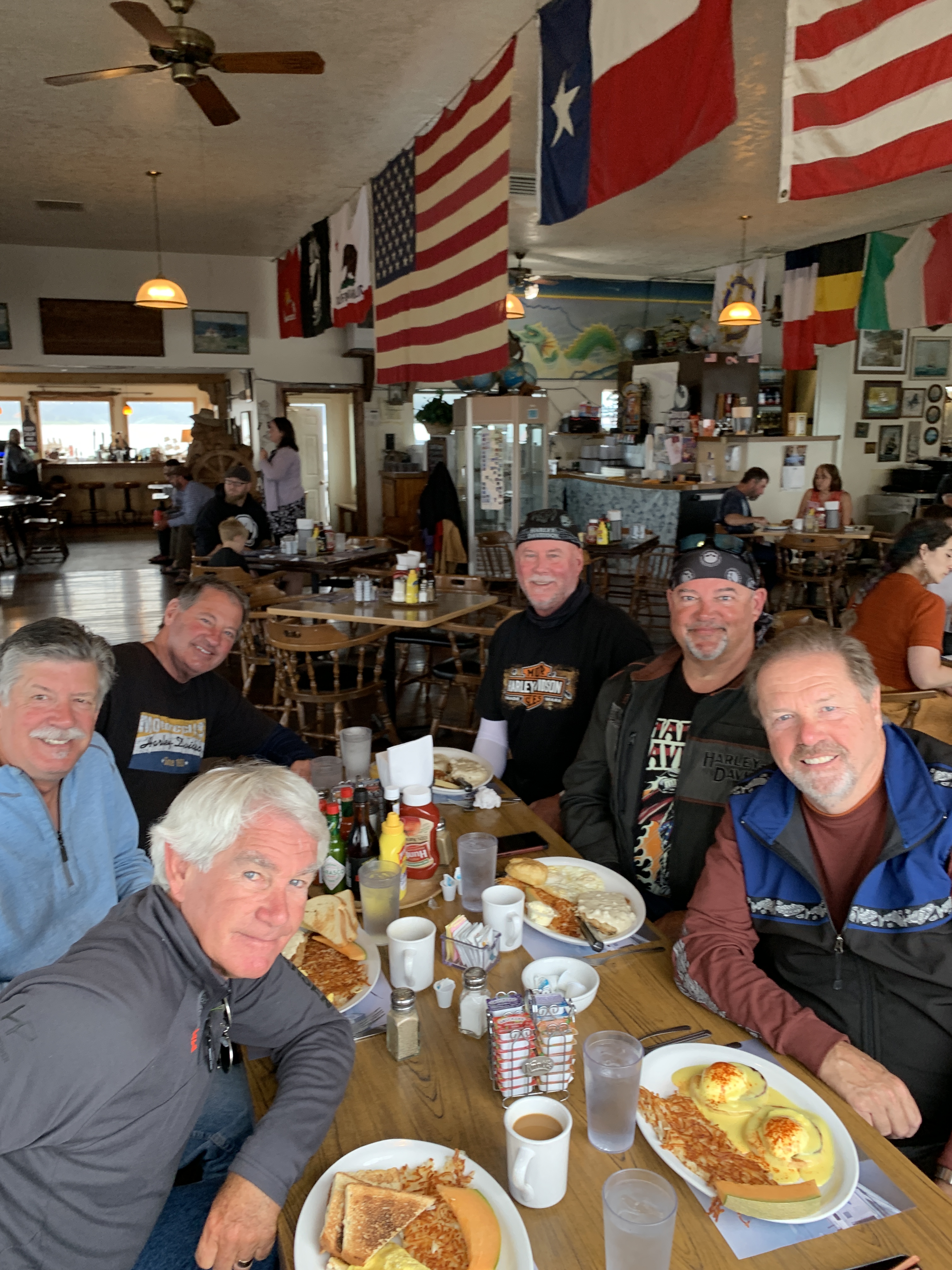
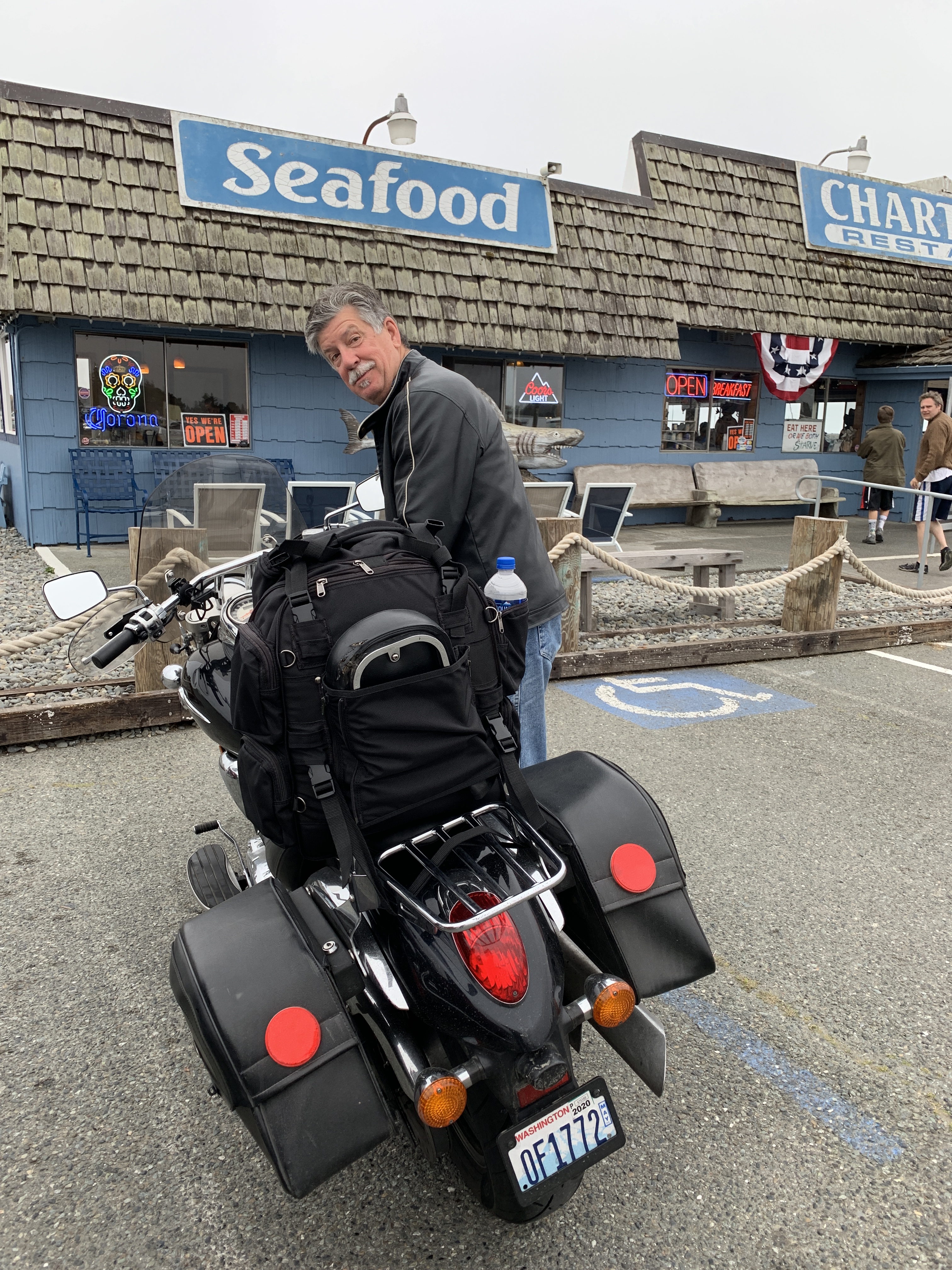
The five of us leave Crescent City on US Highway 101, now called the Redwood Highway. That should be a clue of what’s ahead.
In a few miles, we begin riding through the Del Norte Coast Redwoods State Park. About half the 31,000-acre park is old growth forest of Coast Redwoods. It includes eight miles of wild Pacific Coast shoreline.
Here, tall trees meet the sea.
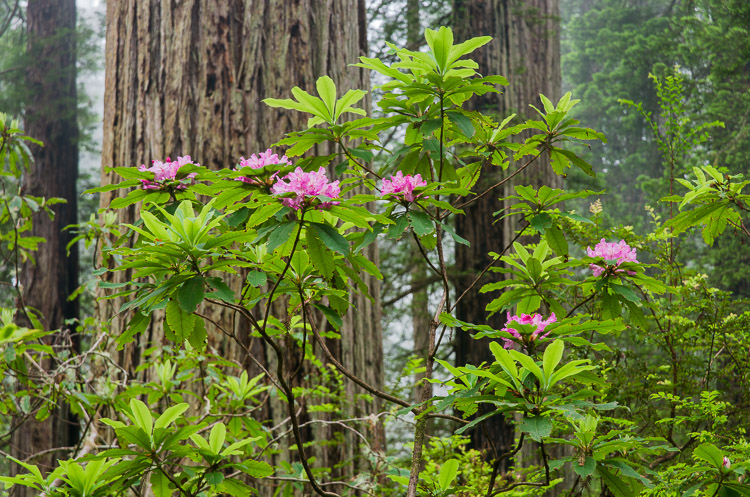
With its often-foggy weather and abundance of rhododendrons, the park is especially photogenic. If you’ve ever seen a picture of huge redwoods in the fog with masses of pink flowers at their bases, it was probably taken here.
The highway takes us to the town of Requa, which lies on the north bank of the Klamath River. Requa is a Yurok word that translates to mouth of the creek.
We cross the Klamath River, and ride south along the eastern edge of the Prairie Creek Redwoods State Park. This 14,000-acre park is a coastal sanctuary for old growth Coast Redwood trees. The park is jointly managed by the California Department of Parks and Recreation, and the National Park Service. Many redwoods in this park reach more than 300 feet in height.
The Prairie Creek Redwoods State Park is part of a complex of several state and national parks along the northern California coast. These combined parks, known as Redwood National Park, contain 139,000 acres of old growth temperate rain forests. Taken together, the parks protect 45 percent of all remaining Coast Redwood old-growth forest.
They are the tallest tree species on Earth.
***
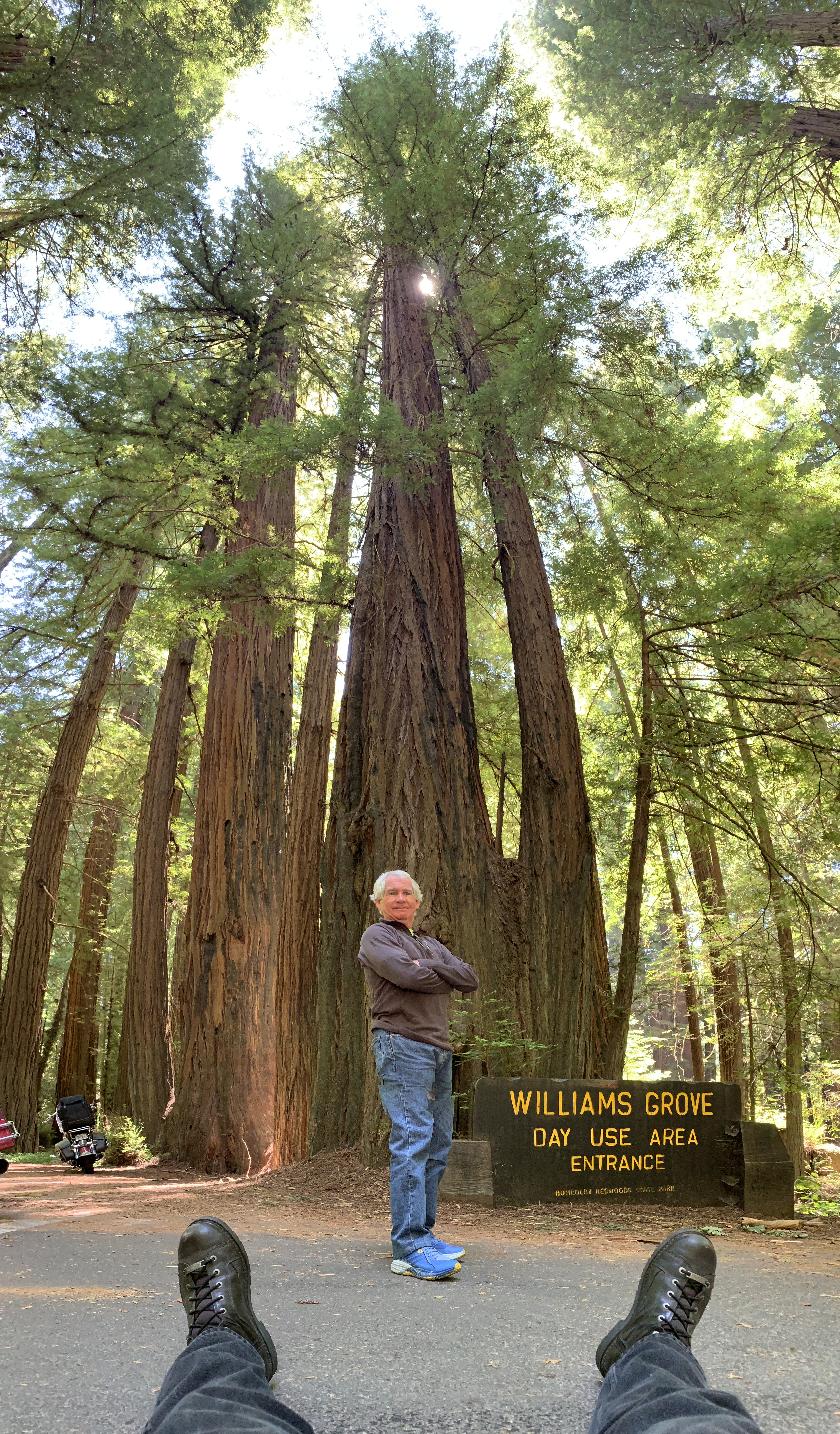
Trees, written by Joyce Kilmer in 1913, is probably the most quoted poem in American history.
It begins:
I think that I shall never see
A poem lovely as a tree.
And it ends:
Poems are made by fools like me,
But only God can make a tree.
That’s something to think about, on this day spent mostly among trees.
***
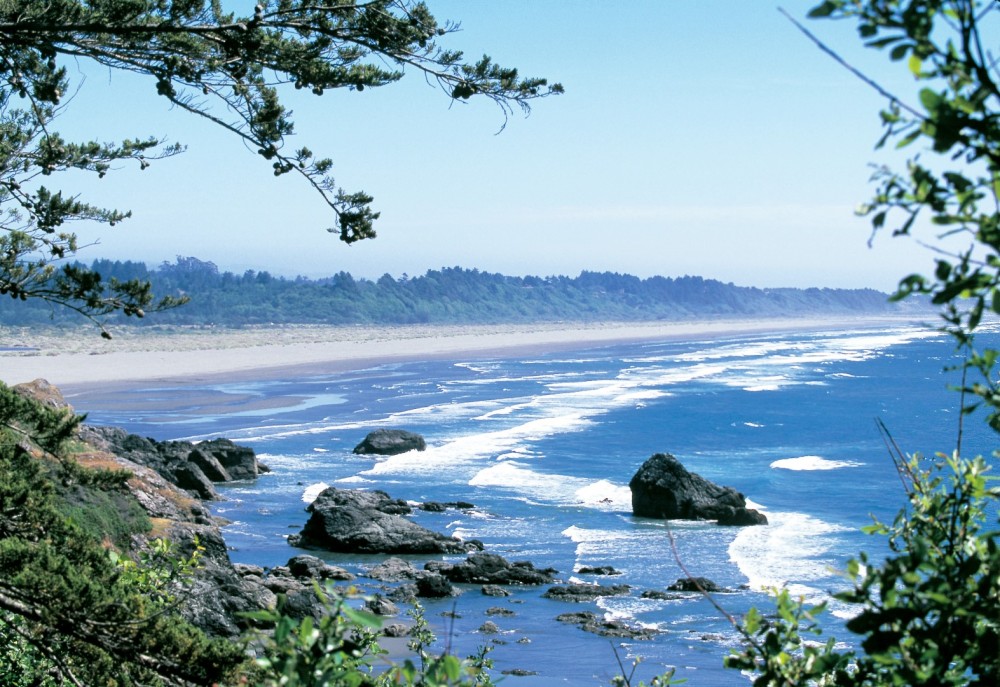
Just west of Orick, the highway again runs along the coast for miles, until reaching Clam Beach, named for the plentiful razor clams you can dig for there. The beach at Clam Beach County Park was named California’s most polluted beach in a 2017 study by an environmental nonprofit. Those clams aren’t sounding so good anymore.
We’re routed slightly inland, around Arcata Bay, as we continue south. Arcata, population 18,000, is the home of Humboldt State University, the northernmost site of the 23-campus California State University system. With a student body equaling nearly half the city’s total population, Arcata is a classic example of a traditional college town.
At the southern end of Arcata Bay is the port city of Eureka, the largest coastal city between San Francisco and Portland. Eureka is California’s state motto. It means: I have found it. Those words were probably intended to refer to the discovery of gold in California.
Humboldt Bay is just south of Eureka. Along with Arcata Bay, Humboldt Bay empties into the Pacific Ocean. In Humboldt Bay, you’ll find a state marine recreational management area, and the Humboldt Bay National Wildlife Refuge.
In 1850, Douglas Ottinger and Hans Buhne entered the bay, naming it Humboldt in honor of the great naturalist and world explorer, Alexander von Humboldt. Von Humboldt was a Prussian polymath — a person of wide-ranging knowledge or learning. He was also a geographer, naturalist, explorer and influential proponent of Romantic philosophy and science.
If you have a resume like that, you get to have stuff named after you.
***
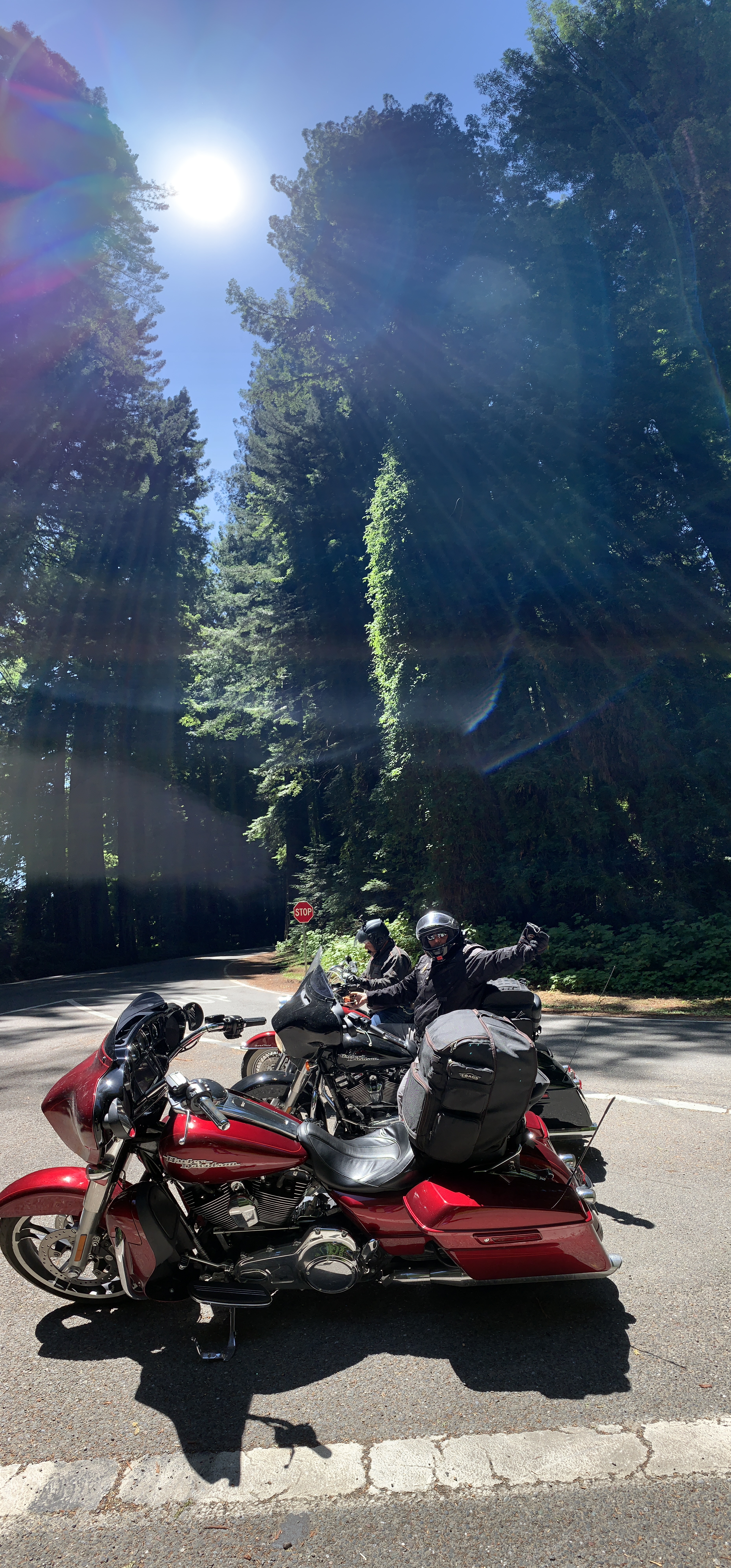
We turn inland for several hours. That’s where the really, really big trees are.
We follow the Eel River, first rolling past Fortuna, known as The Friendly City. A few miles down river is Scotia, a once-booming company town founded by the Pacific Lumber Company. Scotia, originally known as Forestville, became Scotia when it was populated by residents originating from New Brunswick and Nova Scotia, Canada. The name Scotia was chosen by a coin toss; the alternative, on the losing side of the coin toss, was Brunswick.
Scotia is only five miles from the north entrance to the Avenue of the Giants, a 31-mile road that’s easily the most scenic drive in the redwoods. The Avenue of the Giants is 51,222 acres of redwood groves.
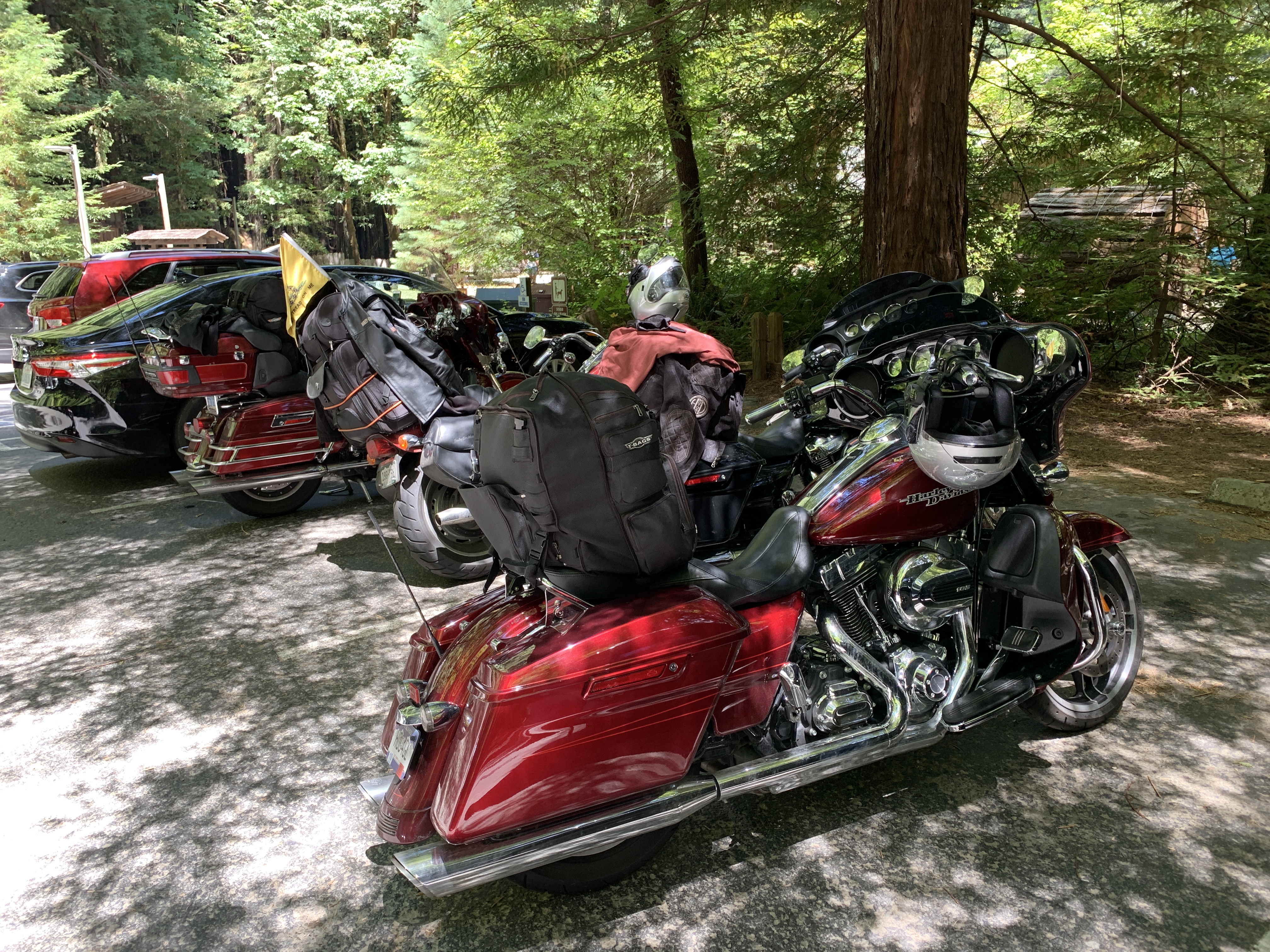
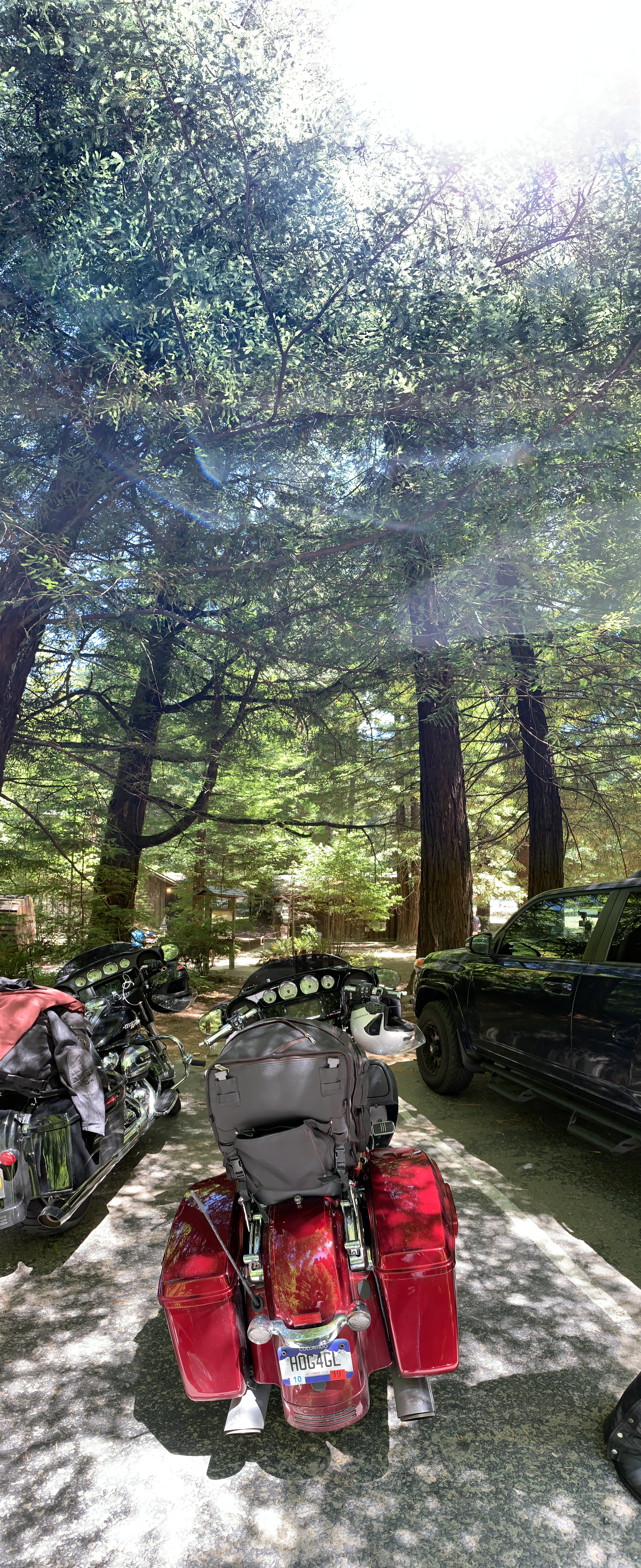
We turn off of Highway 101, and on to California Highway 254, which parallels Highway 101. Highway 254 is called the Avenue of the Giants.
The towering Coast Redwoods on both sides of the road are what give the Avenue of the Giants its name. The redwoods found along the Avenue of the Giants are Coast Redwoods, also called California Redwoods. Sequoia Sempervirens is the official scientific name for the Coast Redwood. The trees grow in a narrow band near the coast of Northern California and Southern Oregon.
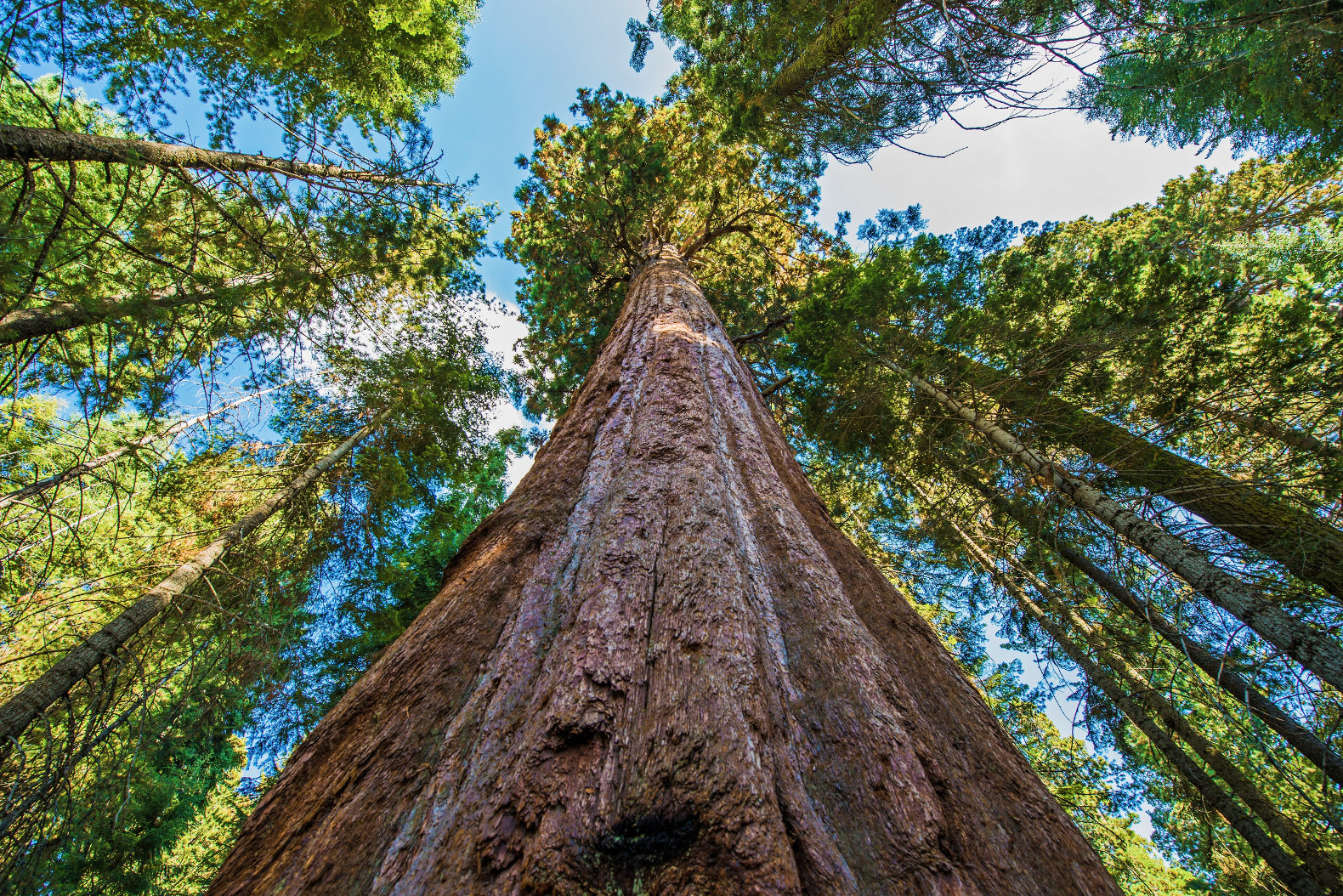
As the tallest trees in the world, Coast Redwoods can grow to be more than 360 feet tall. The big ones have names, like Hyperion — at 379 feet, the tallest known Coast Redwood. That’s higher than the Statue of Liberty, including the pedestal.
The root structure for Coast Redwoods is unusually shallow; their roots grow only 6 to 12 feet deep. But the roots spread out as much as 50 feet around the tree, forming a broad base to hold it steady in high winds, and to gather lots of moisture.
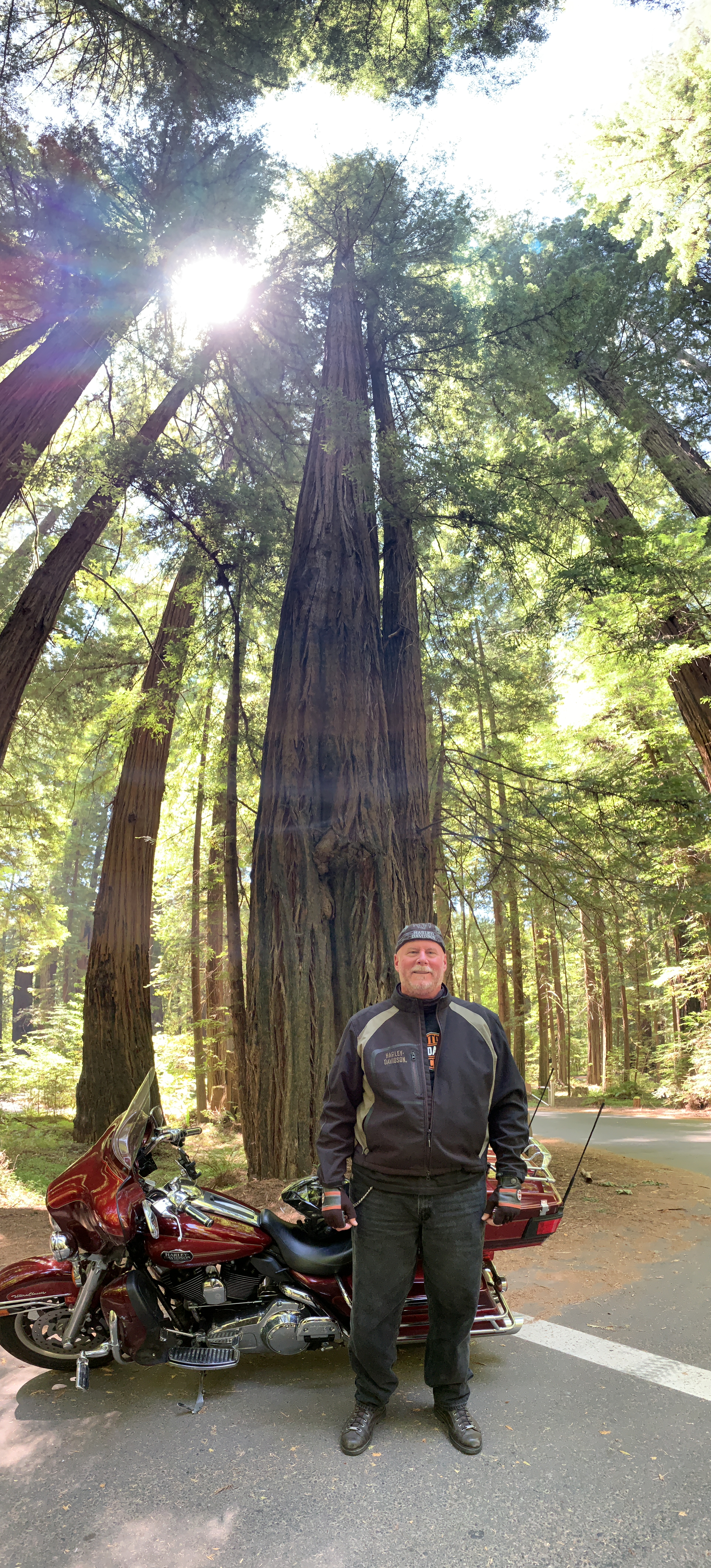
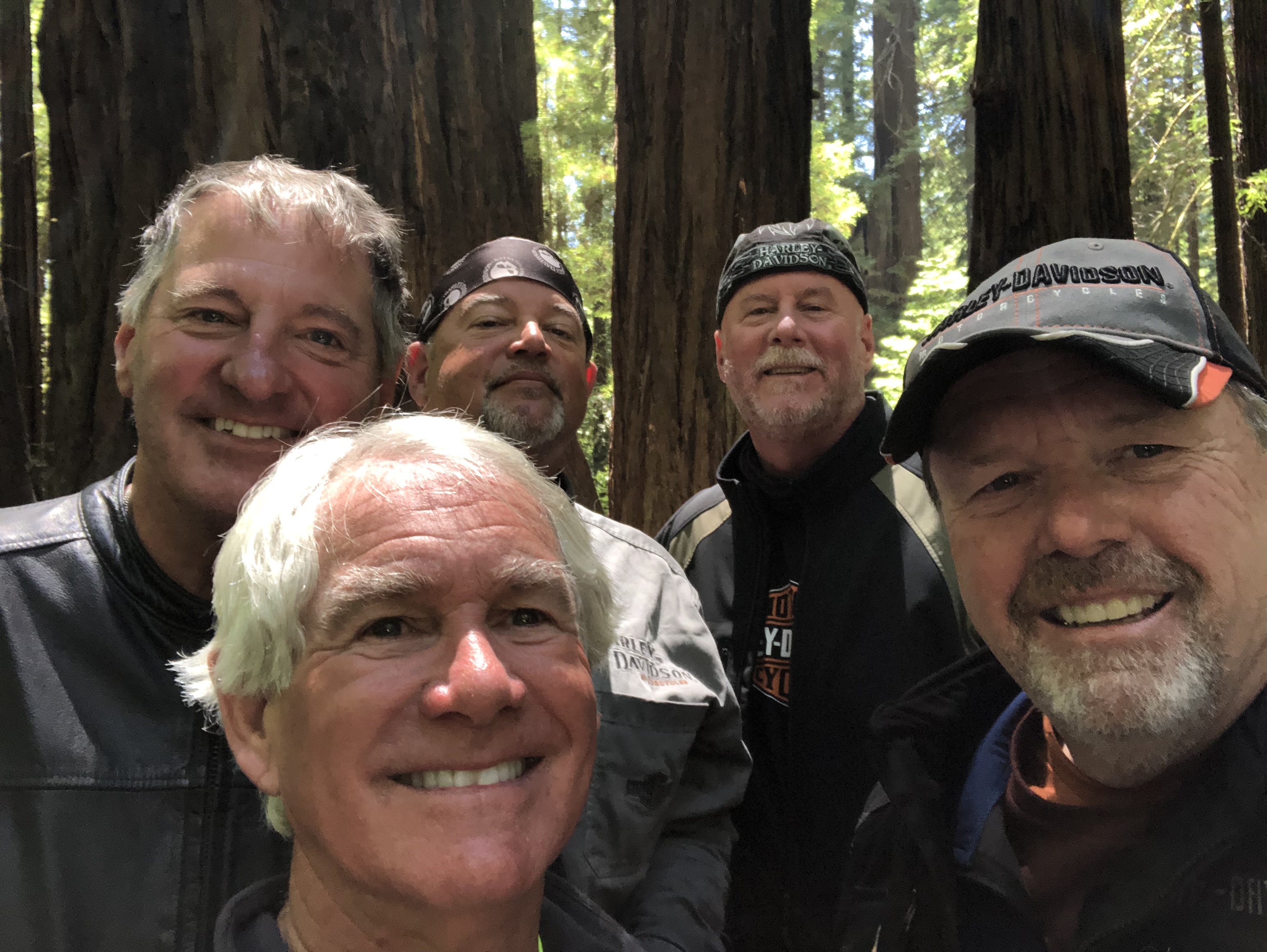
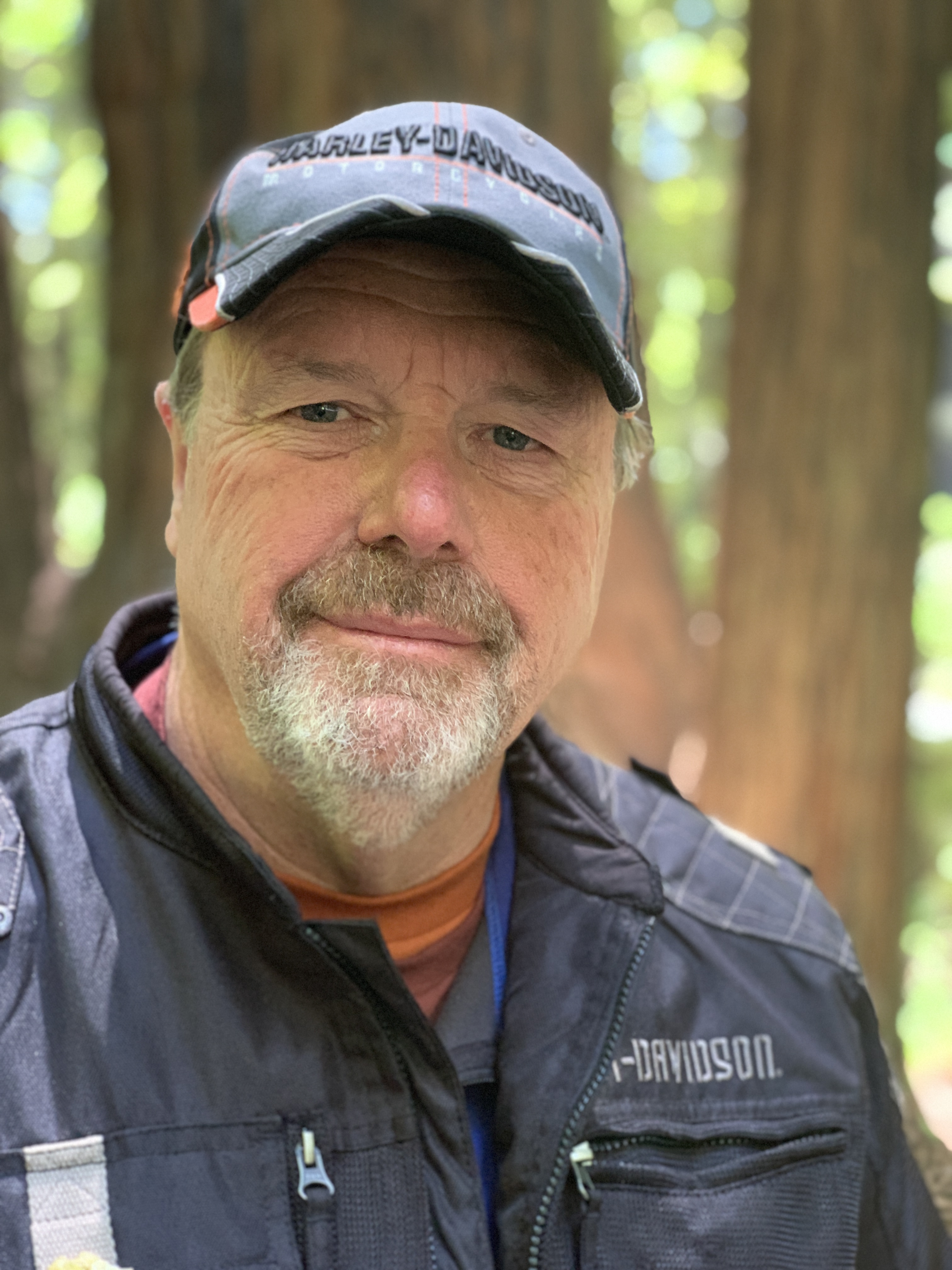
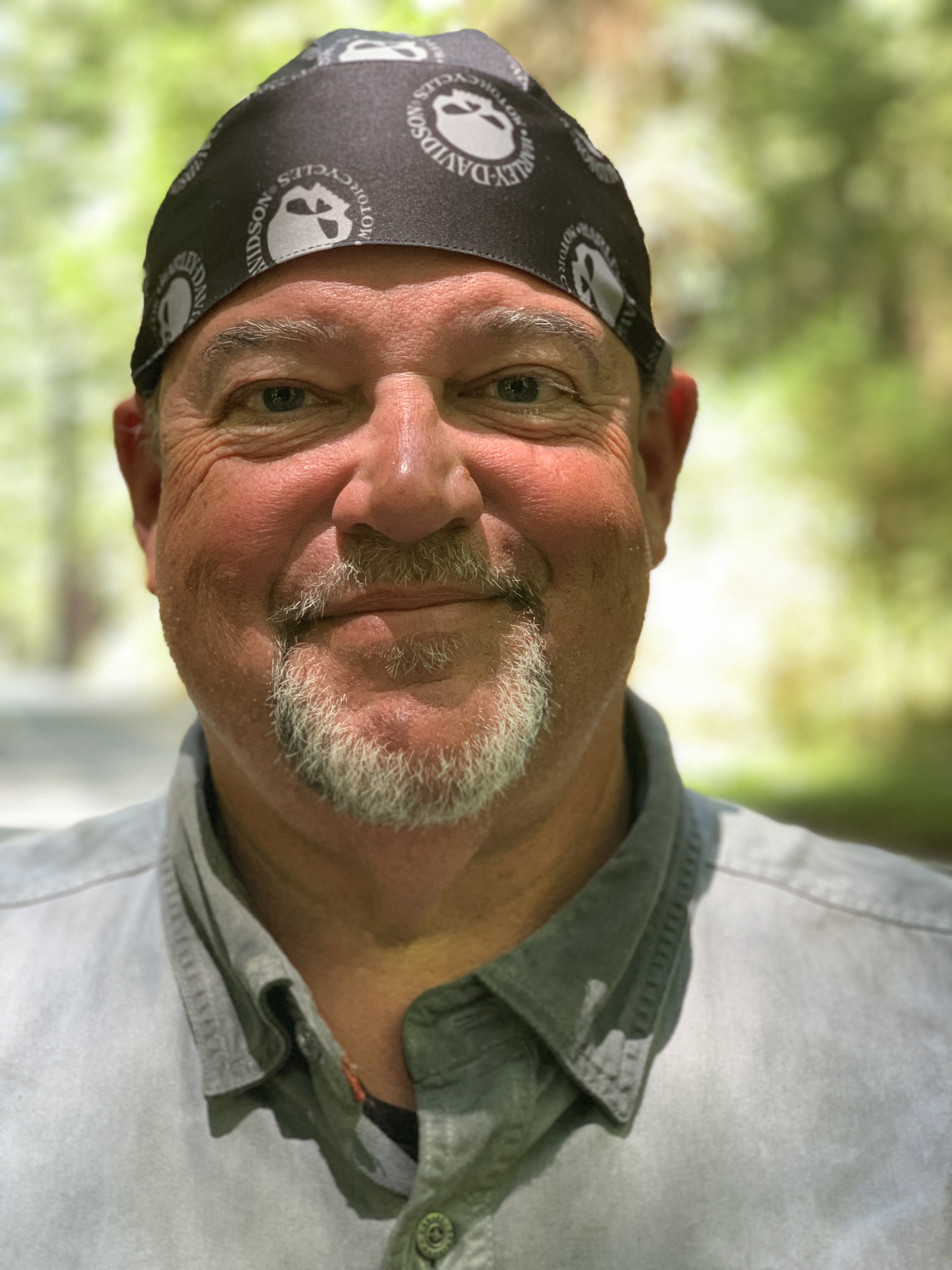
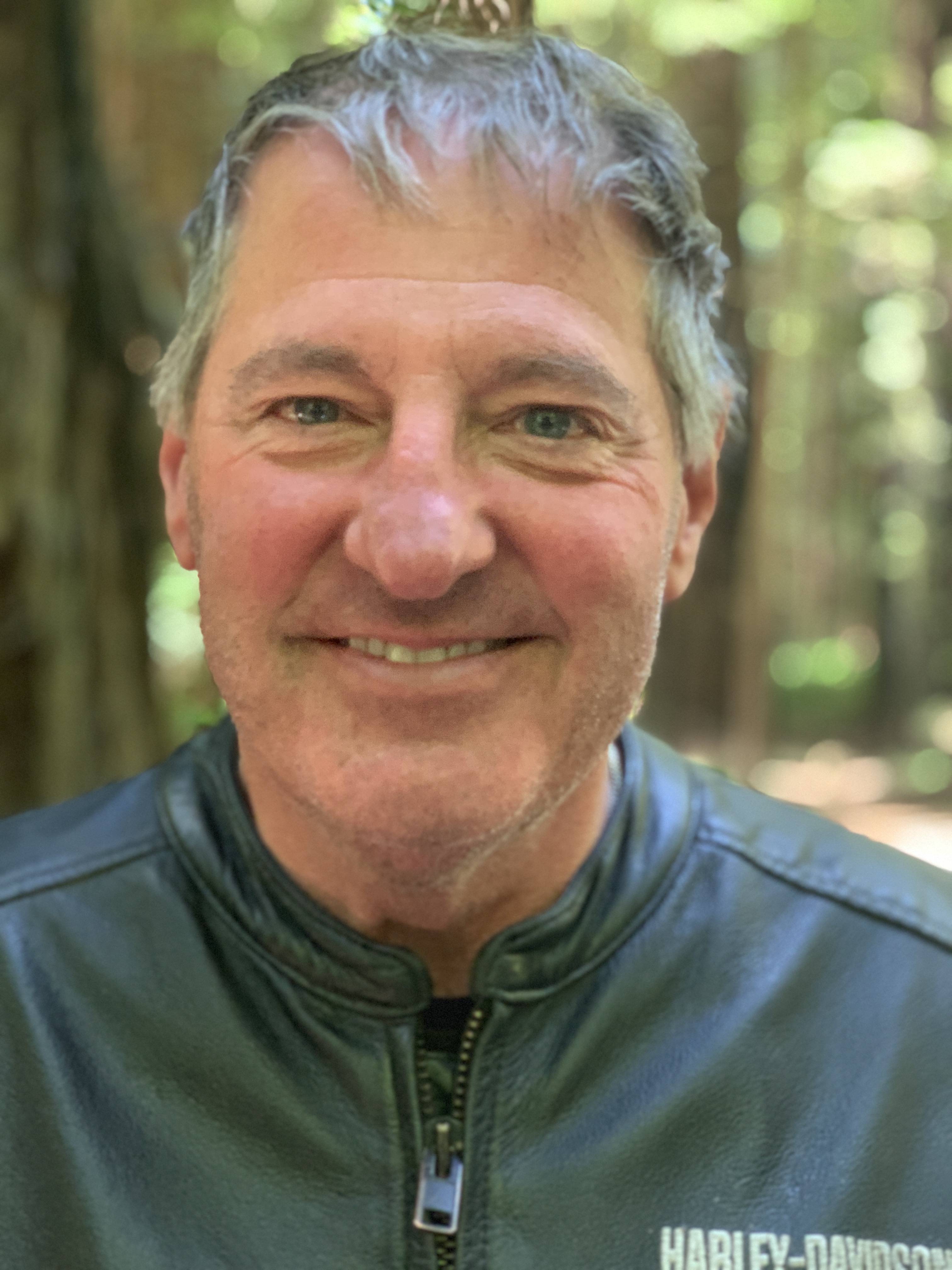
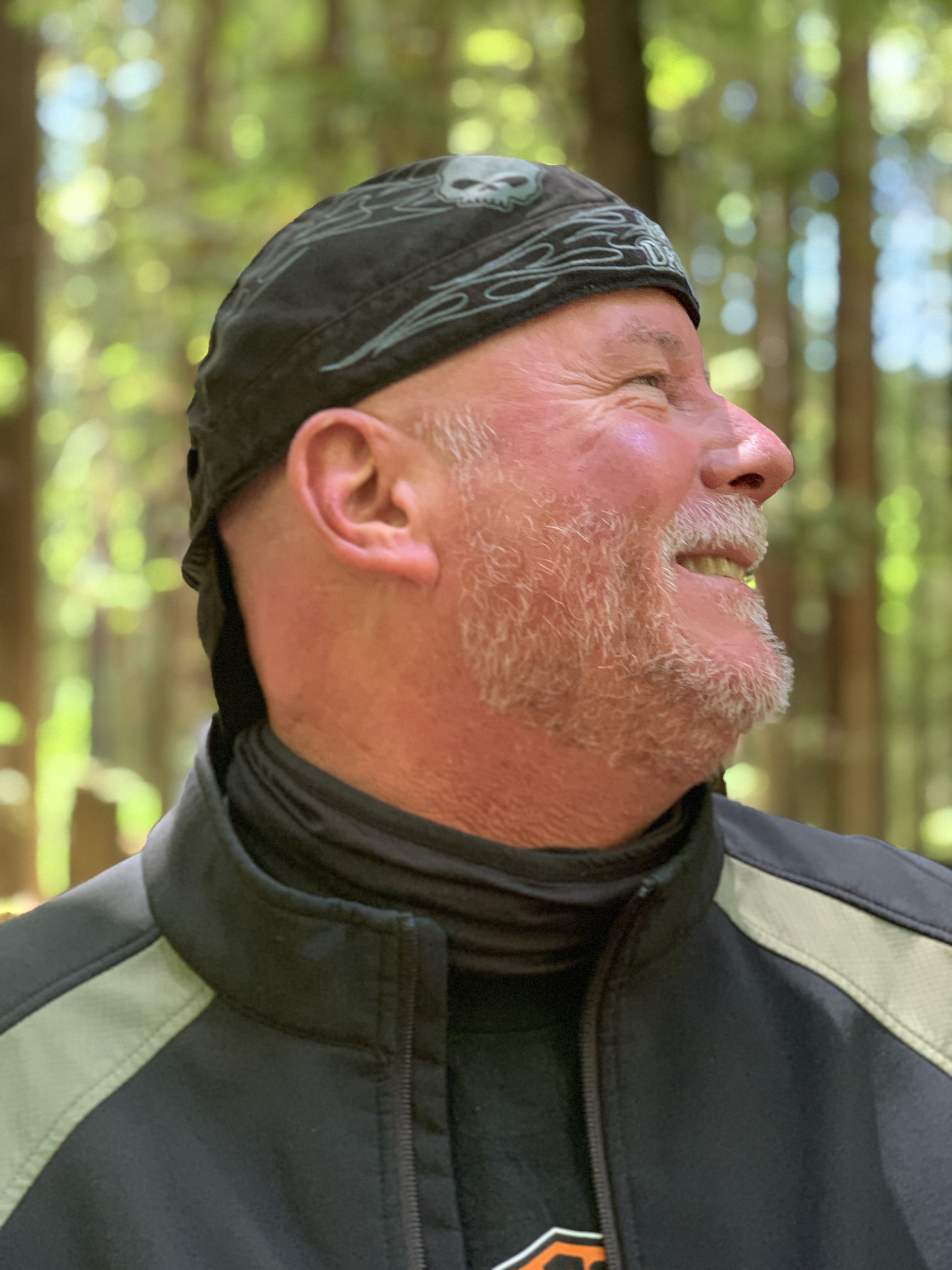
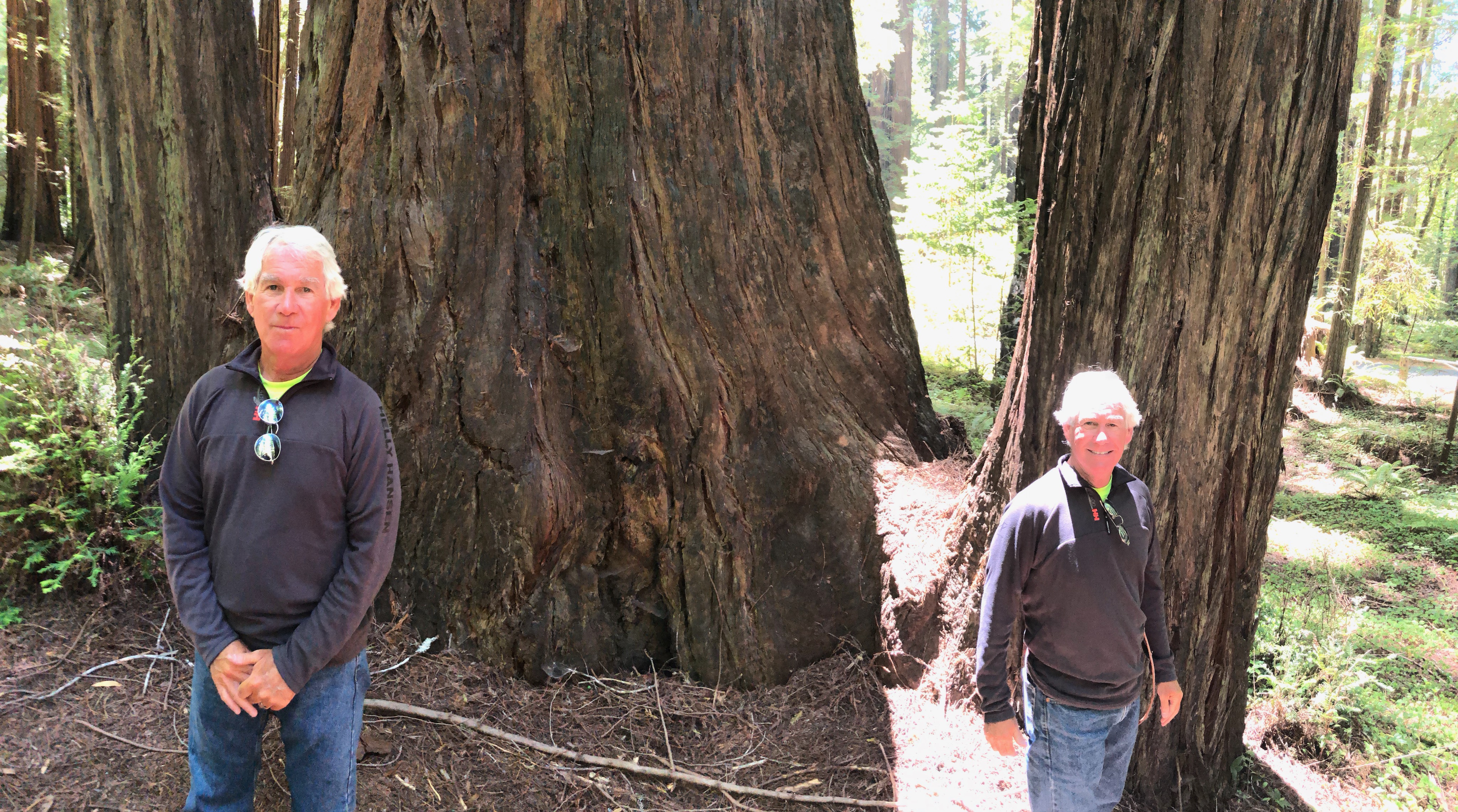
We experience the beauty of the redwoods for miles, before exiting the Avenue of the Giants at its southern entrance and returning to Highway 101. From here, it’s just six miles to Garberville, a once-thriving timber town that now has marijuana cultivation as its economic driver.
Garberville is also where we stop to rest, and fill up with gas. We get to fill our tanks all by ourselves!
***
After our rest break, we continue south on Highway 101 to Leggett, 23 miles away. Leggett is home to the Chandelier Drive Thru Tree, part of a privately-owned grove that’s been in the hands of the Underwood family since 1922. The attraction of the Chandelier tree is that you can drive through it, unless you have a motor home, or are pulling a large trailer. The name Chandelier Tree comes from its unique limbs that resemble a chandelier.
The Chandelier tree is 275 feet tall, 58 feet in circumference, 21 feet in diameter. The tree’s opening, which is 6 feet wide by 6 feet 9 inches tall, was cut in the mid-1930s. Cars have been driving through it ever since, and paying for the privilege. Ten dollars a car. Unclear whether there are Harley discounts.
A number of tall trees in California were similarly opened up for cars to drive through, mostly in the late 1880s and early 1900s. The tree tunnels were cut to stimulate car tourism, a new concept at the time. The men who were paid $75 to cut tunnels in the trees did not know or care about the damage they were inflicting. Because of the damaging effects of carving through trees, the practice of creating tunnel trees has long passed.
***
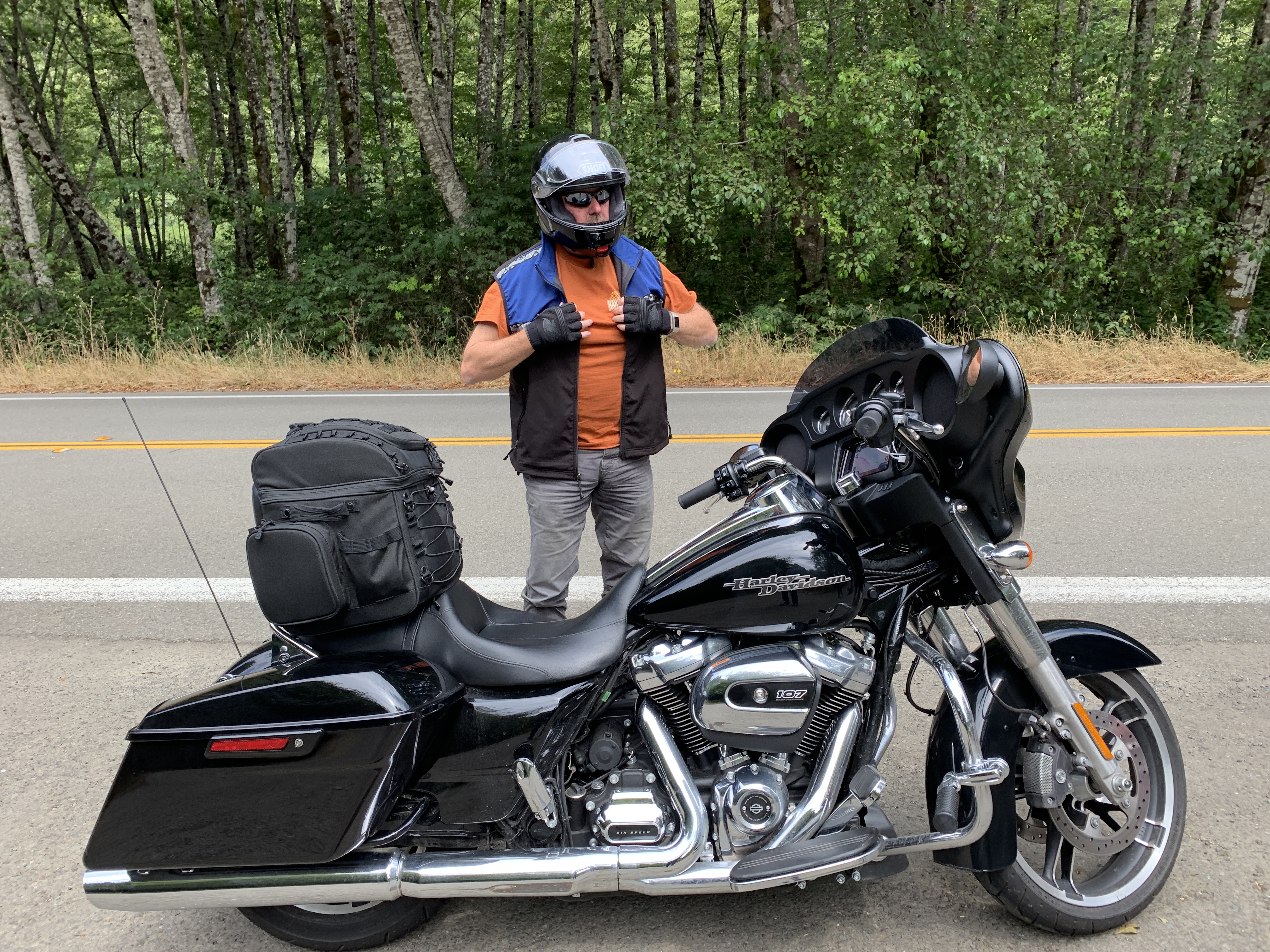
In Leggett, we turn southwest onto California Highway 1, which we’ll be on for the duration of our visit to California. The road, known here as the Shoreline Highway, becomes super twisty as it winds its way to Rockport, about 20 miles away.
Rockport, which began as a small company town serving the timber industry, is regarded as the southern end of the Lost Coast Region. The Lost Coast is a mostly natural and undeveloped area of California’s North Coast. It was named the Lost Coast after the area lost its population base in the 1930s. In addition, the steepness of the coastal mountains made this stretch of coastline too costly for highway and road builders to establish routes through the area, leaving it the most undeveloped and remote portion of the California coast.
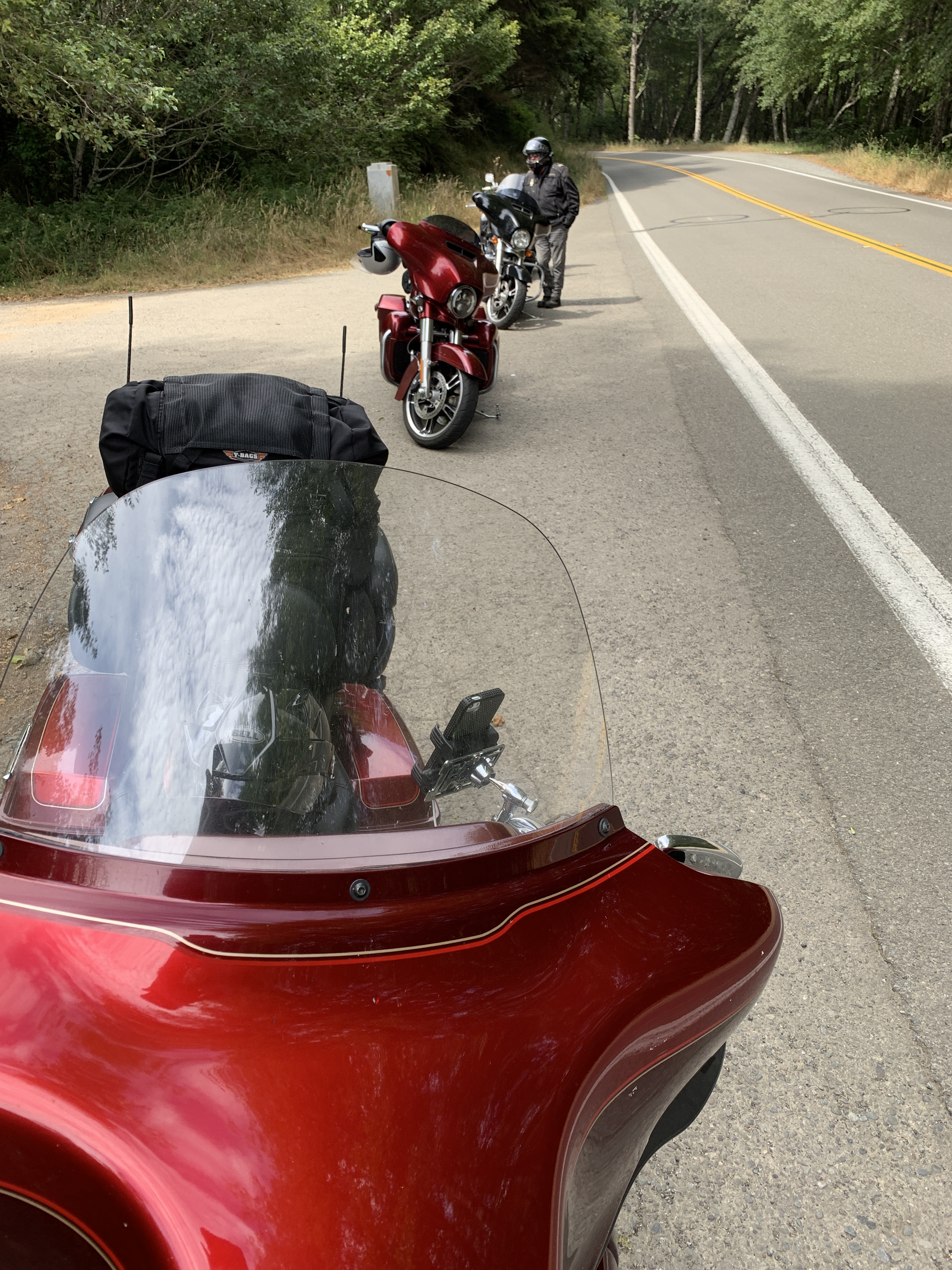
There are five miles of twists and turns between Rockport and Hardy, named for R.A. Hardy, who owned a wharf nearby. The town at one time had a mill and a large hotel. There’s nothing here today other than memories.
Hardy is where we resume our ride along the Pacific Ocean. The Shoreline Highway hugs the coastline until we get to Inglenook, where the roadway is a mile from the beach because it has to go around the MacKerricher State Marine Conservation Area, a state park with nine miles of coastline. The park is named after Duncan and Jessie MacKerricher, who moved to the area from Canada in 1864. They hired a staff of native people to work on their ranch, which produced butter, potatoes, and draft horses. In 1949, their descendants sold the MacKerricher property to the state of California, which made it a state park.
MacKerricher Park is only three miles from tonight’s destination, Fort Bragg. The city was founded, before the Civil War, as a military garrison. It was named for Braxton Bragg, who later became a general in the Confederate Army.
There’s no military presence today in Fort Bragg, California. The much better known Fort Bragg, is in North Carolina. It’s all about the military. Also named for Braxton Bragg, North Carolina’s Fort Bragg is the largest military installation in the world, with more than 50,000 active duty personnel.
Fort Bragg, North Carolina, trivia: Actress Martha Raye is buried in Fort Bragg, in commemoration of her work with the USO during World War II and Vietnam.
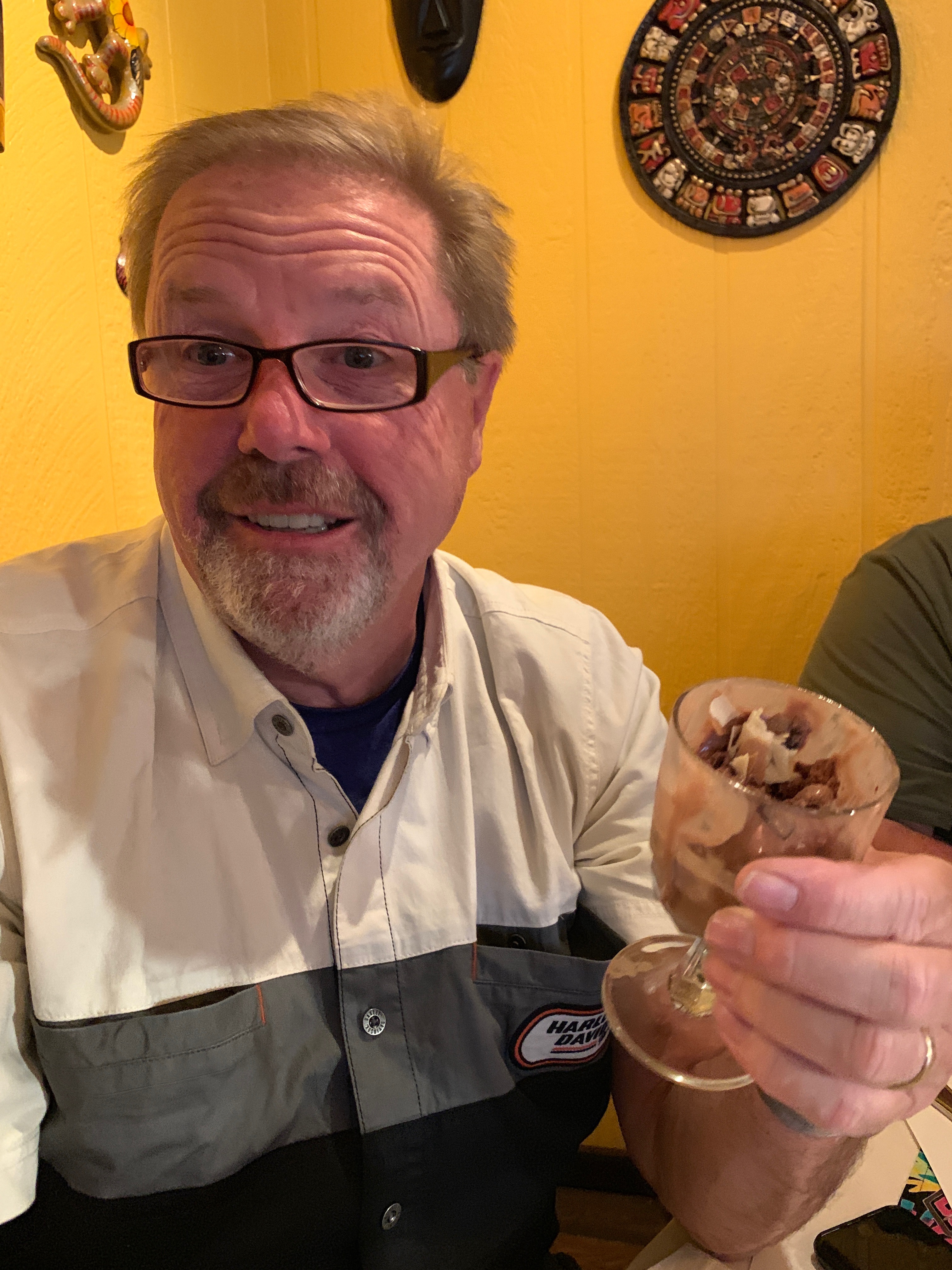
Fort Bragg, California trivia: Five old guys on motorcycles are hungry and could use a seafood dinner.
***
Day Sixteen Summary: It’s hug-a-tree day.
Click here to see today’s complete route from Crescent City, California, to Fort Bragg, California.
We’re on our way home, eh?
Vroom, vroom.
***
Today’s Canada Fun Fact, eh? John Cabot was the first explorer to reach Canada. In 1497, after sailing by sea from Bristol, England, he arrived in what is believed to be modern-day Newfoundland. He made a claim to the North American land for King Henry VII of England. Cabot sailed on the ship Matthew with a crew of 18 men. Cabot, originally from Venice, Italy, was born Giovanni Caboto.
 Riding With Gary
Glad you got to see some Redwoods. The road from Cresent City to Grants Pass also was shock full of redwoods .
Good ride , nice country but didn’t get to pump my own gas.
Bummer.
Safe riding guys.
LikeLike
Give us a call. We’ll arrange gas pumping for you.
LikeLike
Your pictures are gorgeous and not a bad looking Posse either.
Hey Gar, did you know it’s “National Ice Cream Day”? 😋
LikeLike
Did not know about Ice Cream Day. But I did have my usual ice cream sandwich for afternoon snack. I celebrated!
LikeLike
Who are the old guys? I thought y’all were young, hipsters 😎
LikeLike
There’s nobody here over 70. Just sayin …
LikeLike
Know the area well. It’s gorgeous. Two of my brothers live there. Ride safe!
LikeLike
So happy that you are still making these fabulous journeys with your buds. I found this in my spam. I hope I didn’t;t miss too much.
Miss you both.
All its well in SD.
Maureen
LikeLike
I’m crushed that I went to your spam folder 😂😂😂
Hope you and Fran are well and enjoying life in San Diego.
LikeLike