Anacortes is known as Your Island Getaway.
Today, we’re getting away from Fidalgo Island, where Anacortes is located. We’re heading to Vancouver Island, in Canada. On our way, we’ll pass through the San Juan Island archipelago.
Islands everywhere. Hundreds and hundreds of them. Many with names. Some are just big rocks, exposed at low tide.
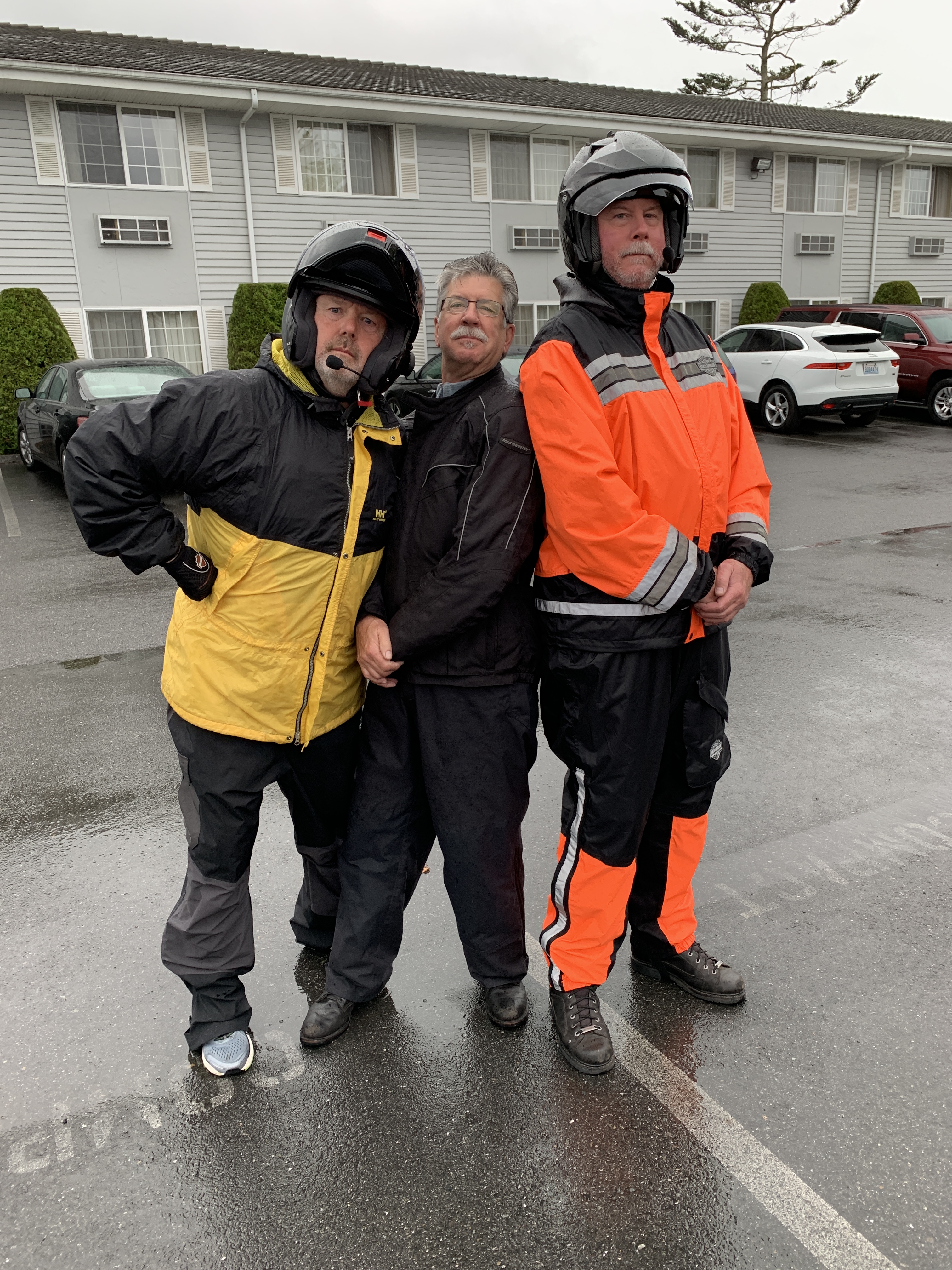
We begin by riding the five miles from downtown Anacortes to the Washington State Ferry terminal.
I’ve been coming here since moving to western Washington in 1979. My first trip on the ferry was in August 1979, when I rode my 1976 Honda CB550 F onto the ferry, which took me to Orcas Island. It was an overnight trip to Rosario Resort, the former Eastsound estate of Seattle mayor and shipbuilder Robert Moran.
The Washington State Ferry system is the largest ferry operator in the US. By comparison, the world’s largest ferry system is in Istanbul, Turkey. It has 87 vessels, crossing the Bosphorus Strait. Some 300,000 people in Turkey’s biggest city take the ferry to work every day.
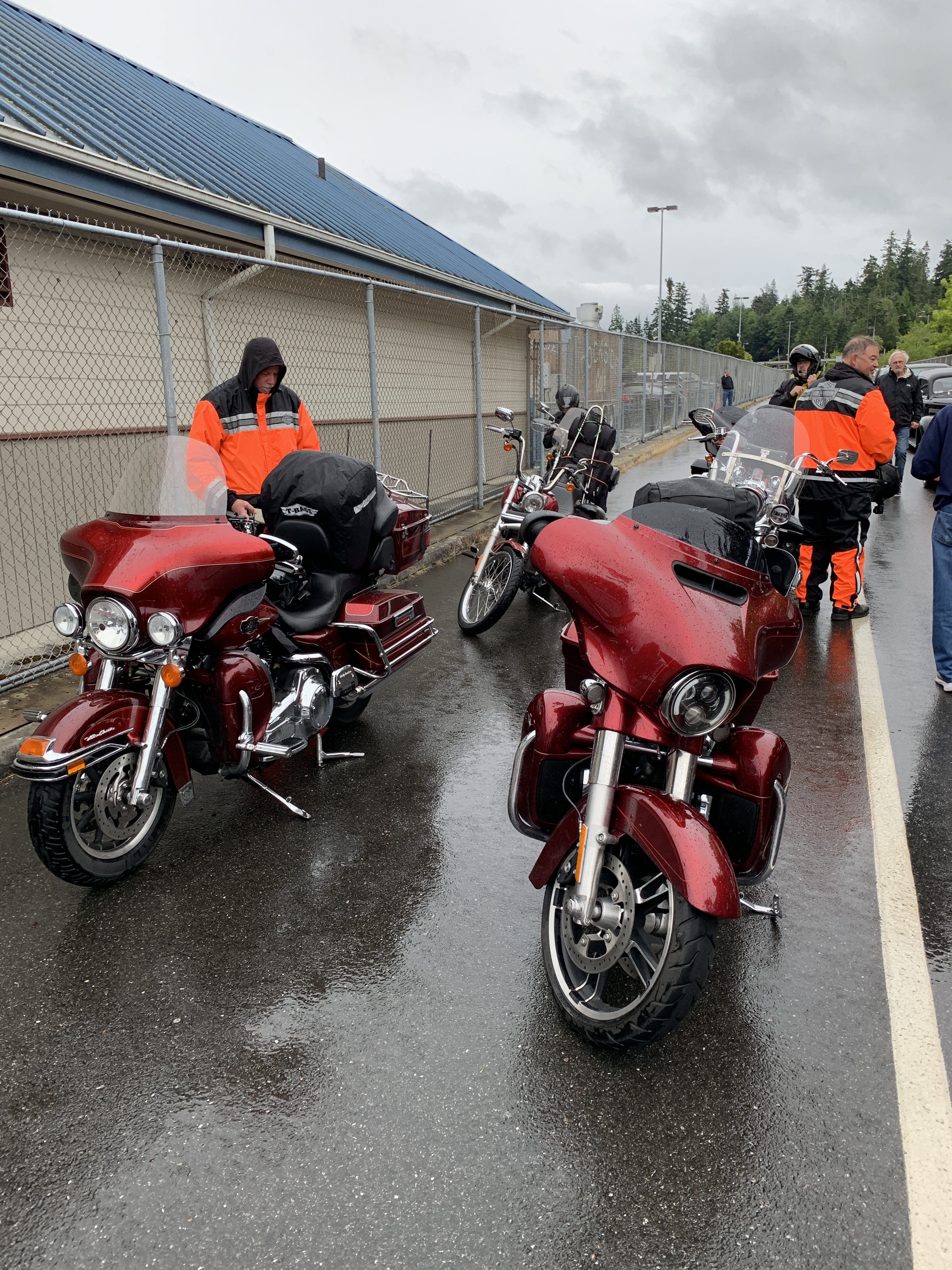
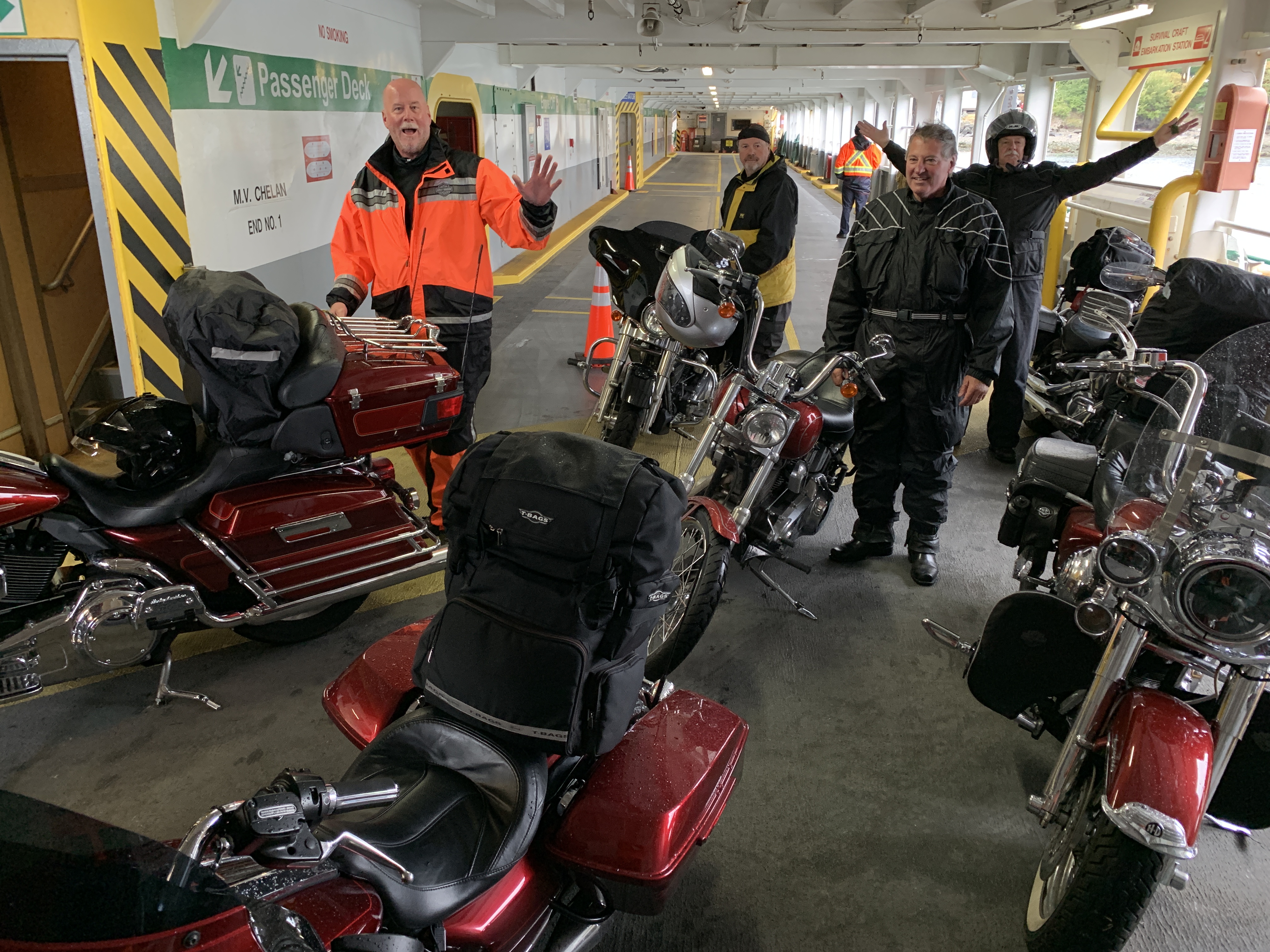
Closer to home, with 23 vessels and 20 terminals, the Washington State Ferry system carries about 25 million passengers every year, including the six of us today. The largest ferry holds up to 2,500 passengers and 200 vehicles
The ferry system is operated by the Washington State Department of Transportation, and is considered part of the state’s highway system. Originally, Washington state only intended to run ferry service until cross-sound bridges could be built as a replacement. But those bridges were thankfully never approved, leaving Washington residents and tourists with a wonderful way to be one with nature.
Thousands of commuters a day ride the ferry to work in downtown Seattle, coming from Bainbridge Island, Vashon Island, and Bremerton — riding across the Puget Sound and Elliott Bay.
Our ferry ride won’t take us anywhere near Seattle. The 44-mile route is from Anacortes, through the San Juan Islands, and on to Sidney, British Columbia.
***
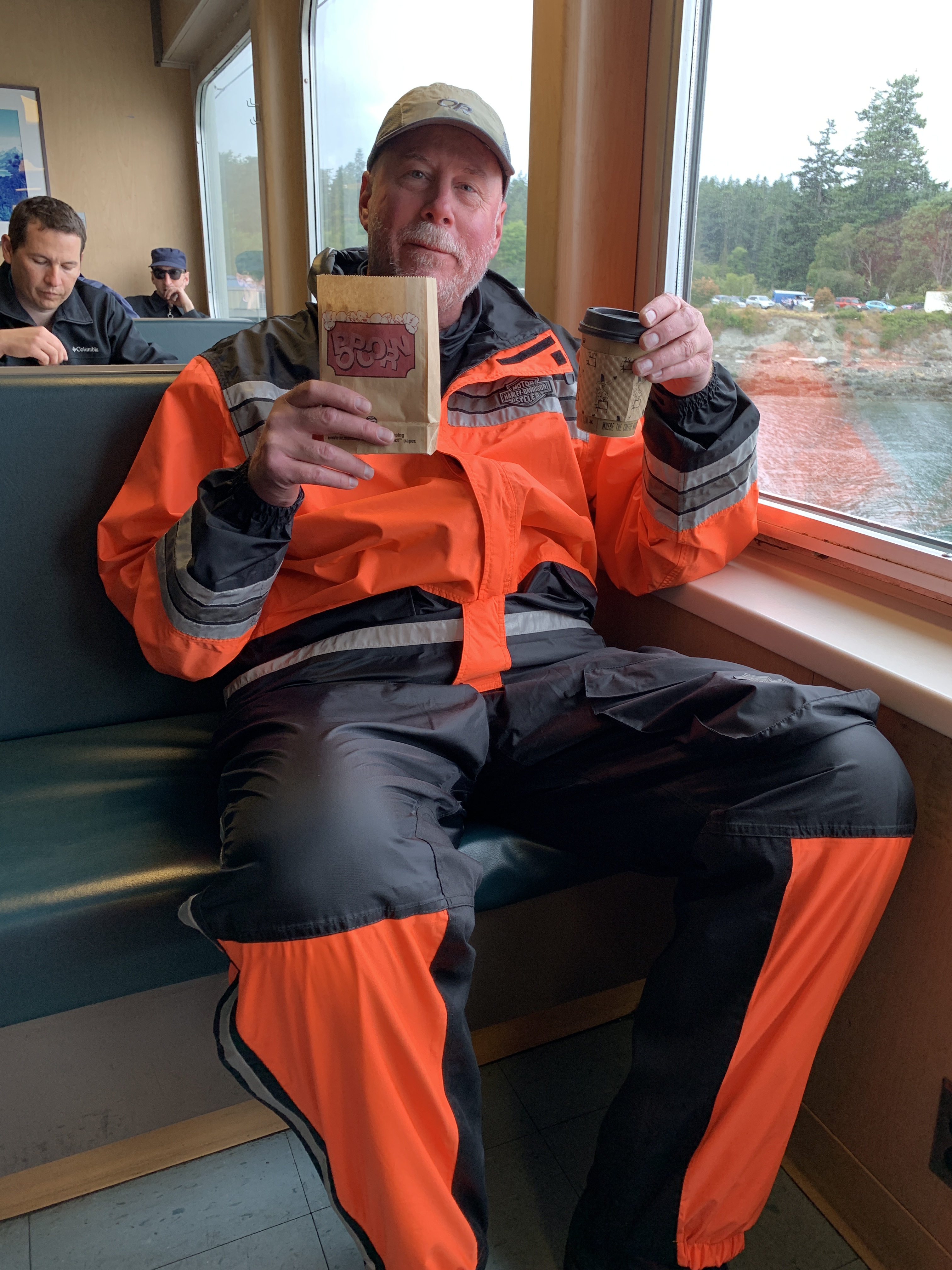
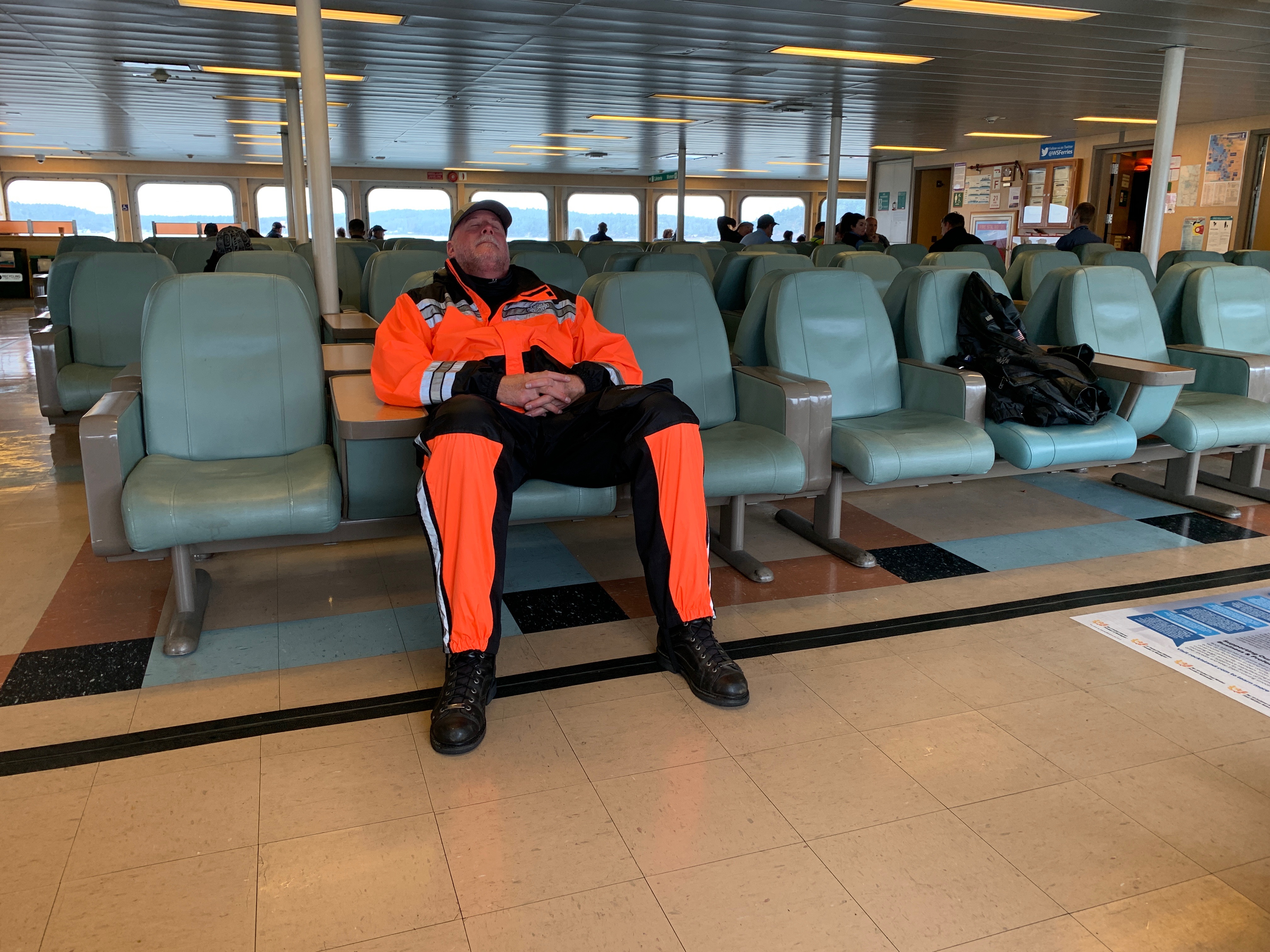
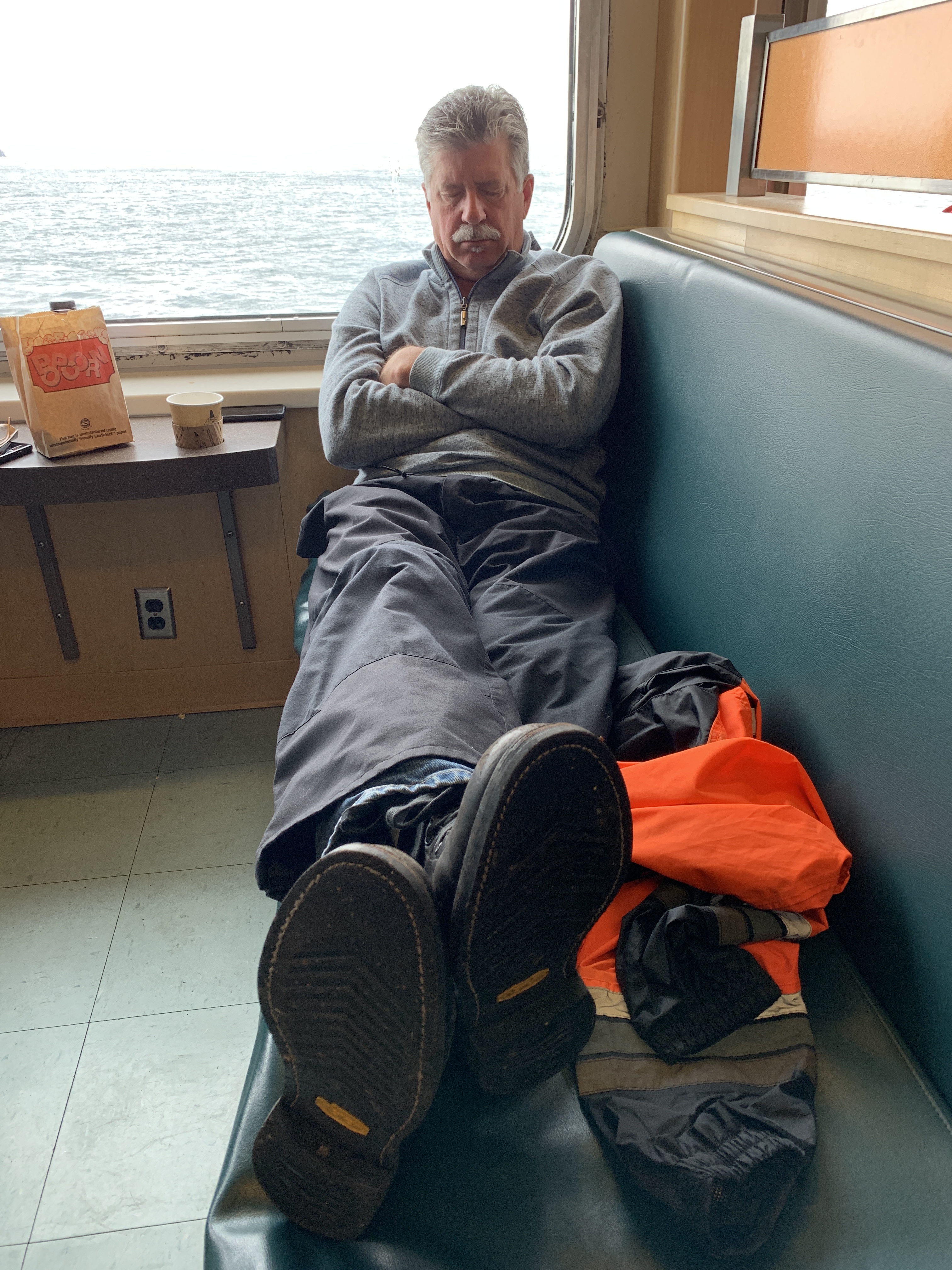
We’re on the Ferry Chelan, 328 feet long with a draft of 15 feet, 6 inches. The Chelan’s two diesel engines produce 5,000-horsepower, giving the vessel a top speed of 16 knots. The MV Chelan was built in 1981 and refitted in 2004 to include a second vehicle deck. The vessel carries nearly 1,100 passengers, 124 autos — and today, at least 6 motorcycles.
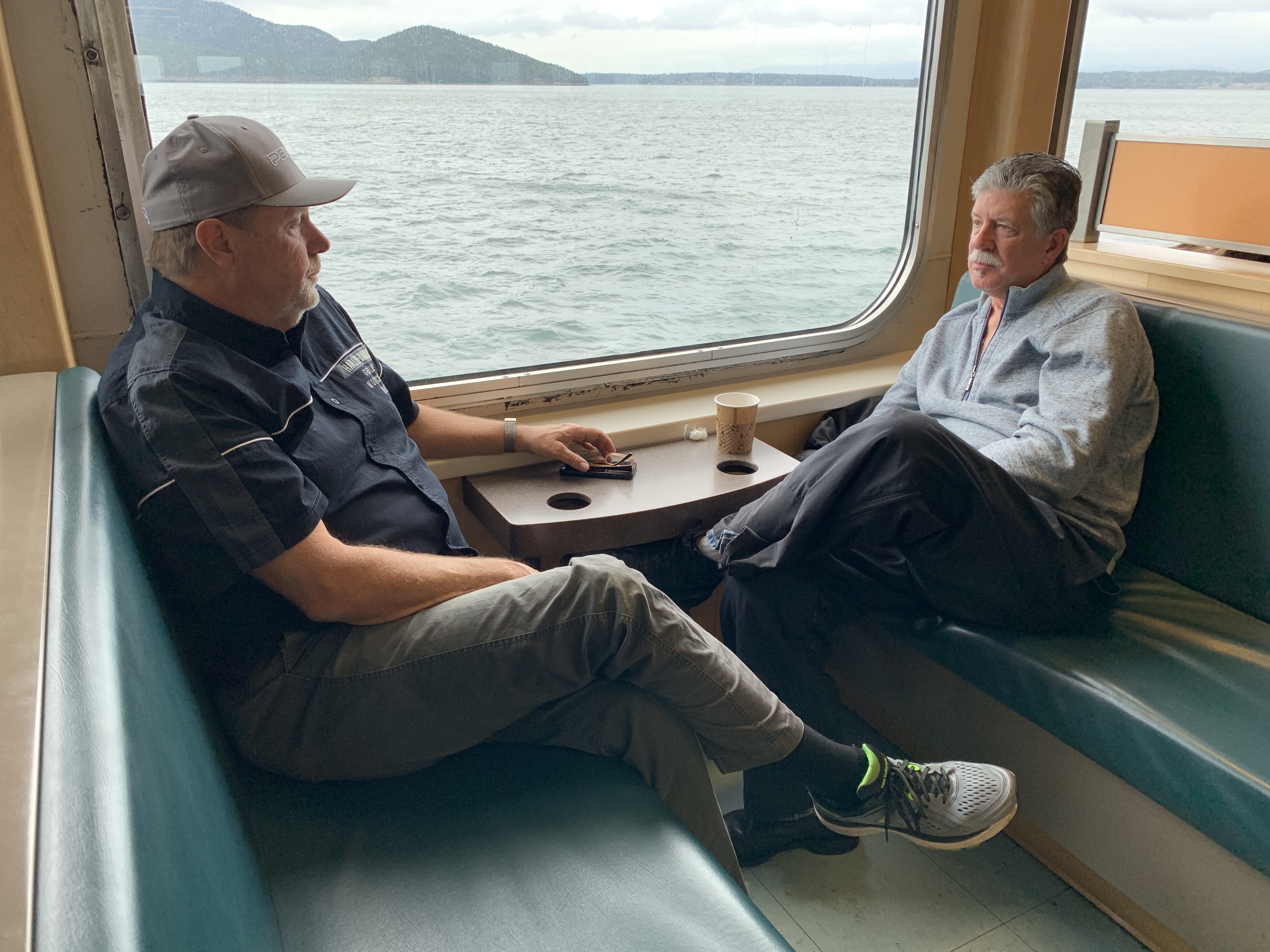
The “MV” in MV Chelan stands for Motor Vessel. Today, almost every ship is a Motor Vessel, because the alternative, SS (Steam Ship) is rarely used anymore.
From Anacortes, the Chelan sails west across Rosario Strait, a major shipping channel. More than 500 oil tankers pass through the strait each year, to and from refineries in Anacortes and Cherry Point, north of Bellingham.
The ferry continues through Thatcher Pass, a half-mile wide opening between Decatur Island, to the south, and Blakely Island, to the north.
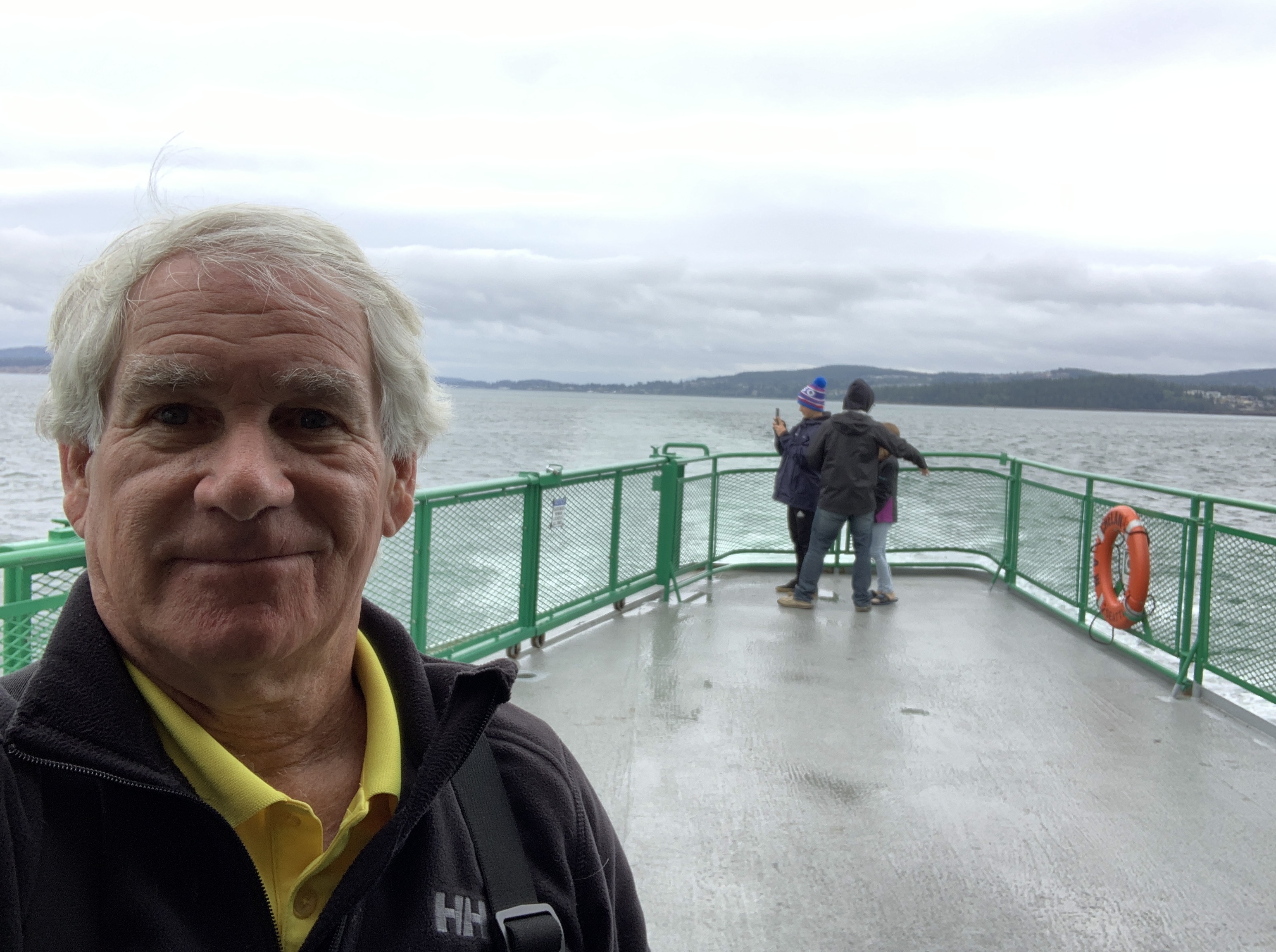
From there, we pass by the northern tip of Lopez Island, the third-largest of the San Juan Islands and because of its flatness, a haven for bicycling. Lopez Island is named for Gonzalo López de Haro, a Spanish naval officer and the first European to discover the San Juan Islands archipelago.
Lopez is one of four San Juan Islands served by the Washington State Ferry system. The others are Shaw, Orcas and San Juan Islands. Today, our ferry to Sidney, British Columbia stops only at Friday Harbor on San Juan Island on its way to Canada, eh.
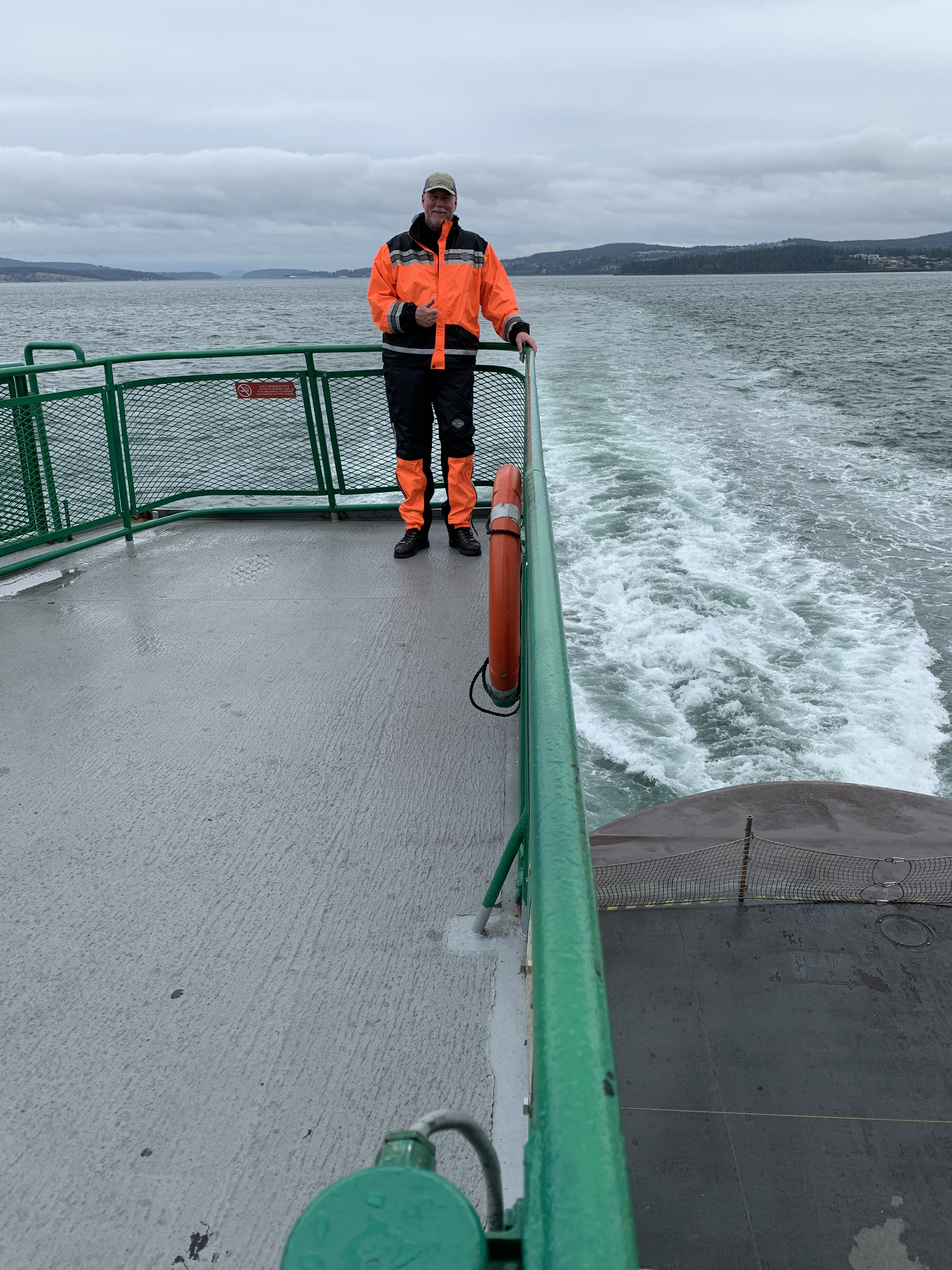
The San Juan Island archipelago includes 172 islands, 128 of which are named. At low tide, the number of islands rises to around 400. Some of the islands are no bigger than a rowboat and many disappear if the tide gets too high. Many of the small and medium-sized islands are privately owned.
When I lived in Bellingham, Washington in the early 1980s, I had a sailboat, Puffin, that I sailed often in the San Juans. It’s hard to overstate how cool it is to sail among these islands.
The first trip Sarah and I took together was in the summer of 1998, when we chartered a sailboat in Bellingham, and sailed through the San Juans to Victoria, British Columbia. This is my first trip back to these waters since then.
***
Near the Lopez Island ferry terminal, we turn southwest, and sail the Upright Channel, between Lopez and Shaw Islands. The ferry follows the southern shoreline of Shaw Island, turns north of Brown Island, and lands in Friday Harbor on San Juan Island at precisely 9:55 am, an hour and 25 minutes after leaving Anacortes. The ferry system runs like a Swiss railway, without the rails.
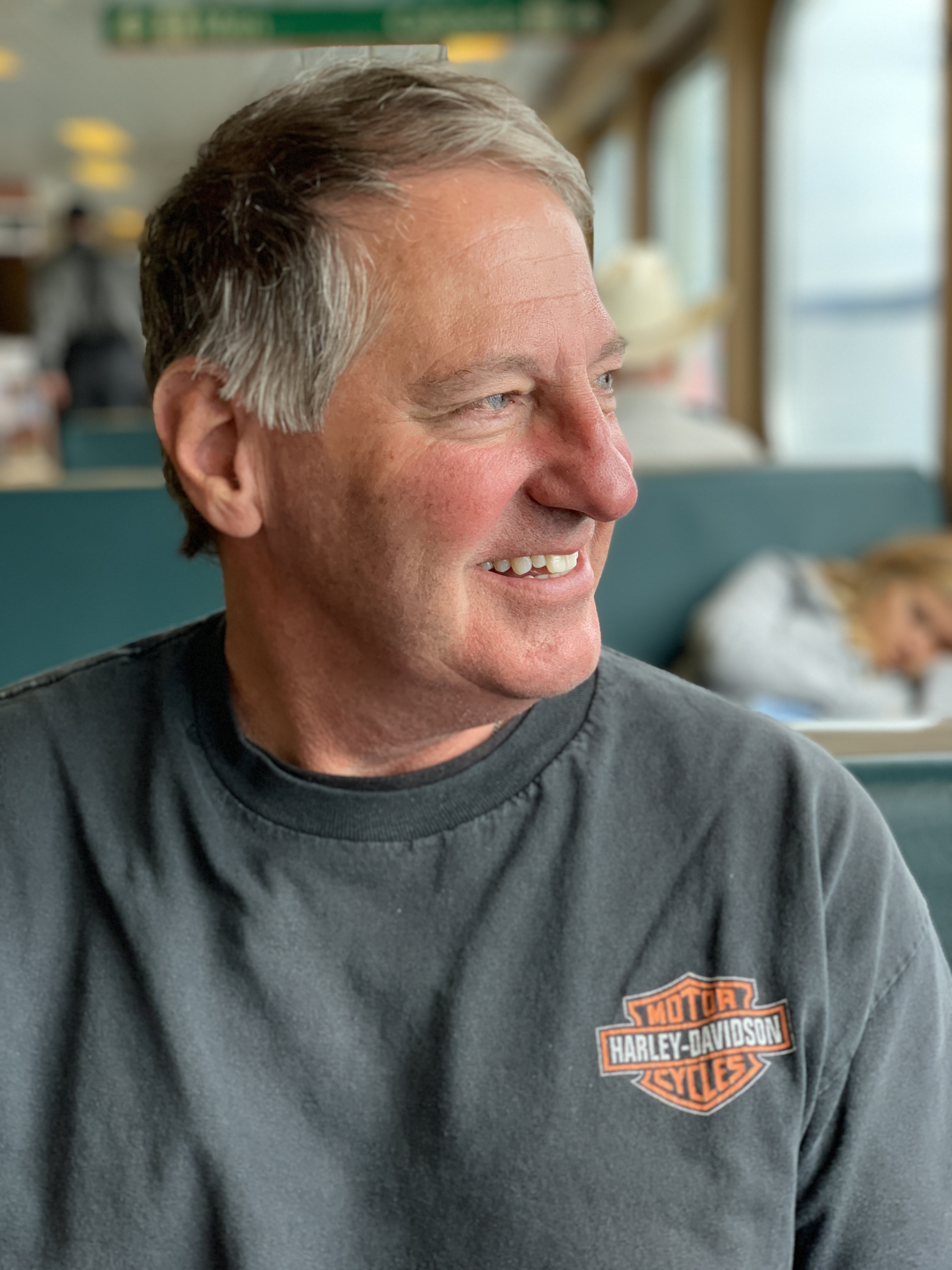
Friday Harbor is the largest town in the San Juans, with about 2,500 year-round residents, and thousands more during the summer tourist season. Friday Harbor was not named after the day of the week. The name originates from Joseph Poalie Friday, a native Hawaiian. He moved to San Juan Island in the 1860s, raising and herding sheep around the area that is today known as Friday Harbor.
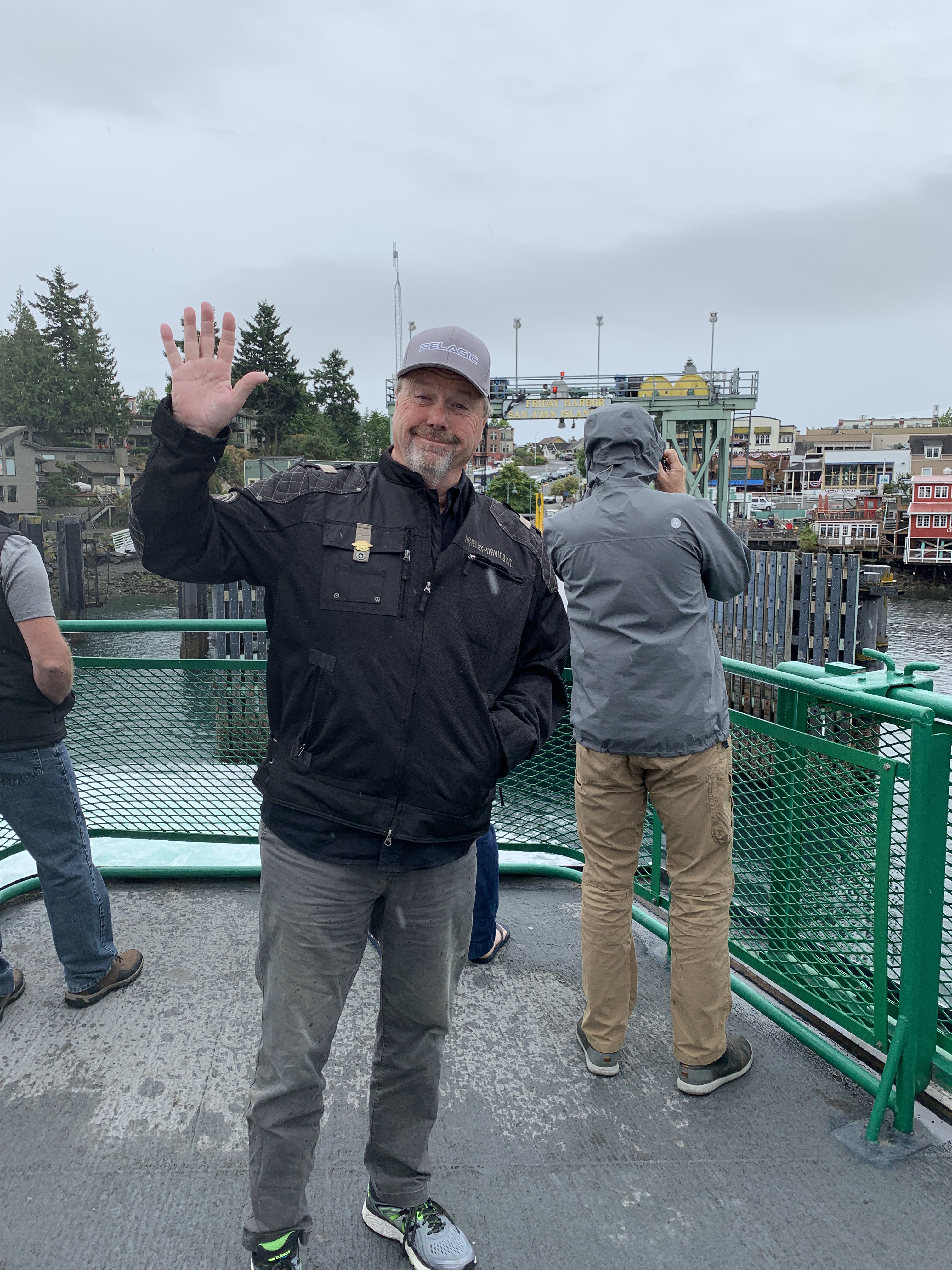
Most everything worth seeing in Friday Harbor is within walking distance of the ferry landing. You’ll find a whale museum, art museum, community theater, bed and breakfasts, hotels and inns, restaurants, shops, and a refreshing absence of fast-food chains.
We get to experience none of that. If you’re headed to Canada, you don’t get to disembark in Friday Harbor, even for a few minutes. Don’t even bother to tell the ferry captain you need a bathroom break in town; the MV Chelan has you covered.
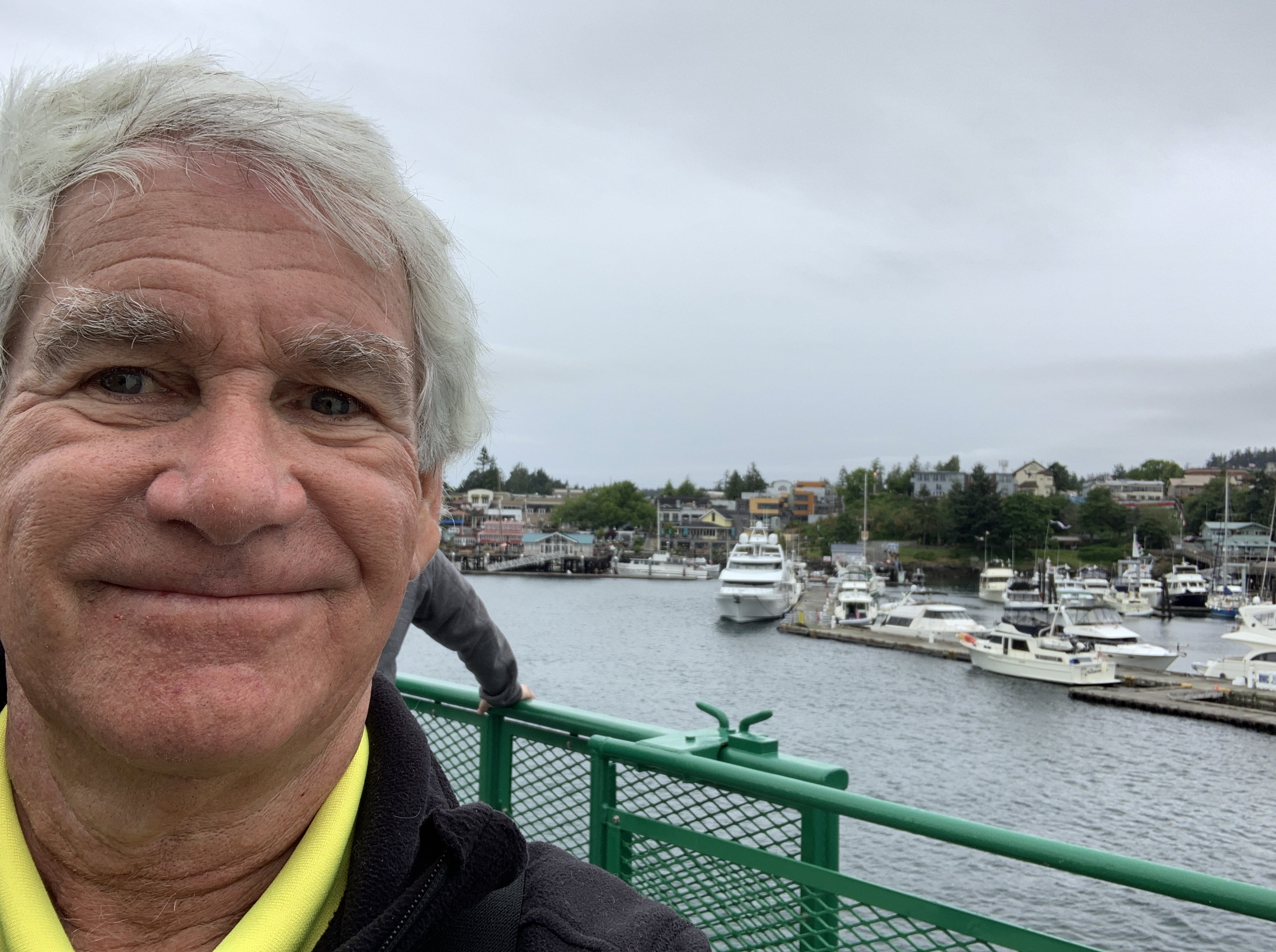
Our ferry makes a quick stop in Friday Harbor, dropping off cars and walk-on passengers, and taking on a few that are headed for Canada. We leave Friday Harbor, heading northwest through San Juan Channel, following the northern shoreline of San Juan Island.
We cross into Canadian waters in Haro Strait, another major shipping channel. It’s the main waterway for ships coming to and from the Port of Vancouver on the Canadian mainland. Haro Strait is part of the international boundary between Canada and the US. Haro Strait was named in 1970 by the commander of the Princesa Real, in honor of his pilot, Gonzalo López de Haro.
At 11:15 am, our ferry’s journey ends in Sidney, British Columbia, on the northern end of the Saanich Peninsula on Vancouver Island.
We’re in Canada, eh!
***
The world-famous Butchart Gardens is only a few minutes from the Sidney ferry terminal.
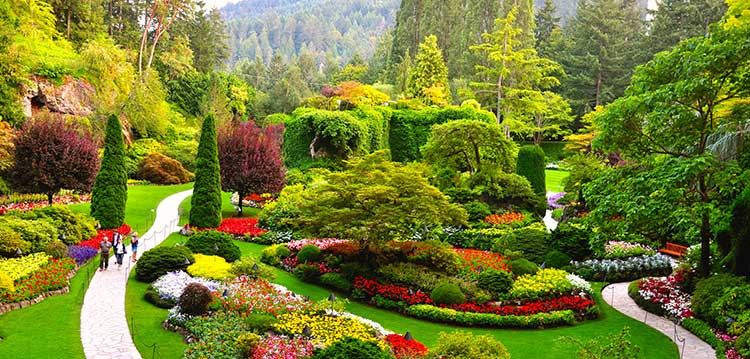
Sidney is located less than a mile from the Victoria International Airport. Victoria is the provincial capital of British Columbia, and tonight’s destination. The southernmost major city in Canada, with a population of nearly 400,000 — Victoria is a 17-mile ride south from Sidney.
A few miles of that ride are on the Trans-Canada Highway, which begins at the intersection of Douglas Street and Dallas Road, where the “Mile 0 Monument” stands. Tonight’s lodging is less than a mile from that monument.
As you might guess, Victoria is named after Queen Victoria. She was Queen of the United Kingdom from 1837 until her death in 1901. Victoria was preceded by William IV, and succeeded by Edward VII, for you royal fans. Her reign of nearly 64 years was longer than that of any of her predecessors, but not as long as Queen Elizabeth II, who has reigned since ascending to the throne in 1952.
***
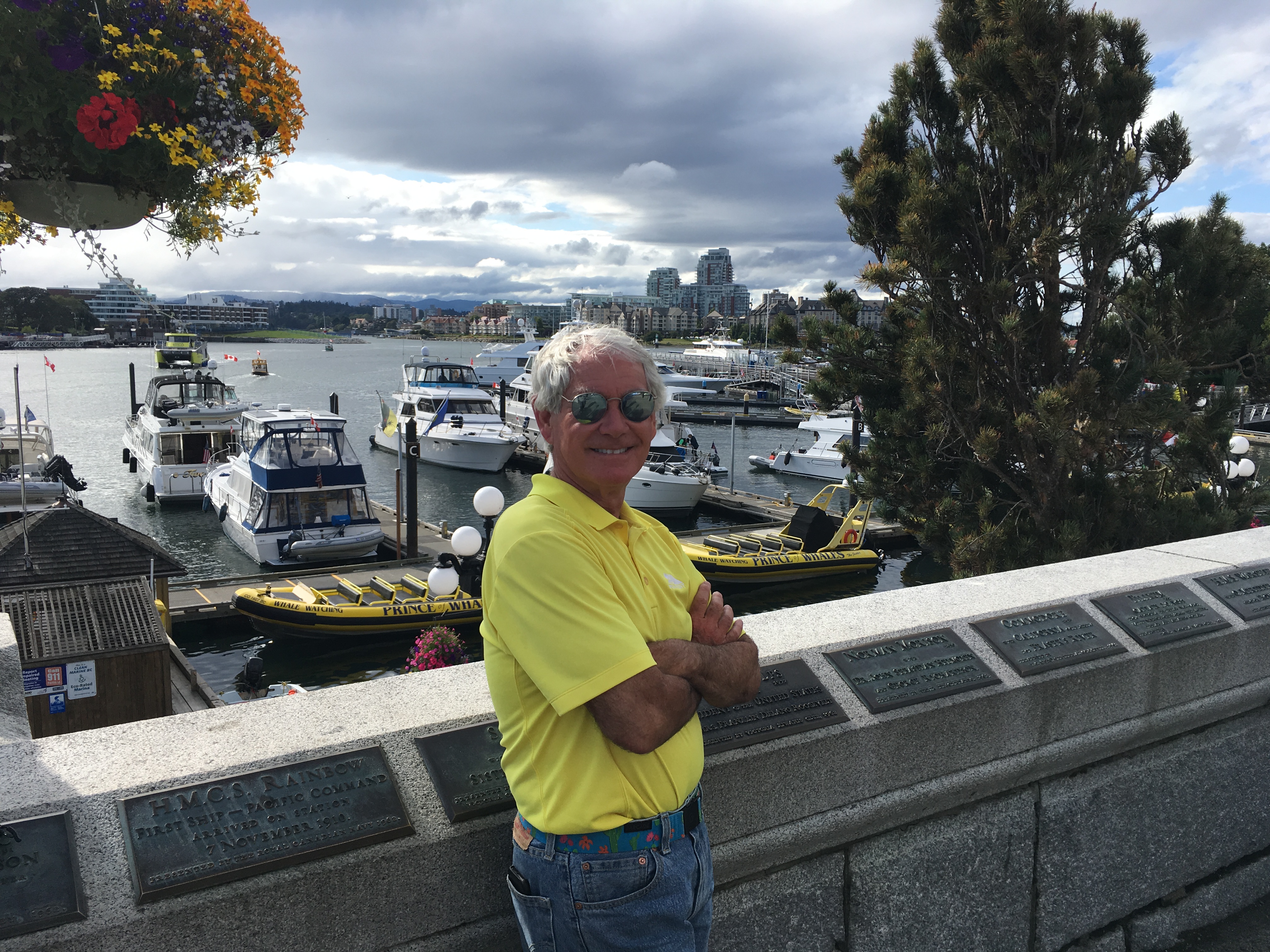
Victoria does have some notable historical buildings. There are the neo-baroque BC Parliament buildings, which can be seen from the Victoria Inner Harbour. There’s the Inner Harbour itself, with its cruise ship port, ferry terminal, pleasure boat docks and seaplanes coming and going.
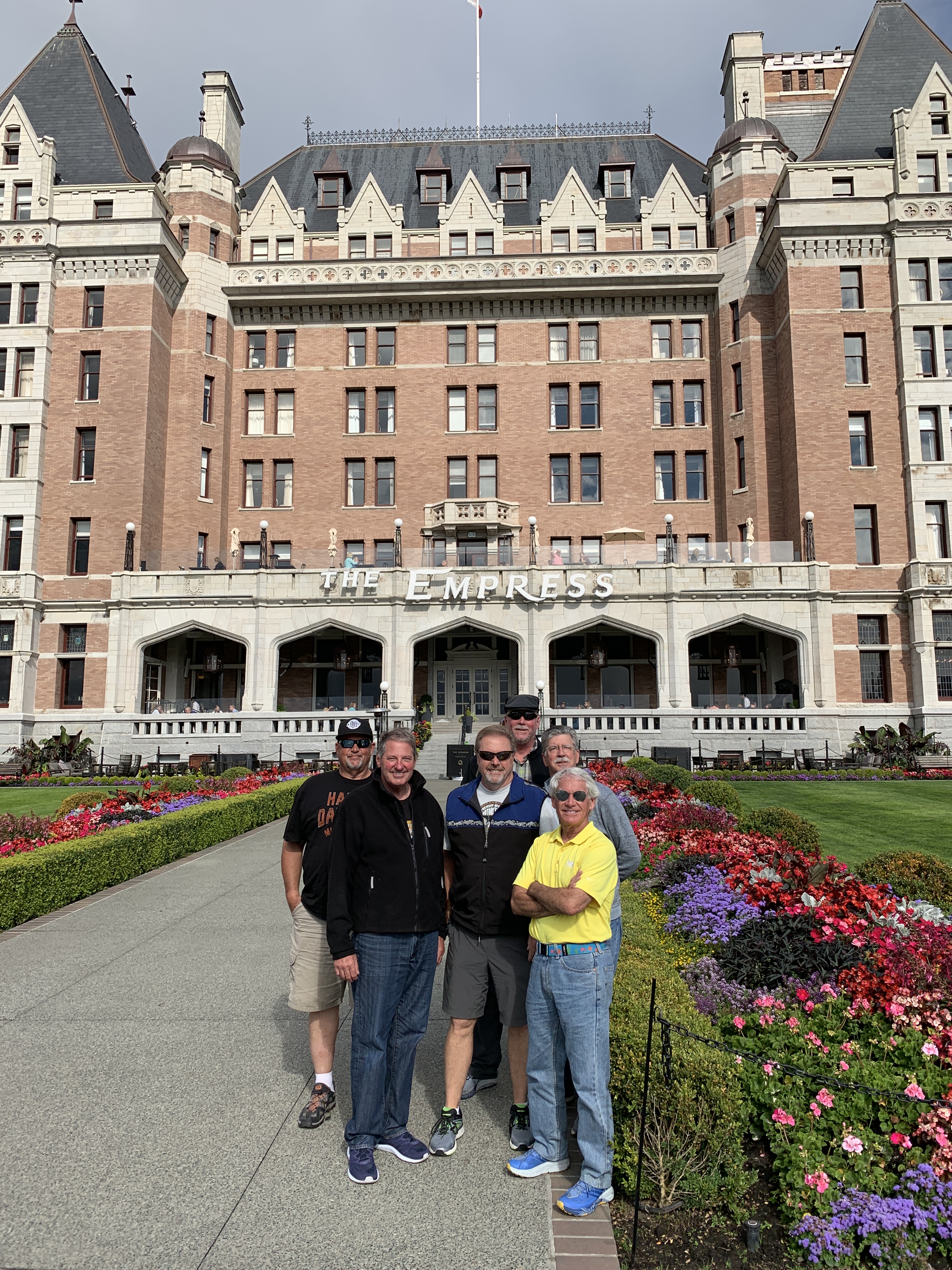
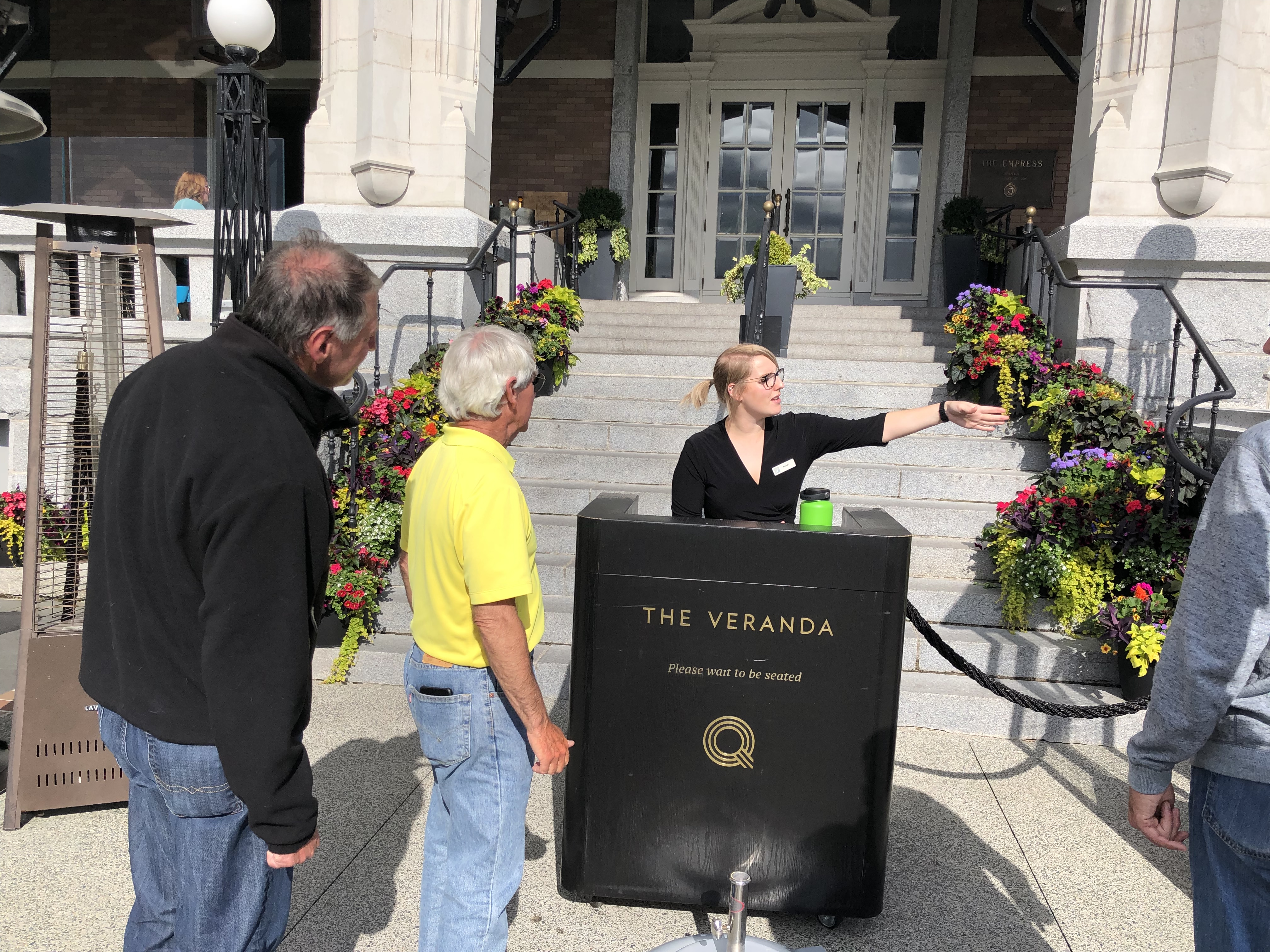
And there’s the 412-room Empress Hotel. About all you can say is wow. They just don’t make hotels like that anymore. At least not any we’re likely to stay in on this trip. Randy is still chafing that he was booted out of the Empress back in the 1980s for wearing jeans. The place is quite proper.
The Empress was built in 1904 by Canadian Pacific Hotels, a division of the Canadian Pacific Railway Company. Designed by Francis Rattenbury as a Chateauesque-styled building, it’s considered one of Canada’s “grand railway” hotels.
Other grand railway hotels include the Banff Springs Hotel and Chateau Lake Louise – both in Alberta; the Chateau Frontenac in Quebec City; the Chateau Laurier in Ottawa; the Place Viger in Montreal; and the Algonquin Resort in New Brunswick. The largest of the grand railway hotels is the Royal York in downtown Toronto.
You could easily do a grand railway hotel tour, perhaps on a Harley. It would last all summer, and leave you virtually penniless.
We’ll be sure to discuss that tonight, over dinner. Seafood, and future grand railway hotel tours.
Ah, the good life.
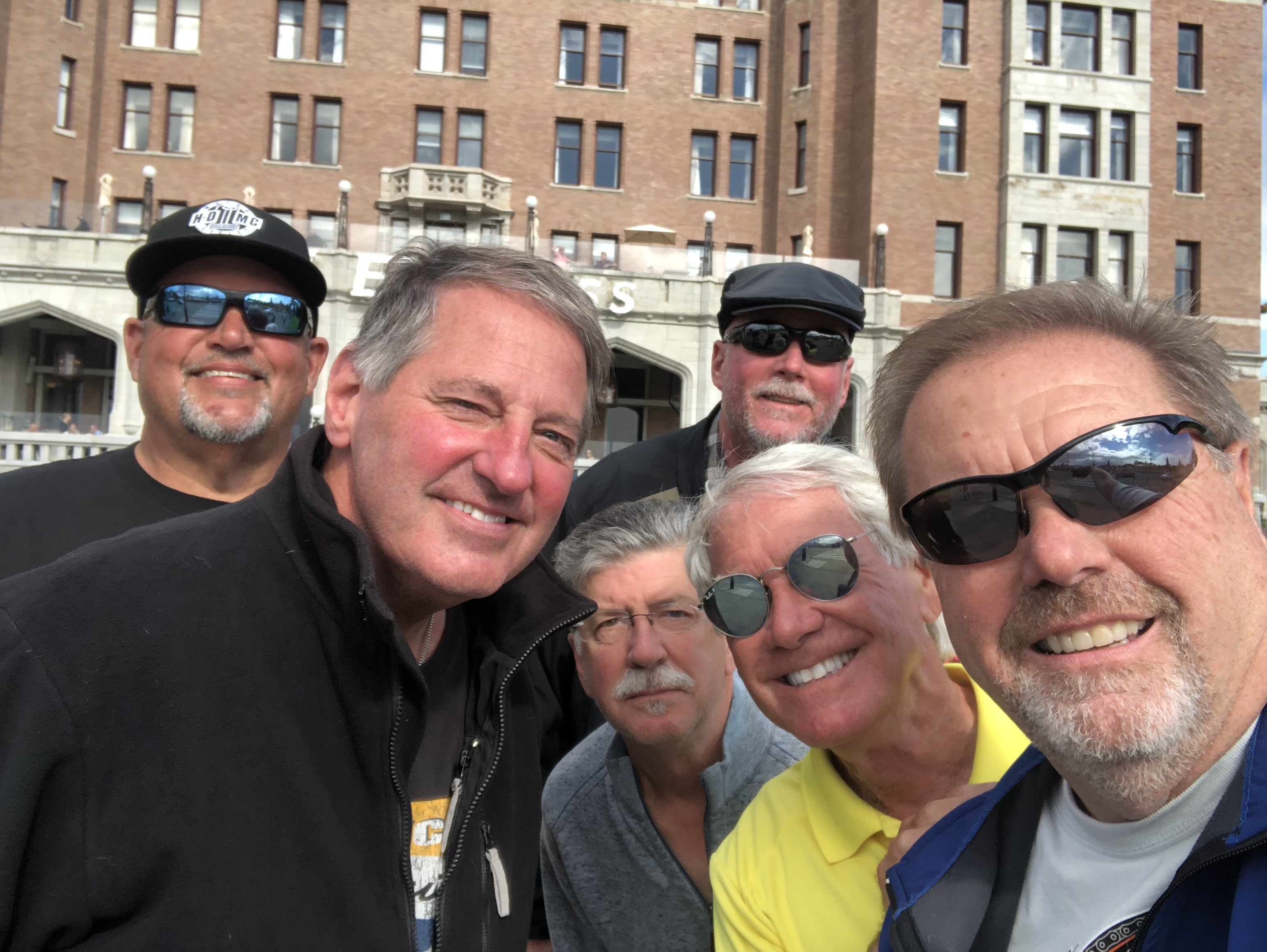
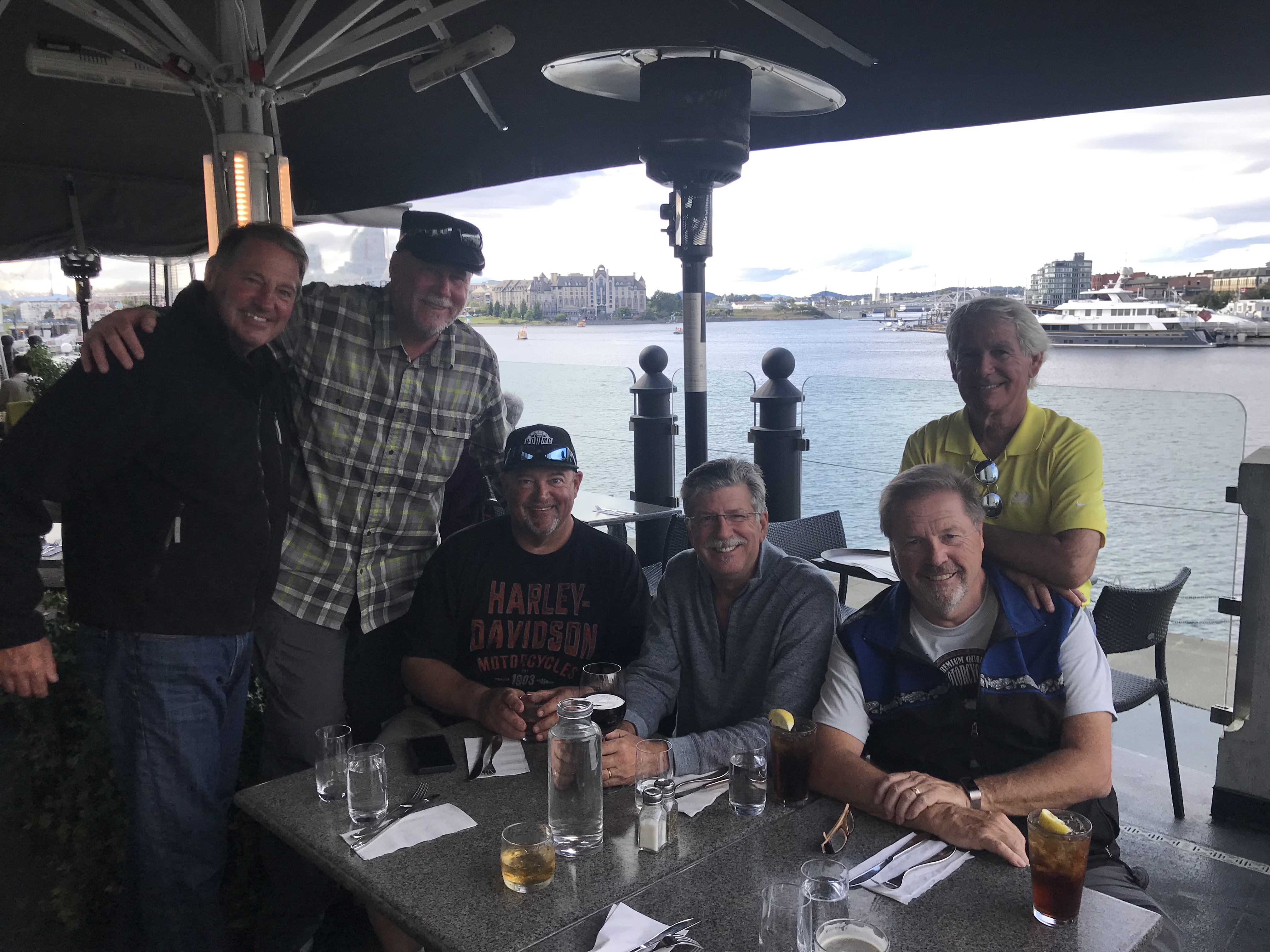
***
Day Twelve Summary: Shortest motorcycle ride of the trip, about 22 miles. Most beautiful ride of the trip, 44 miles through the San Juan Islands on a ferry. Planning the first-ever Harley tour of Canadian grand railway hotels.
Click here to see today’s complete route from Anacortes, Washington, to Victoria, British Columbia (Canada).
We’re finally in Canada, eh?
Vroom, vroom.
***
Today’s Canada Fun Fact, eh? The world’s largest totem pole was carved in Victoria, British Columbia, tonight’s destination. The totem pole, which now resides in British Columbia’s Alert Bay, is 180 feet high.
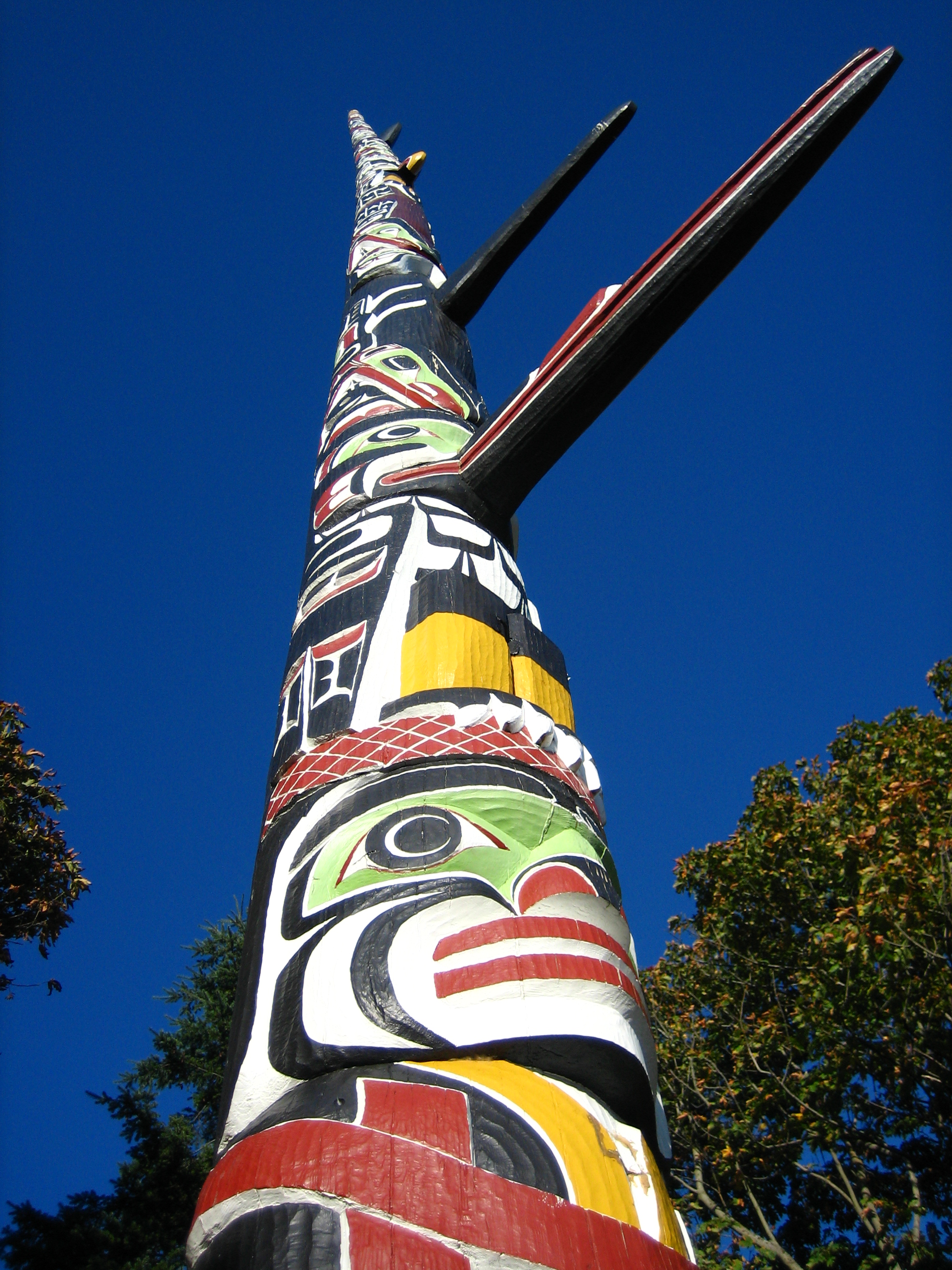
 Riding With Gary
Loving this part of the ride. Love Victoria. Did you know that my great-great-great uncle, Modeste Demers, was the first (Catholic) bishop of Victoria??? His tomb is in the basement of the local cathedral. It is one of the places my family members go to pay their respects whenever they visit. We’ve been there. It is right next to the church’s soup kitchen.
Too bad that you skipped Bouchart Gardens. FABULOUS place. We will be there in Sept. And tea/crumpets at The Empress is not to be missed. Although I think they might have a dress code 🥴
Ride safe!
LikeLike
No dress code anymore at the Empress. I think Steve can show up in his underwear and no one will care. And he should have some new sleeves by then, too,
LikeLike
Well, it looks damp to me; so keep dry and ride safely, Gary!
LikeLike
You are lucky it wasn’t hot, hot, hot when you were in Victoria. We were there the end of July about 5 years ago and the temps reached around 100!! Fortunately we stay at a beautiful hotel on the water with AC. The Empress doesn’t have AC and the people were suffering big time. When we went to the Buchart Gardens we tried to stay in the shade all the time.
Yes, it even gets hot in Canada!
LikeLike