We leave West Yellowstone, just ahead of busloads of tourists doing the same thing we are today: visiting Old Faithful.
The west entrance to Yellowstone National Park is on the outskirts of town. Soon, Yellowstone Avenue transitions to US Highway 191, and we are in the park, riding east toward the Wyoming state line.
Within a mile, we cross into Wyoming. Ninety-six percent of Yellowstone National Park is in Wyoming. The rest is in Montana (three percent) and Idaho (one percent).
We cruse eastward along the banks of the Madison River. The river, which is a fly-fishing mecca, was named in 1805 by Meriwether Lewis of Lewis-and-Clark fame. He named the river after then-Secretary of State James Madison, who four years later succeeded Thomas Jefferson as President.
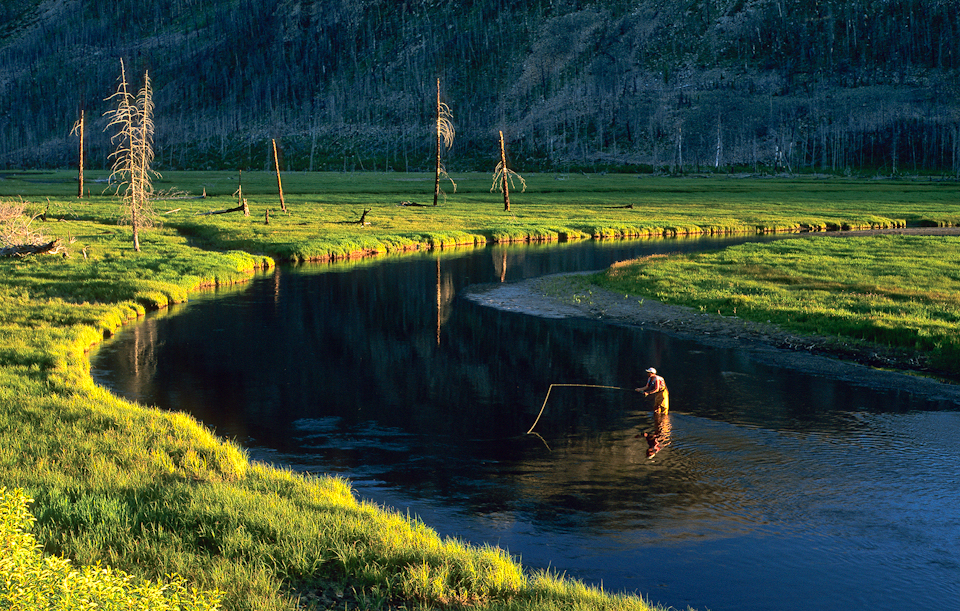
The Madison River has great fishing for rainbow and brown trout. Within Yellowstone National Park, the river is fly fishing only. All fishing in the park is catch-and-release. Fishing is a hugely popular activity within the park. More than 50,000 park fishing permits are issued annually. Yellowstone has hundreds of miles of fishable creeks, streams, rivers and lakes. The cutthroat trout is Wyoming’s state fish.
Soon we pass Mount Haynes, 8,218 feet up in the Gallatin Mountain Range. Mount Haynes is named in honor of Frank Haynes, the first official park photographer.
The next mountain of note is 7,549-foot National Park Mountain, at the confluence of the Madison River and the Firehole River. National Park Mountain is just west of Madison Junction, where we turn south and follow the Firehole River for the next 15 minutes. Temperatures in the river have been measured as high as 86 degrees F, with elevated levels of boron and arsenic. Despite the seemingly hostile environment, brown and rainbow trout live and spawn in the Firehole River.
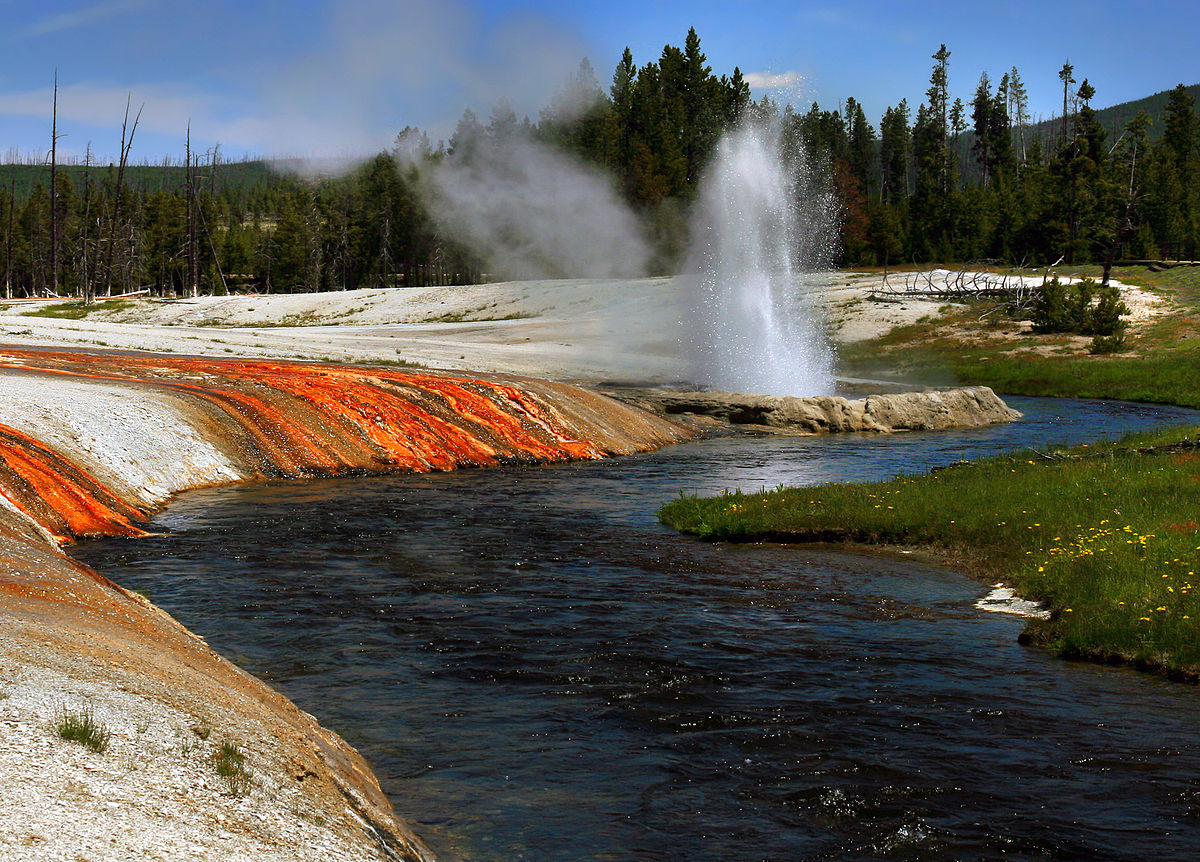
Early trappers named it the Firehole for the steam that makes it appear to be smoking, as if on fire. The steam, of course, is a result of the river flowing through several significant geyser basins in the park.
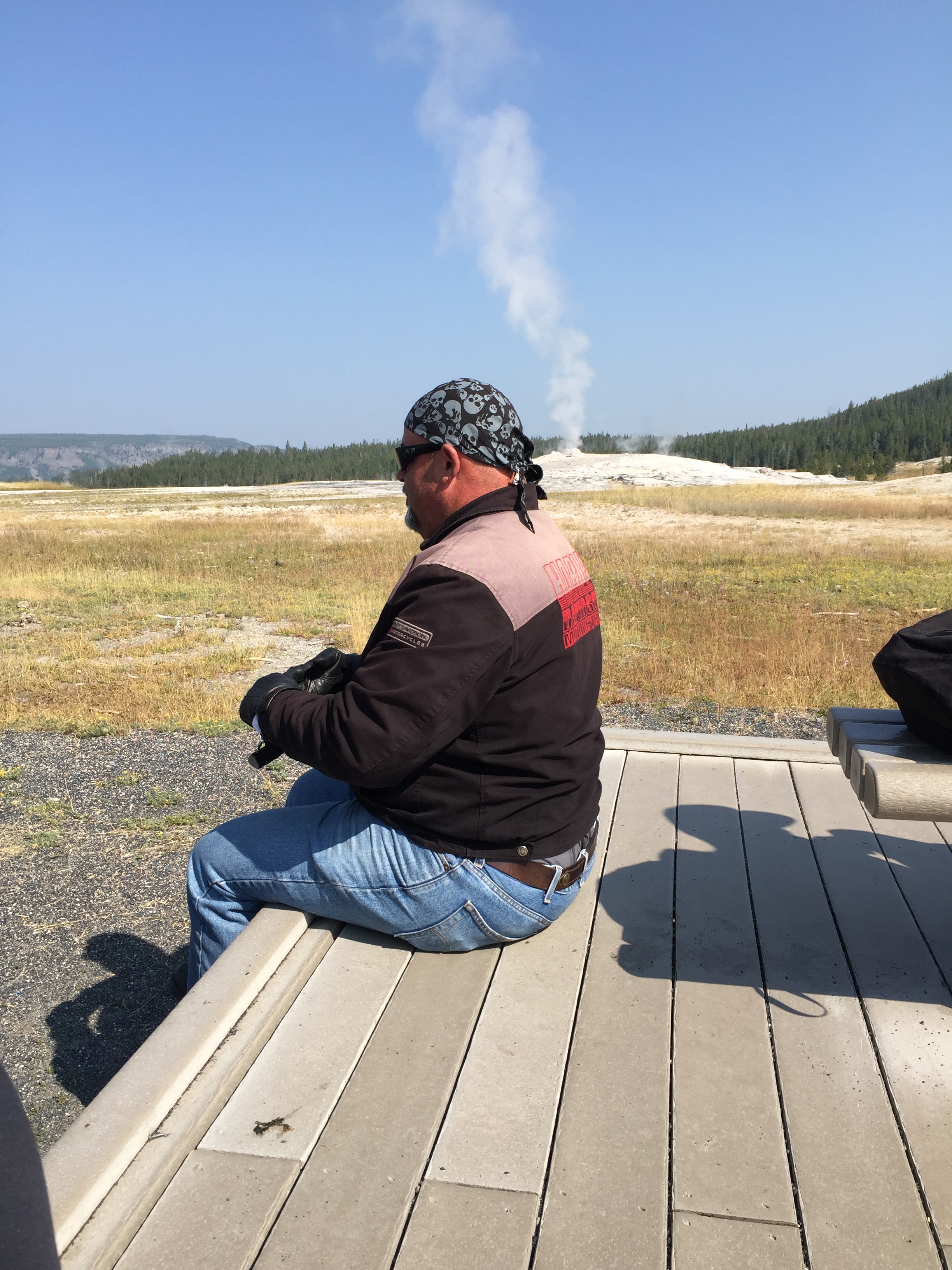
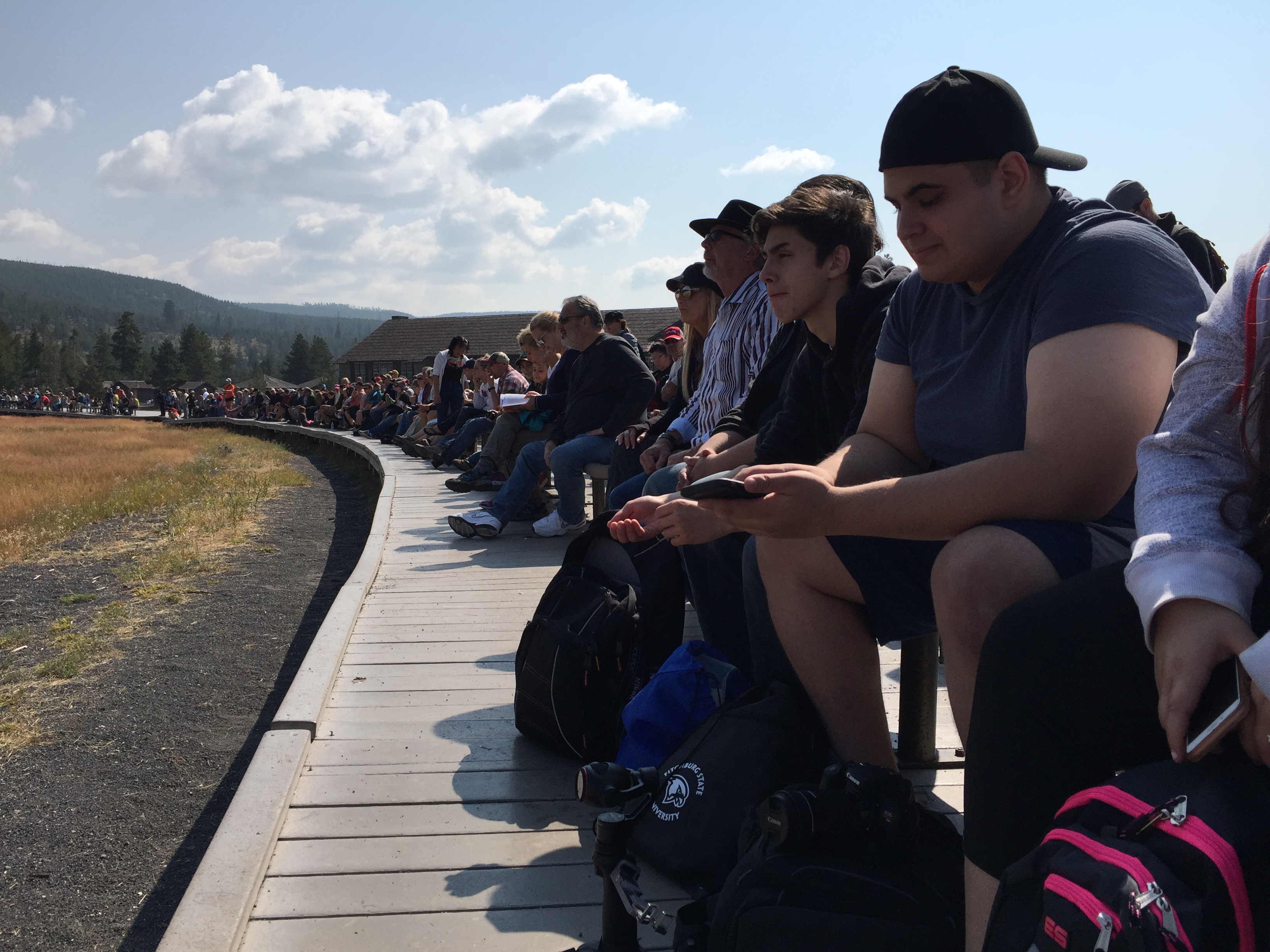
One of those geyser basins is the Upper Geyser Basin, which contains the world-famous Old Faithful – the first geyser in the park to receive a name. It’s faithful, for sure, erupting every 44 to 125 minutes, 365 days a year. The reliability of Old Faithful can be attributed to the fact that it’s not connected to any other thermal features of the Upper Geyser Basin.
Each eruption shoots up to 8,400 gallons of boiling water to a height of up to 185 feet. The eruptions generally last from a minute and a-half to five minutes.
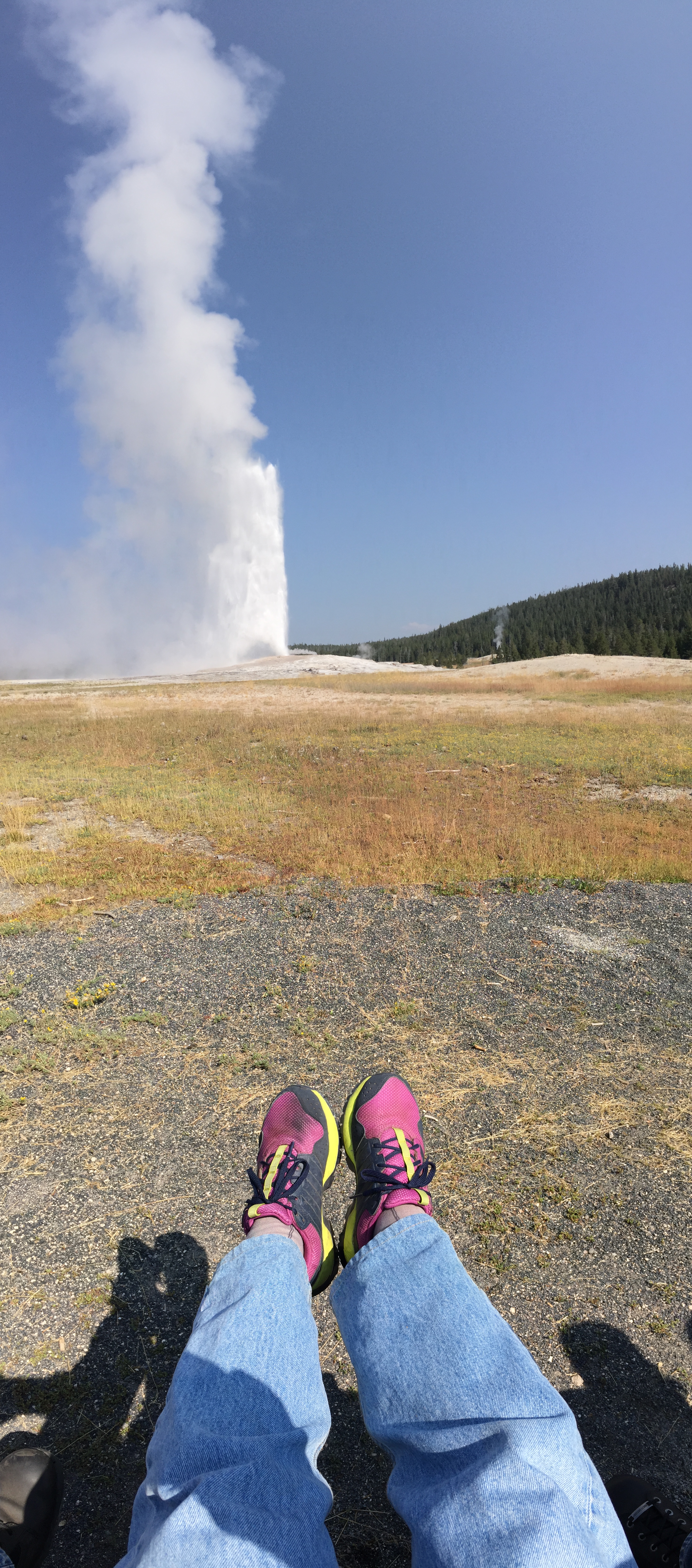
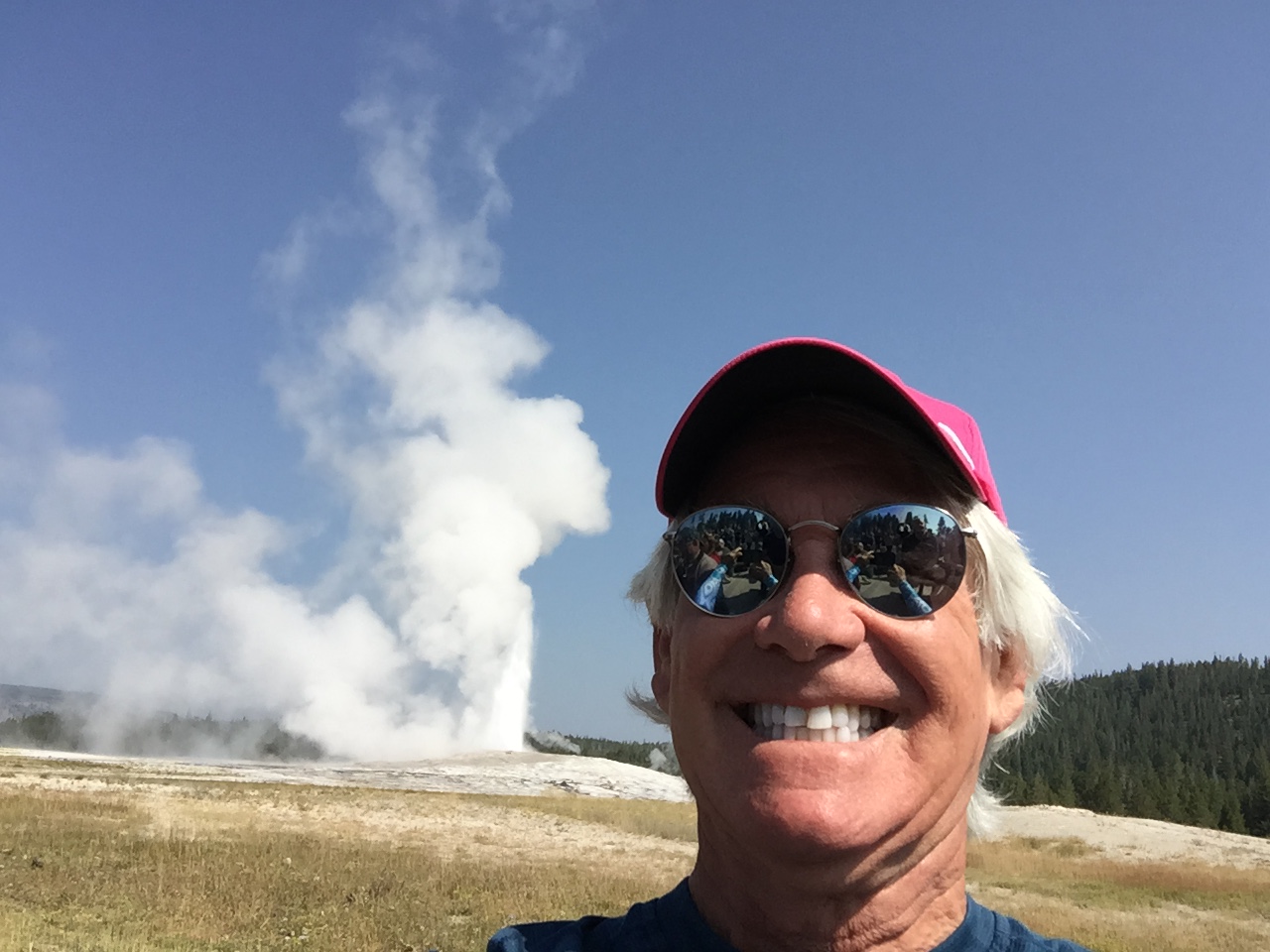
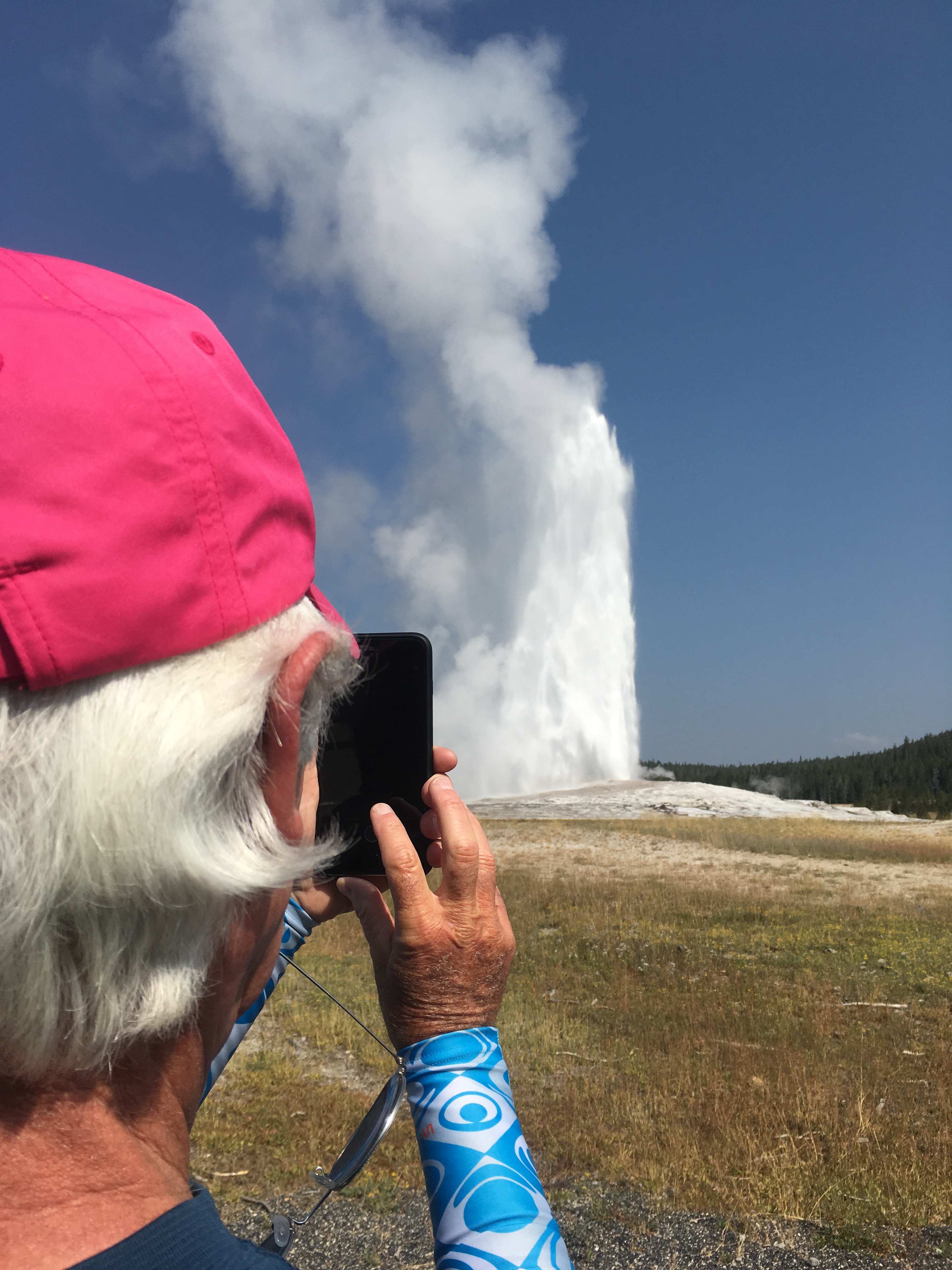
Before leaving West Yellowstone this morning, we checked a geyser timetable to reduce the chances of disappointment. We get to Old Faithful, and sure enough, it erupts, almost on cue.
Since you can’t be with us, the next best thing is to check the Old Faithful live webcam. You’re welcome.
People from all over the world come to Yellowstone to watch Old Faithful erupt. The park’s wildlife and scenery are well known today, but it was the unique thermal features that inspired Yellowstone to become the world’s first national park in 1872.
Old Faithful is one of nearly 500 geysers in Yellowstone – the greatest concentration of geysers in the world. Old Faithful is one of six geysers that park rangers can predict; its eruption pattern is so reliable that early developers built special viewing areas, lodging and concessions for visitors to watch eruptions.
Here, you can learn more about geysers at the Old Faithful Visitor Education Center, you can stay at the Old Faithful Inn, shop at the Old Faithful General Store, eat at the Old Faithful Lodge Cafeteria, or gas up at the Old Faithful Service Station.
***
We leave Old Faithful and continue east on Grand Loop Road, one of the park’s main thoroughfares. The road takes us over the Continental Divide, past Duck Lake, and to West Thumb, an arm of Yellowstone Lake. West Thumb is home to the West Thumb Geyser Basin, formed by a large volcanic explosion about 150,000 years ago.
The resulting collapsed volcano, called a caldera (“boiling pot” or cauldron), later filled with water, forming an extension of Yellowstone Lake. That extension is known as the West Thumb, which is about the same size as another famous volcanic caldera, Crater Lake in Oregon.
At West Thumb, the road turns south, and we soon pass Lewis Lake, named for Meriweather Lewis, commander of the Lewis and Clark Expedition. The Lewis River and the Snake River meet just north of the park’s South Entrance.
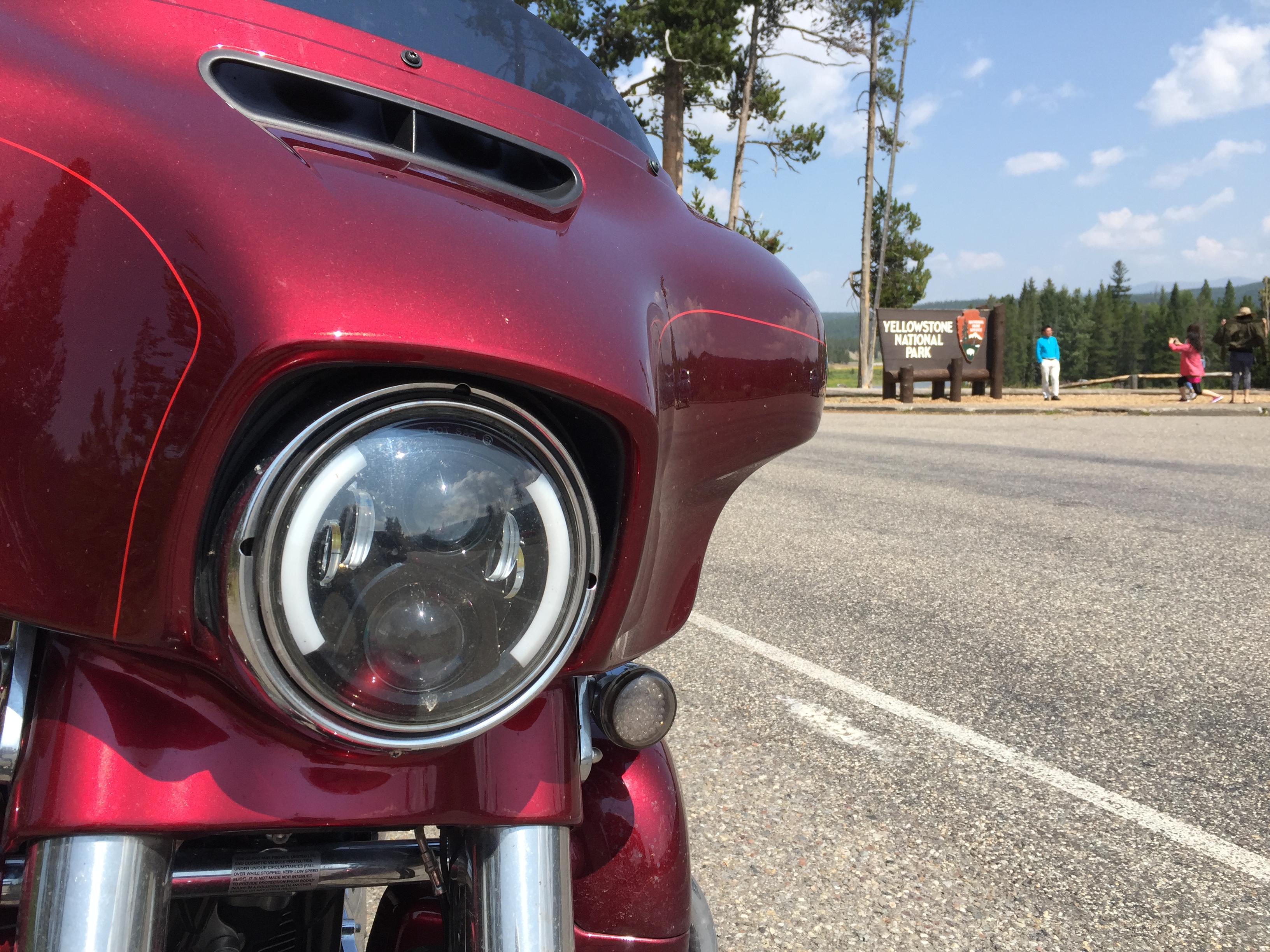
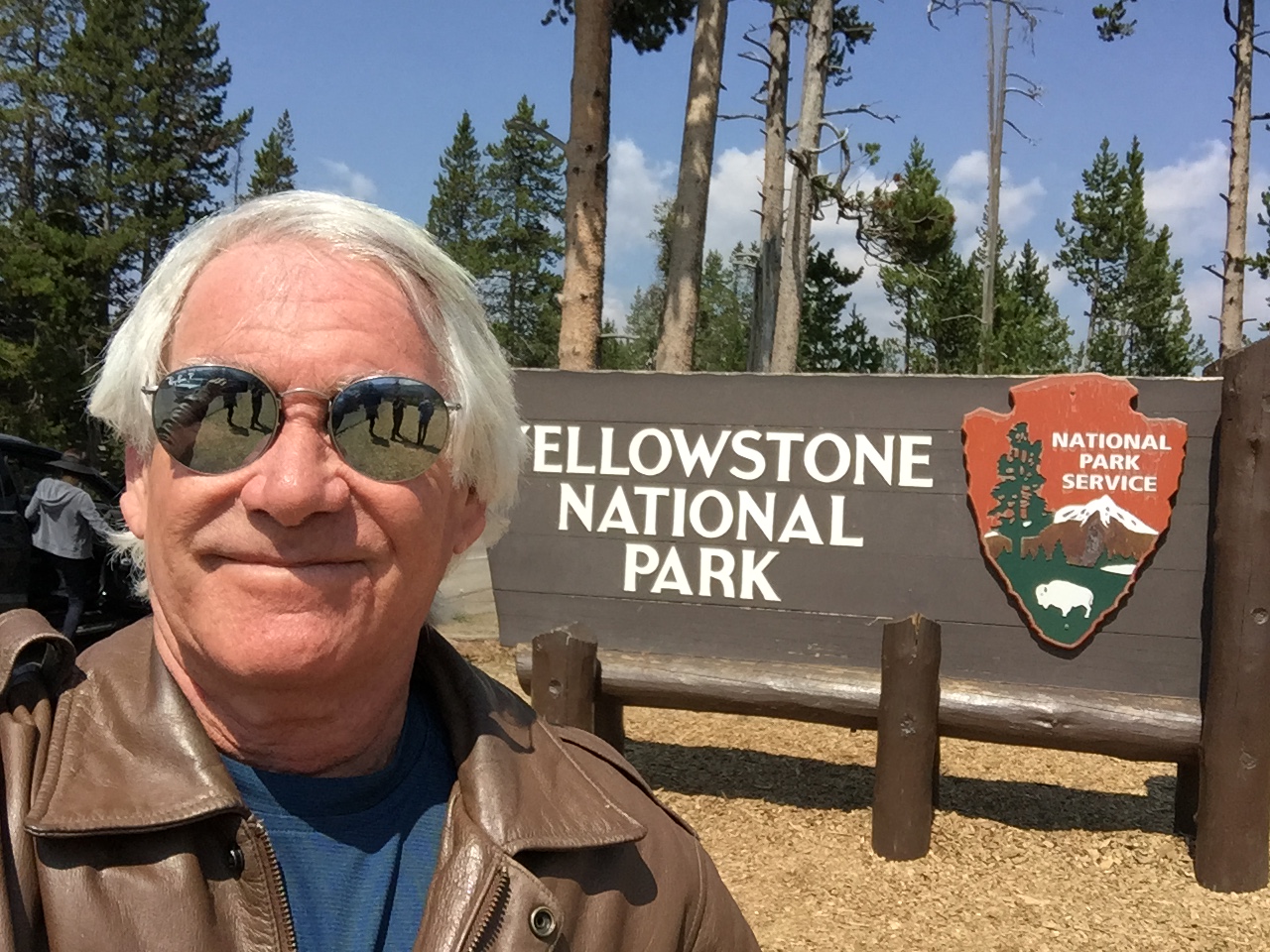
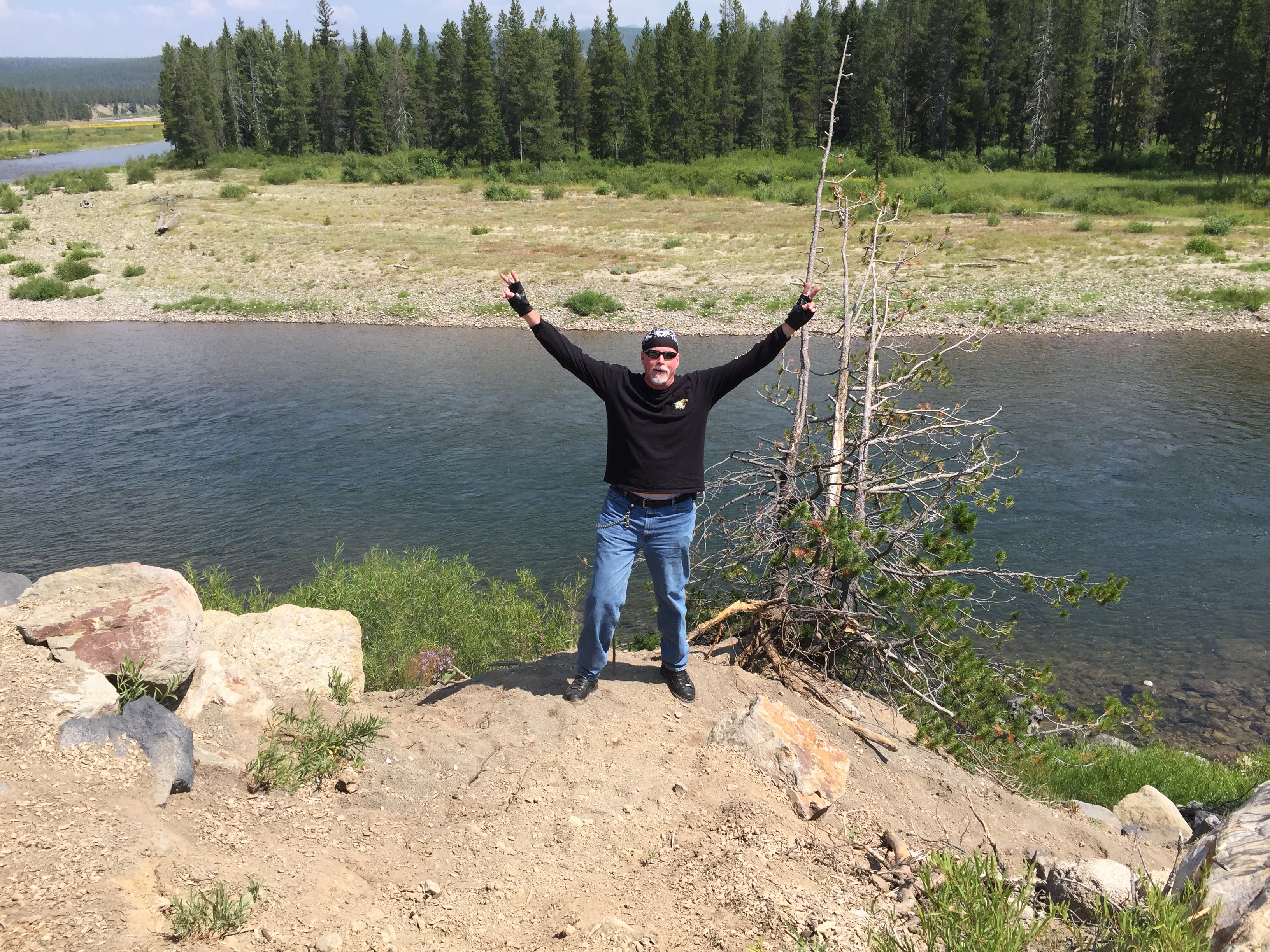
We leave Yellowstone National Park and follow the Snake River, soon crossing it as we head toward yet another National Park – Grand Teton.
The scenic road that connects Yellowstone to Grand Teton National Park is called John D. Rockefeller Memorial Parkway.
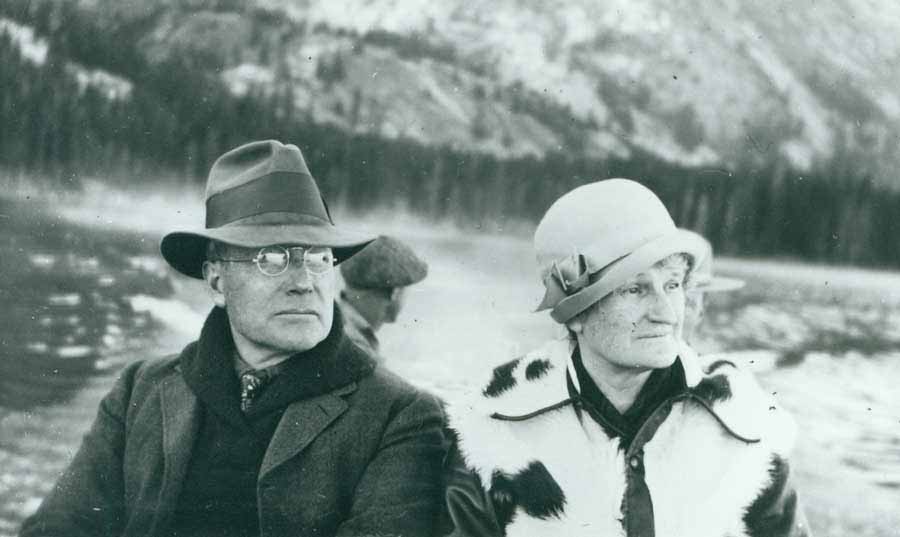
The 24,000-acre Rockefeller Memorial parkway was originally part of Teton National Forest, but was transferred to the National Park Service in the 1970s to create an unbroken connection between the two national parks.
Rockefeller was a conservationist and fabulously wealthy philanthropist who was instrumental in the creation and enlargement of a number of national parks, including Grand Teton. By the time Rockefeller died in 1937, his assets equaled 1.5 percent of America’s total economic output. To control an equivalent share today would require a net worth of more than $350 billion. He’s considered the wealthiest person in modern history. Rockefeller founded Standard Oil, which at its peak, had about 90 percent of the market for refined oil (kerosene) in the US. You gotta love a monopoly!
I’ll say this for Rockefeller: despite his great wealth, or perhaps because of it, he helped make the world a better place through his philanthropy – including purchasing and donating thousands of acres of land to the US National Parks system. Rockefeller serves as a shining example that becoming astonishingly rich doesn’t automatically make you a flaming a_ _ hole.
***
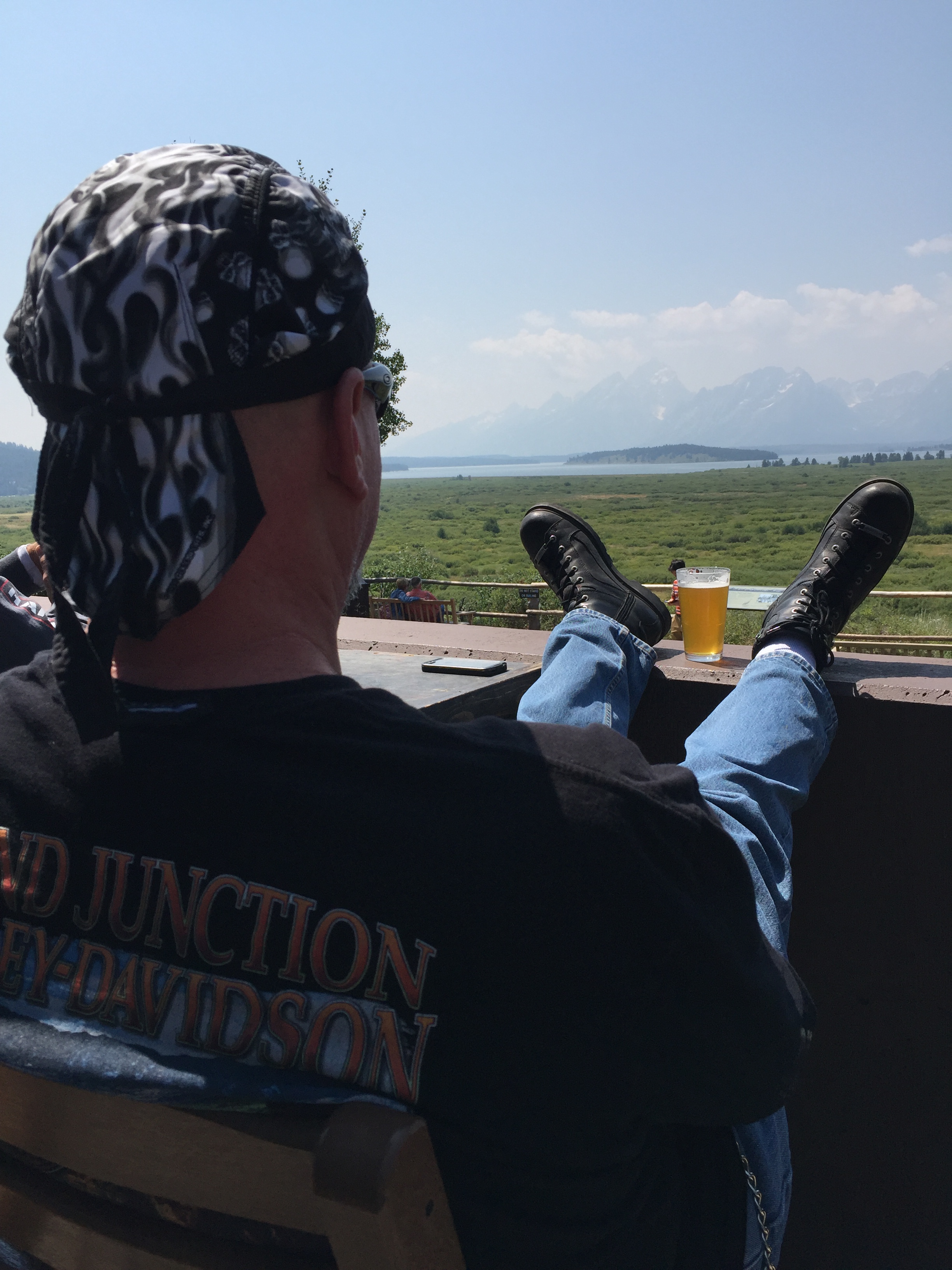
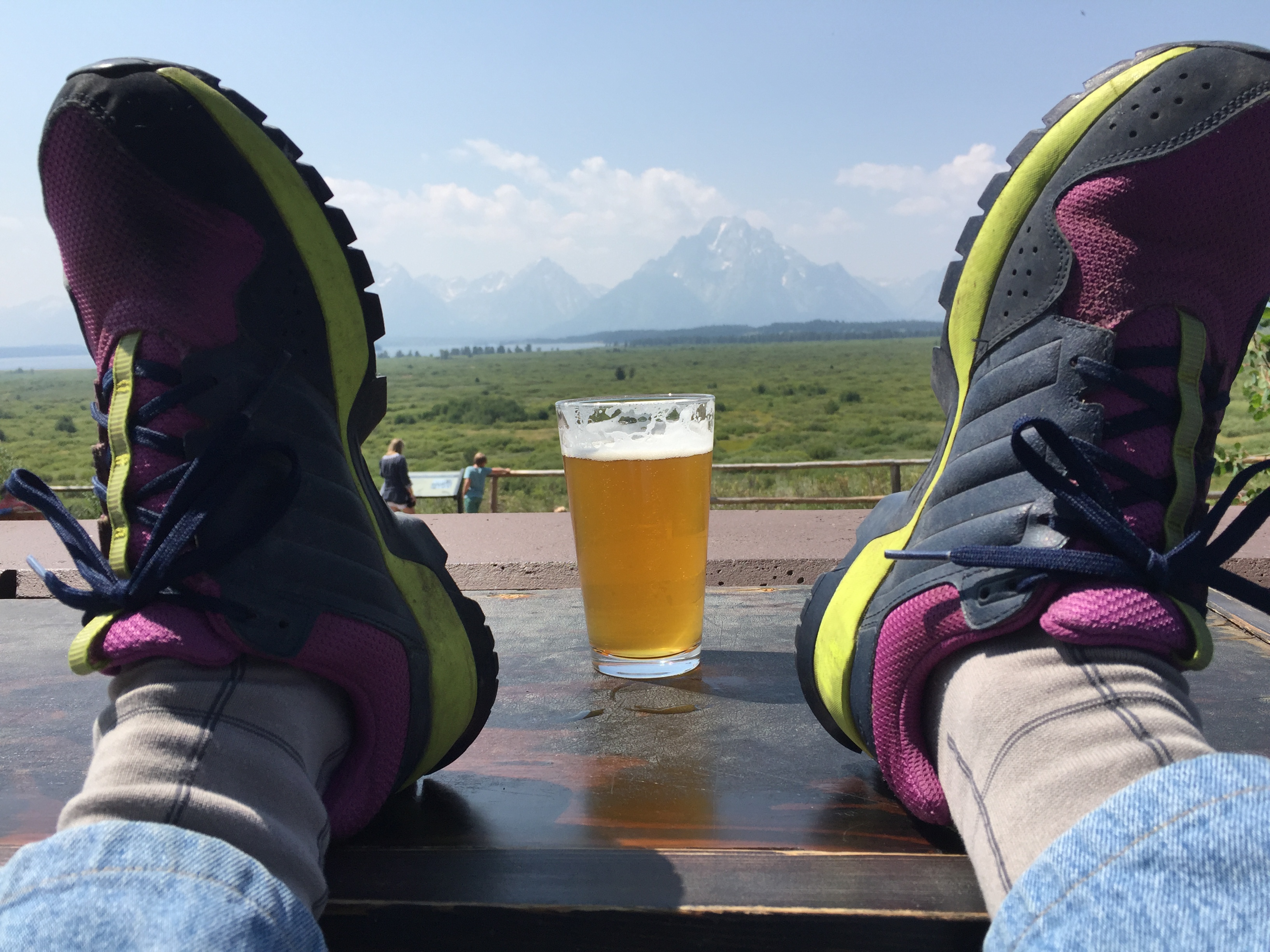
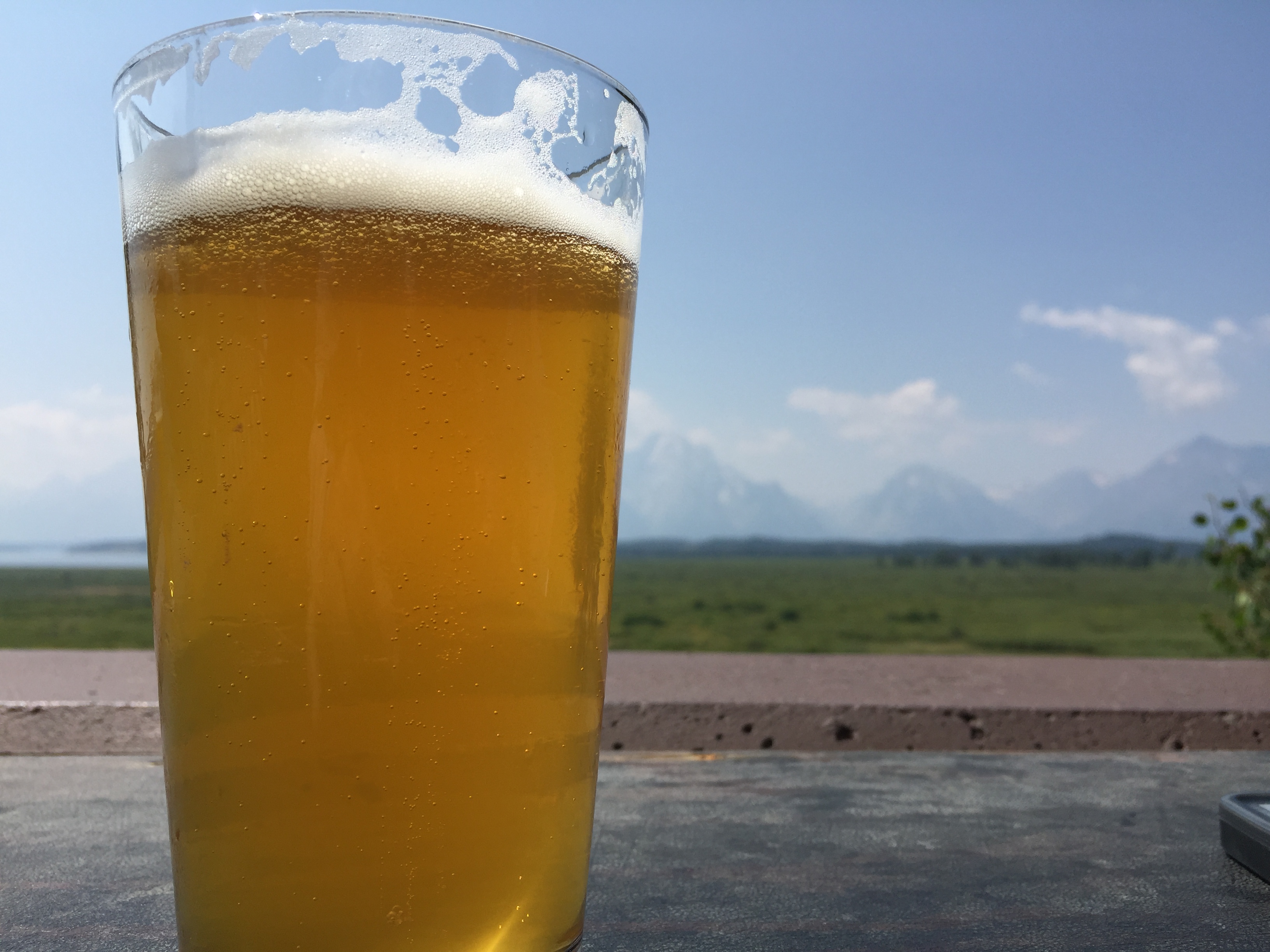
It’s not long before we find ourselves riding along the eastern shore of Jackson Lake, at 6,772 feet, one of the largest high-altitude lakes in the US. The lake is named after the Jackson Five, early mountain pioneers who later in life perfected their Motown sound. That’s a much better story than the truth, which is that it was named after David Edward “Davey” Jackson, a beaver trapper in the area in the late 1820s.
Seems everything around here is named after Davey – including the towns of Jackson and Jackson Hole, and Jackson Lake Lodge, which we pass, then turn east on Teton Park Road to take the extraordinarily scenic route to Jackson Hole.
Near the unincorporated town of Moose, we turn onto Moose Wilson Road, another breathtaking detour, and continue toward Jackson Hole. The road is lined with chokecherry and hawthorn bushes.
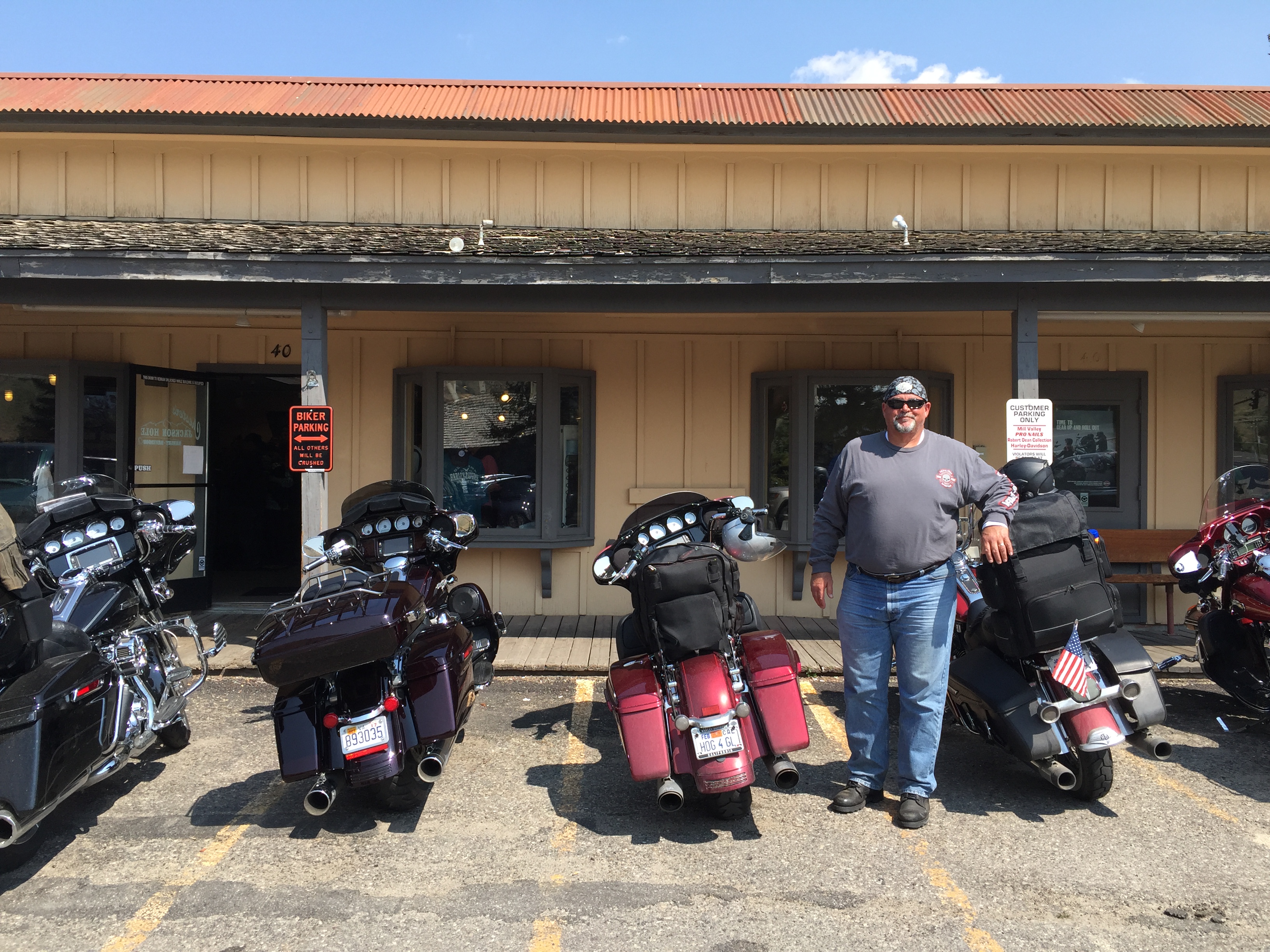
Just outside of the town of Jackson Hole, we arrive at Teton Village, home to the Jackson Hole Mountain Resort.
Jackson Hole, with a peak elevation of 10,450 feet, is known for its steep terrain and a vertical drop of 4,139 feet. With the Teton Range’s uniquely shaped peaks, it’s a spectacular setting for a ski area.
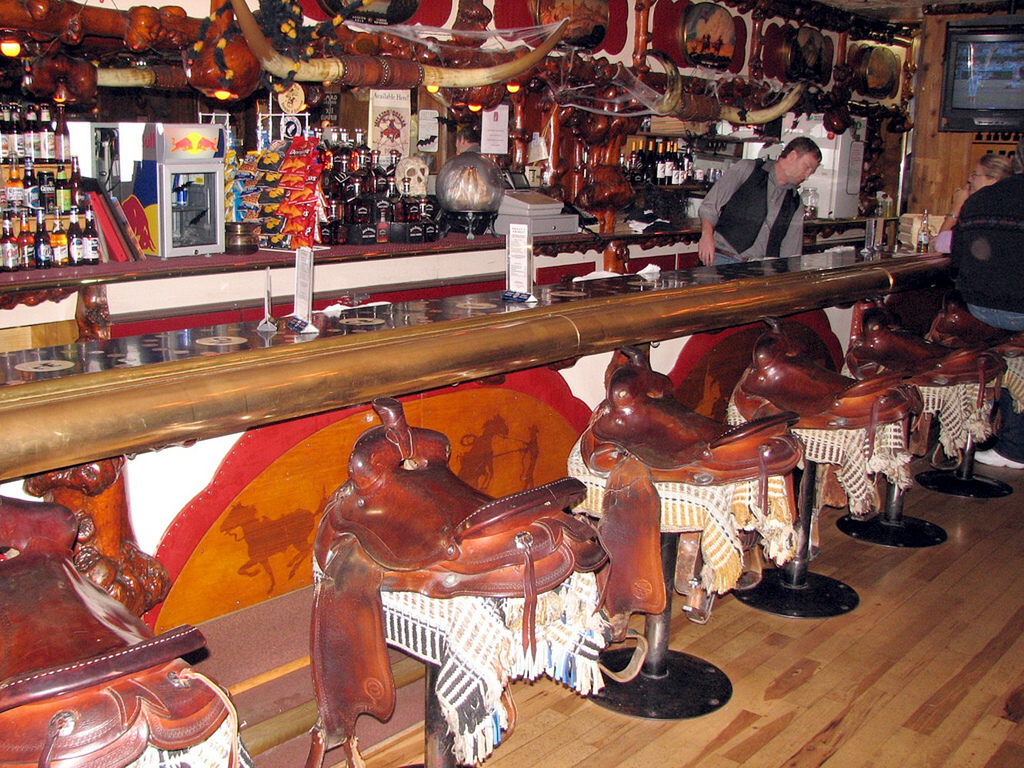
If you’ve ever been to Jackson Hole, you probably stopped at the Million Dollar Cowboy Bar, which has been around for more than 125 years. Over the years, its stage has hosted – among others – Waylon Jennings, Glen Campbell, Tanya Tucker and Willie Nelson. The Million Dollar Cowboy Bar’s saddle barstools have been a signature item since 1973, the year I first visited the place. It’s a good place to grab a cold one on a hot day.
From Jackson Hole, it’s 70 miles to today’s destination: Afton, Wyoming.
We follow the Snake River south to Alpine Junction, and continue until we see the world’s largest arch made of elk antlers. The arch is made up of 3,011 elk antlers, spanning 75 feet across Afton’s Main Street.
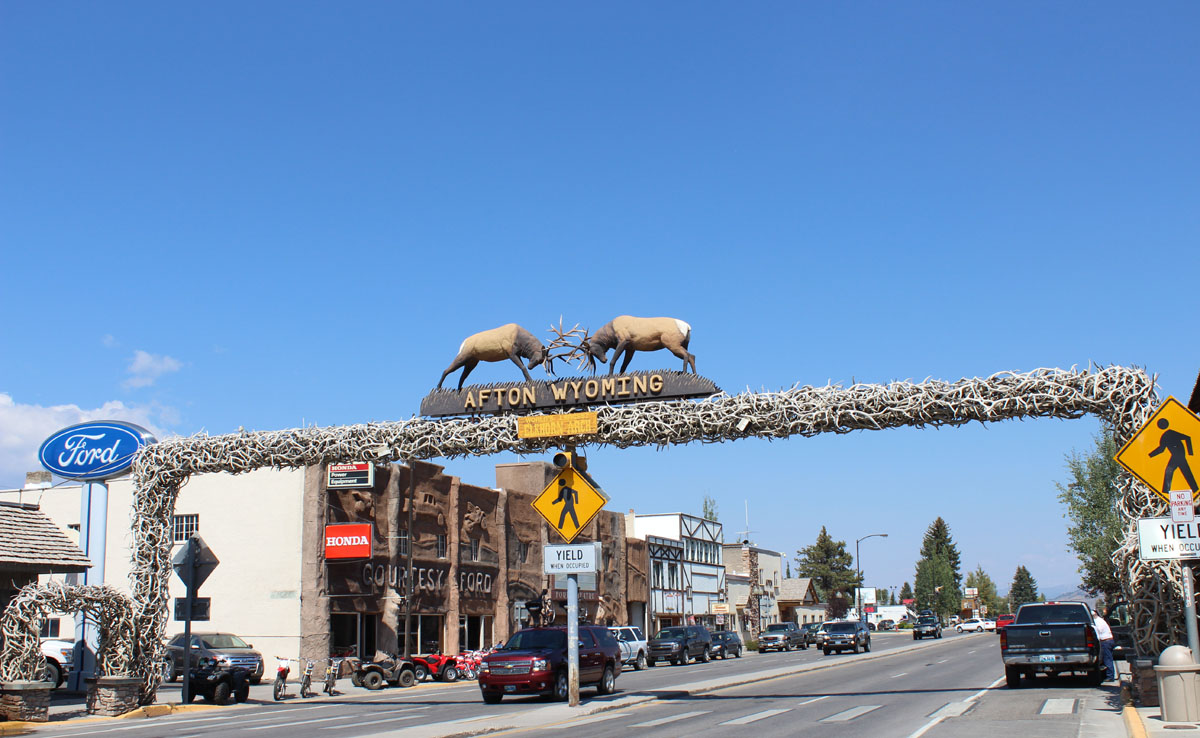
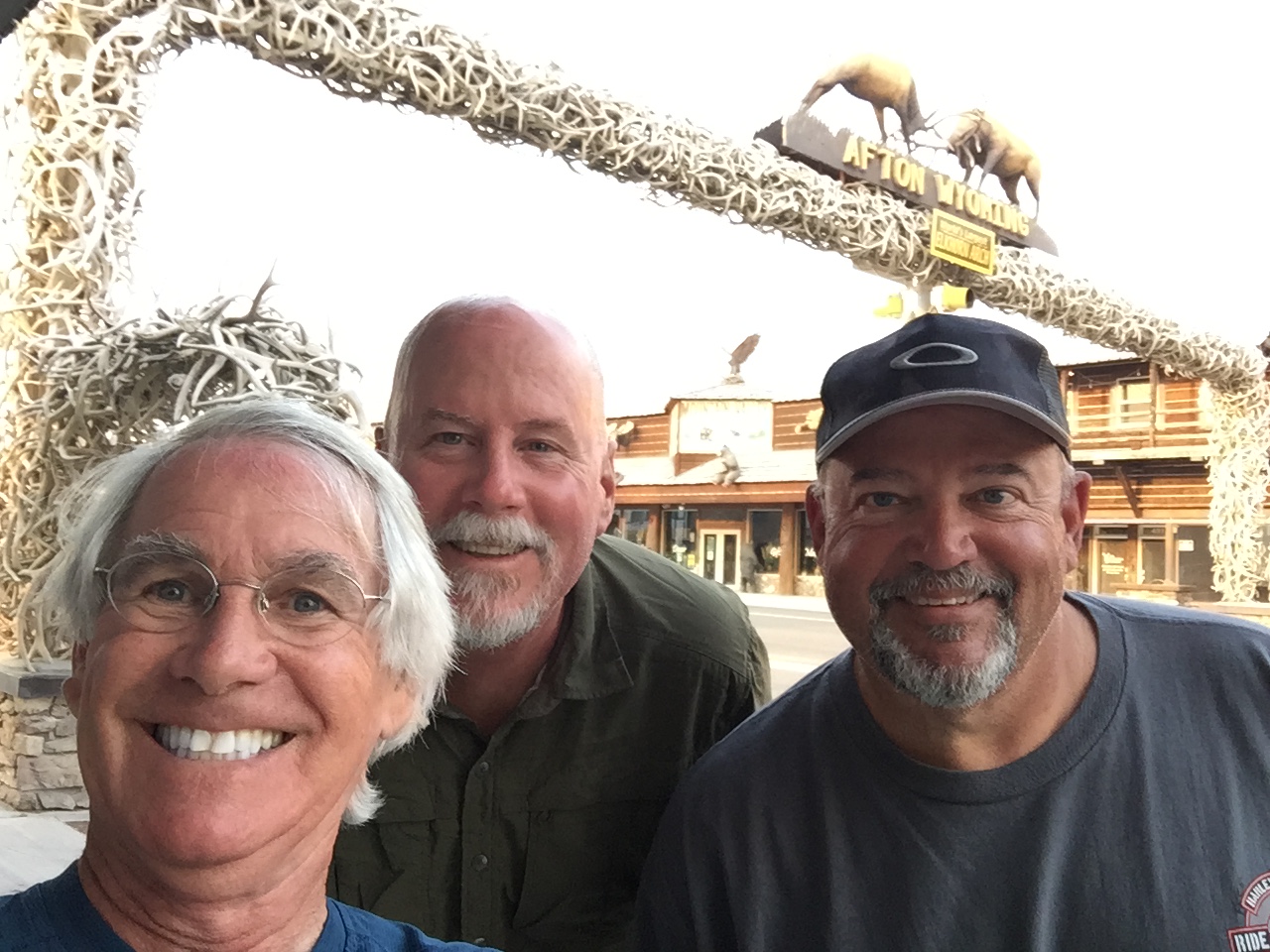
Good place to call it a day. How can you possibly improve on 15 tons of antlers?
***
Day Fourteen Summary: Two National Parks in one day, the predictability of Old Faithful, using your wealth to do good for the neighborhood.
Click here to see today’s complete route from West Yellowstone to Afton.
We’re on our way home.
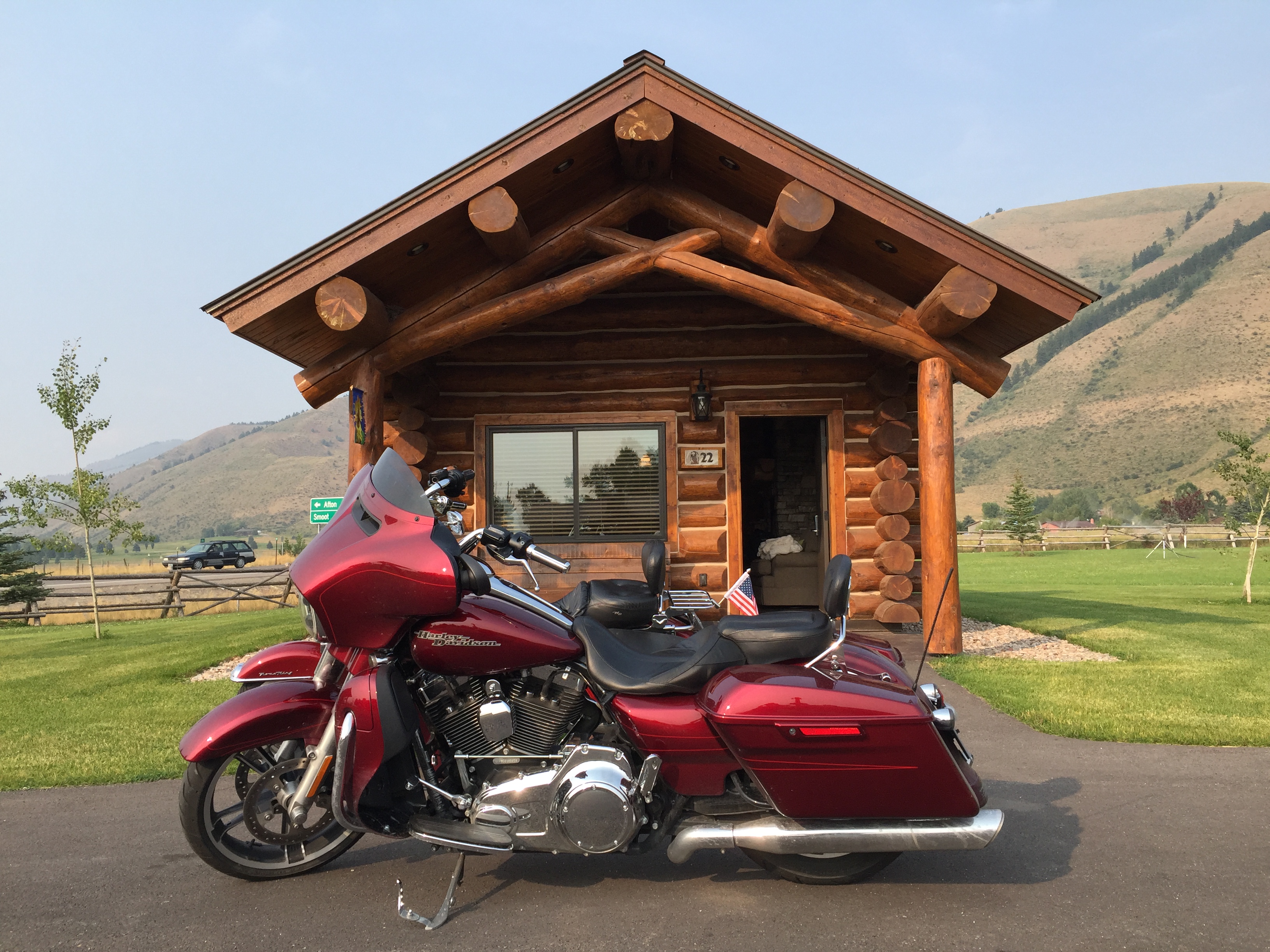
Vroom, vroom.
***
Today in Bucket List History:
Bucket List Goal: “Rename Your Company So Nobody Knows Who You Are or What You Do.”
Goal Achieved: On August 10, 2015, Google restructures itself, placing its search business and its research ventures into a holding company called “Alphabet.” Want to learn more about that? Just Google it.

What’s on your bucket list?
***
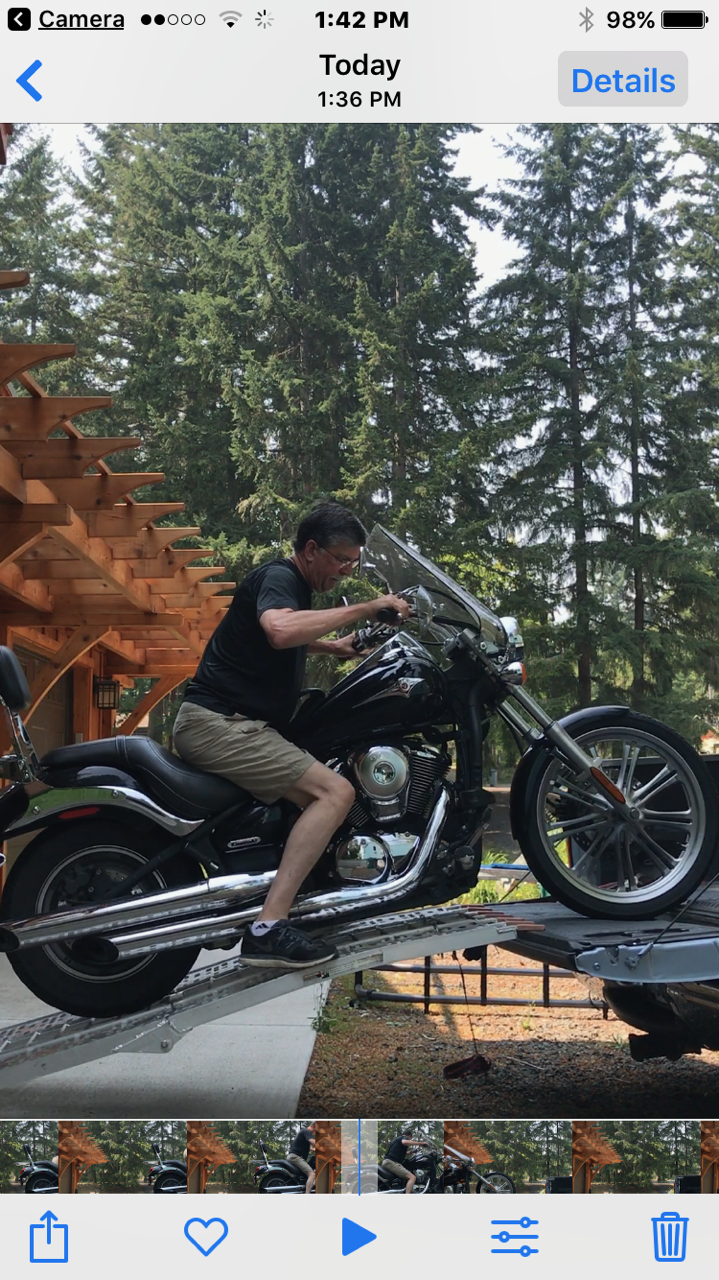
As a postscript, Randy and his Kawasaki arrived at the bike’s parking spot in Poulsbo. Here in the photo below, he unloads it from his F-150. Don’t try this at home.
 Riding With Gary
I’ve gained five pounds!! Just ingesting your edibles!! Tooo much fun:))) Hurry home/Marin…
Sent from my iPhone
>
LikeLike
The diet begins next week, when the trip ends. Home 🏡 in Marin on Wednesday 👍👍👍
LikeLike
I agree with the postscript. The only time I ever dropped my Harley was when I was loading it onto my truck at the end of my Sturgis ride back in 2000.
jwc
LikeLike
You rode a Harley?
LikeLike
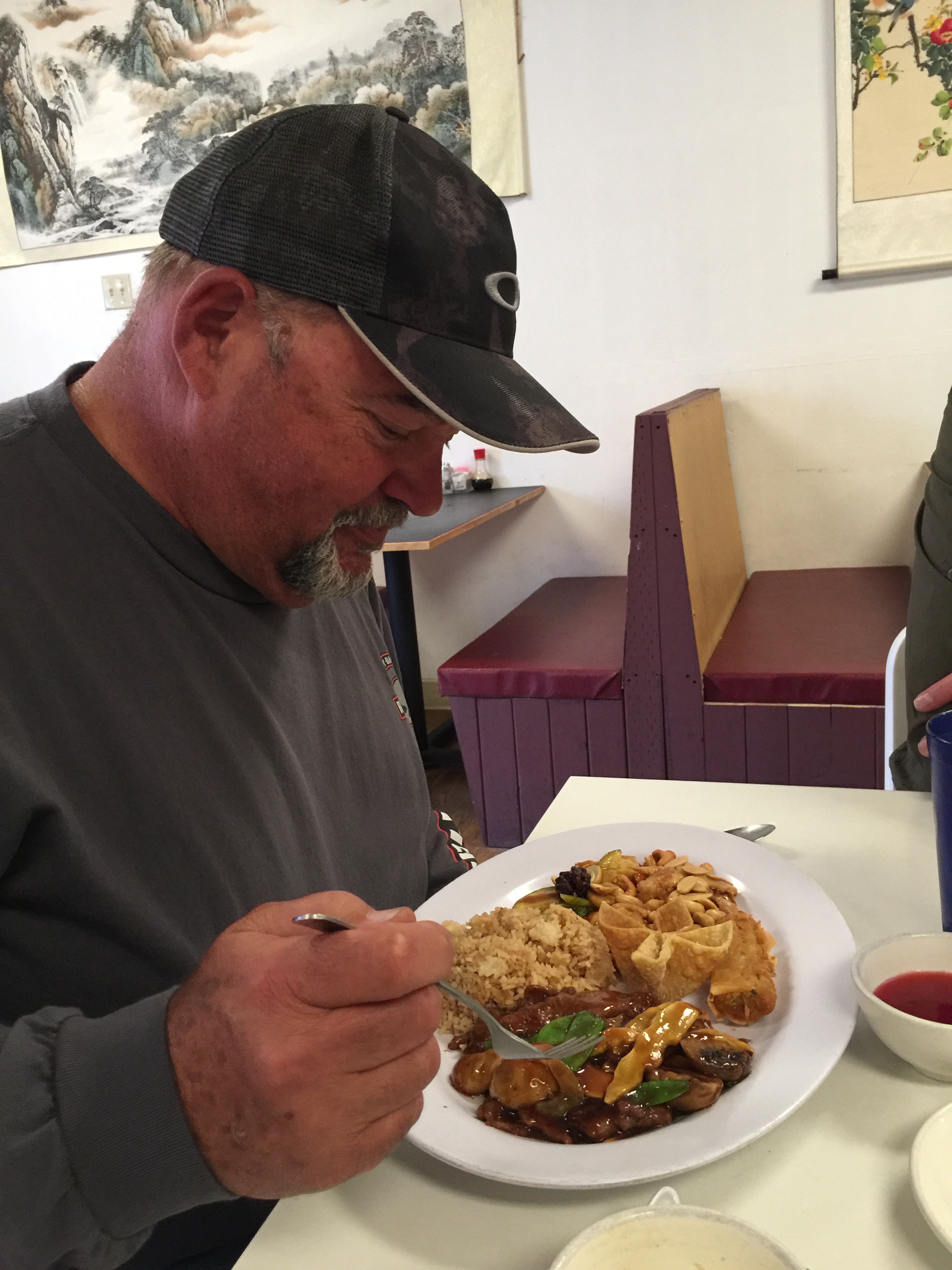
You, with a sweet tooth, would have the sweet roll😋. Lookslike a beautiful ride 👏
LikeLike
You are correct, Darlin’! Way less calories than the rest of the posse 😎👍😎
LikeLike
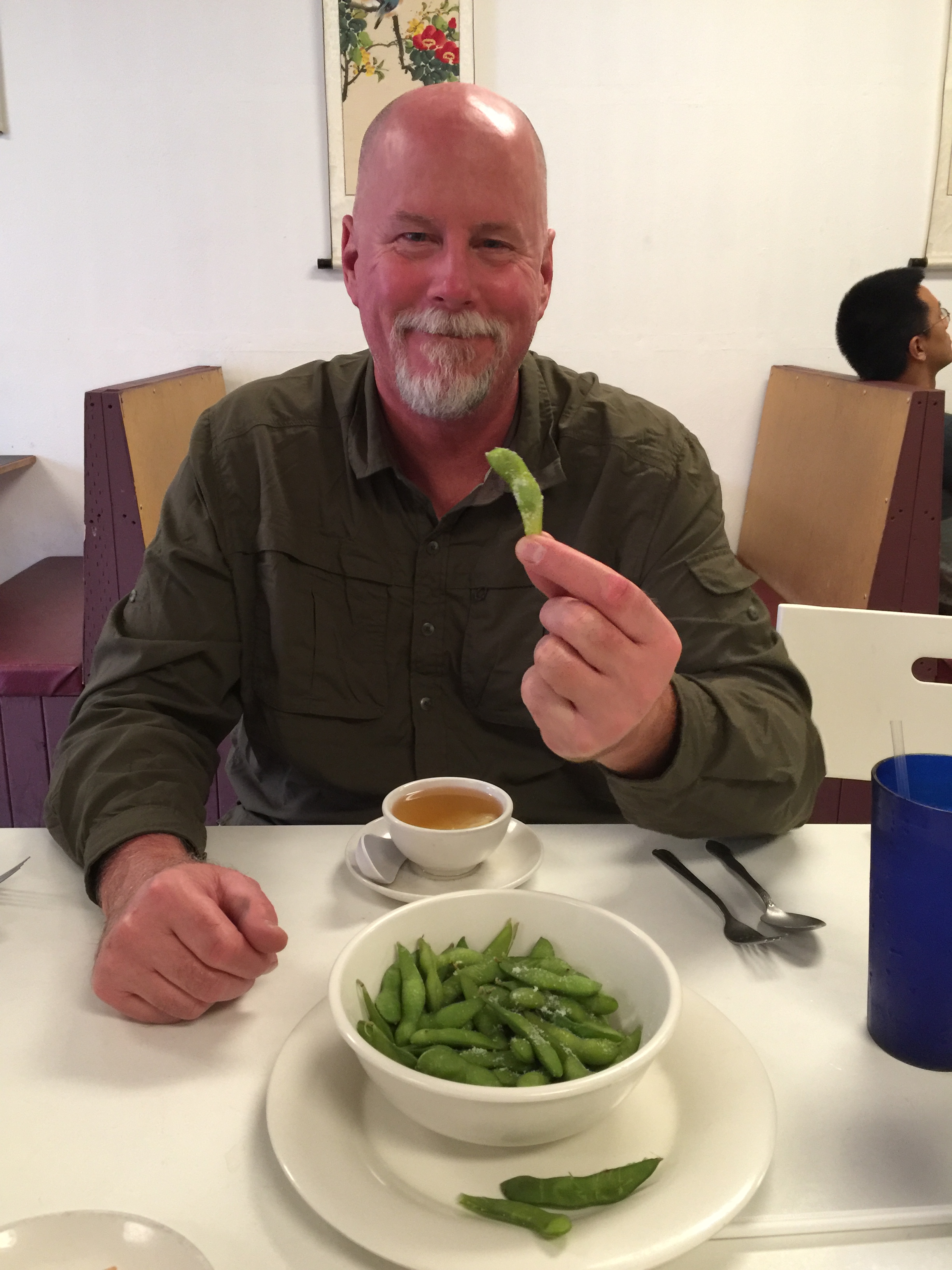
Scott looked a little sad staring at his healthy dinner.
I understand Scott.
LikeLike
I have many questions about the amount and quality of the geysers you mentioned I your blog.
LikeLike
Hey Mr. Geyser Man, bring on the questions. All geysers, all the time.
LikeLike
You guys are seeing some awesome sights! I want to go for the whole trip next time! 😜
LikeLike
You guys are seeing some cool places! I’m going on the entire trip next time! 😜
LikeLike
Missing you since Rapid City! Regarding next trip … we’ll have to have a special board meeting (executive session, cuz it’s a personnel issue 🙂 to review your request.
Dave will likely have the tie breaking vote, ya know, like Mike Pence in the Senate.
LikeLike
You are still a prospect Gail. Lot’s more tasks before you can join Gary’s posse. He was just to ascared to tell you straight up. Ha! You will always be my wingman (or wing person). ❤️
LikeLike