After a hearty breakfast in Jasper, we ride south along the Athabasca River. Athabasca is a Cree word meaning “grass or reeds here and there.”
Today we will see one of the most spectacular sights in Canada. No grass is involved. Today’s natural high is mountains. And glaciers.
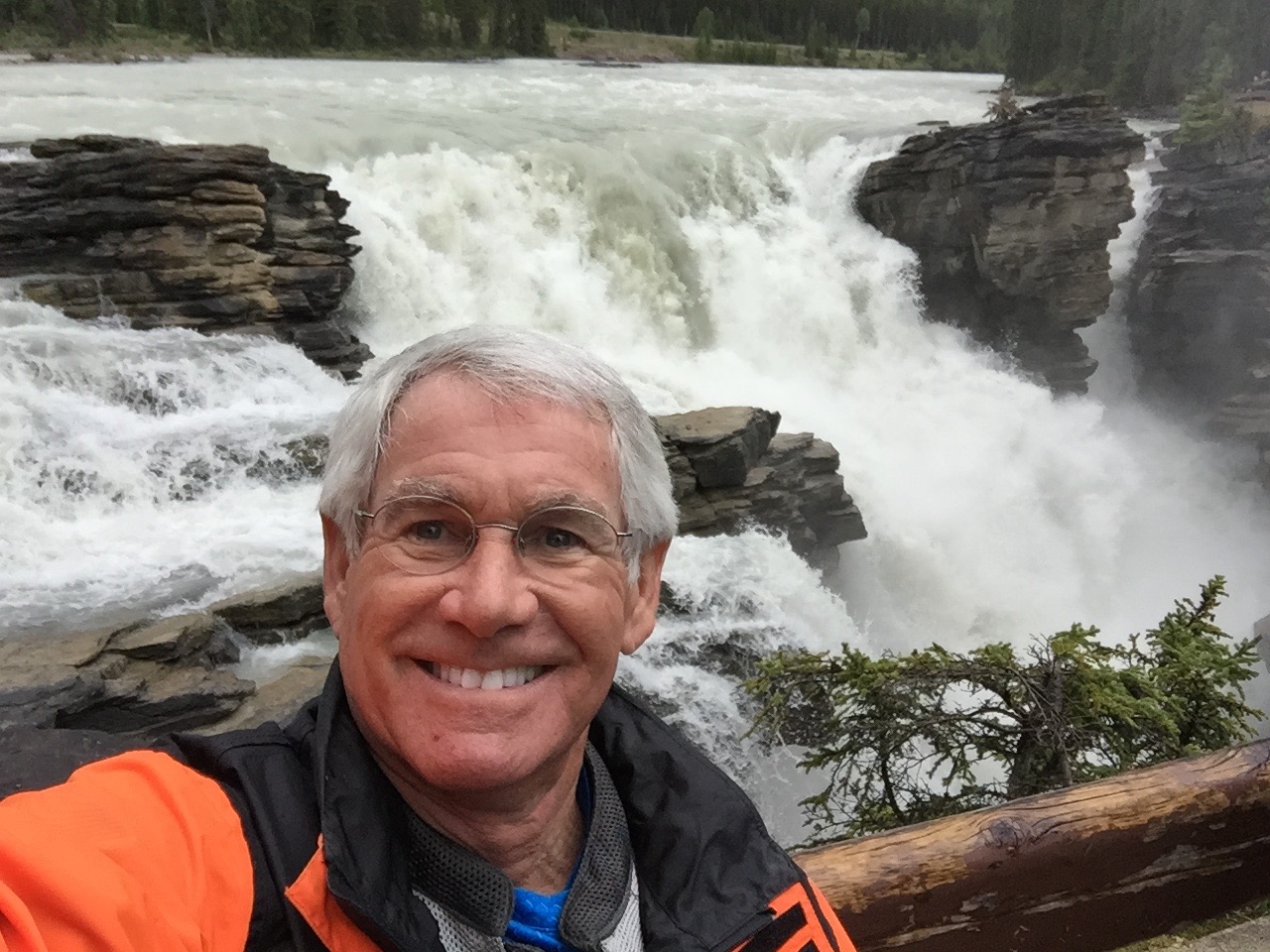
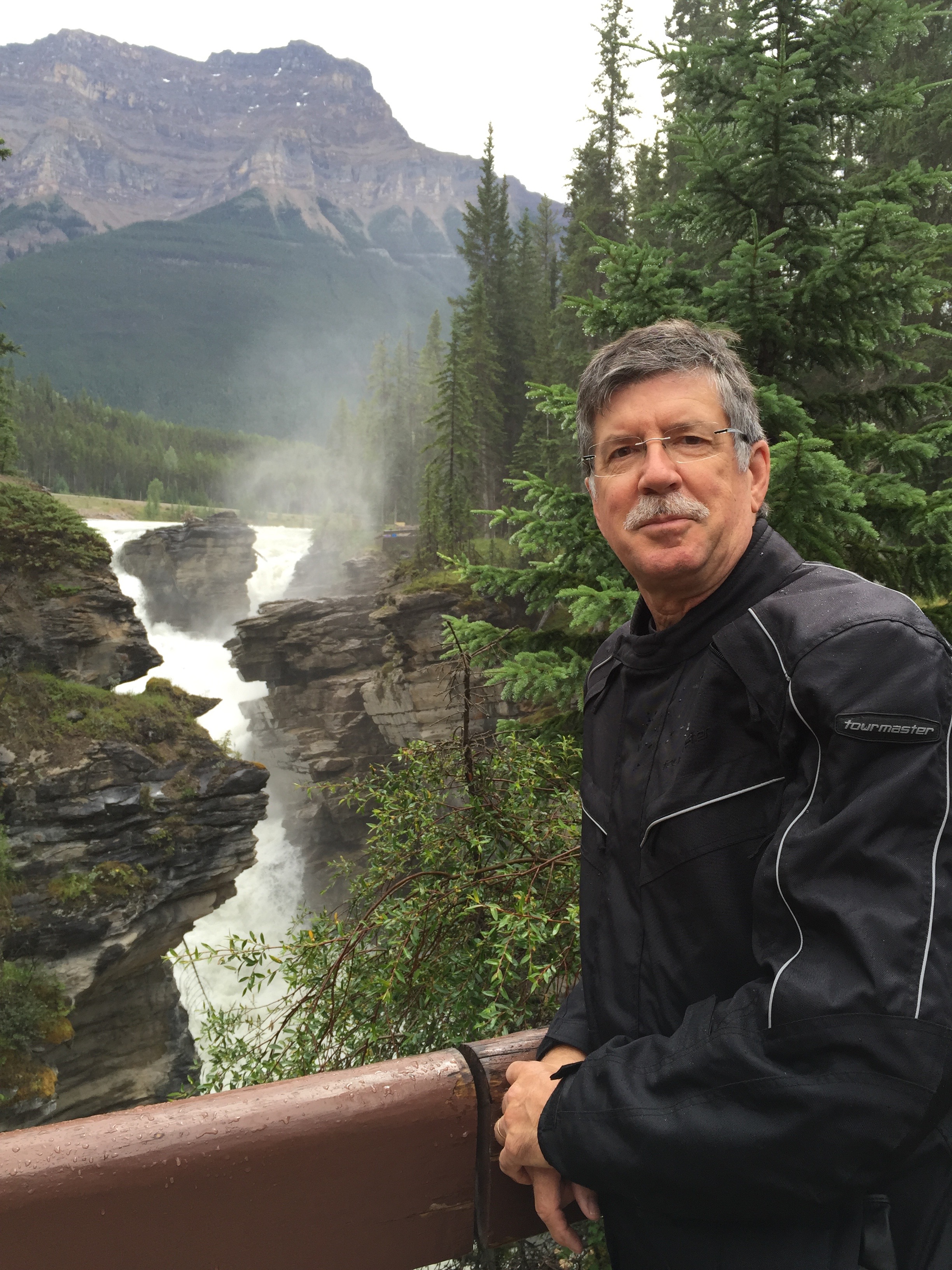
We turn south on Highway 93, the Icefields Parkway, or as the French call it, Promenade des Glaciers. The Icefields Parkway, whose northern end runs along the Athabasca River, will take us past Athabasca Falls to Lake Louise and Banff.
The Icefields Parkway parallels the Continental Divide through some of the most wild and remote portions of Banff and Jasper National Parks. It is a veritable feast of glaciated peaks, turquoise lakes, waterfalls and the spectacular Athabasca Glacier – part of the Columbia Icefield.
This summer, the Icefields Parkway celebrates its 75th birthday. It now attracts more than 1.2 million visitors every year, and has been recognized as one of the world’s “top drives of a lifetime” by National Geographic Traveler magazine. For a look at some other awesome drives, check out Twisted Sifter’s assessment of “roads to drive before you die“
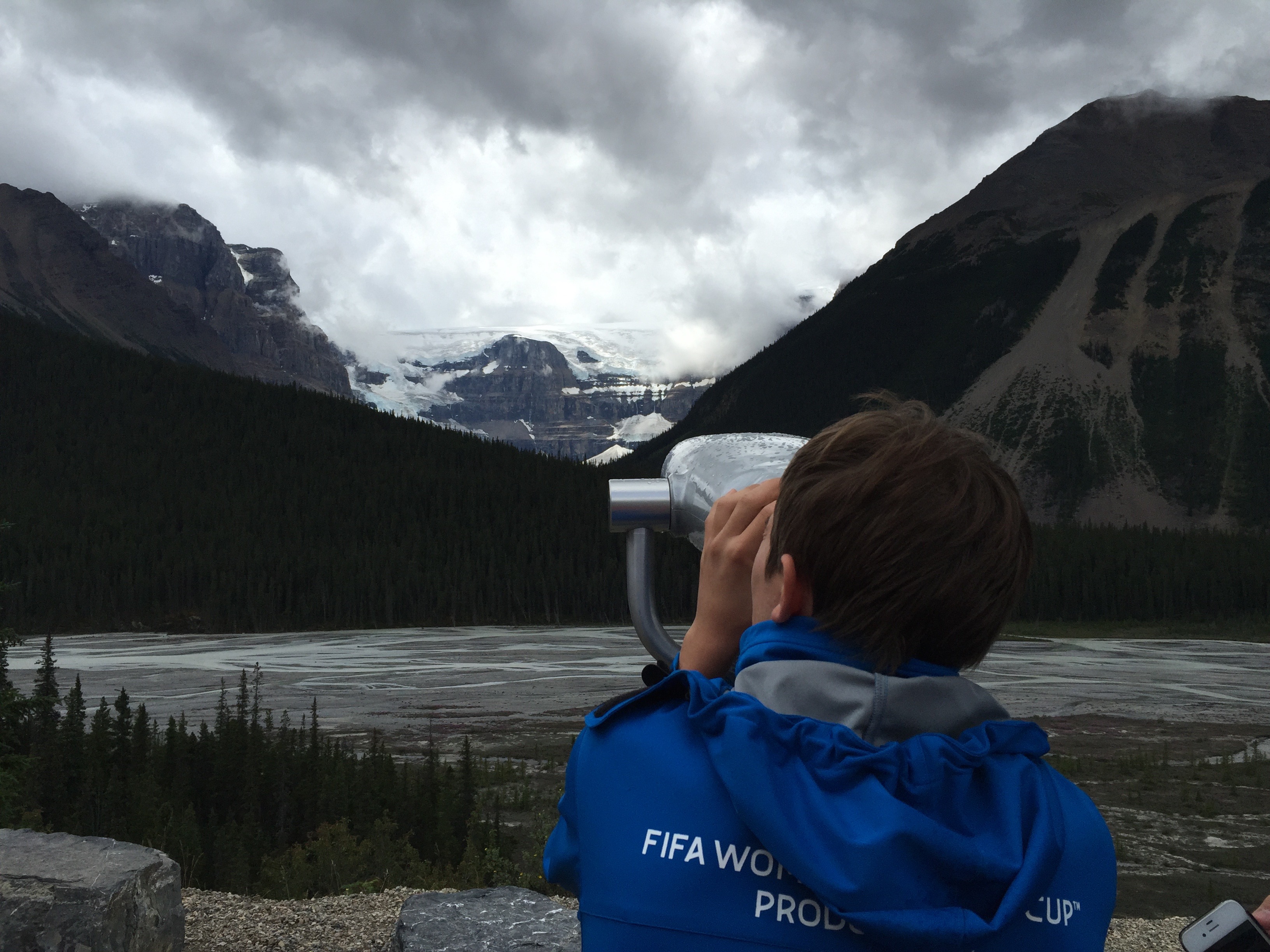
Because of its close proximity to the Icefields Parkway, and rather easy accessibility, the Athabasca Glacier is the most visited glacier in North America (take that, Alaska!). It’s one of the few places where you can literally drive right up to a glacier. The Columbia Icefield is the largest collection of ice and snow in the entire Rockies, and second only to the Arctic Circle among Northern Hemisphere ice-and-snow collections.
The glacier is currently receding at a rate of about 15 feet a year; it’s lost more than half of its volume over the past 125 years.
This part of Canada seems to have a superlative around every bend in the road. It’s a three-hour ride from Jasper to Lake Louise, nearly all of it breathtakingly spectacular. Words are wholly inadequate to convey its beauty.
***
Pictures are clearly the best the best way to express nature’s awesomeness. You may have noticed, in some of the photos posted on this blog, the presence of a GoPro camera or two – sometimes mounted on our helmets, sometimes on our bikes, occasionally in our hands. We even have a 53-inch telescoping GoPro selfie stick! I have a GoPro camera, and Randy has one, too. We brought the high-definition action cameras on this trip with the intention of making a movie about our journey.
Randy and I are GoPro neophytes, but we figured that, with our backgrounds in TV and film – me as a producer, and Randy as a director – we should be able to make a short film that won’t set back our careers or embarrass our families. Highly unlikely that anyone’s gonna fire us if the project flops.
When we get home, our plan is to take the footage from this trip, learn a bit about editing and eventually post our video online. No clue how long this will take us, but when the video is ready, we’ll send you a link to it.
In the meantime, here are some GoPro videos that should give you an idea of what we aspire to.
***
We cross the Saskatchewan River at a berg aptly named Saskatchewan River Crossing. It’s the only place between Jasper and Lake Louise offering basic services like gas, food and lodging.
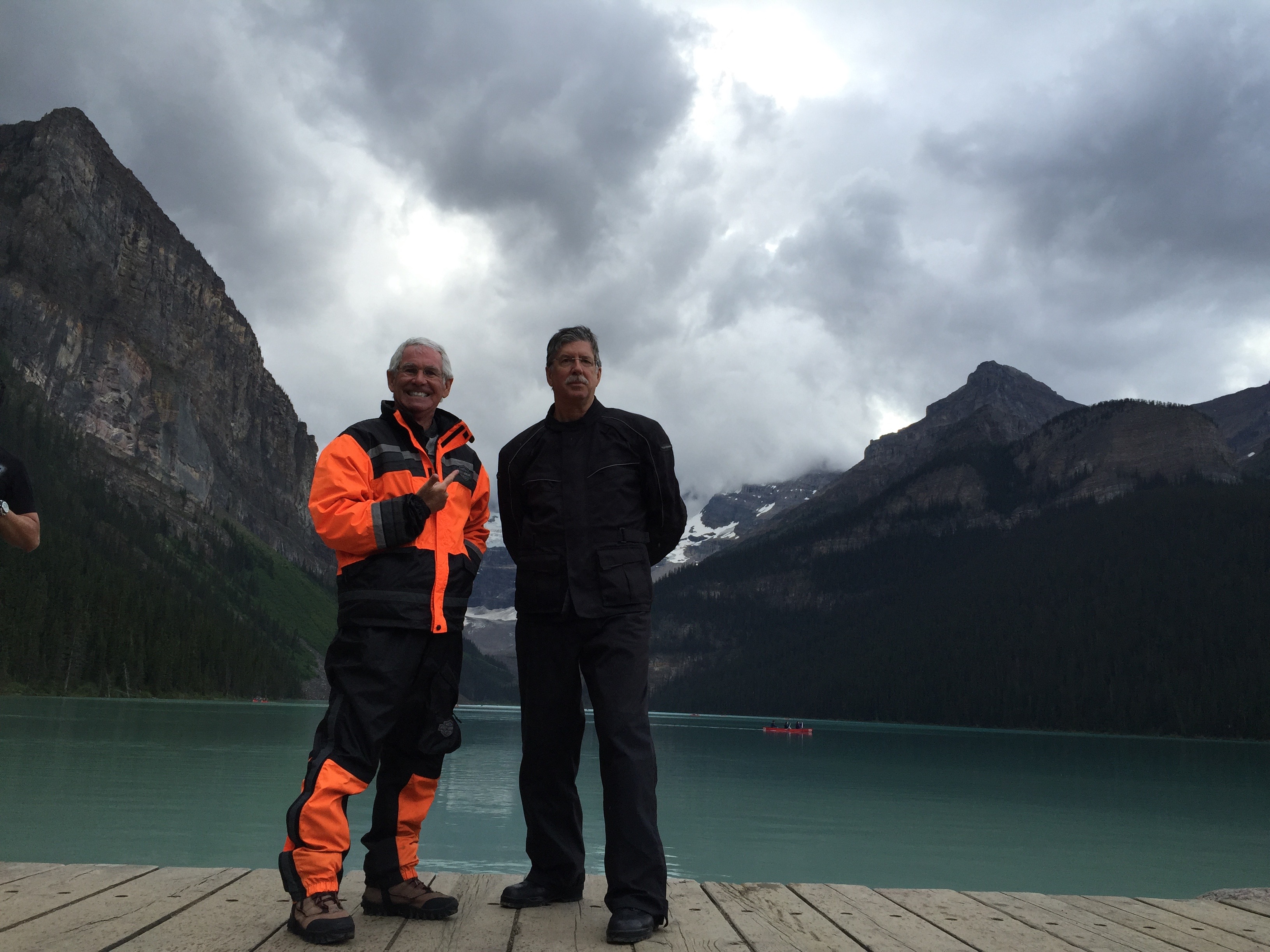
We arrive in Lake Louise, elevation 5,741 feet, around 6 o’clock. Here, you can max out your credit card staying at the Fairmont Chateau Lake Louise, or you can engage in more pedestrian activities like visiting Moraine Lake, one of the most photographed spots in the Canadian Rockies.
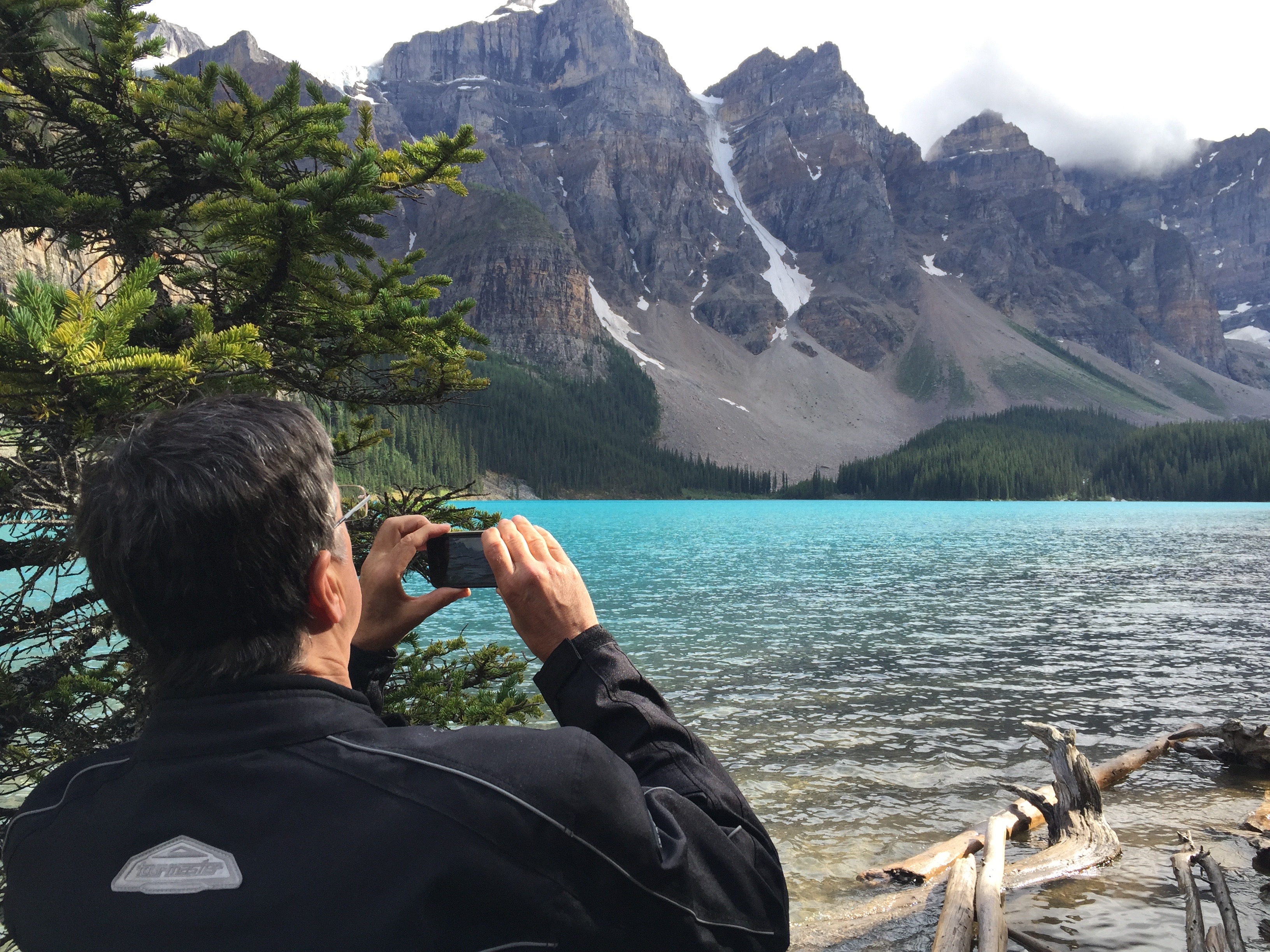
Moraine Lake, in Banff National Park, is about 10 miles south of Lake Louise. It’s a very popular spot for tourists. The lake’s water is a distinct shade of blue, nearly turquoise, due to the refraction of light off the rock flour deposited in the lake. Rock flour, sometimes call glacial flour, consists of fine-grained, silt-sized particles of rock, generated by mechanical grinding of bedrock by glacial erosion or by artificial grinding to a similar size. The rock flour is so fine that it doesn’t sink to the bottom of the lake. Instead, it remains suspended throughout the water.
The view of the mountains behind the lake is known as the “twenty-dollar view.” It’s really a million-dollar view, but a twenty will have to do: Moraine Lake was featured on the backside of the 1969 and 1979 issues of the Canadian twenty-dollar bill. Visiting Moraine Lake is Number two on Trip Advisor’s list of things to do in the Lake Louise Area.
***
In Lake Louise, we turn south on Highway 1, Canada’s Trans-Canada Highway, or as the French call it, Route Transcanadienne. The French have a name for everything in Canada. They should; French is one of two official languages in Canada, and is the mother tongue to about 22 percent of the Canadian population. The other? Um, English. French speakers are much more prevalent in eastern Canada, particularly Quebec.
The Trans-Canada Highway travels through all ten Canadian provinces, between the Pacific and Atlantic Oceans. Along with the Trans-Siberian Highway and Australia’s Highway 1, the Trans-Canada Highway is one of the world’s longest national highways.
In all, about 8,000 miles of road are classified as Trans-Canada Highway. The highway may stitch Canada together, but the Canadian federal government is responsible only for sections of highway that pass through national parks; the provinces look after everything else.
From Lake Louise to Banff – today’s destination, the Trans-Canada Highway follows the Bow River, an important source of water for irrigation, drinking water and hydroelectric power generation, primarily for Calgary’s use. Calgary, known for its Stampede that ended on Sunday, is about 100 miles east of Lake Louise.
From Lake Louise, it’s less than an hour’s ride to Banff, which sits at 4,600 feet, near the confluence of the Bow and Spray Rivers. Banff was first settled in the 1880s, after the transcontinental railway was built through the Bow Valley. The area was named Banff in 1884 by George Stephen, president of the Canadian Pacific Railway. Stephen was born in Banff, Scotland, and apparently was fond of his birthplace.
Banff, whose skyline is dominated by the peaks of Mount Rundle (9,675 feet) and Mount Cascade (9,839 feet), is yet another United Nations World Heritage Site. A Banff fun fact: the International Astronomical Union officially adopted the name Banff for a crater on Mars. Get out your telescopes: the crater is at latitude 17.7 degrees north and longitude 30.8 degrees west. Those are Mars coordinates.
We arrive in Banff, ending our 225-mile day, and, like explorers of old, begin foraging for food. Our culinary search ends at at a charming pizza restaurant, where we eat al fresco and enjoy the mountain ambience.
***
Number one attraction in Banff on Trip Advisor’s List of “top things to do:” riding the Banff Gondola ($39.95), which rises to 7,486 feet on the shoulder of Sulphur Mountain.
Number eighteen on Trip Advisor’s list: golf at Banff Springs Golf Course, a Stanley Thompson-designed layout, open from May through October. Banff Springs is owned and operated by the ritzy Fairmont Banff Springs Hotel, which overlooks the course. Banff Springs is open to the public, and you can play it for $239, plus tax.

Speaking of open, a shout-out tonight to 21-year-old Jordan Spieth, who tees off tomorrow morning at the British Open in Fife, Scotland, on the third leg of his quest for golf’s Grand Slam. Spieth begins his round at 9:26 Greenwich Mean Time, Scotland’s time zone. ESPN’s TV coverage begins at 9:00 am local time (1:00 am here in Jasper); if you’re a Jordan Spieth fan with insomnia, you can watch his entire round.
In April, Spieth was a runaway winner at the Masters, and on Father’s Day, he won the US Open at Chambers Bay. Last weekend, he won the John Deere Classic, a celebration of green-hued farm equipment. It was his fourth win this year! And now, he takes on the world’s best golfers at the British Open, referred to by golf purists (snobs) simply as, “The Open.” This week’s event marks the 29th time The Open has been held at the Old Course at St. Andrews, a tradition dating back to 1873.
The Grand Slam, which you also can have for free at Denny’s on your birthday, has never been achieved in a single calendar year.
You go, Jordan!
 Riding With Gary