Today, we begin heading home. Or at least riding south.
But there’s still much to see along the way. We’ll spend several more days in the Rockies before we even begin thinking about La Quinta (a few feet below sea level), and Farragut, Tennessee – 883 feet above sea level. Both seem so far away right now.
***
Riding 12,000-foot passes on a Harley is addicting. We got an adrenaline high yesterday on Trail Ridge Road, as we climbed to 12,183 feet near Fall River Pass. So, what the heck, let’s see if we can bag another 12,000-footer this morning.
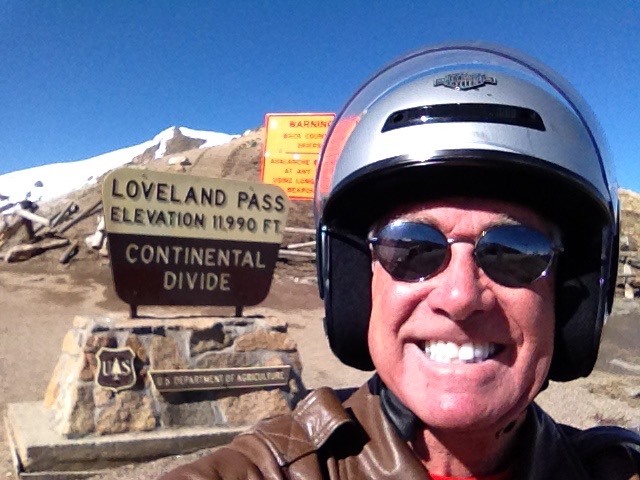
Wouldn’t you know it, we’re only 20 minutes from Loveland Pass, which, at 11,990 feet, is certainly close enough to be considered a twelve-er.
So we jump on I-70, head east for 10 miles, then turn south on US-6 – and in 4 miles, we are at Loveland Pass. It’s not far from the Loveland Ski area, where 2014-15 season passes are already on sale. Adults can ski the entire season for $379; Seniors (70 ) can get a season pass for $89, and children 5 and under ski for free. Woo-hoo!
For you bicycle enthusiasts, Loveland Pass is one of three passes used in the annual “Triple Bypass” ride, a supreme challenge to test the ultimate fitness of any cyclist. The event, which will be held this year on July 12 and 13, begins in Bergen Park at the junction of CO-74 and CO-103. From there, bikers first climb to 11,140-foot Juniper Pass, before continuing to Loveland Pass (11,990 feet) and on to Vail Pass (10,560), before finishing the 120-mile ride in Avon, just 10 miles east of Vail. The one-day ride has more than 10,000 feet of elevation gain!
If you’re interested, you may be a bit late to start getting in shape – but it’s not too late to register. Click here to learn more about the Triple Bypass, and see how you can sign up. The event is so popular that Saturday’s west-to-east ride is already full – some 3,500 riders are taking up the challenge. But you can still sign up for Sunday’s ride (July 13), which uses the same route, but rides from east-to-west. Super hearty cyclists with a penchant for pain actually ride both Saturday and Sunday; it’s called the Double Triple Bypass!
To read one rider’s first-person account of his Triple Bypass, which he calls “a fun day of suffering,” click here.
Should you try a Triple Bypass? Consult your cardiologist.
***
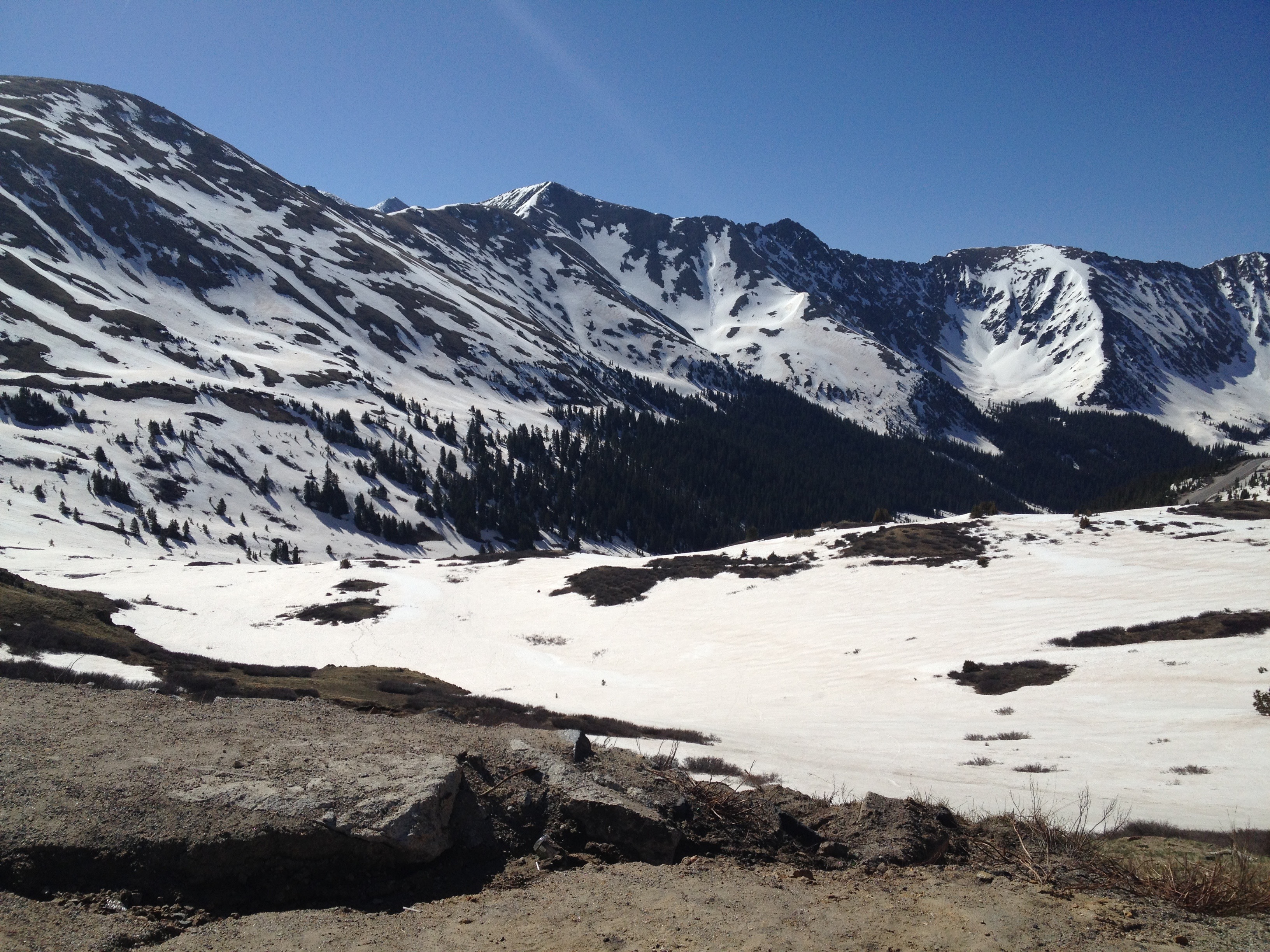
Today, Ray and I only have time for a single bypass – Loveland Pass only – so we press on, following US-6 past a number of well-known Colorado ski resorts, including Keystone, Arapaho Basin, and Breckenridge.
Season passes for the 2014-15 season are on sale at all these resorts.
A few days ago, we passed by the Copper Mountain Ski Resort. It’s worth mentioning that 2014-15 season passes are available here, too. For $389, it comes with three free days of skiing at Killington (Vermont), Park City (Utah), Boreal (California) and Mt. Bachelor (Oregon). Sweet! And for another $100, you can buy Copper Mountain’s new “Secret!” pass, which gets you on the mountain 15 minutes before everyone else, and there’s a dedicated lift line so you can bypass any crowds. Sorta like one of those hotshot airport passes for travelers to avoid TSA hassles.
We turn south off of US-6 onto CO-9, which takes us over Hoosier Pass, another Continental Divide crossing.
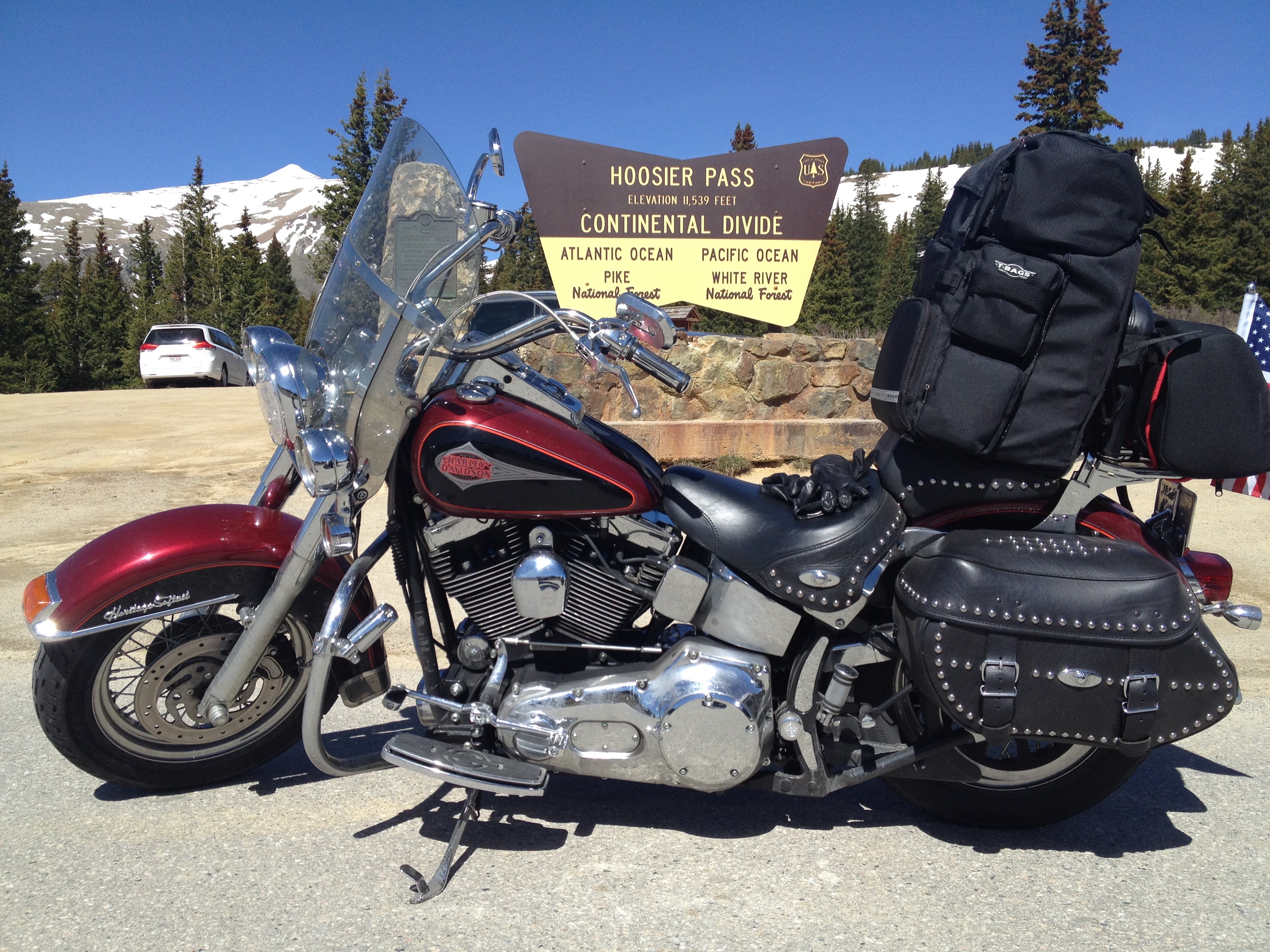
Hoosier Pass, 11,539 feet, is at the northern end of the Mosquito Range. The highway over Hoosier Pass provides an alternate route from Denver to ski areas like Breckenridge and Keystone.
The pass is also the highest point on the TransAmerica Trail, a transcontinental bicycle route that stretches from Yorktown, Virginia, to Astoria, Oregon.
CO-9 leads us to US-285, a scenic road that includes Fairplay, which sits at 10,000 feet. Fairplay is a good place to stop for coffee and a pastry. Not much else going on here.
We continue on US-285, to Poncha Springs, which is at the intersection of US-285 and US-50. Because of its location, Poncha Springs has been dubbed the “Crossroads of the Rockies.”
At this crossroad, we turn west on US-50 and ride about 60 miles to Gunnison, which seems like home now.
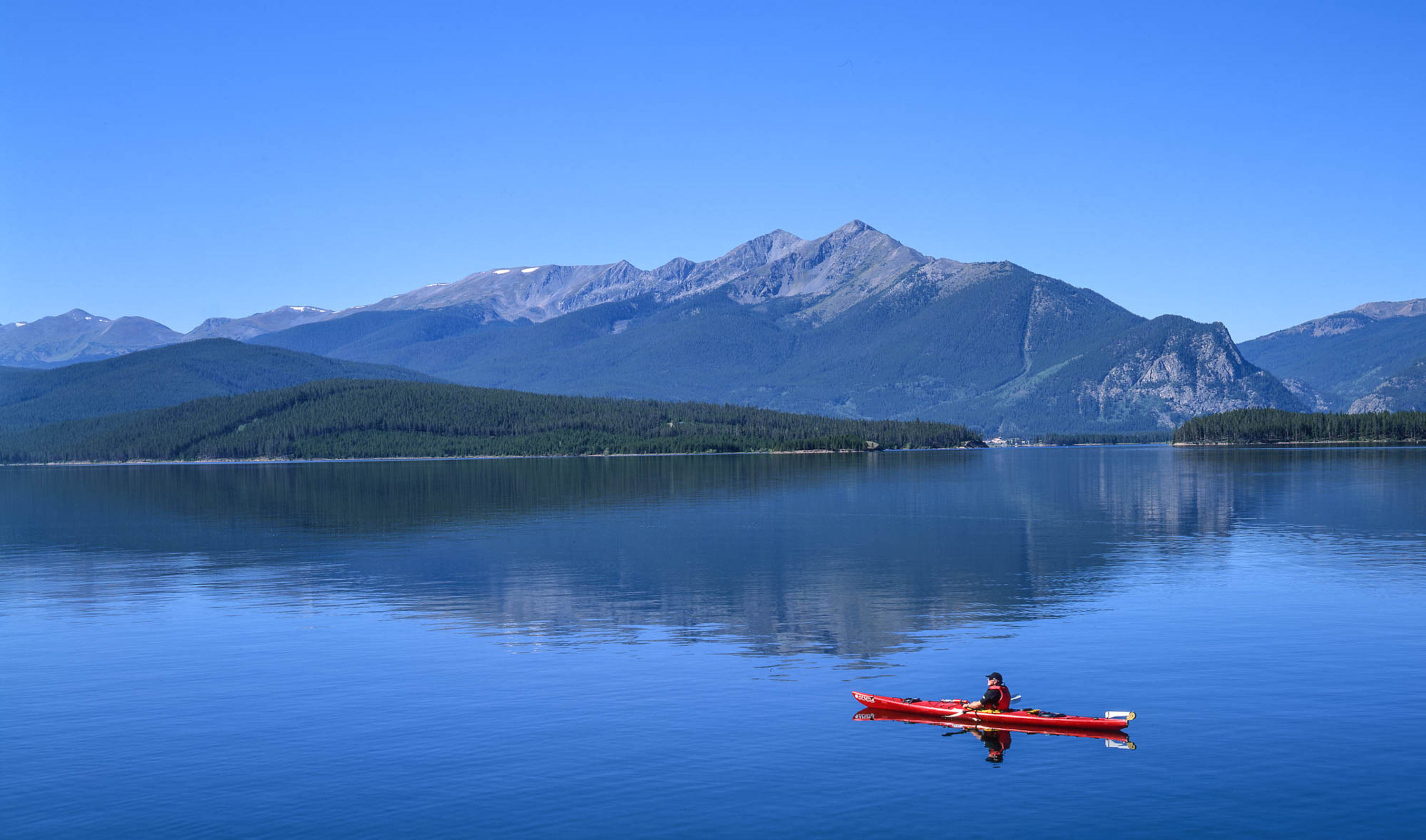
Past Gunnison, we ride along the Dillon Reservoir. We stop for a few photos of the Dillon Pinnacles, a unique formation on the south side of the reservoir.
We press on, and ride west on US-50 for another 64 miles, to Montrose, another place we’ve been before on this trip. In Montrose, we turn south on US-550 for the 45-minute ride to Ouray, one of the most spectacular and beautiful mountain towns imaginable.
***
Ouray, which sits at 7,792 feet, is the birthplace of Kathryn McBride, who we stayed with last week in Palisade.
Ouray was originally established by miners chasing silver and gold in the surrounding mountains. Prospectors arrived here in 1875. At the height of mining there, Ouray had more than 30 active mines. It was mining that brought Kathryn’s family to Ouray, where her father sought his fortune.
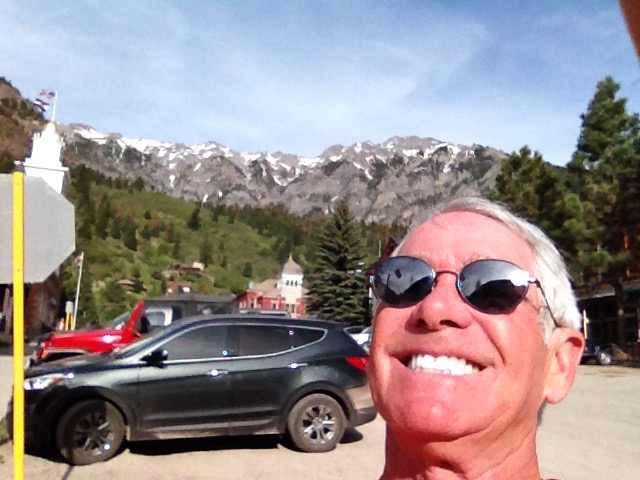
All of Ouray’s Main Street is registered as a National Historic District. Several buildings are listed on the National Register or Historic Places, including the St. Joseph’s Miners’ Hospital, where Kathryn was born. The Hospital now houses the Ouray County Historical Society and Museum.
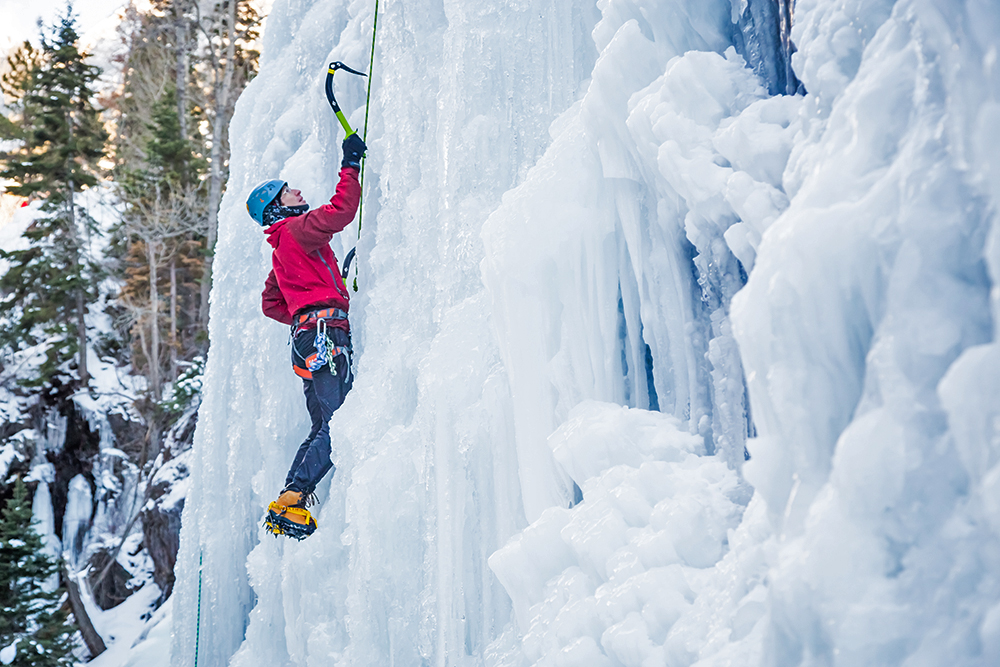
Today’s Ouray economy is based entirely on tourism. Ouray bills itself as the “Switzerland of America,” because of its setting at the narrow head of a valley, enclosed on three and a half sides by steep mountains. Much of the tourism is focused on ice climbing, mountain biking, hiking and off-roading in the San Juan Mountains.
Ouray is considered the winter ice-climbing capital of the U.S. It has the world’s first ice climbing park, expanding on previously popular natural falls, with dozens of frozen waterfalls from 80 to 200 feet high along more than a mile of the Uncompahgre Gorge. The Ouray Ice Park’s slogan: “Get Your Axe in Gear!”
Click here to check it out – by far, the best video you’ll see in 17 days on this blog.
There’s that word again. Uncompahgre. Uncompahgre is a Ute Indian word, which loosely translates to “dirty water” or “red water spring.” It’s believed to be a reference to the many hot springs in the vicinity of Ouray.
The town has inspired literature, film, television and commerce.
- In Ayn Rand’s 1957 novel, Atlas Shrugged, the protagonist’s secret hideaway was in a beautiful valley called Galt’s Gulch, which was inspired by Ouray – where Rand completed her novel.
- In the TV series MacGyver, Ouray is the home of MacGyver’s grandfather, Harry. The town is used as a backdrop for the first-season episode, “Target MacGyver.”
- The opening scene in the movie, Over the Top, with Sylvester Stallone, runs straight through downtown Ouray. The movie was universally panned, but you can still click here to watch the film’s Ouray scene.
- And, Coors and Chevrolet have both filmed commercials in the area. Thirsty? Click here to watch the Coors Ouray commercial.
Ouray is also a popular destination for motorcyclists, as it marks the beginning of the Million Dollar Highway, which we will ride tomorrow.
***
Day Twelve Summary: The crossroads of the Rockies, Uncompahgre explained, America’s ice climbing capital, Target MacGyver.
To view today’s route from Silverthorne to Ouray, click here.
What will tomorrow bring?
 Riding With Gary