We begin the morning by hopping on I-15 North, pointing in the direction of Salt Lake City, where I once attended the University of Utah.
We jump off of I-5 after 7 miles, and head east toward Hurricane. The polygamist communities of Hildale, Utah, and Colorado City, Arizona, are approximately 20 miles east.
Television shined a not-so-flattering light on polygamy recently in the TLC show, Sister Wives, and the HBO series, Big Love. In March 2014, TLC began another polygamy-themed series, My Five Wives. Not surprisingly, these shows are based in Utah.
To catch up on Big Love, click here.
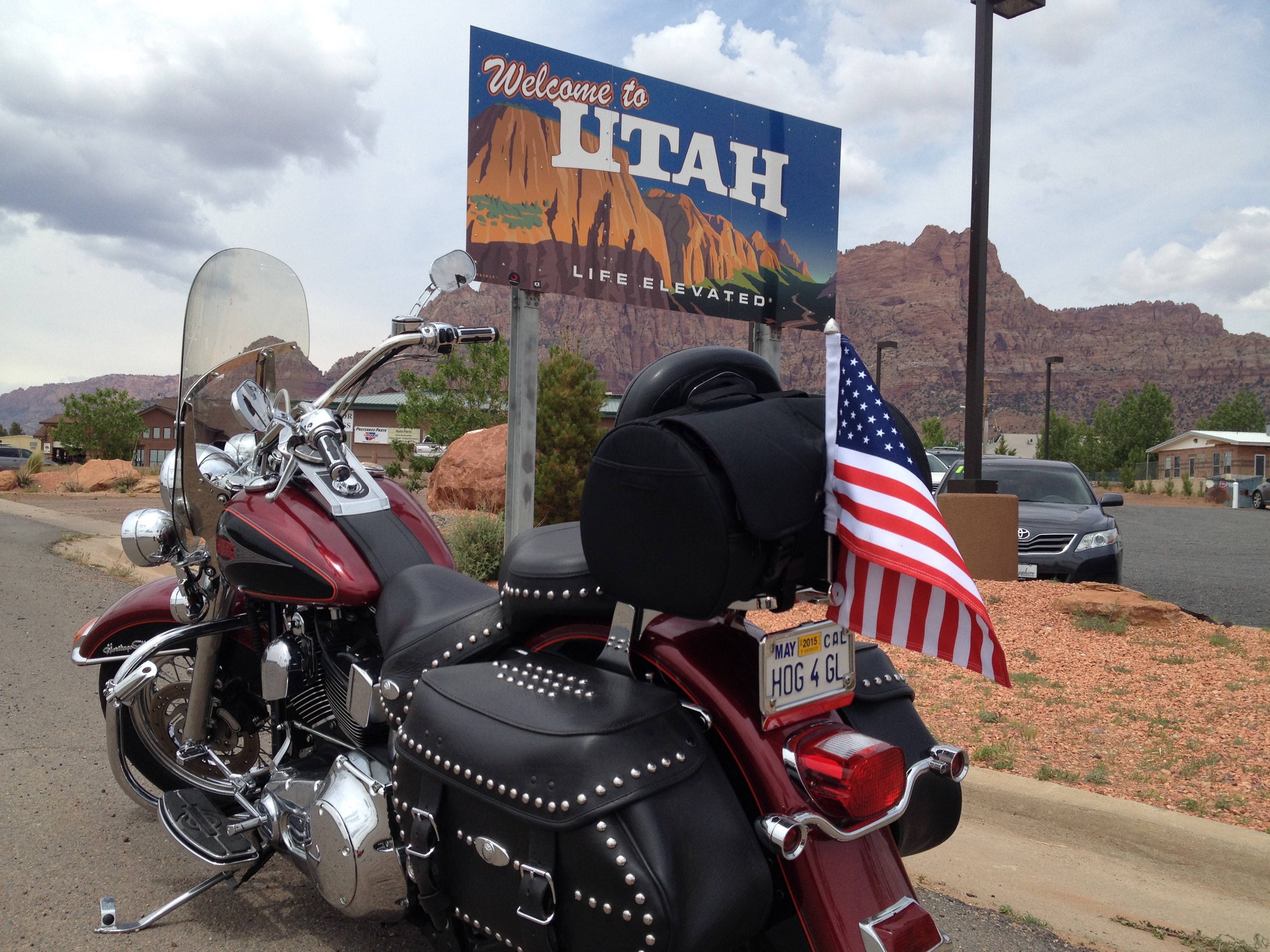
We pass by those polygamous havens on UT-59 South, as we cross into Arizona on our way to the Grand Canyon. It’s considered one of the seven natural wonders of the world. Others natural wonders include the Great Barrier Reef (Australia), Mount Everest (Nepal), and Victoria Falls (Zambia/Zimbawbe).
UT-59 becomes AZ-389 when we cross the state border into Arizona. We swing by Pipe Spring National Monument, rich with local history of American Indians and Mormon pioneers.
***
Arizona is the 48th state and the last of the contiguous states to be admitted to the Union. It achieved statehood on Feb. 14, 1912 – a nice constitutional Valentine’s Day gift. Arizona’s population grew tremendously after World War II, in part because of the development of air conditioning, which made the intense summers more comfortable.
Technically, it won’t be summer for another four weeks, but it’s already quite warm as we ride south. We’re only at 3,000 feet or so and it’s likely to be chillier as we gain elevation.
As we climb through 5,000 to 7.000 feet, the temperatures drop dramatically, the skies darken, and we’re soon in for a very unpleasant and unexpected surprise.
In Fredonia, we turn south on US-89A. Fredonia is Arizona’s northernmost town and the gateway to the North Rim of the Grand Canyon, today’s destination.
We are on US-89A for 63 miles, riding through the Kaibab Plateau, which reaches an elevation of 9,241 feet. Eventually, when US-89A turns east, we continue south on AZ-67, which will take us to the Grand Canyon North Rim Visitors Center.
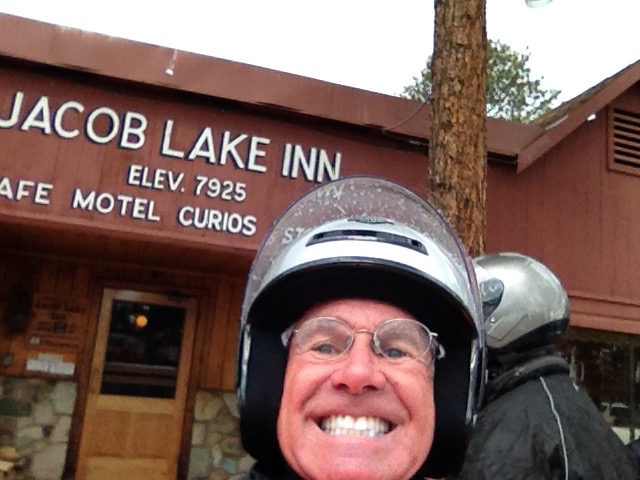
Here, at the junction of US-89A and AZ-67, is Jacob Lake Inn, a charming lodge 45 miles from the North Rim attracting visitors from all over the world — including multitudes of bikers like us. It’s especially busy since today marks the start of Memorial Day weekend.
With temperatures now in the low 40s — the elevation is 7,925 feet — we stop at Jacob Lake Inn for hot chocolate and an oatmeal raisin cookie. We’re cold, wet, and in need of a place to wait out a mountain rain shower that quickly soaks us.
So we struggle into our rain gear and discuss the situation with other bikers in a similar predicament. Some are waiting for the weather to clear so they can continue on to the North Rim. Others are returning from the North Rim with horror stories about the roadway they’ve just ridden.
For a 20-mile stretch of AZ-67, there’s snow and slush on the road, sometimes several inches deep. We hear stories about a number of riders who lost control of their bikes and crashed on the slippery roadway, ruining an otherwise good day.
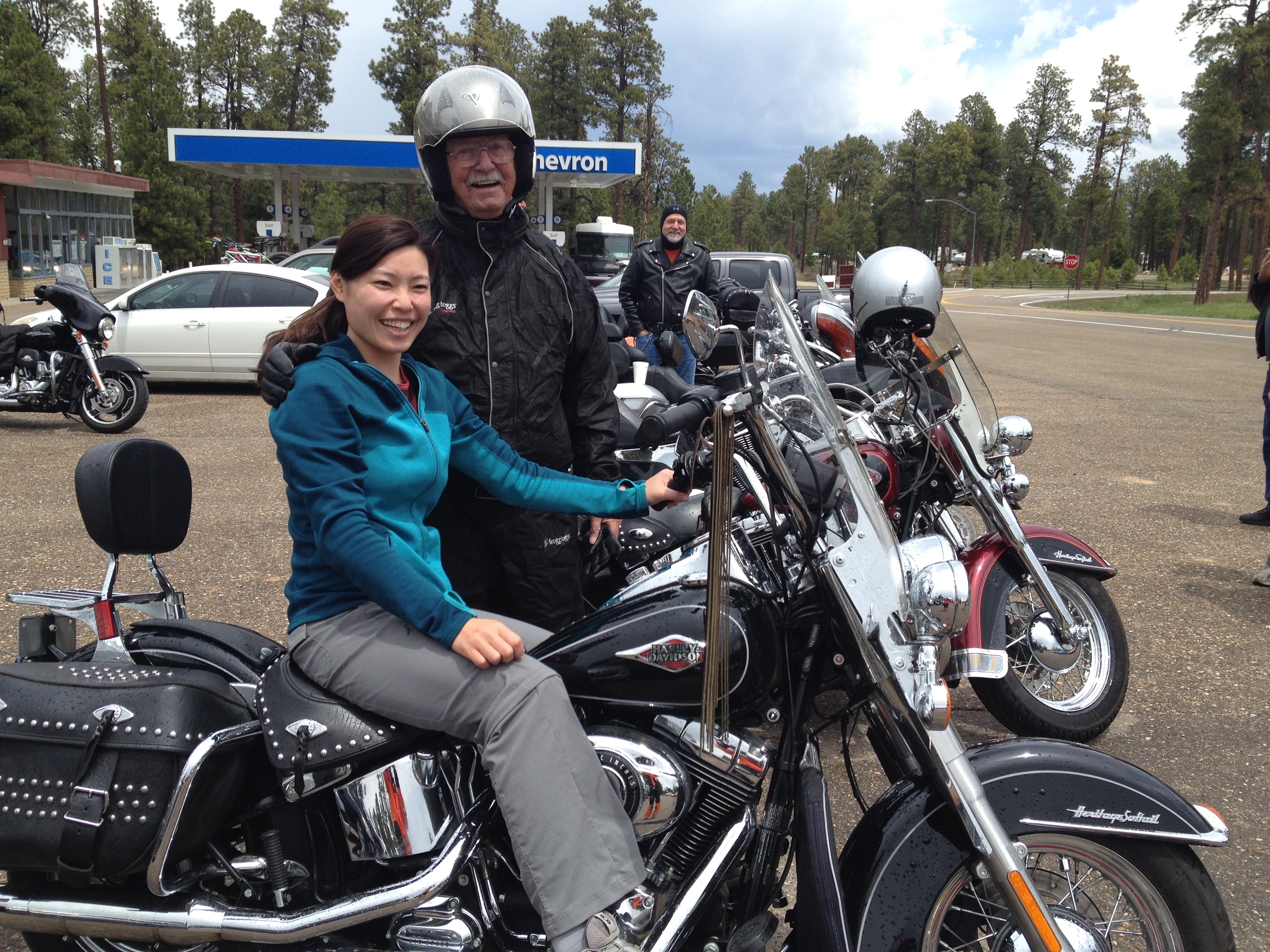
So we wait for the weather to clear, at least a little, so the sun can melt the snow and dry the pavement. We exchange stories with other Harley riders in a similar quandary, and wait more than an hour. New groups of riders arrive from the North Rim, each with vivid reminders of why riding the remaining 45 miles to the North rim might — today — might not be such a good idea.
The weather worsens. It’s now sleeting in the parking lot outside the Jacob Lake Inn. We check the weather radar on our phones and the prospects look dismal.
Reluctantly, we join the other canyon-bound bikers in deciding to turn around and head back to St. George. It’s disappointing, to say the least, to come this far and not get to see one of the most spectacular sights on earth.
But it would have been even more disappointing to crash our bikes in the snow and have to explain to Sarah why my “Ride in the Rockies” never made it to the Rockies.
We’ll just have to try it again, another day, another year.
Because the Grand Canyon was our destination and would have been the highlight of our day, I’m compelled to blog about it anyway. Here goes.
The Grand Canyon has more than five million visitors each year, making it the second-most visited National Park, after Smoky Mountain National Park in Tennessee and North Carolina. Most of the Grand Canyon visitors go to the South Rim.
***
The North Rim, sometimes referred to as the “other” Grand Canyon, is far less populated with visitors and is uniquely different from the South Rim. With an average elevation of 8,000 feet, the North Rim offers views of the canyon from a higher vantage. Point Imperial, the highest point on the North Rim, at 8,803 feet, overlooks the Painted Desert and eastern end of the Grand Canyon.
The canyon itself is 6,000 feet deep at its deepest point, and up to 18 miles across at its widest. Geological historians say it was carved by the Colorado River over a period of six million years. That pretty much blows to shreds the Biblical fairy tale that the Earth is 6,000 years old. Just sayin’ …
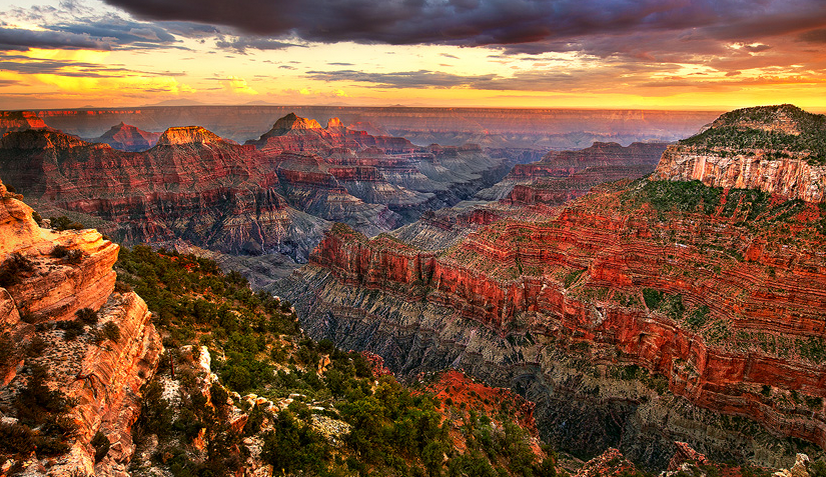
The only lodging inside the National Park on the North Rim is at the Grand Canyon Lodge, located at Bright Angel Point. We stop for lunch and soak in the spectacular views before turning around and heading back to St. George.
To learn more about the Grand Canyon National Park, click here.
Famous people with connections to the Grand Canyon include:
- John Wesley Powell, geologist who was the first to survey the canyon on the Colorado River. He led the first of the Powell Expeditions, exploring the region and documenting its scientific offerings. Lake Powell, a major vacation spot visited by about 2 million people every year, is named after him.
- Emery Kolb and Ellsworth Kolb, brothers who in 1904 built a photographic studio on the South Rim at the trailhead of Bright Angel Trail. They were the first to make a motion picture of a river trip through the canyon. The present-day Kolb Studio is operated by the Grand Canyon Association as a gift shop, art studio, and history center.
- John D. Lee, the first person who catered to travelers to the canyon. In 1872, he established a ferry service at the confluence of the Colorado and Paria rivers. Emma, one of Lee’s 19 wives, continued the ferry business after her husband’s death.
Grand Canyon is so much more than a National Park. It’s a spiritual experience, a place of unimaginable beauty.
And, as of last month, part of it has also been designated a National Landmark. The site of a 1956 plane crash in the canyon that killed 128 people is now a National Landmark, one of 2,450 sites across the country with such status.
At 10:30 a.m. on July 2, 1956, a United Airlines Douglas DC-7 and a TWA Lockheed Super Constellation collided in mid-air. Both were cruising at 21,000 feet, flying over the Grand Canyon, near Chuar Butte. The two airplanes had departed Los Angeles International Airport, three minutes apart, and were on transcontinental routes, flying under Visual Flight Rules (VFR).
United Flight 718, with 58 people aboard, was bound for Chicago; TWA Flight 2, with 70 on board, was en route to Kansas City. At the time, it was the worst air disaster in the history of civil aviation. Click here to see some fascinating photographs of the wreckage, many shot 50 years later.
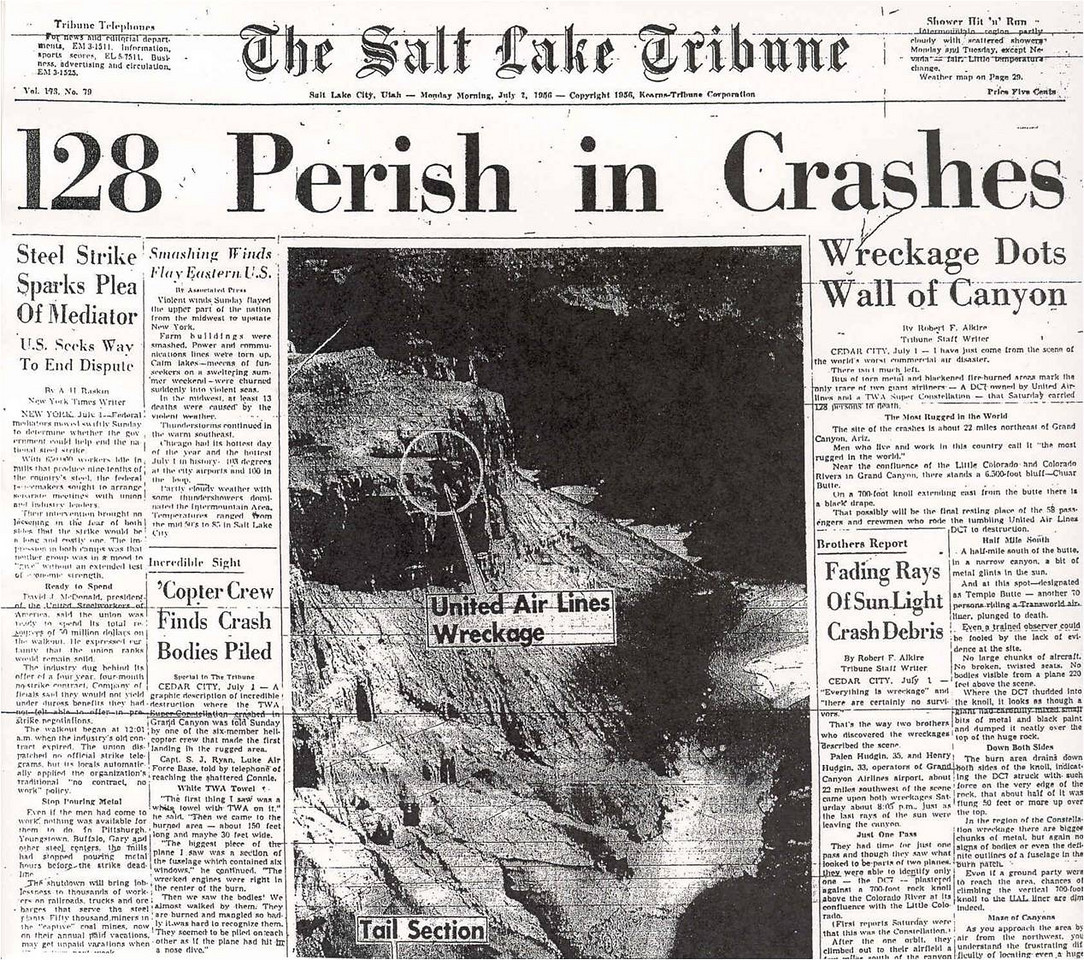
National Landmarks are meant to serve as reminders of triumph, tragedy, public service and artistic beauty. The Salt Lake Tribune, my first employer, won its first and only Pulitzer Prize for “prompt and efficient” coverage of the 1956 Grand Canyon plane crash. Click here to view the Tribune’s coverage, led by Executive Editor Arthur Deck – who later hired me in 1973.
The Grand Canyon crash resulted in dramatic improvements to the national airspace, including modernizing the Air Traffic Control system, and creation of the Federal Aviation Administration. Click here to read the FAA’s description of the accident, what it calls “Lessons Learned.” Very interesting reading, for you aviation nuts, and others who just like to learn stuff.
***
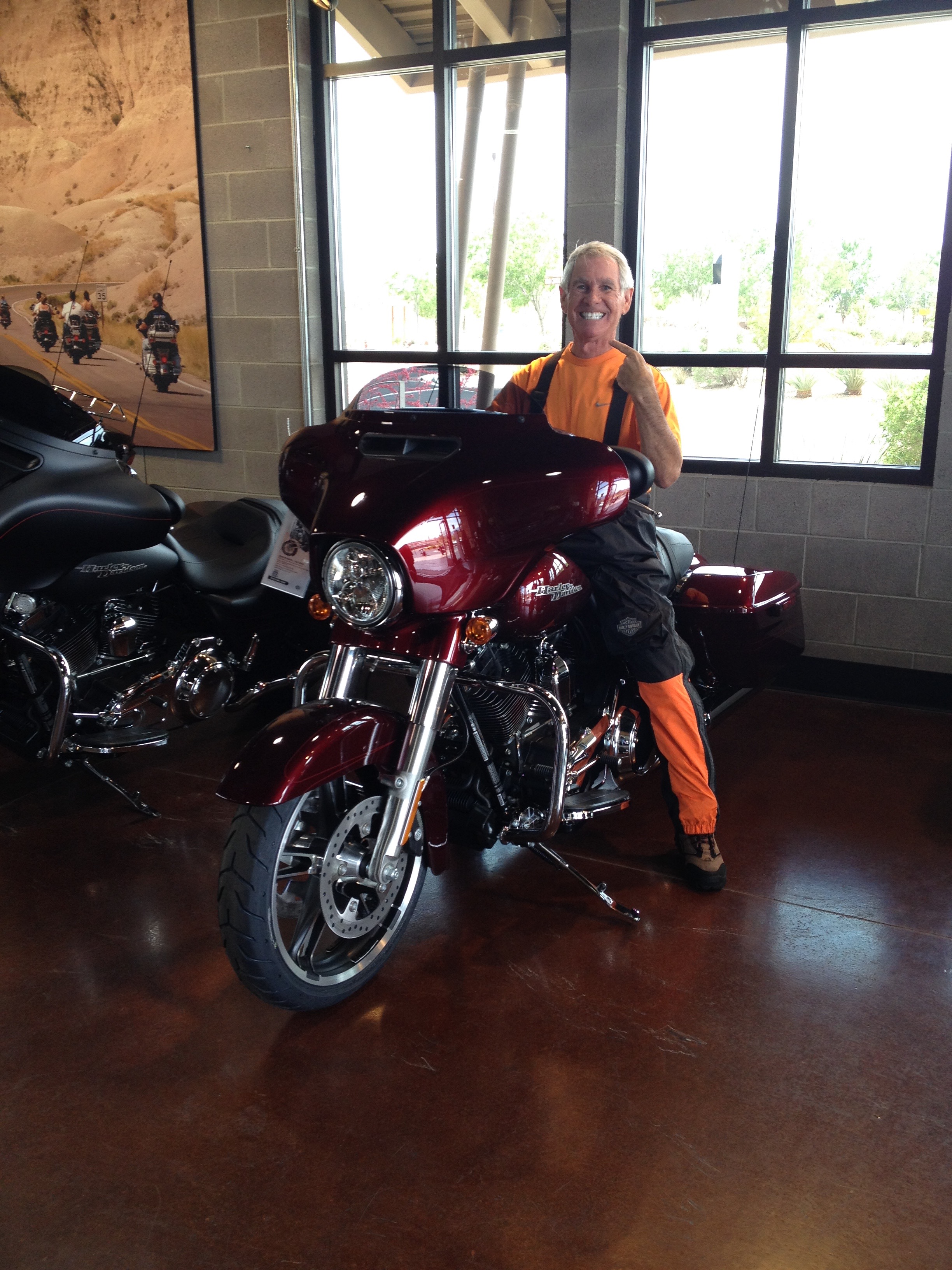
The return ride to St. George is the same as our route to the North Rim this morning, except this time we’re going south to north. We arrive back in St. George after a 300-mile day. A night at the Motel 6 has seldom felt so restful.
Day Three Summary: A hurricane in Utah, the Earth showing its age, polygamy on display, the grandest of canyons.
Click here to view today’s route from St. George to the Grand Canyon’s North Rim and back.
What will tomorrow bring?
 Riding With Gary