Today’s major highlight is visiting Hoover Dam, which sits astride the border between Arizona and Nevada.
We leave Boulder City, heading east on US-93 for the 15-minute ride to Hoover Dam. With nearly a million visitors annually, the concrete arch-gravity dam is a major tourist attraction. It’s operated by the U.S. Bureau of Reclamation.
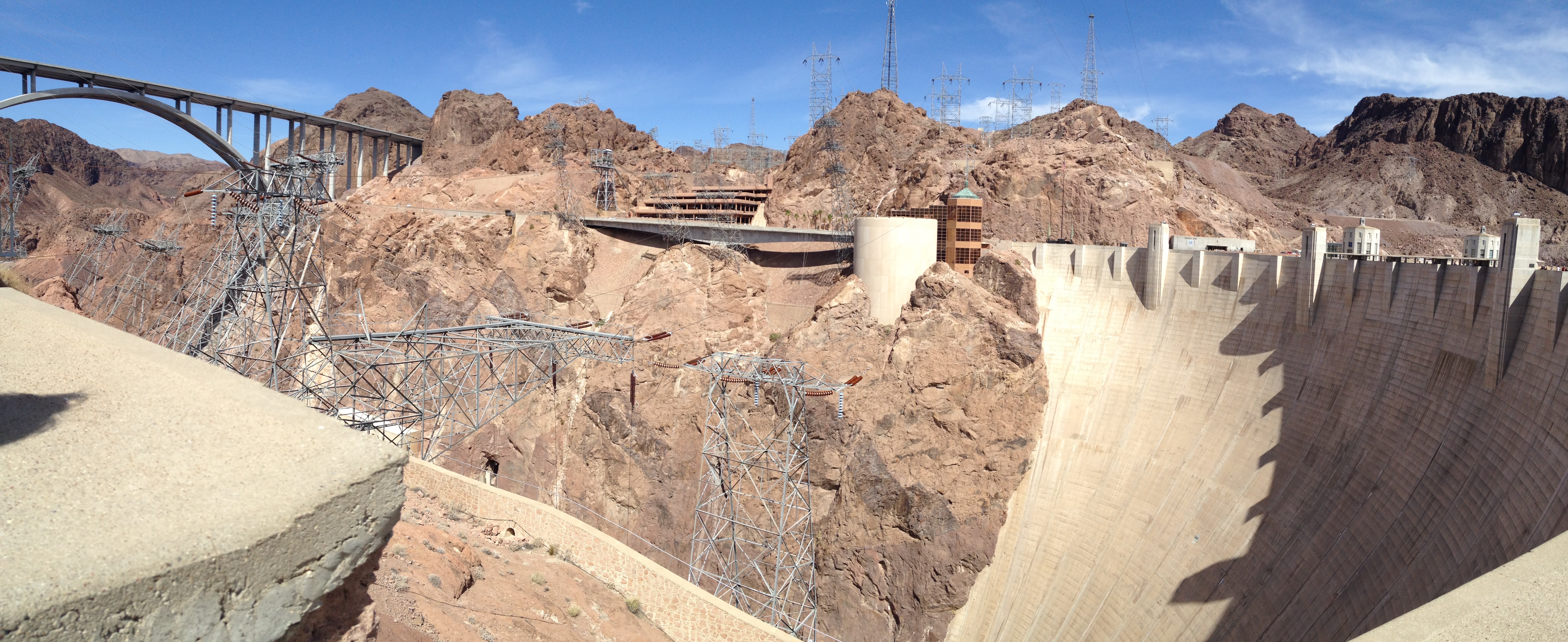
On one end of Hoover Dam is Lake Mead, the largest reservoir in the U.S. Downstream from the dam is the Colorado River. The dam’s generators provide 4.2 billion kilowatt hours of hydroelectric power each year for public and private utilities in Nevada, Arizona and California.
Power generation isn’t the dam’s only purpose. It also provides flood control, water storage and recreation.
The art-deco design dam was built during the Great Depression at a cost of $49 million. More than 100 workers died during its construction. Some famous names involved in the dam’s design and construction included Morrison-Knudsen, Henry Kaiser, and the Bechtel Company. At the peak of construction in 1934, more than 5,200 workers swarmed over the site.
It’s easy to feel quite puny in the presence of this construction and engineering marvel. The Hoover Dam, surprisingly, did not make the American Society of Civil Engineers’ list of greatest engineering achievements of the 20th century. Among the higher-rated wonders-of-the-world: The Golden Gate Bridge, the Panama Canal, the Empire State Building and the Chunnel under the English Channel.
The Hoover Dam did, however, make BBC’s list of Seven Wonders of the Industrial World – along with the London sewer system, Brooklyn Bridge and First Transcontinental Railroad. Takes a Brit, apparently, to fully appreciate American ingenuity.
***
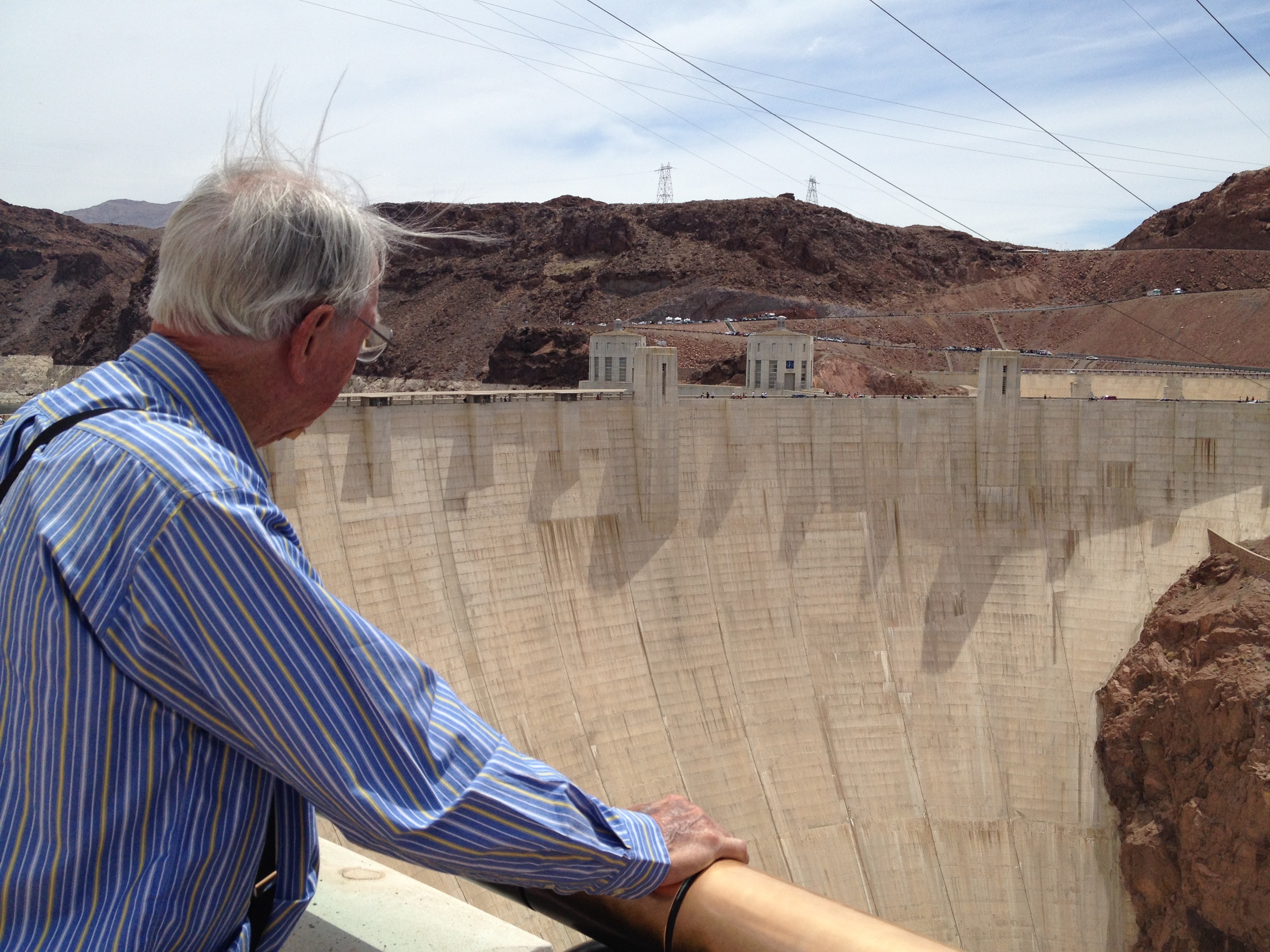
There are two lanes for automobile traffic across the top of the dam. Until recently, this roadway was the only way to cross the Colorado River on US-93. But following the Sept. 11, 2001 terrorist attacks and concerns about security around the dam, the Hoover Dam Bypass project began. The four-lane composite steel and concrete arch bypass bridge opened in October 2010.
The bridge has 30,000 cubic yards of concrete and 16 million pounds of steel. It’s an engineer’s fantasy. Click here to see how one prominent engineering organization views the bridge.
It’s now known as the Mike O’Callaghan-Pat Tillman Memorial Bridge. The bridge is named for Mike O’Callaghan, Nevada’s Governor from 1971-1979, and Pat Tillman, a football player who left his lucrative career with the Arizona Cardinals to enlist in the U.S. Army. Sgt. Tillman was later killed in Afghanistan, at age 27, by friendly fire.
The bridge is 840 feet above the Colorado River, making it the second-highest bridge in the U.S., and the 13th highest in the world. The highest in the U.S., at 1,053 feet, is the Royal Gorge Bridge in Colorado, spanning the Arkansas River; the highest in the world, at 1,627 feet, is the Sidu River Bridge in Hubei Province, China.
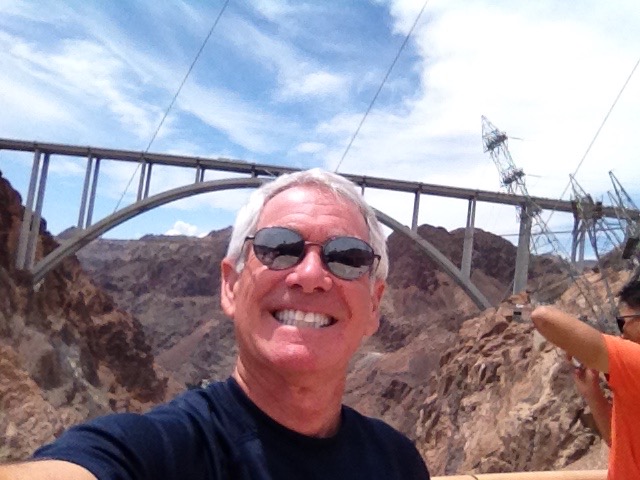
The new O’Callaghan-Tillman Bridge, with the widest concrete arch in the Western Hemisphere, is one of the main reasons Ray wanted to start our ride in Boulder City – so he could see it, and ride across it. Today, we do both, and then tour the dam.
Click here for more on the Hoover Dam.
***
We leave Hoover Dam for the 150-mile drive to St. George, Utah, where we’ll stay tonight. We follow Lakeshore Road, along the western shoreline of Lake Mead and Las Vegas Bay, and continue on this road for about 56 miles – through Valley of Fire State Park, Overton and Moapa Valley – until we reach I-15.
There, we turn northeast and stay on the Interstate for 67 miles. We pass through Mesquite, Nevada – originally settled by Mormon pioneers in 1880. Mesquite motto: Escape, Momentarily. We did.
From Mesquite, we cross into Utah. Almost feels like home.
Utah was the 45th state admitted to the Union, on Jan. 4, 1896, after the region’s dominant church, the Mormons, discontinued and renounced plural marriage, more commonly known as polygamy. The name “Utah” is derived from the name of the Ute tribe. It means “people of the mountains” in the Ute language.
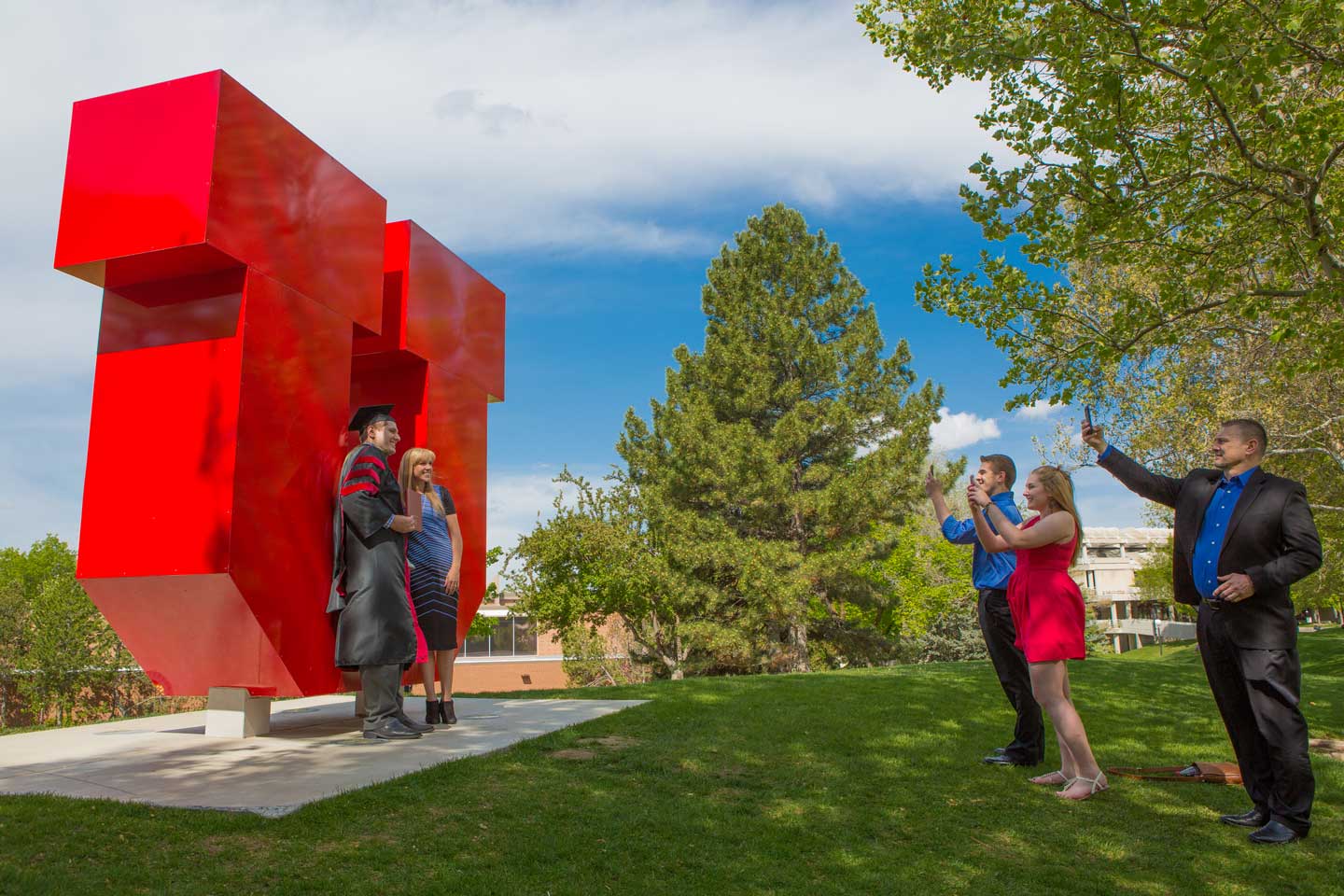
I am, of course, a Ute. Meaning, I graduated from the University of Utah, whose nickname is the Utes. In my days at the U, our sports teams were known as the Runnin’ Redskins. That ended in 1972, when some colleges and universities, under political pressure, voluntarily changed their nicknames from what are now considered ethnic slurs.
Among the other universities changing nicknames: the Stanford Indians became the Cardinal; the St. John’s University Redmen became the Red Storm; and Miami University in Ohio went from the Redskins to the Red Hawks.
The term “Redskin” is considered offensive by most Native Americans, a concept about which the National Football League’s Washington Redskins are completely tone deaf. The Ute tribe gave the University explicit permission to use the Ute name for all its athletic teams.
Notable Utah graduates include:
- Willard Mariott (A.B., 1926), founder of the Marriott hotel chain.
- Stephen Covey (B.S. 1952), author of The Seven Habits of Highly Effective People. Habit #1: Be Proactive (i.e., hop on a Harley and ride the Rockies).
- Karl Rove (non-graduate alumnus), senior advisor and deputy chief of staff in the George W. Bush administration.
- Thomas S. Monson (B.S., 1948), President of The Church of Jesus Christ of Latter-day Saints. With a worldwide membership of more than 15 million followers, the church is headquartered in Salt Lake City. At 86, he’s nine years older than Pope Francis.
***
Southern Utah has some of the most spectacular scenery anywhere. And yet, in the seven years I lived in Salt Lake City (1968-1975), I never ventured south of Provo. Doh! What was I thinking?
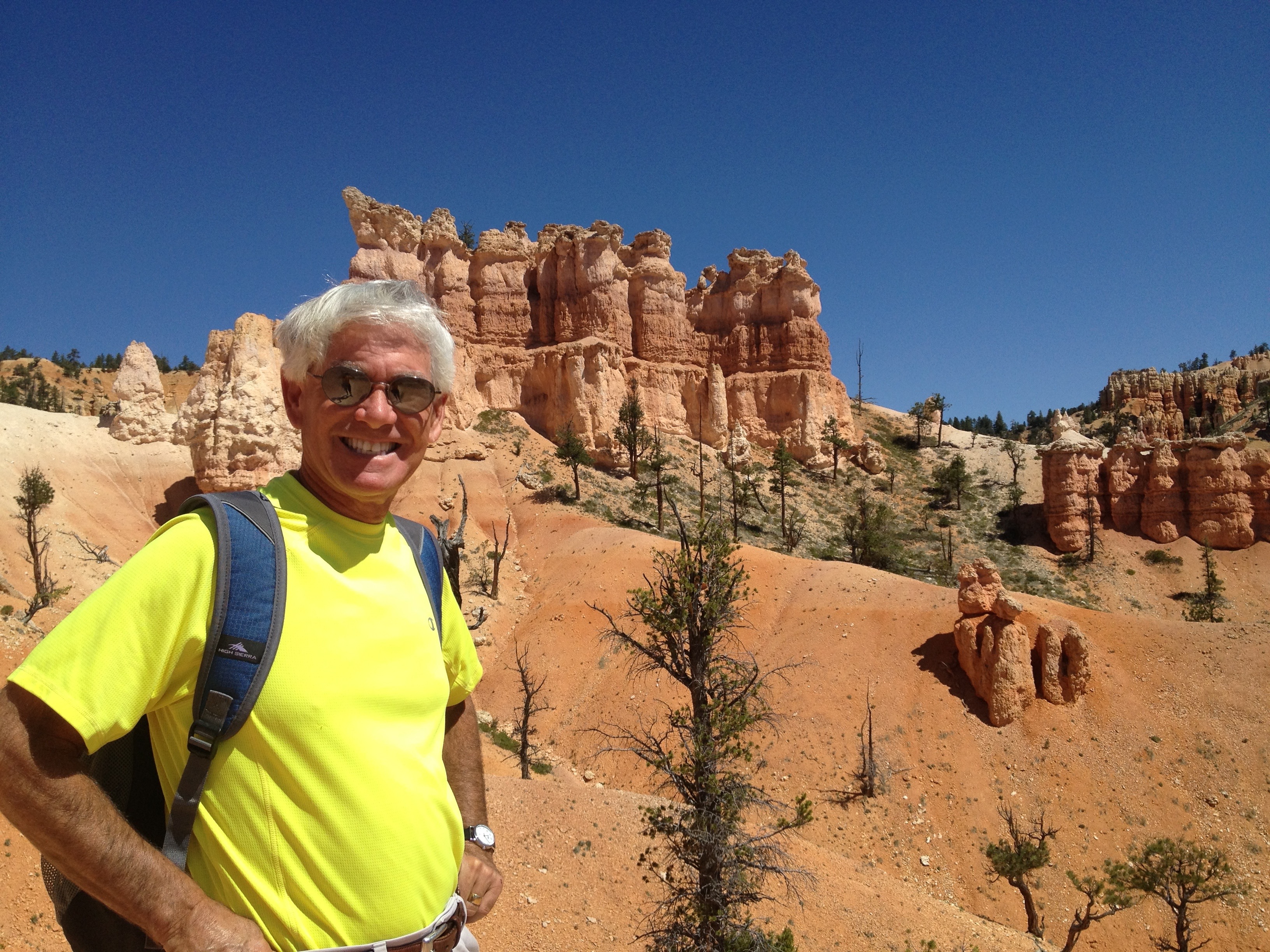
Last year, Sarah and I took a driving trip that included several National Parks in Utah. At the time, I vowed to come back someday on a Harley. That someday is today.
I-15 roughly follows the Virgin River, a tributary of the mighty Colorado River. The Virgin was designated Utah’s first wild and scenic river in 2009, during the centennial celebration of Zion National Park – which we will visit tomorrow.
The Virgin is not named for sexually inexperienced Mormons. Its namesake is Thomas Virgin, a member of the first American party to see it, way back in 1826.
***
We arrive in St. George late in the afternoon. It’s 2,860 feet above sea level, but still quite warm. St. George is the second fastest-growing metropolitan area in the U.S., behind only Greeley, Colorado. With a population of around 75,000, St. George is Utah’s most populous city outside of the Wasatch Front, home to Salt Lake City, Ogden and Provo.
Notable people from St George include:
- Julius Erving, former professional basketball player known as Dr. J, who at one time had a 6,572-square foot home here. FYI, he’s two days older than I am, and unlike me, can still dunk. Click here to watch him dunk at age 63.
- LaVell Edwards, legendary football coach at Brigham Young University. Edwards, who is one month older than my riding partner, Ray Sanders, has 257 college wins and earned a Masters degree at the University of Utah, from which I somehow snagged a Bachelors in Journalism (1973).
- Tanya Tucker, country singer, who moved to St. George in her early teens with her family. There, she auditioned for the film, Jeremiah Johnson. Here’s Tanya singing “I Won’t Take Less Than Your Love.”
- Asia Carrera, born Jessica Steinhauser, a former adult film star (OK, porn actress). She made more than 400 films over a 10-year period from 1993 to 2003, when she moved to St George. You do the icky math. Oh, she’s pretty good at math – said to be a member of Mensa with an IQ of 156.
St. George has an LDS (Mormon) temple, the only one we’ll be close to on this trip. Except that we won’t see it — at least not the inside. I’ve been to the Visitors Center at Temple Square in Salt Lake City, and that’s more than good enough for me. The Visitors Center should not be confused with the Temple; anyone can go to the Visitors Center. The Temple itself … not so much.
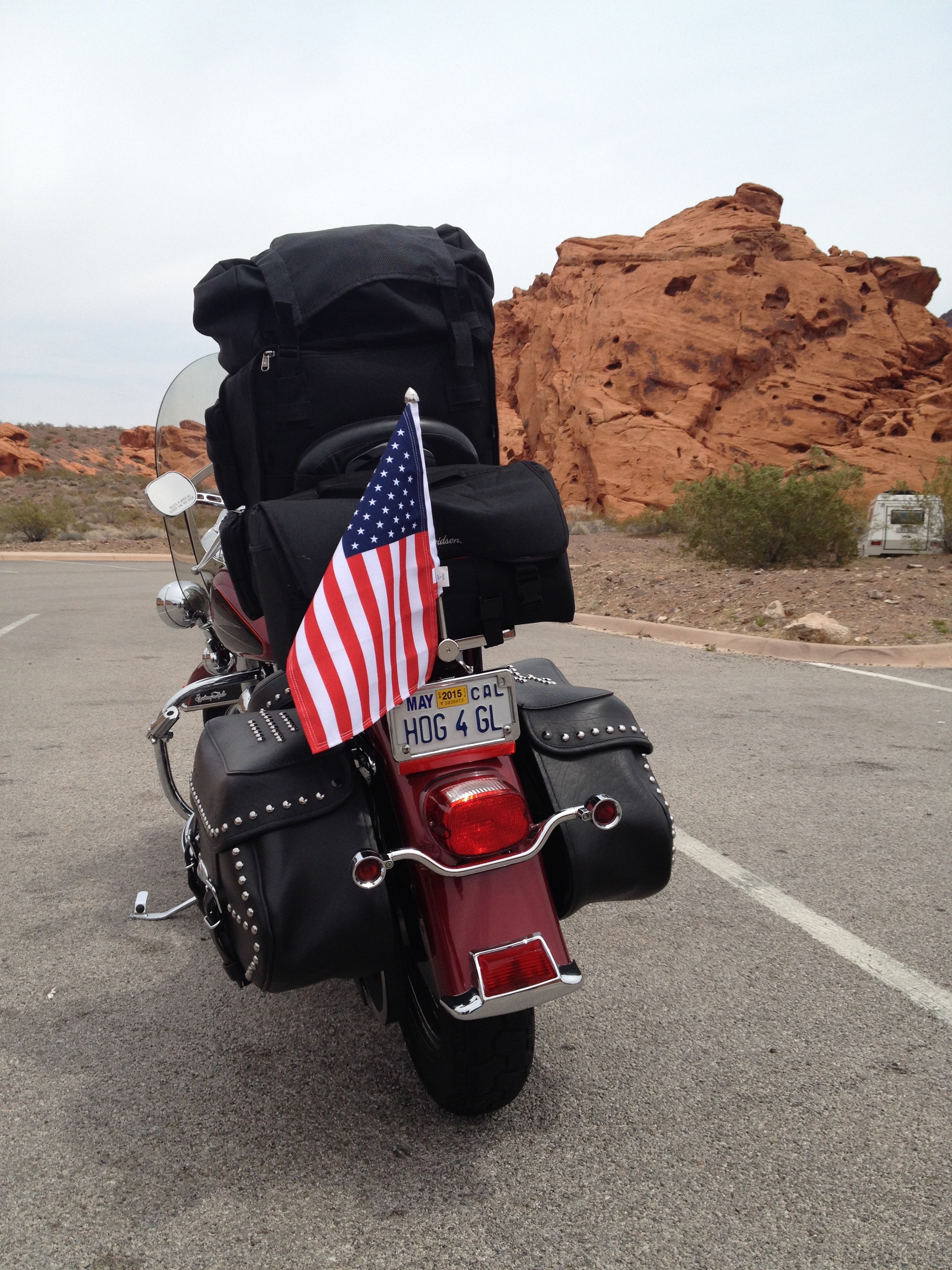
If you’re wondering, there are 142 Mormon temples, 14 more under construction, and another 14 announced and on the drawing board. More than likely, you can’t get into any of them. Gotta be pretty holy for a Temple pass; Mormons call it being “worthy.”
The St. George temple, about a mile from where we’re staying tonight, was the LDS Church’s first. It opened in 1877.
And that concludes today’s church lesson.
***
Day Two Summary: Kilowatt hours by the billion, a bridge to somewhere, when Utah became the Utes, escaping momentarily.
Click here to view today’s route from Boulder City to St. George.
What will tomorrow bring?
 Riding With Gary