As we leave Asheville, North Carolina, we see the Biltmore Estate off in the distance. You could argue it’s the Eastern version of California’s Hearst Castle. At 175,000 square feet, the Biltmore Estate is the largest privately-owned home in the US. No one has lived there since the 1950s. It has 250 rooms and 75 acres of formal gardens. The Biltmore’s grounds and buildings have appeared in a number of Hollywood films, including “Forest Gump,” “Being There,” and “Patch Adams.”
The French Broad River bisects the estate, which was 125,000 acres (the size of Rhode Island) when completed in 1895. Sadly, the Biltmore is now only 8,000 acres. Bummer.
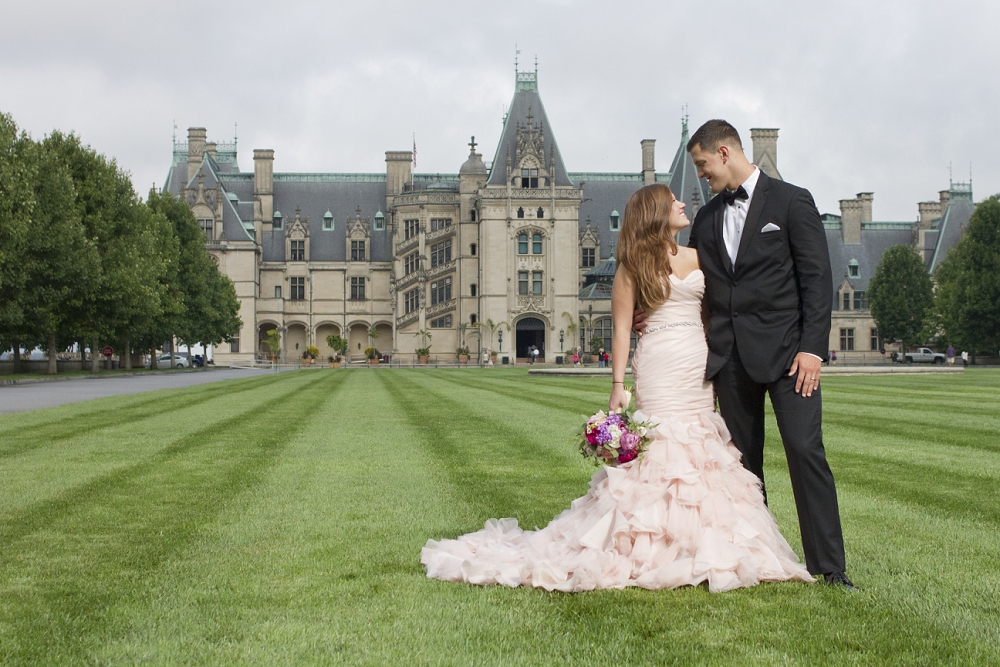
The Biltmore Estate is exactly how you’d spend your money, if only you had the billions to do it. It was how George Washington Vanderbilt II spent his money. He was a grandson of Cornelius Vanderbilt and the youngest child of William Henry Vanderbilt, whose family had amassed a fortune through steamboats, railroads and various business enterprises. George Vanderbilt bilt (sic) the Biltmore Estate with a $12 million inheritance. That was serious money in the late 1800s.
We view the Estate from afar, because we are too cheap to pay the $50 ransom required to enter the grounds. Yes, it’s a bit highbrow for two guys on bikes, eager to head home. But if you want to learn more about the Biltmore Estate, click here.
***
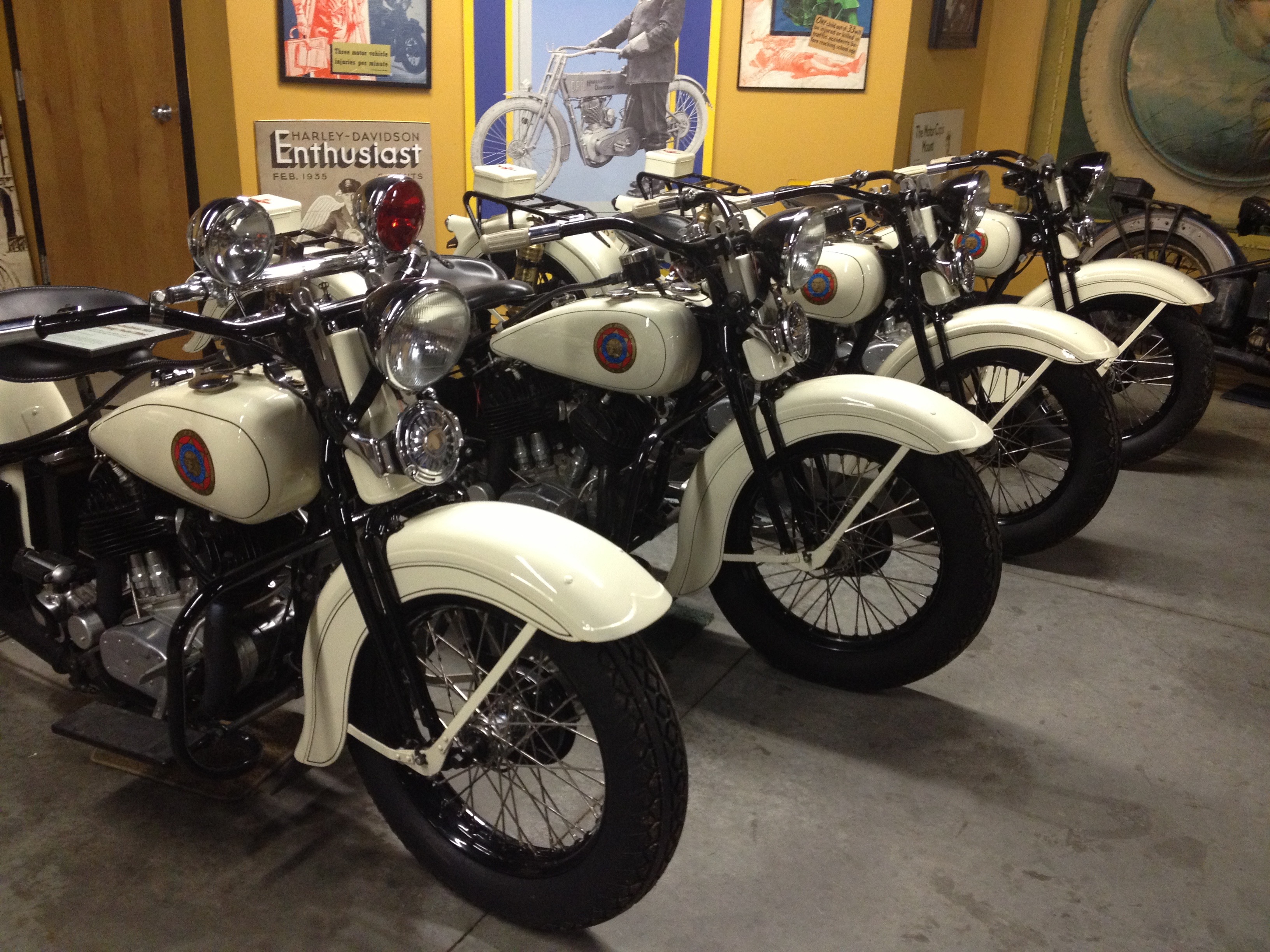
We jump back on the Blue Ridge Parkway, heading for its southern terminus in Cherokee, North Carolina. We cross the Great Smoky Mountains Expressway, then take a detour off of the Parkway. We stop in Maggie Valley, North Carolina, to check out the Wheels of Time Museum, a waltz through motorcycle history. To see a slice of what we took in, click here. Or check out my photos; I got a bit carried away.
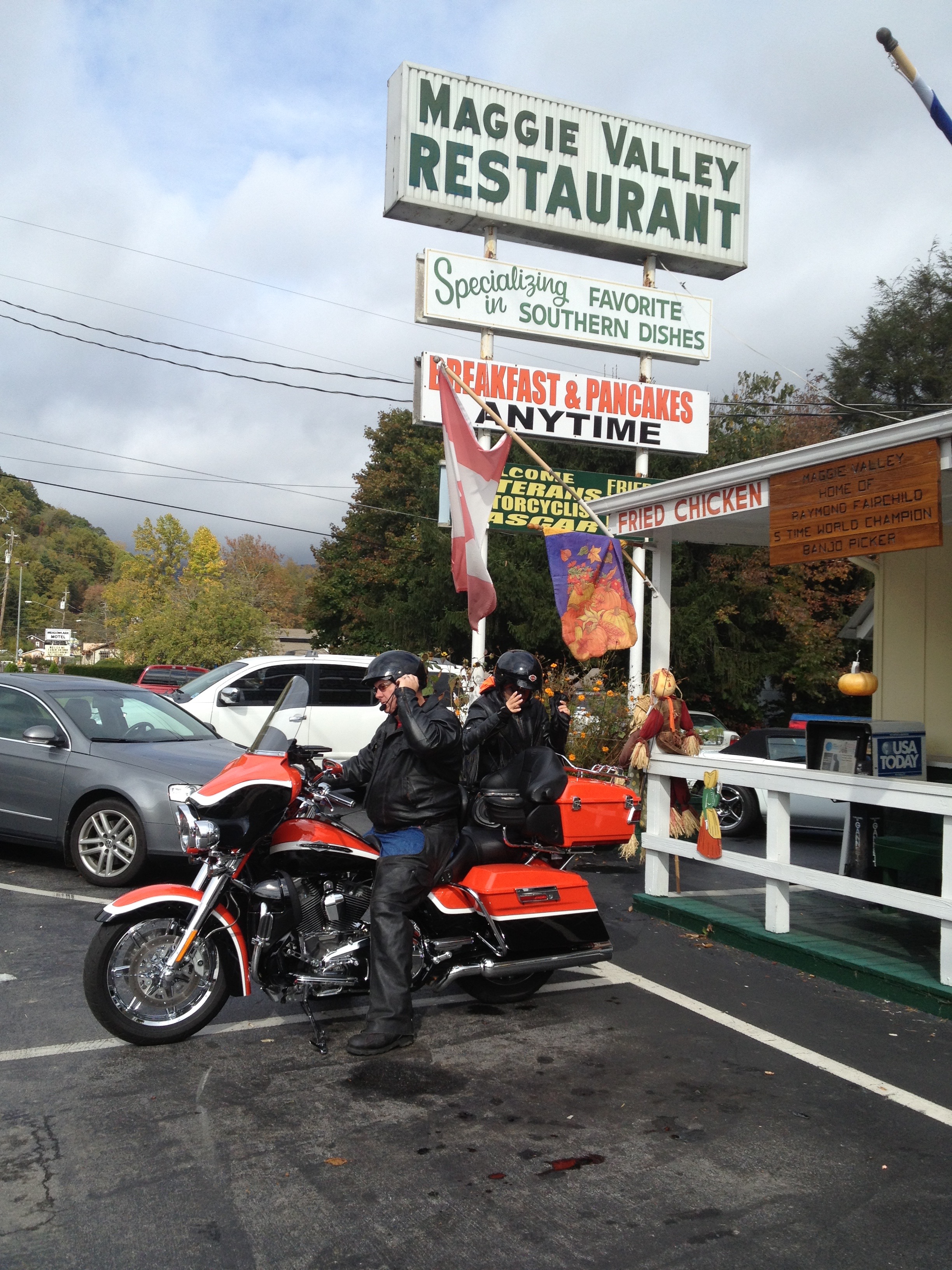
Speaking of slices, we have lunch at the Maggie Valley Restaurant — which, like everything else around here — is rich in history. Click here to learn more about this place that’s been serving up family fare for 60 years. My final breakfast on the road is full of calories and southern flavor: eggs, taters, biscuits and gravy, ham. I may not need to eat again till I get home.
From Maggie Valley, we head for Cherokee, where we stop for gas, and finish our ride on the Blue Ridge Parkway. Remember the 1955 movie, “Davy Crockett, King of the Wild Frontier?” The film starred Fess Parker as Davy Crockett and Buddy Ebsen (better known as Jed in “The Beverly Hills” and as “Barnaby Jones”). I loved that movie. It was shot in Cherokee.
From Cherokee, we ride US-441 for about 8 miles and then turn west on US-74, the Great Smoky Mountain Expressway. The Expressway roughly follows the route of the historic Murphy Branch of the Western North Carolina Railroad (now owned by the Norfolk Southern Railway) and the Great Smoky Mountains Railroad. Much like the railroad before it, the Great Smoky Mountains Expressway connects the mostly rural areas in southwest North Carolina to the rest of the state.
Near Almond, North Carolina, we turn north on NC-28, which, along with NC-143, takes us into Robbinsville, North Carolina. We rode through Robbinsville going the other direction 17 days ago, on Day One of our journey.
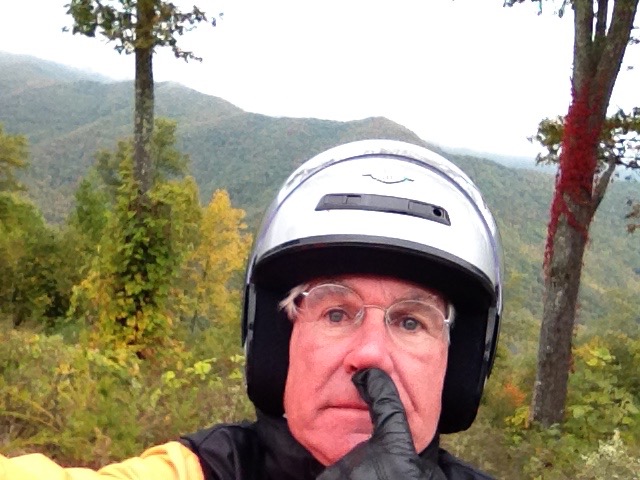
NC-143 soon becomes the Cherohala Skyway, where we spend much of the remainder of our afternoon. The Cherohala, which becomes TN-165 when it crosses into Tennessee, ranks a close second to the Blue Ridge Parkway in awesomeness for a motorcycle ride. It’s a 43-mile long Scenic Byway that connects Tellico Plains, Tennessee, to Robbinsville, North Carolina. Cherohala is a portmanteau of Cherokee and Nantahala, the two national forests through which it passes. Click here to see more on the Cherohala Skyway, which was completed in 1996 at a cost of $100 million. Or try this. To take a ride on the Cherohala, click here for a fun video.
When the Cherohala winds to an end in Tellico Plains, we’re only 52 miles from the Sanders residence in Farragut. We ride through Vonore, which sits at the confluence of the Little Tennessee and Tellico Rivers.
Vonore is near the center of one of the richest archaeological regions in the southeastern United States. Sadly, most of the valley’s archaeological sites were flooded in 1979 when the Tennessee Valley Authority (TVA) completed Tellico Dam at the mouth of the Little Tennessee. The Tellico Dam does not produce any electricity, but the TVA sure does. The TVA — with 29 hydroelectric dams, 3 nuclear power plants, 11 coal-powered plants and a number of other power generation facilities – is the nation’s largest public power provider, serving more than nine million people in Tennessee, Alabama, Georgia, Kentucky, Mississippi, North Carolina and Virginia. That’s a bunch of watts, Bubba!
***
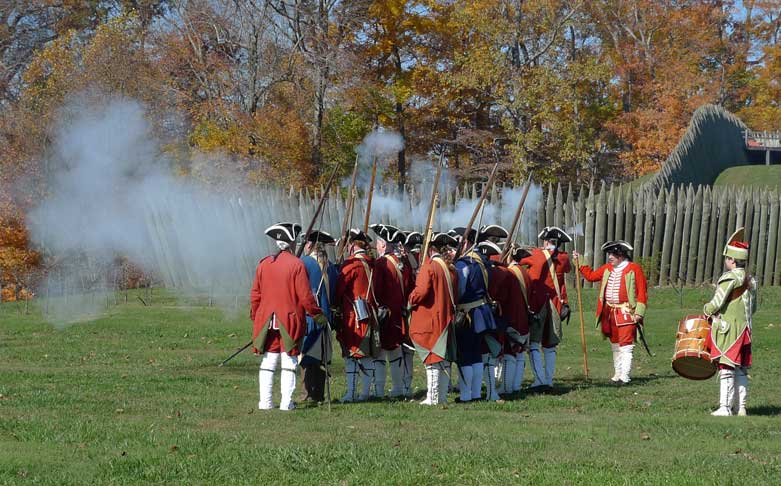
We pass by historic Fort Loudoun, a British colonial fort designated a National Historic Landmark in 1965. Loudon County – named for Fort Loudoun — is home to Greenback, Tennessee. Greenback, as everyone knows, is home to Sarah Murr’s family. Life is coming full circle, an indication our trip must be near its end.
We cross the Tennessee River, and ride through Lenoir City, named after the Lenoir family. A 5,000-acre tract of land, including what is now Lenoir City, was deeded to General William Lenoir as payment for his services during the Revolutionary War.
From Lenoir City, we ride on US-11 a few miles and hop on Kingston Pike, once known as the Dixie Lee Highway (not named after former Washington state Governor Dixie Lee Ray). Kingston Pike, originally part of a Native American trail, connects Knoxville with Farragut.
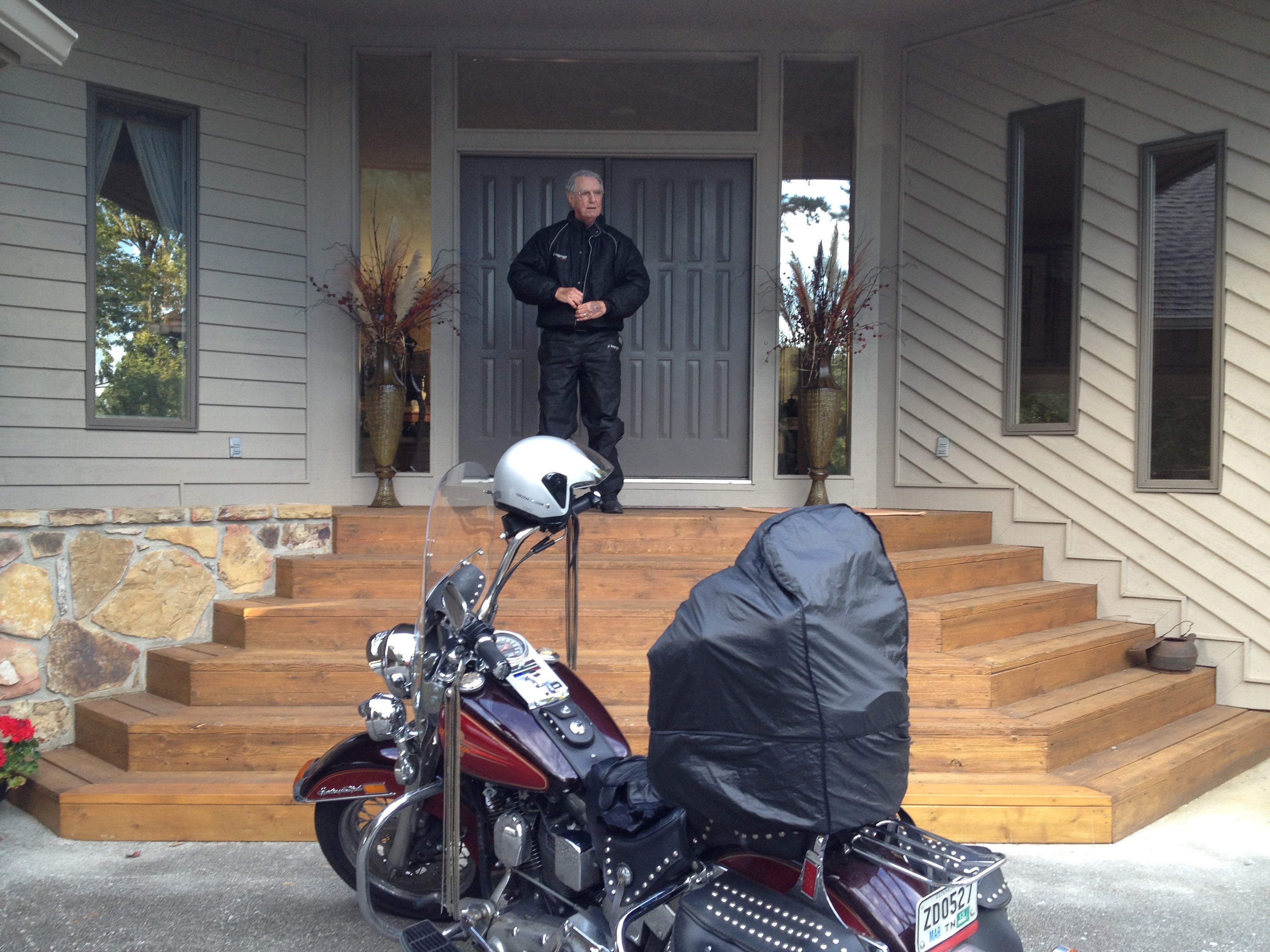
And then, before you know it, we arrive at Ray and Tina’s house in Farragut. Tonight’s five-star lodging: The Sanders residence ($0 no tax, and minimal tipping).
To view today’s complete route from Asheville, North Carolina, to Farragut, Tennessee, click here.
Today’s miles ridden: 252. Total miles since leaving Farragut on September 21, the start of our trip: 4,011. Incidentally, I rode the last 1,707 miles with out a working speedometer. I am that good. One more stat worth noting: over the past 17 days, we spent about 110 hours in the saddle. And my butt isn’t even sore.
Day Seventeen Summary: The benefits of a silver spoon, Fess Parker as Davy Crockett, riding the Cherohala, the power of TVA, heading for home.
***
This year’s ride is over. With little time yet for reflection, the past few weeks are a blur of memories.
- Seventeen days. Four thousand miles. Twelve states. Zero injuries.
- From the deep South to (almost) Oh Canada — and back.
- Chocolate theme parks, and ice cream factories.
- Civil War sites, striped lighthouses, fall colors.
- River valleys, mountains, lowlands and the Atlantic
- Ferry rides, scenic byways, and an iota of interstates.
- Cheap motels with comfortable beds.
- More than 25,000 words blogged, and 350 photos posted — enough for a book.
Something for everyone — at least for me, and for Ray.
***
Hope you enjoyed being a part of the journey. It was nice having you along for the ride.
Your warmth, and occasionally derisive comments, made me feel a little less isolated on the road. In the unlikely event that you learned anything these past few weeks, you’re welcome.
What will tomorrow bring?
I’m on my way home to La Quinta. Most famous person there: Sarah Murr.
 Riding With Gary