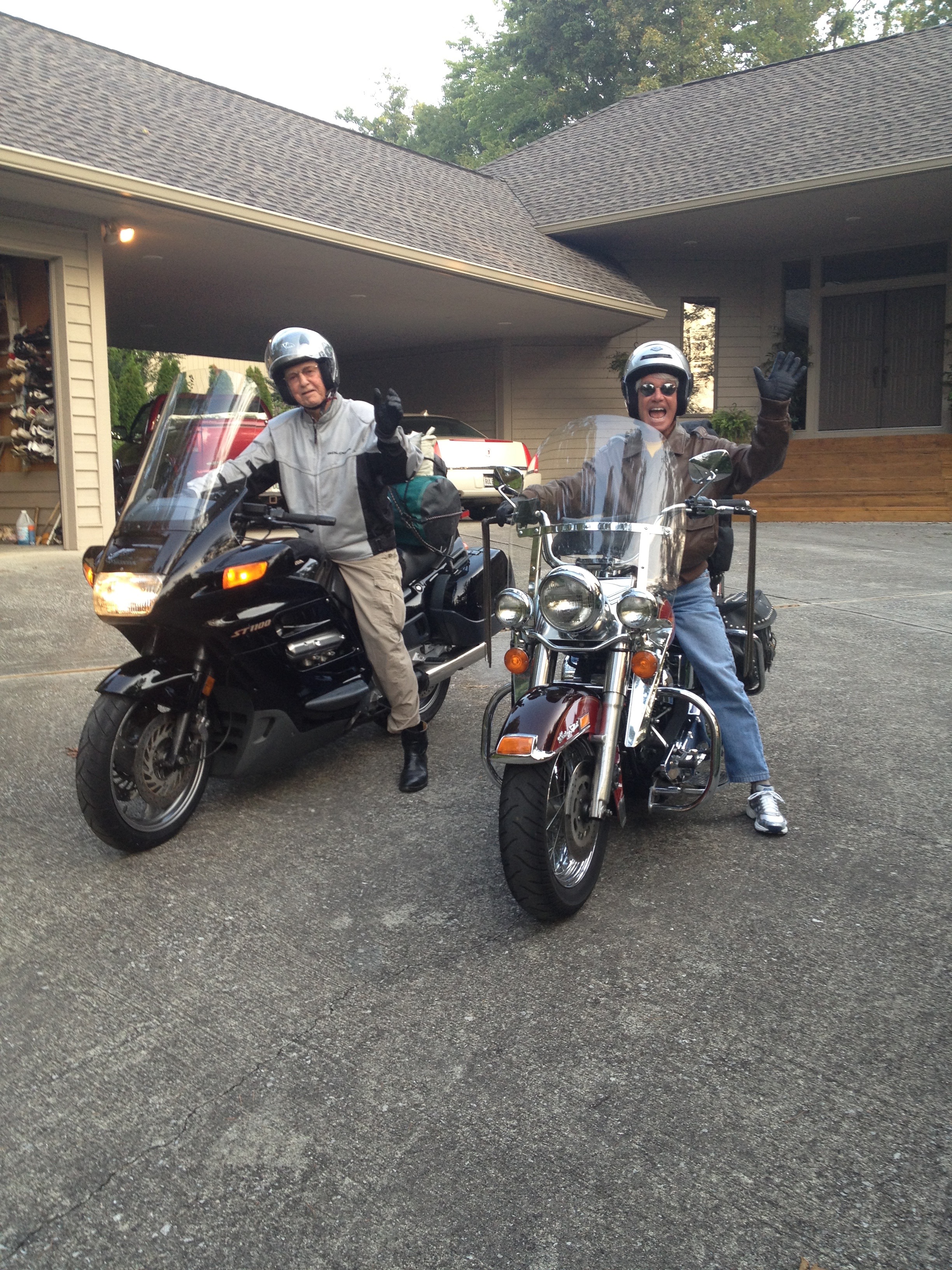
We leave Ray and Tina’s home in Farragut, Tennessee, early this morning, and begin our journey in search of America. We’re pretty sure we’ll find it.
We’ll ride thousands of miles, cross dozens of state borders, spend little time on interstate highways, see spectacular scenery, consume conspicuous amounts of local cuisine, and stay at some of the ritziest Motel Sixes anywhere. It’s about the journey, not the destination.
You will be along for the ride — as much or as little as you want. As much — if you read my daily blog entries. As little — if you don’t.
***
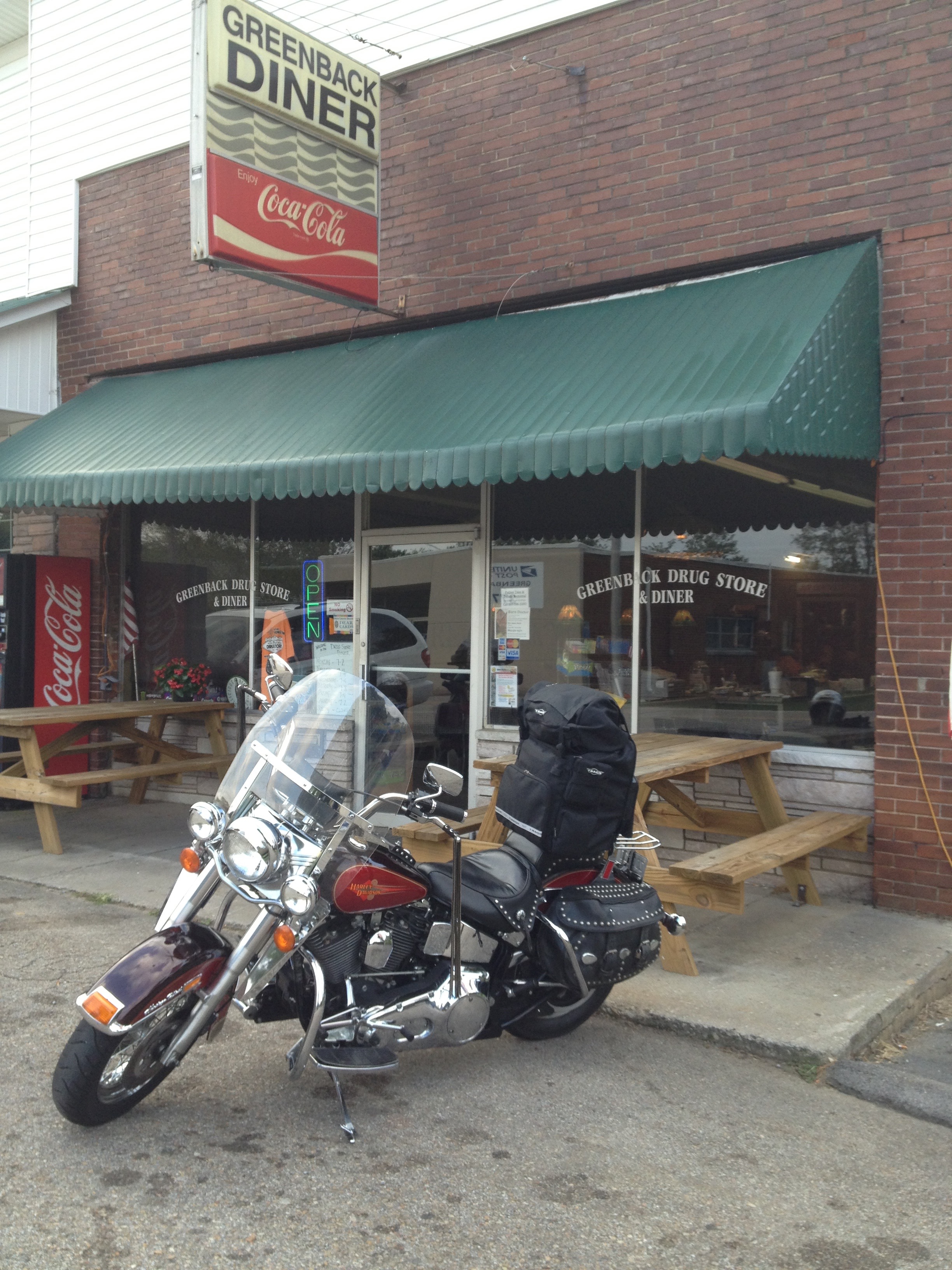
Our first stop today is Greenback, Tennessee, whose most famous former resident is the now-retired Sarah Murr. Sarah graduated from Greenback High School in 1973, one of 33 in that year’s graduating class. She got her degree Sarah-cum-laude, which apparently means she was at the top of her class. In the top 100 percent, anyway. That’s Tennessee math.
Greenback gets its name from the Greenback party, an American political party in the 1870s and 1880s with an anti-monopoly ideology. Note: the game of Monopoly wasn’t created until the early 1900s, showing how progressive Greenback was in its anti-monopolistic leanings.
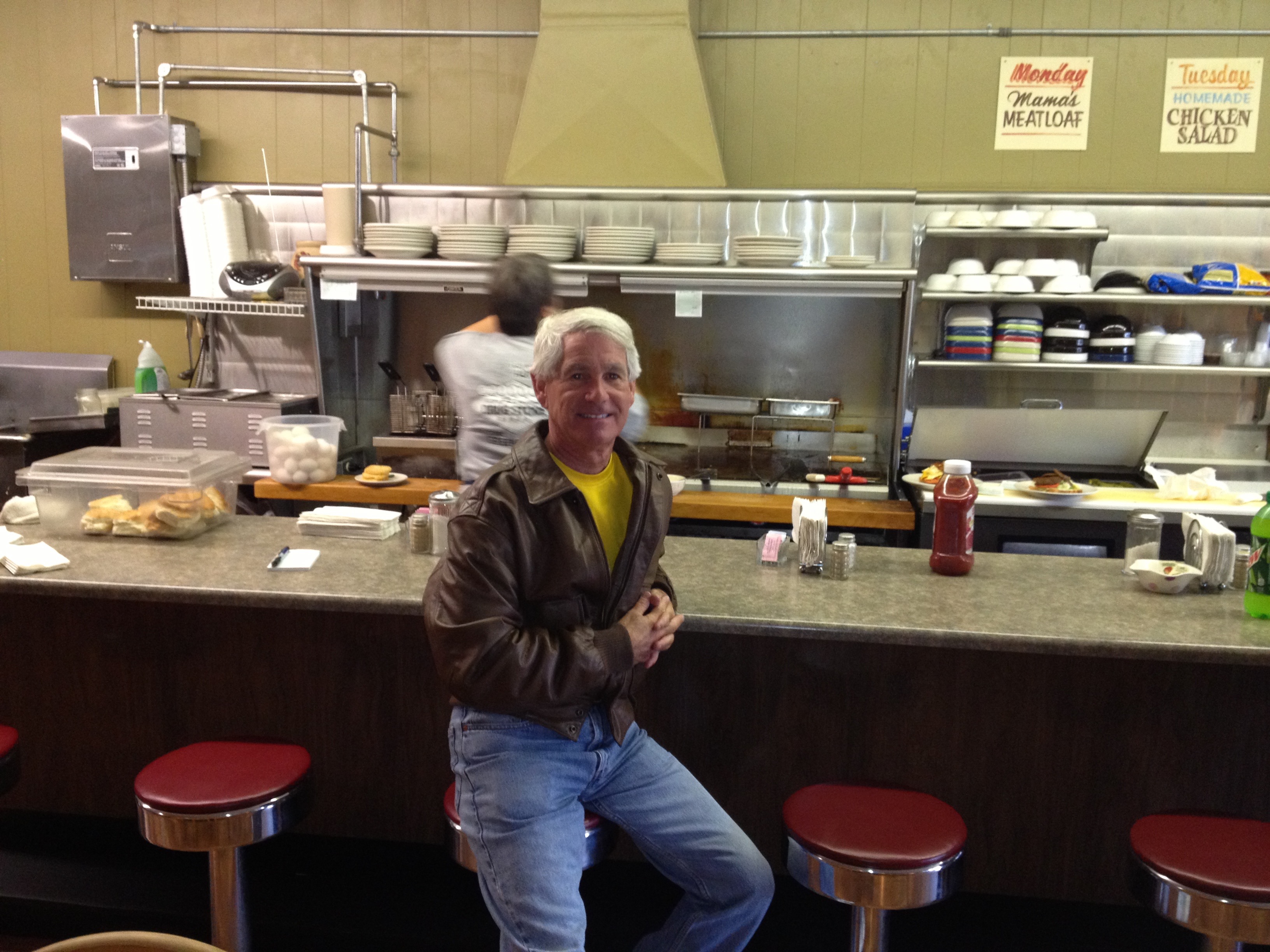
Greenback’s population in the 2010 census was 1,064. Many of them are Murrs, or somehow related to the Murr family. In Tennessee, it’s hard to find someone who’s not your cousin. As the city’s website proudly says, “Everyday is a GREAT day to live in Greenback!”
In 2011, Greenback’s residents were featured in an H&R Block television commercial as part of the company’s nationwide campaign to promote its income tax preparation services. Click here to view the story of that commercial. Along with free tax services for several dozen residents, the company donated several thousand dollars to Greenback School, alma mater of Sarah Elizabeth Murr.
Leaving Greenback, we wipe the tears from our eyes and press on toward North Carolina. We ride along the Little Tennessee River, through the Tallassee Recreation area, past Chilhowee Lake.
We are skirting the western edge of Great Smoky Mountains National Park, which had more than 9 million visitors in 2011, making it by far the most-visited of the 58 US national parks. The second-most visited park, Grand Canyon, had a mere 4.3 million visitors. The 521,490-acre Great Smoky Mountains National Park is in Tennessee and North Carolina – one of only three national parks crossing state borders (Death Valley is in California and Nevada; Yellowstone is in Wyoming, Montana and Idaho).
Next week, we’ll visit Shenandoah National Park, which is entirely in Virginia. I am purposefully giving my newly acquired “Senior Pass” a good workout; the $10 pass allows me lifetime access to our national parks – and more than 2,000 recreation sites managed by five federal agencies. My Senior Pass admits me, and the passengers in my vehicle, to sites managed by the National Park Service, the US Forest Service, the US Fish and Wildlife Service, the Bureau of Land Management, and the Bureau of Reclamation. Click here to learn more about the $10-for-a-lifetime pass – perhaps the best travel bargain anywhere! For you young, illegal immigrants reading this blog post – here’s some bad news: to qualify for the Senior Pass, you have to be at least 62 years old, and a US citizen or permanent resident.
***
Still in Tennessee, but pointed toward North Carolina — we are now on US-129, heading for a Disneyland-like experience for motorcycle riders. US-129, which becomes the Tail of the Dragon, has 318 curves in 11 miles. If you look at a map of the Dragon, you’ll quickly understand how it got its name.
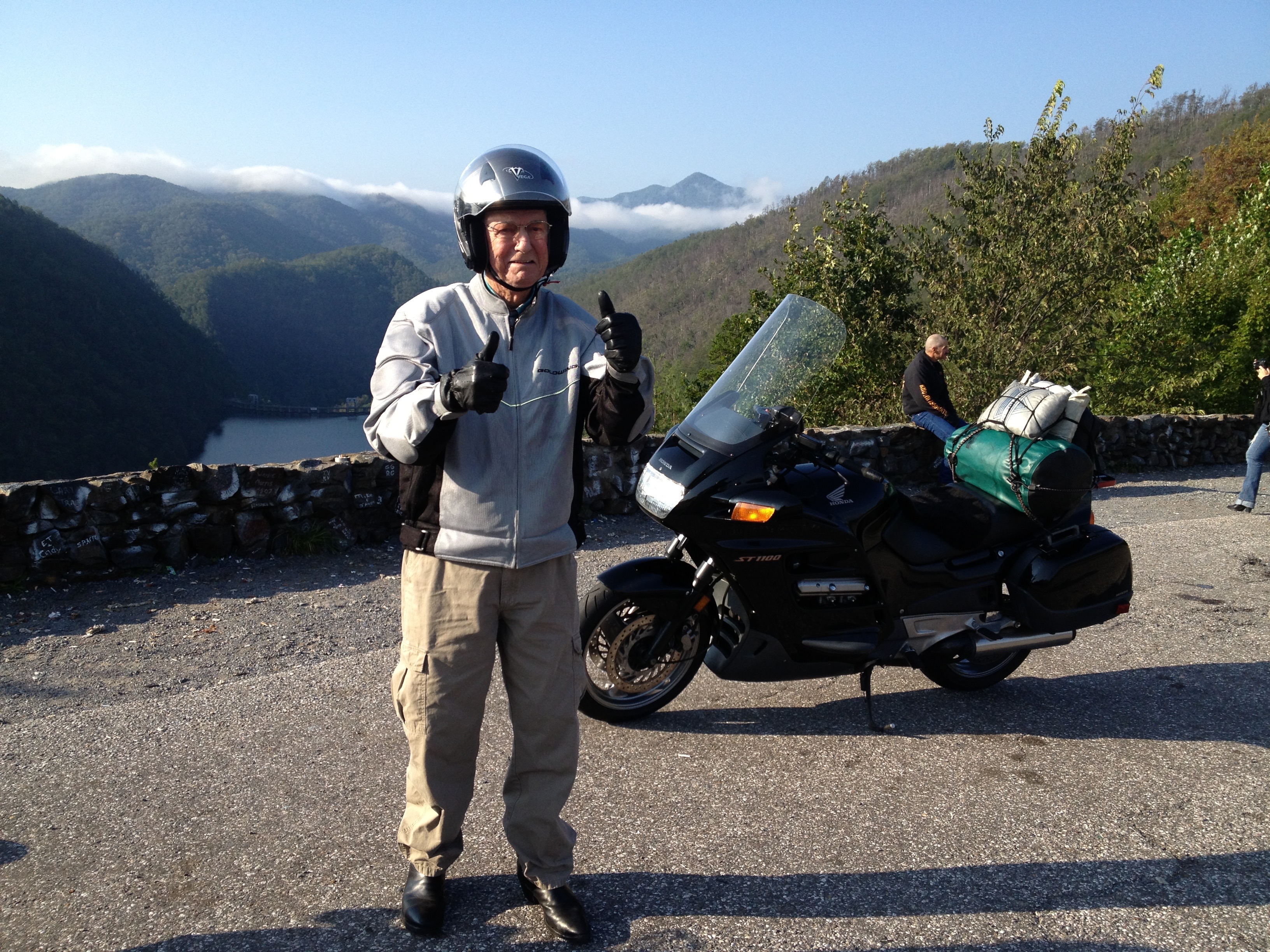
Speed limit on the Dragon is 30 MPH. You will be passed like a bad check if you go that slowly. There’s a reason I’m still alive after 47 years of motorcycle riding: as you may know, I ride like Grandma. I began riding like Grandma when I got my first bike at age 15 — a 1965 Honda Super 90, which at 90 cubic centimeters, had 1/20th of the displacement of my Harley today. So, to get the most out of the Dragon, I slow down, ride the speed limit, and enjoy the breathtaking scenery. Ray does the same, which is a big part of the reason he’s still riding at age 81. Ray will be 82 on November 8; you can send him birthday wishes at Rsandgolfmc@aol.com
Ray rides like Grandpa. We’re quite a pair.
Full disclosure: Ray actually is a Grandpa. I only ride like Grandma.
***
The Tail of the Dragon ends at Deals Gap Motorcycle Resort, as we cross the state border into North Carolina. Deals Gap is home to the Tree of Shame. Click here to check it out. Started some time in the 1980s by a group of Harley riders, the Tree of Shame is a makeshift shrine to those bitten by the Dragon. After riders have successfully slayed the Dragon (as we did today), they can smile at the parts left behind by other riders who were not so fortunate.
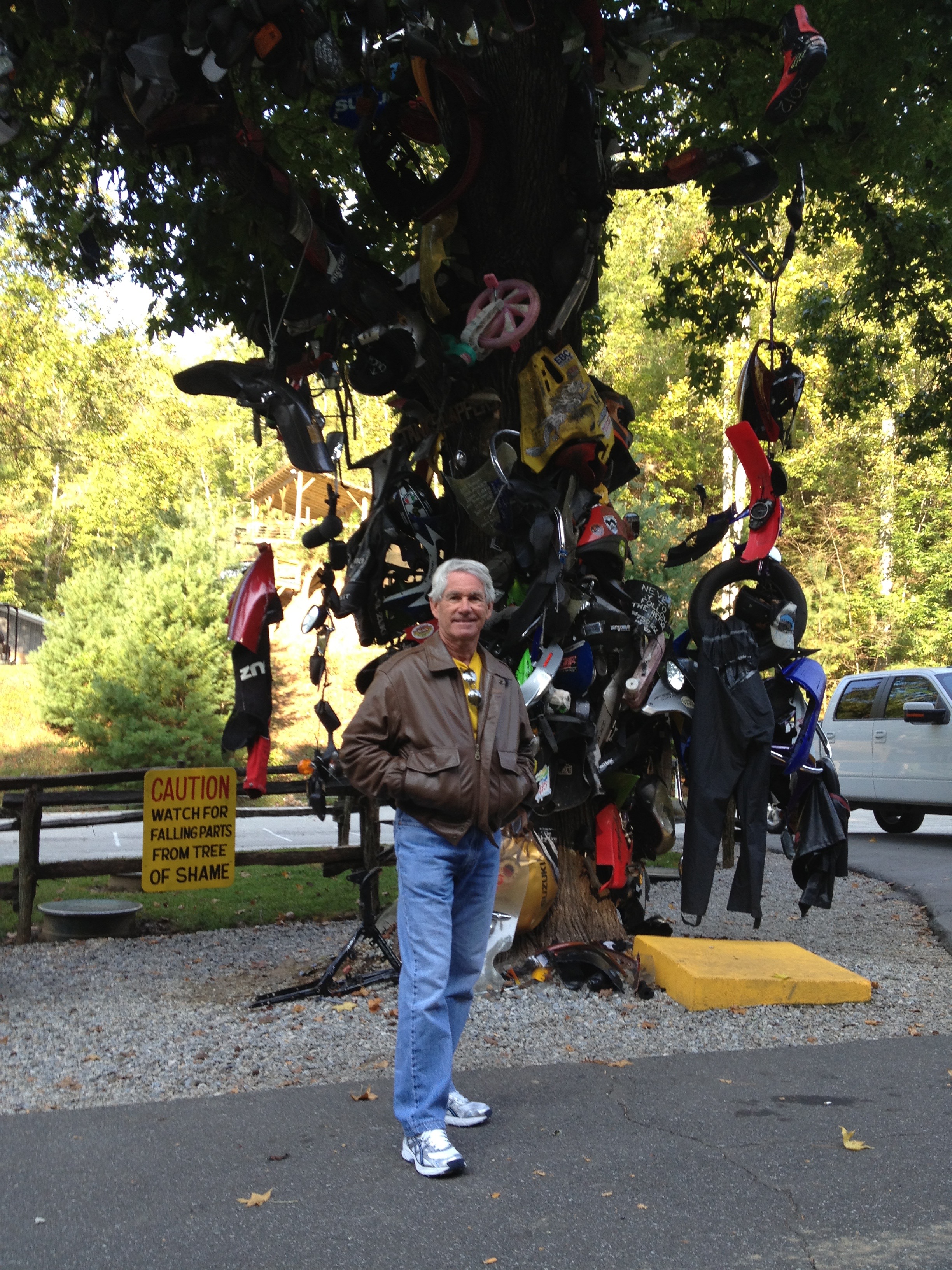
As a show of respect to my body and to Tina’s Harley, I leave behind nothing that would embarrass me. Tina’s a gracious Harley lender, but she does expect all the parts to return to Farragut in working order. Click here to learn more about the Tail of the Dragon. Click here to see a video that will make you appreciate why the Dragon is best left to experienced riders like me and Ray.
From Deals Gap, we continue on US-129 toward Robbinsville, North Carolina. Among Robbinsville’s notable former residents are country music singer Ronnie Milsap and NASCAR driver Rodney Orr, who was killed in practice before the 1994 Daytona 500. Daytona is almost as dangerous as riding the Dragon; an estimated 31 motorcyclists have died riding the Dragon since 1995. Before their lives ended, many of these riders were derogatorily known as SQUIDs — Stupid Quick Underdressed and Imminently Dead. Squid can also be shorthand for “squirly kid.” Squids are known to ride in shorts, flip-flops and without a helmet – fully believing they are invincible. You don’t want to be called a Squid: it describes a motorcyclist with a hot bike and questionable skills and judgment. Much better to be called Grandma.
We continue east on NC-143 and NC-28, riding through the Nantahala National Forest, more than 531,000 acres of mostly untouched beauty. Nantahala is a Cherokee word meaning “Land of the Noonday Sun.” It’s a fitting name for the Nantahala Gorge, where the sun reaches to the valley floor only at midday. The Spanish Conquistador Hernando de Soto explored this area in 1540. It would have taken him far less time on a Harley. De Soto was a primo explorer. He traveled well. That’s why a car was named after him. Thought you might enjoy an ad for the 1955 DeSoto. That’s the year Sarah was born. Click here to see the commercial. Love the chrome.
***
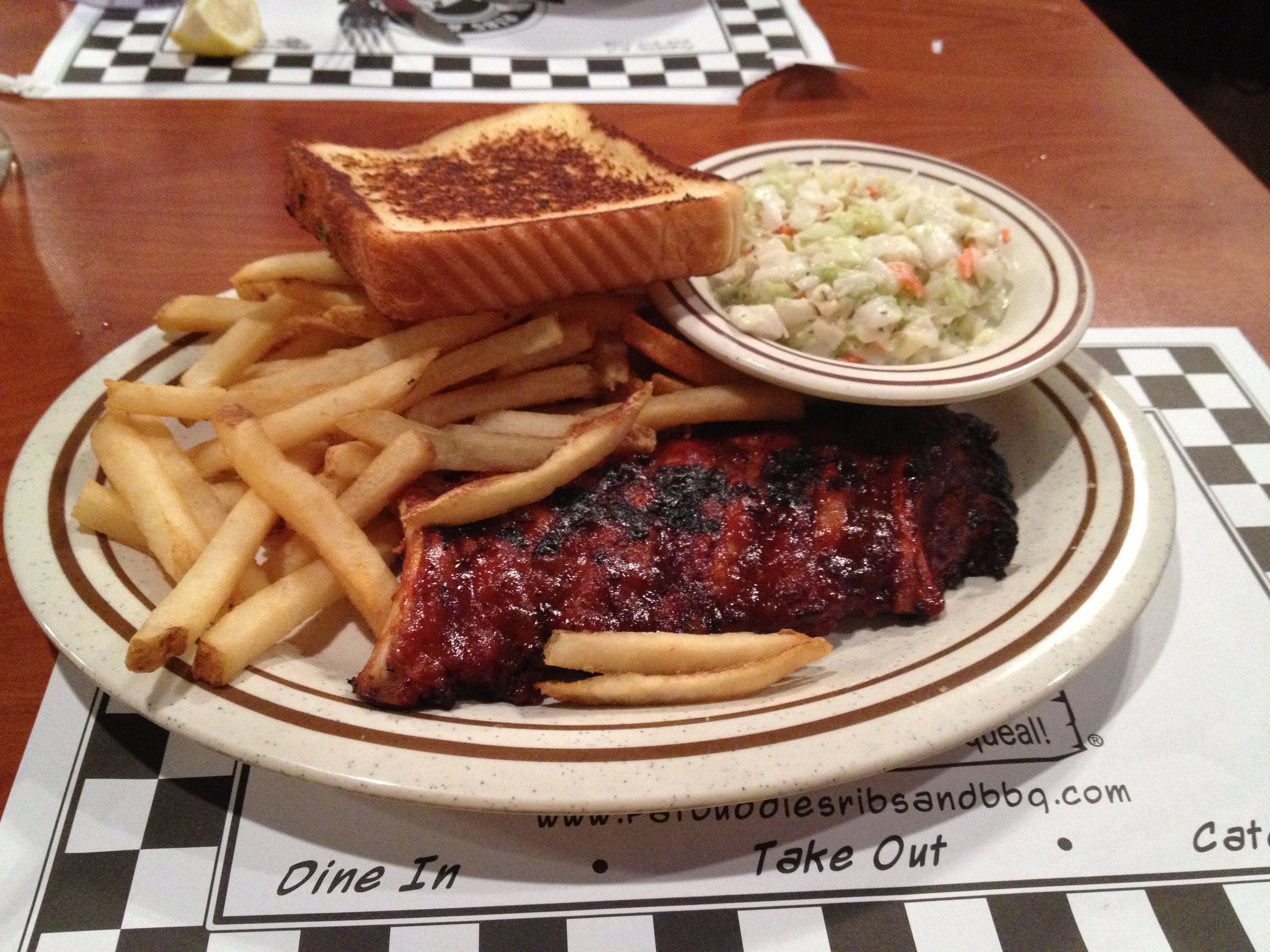
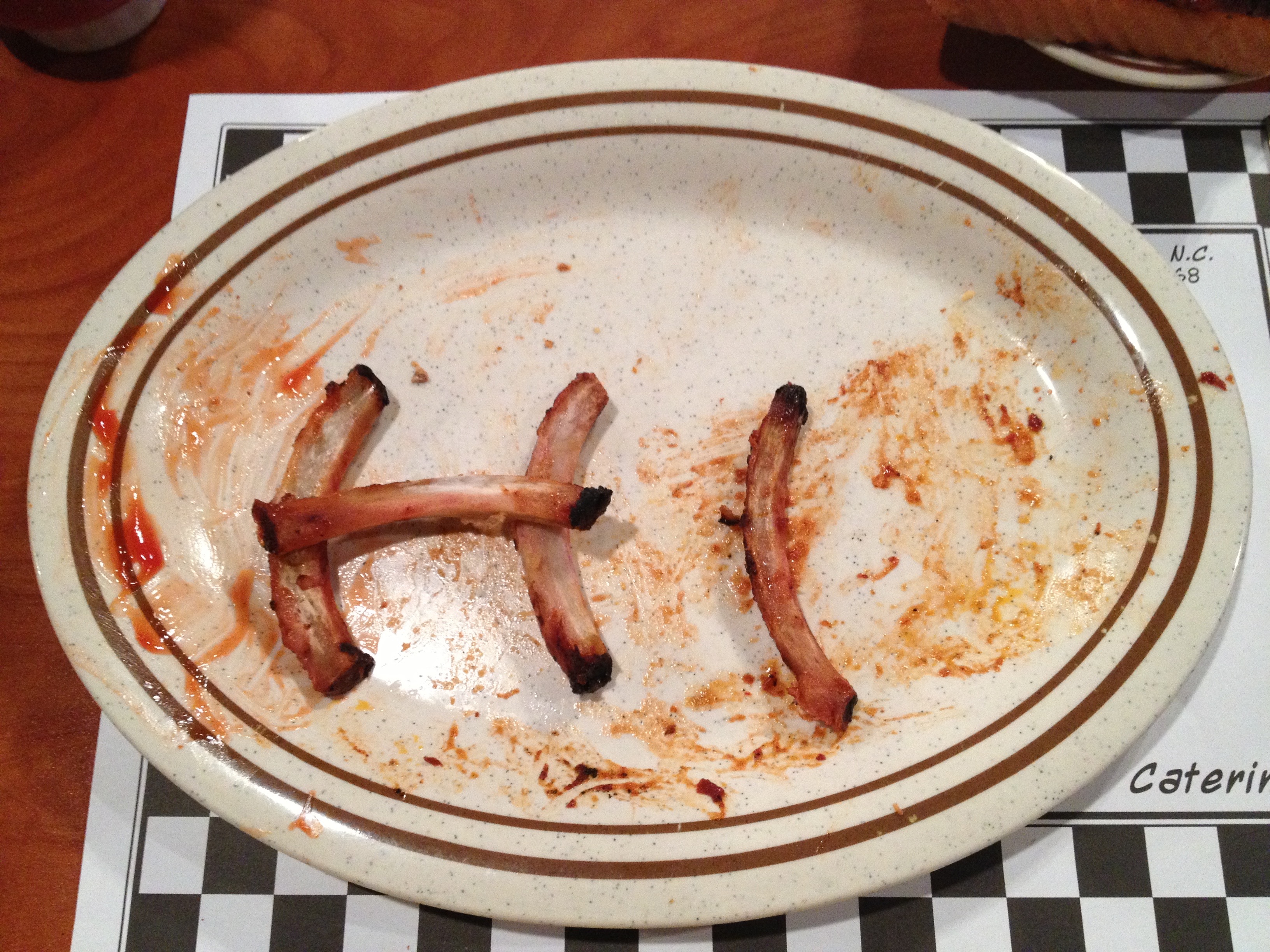
We’ve been on the road now for 125 miles, which is about half of today’s ride. We are hungry and we’re for sure in the South, so we stop at Fat Buddies Ribs & BBQ in Franklin, North Carolina. Those of you who know my culinary preferences should not be surprised at my lunch order. If I had only one meal remaining, it would be ribs. Click here to see what’s on the menu at Fat Buddies. Ray had blackberry pie and vanilla ice cream — no ribs. He takes his sweets very seriously.
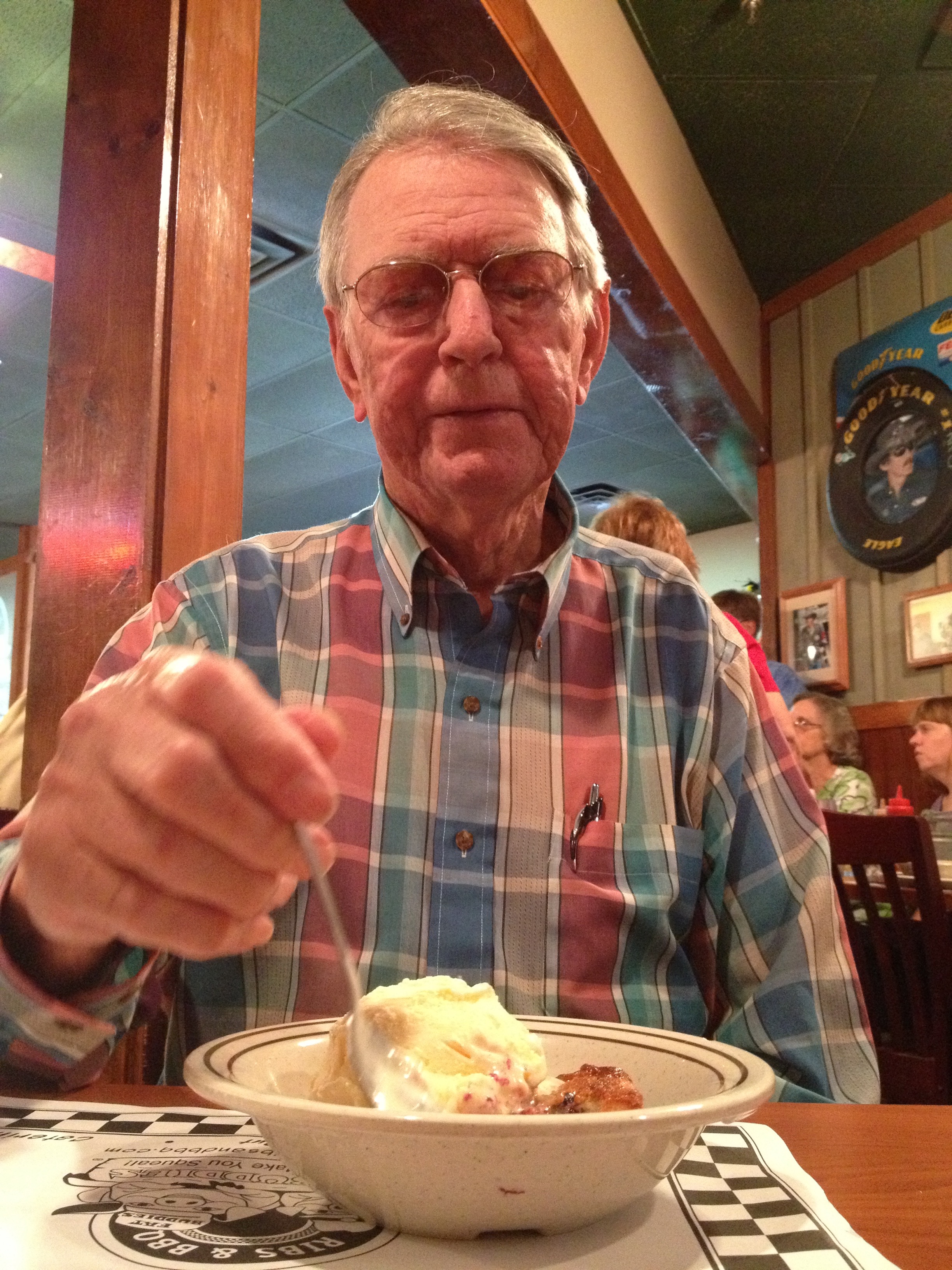
When we’re riding 250 or so miles in a day, a lunch stop generally is a good time to refill the tummy, and refuel the gas tank. So we gas up, and head east on NC-28 toward Highlands. The curvy, newly paved road from Franklin to Highlands is our best ride of the day. From Highlands, we turn toward Cashiers, North Carolina, which apparently was named for its college that trains bank tellers. Really. Or not. Whatever.
We point east on US-64 and head for Rosman, North Carolina, at the eastern boundary of Pisgah National Forest. Rosman is in Transylvania County. County names are generally not worth mentioning on this blog, but I love to say “Transylvania.” It is derived from the colonial Transylvania Company and has Latin origins: trans (“across”) and silva (“woods”). Transylvania — one can almost picture the vampires. Oh yes, there’s another Transylvania in central Romania.
US-178 takes us into South Carolina, where we ride through the Jocassee Gorges Management Area. According to Native American legend, Jocassee means “Place of the Lost One.” Lost, we are not. We have AAA maps, two GPS navigation systems, a stack of credit cards, and a modicum of common sense.
Ten miles into South Carolina, we hop on SC-11, the Cherokee Foothills Scenic Highway. The Cherokee Indians called the geography in this area the “Great Blue Hills of God.” Following an ancient Cherokee path, this beautiful two-lane road arcs through peach orchards and villages, past Cowpens National Battlefield and over Lake Keowee. We’re on the Cherokee Foothills Scenic Highway for only 27 miles of its 130-mile length, enough of a taste to want to come back at a later date.
***
We depart the Scenic Highway only because an appointment looms in Greer, South Carolina, just outside Spartanburg. We turn south on SC-101 and wind our way to the BMW manufacturing plant, where they assemble Beemer SUVs — the X-Series vehicles (X3, X5 and X6). It’s the Munich-based company’s only US production facility. Click here to learn more about the BMW factory in Greer.
The facility employs more than 7,000 people, and produces — on average — about 1,000 vehicles a day. As two guys who used to work for a big ol’ airplane company, Ray and I have an appreciation for the beauty and complexity of large-scale systems integration. So we stop to visit what’s known as “Zentrum.” It’s a tour facility and museum — a very cool experience. But I already have a German-built (in Stuttgart) car that’s paid for, has low-mileage, and should last me till age 85. So we leave without ordering a new vehicle, instead picking up a few souvenirs before heading for our final leg of today’s trip.
Here’s a footnote about auto assembly by companies we all once considered foreign: 10 “non-US-based” car companies operate 16 big assembly plants in the US. In Ohio, Honda has facilities in Marysville and East Liberty, and another plant in Lincoln, Alabama; Nissan builds more than 500,000 vehicles a year in Smyrna, Tennessee; Toyota builds a half-million vehicles a year in Georgetown Kentucky — the Camry and Avalon sedans. Hyundais are built in Montgomery, Alabama; Volkswagen has a plant in Chattanooga, Tennessee. Mercedes builds M-Class and R-Class vehicles in Vance, Alabama. Kia recently expanded its $1 billion plant in West Point, Georgia.
Discern any geographical, political, socio-economic or cultural patterns? This list is not comprehensive, but it is sobering. In Tennessee alone, more than 60,000 jobs are related to auto and parts production. Click here to read a recent New York Times article on this phenomenon.
***
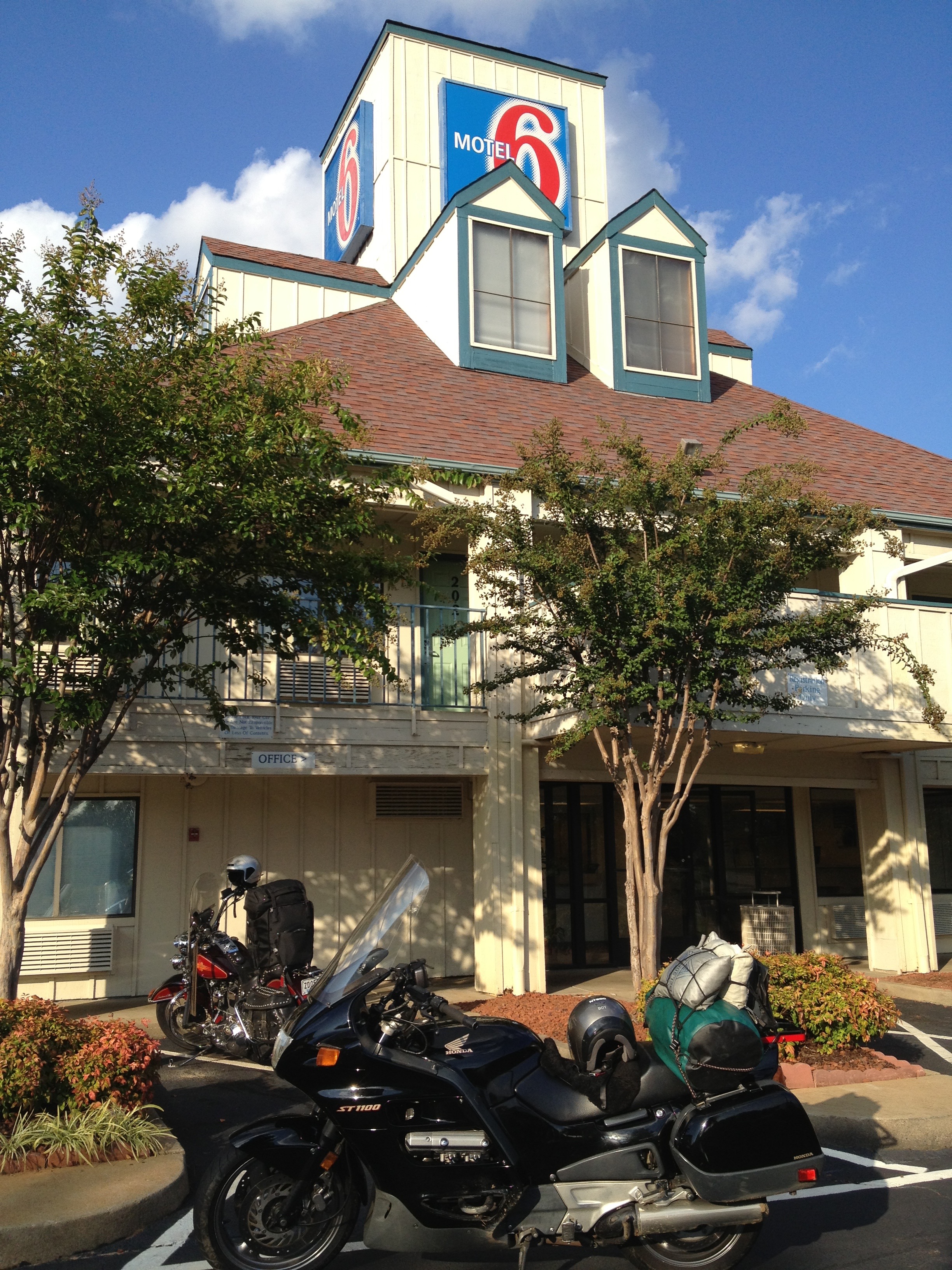
It’s a 22-mile drive from Greer to the posh Motel 6 in Spartanburg, South Carolina. Disappointingly, we are on I-85 for most of the next 25 minutes, violating a cardinal tenet of Gary’s Road Rules: fuhgedabout the Interstate. But it’s the end of a long day, and we just want to check in, put our feet up, and relax. So we deal with 20 miles of boring, grinding I-something.
About tonight’s accommodations: Motel 6, two full beds, non-smoking. Free morning coffee, free expanded cable and a coin laundry in case we soiled ourselves while riding the Dragon. Woo-hoo, we are living large! It’s $41.99, plus tax. If you’re nostalgic about Motel Six, you correctly remember that the room rate was $6 a night when the first motel opened in Santa Barbara, California, in 1962.
***
Day One Summary: ribs in the belly, dragons in the rear-view mirror, photos in the iPhone, and tchotchkes in the saddlebag. Total miles for the day: 288. A nice way to start our 2012 adventure.
Click here to view today’s complete route from Farragut, Tennessee, to Spartanburg, South Carolina. The route is courtesy of Google Maps. You can get turn-by-turn directions (if you want to replicate the route), or zoom in to see every bend in the road.
What will tomorrow bring?
 Riding With Gary